Crypto’s second act: Tokenization and regulation pulling traditional finance into Web3

cointelegraphОпубликовано 2025-12-19Обновлено 2025-12-19

Введение

Sponsored content from OKX discusses the convergence of crypto and traditional finance, driven by tokenization and regulation. OKX positions itself as a global exchange and regulated infrastructure partner, using "dual-stack" custody to help institutions integrate with crypto. The article highlights a fundamental shift in trust from intermediaries to verifiable blockchain data. Key trends include the tokenization of real-world assets (RWAs) for improved liquidity and access. Clear regulations in jurisdictions like the UAE and Singapore are seen as enablers, providing certainty for institutional participation. The line between traditional finance and crypto is blurring, with a collaborative future combining the scale of traditional finance with the innovation and speed of crypto.

Sponsored Content

OKX is broadening its operations to serve as both a global exchange and a regulated infrastructure partner, leveraging “dual-stack” custody to help traditional institutions integrate with the crypto economy.

For nearly a decade, “fintech” was synonymous with better user interfaces, such as mobile applications that improve the aesthetics of banking, but do little to improve the way banking functions. Underneath, the antiquated systems of clearing and settlement remained intact.

In 2025, however, a true rebuilding of the financial architecture might be underway, and it is driven by crypto-native infrastructure developments, rather than Silicon Valley code. As OKX president Hong Fang puts it, “the convergence between crypto and traditional finance is no longer theoretical. It is happening right now, and it is redefining how capital moves, how institutions operate and how customers experience financial services.”

Traditional institutions need partners who understand both code and compliance to navigate this environment. Digital assets exchange OKX, for example, has grown from a trading venue to also becoming an infrastructure partner. “What began as a parallel industry has evolved into a symbiotic relationship,” Fang explains, with crypto innovations now helping the broader financial system adapt to a digital-first era.

The platform boasts a global presence that includes the United States, United Arab Emirates, Singapore and Australia. By obtaining licenses in major regulatory jurisdictions and developing institutional-grade rails, OKX aims to be the bridge that enables Wall Street to safely transition to Web3. For Fang, that bridge matters because “traditional finance brings scale, governance and experience,” while crypto contributes “innovation, transparency and speed.”

Architecture of trust

The defining characteristic of this new era is a fundamental shift in how trust is established. Historically, financial trust was institutional; reliant on a chain of intermediaries to verify that money moved from Point A to Point B. Blockchain technology inverts this model, placing trust in verifiable, tamper-resistant data rather than the intermediaries managing it.

Fang describes this as crypto’s “most significant contribution:” a “reimagining of trust,” moving from reliance on gatekeepers to systems grounded in verifiable, transparent data.

While this may represent a potential threat to some traditional financial institutions, many others view it as an opportunity for operational improvement. “In response, we are seeing traditional finance begin to integrate blockchain solutions into core infrastructure,” Fang highlights, pointing to developments like tokenized deposits and new settlement layers on distributed ledgers.

“Technology can strengthen, rather than replace, the foundations of financial trust,” emphasizes the OKX president. This collaborative approach is driving major pilots, from tokenized deposits to blockchain-based interbank settlement, demonstrating that the future of finance is not about replacing banks, but providing them with improved tools.

From concept to capital markets

If trust is the foundation, speed is the utility. The efficiency of crypto rails has given rise to one of the year’s most significant trends: the tokenization of real-world assets (RWAs). Fang calls tokenization “one of the most promising bridges between traditional finance and crypto”, as it can make RWAs “more liquid, divisible and accessible to a broader range of investors.”

While early tokenization pilots were experimental, many major financial institutions are now issuing tokenized funds, bonds and real estate on regulated blockchains. This situation creates a demand for “dual-stack” infrastructure. Institutions need custodial solutions that can efficiently manage a tokenized treasury bond alongside a traditional equity portfolio.

In response to this demand, OKX developed compliant custody and wallet solutions capable of handling both asset classes, eliminating the technological friction that previously kept institutional capital on the sidelines.

Regulation as a competitive advantage

Perhaps the most surprising catalyst for this convergence is regulation. Rather than stifling innovation, clear legal frameworks in jurisdictions such as the UAE, Singapore and the European Economic Area have created a level of certainty that institutions need to participate in emerging markets.

In hubs like Abu Dhabi and Dubai, regulators have moved from skepticism to supervision, creating environments where digital asset innovation is encouraged within guardrails. OKX has built upon this strategy and secured the necessary licenses and operating approvals in these jurisdictions. By aligning with policymakers, platforms like OKX offer an entry point for institutions seeking to deploy capital without regulatory ambiguity.

“Good regulation is not a constraint; it is an enabler of sustainable innovation,” Fang points out, because it gives institutions the confidence to build, manage risk and offer clients exposure through trusted channels.

Blurred lines

As experiments turn into live products, the line between “traditional finance” and “crypto” is beginning to blur. Banks, asset managers, exchanges and regulators are no longer debating whether digital assets matter; they are deciding how fast they can safely scale them. The emerging model is collaborative: traditional finance brings regulatory discipline and scale, while crypto platforms contribute transparency, programmability and speed.

Fang frames the shift as cultural as much as technical, stating that crypto brought a “culture of experimentation, agility and open innovation,” and institutions are now learning to pair that velocity with mature governance.

The OKX president argues that this convergence is more than a passing phase: “Fintech and crypto are no longer separate stories; they are part of the same narrative.” In this narrative, digital assets help redraw how money, markets and trust work across borders.

The winners of this vision will not be disruptors trying to burn down the old system, but builders using it as a catalyst for a more connected global economy. Through its partnerships with major financial entities and its commitment to regulated infrastructure, OKX aims to demonstrate that the future of finance lies in the seamless integration of both Wall Street and Web3.


Связанные с этим вопросы

QAccording to the article, what is the most significant contribution of crypto as described by OKX president Hong Fang?

AThe most significant contribution of crypto is a 'reimagining of trust,' moving from reliance on gatekeepers and intermediaries to systems grounded in verifiable, transparent, and tamper-resistant data.

QWhat major trend in 2025 is driven by the efficiency of crypto rails, according to the article?

AThe major trend driven by the efficiency of crypto rails is the tokenization of real-world assets (RWAs), which makes assets more liquid, divisible, and accessible to a broader range of investors.

QHow does the article characterize the role of regulation in the convergence of crypto and traditional finance?

AThe article characterizes regulation not as a constraint but as an enabler of sustainable innovation and a competitive advantage. Clear legal frameworks provide the certainty institutions need to participate, encouraging digital asset innovation within established guardrails.

QWhat is the 'dual-stack' infrastructure that OKX developed in response to institutional demand?

AOKX developed compliant custody and wallet solutions capable of efficiently managing both traditional asset classes (e.g., equity portfolios) and new tokenized assets (e.g., treasury bonds), eliminating the technological friction that previously kept institutional capital on the sidelines.

QWhat does the article suggest is the emerging model for the future relationship between traditional finance and crypto?

AThe emerging model is collaborative: traditional finance brings regulatory discipline, governance, and scale, while crypto platforms contribute innovation, transparency, programmability, and speed. It is not about replacing the old system but integrating and improving it.

Похожее

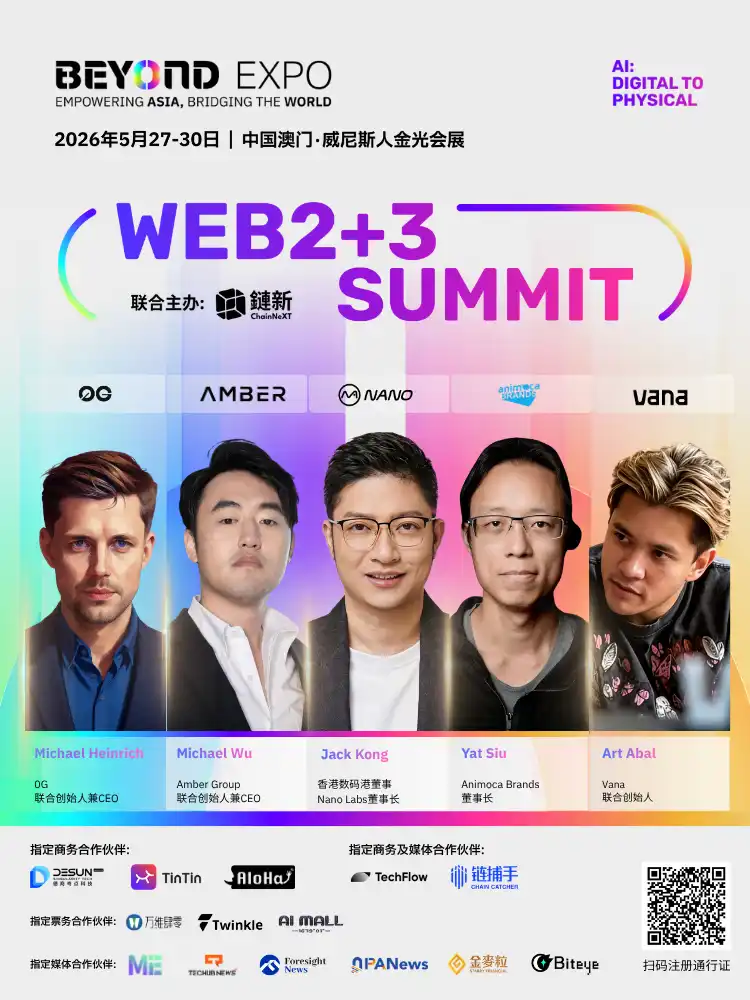
First Batch of Keynote Speakers and Partners Announced! Web2+3 Summit: Defining the Next Generation of Digital Economy

Web2+3 Summit: Defining the Next Generation of Digital Economy The 6th BEYOND International Technology Innovation Expo (BEYOND Expo 2026), Asia's largest tech and ecosystem exhibition, is launching a dedicated Web2+3 stage for the first time. Co-hosted by BEYOND Expo and ChainNeXT Group, the Web3 Summit will take place from May 28–30, 2026. Against the backdrop of accelerating global tech integration, the boundaries between Web2 and Web3 are rapidly blurring. With clearer global regulations for blockchain-driven internet (Web3) and the special issuance of a Hong Kong dollar stable币 license by the Hong Kong SAR government on April 10, 2026, Web3's decentralized principles are quickly merging with traditional industries (Web2) such as e-commerce, finance, and artificial intelligence. Focused on blockchain-driven digital economy elements, the summit will center on three core principles—implementability, commercial viability, and compliance. It will bring together top Web3 experts to discuss key integration areas like stablecoin payment finance (PayFi), real-world asset tokenization (RWA), and decentralized AI (DeAI), unveiling new opportunities for industrial innovation. The first wave of confirmed speakers includes Jack Kong (Director of Hong Kong Cyberport, Chairman of Nano Labs), Yat Siu (Chairman of Animoca Brands), Michael Wu (Co-founder & CEO of Amber Group), Michael Heinrich (Co-founder & CEO of 0G), and Art Abal (Co-founder of Vana). More Web3 ecosystem pioneers, AI, and fintech experts will be announced soon. Core forum topics include: - Web2+DeAI: New AI Paradigms Driven by Decentralized Infrastructure - Web2+RWA: Real-World Asset Tokenization and Global Liquidity - Web2+PayFi: Cross-Border Payments and Financial Innovation Powered by Crypto Infrastructure - Web2+3 AI: Autonomous Agents and the Crypto Economy - Web2+3 Wealth: On-Chain and Off-Chain Integrated Investment Ecosystems - Web2+3 Commerce: A New Landscape for Global Trade Driven by Stablecoins Additional agenda details will be released in the near future.

marsbit1 ч. назад

First Batch of Keynote Speakers and Partners Announced! Web2+3 Summit: Defining the Next Generation of Digital Economy

marsbit1 ч. назад

Торговля

Спот
Фьючерсы

Популярные статьи

Как купить S

Добро пожаловать на HTX.com! Мы сделали приобретение Sonic (S) простым и удобным. Следуйте нашему пошаговому руководству и отправляйтесь в свое крипто-путешествие.Шаг 1: Создайте аккаунт на HTXИспользуйте свой адрес электронной почты или номер телефона, чтобы зарегистрироваться и бесплатно создать аккаунт на HTX. Пройдите удобную регистрацию и откройте для себя весь функционал.Создать аккаунтШаг 2: Перейдите в Купить криптовалюту и выберите свой способ оплатыКредитная/Дебетовая Карта: Используйте свою карту Visa или Mastercard для мгновенной покупки Sonic (S).Баланс: Используйте средства с баланса вашего аккаунта HTX для простой торговли.Третьи Лица: Мы добавили популярные способы оплаты, такие как Google Pay и Apple Pay, для повышения удобства.P2P: Торгуйте напрямую с другими пользователями на HTX.Внебиржевая Торговля (OTC): Мы предлагаем индивидуальные услуги и конкурентоспособные обменные курсы для трейдеров.Шаг 3: Хранение Sonic (S)После приобретения вами Sonic (S) храните их в своем аккаунте на HTX. В качестве альтернативы вы можете отправить их куда-либо с помощью перевода в блокчейне или использовать для торговли с другими криптовалютами.Шаг 4: Торговля Sonic (S)С легкостью торгуйте Sonic (S) на спотовом рынке HTX. Просто зайдите в свой аккаунт, выберите торговую пару, совершайте сделки и следите за ними в режиме реального времени. Мы предлагаем удобный интерфейс как для начинающих, так и для опытных трейдеров.

1.1k просмотров всегоОпубликовано 2025.01.15Обновлено 2025.03.21

Как купить S

Sonic: Обновления под руководством Андре Кронье – новая звезда Layer-1 на фоне спада рынка

Он решает проблемы масштабируемости, совместимости между блокчейнами и стимулов для разработчиков с помощью технологических инноваций.

2.2k просмотров всегоОпубликовано 2025.04.09Обновлено 2025.04.09

Sonic: Обновления под руководством Андре Кронье – новая звезда Layer-1 на фоне спада рынка

HTX Learn: Пройдите обучение по "Sonic" и разделите 1000 USDT

HTX Learn — ваш проводник в мир перспективных проектов, и мы запускаем специальное мероприятие "Учитесь и Зарабатывайте", посвящённое этим проектам. Наше новое направление .

1.8k просмотров всегоОпубликовано 2025.04.10Обновлено 2025.04.10

HTX Learn: Пройдите обучение по "Sonic" и разделите 1000 USDT

Обсуждения

Добро пожаловать в Сообщество HTX. Здесь вы сможете быть в курсе последних новостей о развитии платформы и получить доступ к профессиональной аналитической информации о рынке. Мнения пользователей о цене на S (S) представлены ниже.

活动图片