Crypto Victims Relieved – Or Too Late? What Operation Atlantic Really Means

bitcoinistОпубликовано 2026-04-10Обновлено 2026-04-10

Введение

Operation Atlantic is a major UK-US-Canada law enforcement initiative targeting crypto fraud and approval-phishing scams, involving agencies like the UK's National Crime Agency and the U.S. Secret Service, along with private partners such as Chainalysis. The operation aims to identify victims and compromised wallets in real time, freeze illicit funds before laundering, and generate investigative leads. Initial results include over 20,000 identified victims, more than 20,000 flagged wallet addresses, and over $12 million in frozen suspected scam proceeds. Globally, $45 million in stolen crypto has been identified. Approval phishing scams trick users into signing malicious transactions, allowing direct wallet draining. The operation highlights growing efforts to combat these rapidly evolving crypto crimes.

Crypto companies and public authorities are joining forces in “Operation Atlantic”, a coordinated push to shut down crypto fraud schemes and approval‐phishing attacks.

A Transnational Operation Against Crypto Phishing Scams

Operation Atlantic is a rare case of law enforcement moving in near real time to block scammers before funds fully disappear on‐chain. The operation is a joint UK–US–Canada venture led by the UK’s National Crime Agency and the US Secret Service, targeting crypto investment and “approval phishing” scams. The multiparty operation is also joined by private industry partners like Chainalysis. The blockchain data and analytics company announced the partnership in a yesterday’s post on their website.

As stated by Chainalysis:

Operation Atlantic’s objective is simple but ambitious: spot victims and compromised wallets in real time, freeze and secure illicit funds before they can be laundered through exchanges or services, generate new investigative leads on the fraud networks behind these scams, and lay the groundwork for ongoing investigations based on the intelligence collected during the operation.

Inside Operation Atlantic’s First Results

The operation, announced last month, has yielded its first striking results.

According to a new report from the National Crime Agency (NCA) of the United Kingdom, more than 20,000 victims have been identified, with over 20,000 wallet addresses flagged and more than $12 million in suspected scam proceeds frozen.

More than $45 million stolen in cryptocurrency fraud schemes has been identified around the world.

The report also highlighted that the operation identified one UK victim that lost more than £52,000 to this type of fraud.

Phishing 101

In approval phishing scams, victims are tricked into signing malicious on‐chain approvals that grant the scammers permission to drain tokens directly from their wallets. These attempts are often disguised as investment opportunities or “account security” prompts.

Such tactics are increasingly favored by organized fraud networks because they bypass traditional password theft and rely on users misunderstanding what they are signing.

Just yesterday, our sister website NewsBTC reported that South Korean authorities are rolling out a new standardized withdrawal‐delay across all exchanges in order to prevent damage from phishing scams that depend on speed.

Last month, the Solana memecoin issuance platform Bonk.fun was hichjacked by a phishing scam that set up a fake “Terms of Services” (TOS) signature prompt which, when signed, allowed the drainer to move the unaware user’s funds.

At the beginning of the month, the social network X announced it is in the process of rolling out its toughest anti-crypto scam measure to date, particularly design to combat phishing scams.

As law enforcement becomes more adept at tracing and freezing stolen funds, scam operations will likely move to more complex laundering routes, creating both new tail risks and new on‐chain data signals for sophisticated traders to track.
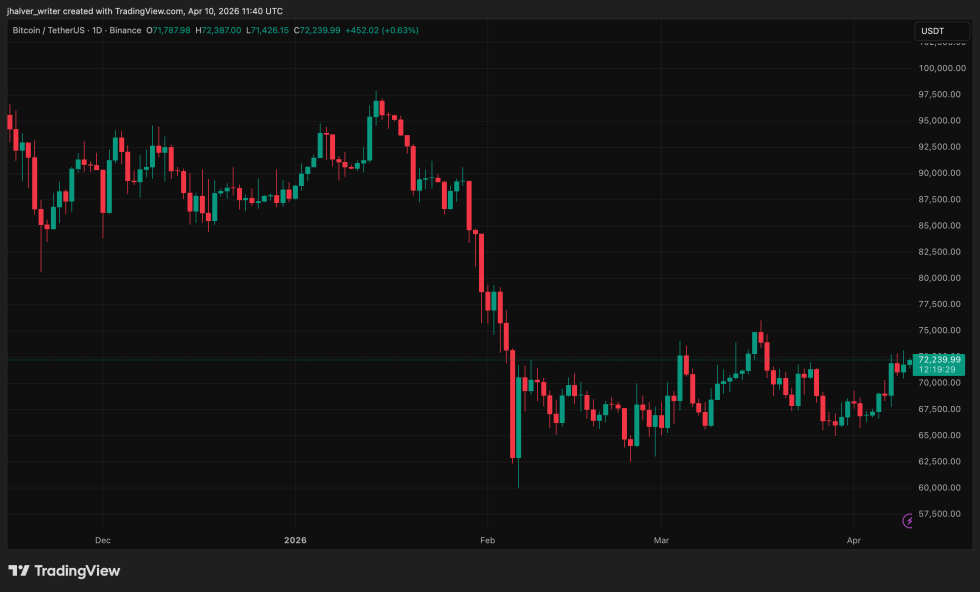
At the moment of writing, BTC trades for the more than $72k on the daily chart. Source: BTCUSDT on Tradingview.

Cover image from Perplexity. BTCUSDT chart from Tradingview.

Связанные с этим вопросы

QWhat is the main objective of Operation Atlantic as described in the article?

AThe main objective of Operation Atlantic is to spot victims and compromised wallets in real time, freeze and secure illicit funds before they can be laundered, generate new investigative leads on the fraud networks, and lay the groundwork for ongoing investigations.

QWhich countries and private company are leading the joint venture known as Operation Atlantic?

AOperation Atlantic is a joint UK-US-Canada venture led by the UK's National Crime Agency and the US Secret Service, with the private industry partner Chainalysis also participating.

QAccording to the article, what were the first key results achieved by Operation Atlantic?

AThe operation identified more than 20,000 victims, flagged over 20,000 wallet addresses, and froze more than $12 million in suspected scam proceeds. It also identified over $45 million stolen in cryptocurrency fraud schemes worldwide.

QHow do approval phishing scams work, according to the article?

AIn approval phishing scams, victims are tricked into signing malicious on-chain approvals that grant scammers permission to drain tokens directly from their wallets. These attempts are often disguised as investment opportunities or 'account security' prompts.

QWhat recent actions have other entities taken to combat phishing scams, as mentioned in the article?

ASouth Korean authorities are rolling out a new standardized withdrawal-delay across all exchanges. The social network X announced it is implementing its toughest anti-crypto scam measure to date, specifically designed to combat phishing scams.

Похожее

An Open-Source AI Tool That No One Saw Predicted Kelp DAO's $292 Million Vulnerability 12 Days Ago

An open-source AI security tool flagged critical risks in Kelp DAO’s cross-chain architecture 12 days before a $292 million exploit on April 18, 2026—the largest DeFi incident of the year. The vulnerability was not in the smart contracts but in the configuration of LayerZero’s cross-chain bridge: a 1-of-1 Decentralized Verifier Network (DVN) setup allowed an attacker to forge cross-chain messages with a single compromised node. The tool, which performs AI-assisted architectural risk assessments using public data, identified several unremediated risks, including opaque DVN configuration, single-point-of-failure across 16 chains, unverified cross-chain governance controls, and similarities to historical bridge attacks like Ronin and Harmony. It also noted the absence of an insurance pool, which amplified losses as Aave and other protocols absorbed nearly $300M in bad debt. The attack unfolded over 46 minutes: the attacker minted 116,500 rsETH on Ethereum via a fraudulent message, used it as collateral to borrow WETH on lending platforms, and laundered funds through Tornado Cash. While an emergency pause prevented two subsequent attacks worth ~$200M, the damage was severe. The tool’s report, committed to GitHub on April 6, scored Kelp DAO a medium-risk 72/100—later acknowledged as too lenient. It failed to query on-chain DVN configurations or initiate private disclosure, highlighting gaps in current DeFi security approaches that focus on code audits but miss config-level and governance risks. The incident underscores the need for independent, AI-powered risk assessment tools that evaluate protocol architecture, not just code.

marsbit50 мин. назад

An Open-Source AI Tool That No One Saw Predicted Kelp DAO's $292 Million Vulnerability 12 Days Ago

marsbit50 мин. назад

Торговля

Спот
Фьючерсы
活动图片