Crypto Market Structure Bill Nears Finish Line, Says White House Digital Asset Director

bitcoinistОпубликовано 2026-02-21Обновлено 2026-02-21

Введение

Negotiations over the CLARITY Act, a market structure bill for crypto, advanced during a third White House meeting. Patrick Witt, the White House Digital Asset Director, described progress as significant and expressed optimism about meeting the deadline. The meeting included crypto industry reps from firms like Coinbase and Ripple, while banks were represented by trade associations. The White House took a more assertive role, introducing draft text that addressed banking concerns. A key point is that paying yield on idle stablecoin balances is off the table, shifting the debate to rewards for specific activities. The draft includes strong anti-evasion measures with potential daily penalties of $500,000 per violation. Banks continue to push for a study on deposit outflows. Further talks are expected as both sides work toward a compromise.

Negotiations over the long-debated crypto market structure bill, known as the CLARITY Act, appear to be moving forward after a third round of talks at the White House on Thursday, even though a final agreement has yet to be reached.

White House Takes Lead In Crypto Talks

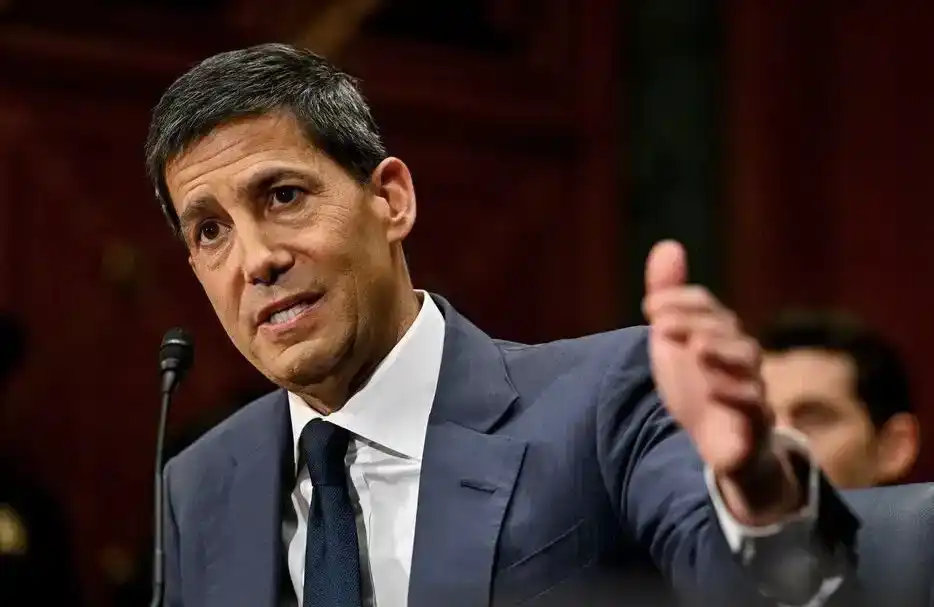
Patrick Witt, executive director of the President’s Council of Advisers on Digital Assets, described the meeting as “a big step forward” in a post on social media platform X (previously Twitter). “We’re close,” Witt wrote, adding that if both sides continue negotiating in good faith, he fully expects the deadline to be met.

Additional details about the latest session were reported by Crypto In America journalist Eleanor Terrett. According to sources present at the meeting, the gathering was smaller than the previous week’s session and included representatives from Coinbase and Ripple.

No individual bank executives attended directly. Instead, the banking industry was represented through trade associations, including the American Bankers Association, the Bank Policy Institute, and the Independent Community Bankers of America.

Terrett indicated that, unlike earlier sessions where industry groups largely guided the discussion, the White House took a more assertive role this time. Witt reportedly introduced draft legislative language that became the centerpiece of the conversation.

The proposed text addressed concerns raised by banks in a document circulated last week titled “Yield and Interest Prohibition Principles.” While acknowledging those objections, the draft also made clear that any restrictions on rewards would be limited in scope.

One key takeaway is that paying yield on idle stablecoin balances — a central objective for many crypto firms — is effectively off the table. The debate has narrowed to whether companies may provide rewards tied to specific activities rather than simple account balances.

Daily Penalties Proposed In Draft

According to one crypto industry participant, banks’ resistance may be driven more by competitive pressures than by fears of large-scale deposit flight, which had previously been framed as the core concern.

A source from the banking side said their camp is still advocating for the inclusion of a formal deposit outflow study in the bill. Such a study would analyze how the growth of payment-focused stablecoins might affect traditional bank deposits over time.

That banking source noted optimism about a new proposed anti-evasion provision in the draft. The language would grant authority to the Securities and Exchange Commission (SEC), the Treasury Department, and the Commodity Futures Trading Commission (CFTC) to ensure compliance with a ban on yield for idle balances.

Civil penalties could reach $500,000 per violation, per day, underscoring the seriousness of the enforcement framework under consideration.

Terrett further disclosed in his coverage that the next phase will involve bank trade groups briefing their members on the latest developments to assess whether there is flexibility around permitting certain forms of stablecoin rewards.

Talks are expected to continue in the coming days. One source familiar with the negotiations said that meeting the end-of-month deadline remains realistic, suggesting that, while differences persist, momentum toward a compromise is building.

The daily chart shows the total crypto market capitalization at $2.3 trillion as of Friday. Source: TOTAL on TradingView.com

Featured image from OpenArt, chart from TradingView.com

Связанные с этим вопросы

QWhat is the name of the crypto market structure bill being negotiated, and who is leading the recent talks?

AThe bill is called the CLARITY Act, and the White House, through its Digital Asset Director Patrick Witt, is taking a leading role in the recent negotiations.

QAccording to the article, what key provision for crypto firms regarding stablecoins is effectively 'off the table' in the current draft?

APaying yield on idle stablecoin balances, which was a central objective for many crypto firms, is effectively off the table in the current draft.

QHow are banking industry interests being represented in the negotiations, and what study are they advocating to include?

AThe banking industry is represented through trade associations rather than individual executives. They are advocating for the inclusion of a formal deposit outflow study to analyze how stablecoins might affect traditional bank deposits.

QWhat are the potential penalties for violating the proposed ban on yield for idle balances, and which agencies would enforce it?

ACivil penalties could reach $500,000 per violation, per day. The Securities and Exchange Commission (SEC), the Treasury Department, and the Commodity Futures Trading Commission (CFTC) would be granted authority to enforce the ban.

QWhat was the reported tone and outlook regarding the negotiations meeting the end-of-month deadline?

APatrick Witt described the meeting as 'a big step forward' and wrote 'We're close.' A source familiar with the negotiations said meeting the end-of-month deadline remains realistic, with momentum toward a compromise building.

Похожее

Stuck Polymarket: The Real Test After Riding the Traffic Boom Has Arrived

Polymarket, a leading prediction market platform, is facing significant technical challenges as its growth outpaces its current infrastructure on Polygon. Users are experiencing laggy transactions, unresponsive orders, and delayed confirmations, severely impacting the trading experience. In response, DeFi Engineering VP Josh Stevens outlined a comprehensive engineering overhaul. The plan includes reducing on-chain data delays, fixing order cancellation issues, rebuilding the central limit order book (CLOB), improving website performance, and developing a unified SDK and API. A major revelation was the ongoing "chain migration," indicating a potential move away from Polygon. The core issue is that Polymarket has evolved from a simple prediction market into a high-frequency trading platform, making Polygon's limitations—such as block space, gas fees, and block time—a ceiling for further growth. The migration is not just a simple chain switch but a fundamental rebuild of its trading system to support more complex products like perpetual contracts (Perps). This announcement has sparked competition among chains like Solana, Sui, and Algorand, all vying to host Polymarket. For Polygon, losing this key application, which contributes significantly to its gas fee revenue, would be a major setback. The real test for Polymarket is no longer attracting users but proving it can provide a stable, reliable trading environment that retains them.

Odaily星球日报18 мин. назад

Stuck Polymarket: The Real Test After Riding the Traffic Boom Has Arrived

Odaily星球日报18 мин. назад

Lowering Expectations for BTC's Next Bull Market

The author, Alex Xu, explains his decision to significantly reduce his Bitcoin holdings (from full to ~30% of his portfolio) during the current bull cycle, citing a lowered long-term outlook for BTC's price appreciation in the next cycle. He outlines six key reasons for this reduced expectation: 1. **Diminished Growth Drivers:** The narrative of exponential user adoption has largely played out with institutional ETF adoption. The next major growth phase—adoption by sovereign national reserves or central banks—seems unlikely in the near future. 2. **Personal Opportunity Cost:** More attractive investment opportunities have emerged in other assets, such as undervalued companies. 3. **Industry-Wide Contraction:** The broader crypto industry is struggling, with most Web3 business models (SocialFi, GameFi, DePIN) failing. This overall萧条 (depression) reduces the fundamental demand and consensus for Bitcoin. 4. **Strain on Major Buyer:** MicroStrategy, a major corporate buyer of BTC, faces rising financing expenses for its debt, which could slow its purchasing rate and create significant marginal pressure on the market. 5. **Increased Competition from Gold:** The emergence of "tokenized gold" has closed the functional gap (portability, divisibility) between physical gold and Bitcoin, offering a strong competitor in the non-sovereign store-of-value space. 6. **Security Budget Concerns:** The block reward halving continues to exacerbate the long-standing issue of funding Bitcoin's network security, with new fee source explorations like Ordinals and L2s largely failing. The author's decision to hold a significant (though reduced) position reflects a cautious, not bearish, outlook. He remains open to increasing his exposure if the fundamental reasons for his skepticism change or if new positive catalysts emerge.

marsbit57 мин. назад

Lowering Expectations for BTC's Next Bull Market

marsbit57 мин. назад

Can Iran 'Control' the Strait of Hormuz?

Iran has announced a comprehensive plan to assert control over the strategic Strait of Hormuz, a critical global oil shipping chokepoint. The proposed measures include requiring all vessels to obtain Iranian permission for passage, imposing fees for security, environmental protection, and navigation management—preferably paid in Iranian rials—and absolutely banning Israeli ships. Vessels from countries deemed hostile by Iran’s top security bodies may also be barred. Analysts suggest Iran’s motives are multifaceted: increasing pressure on the U.S. and Israel by leveraging control over oil transit to influence global prices and inflation; creating a new revenue stream, potentially exceeding $7.7 billion annually, to counter Western sanctions and support postwar reconstruction; and using transit permissions as bargaining chips in future negotiations, notably with the U.S. However, the plan faces significant practical and diplomatic challenges. Enforcing comprehensive interception and fee collection in the busy waterway, patrolled by international military forces, would be difficult. The U.S. has already countering with a blockade of Iranian ports and threats to intercept any ship paying fees, potentially strangling Iran’s oil exports and fee revenue. Broad international opposition, led by European and Gulf states, and legal controversies further complicate implementation. The proposal may ultimately serve more as a negotiating tactic than a feasible policy, with its execution remaining highly uncertain.

marsbit2 ч. назад

Can Iran 'Control' the Strait of Hormuz?

marsbit2 ч. назад

Торговля

Спот
Фьючерсы

Популярные статьи

Как купить HOUSE

Добро пожаловать на HTX.com! Мы сделали приобретение Housecoin (HOUSE) простым и удобным. Следуйте нашему пошаговому руководству и отправляйтесь в свое крипто-путешествие.Шаг 1: Создайте аккаунт на HTXИспользуйте свой адрес электронной почты или номер телефона, чтобы зарегистрироваться и бесплатно создать аккаунт на HTX. Пройдите удобную регистрацию и откройте для себя весь функционал.Создать аккаунтШаг 2: Перейдите в Купить криптовалюту и выберите свой способ оплатыКредитная/Дебетовая Карта: Используйте свою карту Visa или Mastercard для мгновенной покупки Housecoin (HOUSE).Баланс: Используйте средства с баланса вашего аккаунта HTX для простой торговли.Третьи Лица: Мы добавили популярные способы оплаты, такие как Google Pay и Apple Pay, для повышения удобства.P2P: Торгуйте напрямую с другими пользователями на HTX.Внебиржевая Торговля (OTC): Мы предлагаем индивидуальные услуги и конкурентоспособные обменные курсы для трейдеров.Шаг 3: Хранение Housecoin (HOUSE)После приобретения вами Housecoin (HOUSE) храните их в своем аккаунте на HTX. В качестве альтернативы вы можете отправить их куда-либо с помощью перевода в блокчейне или использовать для торговли с другими криптовалютами.Шаг 4: Торговля Housecoin (HOUSE)С легкостью торгуйте Housecoin (HOUSE) на спотовом рынке HTX. Просто зайдите в свой аккаунт, выберите торговую пару, совершайте сделки и следите за ними в режиме реального времени. Мы предлагаем удобный интерфейс как для начинающих, так и для опытных трейдеров.

544 просмотров всегоОпубликовано 2025.04.27Обновлено 2025.04.27

Как купить HOUSE

Обсуждения

Добро пожаловать в Сообщество HTX. Здесь вы сможете быть в курсе последних новостей о развитии платформы и получить доступ к профессиональной аналитической информации о рынке. Мнения пользователей о цене на HOUSE (HOUSE) представлены ниже.

活动图片