CLARITY Act Deadlocked: The "Vacuum Enforcement" Trick of the Moral Clause

marsbitОпубликовано 2026-07-24Обновлено 2026-07-24

Введение

The CLARITY bill faces a stalemate over its ethics clause, specifically the enforcement mechanism. While former President Trump's endorsement and a compromise on a clause banning top federal officials from holding personal crypto interests moved the bill forward, a critical divide remains: Republicans want enforcement by the Justice Department, whose Attorney General candidate is Trump's former private lawyer. Democrats argue this creates a conflict of interest and insist on state attorney general enforcement. This deadlock cooled the initial market rally spurred by the bill's increased passage probability. The updated text also includes other key provisions: exempting non-custodial developers, protecting self-custody rights, regulating stablecoin rewards, and establishing a cybersecurity center. With less than three weeks until a potential Senate vote, market probability for enactment remains below 50%. The article also briefly covers Helium's Q2 report, highlighting a shift in its tokenomics, and Ramp's integration of stablecoin payments for businesses.

Author:Nick Carpinito & Luke Leasure

Compiled by: TechFlow

Deep Tide Guide: Trump personally stepped in to push the CLARITY Act, but Democrats and Republicans are completely split on the issue of enforcement authority — Republicans insist on handing it to the Department of Justice, and the Attorney General candidate happens to be Trump's personal lawyer, who made $10 billion from cryptocurrency alone last year. This "self-policing" design quickly cooled market enthusiasm from Tuesday's狂欢 to Wednesday's sell-off.

On Wednesday, the market took a breather as optimism surrounding the CLARITY Act cooled following the release of a new version of the bill text in the Senate. Although cryptocurrency stocks gave back some of their recent gains, ETF inflows continued to strengthen, extending the strongest consecutive inflow streak since May. Let's step back from the noisy headlines and dissect what exactly has changed in the latest CLARITY draft and which parts are most critical for the crypto market.

Market Dynamics

Market movements diverged on Wednesday, with BTC and stock indices falling slightly, erasing gains from earlier in the week. On Tuesday, the probability of the CLARITY Act passing surged from 31% to 51%, driving double-digit spikes in crypto stocks like COIN and CRCL. However, this probability has since fallen back to 38%, dragging down crypto stocks and other indices.

Senate Republicans released updated bill text on Wednesday, codifying the moral clause into law. The market may now be pricing in the voting prospects based on the actual language, rather than just trading on headlines. The volatility in these crypto stocks shows that this sector could be the biggest beneficiary if the bill passes. Stock futures moved lower overnight, with the Nasdaq opening down -0.97%, pulling mainstream cryptocurrencies slightly lower ahead of Thursday's open.

The brief spike in CLARITY probability lifted most crypto assets. If momentum continues to build and probabilities keep rising, we should expect this legislation to act as a rising tide that lifts all boats. Moving from high uncertainty to low uncertainty is itself a positive, regardless of how stringent the eventual rulemaking might be.
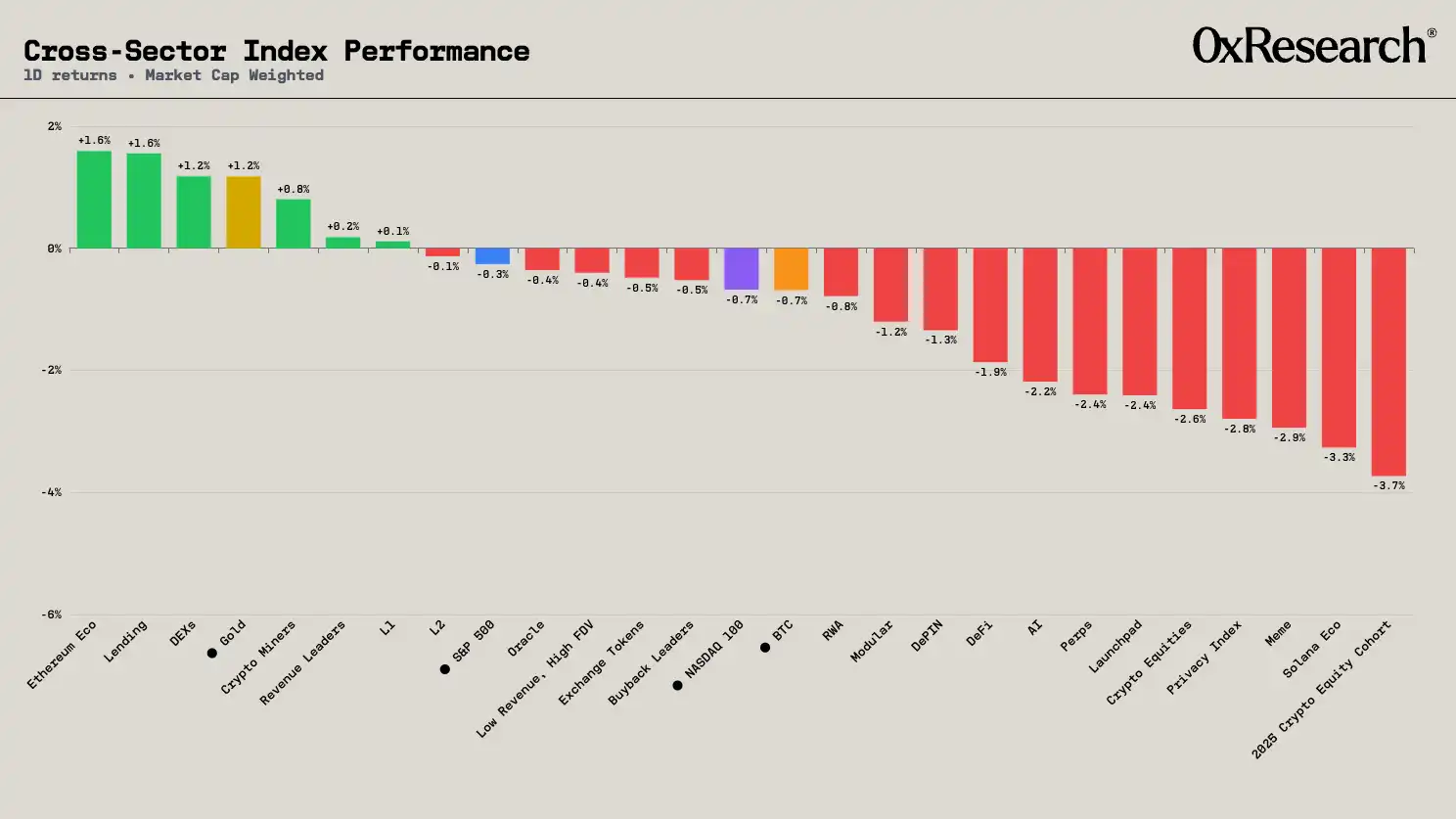
Chart: CLARITY Act Passage Probability (Source: Blockworks Research)

Further supporting prices, ETFs are in their longest consecutive inflow streak since early May, attracting $750 million in net inflows over the past 5 days.
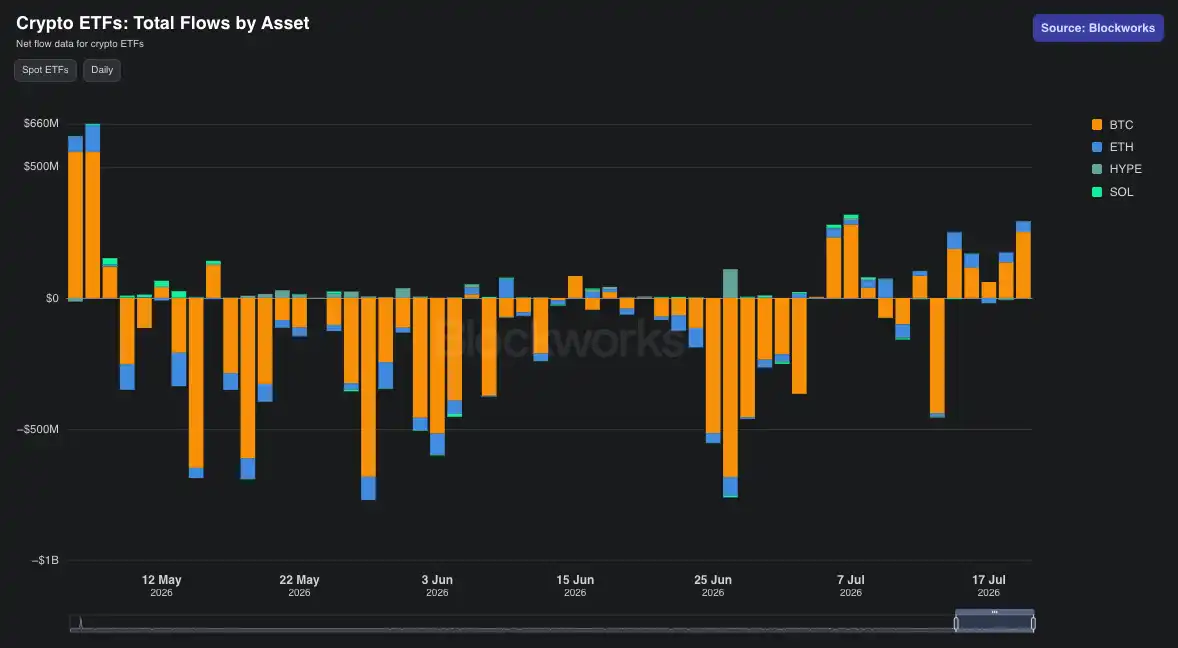
Chart: Consecutive ETF Fund Inflows (Source: Blockworks Research)

Cutting Through the CLARITY Noise

Trump broke the summer deadlock on the CLARITY Act this week, but the core battle over enforcement authority remains unresolved. A White House official told Republican negotiators that the President accepted a moral clause prohibiting senior federal officials, including himself and the Vice President, from holding personal cryptocurrency interests, moving CLARITY closer to a Senate vote. Lummis released updated text on Wednesday, merging work from the Banking and Agriculture Committees, so the moral clause is now publicly visible. However, it still does not specify who will enforce this ban, and Democrats say they have not yet seen a version they can accept.

Lummis and Moreno negotiated this moral clause package with the White House without Democratic signatures. It prohibits the President, Vice President, members of Congress, federal judges, and their spouses from issuing or sponsoring digital assets for compensation during their terms. The clause will expire on January 20, 2029. Affected officials must sell their cryptocurrencies and shares in crypto companies or transfer them into blind trusts they cannot control. Republicans gave civil enforcement authority to the Department of Justice, including the power to sue exchanges listing prohibited tokens. Intermediaries face fines of up to $250,000 per violation per day, while the officials themselves face disgorgement of profits plus a fine of $500,000 or 10%. Sales over $1,000 require disclosure, and the Government Accountability Office (GAO) will study remaining loopholes.

The two sides are split on enforcement. Senate Democrats want state attorneys general to oversee the restriction. The White House and Republicans want it enforced by the federal Attorney General and the Department of Justice. Democrats argue that relying solely on federal enforcement is ineffective for a President — whose former personal lawyer, Todd Blanche, is awaiting Senate confirmation as Attorney General candidate, with disclosure documents showing he earned over $10 billion from crypto income last year. Senator Angela Alsobrooks called DOJ-only enforcement "not serious." Pressure is also coming from the left. Indivisible and Demand Progress have been pressuring Senate Democrats, including Kirsten Gillibrand, this week to reject a weak ethics agreement. And these are precisely the votes Republicans need to reach 60.

The rest of the bill text remains largely unchanged. Industry insiders say the *Blockchain Regulatory Certainty Act* is unchanged from the May Banking Committee version, continuing to exclude non-custodial developers and infrastructure providers from the definition of money transmitters; the Lummis-Grassley amendment retains criminal liability for those who knowingly assist illegal transactions, and the *Protect Your Coins Act* protects self-custody rights. The stablecoin yield section retains the Tillis-Alsobrooks compromise, prohibiting interest on idle stablecoin balances but allowing activity-based rewards. A new enforcement chapter provides funding for state and local crypto investigations and establishes a cybersecurity center targeting North Korea and Iran; it also requires stablecoin issuers to comply with lawful freeze and seizure orders. Bankruptcy provisions treat customer assets as customer property, not assets of a failed custodian — a direct response to FTX.

Time Window: Less Than Three Weeks

Less than three weeks remain. Majority Leader John Thune has committed to scheduling a floor vote before the recess expected to begin around August 7th. The Senate vote is only one hurdle. The House will take up the revised version after returning in September, followed by presidential signing and subsequent rulemaking by the CFTC and SEC.
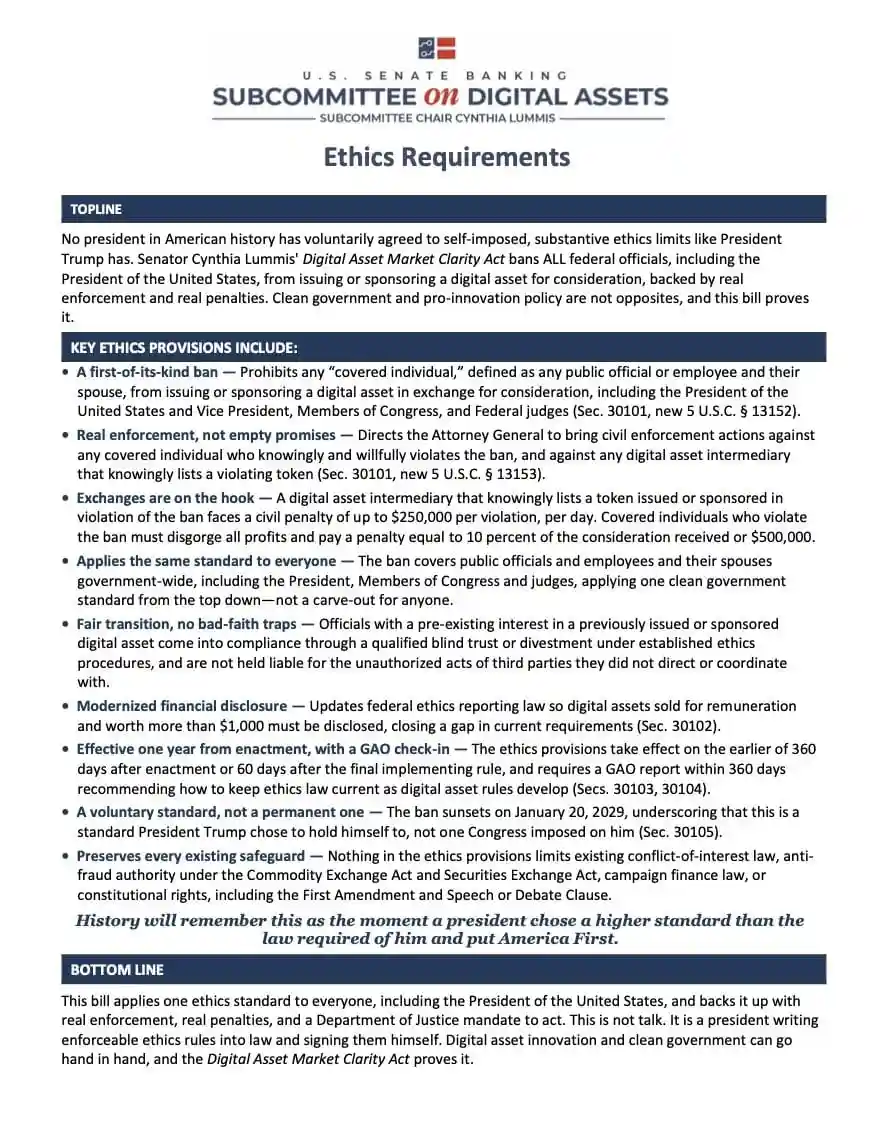
Chart: CLARITY Act Timeline & Moral Clause Sunset (Source: Blockworks Research)

How the Market Prices a "Vote"

Traders price "the vote" and "the outcome" separately. The probability of a Senate vote before recess is near 72% on Kalshi, but volume is only $31k, thin enough to ignore. On Polymarket, the probability of "enacted into law by 2026" is near 41% ($2.4 million volume), while the deeper market on Kalshi for "crypto market structure law by year-end" is near 42% ($3.6 million volume). These two deepest markets differ by 10 percentage points on essentially the same question, and neither prices enactment probability above 50%. The claim that "passage probability exceeds 50%" sits squarely at the optimistic edge of this range.
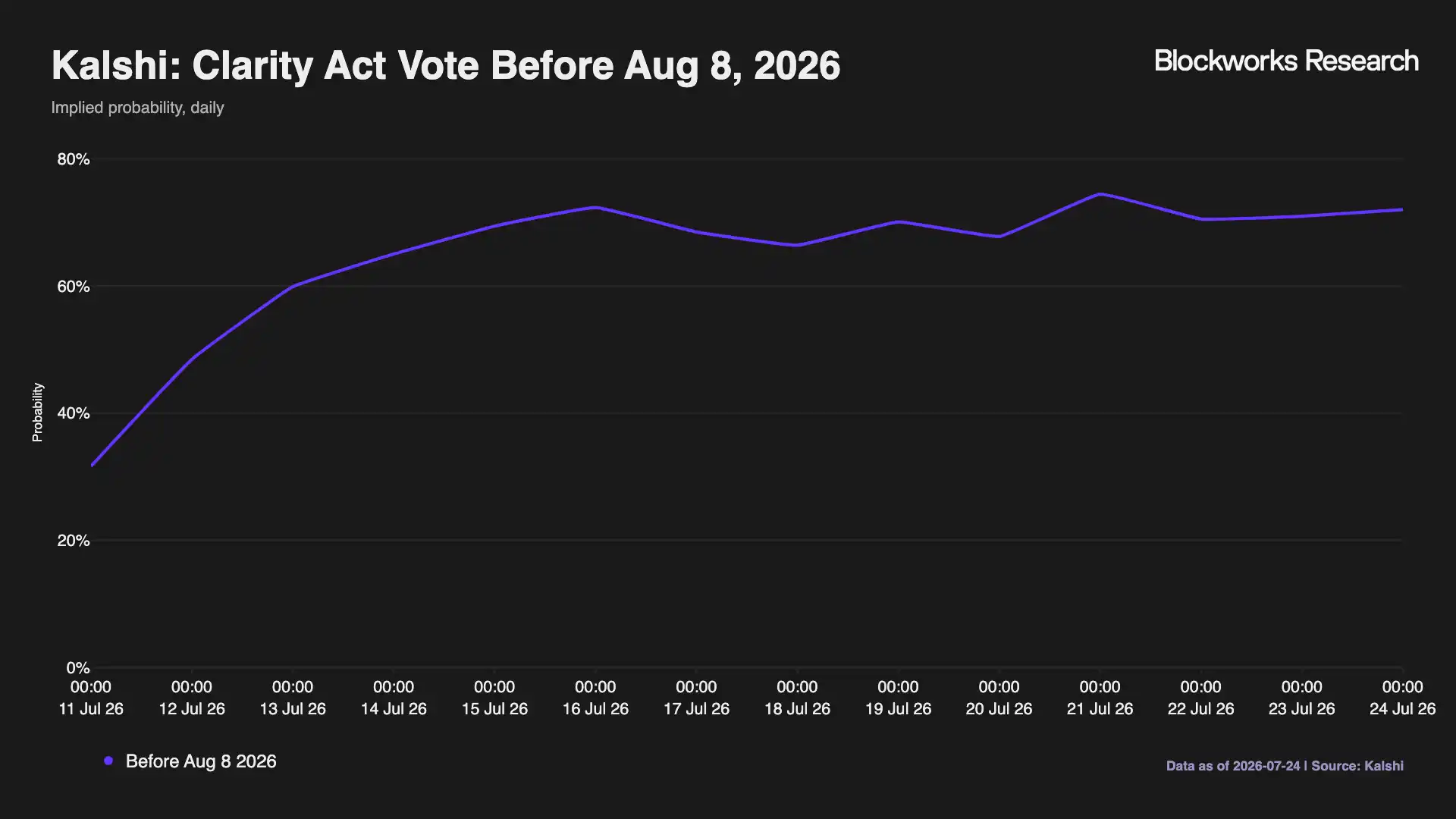
Chart: Kalshi vs. Polymarket Pricing of CLARITY Enactment Probability (Source: Blockworks Research)
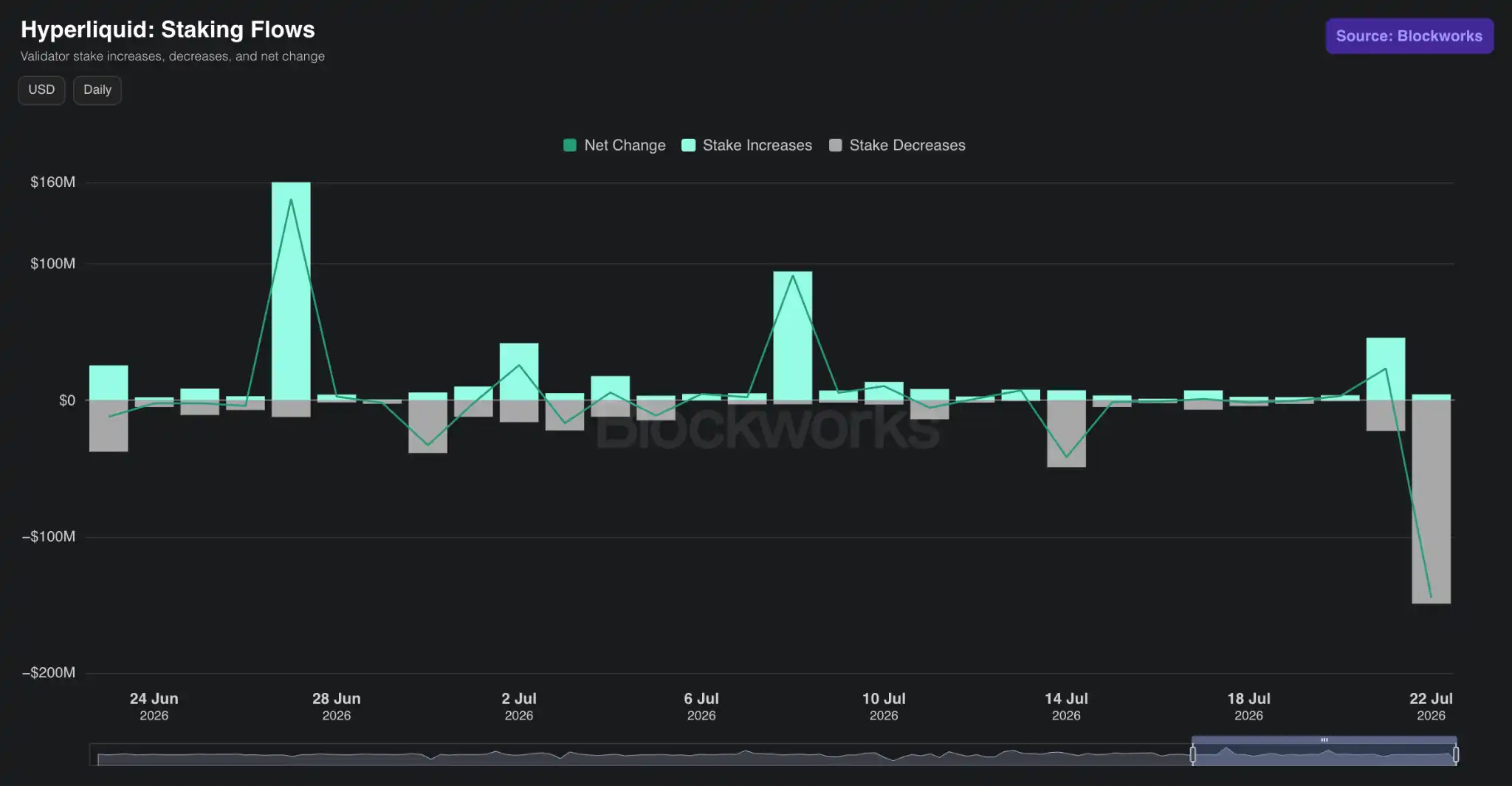
Chart: Crypto Market Structure Legislation Probability Markets (Source: Blockworks Research)

This Week's Loudest, Shallowest News

The loudest thing this week is also the shallowest. An unverified rumor claimed that CLARITY would implement geographic blocking for US users at the RPC layer and enforce it against specific wallets, portraying it as a negative for HYPE; paired with an unverified claim that Multicoin sold about $120 million worth of HYPE before its July 28th unlock. Multicoin's Tushar Jain confirmed a large unstaking on Wednesday but stated the firm had not exited, attributing it to privacy-driven "wallet rotation" rather than selling. No one has produced draft text supporting such a geo-blocking mechanism, and the version Lummis released Wednesday contains no such clause.

Read & Listen

Helium Q2 Token Holder Report

Blockworks interprets this quarter as a "pricing reset" rather than a demand collapse: after HIP-143 slashed operator pay rates from $0.50/GB to ~$0.10/GB on June 4th, offload volumes grew about 20% quarter-over-quarter during the transition. DC-burn revenue reported $3.35 million, down 14%; Blockworks points out that the headline metric of "2.2x revenue coverage of emissions" is emission-driven — because HNT emissions fell 39% to $1.5 million while the revenue line itself declined, so the ~1.7x exit velocity is a cleaner forward-looking reading. Post-quarter, HIP-149 approved by veHNT shifted deployer rewards to usage and retired Proof-of-Coverage, funded by a ~141 million HNT self-terminating supplement that flips the network from deflation to net issuance — a key test for whether Helium's pure operator model can become self-sustaining.
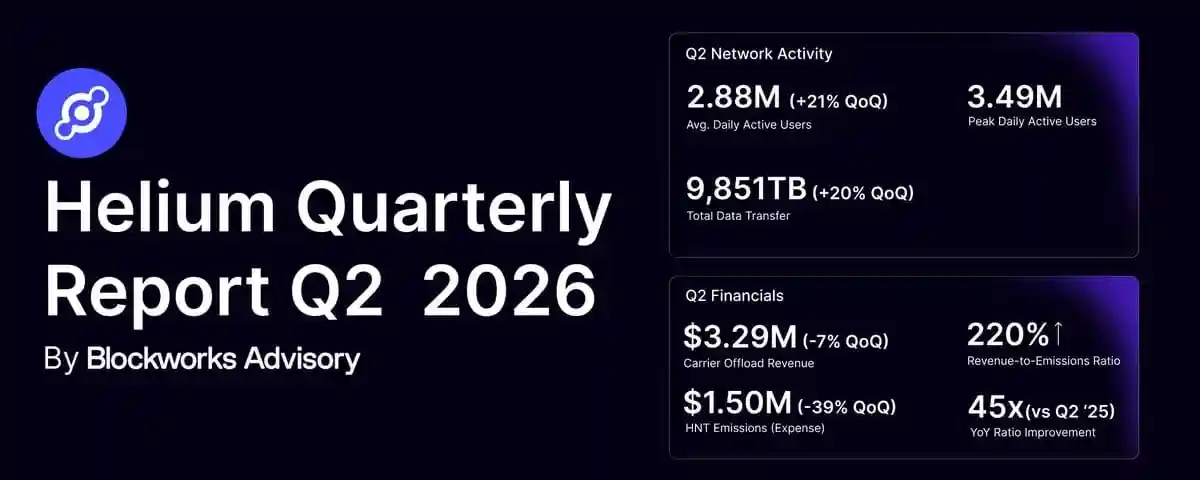
Chart: Helium Q2 Token Economics Data (Source: Blockworks Research)

Stablecoins Hit the Ramp

Ramp partnered with Privy to add a stablecoin rail to its payments platform, allowing businesses to open "stablecoin accounts" holding cash-backed USDC or USDT, earn rewards up to 3.25%, and pay supplier wallets in over 140 countries, or convert into over 40 fiat currencies. Stablecoins also become a standalone payment method in "Bill Pay": businesses can fund spend with USD bank accounts, Ramp handles the conversion before sending, no balance needed. Ramp says over 1000 businesses have paid suppliers this way, with over 70% of transaction volume occurring outside traditional banking hours — a data point that captures the core selling point: 24/7 settlement in the face of wire cut-off times and cross-border delays.
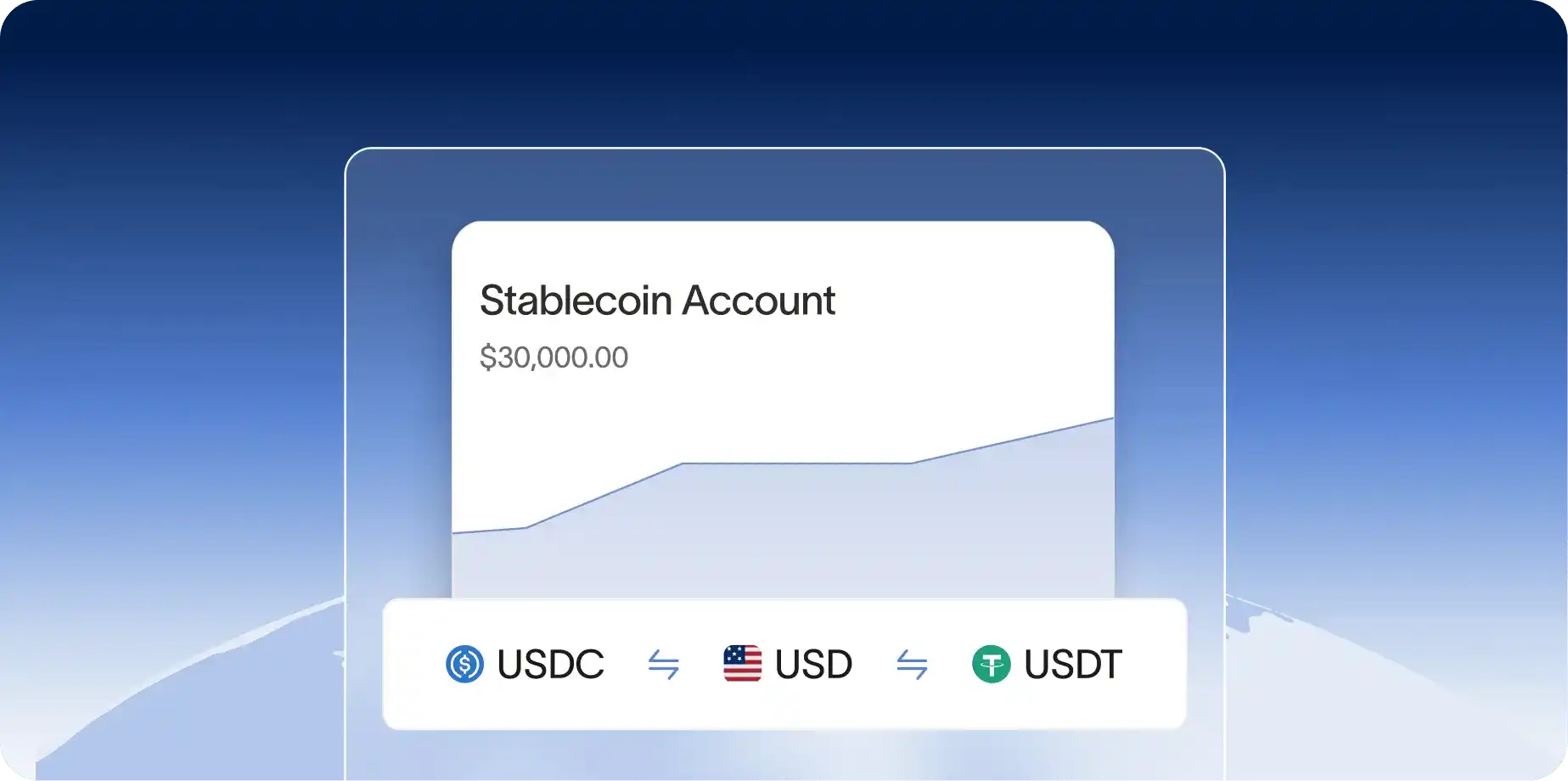
Chart: Ramp Stablecoin Payment Rail (Source: Blockworks Research)

Dollar to Earn, Not Dollar to Move

John Conneely, Global BD Lead at Sky, argues stablecoin leaderboards track the wrong numbers — mixing payment dollars and savings dollars in a single race, when they compete for different shelf space. His argument for USDS/sUSDS rests on "where the yield is": governance publishes the Sky Savings Rate, native to the asset itself; while payment dollars like OUSD leave returns in a distribution protocol decided by the platform. He anchors the argument in Sky's $13.96 billion collateral book across 40+ positions, including $4 billion in stablecoin reserves, $1.5 billion in tokenized treasuries via BlackRock's BUIDL and Janus Henderson Anemoy, and nearly $3 billion in on-chain and OTC crypto lending, making "allocation" rather than "supply" the metric determining the savings race. Read this as Sky's BD case, not a neutral survey; Conneely notes the views are his own, not the Sky Frontier Foundation's.


Связанные с этим вопросы

QWhat is the core disagreement between Democrats and Republicans regarding the enforcement mechanism of the CLARITY Act's ethics clause?

AThe core disagreement is over who should have the enforcement authority. Republicans, with White House acceptance, want the Justice Department (led by a federal Attorney General) to enforce the ethics ban. Democrats argue this is ineffective if the President's former private lawyer, who made over $1 billion from crypto last year, is the Attorney General candidate. They want enforcement to be given to state attorneys general.

QAccording to the article, how did the market react to the changing probabilities of the CLARITY Act passing, and what was a supporting factor for crypto prices?

AThe market reaction was volatile. Cryptocurrency-related stocks like COIN and CRCL surged double digits when the perceived probability of passage jumped from 31% to 51% on Tuesday. However, these gains were partially reversed on Wednesday as the probability fell back to 38%. A key supporting factor for broader crypto prices was strong ETF inflows, which continued for a fifth consecutive day, marking the longest inflow streak since early May.

QWhat are the key requirements of the ethics clause in the updated CLARITY Act draft text released by Senator Lummis?

AThe ethics clause prohibits the President, Vice President, members of Congress, federal judges, and their spouses from issuing or sponsoring digital assets for compensation while in office. It requires these officials to sell their crypto and crypto company holdings or place them into a blind trust they cannot control. It includes civil penalties enforced by the Justice Department: exchanges listing banned tokens face fines up to $250k per violation per day, and officials face disgorgement of profits plus a $500k or 10% penalty. Sales over $1,000 require disclosure, and the GAO will study remaining loopholes. The clause sunsets on January 20, 2029.

QWhat is the significance of the 'time window' mentioned for the CLARITY Act's progress in the Senate?

AThe significant time window is less than three weeks. Senate Majority Leader John Thune has committed to scheduling a floor vote before the August recess, which begins around August 7th. This creates a tight deadline for resolving the remaining disagreements, particularly on the ethics clause enforcement, to get the bill to a vote.

QHow does the article characterize the rumor about CLARITY enabling geographic blocking of U.S. users at the RPC layer and its connection to HYPE token?

AThe article characterizes this as 'the loudest thing this week' but also 'the shallowest.' It states the rumor about RPC-layer geographic blocking and enforcement on specific wallets was unsubstantiated and presented as negative for HYPE token. It was paired with an unconfirmed claim that Multicoin sold around $120 million worth of HYPE before its July 28th unlock. Multicoin's Tushar Jain confirmed a large unstaking event but attributed it to privacy-driven 'wallet rotation,' not selling. The article notes no supporting draft text for the geographic blocking mechanism was provided, and the version released by Lummis on Wednesday contained no such clause.

Похожее

Свадебное дело Чхве Тхэвона закрыто: раскрывая скрытые линии наследования за триллионной империей SK Hynix

Дело о разводе главы SK Group Чхве Тхэвона завершилось, раскрывая сложные сценарии наследования в конгломерате, стоящем за SK Hynix, чья капитализация превысила 1000 трлн вон. В отличие от традиционных сценариев наследования в чеблях, где ключевую роль играют первенец, доли, брачные связи и отцовское признание, трое детей Чхве Тхэвона от бывшей жены Но Соён — дочь Чхве Юнджон (1989 г.р.), дочь Чхве Минджон (1991 г.р.) и сын Чхве Ингын (1995 г.р.) — следуют разными путями. Чхве Юнджон, названная СМИ «наиболее очевидным кандидатом», занимает руководящую должность в SK Inc. и работает над стратегией развития в области биотехнологий и точной медицины, сочетая научную подготовку с бизнес-опытом. Её брак с основателем ИИ-стартапа символизирует новый тип элитных союзов. Чхве Минджон, добровольно служившая в ВМС Республики Корея и работавшая в сфере международной политики в SK Hynix в США, сейчас является основателем ИИ-стартапа в сфере здравоохранения. Её брак с бывшим офицером морской пехоты США подчёркивает связь с геополитическим контекстом, в котором теперь существует полупроводниковый гигант. Чхве Ингын, единственный сын и, казалось бы, естественный наследник по старой логике, сохраняет молчание. Имея образование в области физики, он покинул SK E&S, чтобы присоединиться к McKinsey, что рассматривается как стандартная внешняя стажировка, но без явных сигналов о наследовании. Громкое судебное разбирательство по разводу родителей, связанное с разделом активов на триллионы вон, стало фоном для их путей. По мере того как SK Hynix становится глобальным геополитическим активом в эпоху ИИ, наследование в SK перестаёт быть семейным делом, превращаясь в публичный экзамен на легитимность в новой, сложной реальности. Наследникам предстоит найти свои собственные ответы на вызовы эпохи.

marsbit15 ч. назад

Свадебное дело Чхве Тхэвона закрыто: раскрывая скрытые линии наследования за триллионной империей SK Hynix

marsbit15 ч. назад

Банки выступают против компромисса по доходности стейблкоинов – Найдёт ли закон CLARITY 60 голосов?

Американский Банковский институт политики выступил против нового проекта закона CLARITY Act, указав на пробелы в регулировании доходности стейблкоинов и мерах по борьбе с незаконными финансами. Банковский сектор добивается полного запрета любых форм вознаграждений по стейблкоинам и лоббирует сенаторов, что снижает поддержку со стороны республиканцев. Из-за смерти сенатора Грэма и болезни Макконнелла у республиканцев стало 51 голос. Если сенаторы Кёртис и Корнин откажут в поддержке, эта цифра упадет до 49, а для принятия закона потребуется 60 голосов. Необходимость заручиться поддержкой 11 демократов осложняется тем, что некоторые про-крипто демократы также выступают против законопроекта. Сроки ограничены: до августовских каникул Сената осталось две недели. Лидер большинства Джон Тюн сомневается в успехе до перерыва. Советник Белого дома по криптовалютам Патрик Уитт призывает провести голосование, утверждая, что новые этические нормы устраняют возражения демократов. Вероятность принятия закона в 2026 году, по рыночным оценкам, упала до 32%.

ambcrypto16 ч. назад

Банки выступают против компромисса по доходности стейблкоинов – Найдёт ли закон CLARITY 60 голосов?

ambcrypto16 ч. назад

За 2 месяца оценка выросла с 8,8 до 68 млрд юаней! Крупнейший AI-хаб OpenRouter может быть куплен

Stripe ведет переговоры о приобретении стартапа OpenRouter, агрегатора API крупных языковых моделей, за сумму около 100 миллиардов долларов. Это представляет собой семикратный рост по сравнению с оценкой OpenRouter в 13 миллиардов долларов двумя месяцами ранее. OpenRouter выступает в качестве «маршрутизатора» или агрегатора для более чем 400 AI-моделей (таких как GPT, Claude и множество открытых), позволяя разработчикам через единый API выбирать наиболее подходящую модель для каждой задачи на основе стоимости, скорости и сложности. Это помогает приложениям снижать расходы, автоматически направляя простые запросы к более дешевым моделям. Компания, основанная соучредителем OpenSea Алексом Аталлой, демонстрирует быстрый рост: ее ежегодный доход достиг 50 миллионов долларов, увеличившись в пять раз за полгода. Для Stripe, крупнейшего процессора онлайн-платежей, это вторая крупная сделка в сфере AI-инфраструктуры после приобретения платформы биллинга Metronome в 2025 году. Стратегия Stripe заключается в создании комплексного предложения для AI-экономики: OpenRouter будет «выбирать модель», Metronome — «подсчитывать потребление», а существующие платежные сервисы Stripe — «обрабатывать оплату». Таким образом, Stripe стремится контролировать ключевой уровень инфраструктуры, который определяет распределение трафика между моделями и формирует счета для конечных предприятий. Сделка подчеркивает растущую важность промежуточного слоя, который управляет стоимостью и выбором моделей для миллионов пользователей AI-приложений.

链捕手16 ч. назад

За 2 месяца оценка выросла с 8,8 до 68 млрд юаней! Крупнейший AI-хаб OpenRouter может быть куплен

链捕手16 ч. назад

От OpenSea до OpenRouter: Алекс Аталлах повторяет сценарий «ухода на пике»?

Автор: Нэнси, PANews Алекс Аталла, соучредитель NFT-платформы OpenSea, покинул компанию на пике пузыря NFT четыре года назад. Сейчас он снова оказывается в центре внимания на волне бума ИИ, готовясь продать созданную им агрегирующую платформу AI-моделей OpenRouter по высокой цене. По данным The Wall Street Journal от 23 июля, платежный гигант Stripe ведет переговоры о приобретении OpenRouter, при этом потенциальная оценка сделки может приблизиться к 100 миллиардам долларов. Если сделка состоится, это станет еще одним успехом Аталлы в создании компании на уровне ста миллиардов долларов после OpenSea. Ранее в этом месяце появились сообщения о том, что OpenRouter получил предложения о покупке от нескольких крупных технологических компаний. Потенциальная сделка со Stripe рассматривается как важный шаг для инфраструктурного гиганта в сфере платежей по расширению своего присутствия в области инфраструктуры ИИ. По данным информированных источников, если сделка будет заключена, оценка OpenRouter может приблизиться к 100 миллиардам долларов, что значительно превышает его предыдущие оценки при финансировании. Всего за три года компания добилась быстрого роста благодаря буму больших моделей. Это не первая компания Аталлы стоимостью в сто миллиардов. Ранее он был соучредителем OpenSea, ведущей мировой платформы для торговли NFT, пиковая оценка которой превысила 130 миллиардов долларов. Его уход с OpenSea до серьезного спада на рынке NFT рассматривался как знаковый сигнал. OpenRouter стала крупнейшим хабом в эпоху ИИ, подключившись к более чем 400 AI-моделям, имея около 10 миллионов пользователей и обрабатывая более 200 триллионов токенов в месяц. Однако, несмотря на быстрый рост, это бизнес с большими объемами, но ограниченной рентабельностью. Его основная бизнес-модель заключается в взимании комиссии за платформу (около 5-5,5%) при вызове разработчиками AI-моделей. Конкуренция на рынке агрегации AI-моделей также обостряется. Высокая оценка OpenRouter, возможно, больше отражает его будущий потенциал, чем текущую прибыльность. Для потенциальных покупателей наиболее ценным активом могут быть не текущие доходы, а накопленные реальные данные об использовании ИИ, которые трудно быстро воспроизвести. От NFT к ИИ Алекс Аталла дважды поймал волну технологического бума. Если продажа OpenRouter состоится с оценкой в 100 миллиардов долларов, это может означать либо переоценку стоимости инфраструктуры ИИ, либо сигнал о новом пике цикла. Ответ на этот вопрос даст только время.

链捕手16 ч. назад

От OpenSea до OpenRouter: Алекс Аталлах повторяет сценарий «ухода на пике»?

链捕手16 ч. назад

Приближается ли Биткойн к очередной зоне накопления? ЭТОТ сигнал говорит «да»

Аналитики отмечают, что Bitcoin (BTC) переживает один из самых длительных медвежьих периодов, охватывающий три квартала и два календарных года, при этом его динамика отклонилась от рынка акций. Однако сохраняется корреляция с акциями Apple (AAPL). График соотношения BTC/AAPL с 2017 года движется в восходящем канале, где его нижняя граница традиционно сигнализирует о зоне недооценки (накопления) для Bitcoin, а верхняя — о перекупленности. В настоящее время соотношение приближается к линии поддержки, что, по историческим данным, может предшествовать новой фазе роста BTC. При этом в 2025 году нарушилась многолетняя корреляция годовой доходности Bitcoin с индексами S&P 500 и Nasdaq 100, что объясняется его более резкой реакцией на макроэкономические потрясения. В качестве подтверждающего сигнала для разворота рассматриваются поступления стейблкоинов на криптобиржи, которые указывают на готовность капитала к реинвестированию. За последние семь дней чистый приток составил $1,42 млрд, что значительно меньше оттока в $10 млрд за предыдущие 30 дней и пока недостаточно для уверенного старта ралли. Таким образом, соотношение BTC/AAPL указывает на возможное приближение к зоне накопления, но для подтверждения тренда необходимы более значительные притоки стейблкоинов.

ambcrypto16 ч. назад

Приближается ли Биткойн к очередной зоне накопления? ЭТОТ сигнал говорит «да»

ambcrypto16 ч. назад

Торговля

Спот
活动图片