Комиссия по торговле товарными фьючерсами США (CFTC) выпустила обновленные рекомендации по использованию токенизированного залога на рынках деривативов, открывая путь для пилотной программы по тестированию использования криптовалют в качестве залога.
Залог на рынках деривативов служит гарантийным депозитом, обеспечивая покрытие потенциальных убытков трейдера.
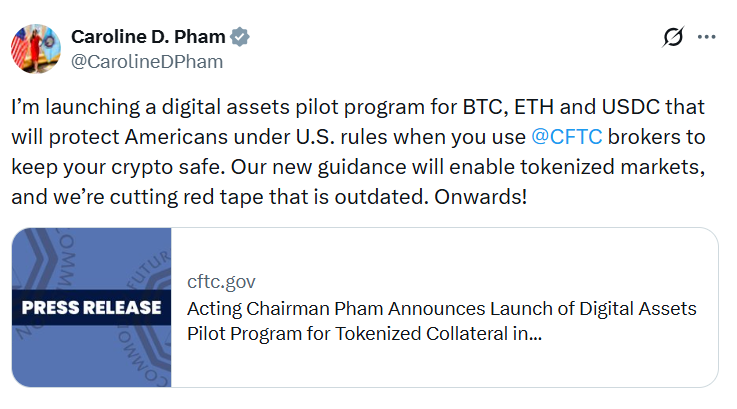
Пилотная программа по цифровым активам, анонсированная исполняющей обязанности председателя CFTC Кэролайн Фам в понедельник, позволит торговым компаниям (FCM) — организациям, facilitating торговлю фьючерсами для клиентов — принимать Bitcoin (BTC), Ether (ETH) и стейблкоин Circle USDC (USDC) в качестве маржинального залога.
Пилотная программа CFTC — это еще один шаг к интеграции криптовалют в регулируемые рынки. Генеральный директор Circle Хит Тарберт заявил, что это также защитит клиентов, снизит трение при расчетах, поскольку токенизированный залог мгновенно перемещается в блокчейне, и поможет снизить риски.
Фам заявила в своем заявлении, что пилотная программа также «устанавливает четкие ограничения для защиты активов клиентов и обеспечивает усиленный мониторинг и отчетность со стороны CFTC».
В рамках пилотной программы участвующие FCM будут подчиняться строгим критериям отчетности, требующим еженедельных отчетов об общих активах клиентов и любых значительных проблемах, которые могут повлиять на использование криптовалюты в качестве залога.
Обновленные рекомендации CFTC по токенизированным активам
Подразделение участников рынка, Управление по надзору за рынками и Управление по клирингу и рискам CFTC также выпустили обновленные рекомендации по использованию токенизированных активов в качестве залога при торговле фьючерсами и свопами.
Рекомендации охватывают токенизированные реальные активы, включая фонды денежного рынка Казначейства США, а также такие темы, как приемлемые токенизированные активы, юридическая правовая сила, разделение и схемы контроля.
Фам заявила в публикации в X в понедельник, что «рекомендации обеспечивают нормативную ясность и открывают двери для добавления большего количества цифровых активов в качестве залога биржами и брокерами, в дополнение к казначейским обязательствам США и фондам денежного рынка».
Подразделение участников рынка также заняло «позицию бездействия» в отношении конкретных требований, касающихся использования платежных стейблкоинов в качестве клиентского маржинального залога и хранения определенных проприетарных платежных стейблкоинов на сегрегированных клиентских счетах.
Консультативное письмо сотрудников CFTC, которое ограничивало возможность FCM принимать криптовалюту в качестве клиентского залога, Staff Advisory 20-34, также было отозвано, поскольку оно «устарело и более не актуально», отчасти из-за закона GENIUS Act.
Крипто-руководители поддерживают шаг CFTC
Несколько крипто-руководителей приветствовали это решение CFTC.
Кэтрин Киркпатрик Бос, главный юрисконсульт блокчейн-компании StarkWare, заявила, что использование «токенизированного залога на рынках деривативов — это ОГРОМНО».
По теме: Регуляторы США опровергают слухи о слиянии SEC и CFTC, стремясь развеять «FUD» вокруг криптовалют
«Атомарные расчеты, прозрачность, автоматизация, эффективность использования капитала, экономия. Кажется внезапным, но кто вспомнит саммит по токенизации в феврале 2024, проблеск надежды в темноте», — сказала она.
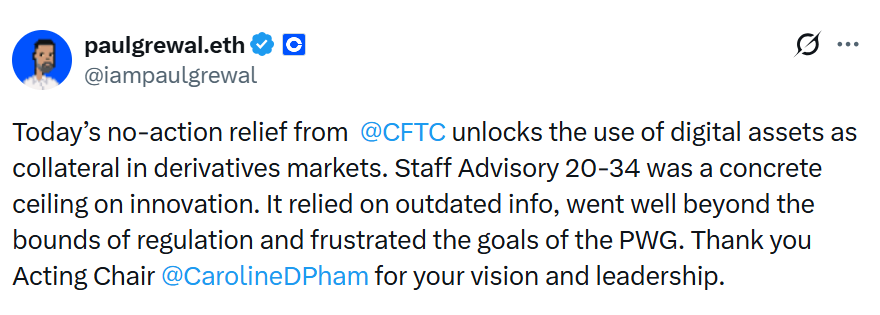
Главный юрисконсульт Coinbase Пол Гревал также поддержал это действие, назвав Staff Advisory 20-34 «бетонным потолком для инноваций».
«Оно опиралось на устаревшую информацию, выходило далеко за рамки регулирования и препятствовало достижению целей PWG (Президентской рабочей группы по финансовым рынкам)».
Тем временем Салман Банаэй, главный юрисконсульт блокчейна первого уровня Plume Network, назвал это «крупным шагом» со стороны CFTC и еще одним толчком к более широкому внедрению.
«Это шаг к использованию ончейн-инфраструктуры для автоматизации расчетов по крупнейшему классу активов в мире: внебиржевым деривативам, свопам», — добавил он.
Журнал: Момент «сейчас или никогда» для XRP, Kalshi выбирает Solana: Дайджест Ходлера, 30 ноября – 6 декабря