Technology Trends

Explores the latest innovations, protocol upgrades, cross-chain solutions, and security mechanisms in the blockchain space. It provides a developer-focused perspective to analyze emerging technological trends and potential breakthroughs.

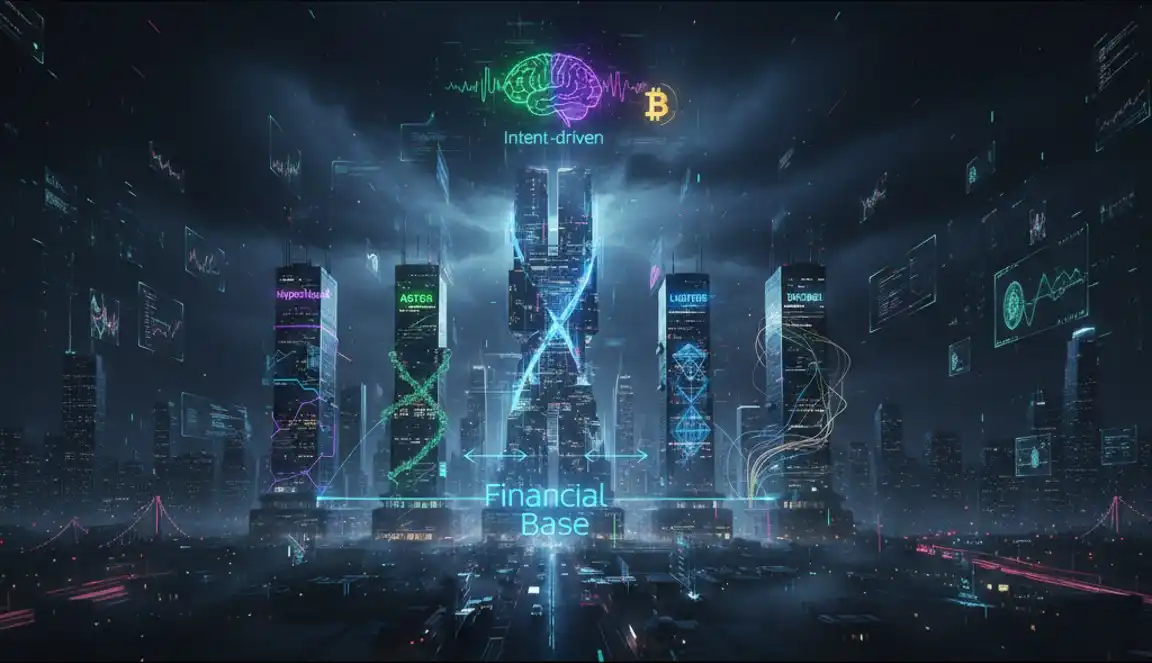
On-Chain Economy: Past, Present, and Future

On-Chain Economy: Past, Present, and Future In 2014, before "Web3" became synonymous with blockchain and crypto assets, the core vision revolved around smart contracts and their potential to enable a self-managing decentralized network. This early idea evolved into the concept of a Smart Economy, where autonomous economic coordination could flourish. Today, Web3 is rapidly growing, largely driven by decentralized finance (DeFi). Stablecoins serve as global settlement tools, and crypto assets have reshaped public understanding of money. Beneath these developments lies a fundamental improvement in financial efficiency. At the same time, AI has moved from abstract concept to daily reality. While many see AI as a productivity tool, its deeper role is that of a new financial efficiency paradigm. By increasing productivity, AI raises the value of attention even during non-working hours, making it a natural core component of the next-generation on-chain economy. The future on-chain economy will be defined by three core features: 1. Minimal human involvement: Humans act as intent providers, while AI handles analysis, execution, and feedback. 2. Complete trustlessness: Systems must be fully secure and trustless. 3. Extreme efficiency: AI will push capital utilization to unprecedented levels. Key enabling technologies include rapidly evolving AI models, intent-based AI agents, agent networks, privacy-preserving tech like ZKP and FHE, enhanced security components, and sustainable monitoring systems. The convergence of AI and blockchain will lead to an organic, self-evolving, and autonomous on-chain economy—what we call the Intelligent Sensible Economy. This is not just a faster system but a structural shift: from human-centered operations to collaboratively intelligent networks. The economy begins to exhibit life-like traits, responding to data, adapting, and self-optimizing. This transformation raises a fundamental question: as systems become self-learning and self-coordinating, are we still building an economy—or a new form of intelligent life?

marsbit03/06 08:23

On-Chain Economy: Past, Present, and Future

marsbit03/06 08:23

Your AI Agent is Quietly Changing the Rules of the Internet

AI Agents are rapidly transforming the internet landscape, evolving from experimental tools to essential components in daily operations—managing emails, scheduling meetings, and handling support tickets. By 2025, automated traffic is projected to surpass human activity, accounting for 51% of all web traffic, with AI-driven visits to US retail sites surging by 4,700% year-over-year. However, confidence in fully autonomous agents has declined due to security concerns, as infrastructure struggles to keep pace with their expansion. Key challenges include discoverability—agents must efficiently find machine-readable services amidst web pages designed for humans, prompting a shift from SEO to Agent-Oriented Discoverability (AEO). Identity is critical: agents require cryptographic authentication, delegated authority, and real-world accountability to transact securely, leading to emerging standards like ERC-8004 and protocols such as Visa’s Trusted Agent Protocol. Finally, reputation systems are essential to verify agent performance through methods like trusted execution environments (TEEs), zero-knowledge machine learning (ZKML), and economic security models, enabling portable, auditable records of reliability. Together, discoverability, identity, and reputation form the foundational infrastructure for an agent-driven economy, ensuring agents can operate at scale with trust and autonomy.

比推03/05 19:13

Your AI Agent is Quietly Changing the Rules of the Internet

比推03/05 19:13

Beyond ChatGPT: The Rise of AI Automation Tools and a Complete Analysis of Commercialization Paths

A quiet paradigm shift is occurring in AI, moving from "suggestion AI" (like ChatGPT) to "execution AI" that acts autonomously. This change is driven by the rise of autonomous AI Agent frameworks, primarily OpenClaw, which allows AI to control systems, automate workflows, and integrate across platforms. However, OpenClaw faces significant security risks, with numerous vulnerabilities and malicious plugins. Alternatives offer different advantages: NanoClaw prioritizes security through OS-level container isolation; Nanobot is minimal, transparent, and built on the standardized MCP protocol for tool interoperability; and PicoClaw is an ultra-lightweight runtime for embedded devices. The article compares their technical architectures, hardware requirements, and functional boundaries—noting that only OpenClaw supports advanced features like browser automation and multi-agent collaboration, albeit with high risk. Four commercialization paths are outlined: plugin monetization, automated service subscriptions, custom enterprise deployments, and content operations for individuals/small teams. A selection guide advises choosing based on data sensitivity, hardware constraints, need for browser automation, and long-term tool reusability. Ultimately, AI automation is presented as a viable tool for productivity and business value, emphasizing the importance of matching the right tool to specific constraints and use cases.

marsbit03/05 12:33

Beyond ChatGPT: The Rise of AI Automation Tools and a Complete Analysis of Commercialization Paths

marsbit03/05 12:33

Farewell to Brute Force Computing: Reconstructing the Valuation Logic of AI for Science through HKUST's "GrainBot"

In 2026, Hong Kong's AI sector is rapidly transitioning from infrastructure development to deep application deployment. A key example is GrainBot, an AI tool developed by a team led by Prof. Guo Yike at HKUST, which represents a significant shift from general-purpose AI to specialized scientific discovery. GrainBot addresses critical challenges in materials science, particularly in analyzing microstructures like grain boundaries in materials used in semiconductors, batteries, and solar panels. Traditionally, this required manual, time-consuming, and error-prone analysis of microscopy images. GrainBot automates this process using computer vision and deep learning to accurately identify, segment grains, and quantify geometric features. It also correlates microstructural data with macro-material properties, as demonstrated in its application to perovskite solar cell research. This breakthrough highlights a broader trend in AI for Science (AI4S), where value is measured not by user metrics but by accelerated R&D cycles and novel discoveries. GrainBot’s potential to drastically shorten development timelines or uncover new materials with superior properties underscores a new valuation logic centered on industrial intellectual property. Hong Kong’s strength in combining domain expertise (e.g., materials science, chemistry) with AI capabilities creates a competitive advantage, positioning it as a hub for "autonomous labs" that integrate AI analysis with robotic experimentation. This model enables high-value patent output through fully automated, data-driven R&D, supporting a "Hong Kong R&D + Bay Area manufacturing" framework. However, challenges remain, particularly regarding data scarcity and silos in scientific research. High-quality, annotated datasets are limited, and data sharing barriers must be overcome through secure mechanisms like privacy computing for broader commercialization. GrainBot symbolizes a convergence of algorithmic innovation and scientific rigor, redirecting investment focus from sheer compute power to AI’s ability to solve real-world physical challenges. Hong Kong’s progress in AI4S signals emerging opportunities in a trillion-dollar AI-driven discovery market.

marsbit03/05 09:42

Farewell to Brute Force Computing: Reconstructing the Valuation Logic of AI for Science through HKUST's "GrainBot"

marsbit03/05 09:42

活动图片