Binance.US Eyes DeFi And Tokenized Assets Under New CEO

bitcoinistОпубликовано 2026-03-12Обновлено 2026-03-12

Введение

Binance.US is charting a new strategic direction under its newly appointed CEO, Stephen Gregory, who brings a strong compliance background from previous roles at Gemini and CEX.IO. The company plans to expand into decentralized finance (DeFi) and tokenized assets, signaling ambitions beyond recovery from past legal challenges. This shift follows the dismissal of a 2023 SEC lawsuit against the exchange in May 2025, which had previously forced the platform to suspend dollar transactions and scale back operations. Since restoring banking services a year ago, Binance.US has introduced new rewards, staking, and referral programs to regain user trust. The move into tokenized assets—digital representations of stocks and other instruments—aligns with industry trends, as major exchanges compete to offer more diverse financial products.

Binance.US is planning to push into decentralized finance and tokenized assets — a signal that the company intends to do more than just recover from years of legal trouble.

The announcement came alongside the appointment of a new chief executive, marking what the company is positioning as a fresh start.

Compliance Background Shapes Leadership Choice

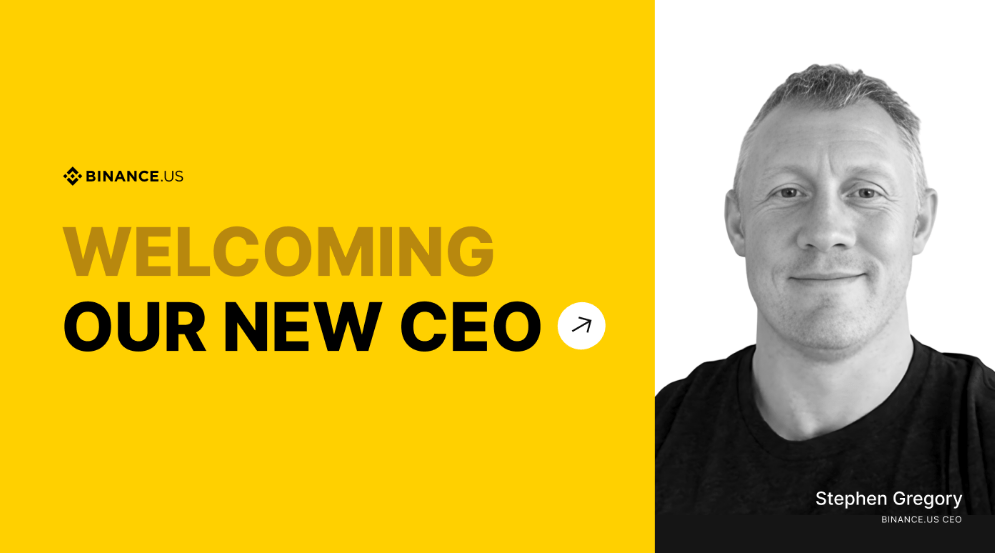
Stephen Gregory took over as CEO on March 9. He brings a compliance-heavy background to the role, having previously served as a compliance officer at Gemini and as compliance chief and counsel at CEX.IO.

Most recently, he ran crypto exchange Currency.com as its chief executive. His predecessor, Norman Reed, has moved into an advisory capacity.

Gregory’s appointment was announced Wednesday. In a statement, he pointed to the Binance brand and its founder, Changpeng Zhao, as central to the company’s identity going forward.

Zhao, known widely as CZ, has publicly pushed for the US to take a leading role in global crypto markets.

The hire of a lawyer with deep compliance roots was not accidental. Binance.US spent years under the shadow of a federal lawsuit that forced the platform to scale back operations significantly and temporarily cut off US dollar banking access entirely.

SEC Lawsuit Dismissed, Path Cleared For Comeback

The Securities and Exchange Commission sued Binance.US in 2023, accusing the exchange of operating without proper registration.

The case dragged on before the agency dropped it with prejudice in May 2025 — one of several crypto enforcement actions pulled back under US President Donald Trump’s administration.

Before that, the exchange had already taken a hit. It stopped processing dollar deposits and withdrawals after the legal pressure mounted, leaving customers limited to crypto-only transactions.

Dollar banking was restored roughly a year ago, a key step toward rebuilding trust with users who had grown cautious.

Since then, the platform has rolled out new rewards programs, expanded staking options, and introduced a referral program — all moves aimed at winning back users who drifted to competitors during the turbulent stretch.

BTC

Binance.US: New Products Signal Bigger Ambitions

The company said Wednesday it plans to keep growing its staking product line while adding services tied to decentralized finance and tokenized assets.

Tokenized assets — which include digital representations of things like stocks — have gained traction across the industry.

BTCUSD trading at $69,929 on the 24-hour chart: TradingView

Reports indicate the total value of tokenized stocks has already crossed $1 billion across multiple platforms.

Other major exchanges have been building out similar offerings, competing for customers who want more than a place to trade crypto.

Binance.US is joining that race later than some rivals, but with a cleaner legal standing than it had just 12 months ago.

Featured image from Gemini, chart from TradingView

Связанные с этим вопросы

QWhat are the two main new areas that Binance.US is planning to push into under its new CEO?

ABinance.US is planning to push into decentralized finance (DeFi) and tokenized assets.

QWho is the new CEO of Binance.US and what is a key focus of his professional background?

AThe new CEO is Stephen Gregory, and a key focus of his professional background is compliance, having served as a compliance officer at Gemini and as compliance chief and counsel at CEX.IO.

QWhat major legal event from 2025 cleared the path for Binance.US's comeback?

AThe Securities and Exchange Commission (SEC) dropped its 2023 lawsuit against Binance.US with prejudice in May 2025.

QWhat was a significant operational challenge Binance.US faced during its legal troubles, and when was it resolved?

ABinance.US temporarily cut off U.S. dollar banking access entirely. This was resolved roughly a year ago when dollar banking was restored.

QAccording to the article, what is the reported total value of tokenized stocks across multiple platforms?

AThe total value of tokenized stocks has crossed $1 billion across multiple platforms.

Похожее

Google and Amazon Simultaneously Invest Heavily in a Competitor: The Most Absurd Business Logic of the AI Era Is Becoming Reality

In a span of four days, Amazon announced an additional $25 billion investment, and Google pledged up to $40 billion—both direct competitors pouring over $65 billion into the same AI startup, Anthropic. Rather than a typical venture capital move, this signals the latest escalation in the cloud wars. The core of the deal is not equity but compute pre-orders: Anthropic must spend the majority of these funds on AWS and Google Cloud services and chips, effectively locking in massive future compute consumption. This reflects a shift in cloud market dynamics—enterprises now choose cloud providers based on which hosts the best AI models, not just price or stability. With OpenAI deeply tied to Microsoft, Anthropic’s Claude has become the only viable strategic asset for Google and Amazon to remain competitive. Anthropic’s annualized revenue has surged to $30 billion, and it is expanding into verticals like biotech, positioning itself as a cross-industry AI infrastructure layer. However, this funding comes with constraints: Anthropic’s independence is challenged as it balances two rival investors, its safety-first narrative faces pressure from regulatory scrutiny, and its path to IPO introduces new financial pressures. Globally, this accelerates a "tri-polar" closed-loop structure in AI infrastructure, with Microsoft-OpenAI, Google-Anthropic, and Amazon-Anthropic forming exclusive model-cloud alliances. In contrast, China’s landscape differs—investments like Alibaba and Tencent backing open-source model firm DeepSeek reflect a more decoupled approach, though closed-source models from major cloud providers still dominate. The $65 billion bet is ultimately about securing a seat at the table in an AI-defined future—where missing the model layer means losing the cloud war.

marsbit1 ч. назад

Google and Amazon Simultaneously Invest Heavily in a Competitor: The Most Absurd Business Logic of the AI Era Is Becoming Reality

marsbit1 ч. назад

Computing Power Constrained, Why Did DeepSeek-V4 Open Source?

DeepSeek-V4 has been released as a preview open-source model, featuring 1 million tokens of context length as a baseline capability—previously a premium feature locked behind enterprise paywalls by major overseas AI firms. The official announcement, however, openly acknowledges computational constraints, particularly limited service throughput for the high-end DeepSeek-V4-Pro version due to restricted high-end computing power. Rather than competing on pure scale, DeepSeek adopts a pragmatic approach that balances algorithmic innovation with hardware realities in China’s AI ecosystem. The V4-Pro model uses a highly sparse architecture with 1.6T total parameters but only activates 49B during inference. It performs strongly in agentic coding, knowledge-intensive tasks, and STEM reasoning, competing closely with top-tier closed models like Gemini Pro 3.1 and Claude Opus 4.6 in certain scenarios. A key strategic product is the Flash edition, with 284B total parameters but only 13B activated—making it cost-effective and accessible for mid- and low-tier hardware, including domestic AI chips from Huawei (Ascend), Cambricon, and Hygon. This design supports broader adoption across developers and SMEs while stimulating China's domestic semiconductor ecosystem. Despite facing talent outflow and intense competition in user traffic—with rivals like Doubao and Qianwen leading in monthly active users—DeepSeek has maintained technical momentum. The release also comes amid reports of a new funding round targeting a valuation exceeding $10 billion, potentially setting a new record in China’s LLM sector. Ultimately, DeepSeek-V4 represents a shift toward open yet realistic infrastructure development in the constrained compute landscape of Chinese AI, emphasizing engineering efficiency and domestic hardware compatibility over pure model scale.

marsbit2 ч. назад

Computing Power Constrained, Why Did DeepSeek-V4 Open Source?

marsbit2 ч. назад

Торговля

Спот
Фьючерсы
活动图片