Big Short Burry Warns: Fed's RMP Aims to Conceal Banking System Fragility, Essentially a Restart of QE

深潮Опубликовано 2025-12-12Обновлено 2025-12-12

Введение

Michael Burry, of "The Big Short" fame, issued a warning that the Federal Reserve's new Reserve Management Purchases (RMP) program is a covert form of quantitative easing (QE) designed to mask deep-seated vulnerabilities in the US banking system. He argues that the need to inject liquidity, despite over $3 trillion in bank reserves, signals systemic fragility, not strength, stemming from the 2023 banking crisis. Burry contends that each crisis now forces the Fed to permanently expand its balance sheet to prevent funding crises. The market reaction showed rising 2-month Treasury yields and falling 10-year yield, alongside ongoing repo market volatility, raising concerns about year-end funding stress. He cautions against bullish bank stock advice and prefers Treasury money market funds for large deposits. While the Fed states RMP is a technical operation to ensure sufficient liquidity, Burry sees it as evidence of a weakened financial system reliant on constant central bank support.

Author: Zhang Yaqi

Source: Wall Street News

Michael Burry, the real-life inspiration for the movie "The Big Short," issued a stern warning about the Federal Reserve's latest bond-buying plan, pointing out that it is called "Reserve Management Purchases" (RMP) but actually exposes the deep-seated fragility of the U.S. banking system. He believes this move is essentially a restart of quantitative easing (QE), aimed at concealing the liquidity crunch facing the banking system, rather than the routine operation claimed by the Fed.

As previously reported by Wall Street News, the Fed announced overnight that it would begin purchasing short-term Treasury bonds as needed to maintain sufficient reserve supplies. The New York Fed simultaneously released a notice, planning to buy $40 billion in short-term Treasury bonds over the next 30 days. This is the latest action since the official halt to quantitative tightening last week. This move comes against the backdrop of unsettling interest rate fluctuations in the $12 trillion U.S. repo market recently, with ongoing turmoil in the money market forcing the Fed to act quickly.

However, Burry believes this action precisely indicates that the banking system has still not shaken off the aftermath of the 2023 small banking crisis. He warned that if the banking system still needs the central bank to "inject blood" despite having over $3 trillion in reserves, this is by no means a sign of strength but a strong signal of systemic fragility.

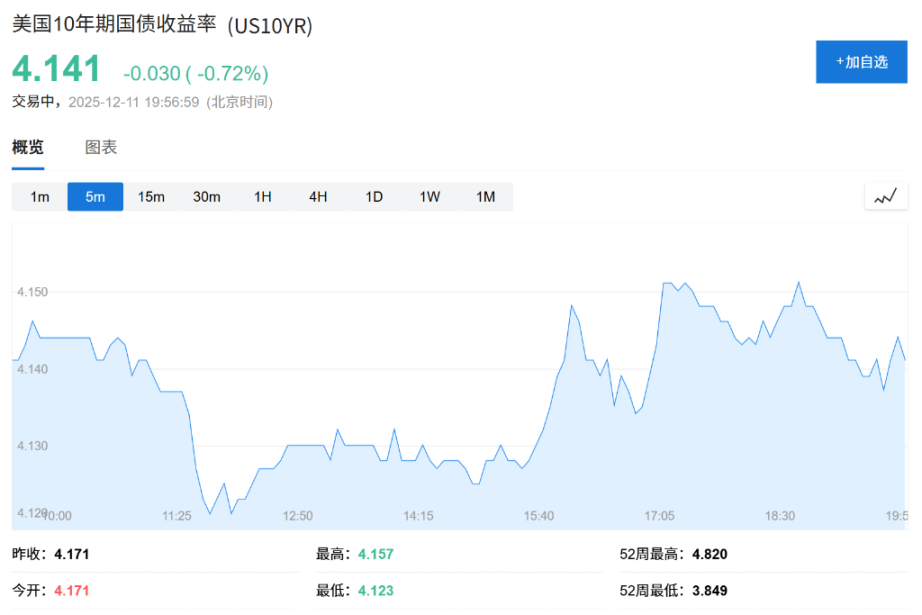
Burry further analyzed that each crisis seems to force the Fed to permanently expand its balance sheet; otherwise, it cannot avoid the outbreak of a bank funding crisis. The subsequent market reaction validated the tight funding conditions, with the U.S. 2-month Treasury yield jumping and the 10-year Treasury yield falling. At the same time, volatility in the repo market persists, sparking concerns about a year-end funding crunch and forcing investors to reassess the stability of the financial system.

Covert Quantitative Easing and a Fragile Banking System

Burry questioned the Fed's use of the term "Reserve Management Purchases," interpreting it as a covert move aimed at stabilizing the still struggling banking industry. According to FRED data, before the 2023 crisis, U.S. bank reserves were only $2.2 trillion, but have now climbed to over $3 trillion.

Burry issued a warning:

"If the U.S. banking system cannot operate without over $3 trillion in reserves or Fed 'life support,' this is not a sign of robustness but a symptom of fragility."

He added that the pattern now seems to be that after each crisis, the Fed needs to permanently expand its balance sheet, or else face the risk of bank funding chains breaking. While this mechanism partly explains why the stock market is performing strongly, it also reveals the financial system's extreme dependence on central bank liquidity.

Market Operation Mismatch and Hedging Strategies

From an operational perspective, Burry highlighted a significant strategic shift between the U.S. Treasury and the Fed: the Treasury tends to sell more short-term bills, while the Fed focuses on buying these bills. This strategy helps avoid pushing up the 10-year Treasury yield. As expected by the market, after the Federal Open Market Committee (FOMC) meeting, the U.S. 2-month Treasury yield rose, while the 10-year Treasury yield fell.

Given the ongoing volatility in the repo market, some analysts expect the Fed may need to take more aggressive action to avoid a year-end funding crunch. Against this backdrop, Burry sees this as further evidence of underlying weakness in the financial system. He warned investors to be wary of misleading advice from Wall Street about buying bank stocks and revealed that for funds exceeding the FDIC's $250,000 insurance limit, he prefers holding Treasury money market funds to hedge risks.

It is important to note that the primary goal of "quantitative easing" (QE) is to lower long-term interest rates by purchasing long-term Treasury bonds and MBS to stimulate economic growth. The purpose of RMP is more technical, focusing on buying short-term Treasury bonds to ensure there is enough liquidity in the financial system's "pipes" to prevent accidents. Bank of America stated that, based on the 2019 experience, liquidity injections will quickly lower the Secured Overnight Financing Rate (SOFR), while the response of the Federal Funds Rate (FF) will be relatively delayed. This "time difference" will create significant arbitrage opportunities for investors.

Связанные с этим вопросы

QWhat is Michael Burry's main criticism of the Federal Reserve's Reserve Management Purchases (RMP) program?

AMichael Burry criticizes the RMP as a covert form of quantitative easing (QE) designed to mask the underlying fragility of the U.S. banking system, rather than a routine operation as the Fed claims.

QAccording to Burry, what does the need for Fed 'lifesupport' despite over $3 trillion in bank reserves indicate about the U.S. banking system?

ABurry argues that if the U.S. banking system cannot function without over $3 trillion in reserves or Fed support, it is not a sign of strength but a symptom of systemic fragility.

QWhat market event prompted the Federal Reserve to initiate the RMP program?

AThe Fed's action was prompted by unsettling rate volatility in the $12 trillion U.S. repo market and ongoing turmoil in money markets, which forced the central bank to act.

QHow does Burry describe the pattern of the Federal Reserve's response to crises in relation to its balance sheet?

ABurry states that each crisis seems to force the Fed to permanently expand its balance sheet to avoid bank funding crises, revealing the financial system's extreme dependence on central bank liquidity.

QWhat investment strategy does Michael Burry recommend for funds exceeding the FDIC's $250,000 insurance limit?

AFor funds exceeding the FDIC's $250,000 insurance limit, Burry recommends holding Treasury money market funds to mitigate risk.

Похожее

From Survival to Accelerated Growth: The Journey of Zcash's Three-Year Rise as Told by the Founder of ZODL

**From Survival to Accelerated Growth: Zcash Founder Details the 3-Year Rise** Three years ago, Zcash (ZEC) was a struggling pioneer in privacy technology, with a price near $30, low shielded supply (11%), and a community mired in governance disputes. Today, ZEC trades around $600, with over 31% of its supply (~$3B) in user-controlled shielded pools. This transformation resulted from breaking key constraints. First, **governance shackles were removed**. The old model guaranteed funding to two entities (ECC and ZF) regardless of performance, creating a monopoly. In 2024, ECC rejected further direct funding, forcing a change. The NU6 upgrade ended direct funding, allocating 8% to community grants and 12% to a protocol-controlled treasury for retroactive rewards, expiring in 2028 unless renewed by overwhelming consensus. The entities also relinquished their trademark-based veto power, freeing community governance. Second, the **product focus shifted** from pure cryptography to user growth. Previously, engineering excelled at privacy tech but failed to attract users. In early 2024, the team (later ZODL) pivoted to building products users wanted, like the Zodl wallet (default privacy, hardware support, cross-asset swaps). This drove shielded supply to grow over 400% in ZEC terms, with 86.5% of recent transactions being shielded, representing real user adoption. Third, the **narrative evolved** from the limiting "privacy coin" label to "unstoppable private money." This clarified Zcash's value proposition: a Bitcoin-like monetary policy with verifiable private payments via advanced cryptography. This structural narrative—protocol (Zcash), asset (ZEC), gateway (Zodl)—enabled broader exchange listings, institutional interest, and ETF filings. Finally, **organizational constraints were broken**. In early 2026, the ECC team left its non-profit structure after disputes over control, forming Zcash Open Development Lab (ZODL). ZODL raised $25M from top VCs (Paradigm, a16z, etc.), gaining the capital and agility of a startup to scale consumer products. Current metrics show strong momentum: social discussion volume for ZEC surged 15,245% in a year, with 81% positive sentiment. The focus is now on enhancing user experience (Zodl wallet), scalability (Tachyon project targeting Visa-level throughput with 25-second blocks), and post-quantum security (quantum-recoverable wallets coming soon). Zcash is positioned to become faster, more usable, scalable, and quantum-resistant.

marsbit3 мин. назад

From Survival to Accelerated Growth: The Journey of Zcash's Three-Year Rise as Told by the Founder of ZODL

marsbit3 мин. назад

Five Counterparty Risk Architectures: A Settlement-Layer Methodology for Classifying TradFi Models in Crypto Exchanges

**Summary:** This companion piece reframes the five TradFi-on-crypto exchange architectures, previously classified by "architectural fingerprint," through the lens of counterparty risk. The core question is: whose balance sheet bears the loss first in a stress scenario, and has it historically done so? Each of the five models corresponds to a distinct risk holder with its own documented failure modes. * **Model 1 (Stablecoin-Settled CEX Perpetuals):** Risk is held by the stablecoin issuer (e.g., reserve composition, bank connectivity) and the CEX's own book. History includes Tether's banking disconnections (2017) and reserve misrepresentations (CFTC 2021 Order). * **Model 2 (CFD Brokers):** Risk resides on the broker's balance sheet (B-book model). Regulatory differences (e.g., ESMA's mandatory negative balance protection vs. Mauritius FSC's lack thereof) define loss allocation rules, as seen in the 2015 SNB event (Alpari UK insolvency). * **Model 3 (Off-Chain Custody & Transfer Agent Chain):** Risk lies with the off-chain custodian/platform. User asset recovery depends on Terms of Use and corporate structure, exemplified by the Celsius bankruptcy ruling (2023) where Earn Account assets were deemed property of the estate. * **Model 4 (DEX Perpetual Protocols):** No single balance sheet bears risk. Loss absorption relies on a protocol's insurance fund and Auto-Deleveraging (ADL) mechanism, as demonstrated in the GMX V1 (2022) and dYdX v3 YFI (2023) incidents. * **Model 5 (Regulated CCP - DCM-DCO-FCM):** The most institutionalized model concentrates risk in the Central Counterparty (CCP). However, history shows CCPs can employ non-standard tools under extreme stress, such as mass trade cancellation (LME Nickel, 2022) or enabling negative price settlements (CME WTI, 2020). The report argues that regulatory choices and counterparty risk structures are co-extensive, not in an upstream-downstream relationship. It concludes with five separate observation checklists (not predictions) for monitoring the structural vulnerabilities of each risk model.

marsbit20 мин. назад

Five Counterparty Risk Architectures: A Settlement-Layer Methodology for Classifying TradFi Models in Crypto Exchanges

marsbit20 мин. назад

Торговля

Спот
Фьючерсы

Популярные статьи

Как купить S

Добро пожаловать на HTX.com! Мы сделали приобретение Sonic (S) простым и удобным. Следуйте нашему пошаговому руководству и отправляйтесь в свое крипто-путешествие.Шаг 1: Создайте аккаунт на HTXИспользуйте свой адрес электронной почты или номер телефона, чтобы зарегистрироваться и бесплатно создать аккаунт на HTX. Пройдите удобную регистрацию и откройте для себя весь функционал.Создать аккаунтШаг 2: Перейдите в Купить криптовалюту и выберите свой способ оплатыКредитная/Дебетовая Карта: Используйте свою карту Visa или Mastercard для мгновенной покупки Sonic (S).Баланс: Используйте средства с баланса вашего аккаунта HTX для простой торговли.Третьи Лица: Мы добавили популярные способы оплаты, такие как Google Pay и Apple Pay, для повышения удобства.P2P: Торгуйте напрямую с другими пользователями на HTX.Внебиржевая Торговля (OTC): Мы предлагаем индивидуальные услуги и конкурентоспособные обменные курсы для трейдеров.Шаг 3: Хранение Sonic (S)После приобретения вами Sonic (S) храните их в своем аккаунте на HTX. В качестве альтернативы вы можете отправить их куда-либо с помощью перевода в блокчейне или использовать для торговли с другими криптовалютами.Шаг 4: Торговля Sonic (S)С легкостью торгуйте Sonic (S) на спотовом рынке HTX. Просто зайдите в свой аккаунт, выберите торговую пару, совершайте сделки и следите за ними в режиме реального времени. Мы предлагаем удобный интерфейс как для начинающих, так и для опытных трейдеров.

1.3k просмотров всегоОпубликовано 2025.01.15Обновлено 2025.03.21

Как купить S

Sonic: Обновления под руководством Андре Кронье – новая звезда Layer-1 на фоне спада рынка

Он решает проблемы масштабируемости, совместимости между блокчейнами и стимулов для разработчиков с помощью технологических инноваций.

2.2k просмотров всегоОпубликовано 2025.04.09Обновлено 2025.04.09

Sonic: Обновления под руководством Андре Кронье – новая звезда Layer-1 на фоне спада рынка

HTX Learn: Пройдите обучение по "Sonic" и разделите 1000 USDT

HTX Learn — ваш проводник в мир перспективных проектов, и мы запускаем специальное мероприятие "Учитесь и Зарабатывайте", посвящённое этим проектам. Наше новое направление .

1.8k просмотров всегоОпубликовано 2025.04.10Обновлено 2025.04.10

HTX Learn: Пройдите обучение по "Sonic" и разделите 1000 USDT

Обсуждения

Добро пожаловать в Сообщество HTX. Здесь вы сможете быть в курсе последних новостей о развитии платформы и получить доступ к профессиональной аналитической информации о рынке. Мнения пользователей о цене на S (S) представлены ниже.

活动图片