‘Beyond code errors’ – How Drift Protocol’s $285mln drain shifts DeFi security bar

ambcryptoОпубликовано 2026-04-06Обновлено 2026-04-06

Введение

The Drift Protocol exploit, resulting in a $285 million loss, marks a significant shift in DeFi security threats, moving beyond simple code errors to sophisticated attacks on governance and operational control layers. The attacker used pre-signed transactions and manipulated a multi-signature mechanism to gain admin access rapidly. This incident underscores that security now depends more on protecting protocol operations and user assets than solely fixing smart contract bugs. Drift’s response demonstrated the critical role of fast crisis management—halting deposits and withdrawals quickly, coordinating with security partners, and providing transparency—which helped contain cross-protocol risks and maintain market confidence. The event reflects a broader trend in DeFi, where attackers increasingly target access and control mechanisms. This has elevated the importance of operational security, prompting protocols to compete not only on yield but also on their ability to manage risk, protect capital, and respond effectively during crises. Industry data shows a growing focus on security investments, such as signer rotation and emergency controls, as key factors in building resilience and trust.

Drift Protocol’s exploit shows a clear shift in how DeFi attacks happen, moving beyond simple code errors into control of protocol operations. The attacker drained about $285 million by using pre-signed transactions and manipulating a multi-signature to gain admin access quickly.

This matters because attackers now focus on governance and control layers, where taking over systems becomes more effective than exploiting code.

Elliptic links the activity to Democratic People’s Republic of Korea (DPRK) -style operations, showing higher coordination and planning.

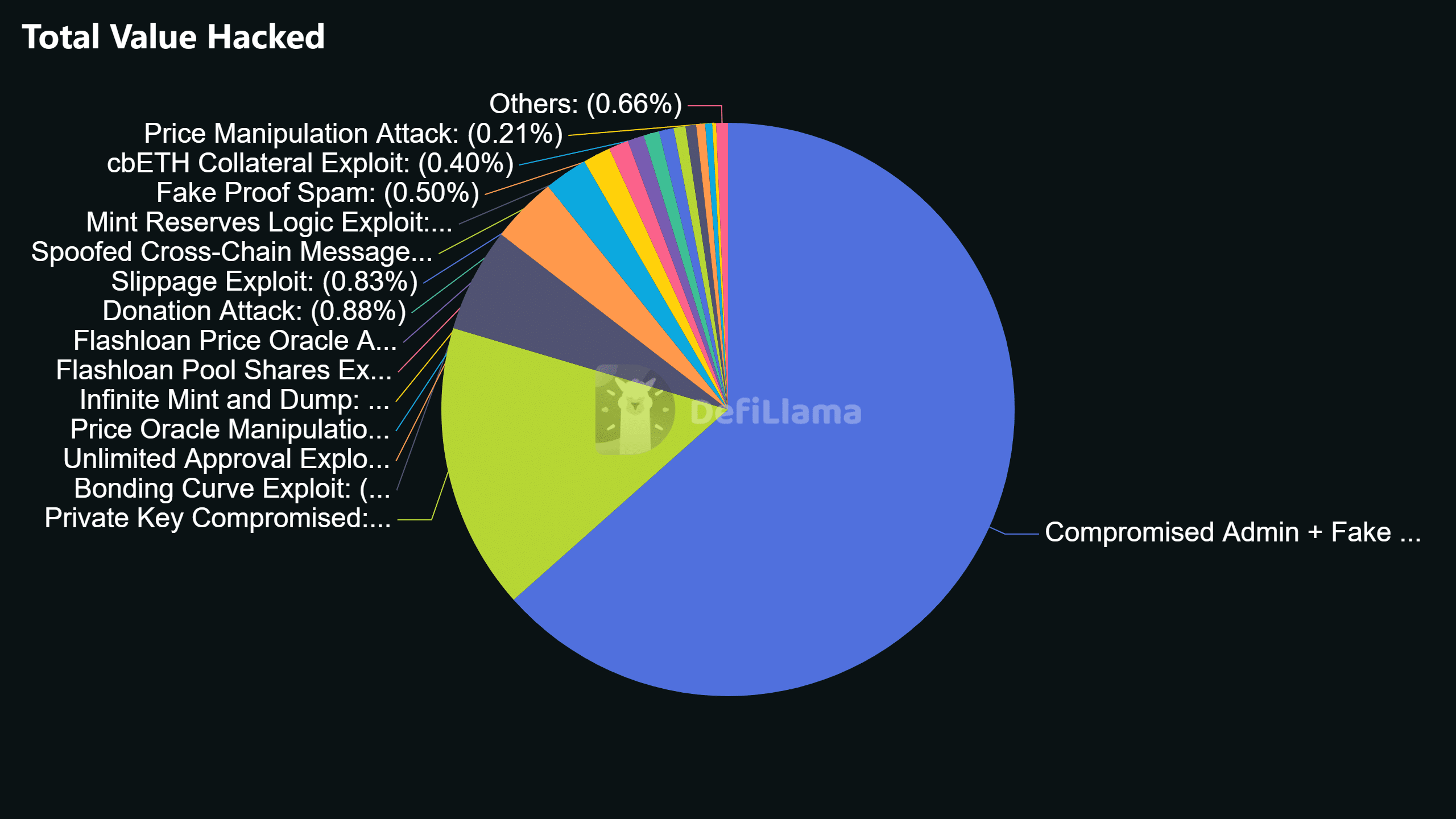
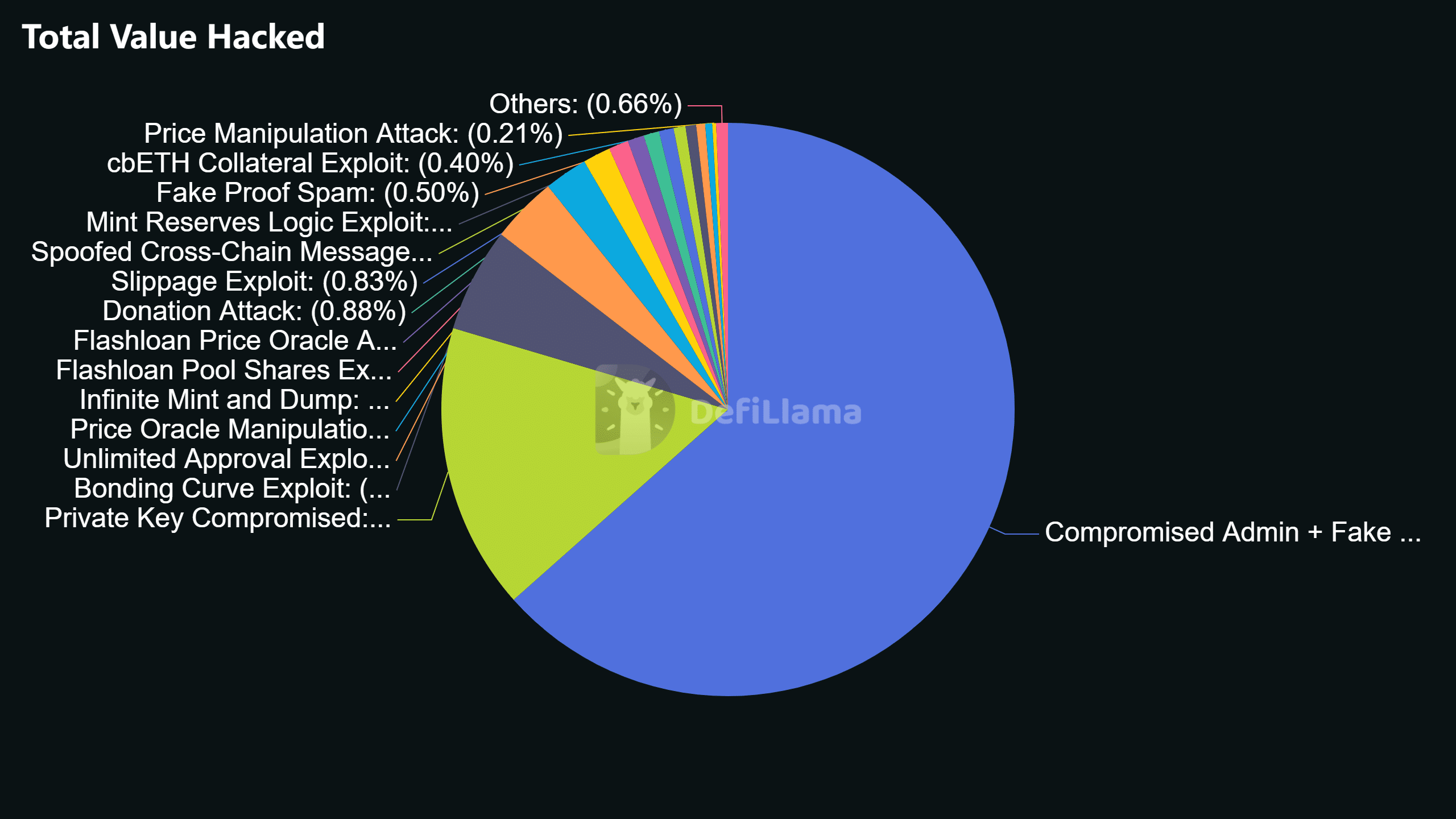
Source: DeFiLlama

The impact spreads across connected protocols, as shared liquidity increases risk beyond one platform. Q1 2026 losses reach about $169 million across 34 incidents, with attacks now centered on access and control. This shows security depends more on protecting operations and users, not just fixing smart contract bugs.

Drift response shows the role of fast crisis management

Drift’s response shows how crisis handling now shapes market confidence as much as the exploit itself. Within minutes, the team confirmed an active attack and halted deposits and withdrawals, signaling immediate control.

This rapid disclosure matters because it reduces uncertainty, allowing users and partners to react before risks spread further. Coordination with security firms, bridges, and exchanges followed quickly, limiting cross-protocol impact.

This pattern highlights a new standard, where response speed and transparency influence trust. Protocols now compete on how effectively they manage risk in real time.

Security becomes a key factor in DeFi competition

This response dynamic now extends into how protocols compete, as handling risk becomes as important as offering returns. Yields have compressed to about 6.8%–13.5%, which shifts focus away from chasing higher returns.

This shift builds as incidents like Drift’s $285 million exploit highlight operational weaknesses rather than code flaws. Users now assess how well protocols manage and contain risk.

At the same time, industry data shows that DAO security spending rose about 32% in 2025, reflecting a stronger focus on operational security. Measures like signer rotation and emergency controls define resilience.

This changes competition, where protocols attract liquidity not just through yield, but through their ability to protect and stabilize capital.


Final Summary

  • Drift Protocol highlights a shift toward governance and operational exploits, where control-layer attacks and rapid response now define protocol resilience.
  • Drift also shows DeFi competition evolving, as security execution and containment speed become key drivers of trust and capital retention.

Связанные с этим вопросы

QWhat was the primary method used by the attacker to drain funds from Drift Protocol?

AThe attacker used pre-signed transactions and manipulated a multi-signature to gain admin access quickly.

QAccording to the article, what is the Drift Protocol exploit indicative of in the broader DeFi landscape?

AIt shows a clear shift in how DeFi attacks happen, moving beyond simple code errors into the control of protocol operations and governance layers.

QHow did Drift Protocol's team respond to the attack, and why was this response significant?

AWithin minutes, the team confirmed the attack and halted deposits and withdrawals. This rapid response reduced uncertainty, allowed users to react, and limited cross-protocol impact, showing that crisis management is now crucial for market confidence.

QWhat broader trend in DeFi security spending does the article mention?

ADAO security spending rose about 32% in 2025, reflecting a stronger industry focus on operational security measures like signer rotation and emergency controls.

QHow is the nature of competition between DeFi protocols changing, according to the article?

ACompetition is evolving where protocols now attract liquidity not just through high yields, but through their ability to protect and stabilize capital, with security execution and risk containment becoming key drivers of trust.

Похожее

Google and Amazon Simultaneously Invest Heavily in a Competitor: The Most Absurd Business Logic of the AI Era Is Becoming Reality

In a span of four days, Amazon announced an additional $25 billion investment, and Google pledged up to $40 billion—both direct competitors pouring over $65 billion into the same AI startup, Anthropic. Rather than a typical venture capital move, this signals the latest escalation in the cloud wars. The core of the deal is not equity but compute pre-orders: Anthropic must spend the majority of these funds on AWS and Google Cloud services and chips, effectively locking in massive future compute consumption. This reflects a shift in cloud market dynamics—enterprises now choose cloud providers based on which hosts the best AI models, not just price or stability. With OpenAI deeply tied to Microsoft, Anthropic’s Claude has become the only viable strategic asset for Google and Amazon to remain competitive. Anthropic’s annualized revenue has surged to $30 billion, and it is expanding into verticals like biotech, positioning itself as a cross-industry AI infrastructure layer. However, this funding comes with constraints: Anthropic’s independence is challenged as it balances two rival investors, its safety-first narrative faces pressure from regulatory scrutiny, and its path to IPO introduces new financial pressures. Globally, this accelerates a "tri-polar" closed-loop structure in AI infrastructure, with Microsoft-OpenAI, Google-Anthropic, and Amazon-Anthropic forming exclusive model-cloud alliances. In contrast, China’s landscape differs—investments like Alibaba and Tencent backing open-source model firm DeepSeek reflect a more decoupled approach, though closed-source models from major cloud providers still dominate. The $65 billion bet is ultimately about securing a seat at the table in an AI-defined future—where missing the model layer means losing the cloud war.

marsbit4 ч. назад

Google and Amazon Simultaneously Invest Heavily in a Competitor: The Most Absurd Business Logic of the AI Era Is Becoming Reality

marsbit4 ч. назад

Computing Power Constrained, Why Did DeepSeek-V4 Open Source?

DeepSeek-V4 has been released as a preview open-source model, featuring 1 million tokens of context length as a baseline capability—previously a premium feature locked behind enterprise paywalls by major overseas AI firms. The official announcement, however, openly acknowledges computational constraints, particularly limited service throughput for the high-end DeepSeek-V4-Pro version due to restricted high-end computing power. Rather than competing on pure scale, DeepSeek adopts a pragmatic approach that balances algorithmic innovation with hardware realities in China’s AI ecosystem. The V4-Pro model uses a highly sparse architecture with 1.6T total parameters but only activates 49B during inference. It performs strongly in agentic coding, knowledge-intensive tasks, and STEM reasoning, competing closely with top-tier closed models like Gemini Pro 3.1 and Claude Opus 4.6 in certain scenarios. A key strategic product is the Flash edition, with 284B total parameters but only 13B activated—making it cost-effective and accessible for mid- and low-tier hardware, including domestic AI chips from Huawei (Ascend), Cambricon, and Hygon. This design supports broader adoption across developers and SMEs while stimulating China's domestic semiconductor ecosystem. Despite facing talent outflow and intense competition in user traffic—with rivals like Doubao and Qianwen leading in monthly active users—DeepSeek has maintained technical momentum. The release also comes amid reports of a new funding round targeting a valuation exceeding $10 billion, potentially setting a new record in China’s LLM sector. Ultimately, DeepSeek-V4 represents a shift toward open yet realistic infrastructure development in the constrained compute landscape of Chinese AI, emphasizing engineering efficiency and domestic hardware compatibility over pure model scale.

marsbit4 ч. назад

Computing Power Constrained, Why Did DeepSeek-V4 Open Source?

marsbit4 ч. назад

Торговля

Спот
Фьючерсы

Популярные статьи

Как купить S

Добро пожаловать на HTX.com! Мы сделали приобретение Sonic (S) простым и удобным. Следуйте нашему пошаговому руководству и отправляйтесь в свое крипто-путешествие.Шаг 1: Создайте аккаунт на HTXИспользуйте свой адрес электронной почты или номер телефона, чтобы зарегистрироваться и бесплатно создать аккаунт на HTX. Пройдите удобную регистрацию и откройте для себя весь функционал.Создать аккаунтШаг 2: Перейдите в Купить криптовалюту и выберите свой способ оплатыКредитная/Дебетовая Карта: Используйте свою карту Visa или Mastercard для мгновенной покупки Sonic (S).Баланс: Используйте средства с баланса вашего аккаунта HTX для простой торговли.Третьи Лица: Мы добавили популярные способы оплаты, такие как Google Pay и Apple Pay, для повышения удобства.P2P: Торгуйте напрямую с другими пользователями на HTX.Внебиржевая Торговля (OTC): Мы предлагаем индивидуальные услуги и конкурентоспособные обменные курсы для трейдеров.Шаг 3: Хранение Sonic (S)После приобретения вами Sonic (S) храните их в своем аккаунте на HTX. В качестве альтернативы вы можете отправить их куда-либо с помощью перевода в блокчейне или использовать для торговли с другими криптовалютами.Шаг 4: Торговля Sonic (S)С легкостью торгуйте Sonic (S) на спотовом рынке HTX. Просто зайдите в свой аккаунт, выберите торговую пару, совершайте сделки и следите за ними в режиме реального времени. Мы предлагаем удобный интерфейс как для начинающих, так и для опытных трейдеров.

1.2k просмотров всегоОпубликовано 2025.01.15Обновлено 2025.03.21

Как купить S

Sonic: Обновления под руководством Андре Кронье – новая звезда Layer-1 на фоне спада рынка

Он решает проблемы масштабируемости, совместимости между блокчейнами и стимулов для разработчиков с помощью технологических инноваций.

2.2k просмотров всегоОпубликовано 2025.04.09Обновлено 2025.04.09

Sonic: Обновления под руководством Андре Кронье – новая звезда Layer-1 на фоне спада рынка

HTX Learn: Пройдите обучение по "Sonic" и разделите 1000 USDT

HTX Learn — ваш проводник в мир перспективных проектов, и мы запускаем специальное мероприятие "Учитесь и Зарабатывайте", посвящённое этим проектам. Наше новое направление .

1.8k просмотров всегоОпубликовано 2025.04.10Обновлено 2025.04.10

HTX Learn: Пройдите обучение по "Sonic" и разделите 1000 USDT

Обсуждения

Добро пожаловать в Сообщество HTX. Здесь вы сможете быть в курсе последних новостей о развитии платформы и получить доступ к профессиональной аналитической информации о рынке. Мнения пользователей о цене на S (S) представлены ниже.

活动图片