Driven by a combination of Super Bowl marketing, geopolitical controversies, and the launch of advanced developer tools, the number of paying consumers for Anthropic's large language model Claude has recently reached a record high. Analysis by the third-party firm Indagari of approximately 28 million U.S. consumer credit card transactions shows that Claude's paying user base experienced explosive growth in early 2026. A company spokesperson subsequently confirmed that its number of paid subscribers has doubled this year.
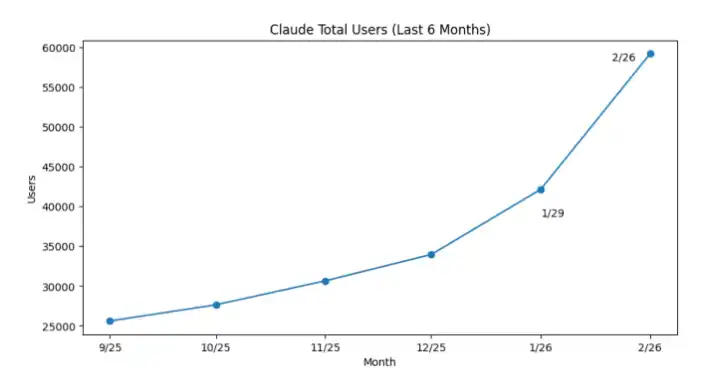
This growth trajectory closely coincides with a series of key events. In late January, the dispute between Anthropic and the U.S. Department of Defense (DoD) over the military use of AI became public. CEO Dario Amodei insisted on refusing to allow the model to be used for lethal autonomous operations or mass surveillance, issuing a strong statement on February 26. Despite facing threats of being labeled a "supply risk" and subsequent legal action, this security stance instead sparked a surge in subscriptions from the civilian market. Simultaneously, Anthropic ran an ad during the Super Bowl satirizing competitors' commercialization strategies, which successfully generated brand buzz and drove a large number of former users to return in February.
Beyond brand factors, product evolution is the core driver. The developer tool Claude Code and the collaboration tool Claude Cowork, launched in January, became the main drivers for subscription conversions. This week, the release of the "Computer Use" feature, which enables autonomous clicking and scrolling, coupled with the mobile task assignment tool Dispatch, triggered another spike in subscriptions.

Data indicates that the increase in subscriptions is primarily concentrated in the $20 per month Pro tier. Although there is still a gap in overall scale compared to OpenAI, Anthropic is building strong brand loyalty in the high-end consumer market through its differentiated security stance and the intensive rollout of tool-based products. Its paying user growth rate has already demonstrated the potential to challenge the existing market landscape.