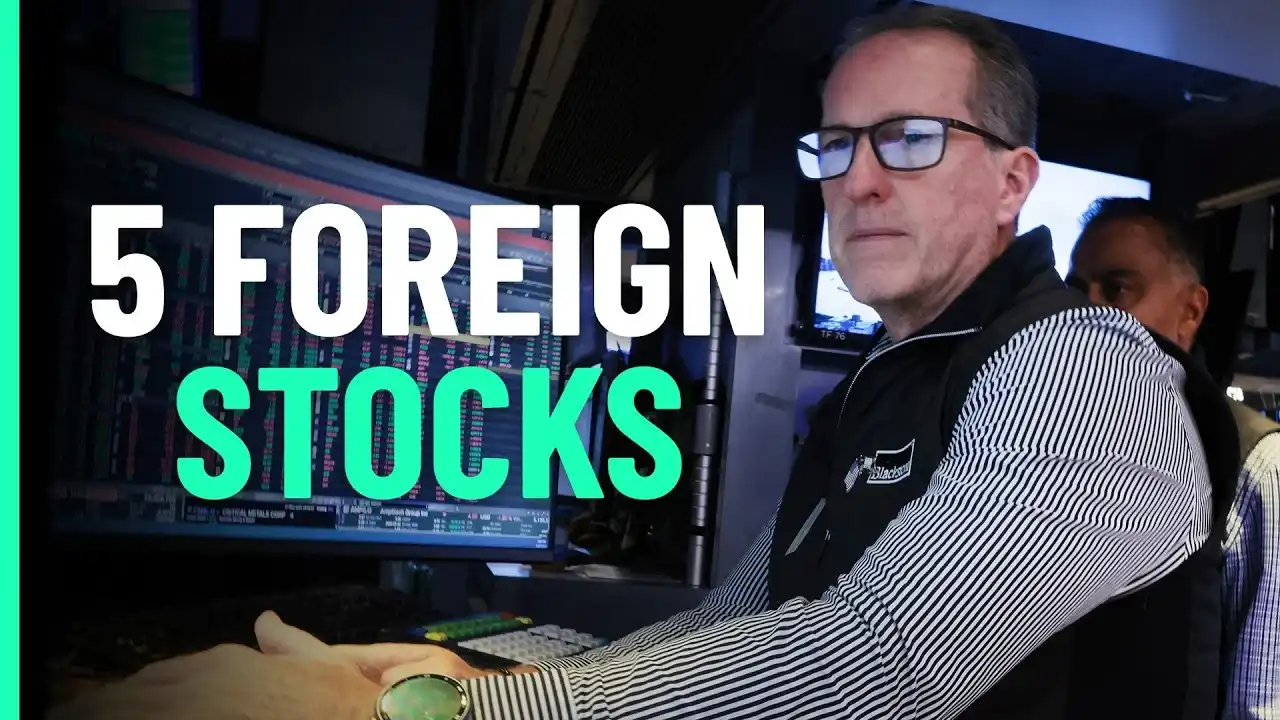
Analyst Recommendation: Looking to the International Market, These 5 Stocks Will Outperform the S&P 500

marsbitОпубликовано 2026-06-08Обновлено 2026-06-08

Введение

Main Street Research CIO James Demmert, who maintains a year-end target of 8100 for the S&P 500, argues that greater opportunities lie outside the US. He recommends investors allocate 45% of their portfolio internationally, citing better valuations and a multi-year trend of international markets outperforming the US, fueled by unprecedented fiscal stimulus in Europe and Japan. Demmert highlights five stocks poised to benefit from the AI revolution and global growth: 1. **ASML**: A critical player in chip manufacturing technology, offering diversification outside the US. 2. **HSBC**: A global bank with a P/E of 9, better growth prospects than US peers, and strong positioning in Asia. 3. **Siemens Energy**: Positioned to address the global electricity shortage driven by AI, crypto, and EVs through grid infrastructure. 4. **BHP**: An "AI derivative" play due to rising copper demand for data centers, trading at a P/E of 16. 5. **AstraZeneca**: An undervalued healthcare stock with a robust pipeline, expected to benefit as AI's impact on the sector becomes apparent. In a rapid-fire Q&A, Demmert named ASML as his top long-term pick and first to double, while identifying a general bear market as the biggest risk to these stocks.

Curated & Translated: Deep Chao TechFlow
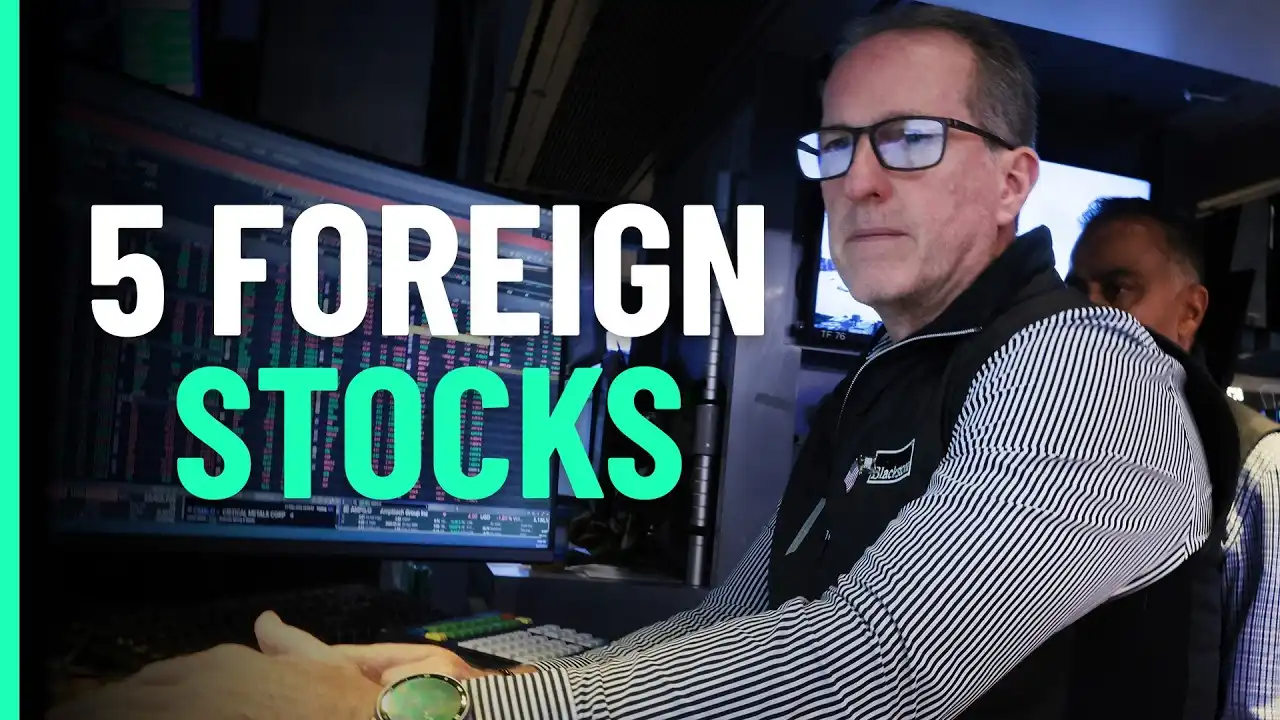
Guest:James E. Demmert, Main Street Research CIO

Host:Caroline

Podcast Source:TheStreet & James E。 Demmert

Original Title:5 Foreign Stocks That Could Beat The S&P 500

Broadcast Date:June 2, 2026

Key Takeaways

While setting a year-end target of 8100 for the S&P 500, Main Street Research CIO James Demmert states that returns from overseas stock markets will surpass those of U.S. stocks. He recommends five international stocks with valuations far lower than their U.S. peers yet directly benefiting from the AI revolution: HSBC with a P/E ratio of 9, BHP with a P/E ratio of 16, and ASML, which he would choose if "I could only hold one stock for five years."

Demmert believes Europe and Japan are taking over global growth with unprecedented fiscal stimulus, and this trend of international markets outperforming the U.S. will "last for several years." He advises investors to allocate 45% of their portfolio overseas.

Highlights of Insights

  • "If investors only hold U.S. stocks now, what they miss first is diversification, and second, the amazing opportunities outside the U.S. — where prices are more reasonable and growth rates are equally, if not more, attractive."
  • "Overseas markets have already outperformed the U.S., and we believe this trend will continue."

The Ultimate Global Chip Play: $ASML

  • "We hold NVIDIA and Micron, but ASML plays a different role in the AI trade — it provides chip design and manufacturing technology, and it also gives us diversification exposure outside the U.S."
  • "The U.S. dollar is weakening persistently. Allocating assets to stocks of overseas companies helps to escape the concentrated risk of being denominated in dollars."

High-Value Global Bank: $HSBC

  • "HSBC has a P/E ratio of only 9, cheaper than JPMorgan Chase, and has a better forward growth outlook. As a global investment bank, its influence in Asia is something JPMorgan cannot match."
  • "I don't think Chinese stocks are investable at this point in time, but companies that operate or can operate there, I think, are very meaningful."

Energy Infrastructure Play: Siemens Energy

  • "The world is running short on electricity — AI is consuming power, cryptocurrency is consuming power, electric vehicles are consuming power. Siemens Energy's core business is helping to build the world's power grids."
  • "The AI revolution is still in the third or fourth inning of a nine-inning game, it's still early. The performance of this type of stock — if you remember the tech boom of the '90s — is very similar in the early years, and this trend can last for quite a long time."

The Hidden AI Miner Stock: $BHP

  • "Most people think this is just a commodity trade, but when you consider all the data center demand, this is absolutely an AI investment — I call it the second derivative of AI."
  • "The world needs more copper. The more data centers we build, the more important copper's role becomes. BHP's P/E ratio is only 16, valuations overseas are far superior to the U.S."

Undervalued Healthcare Rebound: $AZN (AstraZeneca)

  • "Healthcare has been ignored by the market for too long. AstraZeneca has a very strong pipeline of drugs and biomedical products, with a P/E ratio of 18 and over 20% annual growth."
  • "Investors will start rotating into the healthcare sector sometime in the second half of this year, because that's when they'll begin to feel the value-add and actual contributions AI is starting to make in the healthcare field."

Why International Markets Are Outperforming the U.S.

  • "It's a valuation story, but it's also a story about changing global policies. The U.S. is tightening fiscal spending, while Europe is taking a page from our old playbook — they are engaging in unprecedented large-scale government fiscal spending, trying to keep interest rates low."
  • "Overseas markets are outperforming the U.S. for the first time in years, and we believe this is a trend that will last for several years."

Rapid-Fire Q&A: Top Pick & Biggest Risk

  • "If I could only hold one stock for the next five years, it would be ASML. The first to double would be ASML. The first one I'd buy on a pullback would be Siemens Energy."
  • "The most undervalued international market is Europe. The biggest mistake U.S. investors make is not allocating enough overseas, being too conservative. We recommend 45% overseas, the rest domestic."

Introduction

Host Caroline: The S&P 500 hitting 8100 — that's the bold prediction from my next guest. And while he's still bullish on U.S. stocks, he says some of the biggest opportunities right now might actually be overseas. Joining me now is James Demmert, Founder and Chief Investment Officer at Main Street Research. James, great to have you.

James:

Great to be with you, Caroline.

Host Caroline: You still see the S&P 500 hitting 8100 this year, but none of your top five stock picks are in the S&P 500. What does that say?

James:

It says we think the S&P can get to 8100 — a target that once looked high, and now while perhaps not as distant as before, is indeed getting closer. It also says that if we're leaning towards overseas markets, it's because we think they can actually outperform the S&P 500.

Host Caroline:What are investors missing if they only hold U.S. stocks right now?

James:

I think they're missing firstly diversification, and secondly they're missing the amazing opportunities outside the U.S. — where prices are more reasonably valued, while growth rates are equally, if not more, attractive. You may have noticed, year-to-date, overseas markets have already outperformed the U.S., and we believe this trend will continue.

Pick 1: The Ultimate Global Chip Play

Host Caroline: Alright, let's get into your top five picks, starting with ASML. This stock has already had a big run this year, why are you still buying?

James:

I know in tech, everyone's flocking to Micron and the memory chip trade. But don't forget, ASML is a company involved in chip design, manufacturing, and technology, they are an indispensable part of the entire chip manufacturing process. The company is headquartered in the Netherlands, currently trading at a P/E of 38, but their annual growth rate is far above that level. It's a great entry point into investing in overseas stocks.

Host Caroline: You mentioned Micron, so why hold ASML instead of directly buying Micron or even NVIDIA or other chip stocks?

James:

We hold NVIDIA, we hold Micron. The reason ASML is in our portfolio is because it plays a completely different role in the AI trade — it does chip design technology, and it also gives us diversification exposure outside the U.S. You also know, the U.S. dollar is weakening persistently. Allocating assets to stocks of overseas companies helps to escape the concentrated risk of being denominated in dollars.

Pick 2: High-Value Global Bank

Host Caroline: Next is HSBC. There are plenty of great U.S. bank stocks to buy, why go overseas for a bank?

James:

That's a very good question. It comes down to valuation. Caroline, HSBC's P/E ratio is only 9. By comparison, JPMorgan Chase, while an excellent company — and we own it too — but HSBC offers a better valuation and a better forward growth outlook, because you're seeing a reawakening of investment overseas. That's why the performance of overseas indices is surpassing the domestic U.S. HSBC is a significant component of overseas indices, and as a global investment bank, its business reach covers not only the U.S. and Europe, but also has a presence in Asia that JPMorgan cannot match.

Host Caroline: Still, how should investors view the China risk?

James:

I'm not sure the Chinese market itself is investable, but I do think you can invest in companies that can safely operate in China. I know this is also one reason NVIDIA is eager to open the door to the Chinese market and sell products there. So, I don't think Chinese stocks are investable at this point in time, but companies that operate or can operate there, I think, are very meaningful.

Pick 3: Energy Infrastructure Play

Host Caroline: Next on your list is Siemens Energy, ticker SMERY in the U.S. It's up about 40% year-to-date, why are you bullish on this stock?

James:

It has performed well this year, and I think that performance will continue. Let's be clear about one thing — the world is running short on electricity. AI is consuming a lot of power, cryptocurrency is eating electricity, electric vehicles are eating electricity. While we're all thinking about how to increase electricity supply, that's precisely the area Siemens Energy focuses on. They are helping us build the global power grid, not just in their home country Germany, but all over the world. This stock trades at a P/E of about 37, but earnings growth is far above that level.

Host Caroline: I mentioned it's done well this year, but its one-year performance is even more impressive — over 90%. How should investors approach stocks that have already run up so much? If they haven't gotten in, is it too late now?

James:

If they haven't gotten in, my advice has always been to wait for a pullback, buy when the stock shows weakness, or buy a third of the position first and build it gradually. If you already own it, remember that volatility in these types of stocks will be high, volatility in the entire AI trade is high. But in our view, the AI revolution is still in the third or fourth inning of a nine-inning game, it's still early. The performance of this type of stock — if you remember the tech boom of the '90s — is very similar in the early years, and this trend can last for quite a long time.

Pick 4: The Hidden AI Miner Stock

Host Caroline: Next is BHP Group, also up over 40% year-to-date. Why are you still bullish on the mining space?

James:

The world needs more copper. The more data centers we build, the more important copper's role becomes. We also believe we are in a global economic expansion right now, which means the demand for raw materials will only increase, and BHP is an excellent way to participate in this trend. The company is headquartered in Australia, with a P/E ratio of only 16. Again, valuations overseas are far superior to the U.S.

Host Caroline: So is this really a commodity trade, or an AI infrastructure trade?

James:

That's exactly what it is. Most people think this is just a commodity trade, but when you consider all this data center demand, this is absolutely an AI investment — I call it the second derivative of AI.

Pick 5: Undervalued Healthcare Rebound

Host Caroline: Last is a healthcare stock, AstraZeneca, which has actually underperformed the market this year, basically flat. Why buy a lagging healthcare stock?

James:

This is the "little engine that could." We really think the healthcare sector has been ignored by the market for too long. AstraZeneca has a very strong pipeline of drugs and biomedical products. With a P/E of 18 and over 20% annual growth, we think the market will come to recognize the value of these stocks.

We also believe investors will start rotating into the healthcare sector sometime in the second half of this year, because that's when they'll begin to feel the value-add and actual contributions AI is starting to make in the healthcare field. So, I think this will ultimately become an AI investment as well. And from a valuation and overseas exposure perspective, it's an excellent way to diversify a portfolio.

Why International Markets Are Outperforming the U.S.

Host Caroline: Alright, from a valuation perspective and looking at these five picks overall, is the logic for international stocks over U.S. stocks now purely a valuation story?

James:

It's a valuation story, but it's also a story about changing global policies. You know, the U.S. is tightening fiscal spending, or trying to. What we're doing, essentially, is handing over the growth baton to Europe — it's Europe's turn now to follow our old playbook. In Europe, overseas, in Japan, you're seeing these economies really heating up because they are engaging in unprecedented large-scale government fiscal spending while trying to keep interest rates low. That's why overseas markets are outperforming the U.S. for the first time in years, and we believe this is a trend that will last for several years.

Rapid-Fire Q&A: Top Pick & Biggest Risk

Host Caroline: Moving into the rapid-fire Q&A. If you could only hold one stock for the next five years, which one?

James: ASML.

Host Caroline: If you had to delete one from this list first, which one?

James:

AstraZeneca.

Host Caroline: Which one would you buy first on a pullback?

James:

Siemens Energy.

Host Caroline: Which one among these five would double first?

James:

ASML.

Host Caroline: If the economy slows, which one is most resilient?

James:

AstraZeneca.

Host Caroline: Which one has the biggest competitive advantage over its rivals?

James:

Siemens Energy.

Host Caroline: What is the biggest risk shared by these five stocks?

James:

A bear market.

Host Caroline: If you could add a sixth stock to the list, what would it be?

James:

NVIDIA.

Host Caroline: Which international market is most undervalued right now?

James:

Europe.

Host Caroline: What is the biggest mistake U.S. investors make when allocating to overseas assets?

James:

Not allocating enough overseas, being too conservative.

Host Caroline: For a standard portfolio, what should the U.S. vs. international allocation be?

James:

We recommend 45% overseas, the rest domestic.

Host Caroline: A U.S. stock to hold for five years, not NVIDIA, which one?

James:

Costco.

Host Caroline: What type of U.S. stocks would you avoid right now?

James:

Anything in the real estate sector and anything in the consumer discretionary sector.

Host Caroline: Is that because of interest rates?

James:

It's interest rates, and it's also about the K-shaped economy.

Host Caroline: Okay, one word to describe how you feel about the current U.S. market.

James:

Bullish, but always concerned.

Host Caroline: One word to describe how you feel about international markets.

James:

Extremely optimistic — that's two words.

Связанные с этим вопросы

QAccording to James Demmert, why does he recommend looking beyond the US stock market?

AHe believes international markets are offering more compelling opportunities with more reasonable valuations and attractive, sometimes higher, growth rates compared to the US. He also emphasizes the benefit of diversification and points out that international markets are already outperforming the US, a trend he expects to continue for years.

QWhat is the primary role of ASML in the context of the AI revolution, as explained by James Demmert?

AASML plays a unique role by providing the critical technology for chip design and manufacturing, which is essential for AI development. It offers a different exposure within the AI thematic and provides geographic diversification away from US-based companies and the US dollar.

QWhat two key factors does James Demmert cite as reasons why international stocks are currently outperforming the US market?

AHe cites a combination of attractive valuations overseas and a global policy shift. While the US is tightening fiscal spending, Europe and Japan are engaging in unprecedented large-scale government fiscal stimulus while trying to maintain low interest rates, which is driving growth in their markets.

QWhich of the five recommended stocks does James Demmert identify as a "hidden AI mining play," and why?

AHe identifies BHP Group as a hidden AI play. While many see it as a simple commodity trade, Demmert argues it is a direct AI investment—a "second derivative of AI"—because the massive demand for copper is driven by the construction of data centers required for AI infrastructure.

QFor a standard portfolio, what asset allocation between US and international stocks does James Demmert recommend?

AHe recommends allocating 45% of a portfolio to international stocks and the remainder to domestic (US) stocks.

Похожее

Wang Chuan: After Investing in Storage Stocks and Seeing a Thirty-Fold Return, How to Remain Unanxious (Part 7) - A Quarter-Century Cycle

Wang Chuan: Reflections on Investment Anxiety and Market Cycles After Observing a 30x Gain in a Storage Stock (Part 7) – A Quarter-Century Cycle This article examines the cyclical nature and inherent risks in technology hardware investments, using the storage and semiconductor sectors as examples. It criticizes the misleading practice of "annualized" Net Dollar Retention (NDR) rates, where short-term growth is extrapolated unrealistically. A key concept explored is "reflexivity" – demand driven by panic, exploration, and liquidity during market booms, which can vanish just as quickly when conditions reverse. This reflexivity exists both in product demand and among speculative stock buyers, creating powerful feedback loops that inflate prices during upturns and exacerbate crashes during downturns. The author highlights a major risk for hardware sectors: unlike assets with defined cycles (e.g., Bitcoin's halving), there's no guarantee of a swift recovery post-crash. Companies like Micron, Intel, and Cisco took roughly a quarter-century to surpass their 2000 highs, enduring drawdowns exceeding 80%. This is attributed to the "bullwhip effect" in supply chains, where demand collapses instantly but过剩产能 persists, and a migration of narrative-driven capital. High-valuation stories吸引 speculative funds during growth phases, but these funds quickly depart for the next hot narrative once growth slows, leaving behind stronger companies with much lower valuations. The piece warns of dangerous mental models formed during bull markets: 1) equating current strong demand with perpetual high growth, and 2) believing that making fast, large profits is easy. Citing巴菲特, the author notes that easy money undermines rationality, likening speculators to Cinderella at a ball with a clock that has no hands. The current phase presents an asymmetric risk-reward scenario: potential for further gains exists, but the downside risk is an 80%+ drawdown and a multi-decade wait for breakeven, which reflexive speculators cannot tolerate. The hypothetical investor "老王" (Lao Wang), who achieved a 30x return, is used to illustrate potential pitfalls. Leverage could lead to a wipeout during a sharp correction. Even without leverage, ingrained beliefs in easy money would likely lead him to double down after losses, expecting a quick rebound. Instead, he might face a protracted decline, depleting his resources through frantic trading as the high-growth narrative fades. The conclusion references Schopenhauer, comparing those who have seen multiple market cycles to an audience seeing the same magic trick repeatedly—once the illusion is understood, its power is gone.

marsbit6 мин. назад

Wang Chuan: After Investing in Storage Stocks and Seeing a Thirty-Fold Return, How to Remain Unanxious (Part 7) - A Quarter-Century Cycle

marsbit6 мин. назад

US Stocks Too Expensive? This Top CIO Scoured the Globe and Found 5 Stocks More Attractive Than NVIDIA

Summary: Main Street Research CIO James Demmert maintains his bullish 8,100 target for the S&P 500 but argues that greater opportunities now lie overseas. He identifies five international stocks with superior valuations poised to benefit from the AI revolution, suggesting international markets will outperform the US for years. Key Recommendations: 1. **ASML (Netherlands):** A foundational chip manufacturing technology provider, offering crucial AI exposure and geographic diversification. Demmert's top long-term pick. 2. **HSBC (UK/Asia):** A global bank with a 9x P/E ratio, better growth prospects than US peers like JPMorgan, and strong Asian presence. 3. **Siemens Energy (Germany):** A direct play on global power grid expansion driven by AI, crypto, and EV electricity demand. 4. **BHP Group (Australia):** A "hidden AI play" and "second derivative" of the trend due to massive copper demand for data centers. Trades at a 16x P/E. 5. **AstraZeneca (UK):** An undervalued healthcare stock with a strong pipeline (18x P/E, >20% growth), expected to benefit from AI's impact on medicine. Core Thesis: International outperformance is driven by both attractive valuations and a major policy shift. While the US tightens fiscal policy, Europe and Japan are launching unprecedented stimulus, reigniting growth. Demmert recommends allocating 45% of a portfolio internationally, citing excessive US investor conservatism as a key mistake.

marsbit11 мин. назад

US Stocks Too Expensive? This Top CIO Scoured the Globe and Found 5 Stocks More Attractive Than NVIDIA

marsbit11 мин. назад

a16z Partner: Three Paths for Crypto Projects to Find PMF

Author: Jason Rosenthal. Compiler: Shenchao TechFlow. Finding Product-Market Fit (PMF) is the most critical variable for a company's survival. In the crypto space, misaligned growth hacking and airdrops often mask the absence of true PMF. However, leading teams are now finding PMF faster. Here are three proven paths for crypto projects to achieve PMF: 1. **Co-build with Anchor Clients:** Partner with the most sophisticated potential clients in your field and develop the product based on their specific needs. Their adoption serves as the strongest validation, more valuable than media coverage or TVL metrics. This approach is shaping current product roadmaps, as seen in collaborations between crypto startups and traditional finance. 2. **Position Ahead of an Exponential Curve:** Identify and position yourself ahead of a major emerging trend before the market fully realizes it. The most evident current curve is the rise of AI Agents as autonomous economic actors. Projects like AgentCash by Merit Systems, which enables AI Agents to pay for API access with crypto, are building foundational payment rails for the impending Agent economy. 3. **Be Your Own First and Best Customer:** The most enduring infrastructure companies don't wait for external validation. They first build and prove their technology by using it to power their own applications at scale before offering it to others. Matter Labs exemplifies this by anchoring its ZKsync technology in a concrete application, Cari Network, which enables U.S. regional banks to conduct real-time, on-chain interbank transfers of tokenized deposits. The underlying logic is consistent: the fastest path to PMF involves choosing the right battlefield and executing with conviction—by co-building with clients whose validation compounds, positioning ahead of the curve before consensus forms, or becoming your own best case study.

marsbit12 мин. назад

a16z Partner: Three Paths for Crypto Projects to Find PMF

marsbit12 мин. назад

Wang Chuan: How to Avoid Anxiety When the Neighbor, Lao Wang, Made Thirty Times His Investment in Storage Stocks (7) - A Quarter-Century Cycle

Wang Chuan: Reflections on a Quarter-Century Cycle – How to Stay Calm After a 30x Gain on Storage Stocks (Part 7) This article continues the discussion on investment pitfalls. It highlights the deceptive use of metrics like the "Annualized Net Dollar Retention Rate" by some companies to inflate growth projections. The core analysis focuses on the "reflexivity" present in both product demand and financial markets during boom periods. In a bubble, speculative and fear-driven demand in the real economy interacts with speculative, leveraged buying in financial markets, creating a powerful upward feedback loop. This dynamic reverses sharply when faced with physical or liquidity constraints, leading to a cascading downturn. The hardware and semiconductor sectors face unique risks. Unlike assets with defined cycles, there's no guarantee of a swift recovery post-crash. Historical examples like Micron, Intel, and Cisco show it can take decades to surpass previous peaks after severe drawdowns (80-95%). This is due to the "bullwhip effect" in supply chains—demand vanishes quickly while过剩产能 persists—and the migration of speculative capital and growth narratives to new sectors once momentum slows. Companies may have stronger fundamentals years later, but the speculative "soul" of extreme valuations is long gone. The author warns of psychological traps for new investors: mistaking temporary, intense demand for permanent growth, and believing that making quick, large profits is easy. Citing Buffett, the piece cautions that easy money erodes rationality. The current phase presents an asymmetric risk-reward scenario: potential for further gains versus the risk of an 80%+ drawdown and a multi-decade recovery wait—an outcome reflexive speculators cannot endure. The hypothetical "Lao Wang" who made 30x may be wiped out by leverage or, driven by the "get-rich-quick" mindset, may repeatedly try to recover losses until exhausted, failing to recognize that the high-growth narrative has ended. The piece concludes with Schopenhauer's analogy: those who've seen multiple cycles are like an audience watching the same magic trick repeatedly—the illusion no longer works.

链捕手20 мин. назад

Wang Chuan: How to Avoid Anxiety When the Neighbor, Lao Wang, Made Thirty Times His Investment in Storage Stocks (7) - A Quarter-Century Cycle

链捕手20 мин. назад

Торговля

Спот
Фьючерсы

Популярные статьи

Как купить S

Добро пожаловать на HTX.com! Мы сделали приобретение Sonic (S) простым и удобным. Следуйте нашему пошаговому руководству и отправляйтесь в свое крипто-путешествие.Шаг 1: Создайте аккаунт на HTXИспользуйте свой адрес электронной почты или номер телефона, чтобы зарегистрироваться и бесплатно создать аккаунт на HTX. Пройдите удобную регистрацию и откройте для себя весь функционал.Создать аккаунтШаг 2: Перейдите в Купить криптовалюту и выберите свой способ оплатыКредитная/Дебетовая Карта: Используйте свою карту Visa или Mastercard для мгновенной покупки Sonic (S).Баланс: Используйте средства с баланса вашего аккаунта HTX для простой торговли.Третьи Лица: Мы добавили популярные способы оплаты, такие как Google Pay и Apple Pay, для повышения удобства.P2P: Торгуйте напрямую с другими пользователями на HTX.Внебиржевая Торговля (OTC): Мы предлагаем индивидуальные услуги и конкурентоспособные обменные курсы для трейдеров.Шаг 3: Хранение Sonic (S)После приобретения вами Sonic (S) храните их в своем аккаунте на HTX. В качестве альтернативы вы можете отправить их куда-либо с помощью перевода в блокчейне или использовать для торговли с другими криптовалютами.Шаг 4: Торговля Sonic (S)С легкостью торгуйте Sonic (S) на спотовом рынке HTX. Просто зайдите в свой аккаунт, выберите торговую пару, совершайте сделки и следите за ними в режиме реального времени. Мы предлагаем удобный интерфейс как для начинающих, так и для опытных трейдеров.

1.4k просмотров всегоОпубликовано 2025.01.15Обновлено 2026.06.02

Как купить S

Sonic: Обновления под руководством Андре Кронье – новая звезда Layer-1 на фоне спада рынка

Он решает проблемы масштабируемости, совместимости между блокчейнами и стимулов для разработчиков с помощью технологических инноваций.

2.3k просмотров всегоОпубликовано 2025.04.09Обновлено 2025.04.09

Sonic: Обновления под руководством Андре Кронье – новая звезда Layer-1 на фоне спада рынка

HTX Learn: Пройдите обучение по "Sonic" и разделите 1000 USDT

HTX Learn — ваш проводник в мир перспективных проектов, и мы запускаем специальное мероприятие "Учитесь и Зарабатывайте", посвящённое этим проектам. Наше новое направление .

1.8k просмотров всегоОпубликовано 2025.04.10Обновлено 2025.04.10

HTX Learn: Пройдите обучение по "Sonic" и разделите 1000 USDT

Обсуждения

Добро пожаловать в Сообщество HTX. Здесь вы сможете быть в курсе последних новостей о развитии платформы и получить доступ к профессиональной аналитической информации о рынке. Мнения пользователей о цене на S (S) представлены ниже.

活动图片