Автор: Кури
Оригинальное название: ИИ приводит к увольнениям, но OpenAI нанимает продавцов
Компании, создающие ИИ, массово нанимают «полевых агентов» — лопаты созданы, но нужно кого-то, кто научит других, как копать.
В последнее время волна тревоги о безработице из-за ИИ охватила интернет как на Востоке, так и на Западе.
Block уволила 4000 человек, генеральный директор заявил, что ИИ может выполнять вашу работу; Pinterest сократила 15% сотрудников, деньги будут вложены в развитие ИИ; Dow Chemical уволила 4500 человек, объяснив это усилением автоматизации...
В Китае тоже неспокойно: ходят слухи, что NetEase использует ИИ для замены аутсорсинга, iFlytek опровергла слухи о массовых увольнениях, ByteDance сообщила об оптимизации 20% сотрудников в не-ИИ отделах каждые полгода...
По статистике, за первые три месяца 2026 года в мировом технологическом секторе было уволено уже более 45 000 человек, из которых почти десять тысяч были прямо отнесены на счет ИИ.
На этом фоне в прошлую пятницу Financial Times сообщила, что OpenAI планирует к концу года увеличить число сотрудников с 4500 до 8000 человек.
3500 новых вакансий. Компания, создающая ИИ, говорит, что ей не хватает людей?
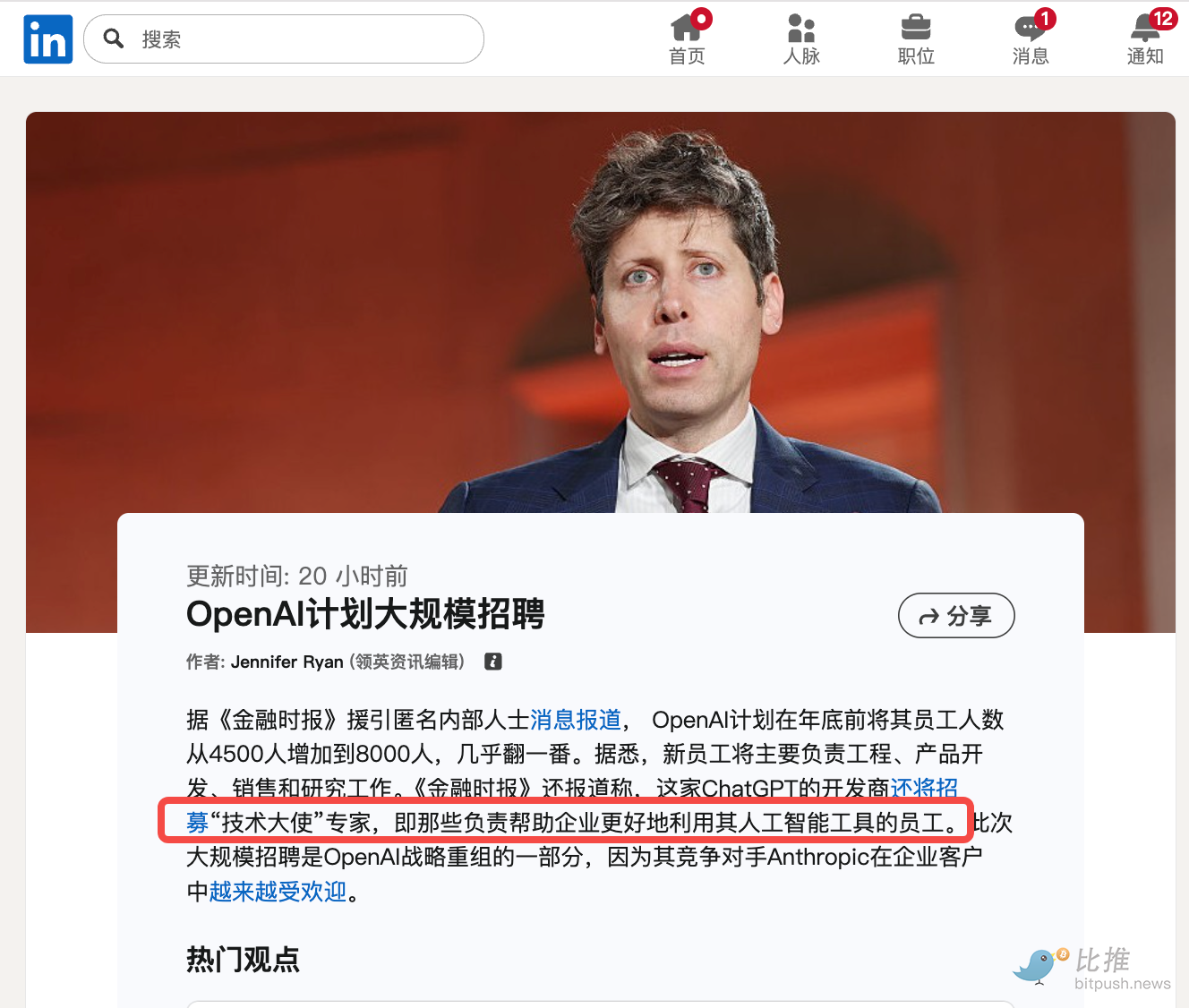
Если зайти на страницу вакансий OpenAI, инженеры и исследователи, конечно, нанимаются, но так же густо на странице представлены и другие должности: менеджер по партнерствам, корпоративные продажи, команда GTM (стратегия выхода на рынок), а также новая должность, упомянутая в отчете — technical ambassadorship, что переводится как:
Технический посол, специально помогающий корпоративным клиентам научиться использовать ИИ.
Таким образом, OpenAI нанимает не тех, кто делает ИИ сильнее, а тех, кто заставляет других платить за ИИ.
Удовлетворение клиентов важнее улучшения модели
У ChatGPT 900 миллионов активных пользователей в неделю, но большинство не платят.
Те потребители, которые платят, обслуживаются OpenAI в убыток: стоимость вычислительных ресурсов, потребляемых каждым активным пользователем, превышает ежемесячную плату в 20 долларов. Прогнозируемая выручка в этом году — 250 миллиардов долларов, прогнозируемый убыток — 140 миллиардов.
Потребители поддерживают трафик, корпоративные клиенты — прибыль. А корпоративные клиенты бегут к Claude от Anthropic.
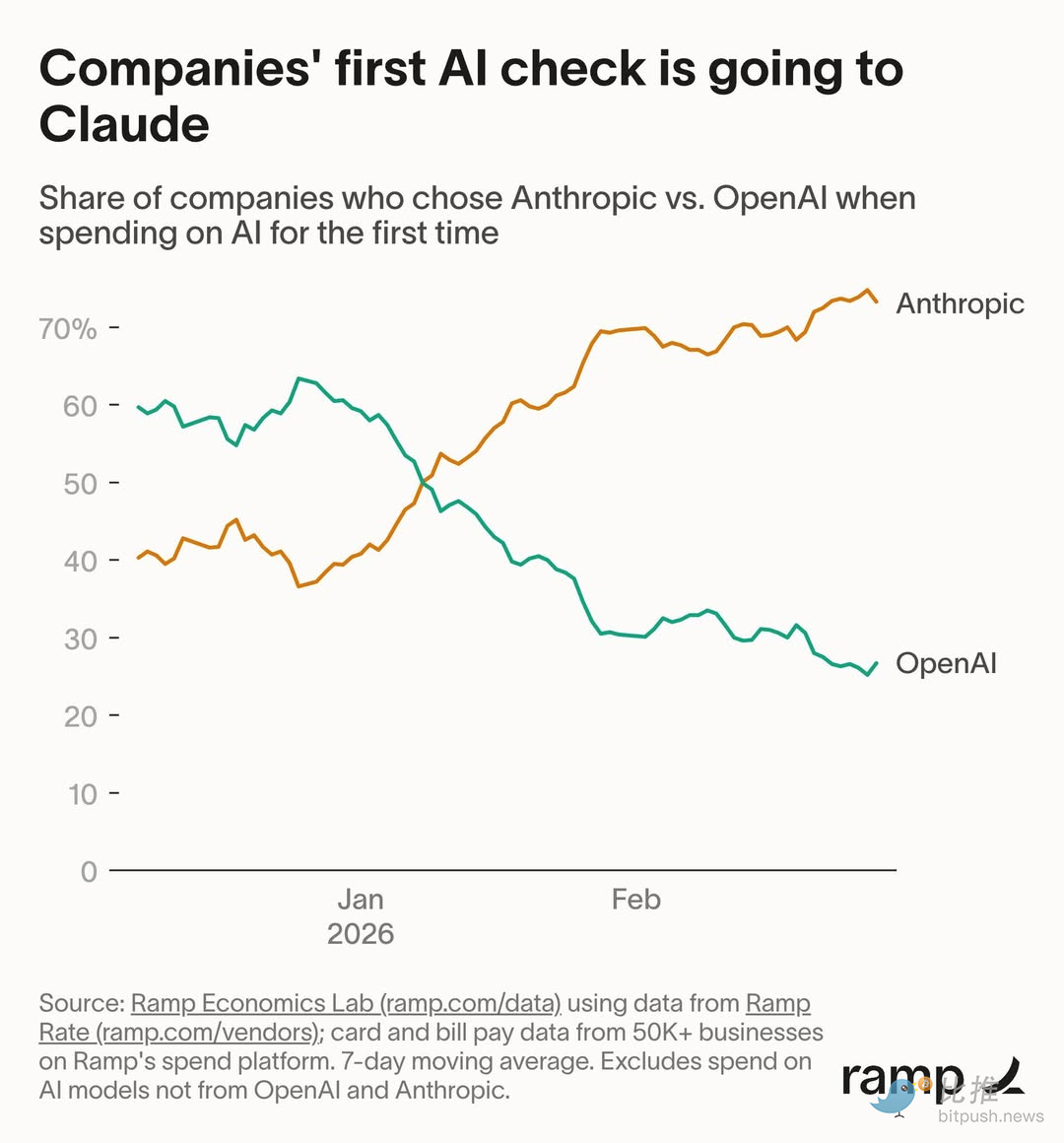
Данные Ramp показывают, что среди предприятий, впервые покупающих инструменты ИИ, Anthropic захватила 73% доли. Десять недель назад этот показатель делился поровну между двумя компаниями.
В декабре прошлого года Алтман разослал всему персоналу меморандум «code red», приостановив все непрофильные проекты, такие как реклама и помощники по покупкам, и сосредоточив все ресурсы компании на улучшении пользовательского опыта ChatGPT.
Непосредственным триггером стало то, что Google Gemini 3 превзошел ChatGPT в нескольких тестах, но更深ое беспокойство было на корпоративной стороне: Anthropic внедряла Claude в код и рабочие процессы клиентов, и как только это было сделано, затраты на миграцию начали расти как снежный ком.
Модели можно улучшать, но клиенты не вернутся сами. Чтобы вернуть клиентов, недостаточно советов от ИИ, нужно, чтобы кто-то пошел и постучал в дверь.
Лопата не может продать себя сама
ИИ может писать код, обслуживать клиентов, анализировать данные, но есть одна вещь, которую он не может сделать:
Убедить технического руководителя предприятия подписать годовой контракт на покупку меня.
Для личного использования ИИ достаточно скачать приложение, и если не понравится, можно удалить. Использование ИИ предприятиями — это другое дело. Проверка безопасности данных, изменение внутренних процессов, совместимость с существующими системами, обучение сотрудников — любой из этих этапов может заблокировать проект.
Это не проблема, которую можно решить тестами модели, нужно, чтобы кто-то сел в конференц-зале с клиентом и продвигал проект.
OpenAI, очевидно, это поняла. Она не только нанимает продавцов, но и, по сообщениям FT, ведет переговоры с частными фондами, такими как TPG и Brookfield, о создании совместных предприятий,专门帮企业落地 AI. Суть этого бизнеса все равно в том, чтобы направить людей на место.
История Block также рассказывает о том же.
Менее чем через три недели после увольнения 4000 человек компания начала возвращать людей. Одному инженеру-конструктору сообщили, что его «уволили по ошибке», технический руководитель обнаружил, что после сокращения всей команды некому было接手 ключевой бизнес, пригрозил уйти, и компания вернула часть людей.
Дорси сам заранее написал в письме об увольнении: мы, возможно, уволили некоторых по ошибке...
ИИ действительно вызывает тревогу по поводу увольнений, но если из-за ИИ будут уволены ключевые «артерии», создающие кровь, то это явно перебор. Даже в компании, генеральный директор которой публично заявляет, что ИИ может заменить большинство сотрудников, все еще есть звенья, которые ИИ не может охватить.
ИИ лучше всего заменяет задачи, которые можно четко определить, но «заставить организацию поверить, что ей нужен ИИ, а затем помочь ей его использовать» — это как раз то, что нельзя четко определить.
В каждой технологической революции кто-то говорит: «те, кто продают лопаты, зарабатывают больше всех». В этом раунде ИИ то же самое, consensus заключается в том, что компании, создающие инфраструктуру, получают стабильный доход, независимо от того, кто выиграет или проиграет.
Но нынешняя ситуация OpenAI показывает, что лопаты созданы, но нужно, чтобы кто-то научил других, как ими пользоваться. И этот процесс «обучения» как раз нельзя выполнить с помощью самой лопаты.
Полевое продвижение — железная миска с рисом в тревоге об ИИ
Если сопоставить уволенных и нанятых людей в этом раунде, можно увидеть разделительную линию.
Среди 4000 человек, уволенных из Block,很大一部分 — это инженерные и операционные должности, нанятые во время пандемии, которые выполняли работу, которую можно стандартизировать. Среди 3500 новых сотрудников OpenAI大部分 — это продажи, успех клиентов, управление партнерствами, то есть работа, которую нельзя записать в документы процессов.
То, чем сейчас занимается OpenAI, имеет очень старое название: полевое продвижение (地推).
Отправлять людей в офис клиента, садиться, слушать потребности, подключать системы, следить за запуском. Технический посол, менеджер по партнерствам — смените английские названия, по сути, это no отличается от того, как десять лет назад во время битвы O2O Meituan отправляла людей по одному убеждать владельцев ресторанов установить POS-терминалы.
Эта линия проявляется не только в этих двух компаниях.
Генеральный директор Shopify в этом году сказал сотрудникам, что в будущем, чтобы запросить добавление человека, сначала докажите, что ИИ не может это сделать. Klarna два года назад уволила 700 сотрудников службы поддержки, заявив, что ИИ достаточно, в прошлом году тихо вернула людей, генеральный директор признал, что «зашел слишком далеко» с ИИ.
В чем разница между уволенными и возвращенными?
У сокращаемых должностей есть общая черта: содержание работы можно разбить на четкие входные и выходные данные. Написать код, ответить на заявку, сгенерировать отчет — границы четкие, и ИИ как раз擅长 это.
Характеристика полевого продвижения прямо противоположна. Помочь финансовому клиенту подключить ИИ к системе compliance и помочь игровой компании использовать ИИ для генерации контента — нет двух одинаковых проектов. Сидящие напротив люди разные, и решения разные. Это нельзя описать в prompt.
ИИ уничтожает не все рабочие места, а переоценивает их. То, что можно объяснить одним предложением, дешевеет, то, что нельзя объяснить, дорожает.
Компания, которая три года назад могла изменить мир одной статьей, теперь нанимает тысячи людей, чтобы стучаться в каждую дверь.
Если вы беспокоитесь, заменит ли вас ИИ, ответ может зависеть не от вашей отрасли, а от того, можно ли вашу работу объяснить одним предложением.
Та часть, которую можно объяснить, уже не очень безопасна.
Twitter:https://twitter.com/BitpushNewsCN
Группа общения比推 TG:https://t.me/BitPushCommunity
Подписка比推 TG: https://t.me/bitpush