Afghanistan's Stablecoin, An Unexpected Hub of Crypto Innovation

marsbitОпубликовано 2026-01-26Обновлено 2026-01-26

Введение

A surprising blockchain-based financial innovation is emerging from Afghanistan, despite the country's isolation under Taliban rule. HesabPay, an Afghan startup, has developed a platform that is transforming humanitarian aid delivery in conflict zones. The system uses digital wallets and stablecoins to transfer funds instantly, bypassing traditional banking obstacles like high fees and sanctions. The platform is now being used by major aid organizations. The UN Refugee Agency (UNHCR) has used it to disburse nearly $25 million to over 86,000 Afghan families. Mercy Corps partnered with HesabPay to extend its services to Syria, where cash shortages and banking restrictions are severe, and is developing projects for Sudan and Haiti. Key advantages include reduced transaction costs, instant transfers, and enhanced transparency. The blockchain creates a digital record for every transaction, allowing donors to track exactly where funds go. The system also includes real-time dashboards and anti-fraud algorithms to flag suspicious activity like money laundering, providing a level of oversight difficult to achieve with physical cash aid. While risks exist, such as the potential for a central bank to shut down a national stablecoin, aid workers see the technology as a way to deliver assistance quickly, securely, and with greater accountability to rebuild trust in aid effectiveness. For beneficiaries like a Syrian farmer, it provides a lifeline to restart their lives after war.

Author: Aryn Baker, The New York Times

Compiled by: Felix, PANews

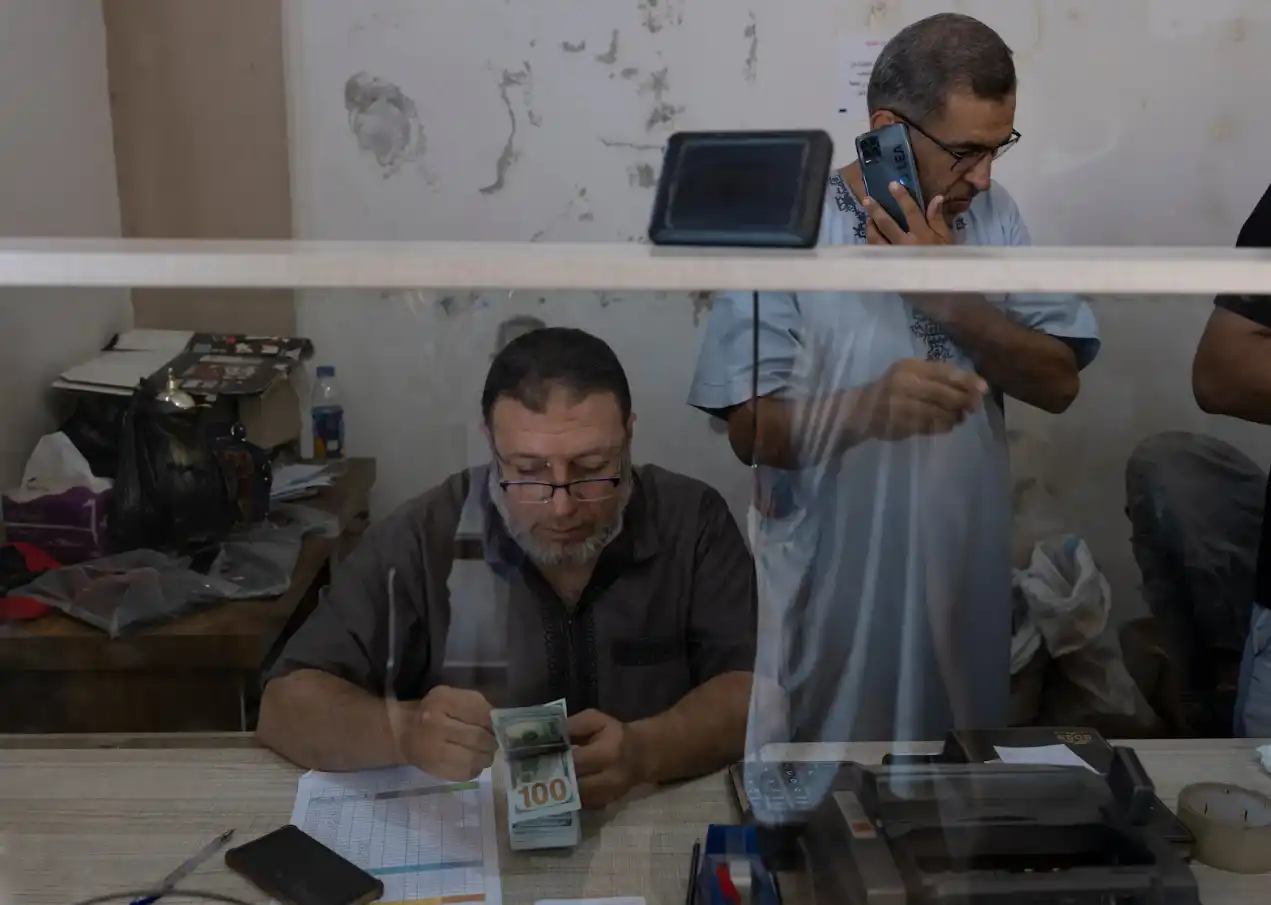
In a bustling currency exchange in northwestern Syria, a 46-year-old farmer clutched a plastic card as if it were her lifeline. She had never heard of cryptocurrency, but this card contained $500 worth of crypto, helping her restart her farm after nearly 14 years of civil war.

As the teller confirmed the amount and withdrew cash for Hala Mahmoud Almahmoud's account, the farmer smiled with relief and paused to express her gratitude. She asked where such technology came from.

The answer surprised her: Afghanistan.

Many might not imagine that this blockchain-based innovation in cash transfers originates from a country known for Taliban rule and skepticism toward the internet. Yet, in this nearly isolated nation, an Afghan startup is developing tools aimed at transforming how humanitarian aid is delivered in conflict-ravaged countries.

"We have faced these challenges ourselves, so we know how to create effective solutions," said Zakia Hussain, a 26-year-old programmer at the startup HesabPay, which designed the technology behind the card held by Ms. Almahmoud.

Hala Mahmoud Almahmoud outside her home near Latamina, Syria. She received $500 in cryptocurrency aid to help reopen her farm.

The UN Refugee Agency (UNHCR) is one of the early supporters of the platform. The agency uses it to support over 86,000 families in Afghanistan, making it one of the largest public blockchain aid projects globally. Mercy Corps, the charitable organization that donated to Ms. Almahmoud, partnered with HesabPay to extend aid to Syria and is currently developing projects for Sudan and Haiti.

In Syria, accessing funds from abroad is highly complex. Cash is scarce, international banks avoid the region, and remittance companies like Western Union charge fees as high as 10%. HesabPay enables organizations like Mercy Corps to bypass these obstacles.

Sanzar Kakar, an Afghan-American entrepreneur and founder of HesabPay, previously ran Afghanistan's largest payroll processing company. However, the 2021 U.S. withdrawal from Afghanistan and the Taliban's return to power triggered a financial collapse. Sanctions halted international remittances, and the central bank was paralyzed.

To address the country's growing financial insecurity, Kakar turned to blockchain technology. He created HesabPay (meaning "account" in the local language), a mobile-based application that allows instant transfers from one digital wallet to another, bypassing banks and the Taliban government. He stated that the Afghan government has granted his company a formal financial operating license.

The aid organization Mercy Corps, which donated funds, partnered with HesabPay to extend the platform's services to Syria.

Today, the platform has over 650,000 wallets in Afghanistan, with about 50,000 actively used, transferring approximately $60 million worth of Afghan afghani stablecoins (stablecoins pegged to the Afghan currency) monthly.

Since February 2025, the UN has used HesabPay to distribute nearly $25 million to returning Afghans through 80,000 digital wallets, according to Carmen Hett, Treasurer of Corporate Finance at UNHCR: "This helps reduce transaction fees, shorten waiting times, and enhance traceability, real-time monitoring, and accountability."

Ric Shreves, a decentralized finance solutions expert and president of the Decentralized Cooperation Foundation, said it is not surprising that organizations like Mercy Corps and the UN are turning to blockchain-based fund transfers for aid. For such organizations, "this approach offers almost all advantages compared to traditional aid methods."

However, he noted that risks remain, especially when payment systems are based on local currency stablecoins, as in Afghanistan. (In Syria, HesabPay wallets are backed by U.S. dollars, a more stable option.) Just as wallets can be shut down for interacting with sanctioned individuals, they could theoretically be closed by a central bank for political reasons.

Using blockchain technology makes it easier for Mercy Corps to send funds to Syria, where cash is scarce and international banks typically do not operate.

Ric Shreves stated, "When we provide people with non-physical transaction methods, it also means these transactions can potentially be blocked through technical means." He added that digital currency is clearly safer than cash, but it still cannot be hidden under a mattress like cash.

In recent years, aid organizations have increasingly opted for cash assistance, viewing it as a quick and dignified form of aid. However, cash assistance has a flaw: it is difficult to track where the money goes. Donors want to see their contributions reach those in need. Since President Trump significantly cut U.S. foreign aid early last year, organizations like Mercy Corps face greater pressure to demonstrate the effectiveness and integrity of their aid.

This is where blockchain comes into play, creating a digital record that accurately tracks how much money was sent, to whom, and where it went. Scott Onder, Chief Investment Officer at Mercy Corps, said this combination of speed and accountability "might help regain the trust of those who have doubts about the effectiveness of aid."

HesabPay also includes additional security measures, such as real-time dashboards to track wallet activity and cross-check it with international compliance databases. The company stated that the system is designed to detect illegal activities like terrorist financing, money laundering, and cyber fraud, immediately alerting when suspicious transactions occur. For aid donors, this provides a level of oversight that is nearly impossible in fragile countries.

Abdul Moti Hammoud, a resident of Halfaya, lost a leg after accidentally triggering a landmine while driving a tractor. He is a beneficiary of the aid organization Mercy Corps.

In a recent online demonstration, Nigel Pont, the company's senior advisor for humanitarian affairs, clicked on a purple dot representing a HesabPay agent in Afghanistan. Dozens of light blue beneficiary wallets unfolded, showing recent transfer records. Another click revealed where the funds went. Then, a wallet suddenly turned red, triggering a suspected fraud alert—slightly awkward during a live demo, but exactly the type of risk the system is designed to identify.

"From an aid donor's perspective, this is extremely valuable," said Nigel Pont, former Chief Strategy Officer at Mercy Corps. "A system that automatically flags fraud risks means you can verify immediately, rather than waiting six months for a report that someone stole $20,000." Nigel Pont acknowledged that no system can completely eliminate corruption, but then again, neither can cash.

22-year-old Abdul Halim Hasan was waiting in line at the same currency exchange in Syria as Ms. Almahmoud. He said he imagines a day when he can use HesabPay like a regular bank account, receiving funds, paying bills, and saving money securely. For now, though, his HesabPay card allows him to access the funds needed to restart his life after the war, and that is enough.

Ms. Almahmoud (second from left) and her family with Mercy Corps staff in Halfaya.

Related reading: Philanthropist or Predator? The Crypto Business of Top Global Influencer "Mr. Beast"

Связанные с этим вопросы

QWhat is the innovative blockchain-based cash transfer solution mentioned in the article, and where was it developed?

AThe innovative blockchain-based cash transfer solution is called HesabPay, and it was developed in Afghanistan.

QWhich organizations are using HesabPay to deliver humanitarian aid, and in which countries is it being implemented?

AThe United Nations High Commissioner for Refugees (UNHCR) and Mercy Corps are using HesabPay. It is being implemented in Afghanistan and Syria, with projects under development for Sudan and Haiti.

QWhat are the main advantages of using a blockchain-based system like HesabPay for aid organizations, according to the article?

AThe main advantages include lower transaction fees, shorter wait times, enhanced traceability, real-time monitoring, accountability, and a system designed to detect and alert for illegal activities like terrorist financing and money laundering.

QWhat potential risk does the article associate with using a local currency stablecoin, like the one used in Afghanistan, compared to a dollar-backed one?

AThe risk is that a wallet based on a local currency stablecoin could theoretically be shut down by a country's central bank for political reasons, whereas a dollar-backed stablecoin is a more stable option.

QHow did the situation in Afghanistan following the 2021 U.S. withdrawal influence the creation of HesabPay?

AThe U.S. withdrawal and the Taliban's return to power caused a banking collapse and sanctions that cut off international remittances. This financial insecurity prompted Sanzar Kakar to create HesabPay to bypass banks and the Taliban government for instant digital money transfers.

Похожее

South Korean Exchanges 'Battle' Regulators, Challenging the Boundaries of Enforcement and Legislation

South Korea's cryptocurrency industry is engaged in a rare, direct confrontation with regulators. The Financial Intelligence Unit (FIU), the primary anti-money laundering (AML) watchdog, has recently imposed heavy penalties on major exchanges like Upbit and Bithumb for alleged violations involving unregistered overseas VASPs and AML procedures. However, exchanges are now actively challenging these actions in court and through industry associations. In a significant shift, the Seoul Administrative Court ruled in favor of Upbit's operator, Dunamu, overturning part of an FIU-ordered business suspension. The court found the FIU's penalty criteria and justification insufficiently clear. Similarly, the court suspended the enforcement of a six-month business suspension against Bithumb pending a final ruling, citing potential irreversible harm to the exchange. Beyond legal battles, the industry is contesting proposed legislative amendments. The Digital Asset eXchange Alliance (DAXA) strongly opposes a draft rule that would mandate Suspicious Transaction Reports (STRs) for all crypto transfers over 10 million KRW (~$6,800). DAXA argues this "poison pill" clause violates legal principles and would overwhelm the STR system, increasing reports from 63,000 to an estimated 5.45 million annually for major exchanges, thereby crippling effective AML monitoring. This conflict highlights a structural tension in South Korea's crypto governance: comprehensive digital asset laws are still developing, while regulators rely heavily on AML enforcement. The industry's move from passive compliance to active legal and legislative challenges signifies a new phase, pressing for clearer rules and more proportionate enforcement. While short-term disputes may intensify, this clash could ultimately lead to a more mature and sustainable regulatory framework for South Korea's vibrant crypto market.

marsbit38 мин. назад

South Korean Exchanges 'Battle' Regulators, Challenging the Boundaries of Enforcement and Legislation

marsbit38 мин. назад

After 50x Storage Surge, Justin Sun Always Looks to the Next Decade

Sun Yuchen, known for his controversial stunts like a $30 million lunch with Warren Buffett (canceled due to a kidney stone) and eating a $6.2 million duct-taped banana, is often overshadowed by a significant fact: his decade-long track record of spotting major investment trends. In 2016, he famously advised young people to invest in Bitcoin, Nvidia, Tesla, and Tencent instead of buying property. A hypothetical $20,000 investment in Nvidia and Tesla from that list would now be worth over 50 million RMB. His latest major call was on November 6, 2025, predicting a "50x storage opportunity" tied to the AI boom, which materialized with Sandisk's stock surging nearly 50-fold by 2026. Looking ahead, Sun now focuses on the next frontier: Physical AI. He identifies four key areas: 1. **Embodied AI/Robotics**: He sees this reaching its "iPhone moment," with companies like UBTech and Galaxy General leading in commercialization. 2. **Drones**: Viewed as the first commercially viable form of Physical AI, revolutionizing sectors from warfare (e.g., AeroVironment's Switchblade) to logistics. 3. **Spatial Computing**: Beyond VR, it's about AI understanding physical space, a foundational technology for robotics and autonomous systems, exemplified by Apple's Vision Pro. 4. **Space Exploration**: After a 2025 suborbital flight with Blue Origin, Sun advocates for space as the ultimate frontier, discussing blockchain's potential role in space asset management and data transactions. His investment philosophy involves betting on entire, inevitable trends rather than single companies. For robotics, he sees Tesla (the body/manufacturer) and Nvidia (the brain/AI platform) as complementary plays. In defense drones, he highlights companies making tanks obsolete (AeroVironment) and those augmenting fighter jets (Kratos). For space, he participated in Blue Origin's flight and anticipates SpaceX's potential IPO to redefine the sector's valuation. Sun Yuchen's vision frames the next two decades not as a revolution in information flow (like the internet), but in the fundamental operation of the physical world through AI-powered robots, autonomous systems, and spatial intelligence, ultimately extending human and AI activity into space. While many still focus on conventional assets, he continues to look toward the next technological horizon.

marsbit1 ч. назад

After 50x Storage Surge, Justin Sun Always Looks to the Next Decade

marsbit1 ч. назад

The Billionaires Behind the Most Expensive Midterm Election in History

"The Most Expensive Midterm Elections and Their Billionaire Backers" This analysis details the unprecedented scale of spending in the 2026 midterm elections, highlighting the key billionaire donors shaping the political landscape. Jeff Yass, founder of Susquehanna International Group, has contributed over $81 million, ranking third among individual donors behind George Soros ($102.6M) and Elon Musk ($84.8M). Yass is a major donor to Trump's MAGA Inc. and supports school choice and various candidates. Overall, federal committees have raised over $4.7 billion this cycle, with political ad spending projected to reach $10.8 billion. Republican-aligned groups are significantly out-raising their Democratic counterparts. "Dark money" from undisclosed sources continues to grow. The core stakes involve control of Congress and policy direction for Trump's final term. Donors are also motivated by specific issues: Sergey Brin and Chris Larsen are funding opposition to a proposed California wealth tax and supporting crypto-friendly policies. Other top donors include OpenAI's Greg Brockman and his wife Anna ($50M total to MAGA Inc. and an AI-focused PAC), Richard Uihlein ($45.3M to conservative causes), venture capitalists Marc Andreessen and Ben Horowitz (each over $44M to crypto/AI PACs and MAGA Inc.), Miriam Adelson ($42.6M to GOP leadership PACs), Paul Singer ($33.9M), and Diane Hendricks ($25.8M to MAGA Inc.). The article notes that the peak fundraising period is still ahead, with major primaries approaching.

marsbit1 ч. назад

The Billionaires Behind the Most Expensive Midterm Election in History

marsbit1 ч. назад

The Largest IPO in History Is Approaching, Surpassing SpaceX, 28 Years of AI Self-Iteration, Countdown to Intelligence Explosion

"Anthropic Nears Trillion-Dollar IPO, Fueled by Explosive Growth and 2028 'Intelligence Explosion' Warning Anthropic is considering a deal valuing the AI company near $1 trillion, potentially leading to one of the largest IPOs ever and surpassing SpaceX. Its revenue has skyrocketed, with Annual Recurring Revenue (ARR) reaching $45 billion in May 2026—a 500% increase in just five months. This vertical growth curve is attributed to its key products, Claude Code and Cowork, dominating AI coding and enterprise collaboration. Beyond commercial success, co-founder Jack Clark issued a pivotal warning in an interview: there is a greater than 50% chance that by the end of 2028, AI systems will achieve recursive self-improvement—the ability to autonomously build a 'better version' of themselves, initiating an 'intelligence explosion.' This prophecy underpins the company's astronomical valuation, as the market prices in the potential for transformative and disruptive AI. Further signaling its ambition, Anthropic formed a $1.5 billion joint venture with Goldman Sachs and Blackstone, aiming to disrupt traditional consulting firms like McKinsey by deploying Claude AI for complex strategic work. This move tests AI's capacity to replace high-level cognitive labor, a precursor to its predicted autonomous evolution. The narrative presents a dual future: unprecedented economic opportunity alongside significant risks like economic restructuring and security threats. Anthropic's meteoric rise and Clark's 2028 prediction frame the coming years as a countdown to a potential technological singularity."

marsbit1 ч. назад

The Largest IPO in History Is Approaching, Surpassing SpaceX, 28 Years of AI Self-Iteration, Countdown to Intelligence Explosion

marsbit1 ч. назад

Торговля

Спот
Фьючерсы

Популярные статьи

Как купить S

Добро пожаловать на HTX.com! Мы сделали приобретение Sonic (S) простым и удобным. Следуйте нашему пошаговому руководству и отправляйтесь в свое крипто-путешествие.Шаг 1: Создайте аккаунт на HTXИспользуйте свой адрес электронной почты или номер телефона, чтобы зарегистрироваться и бесплатно создать аккаунт на HTX. Пройдите удобную регистрацию и откройте для себя весь функционал.Создать аккаунтШаг 2: Перейдите в Купить криптовалюту и выберите свой способ оплатыКредитная/Дебетовая Карта: Используйте свою карту Visa или Mastercard для мгновенной покупки Sonic (S).Баланс: Используйте средства с баланса вашего аккаунта HTX для простой торговли.Третьи Лица: Мы добавили популярные способы оплаты, такие как Google Pay и Apple Pay, для повышения удобства.P2P: Торгуйте напрямую с другими пользователями на HTX.Внебиржевая Торговля (OTC): Мы предлагаем индивидуальные услуги и конкурентоспособные обменные курсы для трейдеров.Шаг 3: Хранение Sonic (S)После приобретения вами Sonic (S) храните их в своем аккаунте на HTX. В качестве альтернативы вы можете отправить их куда-либо с помощью перевода в блокчейне или использовать для торговли с другими криптовалютами.Шаг 4: Торговля Sonic (S)С легкостью торгуйте Sonic (S) на спотовом рынке HTX. Просто зайдите в свой аккаунт, выберите торговую пару, совершайте сделки и следите за ними в режиме реального времени. Мы предлагаем удобный интерфейс как для начинающих, так и для опытных трейдеров.

1.3k просмотров всегоОпубликовано 2025.01.15Обновлено 2025.03.21

Как купить S

Sonic: Обновления под руководством Андре Кронье – новая звезда Layer-1 на фоне спада рынка

Он решает проблемы масштабируемости, совместимости между блокчейнами и стимулов для разработчиков с помощью технологических инноваций.

2.2k просмотров всегоОпубликовано 2025.04.09Обновлено 2025.04.09

Sonic: Обновления под руководством Андре Кронье – новая звезда Layer-1 на фоне спада рынка

HTX Learn: Пройдите обучение по "Sonic" и разделите 1000 USDT

HTX Learn — ваш проводник в мир перспективных проектов, и мы запускаем специальное мероприятие "Учитесь и Зарабатывайте", посвящённое этим проектам. Наше новое направление .

1.8k просмотров всегоОпубликовано 2025.04.10Обновлено 2025.04.10

HTX Learn: Пройдите обучение по "Sonic" и разделите 1000 USDT

Обсуждения

Добро пожаловать в Сообщество HTX. Здесь вы сможете быть в курсе последних новостей о развитии платформы и получить доступ к профессиональной аналитической информации о рынке. Мнения пользователей о цене на S (S) представлены ниже.

活动图片