a16z Proposes "Staked Media": A New Game Using Deposits to Combat Misinformation

比推Опубликовано 2025-12-17Обновлено 2025-12-17

Введение

a16z has proposed a concept called "Staked Media" to combat misinformation using cryptographic technology and economic incentives. In an era where AI-generated content and fake news are widespread, the idea requires content creators or media organizations to cryptographically sign and stake a certain amount of cryptocurrency (such as ETH or USDC) when publishing content. This acts as a verifiable and unchangeable commitment on-chain. If the content is proven false, the staked funds are slashed; if true, the stake can be returned or even rewarded. The staking amount may vary based on the creator’s influence and content importance. To determine truthfulness, a combination of community voting (by users who also stake tokens) and algorithmic analysis is used. Disputes can be escalated to an expert committee. Malicious voters or creators may also face penalties. Repeat offenders would suffer reputational damage and higher staking requirements in the future. The system aims to incentivize truthfulness through financial stakes, reputation mechanisms, and potential legal accountability. It is suggested that such a model could be implemented within two years.

Recently, a16z proposed a concept called "Staked Media," which is quite interesting. Considering that social media is now filled with AI accounts, and fake news looks as real as the truth, ordinary users simply don't have the time or energy to distinguish between what's true and false.

The prediction of "Staked Media" is not far-fetched. It might emerge within the next two years.

So, what is Staked Media?

Simply put, it uses encryption technologies like zk to allow media or individuals to prove their credibility, similar to "making a written pledge" online. This "pledge" would be recorded on the blockchain, making it tamper-proof. But just making a pledge isn't enough; there also needs to be "staking something" as collateral, such as ETH, USDC, or other crypto tokens. This serves as proof that the published content is true and reliable. If the content is proven to be false, the staked assets would be slashed. This creates an environment that encourages truth-telling.

Nowadays, AI-generated articles and videos are everywhere, and fake news is rampant. Staked Media aims to make content publishers more cautious rather than speaking recklessly. For a simple example, imagine a YouTuber posting a video praising a certain product. They would have to "make a pledge" on the Ethereum chain and stake some ETH or USDC. If the video is fake, the money is lost, and viewers can rest assured. Another example: suppose you're a blogger recommending a mobile phone. You'd need to stake $100 worth of ETH on the Ethereum chain, making a pledge like, "If the phone's beauty filter doesn't achieve a certain effect, I will compensate." Viewers see that you've staked money and consider you trustworthy. If the video is fabricated by AI, the $100 is gone.

How could staking be implemented? Let's imagine.

Whether it's a big V/influential media or a small V, when posting content, they would need to "make a pledge" on the chain (e.g., Ethereum) (by signing for verification) and simultaneously deposit a certain amount of tokens (like ETH/USDT) into a specific smart contract. If the content is false, this money would be slashed (given to victims or burned). If the content is verified as true, the money could be returned after a certain period, and they might even receive rewards (such as tokens issued by the Staked Media platform itself or funds slashed from other fake content).

The specific amount staked could be determined based on the platform's rules. For major media/influencers publishing important news, the staked token amount would be higher, perhaps worth hundreds or thousands of dollars or even more. For small V's posting daily content, maybe a few dozen dollars would suffice. It could be linked to the content's influence (with a floating algorithm)—the greater the influence, the more that needs to be staked.

For media, staking indeed adds a financial cost, but it can gain the trust of the audience, which is a necessary cost in the era of fake news.

However, how to determine truth or falsehood? Through a dual verification system of community and algorithms. On the community side, users with voting rights (who need to stake crypto assets) would vote on the chain. If a certain threshold, say 60% or higher, votes that the content is false, it would be deemed false. Additionally, algorithms would analyze data to assist. If the content publisher disagrees, they can initiate arbitration, which would then be handled by an expert committee. If voters are found to be maliciously manipulating, their funds would be slashed. Participating in voting and being a member of the expert committee would come with rewards. Rewards would come from slashed funds and the media's own tokens, etc.

Furthermore, content creators could use zk technology to generate proof of authentic source from the very beginning, such as creating videos with zk technology.

What if wealthy individuals cheat? A wealthy person might stake a large amount to spread fake news, as long as the benefits are substantial enough.

It's not just about staking funds; there's also historical record and a reputation system. Accounts with slashing records would be labeled, and the required staking amount for their future content would increase. If an account is slashed 3 or 4 times, people would be less likely to trust their content later on. There could also be legal accountability. Therefore, falsifying information carries significant costs—not only financial but also the trust built over time, historical records, reputation systems, and real-world legal responsibilities.

Perhaps Staked Media projects are already on the way.


Twitter:https://twitter.com/BitpushNewsCN

Bitpush TG Discussion Group:https://t.me/BitPushCommunity

Bitpush TG Subscription: https://t.me/bitpush

Original link:https://www.bitpush.news/articles/7596328

Связанные с этим вопросы

QWhat is the core concept of 'Staked Media' proposed by a16z?

AStaked Media requires content creators to cryptographically prove their credibility by staking assets (like ETH or USDC) as collateral when publishing content. If the content is proven false, the staked assets are slashed, creating an incentive for truthfulness.

QHow does the staking mechanism work in Staked Media to combat misinformation?

AContent creators must sign a verifiable 'pledge' on a blockchain (e.g., Ethereum) and lock tokens in a smart contract. If the content is deemed false through community voting and algorithmic analysis, the staked tokens are forfeited. Honest content results in the return of tokens or potential rewards.

QWhat role does the community play in verifying content truthfulness in Staked Media?

ACommunity members with voting rights (who also stake crypto assets) vote on-chain to determine if content is false. A threshold (e.g., 60% votes) triggers penalties. Malicious voters risk losing their staked funds, while honest participants may receive rewards from slashed tokens or platform incentives.

QHow does Staked Media address potential abuse by wealthy actors who might stake large amounts to spread false news?

ABeyond financial stakes, the system incorporates historical record and reputation tracking. Accounts with prior penalties face higher staking requirements and distrust. Repeated violations (e.g., 3-4 slashes) lead to loss of credibility and potential legal accountability, making abuse costly and unsustainable.

QWhat technological tools are suggested to enhance content authenticity in Staked Media?

AZero-knowledge (zk) cryptography is proposed to generate proof of authentic content origin, such as zk-based video verification, ensuring the content's integrity from creation to publication.

Похожее

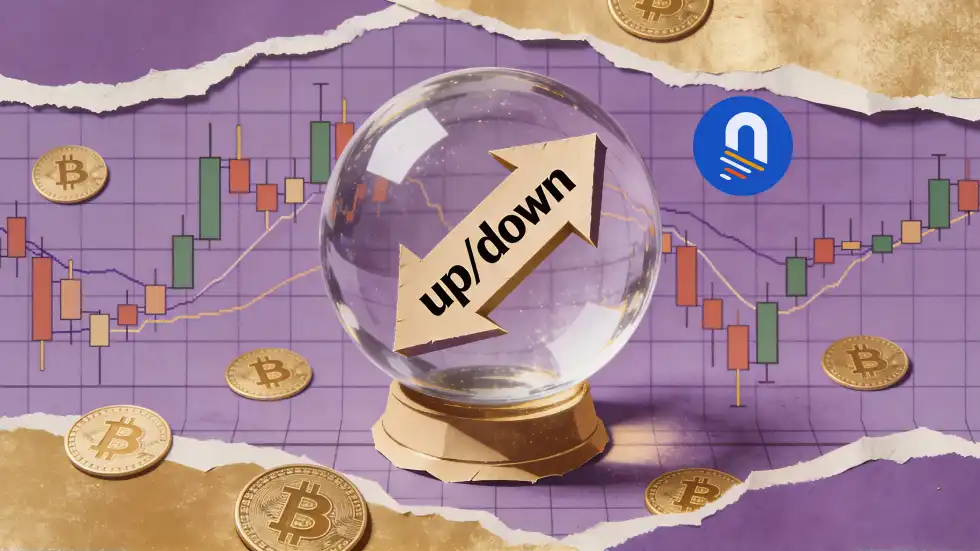
Can a Hair Dryer Earn $34,000? Deciphering the Reflexivity Paradox in Prediction Markets

An individual manipulated a weather sensor at Paris Charles de Gaulle Airport with a portable heat source, causing a Polymarket weather market to settle at 22°C and earning $34,000. This incident highlights a fundamental issue in prediction markets: when a market aims to reflect reality, it also incentivizes participants to influence that reality. Prediction markets operate on two layers: platform rules (what outcome counts as a win) and data sources (what actually happened). While most focus on rules, the real vulnerability lies in the data source. If reality is recorded through a specific source, influencing that source directly affects market settlement. The article categorizes markets by their vulnerability: 1. **Single-point physical data sources** (e.g., weather stations): Easily manipulated through physical interference. 2. **Insider information markets** (e.g., MrBeast video details): Insiders like team members use non-public information to trade. Kalshi fined a剪辑师 $20,000 for insider trading. 3. **Actor-manipulated markets** (e.g., Andrew Tate’s tweet counts): The subject of the market can control the outcome. Evidence suggests Tate’sociated accounts coordinated to profit. 4. **Individual-action markets** (e.g., WNBA disruptions): A single person can execute an event to profit from their pre-placed bets. Kalshi and Polymarket handle these issues differently. Kalshi enforces strict KYC, publicly penalizes insider trading, and reports to regulators. Polymarket, with its anonymous wallet-based system, has historically been more permissive, arguing that insider information improves market accuracy. However, it cooperated with authorities in the "Van Dyke case," where a user traded on classified government information. The core paradox is reflexivity: prediction markets are designed to discover truth, but their financial incentives can distort reality. The more valuable a prediction becomes, the more likely participants are to influence the event itself. The market ceases to be a mirror of reality and instead shapes it.

marsbit9 мин. назад

Can a Hair Dryer Earn $34,000? Deciphering the Reflexivity Paradox in Prediction Markets

marsbit9 мин. назад

First Day Review of "Musk's WeChat" XChat: Even Worse Than Expected

Elon Musk's much-anticipated "WeChat-like" app, XChat, has officially launched after multiple delays. The initial review reveals a product that falls short of expectations, offering an experience largely similar to X Platform's (formerly Twitter) direct messages, despite being marketed as an encrypted communication tool. Key observations from the first-day test include: 1. The app's promoted "end-to-end encryption" and its claimed relation to Bitcoin's architecture were criticized by experts as a superficial attempt to capitalize on crypto buzz, with no real technical connection. 2. Musk's vision of an ad-free "secure communication system" is technically met, but only because the app is currently extremely basic, featuring only a single chat interface. 3. A promised anti-screenshot feature appears inconsistent; it works in X Platform group chats but fails within the XChat app itself, where screenshots still capture avatars. 4. The app supports 45 languages and has a 16+ age rating, indicating a broader tolerance for content compared to WeChat's 13+ rating. 5. A puzzling login process requires users to verify the email associated with their X account. 6. The touted encryption" feels minimal in practice, with its presence only indicated by a simple "Encrypted - Yes" label on messages. 7. Disappearing message timers for groups can be set from 5 minutes to 4 weeks, with the timer starting upon being read by a user. 8. Group invite links are shared with X Platform groups. 9. Group size limits are planned to be increased, aiming for 1000 members, a move that has drawn user criticism. 10. The app offers 8 different colored icons, and its chat bubbles are notably similar to WeChat's. Message deletion options mimic Telegram's. Crucially, many pre-announced features like importing X contacts, integrating Grok AI, X Money payments, and Cashtags are not yet available. The initial release is seen as a bare-bones and underwhelming first step.

Odaily星球日报1 ч. назад

First Day Review of "Musk's WeChat" XChat: Even Worse Than Expected

Odaily星球日报1 ч. назад

Торговля

Спот
Фьючерсы

Популярные статьи

Как купить USDS

Добро пожаловать на HTX.com! Мы сделали приобретение USDS (USDS) простым и удобным. Следуйте нашему пошаговому руководству и отправляйтесь в свое крипто-путешествие.Шаг 1: Создайте аккаунт на HTXИспользуйте свой адрес электронной почты или номер телефона, чтобы зарегистрироваться и бесплатно создать аккаунт на HTX. Пройдите удобную регистрацию и откройте для себя весь функционал.Создать аккаунтШаг 2: Перейдите в Купить криптовалюту и выберите свой способ оплатыКредитная/Дебетовая Карта: Используйте свою карту Visa или Mastercard для мгновенной покупки USDS (USDS).Баланс: Используйте средства с баланса вашего аккаунта HTX для простой торговли.Третьи Лица: Мы добавили популярные способы оплаты, такие как Google Pay и Apple Pay, для повышения удобства.P2P: Торгуйте напрямую с другими пользователями на HTX.Внебиржевая Торговля (OTC): Мы предлагаем индивидуальные услуги и конкурентоспособные обменные курсы для трейдеров.Шаг 3: Хранение USDS (USDS)После приобретения вами USDS (USDS) храните их в своем аккаунте на HTX. В качестве альтернативы вы можете отправить их куда-либо с помощью перевода в блокчейне или использовать для торговли с другими криптовалютами.Шаг 4: Торговля USDS (USDS)С легкостью торгуйте USDS (USDS) на спотовом рынке HTX. Просто зайдите в свой аккаунт, выберите торговую пару, совершайте сделки и следите за ними в режиме реального времени. Мы предлагаем удобный интерфейс как для начинающих, так и для опытных трейдеров.

77 просмотров всегоОпубликовано 2026.04.13Обновлено 2026.04.13

Как купить USDS

Неделя обучения по популярным токенам 12: Крипто-конференция на 25 апреля 2026 года в Mar-a-Lago привлекает внимание, волна мем-монет вновь поднимается

Сообщество с большим нетерпением ожидает крипто-конференцию на 25 апреля 2026 года в Mar-a-Lago, многие рассматривают это как возможность «купить монету = приблизиться к президенту».

931 просмотров всегоОпубликовано 2026.04.14Обновлено 2026.04.14

Неделя обучения по популярным токенам 12: Крипто-конференция на 25 апреля 2026 года в Mar-a-Lago привлекает внимание, волна мем-монет вновь поднимается

Обсуждения

Добро пожаловать в Сообщество HTX. Здесь вы сможете быть в курсе последних новостей о развитии платформы и получить доступ к профессиональной аналитической информации о рынке. Мнения пользователей о цене на A (A) представлены ниже.

活动图片