A New Crypto Predator Emerges: Google Exposes ‘Ghostblade’

bitcoinistОпубликовано 2026-03-21Обновлено 2026-03-21

Введение

A new iOS malware called "Ghostblade," part of the DarkSword tool suite, has been exposed by Google Threat Intelligence. Designed to steal sensitive data from Apple devices, it targets cryptocurrency private keys, messages from iMessage, WhatsApp, and Telegram, as well as SIM details, location data, and media files. Ghostblade operates once, extracts information, and then deletes crash logs to avoid detection, leaving no persistent trace. This makes it particularly effective and hard to identify. The emergence of Ghostblade reflects a broader shift in cyberattacks toward individual crypto users rather than institutions. Although overall crypto hack losses dropped to around $50 million in February—down from $385 million the previous month—this decline is due to attackers shifting from code exploits to social engineering, phishing, and wallet poisoning schemes. The report underscores that high-value individual holders are increasingly targeted through deceptive websites and malware designed to operate quickly and discreetly.

Private crypto holders took the heaviest losses from hacking, phishing, and digital theft attempts in February 2026, according to blockchain intelligence firm Nominis — and a newly identified strain of iOS malware may explain part of why individual users have become the preferred target.

Designed To Strike Fast And Disappear

Google Threat Intelligence has identified a JavaScript-based malicious tool called Ghostblade, built specifically to hit Apple iOS devices, extract sensitive data, and go quiet before anyone notices.

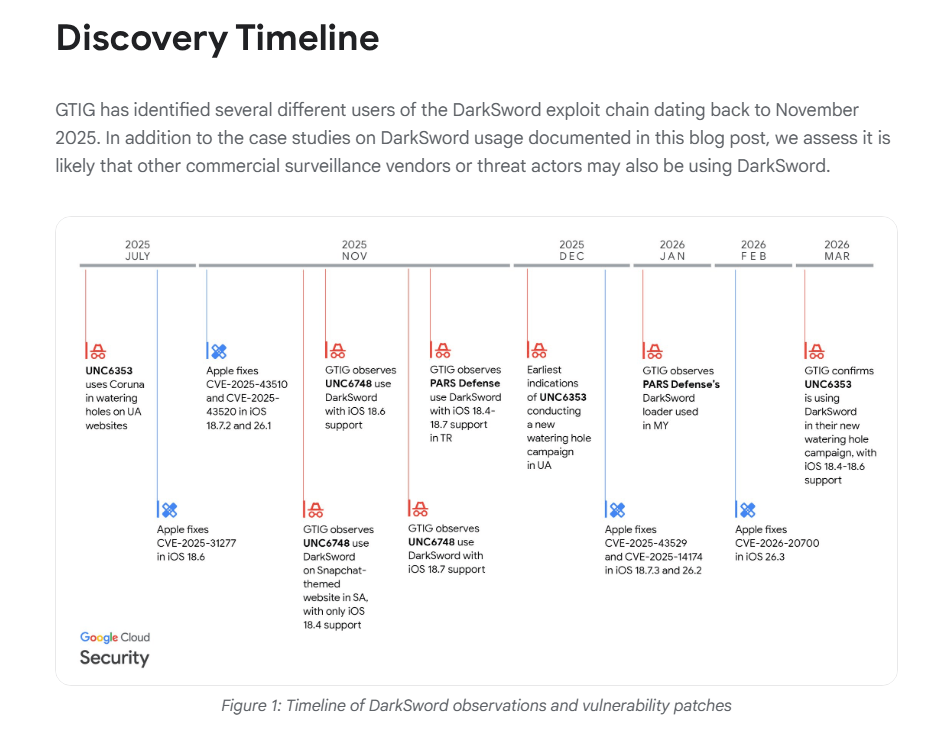
The software is one of six tools bundled inside a broader package researchers are calling DarkSword. Together, the tools are engineered to steal cryptocurrency private keys, messaging data, and personal information from infected devices.

Ghostblade runs once, takes what it needs, and stops. No persistent background activity. No extra software required to make it work. That design makes it far harder to catch than malware that keeps running after an infection.
Source: Google

The tool also covers its tracks in a specific way. After it finishes, it wipes crash logs from the compromised device. Those logs are what Apple normally collects to identify software problems and flag suspicious activity. Without them, Apple receives no signal that anything went wrong.

What Ghostblade Can Actually Access

The scope of what Ghostblade can pull from a device is wide. Based on Google’s report, the malware is capable of reaching messages from iMessage, WhatsApp, and Telegram.

It can also collect SIM card details, location data, multimedia files, and system-level settings. For crypto users, the most direct threat is private key exposure — the kind of access that gives an attacker full control over a digital wallet with no way to reverse transactions once funds are moved.

Bitcoin is currently trading at $70,572. Chart: TradingView

The DarkSword suite represents a new chapter in browser-based attacks aimed at the crypto space, with Ghostblade serving as one of its most technically refined components.

Hackers Shift Focus From Code To People

Total losses from crypto-related hacks dropped sharply in February, falling to close to $50 million from $385 million the month before, Nominis data shows. But that decline does not signal a safer environment.

Reports indicate the drop reflects a change in method, not ambition. Attackers moved away from exploiting code vulnerabilities and toward phishing schemes, wallet poisoning, and other approaches that rely on tricking users rather than breaking systems.

Fake websites built to mirror legitimate platforms are a common vehicle. Users who land on them and interact with any element can have credentials and keys lifted without realizing it.

The Ghostblade alert from Google arrives against that backdrop — a reminder that high-value individual users, not just exchanges or protocols, are firmly in the crosshairs.

Featured image from Unsplash, chart from TradingView

Связанные с этим вопросы

QWhat is the name of the newly identified iOS malware described in the article, and what is its primary function?

AThe malware is called Ghostblade. Its primary function is to extract sensitive data, such as cryptocurrency private keys, messaging data, and personal information, from infected Apple iOS devices and then go quiet to avoid detection.

QAccording to the article, what broader package is Ghostblade a part of, and what is the collective goal of its tools?

AGhostblade is one of six tools bundled inside a broader package called DarkSword. The collective goal of these tools is to steal cryptocurrency private keys, messaging data, and personal information from infected devices.

QHow does the Ghostblade malware avoid detection after it completes its task on a compromised device?

AGhostblade avoids detection by running only once, taking the data it needs, and then stopping with no persistent background activity. It also covers its tracks by wiping crash logs from the device, which prevents Apple from receiving signals that would normally flag suspicious activity.

QWhat specific types of data can the Ghostblade malware access on an infected device?

AGhostblade can access messages from iMessage, WhatsApp, and Telegram. It can also collect SIM card details, location data, multimedia files, system-level settings, and most critically for crypto users, private keys that control digital wallets.

QWhat trend in cyber attacks does the article highlight, as shown by the change in total crypto losses from January to February 2026?

AThe article highlights a trend where attackers are shifting their focus from exploiting code vulnerabilities to using methods that trick users, such as phishing schemes and wallet poisoning. This is evidenced by a sharp drop in total losses from $385 million in January to about $50 million in February, which reflects this change in method rather than a decrease in attacker ambition.

Похожее

Паркер Льюис ответил, почему биткоин остаётся лучшими деньгами

Известный биткоин-аналитик Паркер Льюис раскритиковал стратегии публичных компаний, позиционирующих себя как криптовалютные казначейства. Он заявил, что продажа ими «цифрового кредита» в виде бессрочных привилегированных акций искажает суть биткоина, который не генерирует фиатный доход на алгоритмическом уровне. Льюис подчеркнул, что выплата дивидендов в этой модели часто зависит от притока новых инвесторов, что несёт высокие риски, наглядно демонстрируемые скромным размером рынка таких акций ($1 трлн) на фоне глобального кредитного рынка ($300 трлн). Эксперт также опроверг тезис о чрезмерной волатильности биткоина, объяснив её как естественное следствие массового принятия актива с жёстко ограниченным предложением. Он призвал инвесторов покупать биткоины напрямую, а не акции компаний вроде MicroStrategy, что математически безопаснее. Льюис указал на главную угрозу — инфляцию фиатных денег, проиллюстрировав её личным «Индексом рибая», показывающим рост цен на 12–13% годовых. В итоге, наиболее надёжной стратегией защиты сбережений он назвал прямое владение биткоином и контроль над приватными ключами, предостерегая от скрытых рисков погони за корпоративной доходностью через деривативы.

cryptonews.ru55 мин. назад

Паркер Льюис ответил, почему биткоин остаётся лучшими деньгами

cryptonews.ru55 мин. назад

Почему биткоин удерживает $64 000 после жесткой паузы ФРС

Федеральная резервная система США оставила ключевую ставку без изменений, но жесткая риторика и голосование (9 против 3) показали готовность к дальнейшему ужесточению, что ограничивает аппетит к рисковым активам. Несмотря на это, биткоин демонстрирует устойчивость, удерживаясь около уровня $64 000 после волатильной реакции на заявление ФРС. Ключевая поддержка находится в зоне $63 000–63 500, сопротивление — около $66 000. На рынке наблюдается ротация капитала: спотовые Bitcoin-ETF после серии оттоков показали чистый приток в $32,1 млн, тогда как фонды на Ethereum продолжили терять средства. Интерес институциональных инвесторов сместился в сторону биткоина как основного актива, хотя отдельные альткоины, такие как Solana, также привлекают капитал. Рыночная доля Ethereum снижается, несмотря на сильные фундаментальные показатели сети, включая растущую очередь на стейкинг. Законодательная инициатива CLARITY Act была отложена Сенатом США до осени, что снизило рыночные ожидания относительно её принятия в 2026 году. В последний день июля внимание инвесторов будет приковано к макроэкономической статистике из США. Устойчивость биткоина выше $63 000, закрепление Ethereum над $1 860 и продолжение притоков в ETF могут стать сигналами для формирования базы восстановления во второй половине года.

cryptonews.ru55 мин. назад

Почему биткоин удерживает $64 000 после жесткой паузы ФРС

cryptonews.ru55 мин. назад

Компания ARK Invest Кэти Вуд купила 109,129 акций Circle на $6,83 млн

Компания ARK Invest Кэти Вуд приобрела 109 129 акций компании Circle на сумму около 6,83 млн долларов США. Покупка была осуществлена через три ее биржевых фонда: ARK Innovation, ARK Next Generation Internet и ARK Fintech Innovation. Эта сделка произошла вскоре после того, как Circle получила лицензию на доверительное управление от Департамента финансовых услуг штата Нью-Йорк для своей дочерней компании Circle New York Trust. Генеральный директор Circle Джереми Аллер назвал получение лицензии долгосрочной целью компании. Однако, несмотря на это регулирующее одобрение, акции Circle (CRCL) 31 июля снизились на 2,54%, что, вероятно, указывает на сдержанную реакцию инвесторов на данную новость. Параллельно ARK Invest также совершила крупные покупки акций Tesla, SpaceX и Nvidia на общую сумму около 40,2 млн долларов, одновременно сократив свои доли в таких компаниях, как Shopify, Cloudflare и CrowdStrike.

cryptonews.ru56 мин. назад

Компания ARK Invest Кэти Вуд купила 109,129 акций Circle на $6,83 млн

cryptonews.ru56 мин. назад

Арестованы участники мошеннической схемы с XRP, похитившие 9 млн долларов у 71 инвестора

Полиция Сеула арестовала трех участников мошеннической инвестиционной платформы, похитивших примерно 3,4 млн XRP (около 9 млн долларов) у 71 инвестора. Группа продвигала сайт Fxrpntwork.com через блоги и YouTube, обещая гарантированную сохранность вкладов и ежемесячный доход до 1,8%, после чего исчезла с деньгами. Мошенники использовали названия и брендинг легитимных проектов Flare Network и FXRP для создания видимости надежности. Полиция предупреждает инвесторов о необходимости проверять официальные источники и не доверять непроверенной информации в интернете. Дело передано прокуратуре, ведется розыск еще одного подозреваемого за рубежом с помощью Интерпола. В ходе расследования были заморожены активы на крупную сумму и выявлены дополнительные транзакции, что указывает на возможных новых потерпевших и соучастников. Этот случай иллюстрирует распространенность мошеннических схем с гарантированной доходностью в криптосфере.

cryptonews.ru58 мин. назад

Арестованы участники мошеннической схемы с XRP, похитившие 9 млн долларов у 71 инвестора

cryptonews.ru58 мин. назад

Торговля

Спот
活动图片





