Written by: Kuli, Shenchao TechFow
On January 7th, the core development team of Zcash collectively resigned.
Not just one or two people throwing a tantrum, but the entire Electric Coin Company, about 25 people, led by the CEO, all left.
This company has an abbreviation, ECC, and is the main developer behind Zcash. You can understand it as: the people who write the code, quit.
Upon the news, ZEC plummeted by 20%.
A hot piece of knowledge: Zcash is almost ten years old.
Launched on October 28, 2016, it's older than many people's time in the crypto space. Its selling point back then was "private transactions"—sender, receiver, amount, all encrypted, nothing visible on the chain.
But the reality is, after nine years online, less than 1% of ZEC transactions actually used this feature.
The remaining 99% are still running naked.
Nine years. The product isn't used, but the team kept grinding. The price dropped from over $3,000 when it first launched in 2016 to $15 in July 2024.
Then, by the end of 2025, ZEC suddenly surged.
It was hovering around $40 at the start of the year, and by November 7th, it soared to $744, market cap breaking $10 billion, clawing its way back into the top twenty.
The long-dormant narrative of privacy coins suddenly became sexy again.
Okay, the price skyrocketed nearly 800%, and then, "the development team ran away."
This story sounds like a middle-aged man's script. Bought a Porsche, then got divorced. Year-end bonus came in, then it's splitsville.
When there's little money, everyone is comrades; when money increases, they start fighting over who calls the shots.
What are they fighting over? A wallet called Zashi.
Zashi is a mobile wallet released by ECC in early 2024, promoting "privacy features enabled by default." It's the most important user entry point in the Zcash ecosystem.
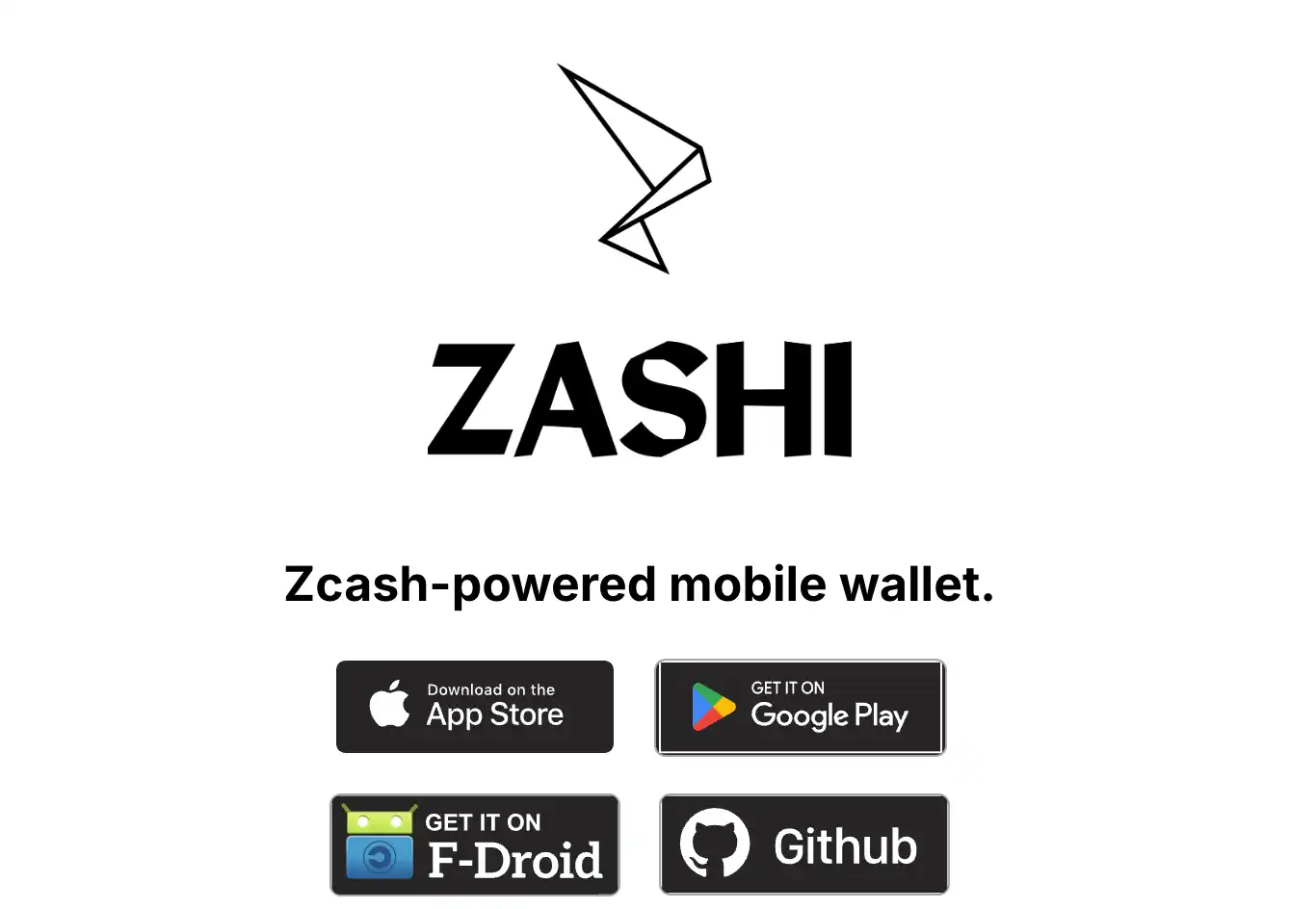
The ECC team wanted to privatize Zashi, bring in external investment, and turn it into a startup capable of raising funds and iterating quickly.
But ECC is not an independent company. In 2020, ECC was placed into a non-profit organization called Bootstrap, structured as a US 501(c)(3).
Simply put, this structure is specifically for charities and public welfare organizations. The benefit is no taxes, the downside is that money made cannot be distributed to insiders, and how assets are handled must be approved by the board of directors.
Back then, this was done for compliance, to avoid regulatory pressure from the SEC. In a bear market, no one cared about these details, as there was no money to share anyway.
Now, the Bootstrap board says, no.
The board's reasons are:
We are a non-profit organization with a fiduciary duty to protect donor interests. Privatizing Zashi could be illegal, could lead to lawsuits, could be politically attacked. They even gave an example: Look at OpenAI, trying to transition from non-profit to for-profit, how many people sued.
ECC's former CEO, Josh Swihart, sees it differently. He said on Twitter that the board's actions constitute "malicious governance behavior," making it "impossible for the team to perform their duties effectively and with dignity."
He used a legal term: "constructive discharge," meaning although not formally fired, the working conditions were altered to make the job untenable, equivalent to being forced out.
25 people forced out together.
Simultaneously, Swihart named four board members: Zaki, Christina, Alan, Michelle. He connected their initials, calling them "ZCAM."
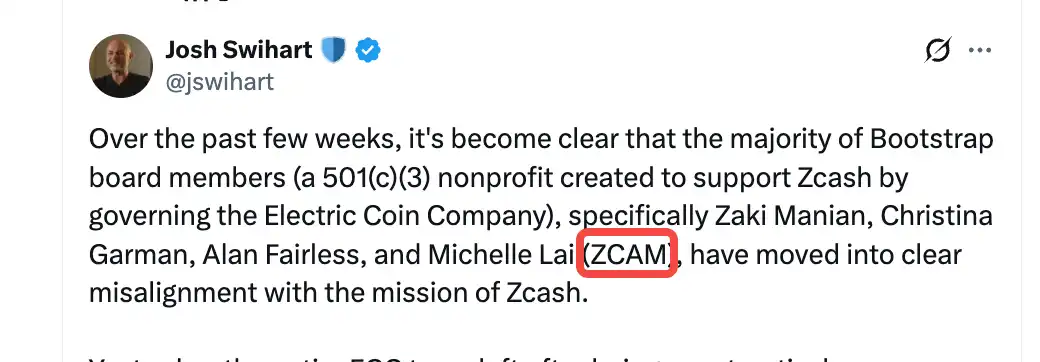
ZCAM. Sounds like SCAM. Not sure if it's intentional.
Among these four, Zaki Manian has the most stories.
He's an old-timer in the Cosmos ecosystem, was a core member of Tendermint. Resigned in 2020 after a public feud with founder Jae Kwon.
In 2023, the FBI informed him that two developers on a project he was responsible for were North Korean agents. After finding out, he concealed this for 16 months before making it public. In October 2024, Jae Kwon publicly accused him of "gross negligence" and "betraying the community's trust."
Now, he is a member of the Zcash board of directors.
The day after resigning, the former ECC team announced the formation of a new company, codenamed CashZ.
They said they would use the Zashi codebase to create a new wallet, to be launched within weeks. Existing Zashi users can migrate seamlessly.

"We are the same team, with the same mission: to build unstoppable private money."
No new token, no starting from scratch, just changing the shell to keep working.
The most ironic part of this, we think, is the timing.
When ZEC was $15, no one cared who managed the wallet. When it hit $500, how much Zashi was worth became a matter of life and death.
When money appears, you find out who's family.
Similarly, the conflict between a non-profit and a startup team: OpenAI ended with the board losing, Zcash ended with the team leaving.
Who won is unclear, but this conflict is indeed common in crypto projects.
Swihart wrote a passage on the CashZ website explaining why they left:
"The non-profit foundation model is a relic of the compliance era in crypto. An era where projects needed 'compliance buffers' to protect themselves. But these buffers introduced bureaucracy and divergence in roadmap. Startups can scale fast, non-profits cannot."
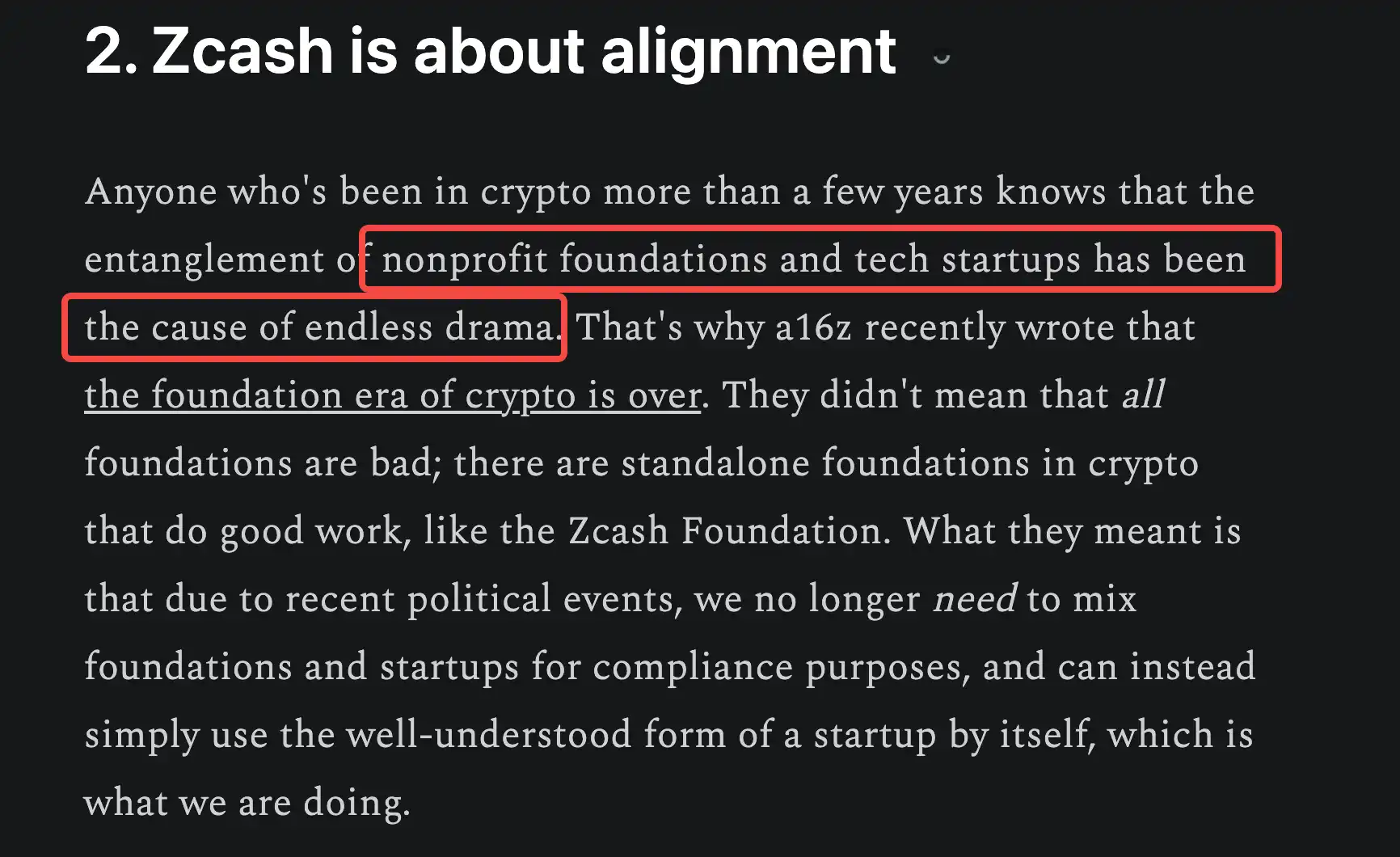
He also said: "Anyone who's been in crypto for a few years knows that the entanglement of non-profit foundations and tech startups is a source of endless drama."
It truly is endless drama.
In 2023, when Zooko stepped down as CEO, there were rumors of disagreements with Swihart. In January 2025, Zcash Foundation board member Peter Van Valkenburgh also resigned.
A decade-old coin, those who were supposed to leave have pretty much all gone.
Someone asked on Twitter: Will Zcash die?
The chain is still running. The code is still there. It's just that the people writing the code have changed.
But Swihart is right, the conflict between non-profits and startups is a common disease in this industry. Cosmos argued. The Ethereum Foundation argued. The Solana Foundation argued.
The difference is only in the manner and intensity of the arguments.
Zcash chose the most straightforward way.
Break up.