Since late 2024, besides its core crypto custody and stablecoin payment businesses, Cobo has been exploring the integration of AI and blockchain.
We initially saw the potential for standardization brought by MCP. Theoretically, if skills were sufficiently standardized, AI could call upon capabilities like plugins, and blockchain would become the most natural financial infrastructure for AI.
Consequently, we internally incubated an MCP app store. But it was quickly invalidated.
At that time, the barrier to entry for AI was still so high that only seasoned engineers could proficiently make calls, and MCP wasn't standardized enough. Each integration was time-consuming and labor-intensive, with high costs and slow progress; the actual implementation fell far short of expectations.
But the AI team was already assembled. It was expensive, hard to recruit for, and couldn't be easily disbanded.
So we decided to change direction. If we couldn't transform the client world yet, we would start by transforming ourselves.
First Problem: Security
As an asset custody company, Cobo's data and internal technical processes and frameworks are extremely sensitive. We also have strict internal data tiers. But without data and real business input, it's impossible to train the company's own Agent.
Our first thought was local model deployment. But the reality is, the intelligence level of local models didn't meet the requirements. They could run, but weren't user-friendly; they could answer, but weren't smart enough.
We ultimately chose Claude and Gemini as the foundation (applying for ZDR—Zero Data Retention clauses to achieve the highest level of isolation).
But large language models are just the underlying "brain" of the business. The real complexity lies in data and permissions.
We later built a complete internal knowledge base and Agent framework.
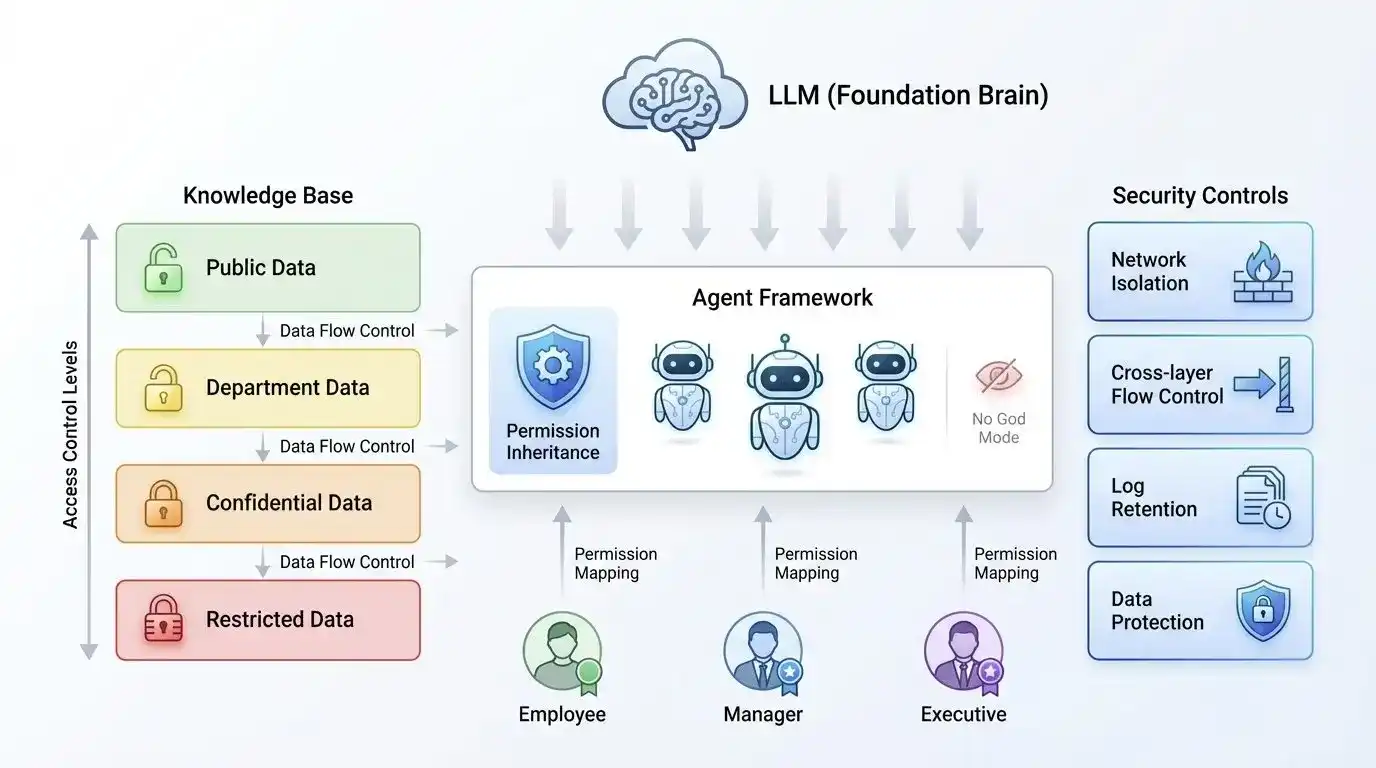
Internal knowledge base + Cobo's self-developed agent system
The knowledge base is responsible for the hierarchical classification of internal company data. It assigns readable scopes based on employee permissions.
When Agents call the knowledge base, they also inherit the employee's permissions, rather than having a "God's-eye view".
The details here include:
- How to isolate the network environment
- How to restrict cross-layer data flow
- How to control log retention for auditability
- How to prevent sensitive information leakage
These aspects aren't glamorous, but they determine whether this can run long-term. AI must not become a security vulnerability.
Problem After Architecture Was Built: No One Used It
Even today, the company still faces a reality: many front-line business units are dismissive of AI.
If it's just encouraged usage, AI-driven workflow change won't happen.
We later realized we had to start with company management.
First Breakthrough: OKR Agent
Our first strongly pushed scenario wasn't customer service, nor was it writing code.
It was OKR (Objectives and Key Results).
We used AI to break down company strategy, used AI to help set OKRs, used AI to track progress, and used AI to review bottlenecks.
In other words, we slowly transformed company management from human management to silicon-carbon co-governance. This process was extremely uncomfortable for employees.
Previously, goals could be written more vaguely, and processes could be explained more loosely. Now, with weekly data right there, excuses became fewer and fewer.
From that moment on, goals were no longer just discussions in meetings; they became continuous records in the system.
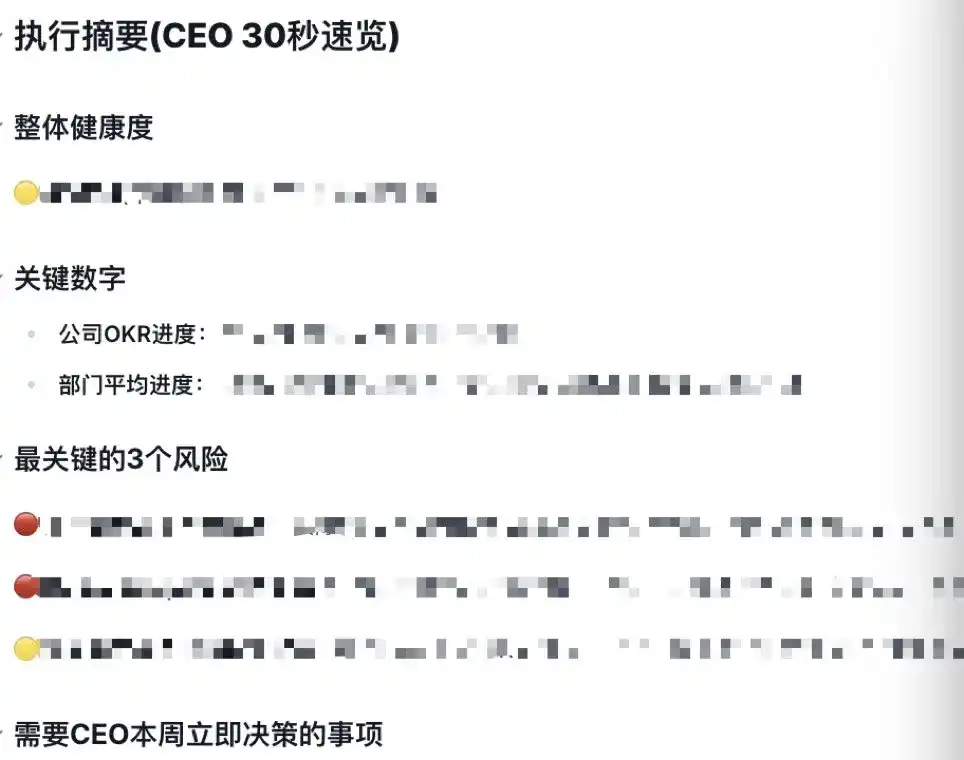
Strategy OKR督促业务进展 (Strategy OKR督促业务进展 - Supervising business progress weekly)
But it was also starting with performance that everyone truly became familiar with AI. Because if you didn't participate, it directly affected your compensation.
From Performance to Business: Comprehensive Agent-ification
After OKRs were up and running, we began promoting the agent-ification of internal services. We used evaluations + bonuses to强制 (mandate) each department to establish Agents related to their own business.
Customer service built customer service Agents. Legal built contract assistance Agents. Sales built CRM Agents.
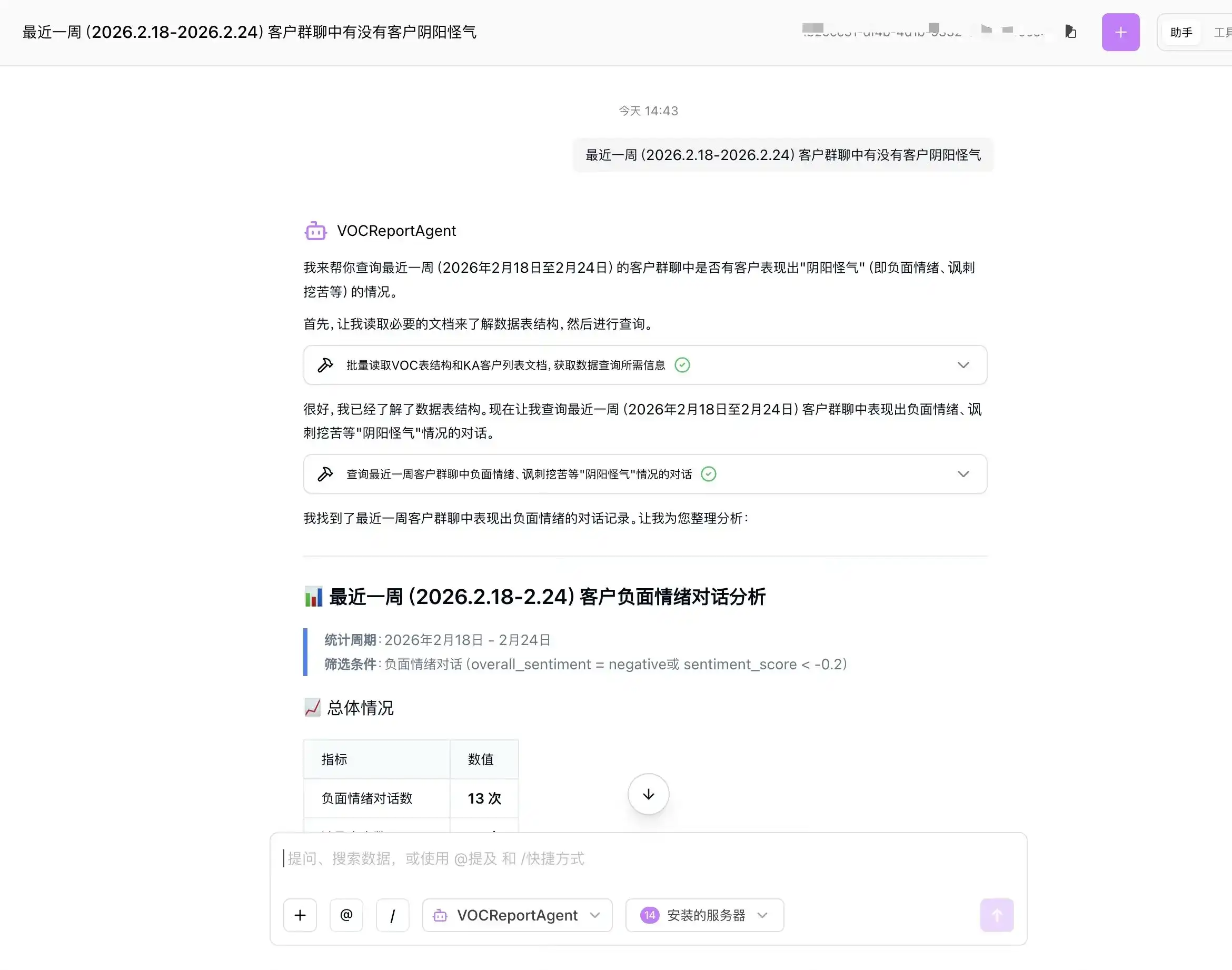
寻找最阴阳怪气的客户agent (Looking for the most passive-aggressive customer agent)
In the end, over 100 Agents were launched.
We cannot precisely quantify the results of "silicon-carbon co-governance".
But at least one change is clear:
Before, the first reaction to a problem was "Should we hire another person?". Now the first reaction is, "Can we get the system involved first?".
This is essentially our understanding of silicon-carbon co-governance. It's not about AI replacing humans. It's about humans becoming accustomed to working alongside systems.
Lessons Learned from This Year's Journey, Some Very Practical
First, have healthy cash flow.
If the company's cash flow isn't healthy, this kind of transformation won't reach the finish line. AI is not a cost-saving tool; it's an upfront investment for long-term structural upgrades. Thanks to Cobo's main business still having healthy cash flow.
Second, it must be top-down推进 (driven).
Organizations don't change spontaneously. If management doesn't strongly push it, this will naturally fail.
As is well known, Cobo's founders are重度ai玩家 (heavy AI users/enthusiasts), CTO Dr. Jiang started some AI research as a postdoc at CMU in the 2000s.
Third, mandatory usage is necessary.
If it's just encouragement, AI will always remain at writing emails. Real process change inevitably involves a degree of "compulsion".
Fourth, solve your own business first.
Many companies talk about AI + Web3. But if you haven't completed your own internal AI transformation, what you talk about externally is just概念 (concept).
Looking Back
We also cannot fully quantify this transformation. The company began shifting from "people-driven processes" slowly towards "goal-driven systems".
If "intelligent organizations" truly emerge in the future, they certainly won't evolve naturally. They will be pushed out through round after round of discomfort.
Because of the participation of the entire team, the company can also better understand the real demands in the AI era.
This is also a byproduct of our internal transformation.
Recently we launched Cobo Waas Skill. Cobo WaaS Skill is an integration and operational capability layer specifically designed for AI Coding Agents. It enables Agents to accurately call WaaS APIs through structured knowledge, executable examples, and scenario orchestration. We are upgrading wallet APIs into financial capability modules that can be directly called by AI Agents. The development cycle is shortened from weeks to conversation-level.
This isn't the result of a single product inspiration. Rather, it's the natural溢出 (spillover) of capabilities after our internal round of silicon-carbon co-governance.
We are still摸索 (figuring things out).
But at least, today's Cobo is no longer the company it was in 2024.