SpaceX Ties Up with Cursor: A High-Stakes AI Gambit of 'Lock First, Acquire Later'

marsbitОпубликовано 2026-04-23Обновлено 2026-04-23

Введение

SpaceX has secured an option to acquire AI programming company Cursor for $60 billion, with an alternative clause requiring a $10 billion collaboration fee if the acquisition does not proceed. This structure is not merely a potential acquisition but a strategic move to control core access points in the AI era. The deal is designed as a flexible, dual-path arrangement, allowing SpaceX to either fully acquire Cursor or maintain a binding partnership through high-cost collaboration. This "option-style" approach minimizes immediate regulatory and integration risks while ensuring long-term alignment between the two companies. At its core, the transaction exchanges critical AI-era resources: SpaceX provides its Colossus supercomputing cluster—one of the world’s most powerful AI training infrastructures—while Cursor contributes its AI-native developer environment and strong product adoption. This synergy connects compute power, models, and application layers, forming a closed-loop AI capability stack. Cursor, founded in 2022, has achieved rapid growth with over $1 billion in annual revenue and widespread enterprise adoption. Its value lies in transforming software development through AI agents capable of coding, debugging, and system design—positioning it as a gateway to future software production. For SpaceX, this move is part of a broader strategy to evolve from a aerospace company into an AI infrastructure empire, integrating xAI, supercomputing, and chip manufacturin...

When SpaceX announced it had secured an option to acquire AI programming company Cursor for $60 billion, along with an alternative clause requiring a $10 billion cooperation fee if the acquisition does not proceed, the news quickly sent shockwaves through the global tech and capital markets. However, interpreting this merely as a potential merger deal would significantly underestimate the strategic depth behind this arrangement. From structural design and resource exchange to industry timing, this appears more like a systematic positioning around the 'core gateway of the AI era.'

From 'Acquisition' to 'Option Control': A Meticulously Designed Transaction Structure

The most striking aspect of this deal is not the amount itself but its highly flexible dual-path structure. SpaceX can either complete a full acquisition of Cursor for $60 billion in the future or opt not to acquire but pay $10 billion to continue cooperation. This design allows SpaceX to exert significant influence over Cursor's future destiny while bearing limited risk, as both paths will bind the two parties to the same technological and commercial trajectory for the long term.

Further analysis reveals that this 'option-style acquisition' is essentially a control mechanism介于 investment and acquisition. It avoids the regulatory and integration risks of an immediate acquisition while locking in the cooperative relationship through high违约 costs, enabling a flexible strategic layout of 'bind first, decide whether to fully吞并 later.' This also explains why some commentators interpret it as a form of 'quasi-acquisition' or even 'semi-control' relationship.

Exchange of Computing Power and Product: The Most Critical Resource对接 in the AI Era

In this transaction, what is exchanged is not simple capital but the two most critical resources of the AI era: computing power and application入口. SpaceX provides its标志性 Colossus supercomputing cluster, described as having training capabilities equivalent to hundreds of thousands or even millions of high-end GPUs, making it one of the most powerful AI infrastructures globally. Cursor, on the other hand, offers its product penetration among developer communities and积累 of AI programming technology.

The significance of this combination lies in its direct打通 of the complete chain of 'computing power—model—application.' This enables Cursor, which previously relied on external models or computing power, to gain enhanced training capabilities. Simultaneously, it provides SpaceX and its integrated xAI with a key landing point at the application layer, thereby摆脱 the limitation of having only models without落地 scenarios. This complementary relationship represents the most稀缺 capability combination in the current AI competition.

Cursor's Value: Why a Company Founded Just a Few Years Ago Can Reach a $60 Billion Valuation

To understand the rationality of this deal, one must comprehend Cursor's uniqueness. It is not a traditional development tool but an 'AI-native development environment.' Its core lies in deeply embedding artificial intelligence into the software development process, making AI not just a code completion tool but a collaborative agent capable of undertaking complex programming tasks. This model has led to its rapid expansion among enterprises and developers.

According to publicly disclosed information, Cursor was founded in 2022 but achieved a leap in valuation from billions to hundreds of billions of dollars within just a few years. It has already reached an annual revenue scale exceeding $1 billion and is adopted by numerous large enterprises. Such growth speed is extremely rare in the software industry.

More crucially, what Cursor represents is not a single product but a 'transformation in software production methods'—using AI agents to automatically handle coding, debugging, and even system design. This means it controls not just a function but the gateway to the future way developers work. Once such an入口 is controlled, its commercial value will far exceed that of traditional software companies.

SpaceX's True Goal: From Aerospace Company to AI Infrastructure Empire

If this transaction is viewed on a larger timeline, it becomes clear that it is a continuation of a series of actions Musk has taken in recent years: integrating xAI, building supercomputers, advancing chip manufacturing, and other methods to transform SpaceX from a单一 aerospace company into an 'AI infrastructure platform.' Cursor is precisely the missing final piece in this system.

Previously, SpaceX had completed the integration of xAI, giving it model development capabilities. However, it still lagged behind competitors in the application layer, especially in developer tools. By binding with Cursor, SpaceX can quickly弥补 this shortcoming, forming a closed-loop system covering computing power, models, and applications. This not only enhances its AI competitiveness but also provides a more attractive narrative foundation for its upcoming IPO.

In other words, the goal of this deal is not simply to enhance a particular business but to build a super story of 'AI + infrastructure' for SpaceX that can support a trillion-dollar valuation.

Changes in Industry Landscape: AI Competition Shifts from Model Wars to Gateway Wars

On a broader level, this transaction reflects a shift in the logic of competition within the AI industry—from early competition围绕 model capabilities to competition围绕 'gateways and ecosystems.' As model capabilities become more homogenized, whoever controls the user gateway will掌握 the initiative in commercialization.

Current major competitors include OpenAI, Anthropic, and Google, which are争夺 users through products like ChatGPT, Claude, and Gemini, respectively. In the developer领域, programming tools have become one of the most critical gateways because software development itself is the most direct monetization path for AI.

Therefore, by binding with Cursor, SpaceX is essentially争夺 'the core user group of programmers.' Once this group is mastered, it means occupying a key position in the future software production system.

Potential Risks and Controversies: High Valuation and Uncertainty in Strategic Integration

Although widely regarded as strategically significant, this deal also carries不容忽视 risks. The foremost is the valuation issue—whether Cursor's $60 billion valuation, achieved through数十倍 growth in an extremely short time, can be sustained long-term remains debatable. Secondly, there is technical integration risk, as xAI still lags behind some competitors in programming capabilities, and whether it can achieve breakthroughs through integrating Cursor has yet to be verified.

Furthermore, deep integration among multiple companies may attract regulatory attention, especially against the backdrop of high centralization in AI and infrastructure. Balancing expansion with regulation will become an important variable in the future.

Conclusion:

In summary, the true significance of this '$60 billion acquisition option' lies not in whether the acquisition is ultimately completed but in its use of structural design, resource binding, and ecosystem integration to提前锁定 the most critical production gateway of the AI era—the core scenario of software development. In the future, whoever masters the development tools may master the dominance of software production, and software production itself is the foundation of the digital economy.

Therefore, rather than saying Musk is betting on an AI company, it is more accurate to say he is押注 on a grander proposition: in the process of artificial intelligence reshaping the world, how to redefine the distribution of technological power by controlling computing power and gateways.

Связанные с этим вопросы

QWhat is the strategic significance of the deal structure between SpaceX and Cursor, beyond a simple acquisition?

AThe deal is structured as a dual-path option: SpaceX can either acquire Cursor for $60 billion or pay a $10 billion collaboration fee if it chooses not to acquire. This design allows SpaceX to maintain high influence over Cursor's future with limited risk, binding both parties long-term while avoiding immediate regulatory and integration challenges of a full acquisition.

QWhat key resources are exchanged in the SpaceX-Cursor deal, and why are they critical in the AI era?

ASpaceX provides its Colossus supercomputing cluster, one of the world's most powerful AI infrastructures with massive GPU training capacity, while Cursor offers its AI-native development environment and deep penetration among developers. This exchange bridges the 'computing power-model-application' chain, giving Cursor enhanced training capabilities and SpaceX a critical application-layer entry point.

QWhy is Cursor, a company founded only in 2022, valued at $60 billion in this potential acquisition?

ACursor is valued at $60 billion due to its rapid growth, achieving over $1 billion in annual revenue and widespread enterprise adoption in just a few years. Its value stems from being an AI-native development environment that transforms software production by embedding AI as a collaborative partner in coding, positioning it as a gateway to future developer workflows.

QHow does the Cursor deal fit into SpaceX's broader transformation and strategic goals?

AThe deal is part of SpaceX's shift from a space company to an AI infrastructure empire, integrating xAI (for model development), supercomputing, and chip manufacturing. Cursor fills the gap in developer tools, creating a closed-loop system covering computing power, models, and applications, which supports a trillion-dollar valuation narrative for SpaceX's upcoming IPO.

QWhat does the SpaceX-Cursor transaction reveal about the evolving competition in the AI industry?

AIt signals a shift from model-centric competition to a focus on controlling user entry points and ecosystems. As AI models become more homogeneous, dominance in access points like developer tools becomes crucial. By binding Cursor, SpaceX aims to capture the core developer community, which is key to monetizing AI in software production.

Похожее

Fu Peng's First Public Speech in 2026: What Exactly Are Crypto Assets? Why Did I Join the Crypto Asset Industry?

Fu Peng, a renowned macroeconomist and now Chief Economist at New火 Group, delivered his first public speech of 2026 at the Hong Kong Web3 Festival. He explained his perspective on crypto assets and why he joined the industry, framing it within the context of macroeconomic trends and financial evolution. Fu emphasized that crypto assets are transitioning from an early, belief-driven phase to a mature, institutionally integrated asset class. He drew parallels to the 1970s-80s, when technological advances (like computing) revolutionized traditional finance, leading to the rise of FICC (Fixed Income, Currencies, and Commodities). Similarly, current advancements in AI, data, and blockchain are reshaping finance, with crypto assets becoming part of a new "FICC + C" (C for Crypto) framework. He noted that institutional capital, including traditional hedge funds, avoided early crypto due to its speculative nature but are now engaging as regulatory clarity emerges (e.g., stablecoin laws, CFTC classifying crypto as a commodity). Fu predicted that 2025-2026 marks a turning point where crypto becomes a standardized, financially viable asset for diversified portfolios, akin to commodities or derivatives in traditional finance. Fu defined Bitcoin not as "digital gold" in a simplistic sense but as a value-preserving, financially tradable asset. He highlighted that crypto's future lies in regulated, institutional adoption, moving away from retail-dominated trading. His entry into crypto signals this maturation, where traditional finance integrates crypto into mainstream asset management.

marsbit45 мин. назад

Fu Peng's First Public Speech in 2026: What Exactly Are Crypto Assets? Why Did I Join the Crypto Asset Industry?

marsbit45 мин. назад

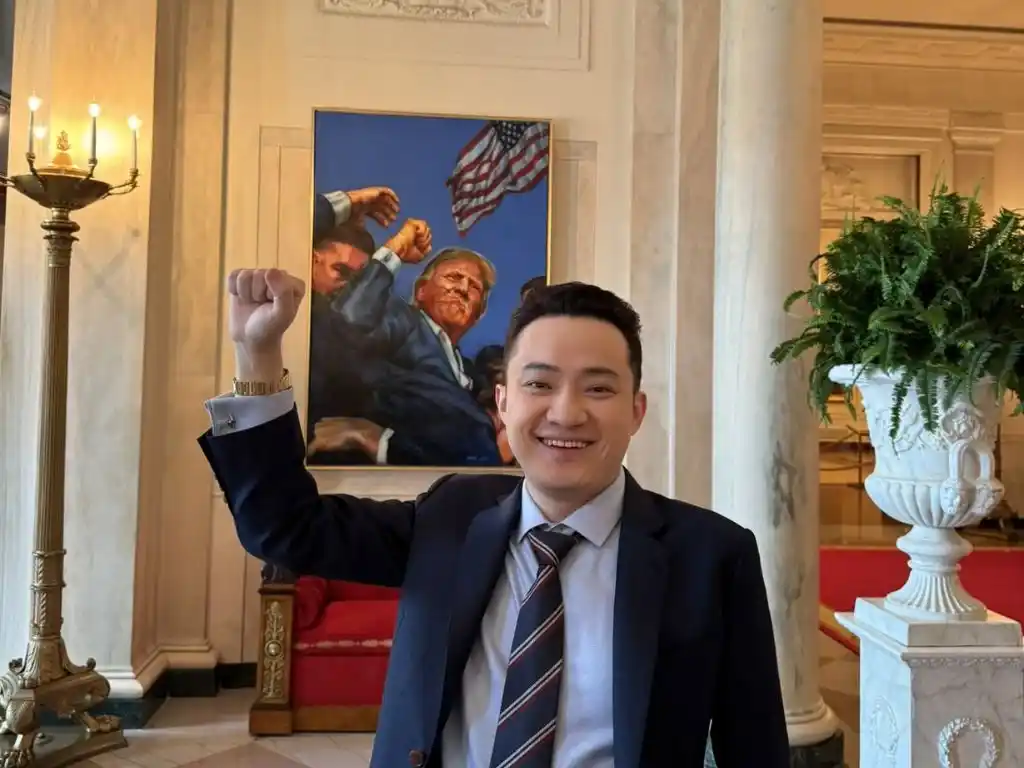
Justin Sun Sues Trump Family: What $75 Million Bought Was Only a Blacklist

Justin Sun, founder of Tron, has filed a lawsuit in federal court against World Liberty Financial (WLF), alleging he was made the "primary target of a fraudulent scheme" after investing $75 million. Sun claims the investment secured him an advisor title and WLFI tokens, which were later frozen by WLF, causing "hundreds of millions in losses." The dispute began in late 2024 when Sun's investment helped revive WLF's struggling token sale, which ultimately raised $550 million. Shortly after, the SEC dropped its lawsuit against Sun following Donald Trump's inauguration. However, relations soured when Sun refused WLF's demands for additional funding. In August 2025, WLF added a "blacklist" function to its smart contract, allowing it to unilaterally freeze tokens. Sun's holdings, worth approximately $107 million, were frozen, and he was threatened with token destruction. The lawsuit highlights WLF's structure, which directs 75% of token sale profits to the Trump family, who had earned $1 billion by December 2025. WLF's CEO is Zach Witkoff, son of U.S. Middle East envoy Steve Witkoff. The project faces scrutiny for opaque operations, including a controversial loan arrangement on the Dolomite platform, co-founded by a WLF advisor. Despite Sun's history with the SEC, the case underscores centralization risks within DeFi, as WLF controls governance and holds powers to freeze assets arbitrarily. Sun's tokens remain frozen as legal proceedings begin.

marsbit53 мин. назад

Justin Sun Sues Trump Family: What $75 Million Bought Was Only a Blacklist

marsbit53 мин. назад

$500 to Buy OpenAI Stock: Silicon Valley's Most Respectable Liquidity Invitation

Silicon Valley's largest venture capital platform, AngelList, has launched a new fund called USVC, allowing U.S. retail investors to buy into high-profile AI companies like OpenAI, Anthropic, and xAI with a minimum investment of $500—no accredited investor status required. Promoted by AngelList co-founder Naval Ravikant, the fund is framed as an opportunity for ordinary people to access high-growth private tech investments traditionally reserved for VCs. However, critics argue it functions more like an exit vehicle for early insiders. USVC acquires shares not through primary rounds but largely via secondary transactions—purchasing stakes from early investors, VC funds, and employees looking to cash out at peak valuations. With companies like xAI heavily weighted in the portfolio, the fund effectively channels retail money into providing liquidity for insiders who entered at much lower valuations. The fund’s structure raises concerns: shares are illiquid, with no secondary market, and buybacks are limited and discretionary. The actual annual fee reaches 3.61%, far above the advertised 1% management fee. This model parallels the "low float, high fully diluted valuation" strategy seen in crypto, where early investors profit by selling to latecomers at inflated prices. The timing—alongside similar moves by platforms like Robinhood—suggests that Silicon Valley’s sudden interest in retail inclusion may be less about democratizing access and more about securing exits for insiders.

marsbit1 ч. назад

$500 to Buy OpenAI Stock: Silicon Valley's Most Respectable Liquidity Invitation

marsbit1 ч. назад

Торговля

Спот
Фьючерсы

Популярные статьи

Неделя обучения по популярным токенам (2): 2026 может стать годом приложений реального времени, сектор AI продолжает оставаться в тренде

2025 год — год институциональных инвесторов, в будущем он будет доминировать в приложениях реального времени.

1.8k просмотров всегоОпубликовано 2025.12.16Обновлено 2025.12.16

Неделя обучения по популярным токенам (2): 2026 может стать годом приложений реального времени, сектор AI продолжает оставаться в тренде

Обсуждения

Добро пожаловать в Сообщество HTX. Здесь вы сможете быть в курсе последних новостей о развитии платформы и получить доступ к профессиональной аналитической информации о рынке. Мнения пользователей о цене на AI (AI) представлены ниже.

活动图片