Comics Illustration: Helping You Understand China's New Regulations on Outbound Investment

marsbitОпубликовано 2026-06-01Обновлено 2026-06-01

Введение

Summary: Understanding China's New Regulations on Overseas Investment The State Council has announced new regulations on overseas investment, effective July 1, 2026. The core message is not a prohibition on international investment, but a call for both companies and individuals to operate with strong regulatory awareness. Here are the key points: 1. **Scope is Broad:** The rules apply not only to companies but also to other organizations and individual residents. 2. **Definition of Investment is Wide:** It encompasses not just capital transfers but also asset contributions, obtaining equity or rights, financing, providing guarantees, and direct or indirect acquisition of rights related to overseas entities or assets. 3. **Companies Must Plan Comprehensively:** Beyond simple ownership charts, firms need clear plans covering the investing entity, required approvals or filings, fund transfer paths, and compliance with technology, data, and security reviews. 4. **Individuals Should Prioritize Compliance:** Before focusing on returns, individuals must first assess their eligibility, understand legal channels for capital outflow, know what they are acquiring, and identify responsible parties in case of issues. 5. **Penalties are Significant:** Violations can result in fines and potentially restrictions on future overseas investment activities. In essence, overseas investment remains possible, but it must be approached with regulatory compliance as a fundamental priority, no...

Author: Liu Honglin, Mankun Blockchain

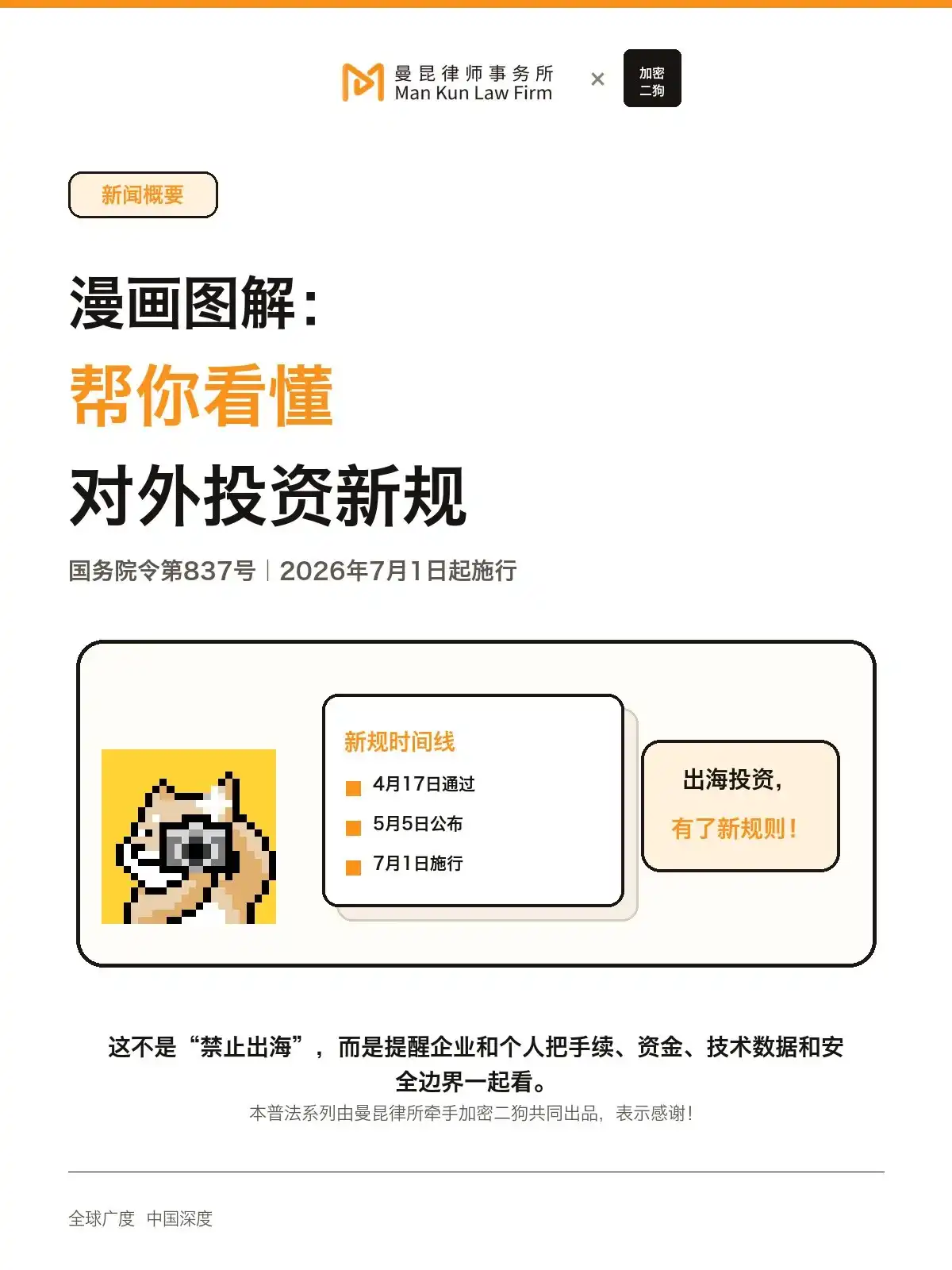
The State Council has promulgated the "State Council Regulations on Outbound Investment," which will take effect from July 1, 2026.

This is not simply a matter of "cannot go overseas."

More accurately, it serves as a reminder to enterprises and individuals: outbound investment must follow rules.

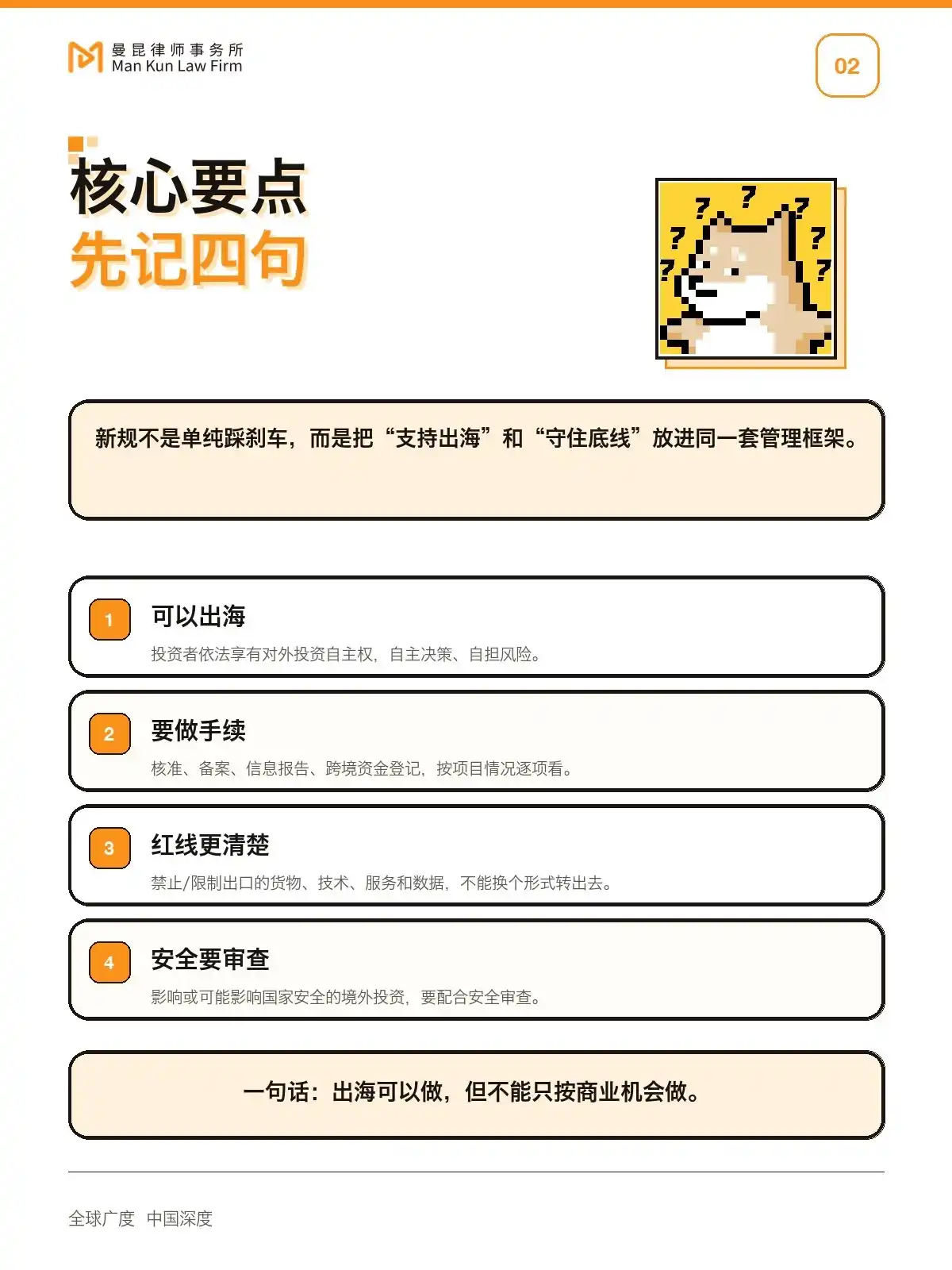
To understand this new regulation, keep the following points in mind first:

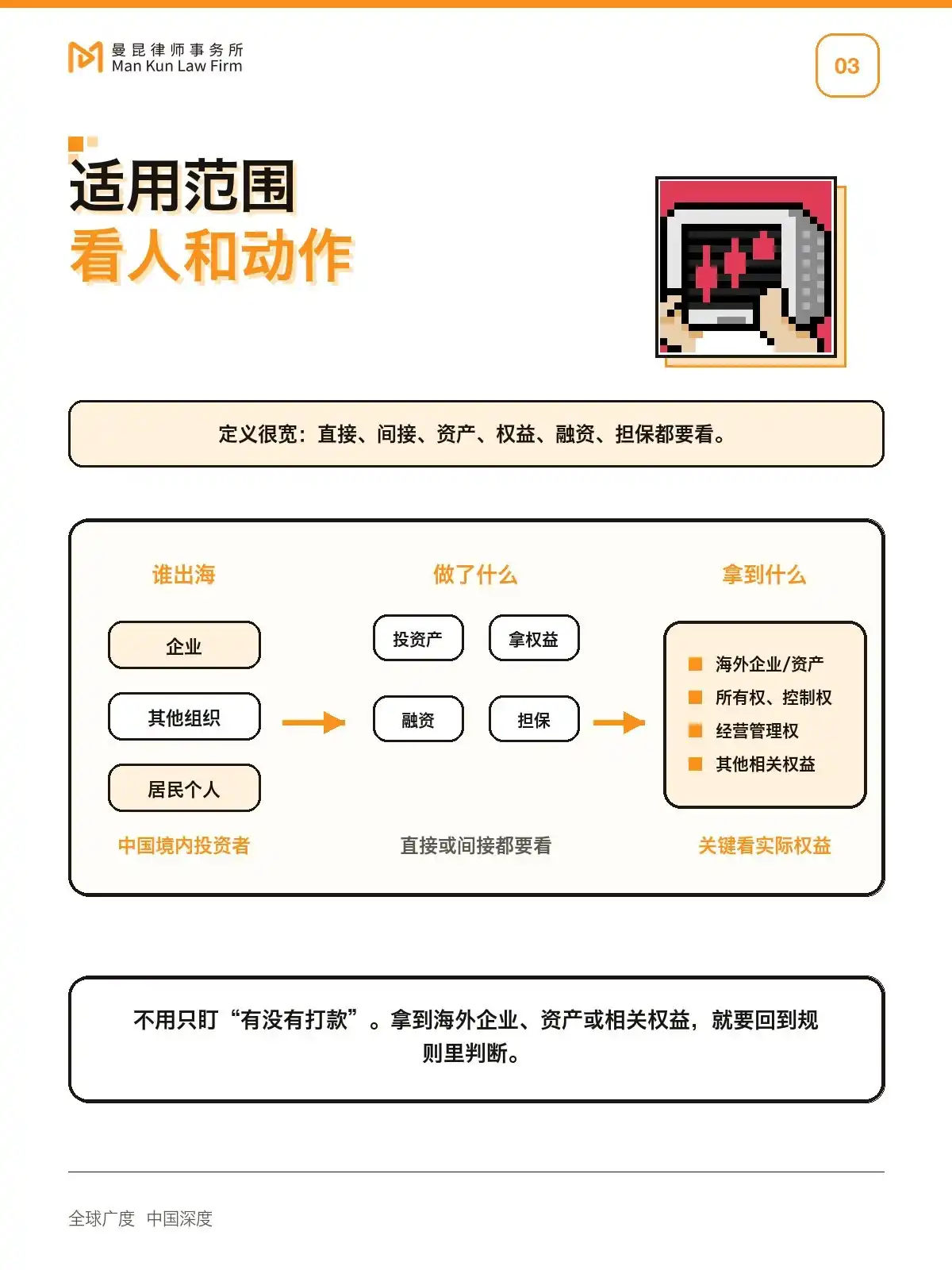
1️⃣ It's not just enterprises that are regulated. The scope of investors includes domestic enterprises, other organizations, and resident individuals.

2️⃣ It's not just about transferring money. Acquiring assets, obtaining equity rights, providing financing or guarantees, and directly or indirectly acquiring rights and interests related to overseas enterprises or assets all require assessment.

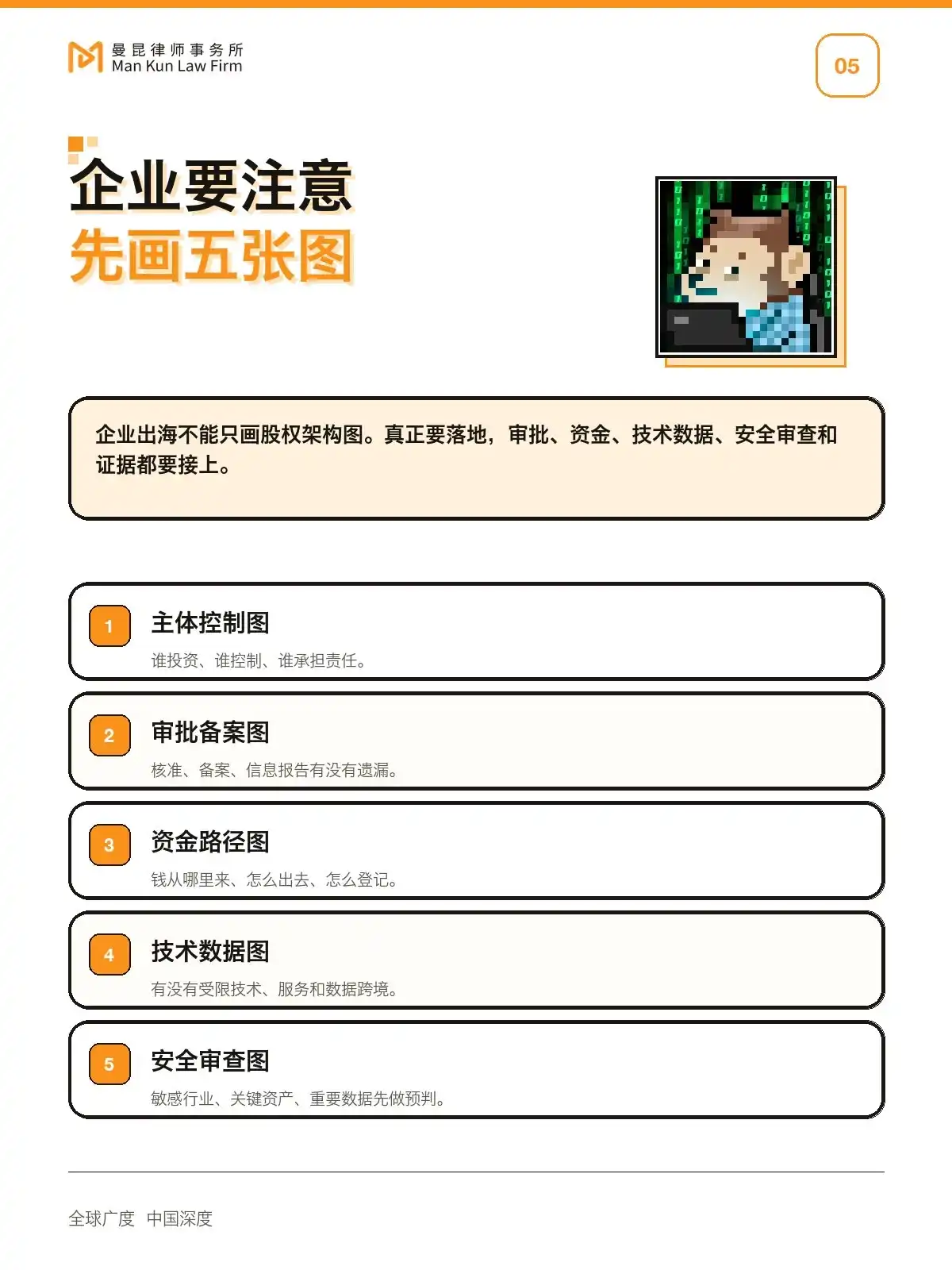
3️⃣ Enterprises shouldn't just draw equity structure charts. They also need to clearly chart the entities, approval/filing procedures, fund flow paths, technology, data, and security reviews.

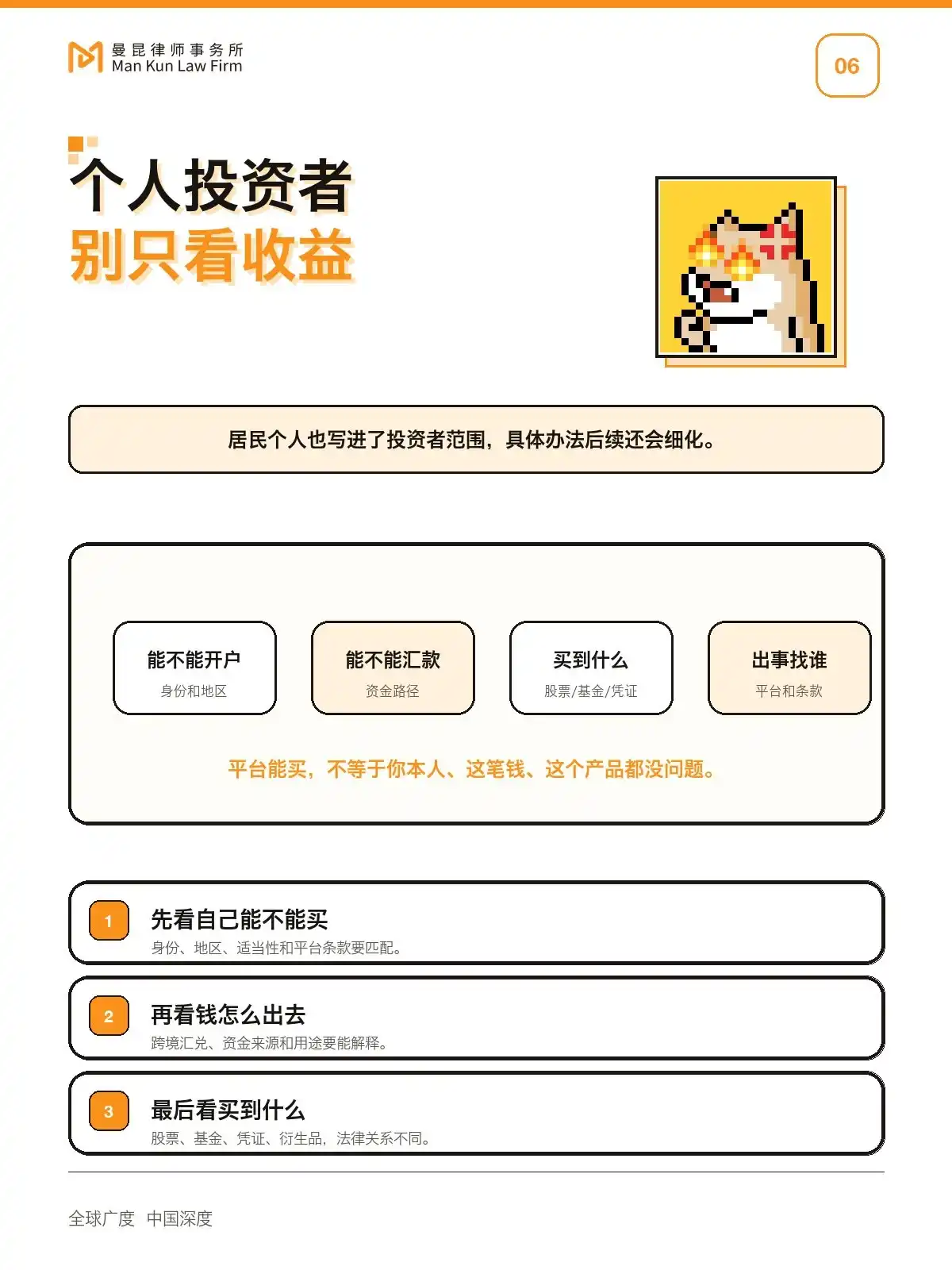
4" Individuals shouldn't just look at returns. First, consider whether you are eligible to invest, how the funds will go out, what you are actually buying, and whom to turn to if something goes wrong.

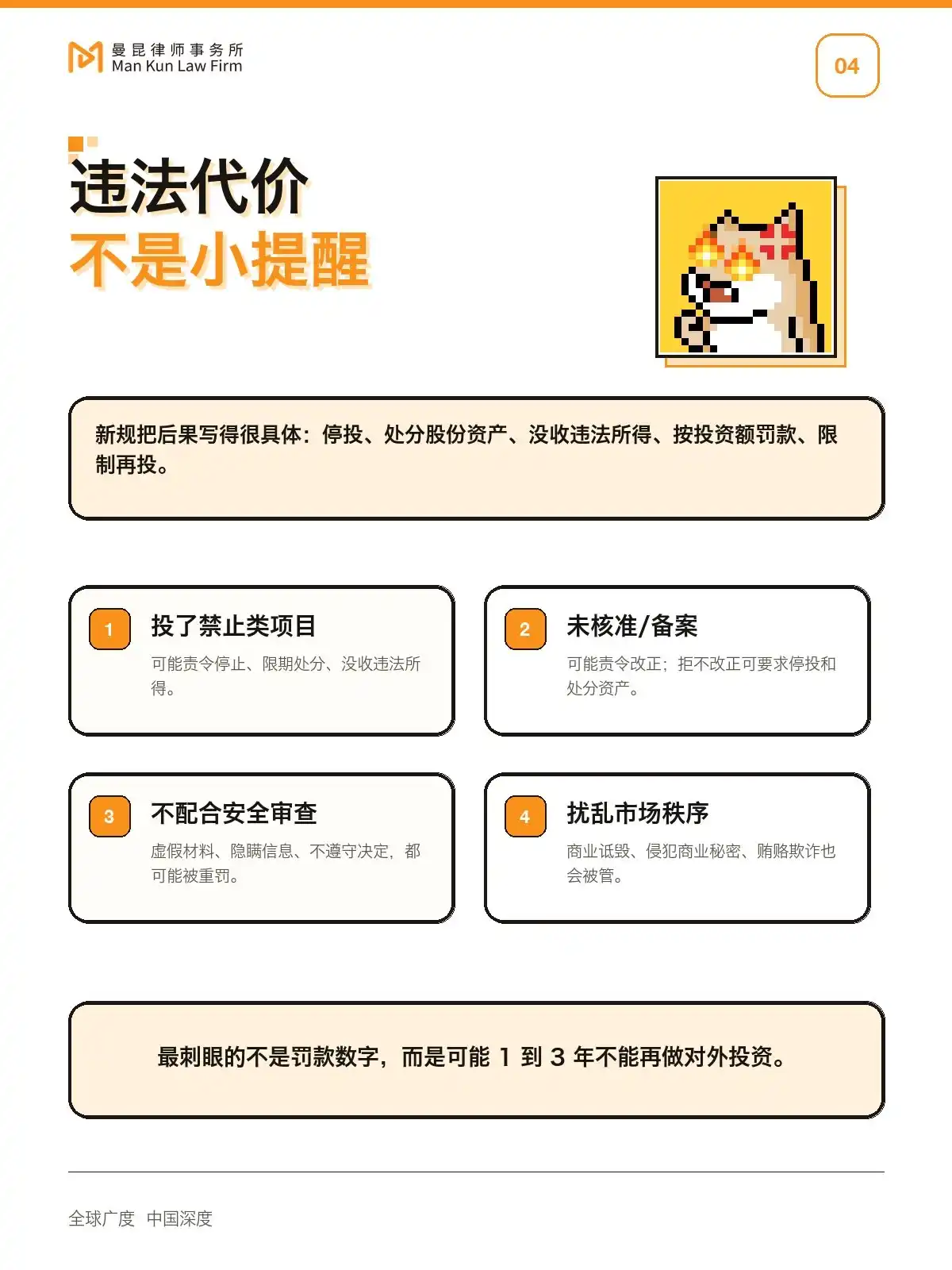
5️⃣ The price of non-compliance is not light. Beyond fines, there may be restrictions on continuing outbound investment activities.

In a nutshell: Outbound investment is not prohibited, but it cannot be pursued solely based on commercial opportunities.

The above is for general information sharing only and does not constitute legal advice or investment recommendations.
Связанные с этим вопросы

QWhat is the core message of China's new regulations on outward investment according to the article?

AThe core message is that outward investment is not prohibited, but it must be conducted with a strong awareness of and compliance with the rules. The regulations emphasize that decisions cannot be based solely on commercial opportunities.

QWho is covered as 'investors' under these new regulations?

AThe regulations cover not only domestic enterprises but also other domestic organizations and resident individuals. All are explicitly included within the scope of investors subject to the rules.

QWhat are some of the forms of outward investment mentioned that require consideration under the new rules?

AThe rules apply not just to monetary transfers. Activities like investing assets, acquiring equity interests, providing financing, offering guarantees, and obtaining rights related to overseas entities or assets, either directly or indirectly, all fall under consideration.

QWhat additional requirements do enterprises need to prepare for besides their corporate ownership structure charts?

AEnterprises must also clearly outline and prepare documentation related to the involved entities, the processes for obtaining necessary approvals or filings, the paths for fund transfers, and considerations for technology, data, and security reviews.

QWhat are the potential consequences for violating these regulations?

ABeyond financial penalties, violators may face restrictions or prohibitions on their ability to continue engaging in outward investment activities in the future.

Похожее

Торговля

Спот
Фьючерсы
活动图片