Kraken is Also Issuing Tokens? A Comprehensive Guide to Ink Season 1 Points Program

Odaily星球日报Опубликовано 2026-04-15Обновлено 2026-04-15

Введение

Kraken Pro, the professional trading platform of the major cryptocurrency exchange Kraken, has launched the first season of its Ink Points program. Ink is Kraken’s Ethereum Layer 2 blockchain, introduced in October 2024, designed to simplify user onboarding into DeFi by addressing common pain points like complex wallet setups and high gas fees. The article explains the differences between Kraken's three service tiers: the basic Kraken for beginners, the subscription-based Kraken+ offering fee-free tiers, and Kraken Pro for advanced traders with lower fees and professional tools. All versions share the same account and funds. A step-by-step guide is provided for interacting with Kraken Pro: users must register, complete KYC, navigate to the "Promos" section to access Ink Points, deposit funds, and start trading to earn points. Ink Points serve as a loyalty incentive within the Ink Layer 2 ecosystem. Points are earned through trading, staking, and referrals on Kraken Pro, with an affiliate program offering 10% commission on referrals. Points are calculated daily, distributed weekly, and accumulated over four-week seasons. A ranked, tiered competition system is in place, though points currently have no monetary value or tokenization capability. The program is not accessible in all regions.

Original | Odaily Planet Daily (@OdailyChina)

Author | Asher (@Asher_ 0210)
Last night, the Korean cryptocurrency exchange Kraken announced via its Kraken Pro official account that the Ink Season 1 points program is now live.
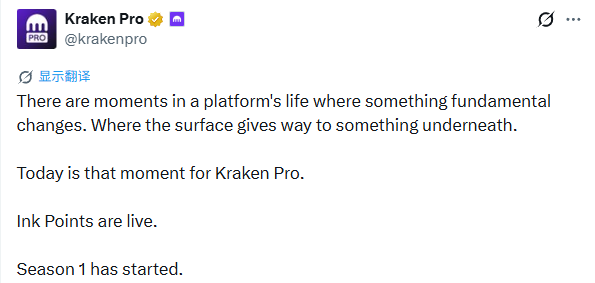
Kraken Pro officially announces the launch of the Ink points program

Kraken officially announced the launch of the Ink chain (an Ethereum Layer 2 designed to simplify user entry into DeFi) in October 2024, aiming to seamlessly bridge Kraken's over 10 million centralized exchange users to the on-chain DeFi ecosystem, addressing the pain points of traditional DeFi (such as complex wallet setup, high gas fees, fragmented liquidity, etc.). Although Ink is not the Kraken exchange itself, but an independent on-chain infrastructure, it is deeply integrated with Kraken's infrastructure (such as Kraken Wallet, zero withdrawal fee support, etc.).

At the end of last year, Kraken's valuation in the primary market once reached $20 billion. However, due to the cooling IPO environment in the crypto industry, its CEO subsequently chose to postpone the planned US listing originally scheduled for 2026. Therefore, it is more likely that Kraken will prioritize promoting the Ink chain to complete its token issuance before going public.

Below, Odaily Planet Daily provides a breakdown of the relationship between Kraken Pro and Kraken, a Kraken Pro interaction tutorial, and the Ink points rules.

Differences Between the 3 Versions of Kraken Exchange

This event takes place on Kraken Pro. Since Kraken currently has three versions, Odaily Planet Daily has compiled the differences between them as follows:

  • Kraken (Basic Version): Focuses on simplicity and ease of use, with a very intuitive interface, suitable for beginners or small-volume users with low trading frequency. Offers a standalone mobile app, low operational barrier, and leans towards a "buy-and-use" experience.
  • Kraken+ (Subscription/Membership Version): Builds upon the basic version with a subscription mechanism where users pay monthly for additional benefits. The core advantage is zero fees on the first $10,000 of trading volume per month, along with some additional perks. Suitable for users with certain trading needs looking to reduce costs.
  • Kraken Pro (Professional Version): Targets experienced traders, offering a standalone app and web interface. Features include more professional candlestick charts, a variety of order types (like limit, stop-loss, etc.), and a lower fee structure. Although it has a separate interface, it shares the same account and funds as the basic version, allowing users to switch between the regular version and Pro at any time.
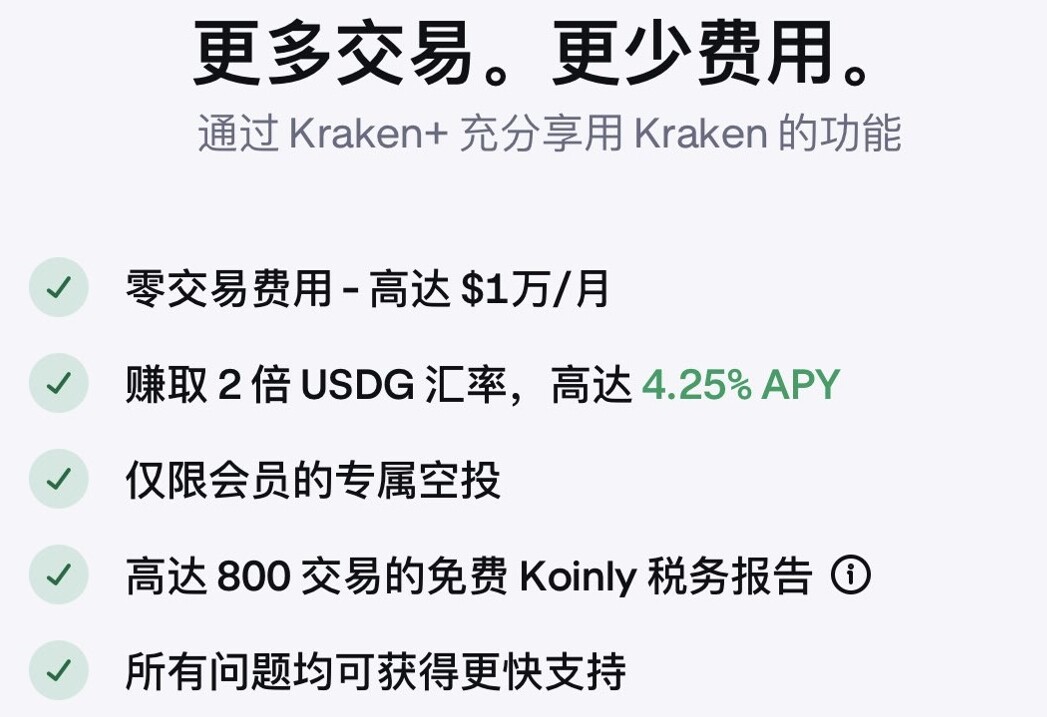
Difference between Kraken and Kraken+

Step-by-Step Guide to Interacting with Kraken Pro

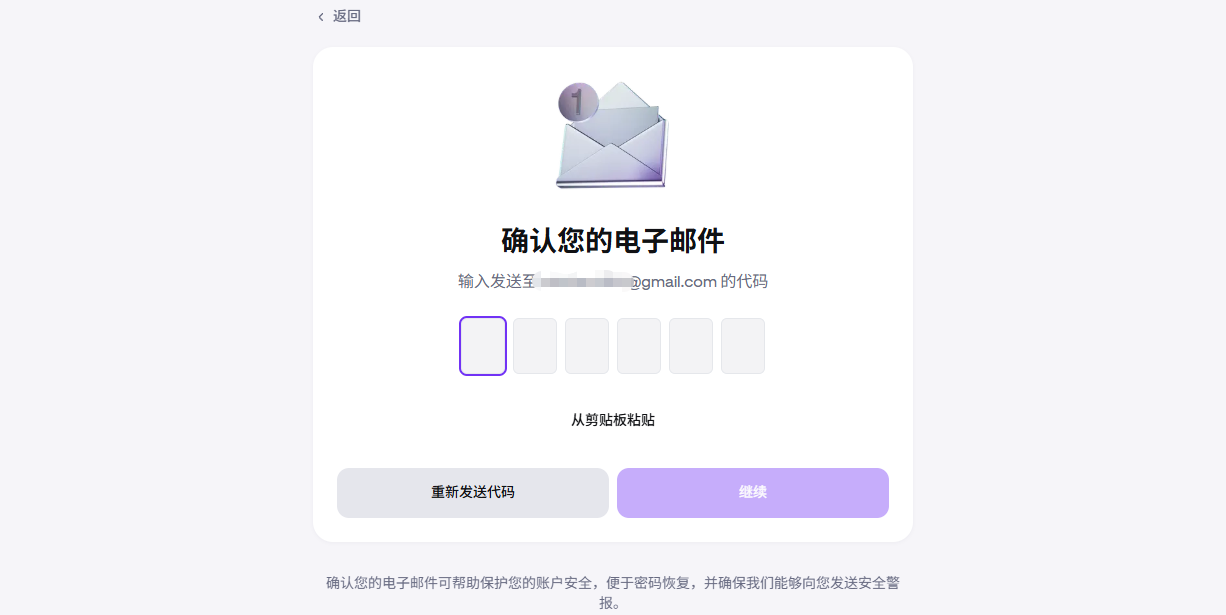
STEP 1. Go to the Kraken Pro website (link: https://pro.kraken.com/) and complete account registration using your email.
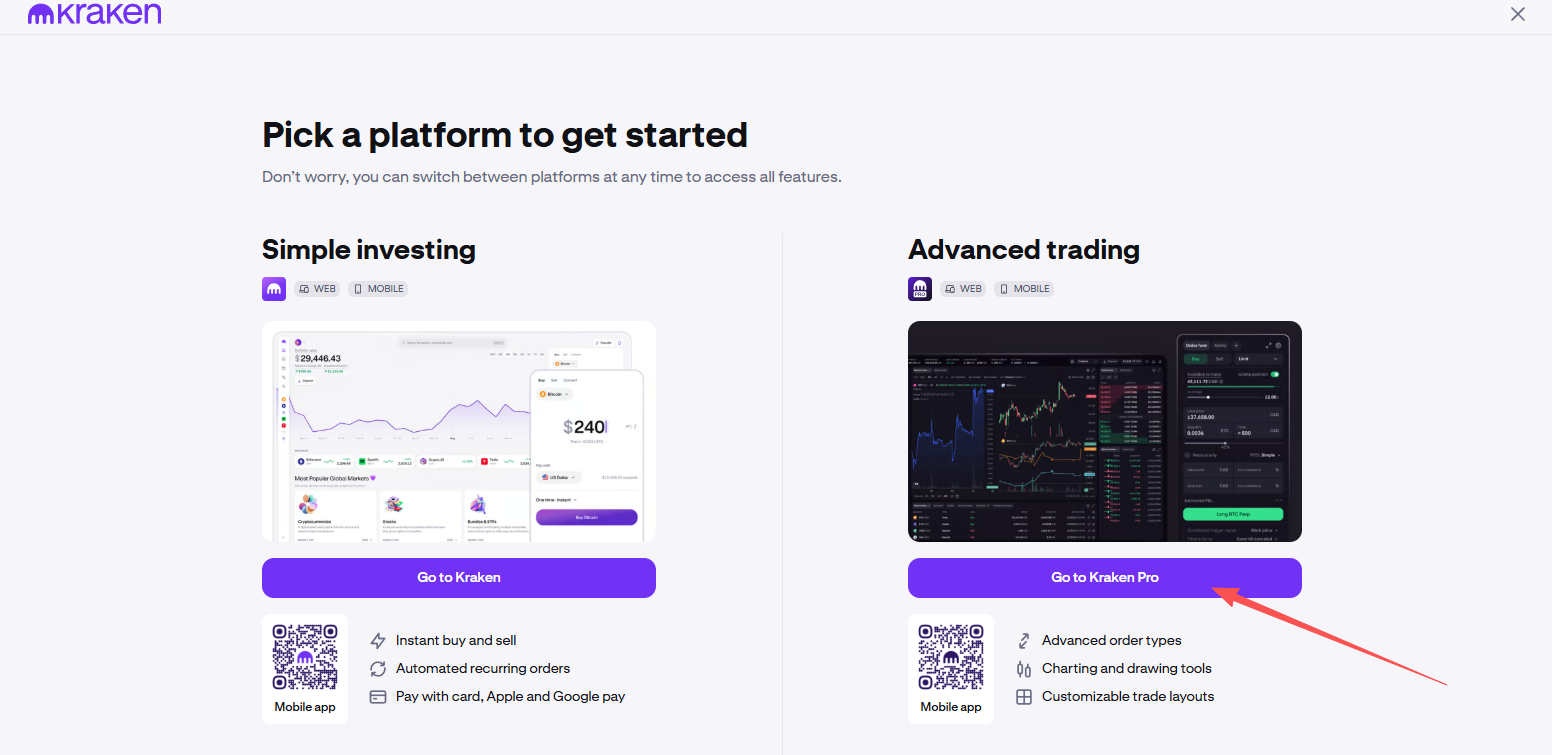
STEP 2. Select the Kraken Pro version. If using a mobile device, simply download the Kraken Pro app from your app store. Additionally, after accessing Kraken Pro, you need to complete KYC verification.
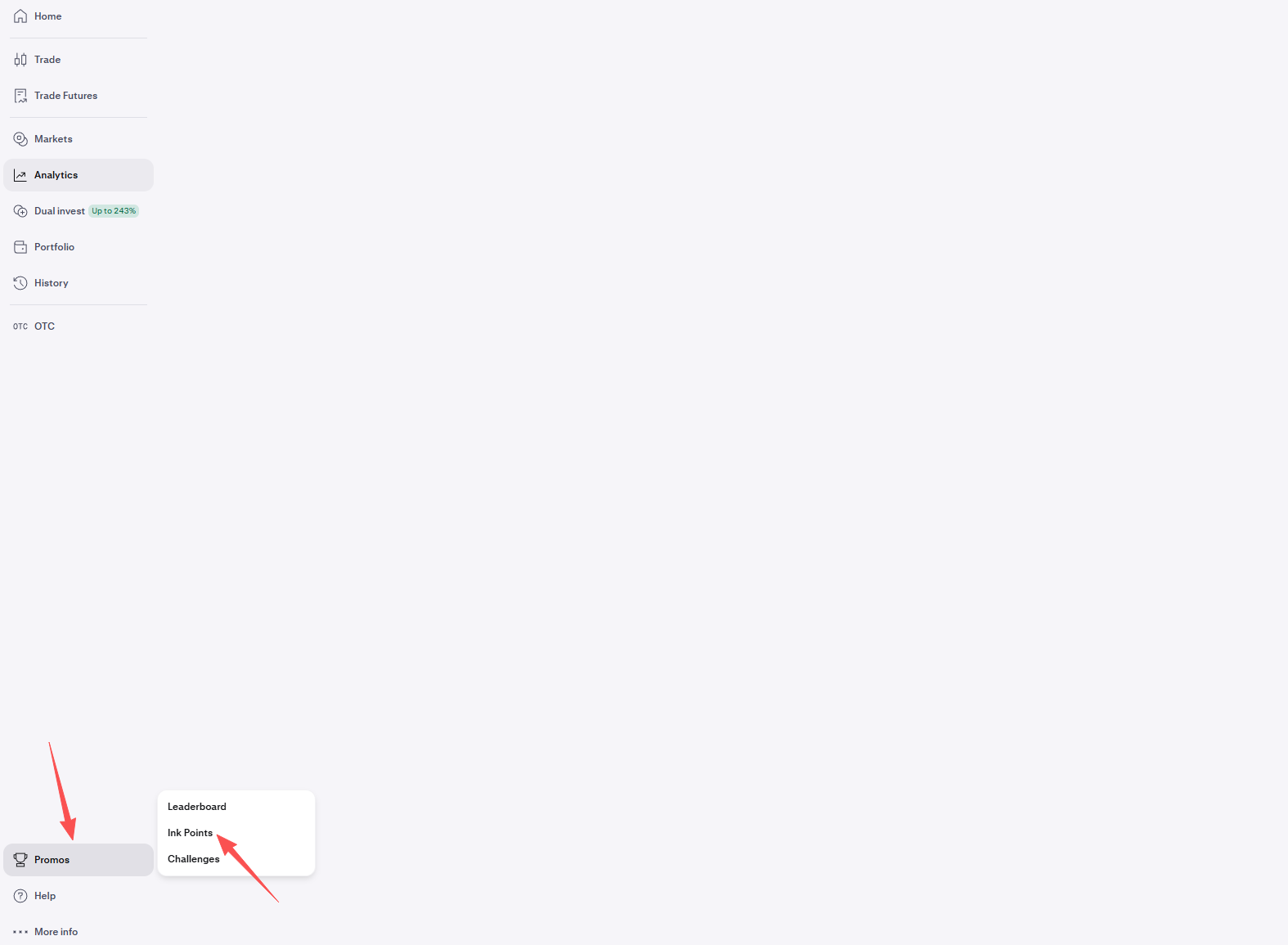
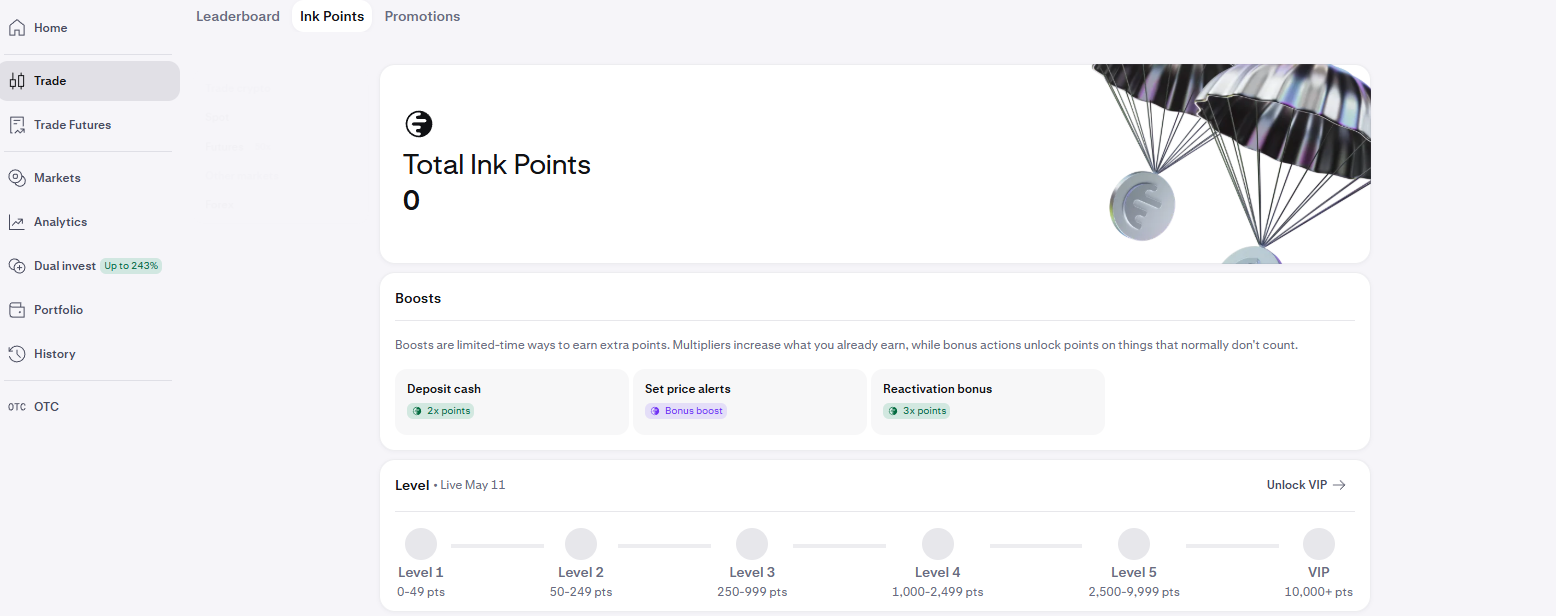
STEP 3. Click on "Promos" at the bottom and select "Ink Points" to enter the points interface.
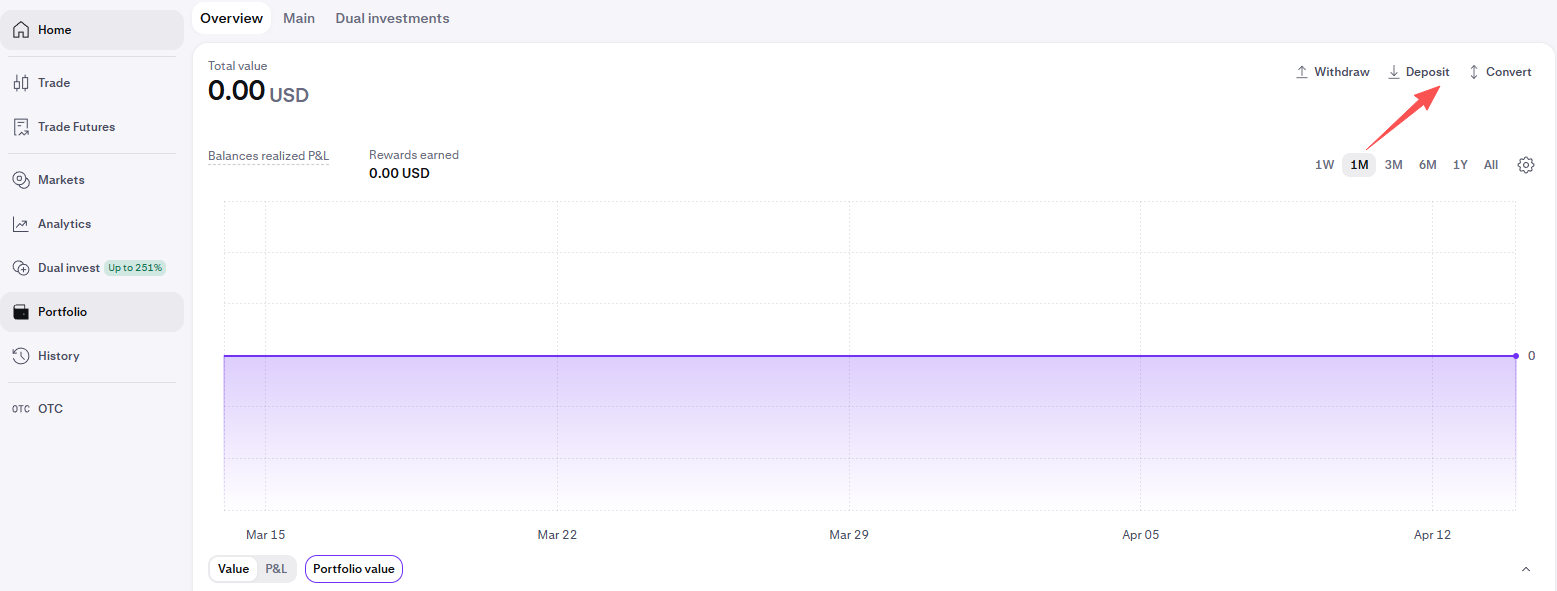
STEP 4. Click on "Portfolio" and then "Deposit" to fund your account, then you can start trading and earning points.
Detailed Explanation of Ink Points Rules

What are Ink Points

  • Ink Points are the points system for the Ink Layer2, connecting real user interactions with incentive mechanisms;
  • The Kraken Pro version will also adopt this points system as a loyalty program.

How to Earn Ink Points

  • Performing actions like trading, staking, and referring new users on Kraken Pro can earn Ink Points;
  • Joining the Kraken Alliance Program can earn a 10% Ink points rebate from referrals;

Additionally, the official encourages genuine user interaction: the earlier you start, the more active you are, and the more Kraken Pro products you use, the more points you will earn.

Ink Points Update Instructions

  • Points Calculation: Points are calculated daily, the system settles automatically every week, and points are distributed every Monday;
  • Season Structure: Every 4 weeks is a season, points for each season are calculated separately, total points are retained for life;
  • Acceleration Mechanism: Point multiplier events will be launched regularly, users should pay attention to official announcements;
  • Leaderboard + Tiers: Rankings are updated weekly, with six tiers based on current points (Tiers 1 to 5 and VIP). The exclusive "Tier System" means you compete only with traders in the same tier. Except for VIP, other tiers currently offer no additional benefits, but plans are to gradually open them up in the future.

Furthermore, the official notes that Ink Points are not tokenizable, not redeemable, have no cash value, and are temporarily unavailable in some regions.


Связанные с этим вопросы

QWhat is the Ink Points program announced by Kraken Pro?

AThe Ink Points program is a loyalty and incentive system for Kraken Pro users, designed to reward activities like trading, staking, and referrals. It is part of the Ink Layer2 ecosystem and aims to encourage user engagement.

QWhat are the key differences between Kraken, Kraken+, and Kraken Pro?

AKraken is the basic version for beginners with a simple interface. Kraken+ is a subscription-based version offering benefits like zero fees on the first $10,000 in monthly trading volume. Kraken Pro is the advanced version for experienced traders, featuring professional charts, lower fees, and more order types, while sharing the same account and funds as the basic version.

QHow can users earn Ink Points on Kraken Pro?

AUsers can earn Ink Points by trading, staking, and referring new users on Kraken Pro. Additionally, joining the Kraken Alliance Program allows users to earn a 10% rebate on Ink Points from referred users.

QWhat is the relationship between Ink Chain and Kraken exchange?

AInk Chain is an independent Ethereum Layer2 infrastructure designed to simplify user entry into DeFi, but it is deeply integrated with Kraken's infrastructure, such as Kraken Wallet and zero withdrawal fees. It is not the Kraken exchange itself.

QWhat are the rules for Ink Points distribution and calculation?

AInk Points are calculated daily and distributed automatically every Monday. The program runs in 4-week seasons, with points accumulated per season but lifetime totals retained. There are six user levels (1 to 5 and VIP), and rankings are updated weekly. Points cannot be tokenized, exchanged, or cashed out.

Похожее

Behind the $TAO Crash: The Bittensor Internal Strife and the 'Impossible Trinity' of DeAI

The decentralized AI (DeAI) sector is facing a major crisis following a public conflict within Bittensor ($TAO), a leading DeAI project. Covenant AI, one of its top development teams, which recently successfully trained a 72-billion-parameter large language model, announced its exit from the Bittensor network. The team accused founder Jacob Steeves of having "absolute and dictatorial" control over the network, alleging he arbitrarily cut off token rewards to their subnet without transparent governance. This triggered a panic sell-off, causing $TAO’s price to drop 15-25% in a single day and wiping out hundreds of millions in market value. The incident has raised serious questions about the viability of decentralized AI, highlighting a fundamental tension—referred to as DeAI’s "impossible trilemma"—between model quality and scale, credible neutrality of decentralization, and Sybil-resistant incentive alignment. Covenant’s departure exposed the centralized reality beneath Bittensor’s decentralized facade: although the network relies on a Yuma consensus mechanism for reward distribution, key validator nodes are controlled by early investors and the founder, allowing unilateral intervention. The event underscores systemic governance risks that may deter high-quality developers and institutional participants, threatening the entire DeAI narrative centered around trustless, incentive-driven AI development.

marsbit13 мин. назад

Behind the $TAO Crash: The Bittensor Internal Strife and the 'Impossible Trinity' of DeAI

marsbit13 мин. назад

Short-Term Rebound or Bull Market Return? What Do Traders Think?

The S&P 500 has rebounded nearly 10% from its March 27 low, with the Nasdaq posting a 10-day winning streak—its longest since 2021. Bitcoin surged past $76,000, and crypto-related stocks rallied. The market is showing a V-shaped recovery, but the question remains: is this a true bull market return or just a short-term rebound? Bullish analysts, including Tom Lee and Ed Yardeni, argue the bottom is in. Lee cites the U.S.-Iran ceasefire as a key factor, while Yardeni maintains a year-end S&P 500 target of 7700, stating "pessimism is now out of style." Goldman Sachs labels this a "marathon expansion," expecting a 12% earnings growth to form a "fundamental bottom," with AI driving nearly 40% of S&P 500 earnings growth. Morgan Stanley notes that bull markets in their fourth year historically deliver positive returns, with AI-driven productivity gains yet to fully diffuse. Bearish voices, led by Bank of America’s Michael Hartnett, caution that true market lows require extreme pessimism, which is absent now. Cash levels are low at 4.3%, and institutional investors remain overweight on stocks. Hartnett warns that oil’s 60% rise since the Iran war could hurt profits more than inflation data suggests. Goldman’s trading desk also views the rally as a technical rebound, not a trend, pending real-world oil shipping data from the Strait of Hormuz. Piper Sandler’s Michael Kantrowitz has stopped issuing year-end targets due to high uncertainty. The divide is clear: bulls see a fundamentals-driven bull run with earnings growth and geopolitical de-escalation, while bears see a sentiment-driven bounce with weak inflows—equity funds saw $15.4 billion in outflows last week. The key variable is the U.S.-Iran talks; a ceasefire extension could solidify the rally, but failure may trigger a drop. As Hartnett warns, "investors should not mistake a relief rally for a solution."

marsbit1 ч. назад

Short-Term Rebound or Bull Market Return? What Do Traders Think?

marsbit1 ч. назад

Торговля

Спот
Фьючерсы
活动图片