Reading Trends from Data: The Logic Behind the Crypto Market Rebound and Potential Risks

marsbitОпубликовано 2025-12-29Обновлено 2025-12-29

Введение

Analysis of the crypto market rebound and underlying risks, based on data for the week of Dec 20-26. Bitcoin found technical support at the $85,000 level, bouncing from a low of $84,500. While a technical rebound is underway, key data suggests the market is not yet on a solid footing for a sustained trend reversal. Key short-term data points show mixed picture: * **Stablecoins:** Net issuance remained negative at -$326M, but the outflow rate slowed by 60% week-over-week. * **BTC ETFs:** Net outflows worsened significantly to -$664.37M, a crucial headwind. A return to net inflows is deemed essential for a true reversal. * **OTC Premiums:** USDT and USDC premiums fell to 97.86% and 98.36% respectively, indicating weak demand and persistent capital outflows. * **ETH ETFs:** Outflows narrowed considerably to -$139.53M from the previous week, providing some relative stability for Ethereum. Mid-term on-chain data revealed minor accumulation by addresses holding 100-1K BTC, while larger wallets (10K-100K BTC) reduced holdings. Strong筹码 accumulation was noted near the $87,100 price point, suggesting it could become a key support level. The altcoin market (TOTAL3) saw a modest 1.95% gain but overall sentiment remained weak. Key observations include: * Low trading activity and a subdued market sentiment index. * BTC dominance held high at 65.76%, indicating altcoins continue to underperform Bitcoin. * Meme coins and high-profile tokens saw sporadic gains, but lacked s...

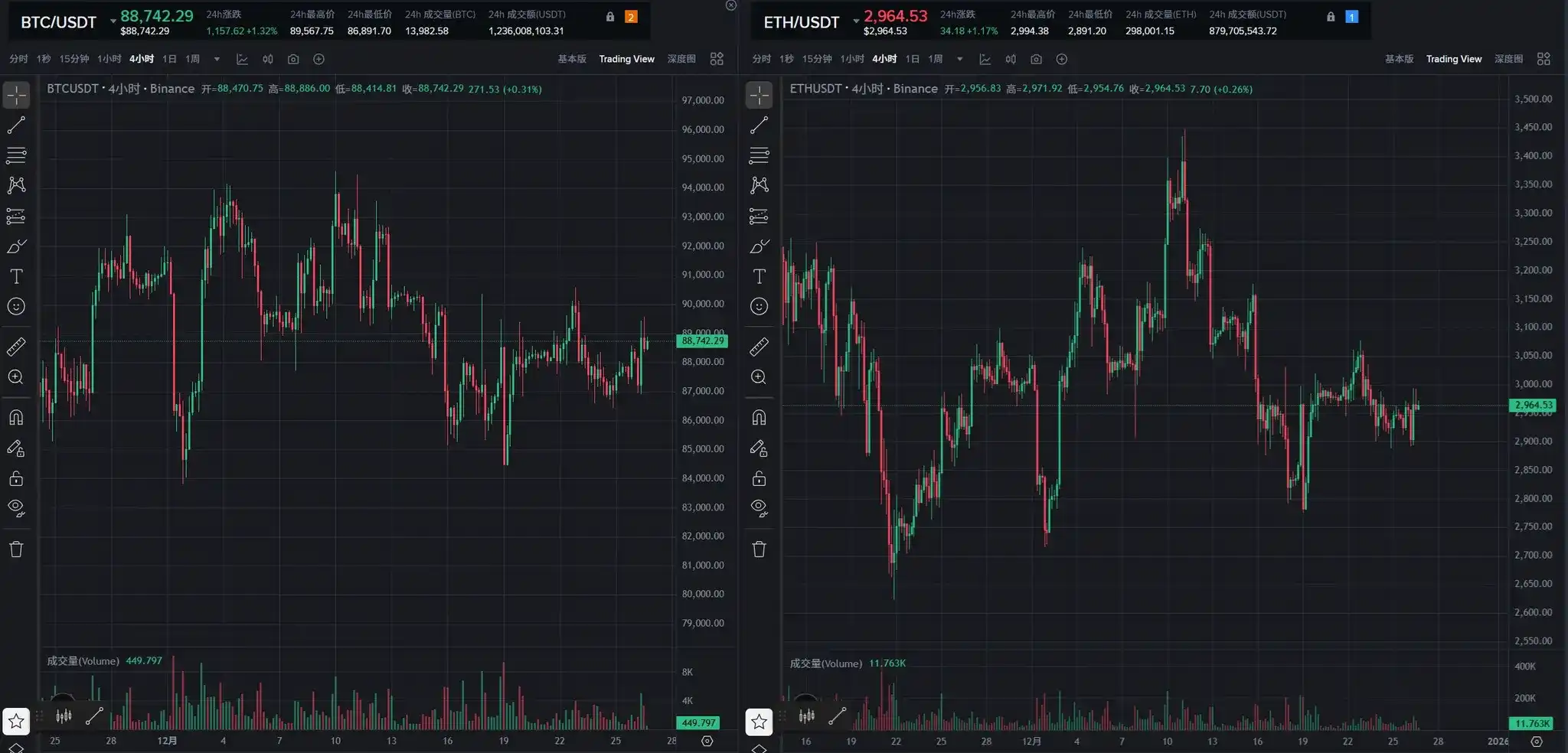
Last week, the market showed a downward trend, and the technical support level of $85,000 we previously emphasized proved effective. After BTC touched a low of $84,500 on Friday, it began a rebound this week. From both daily and weekly perspectives, the support level of $85,000 was validated after the previous continuous decline. Over the weekend, the market maintained its rebound momentum, showing an overall pattern of fluctuating recovery.
2. Mid- to Short-Term Data Changes Affecting the Market This Week

2.1 Stablecoin Fund Flows

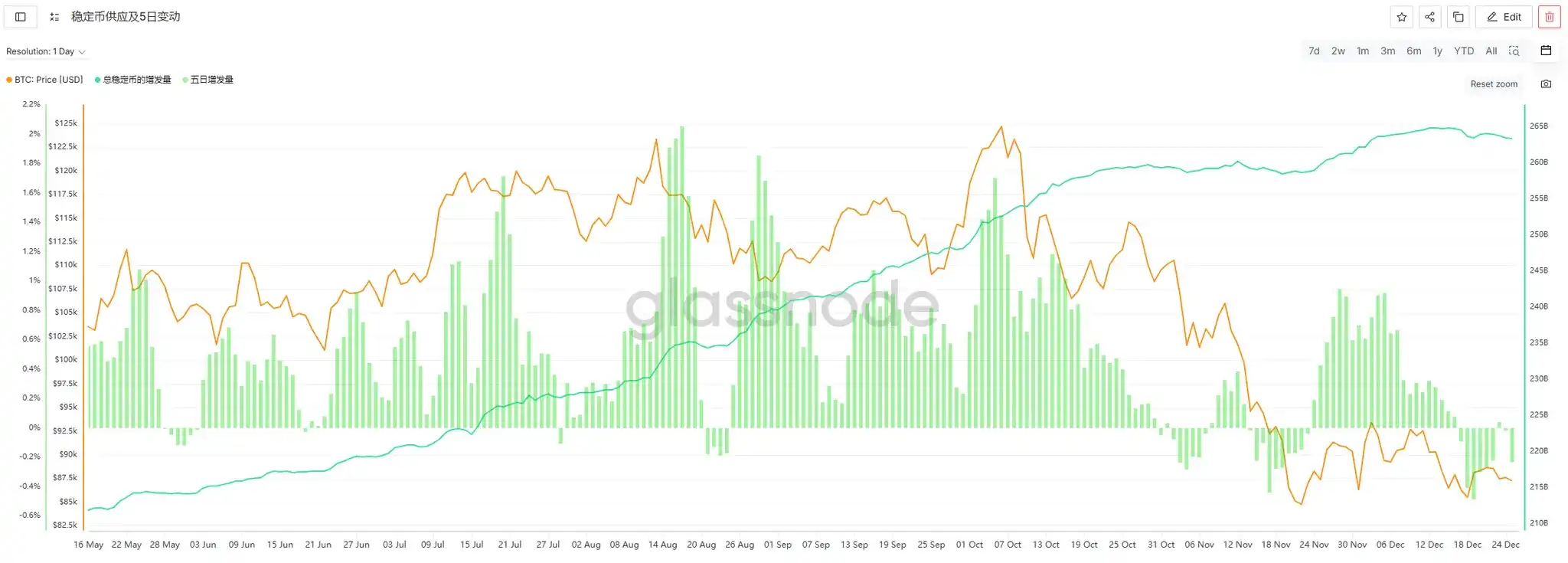
This week (12/20-12/26), the weekly issuance of stablecoins was -$326 million, indicating continued outflow of funds, but the scale of outflow has significantly narrowed. Compared to last week's negative issuance of -$824 million, the average daily negative issuance this week decreased from -$117.7 million to -$46.5 million, representing a 60% increase in overall fund flow. The broader market was mainly volatile this week without sustained declines, which aligns with the trend of reduced stablecoin outflows.
2.2 ETF Fund Flows

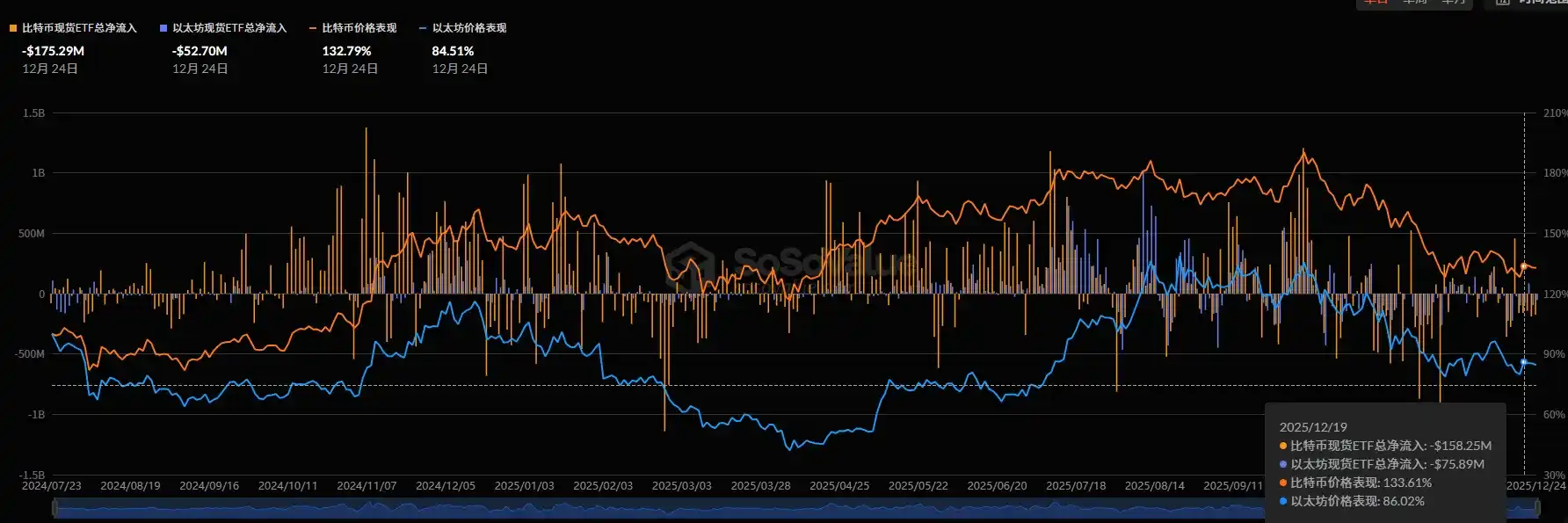
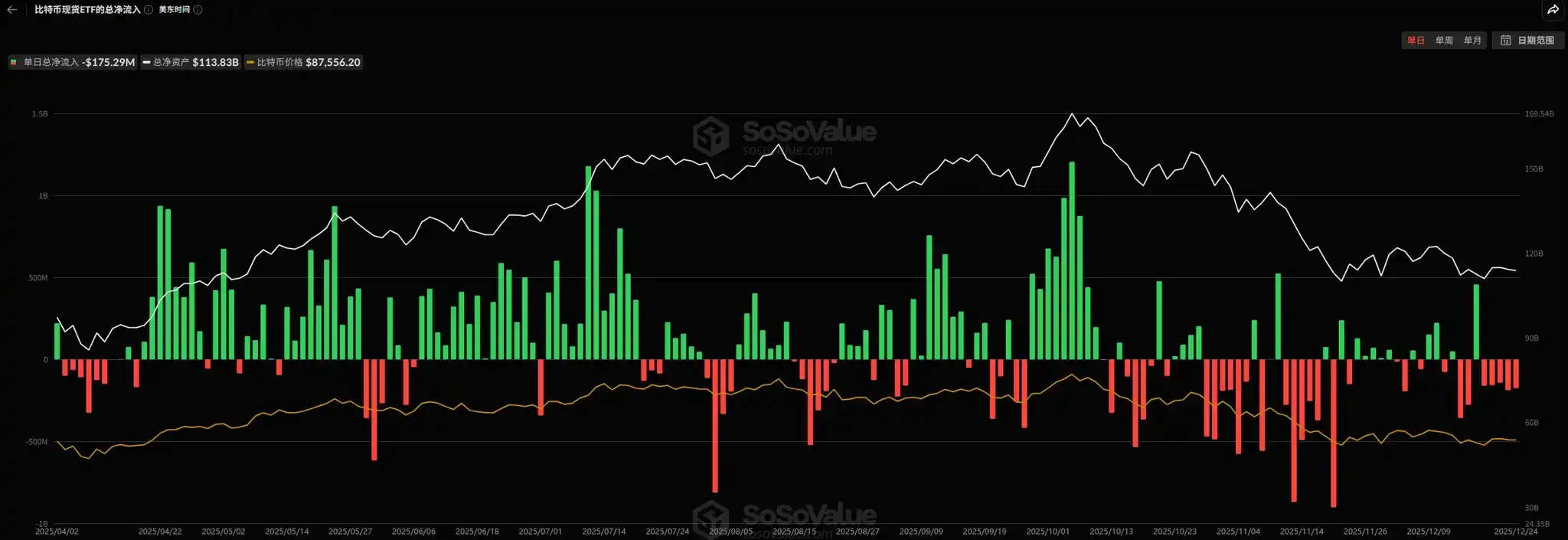
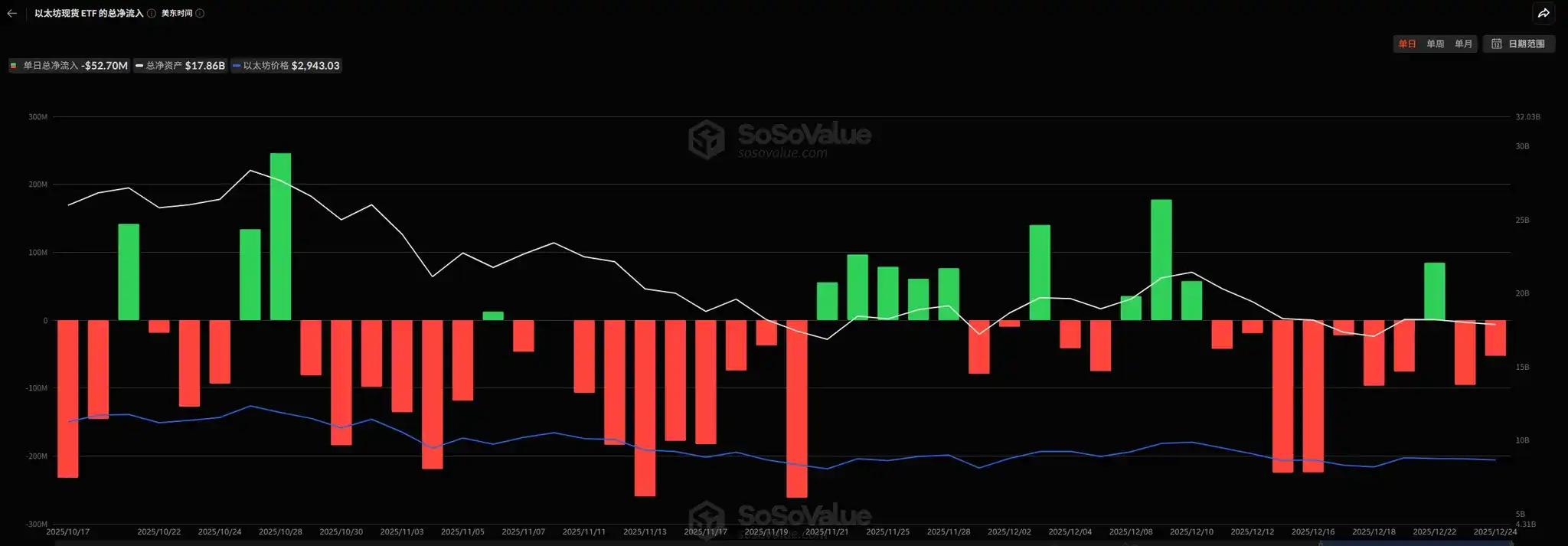
This week, the net outflow of Bitcoin ETFs further expanded, reaching $664.37 million, an increase of $374.72 million compared to last week. Based on daily fund flow data, there is no sign of a regular reduction in ETF net outflows yet. Although BTC prices have rebounded, this can only be characterized as a short-term technical rebound. For the market to achieve a trend reversal, the return of Bitcoin ETFs to net inflows is a core prerequisite.
2.3 Off-Market Discount/Premium

This week, the off-market discount/premium rates for USDT and USDC slightly declined. The current USDT discount/premium is 97.86%, and USDC is 98.36%, both at relatively low levels for the year. This phenomenon reflects continued低迷 market sentiment, insufficient off-market funds for bargain hunting, and some signs of capital outflow.

2.4 Ethereum ETF

This week, the net outflow of Ethereum ETFs was -$139.53 million, a significant reduction compared to last week's net outflow of $587.5 million. Ethereum prices showed volatile movements this week without sustained declines, echoing the narrowed ETF outflows. If this trend can be maintained, it will provide strong support for Ethereum's rebound.
2.5 Total Crypto Market Capitalization

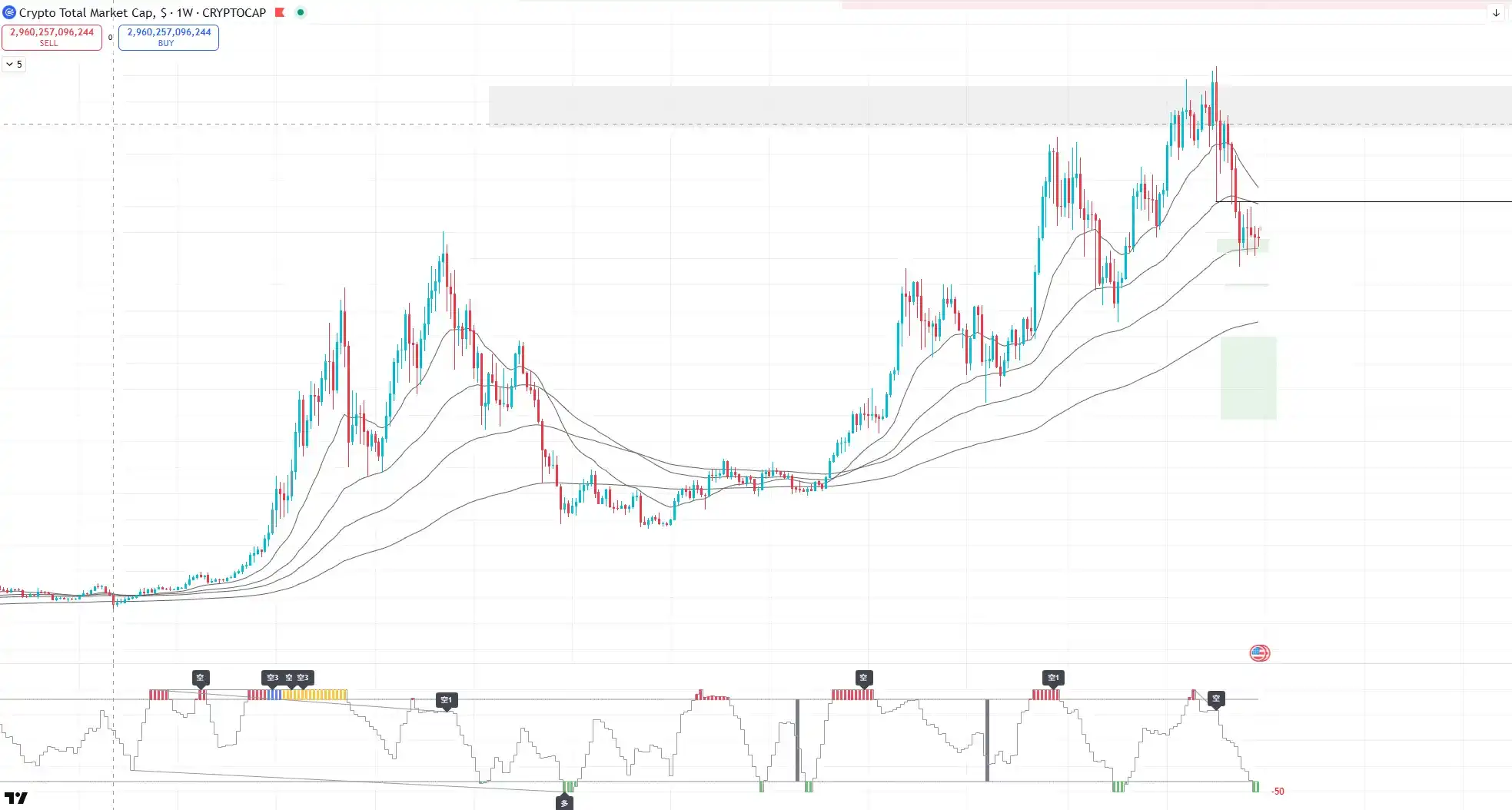
This week, the total crypto market capitalization fell to around $3 trillion, precisely touching the weekly EMA100 moving average. The indicator currently shows a weekly oversold signal. Combined with the historical performance of weekly oversold signals since 2021, the market has the potential for a rebound from a technical perspective.
3. Mid-Term Data Changes Affecting the Market This Week

Holding Address Distribution and URPD

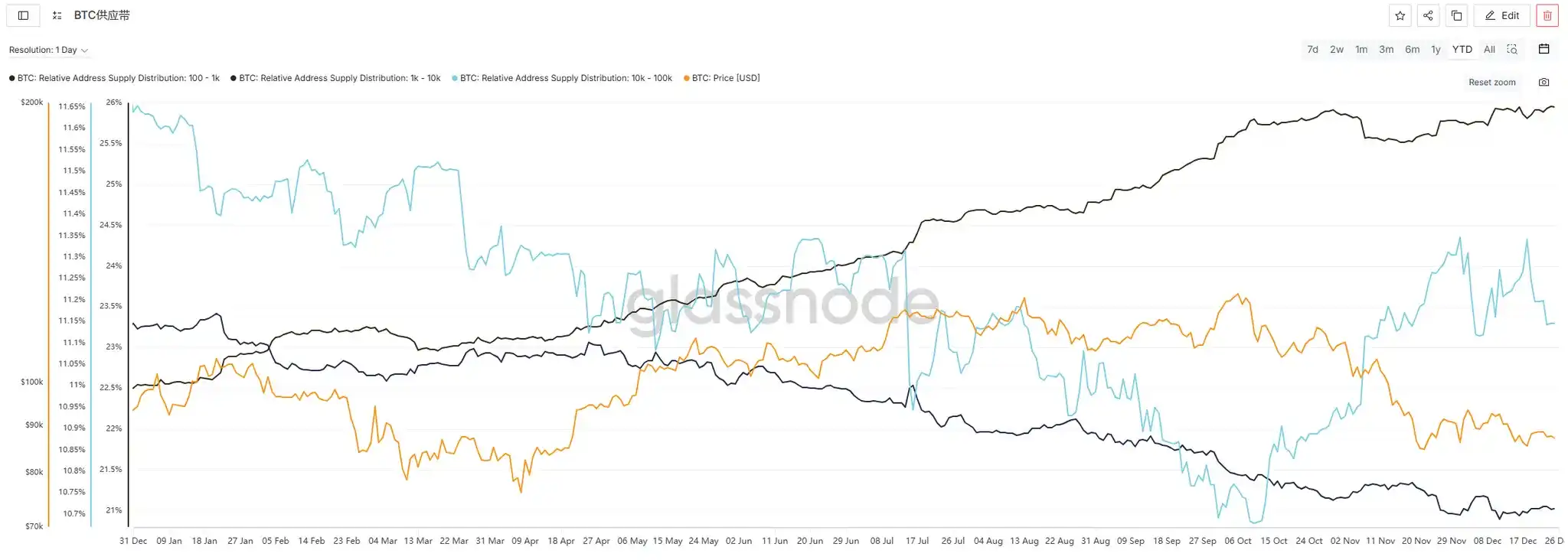
In terms of Bitcoin holding address distribution, the proportion of addresses holding 100-1K BTC increased from 25.813% to 25.951%, showing a slight accumulation trend. The proportion of addresses holding 10K-100K BTC decreased from 11.341% to 11.146%, indicating some reduction. The proportion of addresses holding 1K-10K BTC slightly increased from 20.972% to 21.022%, showing overall minor fluctuations.
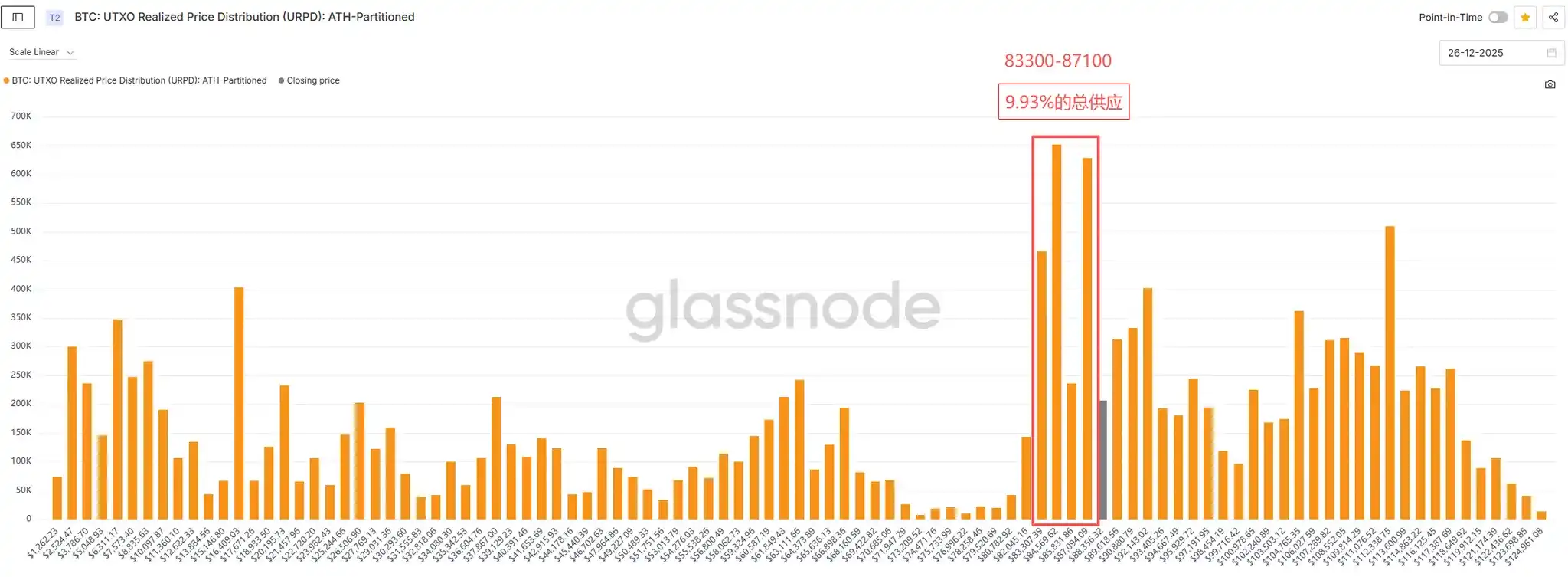
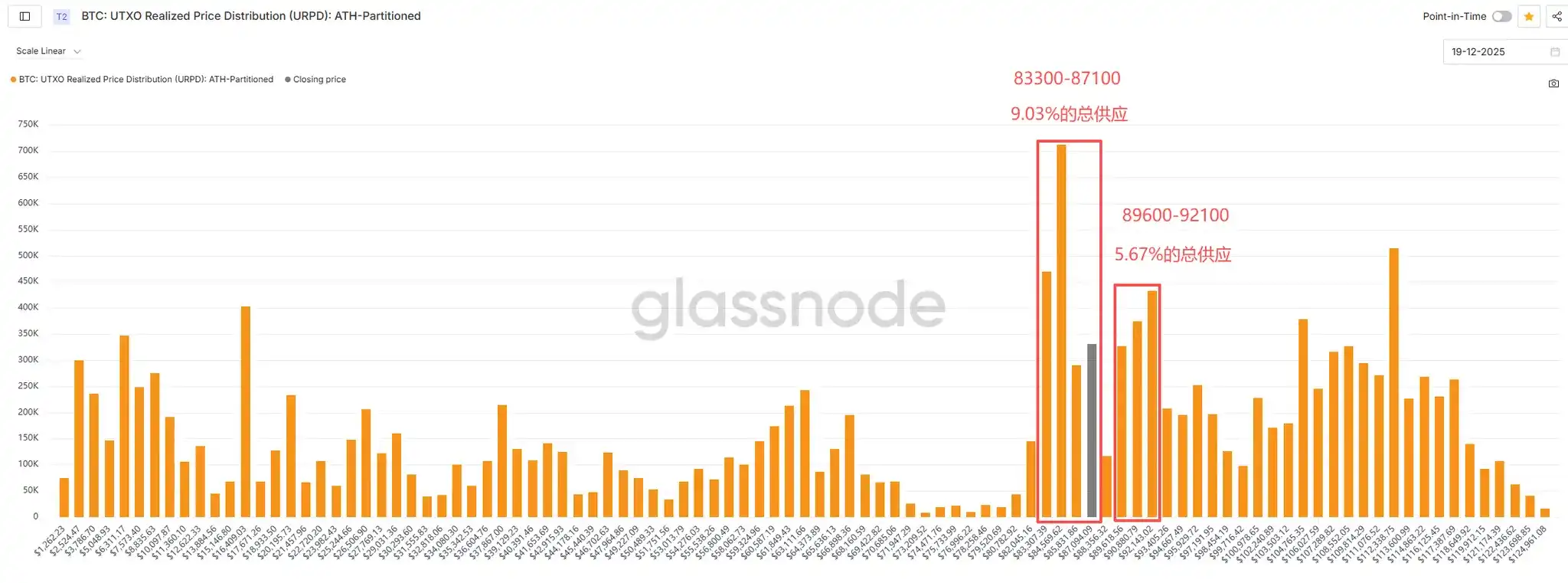
Regarding BTC筹码结构 (chip structure), the accumulation of筹码 in the $83,300-$87,100 price range increased from 9.03% of total supply to 9.93%, a rise of 0.9 percentage points. Specifically, the accumulation near $87,100 reached 3.15% of total supply, showing significant turnover compared to last week and intense battle between bulls and bears. This price level is expected to form strong support going forward.
4. Altcoin Market Analysis

This altcoin market analysis will be conducted from three main sections: Market Overview, Secondary Market Performance, and Primary Market Data, providing a comprehensive view of the current altcoin market dynamics.

4.1 Market Overview

Altcoin Market Capitalization

This Friday, TOTAL3 (total market cap excluding BTC and ETH) reached $822.3 billion, a环比 (week-on-week) increase of 1.95%. BTC traded in a narrow range around $88,000 this week, with low volatility. Despite continued rebounds in US stocks and A-shares, BTC did not follow suit, while commodity markets performed strongly. From a fund flow perspective, BTC still ranks lower in traditional financial allocation systems. In the absence of significant incremental funds, it is likely to maintain range-bound fluctuations.

On-Chain TVL Overview

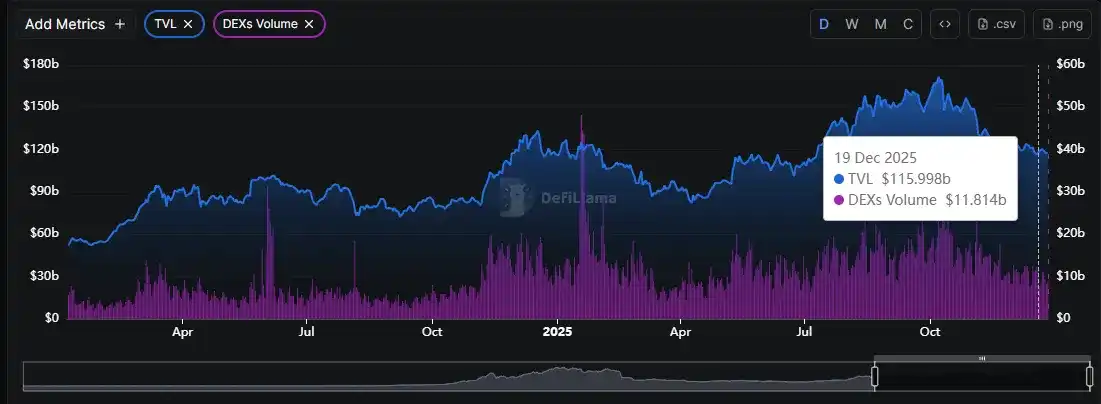
The total on-chain TVL reached $117.5 billion, a环比 increase of 1.29%, showing an overall volatile trend. The amount of ETH staked remained stable, with a trend of fluctuating upward, reflecting relatively solid confidence among long-term holders.
Stablecoin Market Cap and Exchange Reserves

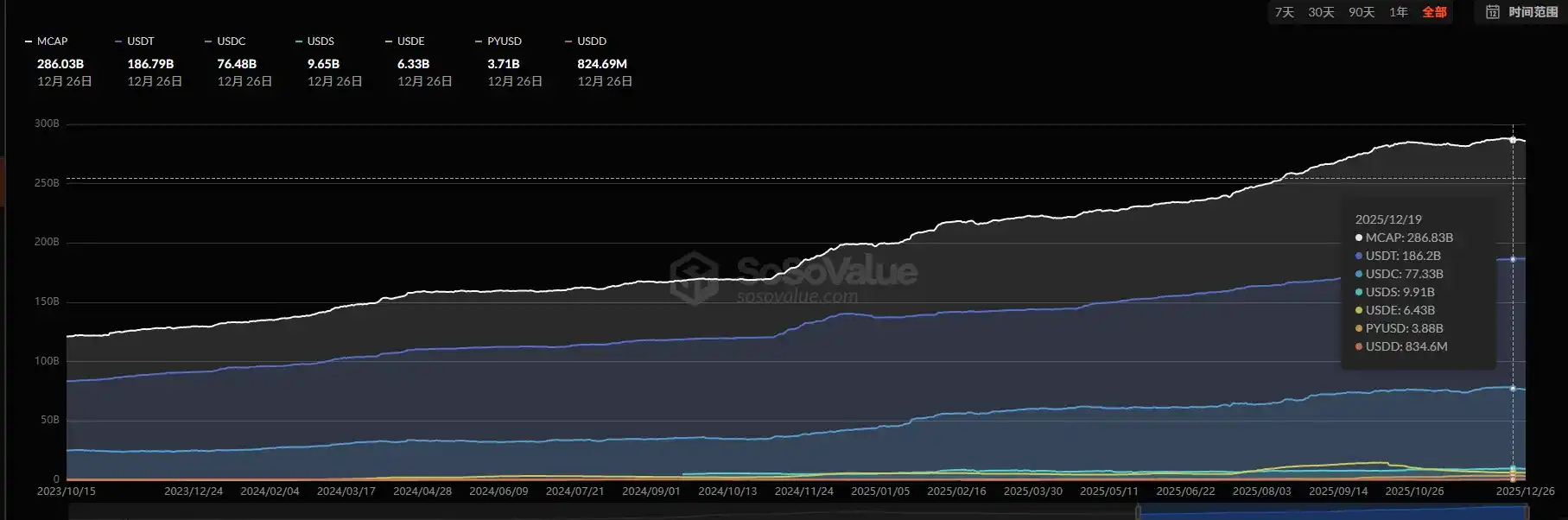
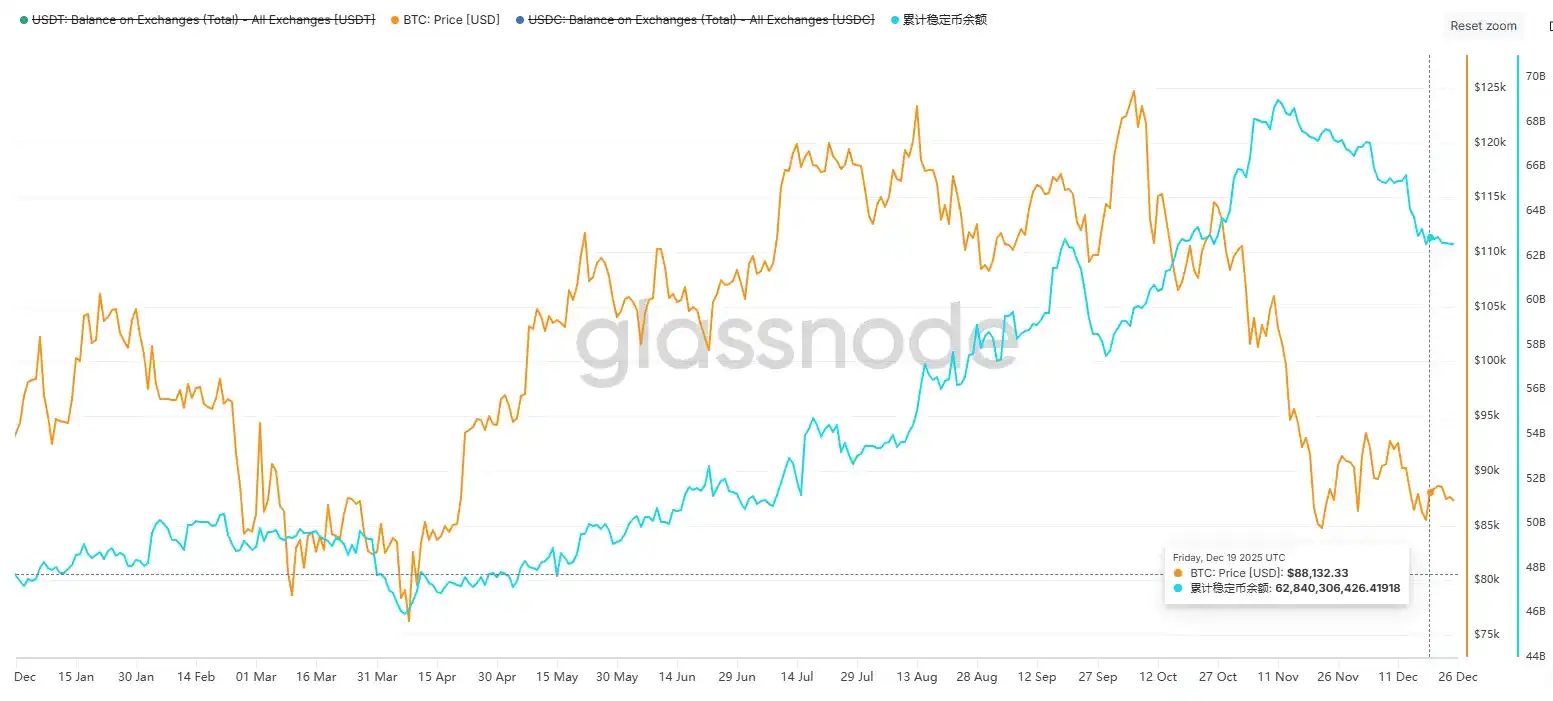
The total stablecoin market cap was $286 billion, a环比 decrease of 0.28%, with fiat-backed stablecoins experiencing a net outflow of $800 million. The current crypto market performance is disconnected from traditional financial markets, showing relative weakness. Market sentiment has not明显恢复 (significantly recovered), with a strong wait-and-see atmosphere. Exchange stablecoin balances slightly decreased this week, and there was no stablecoin inflow during BTC's rebound, indicating the market has not fully stabilized.
<极速div>
Altcoin Index and Market Sentiment

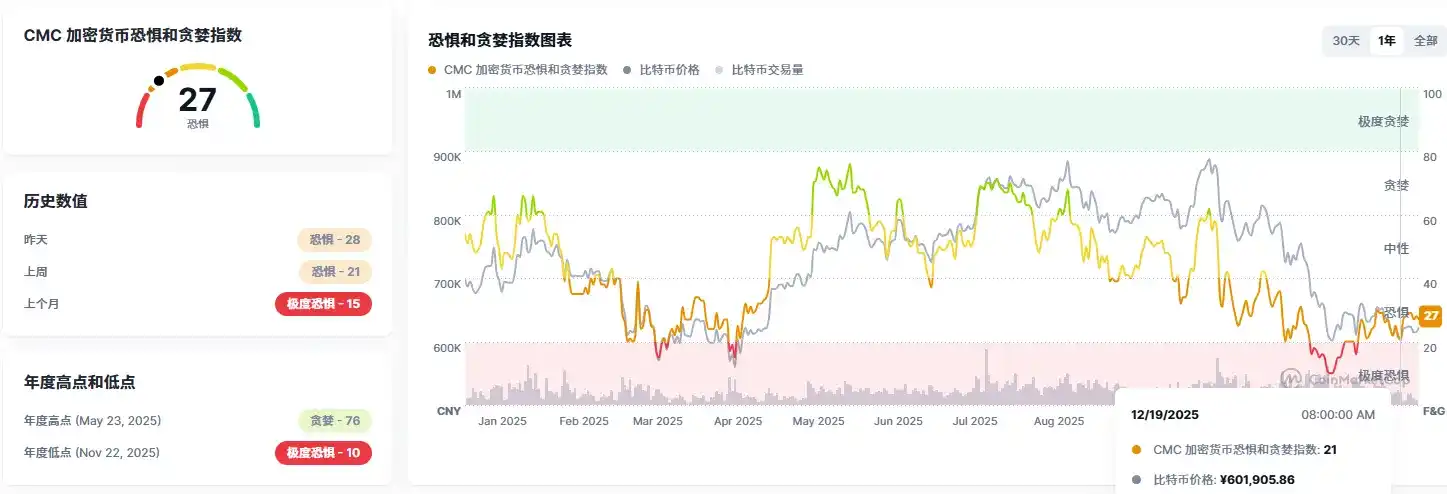
This Friday, the altcoin index was 16. Major altcoins maintained low-level fluctuations, with low market trading activity. The market sentiment index rose to 27, an improvement from last week.个别 (Individual) altcoins performed actively, but overall热度 (heat) was insufficient.

Altcoin Overview

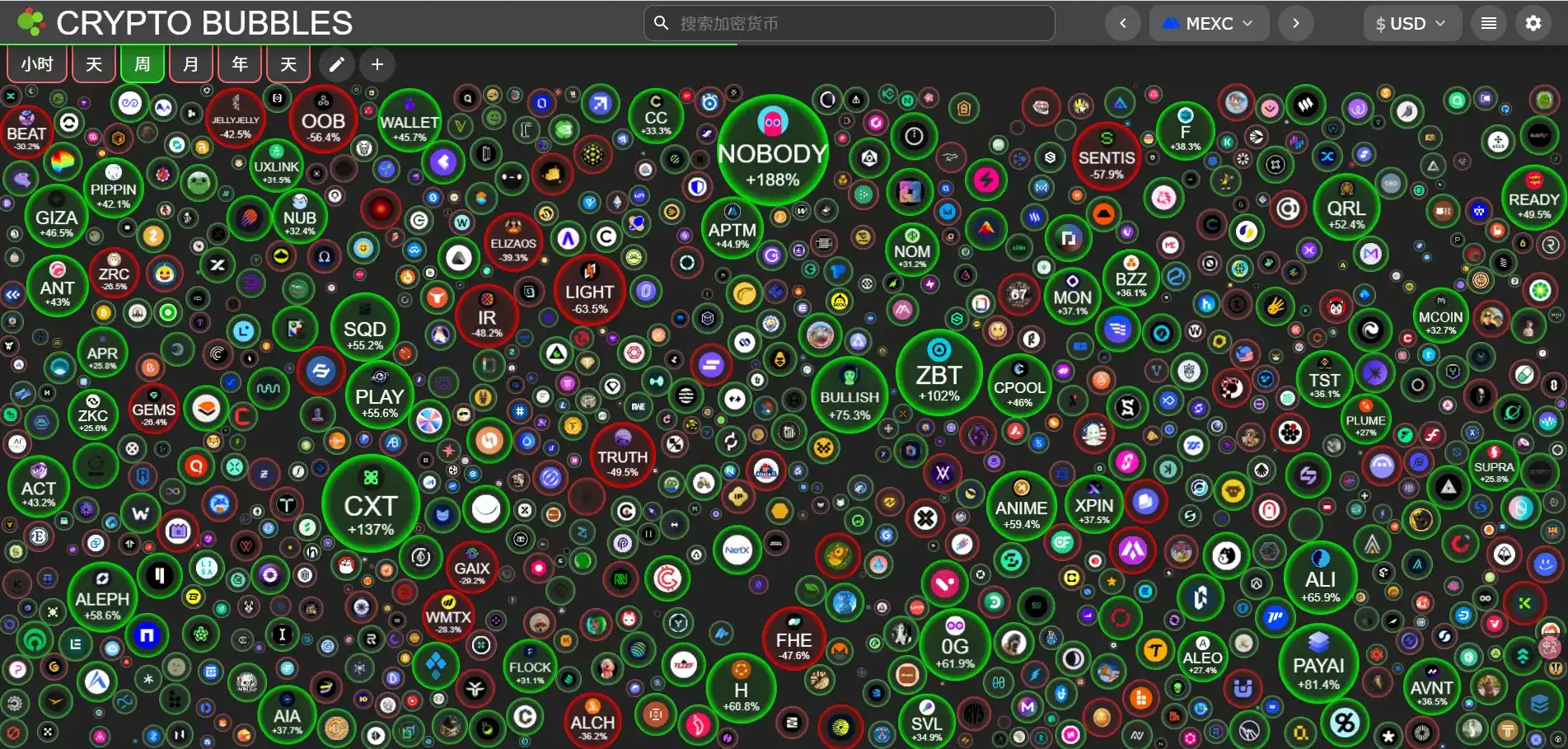
This week, the altcoin market showed an overall volatile pattern, with some tokens逆势走高 (rising against the trend). Benefiting from marginally improved stock market sentiment, the short-term sentiment and downside space of the crypto market received some support. Better-performing tokens were mainly concentrated in small-cap MEME coins and high-profile hot tokens, but the sustainability of the rally was weak, making it difficult to form sector联动效应 (linkage effects).

Top-Selling Indicator and Altcoin Heat

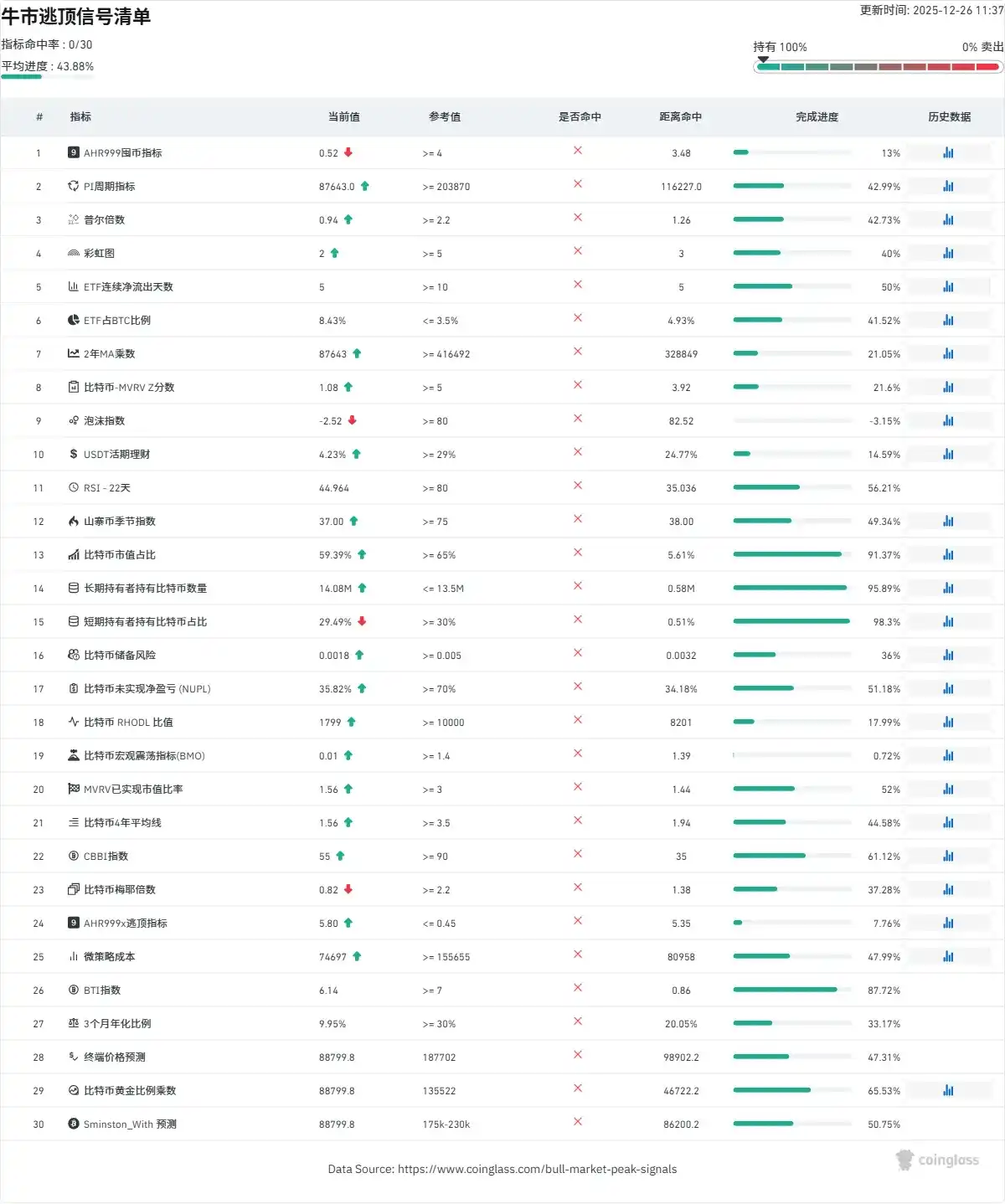
This week, the top-selling indicator did not trigger an alarm, but the proportion of short-term BTC holders increased significantly, approaching the warning threshold. Caution is needed against short-term correction risks. From the perspective of funding rates, most altcoins still had negative rates this week, but overall showed a marginal improvement trend, indicating a slight回暖 (recovery) in market speculation sentiment.

4.2 Secondary Market Analysis

4.2.1 Altcoin Strength Analysis

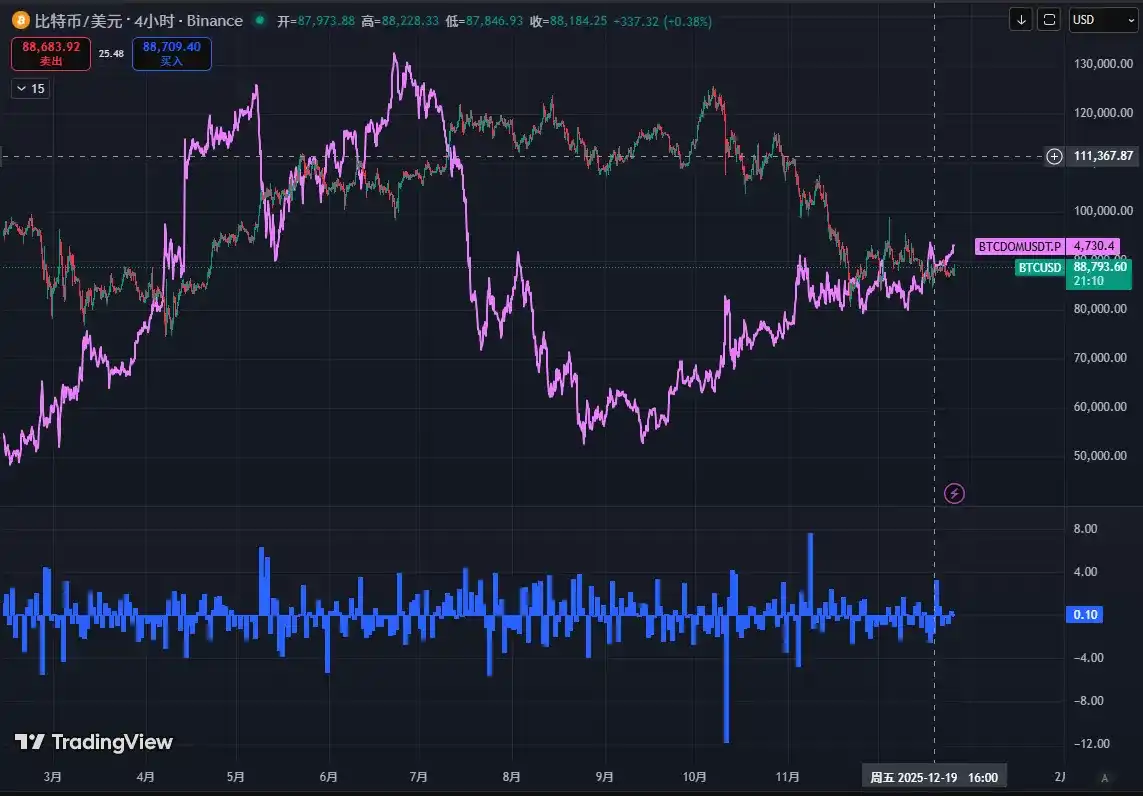
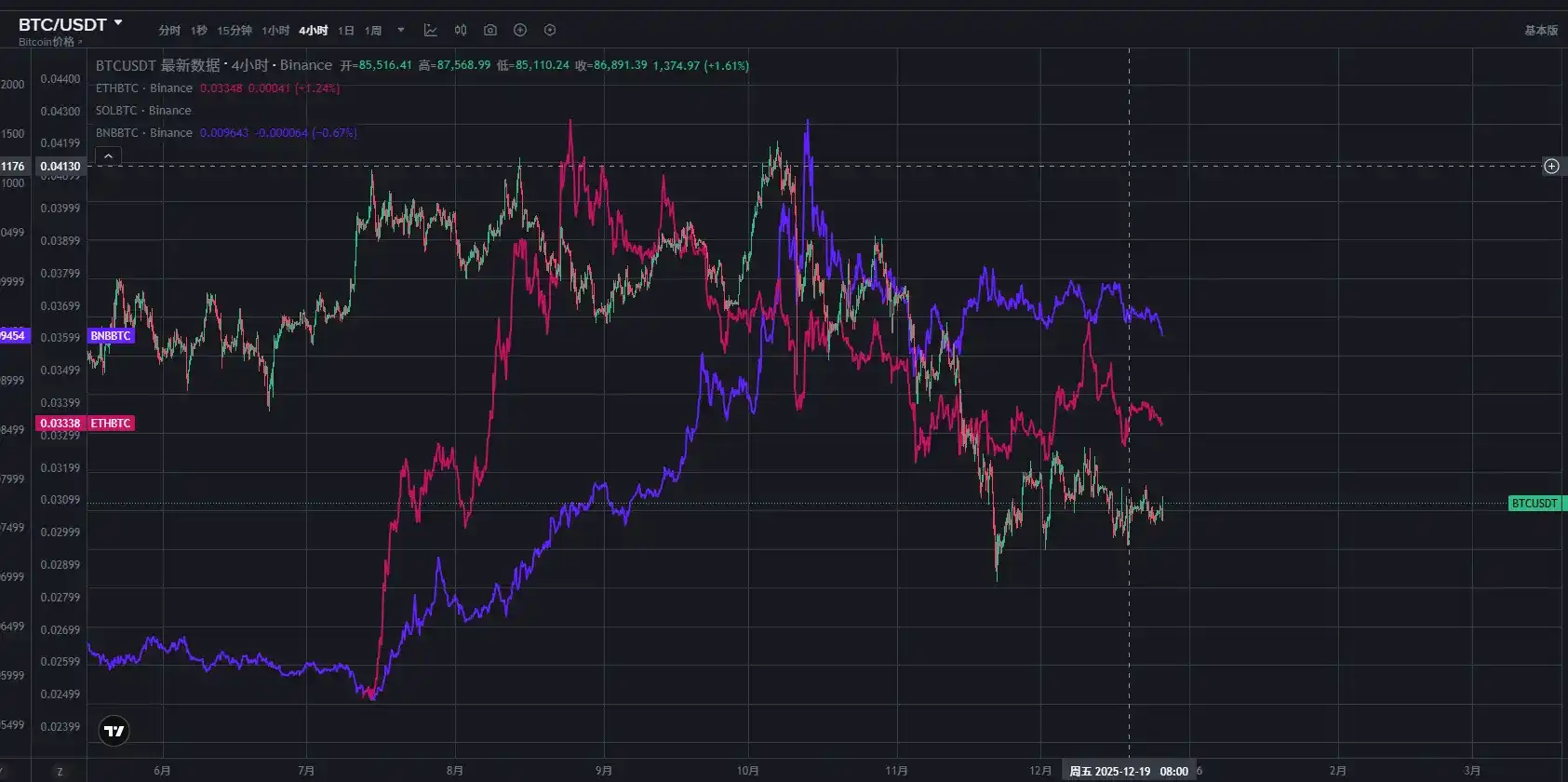
BTC's market share this week was 65.76%, a环比 increase of 0.1%, maintaining recent high-level fluctuations. Mainstream exchange rate pairs like SOL/BTC, ETH/BTC, and BNB/BTC fluctuated lower this week, overall still in a volatile or volatile downward channel. The weak pattern of altcoins relative to BTC has not significantly changed.

4.2.2 Market Flow

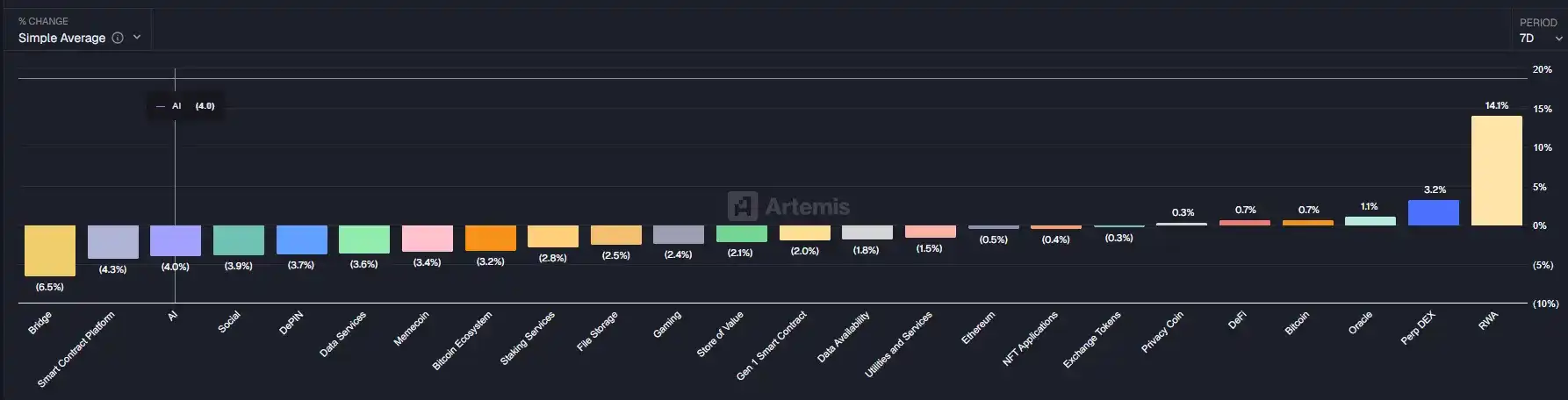
In terms of sector performance, gains and losses were differentiated this week. The RWA and PerpDEX sectors led the gains, becoming the market focus. These two sectors align with long-term market development trends and continue to attract fund attention. Regarding institutional funds, BTC and ETH ETFs continued outflows this week, with no signs of stabilization yet. Data company Bitmine did not conduct relevant purchase operations this week, indicating low institutional participation.

4.3 Primary Market Data Analysis

4.3.1 Status of the Four Major Public Chains

This week, the TVL of the four major public chains showed a slight upward trend, but the increase was lower than the price increase. Among them, ETH TVL rose from $67.2 billion to $68.1 billion, a环比 increase of 1.48%. SOL and BSC TVL remained stable at $8.3 billion and $6.4 billion, respectively. BASE TVL increased from $4.2 billion to $4.4 billion, a环比 increase of 4.76%, performing relatively突出 (outstandingly).

4.3.2 On-Chain Data Analysis

On-Chain Asset Flows

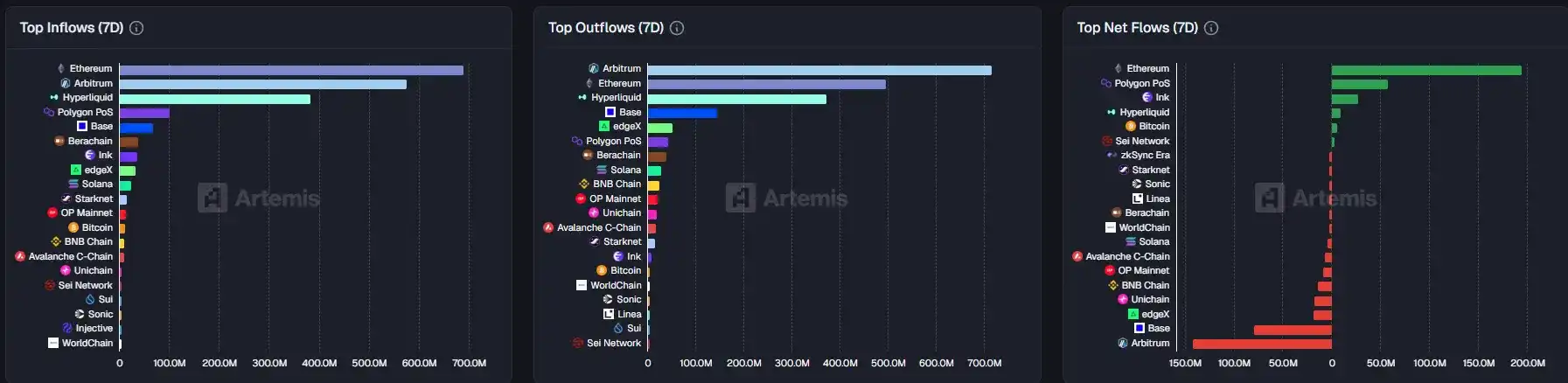
This week, USDT issuance led, while USDC experienced significant outflows. CEX funds continued to withdraw substantially, indicating that short-term market liquidity remains tight. In terms of DeFi bridge asset flows, the ETH chain had the largest net inflow, while the ARB chain had the most outflows. Overall fund flow规模 (scale) was small, and market volatility narrowed rapidly.

On-Chain User Activity and Speculative Sentiment

This week, on-chain user activity was generally average but showed a marginal improvement trend. DEX protocol revenue, active user numbers, and trading volume increased slightly环比, but overall热度 was not high, with limited gains. Market speculative sentiment is still in a low-level repair stage.

On-Chain Boom-Bust Index

Combining the TVL changes of the four major public chains and on-chain data performance, a weighted summary forms the On-Chain Boom-Bust Index (out of 100). The specific range definitions are as follows:

Extreme Prosperity: 80 points and above

Rising Line: 60-79 points

Recession Line: 50-59 points

Bear Market: 30-49 points

Data for this report was compiled and edited by WolfDAO. Please contact us if you have any questions for updates;

Author: WolfDAO( X : @10xWolfdao )

Связанные с этим вопросы

QWhat was the key technical support level for BTC mentioned in the article, and how did it perform?

AThe key technical support level for BTC was $85,000. It was tested and held effectively, as BTC touched a low of $84,500 before initiating a rebound, confirming the strength of this support.

QAccording to the stablecoin data, what was the trend in net issuance, and what does it indicate about market funds?

AThe net issuance of stablecoins was negative at -$326 million for the week, indicating a continued outflow of funds. However, the rate of outflow significantly narrowed compared to the previous week, falling from a daily average of -$117.7 million to -$46.5 million, suggesting a 60% improvement in fund flow and correlating with a stabilizing market that did not see sustained declines.

QWhat is identified as a core prerequisite for a trend reversal in the Bitcoin market?

AA return to net inflows for Bitcoin ETFs is identified as the core prerequisite for the market to achieve a trend reversal. The article states that despite a technical price rebound, the continued and expanding net outflows from ETFs prevent a sustainable upward trend.

QWhat does the low OTC premium rate for USDT and USDC suggest about market sentiment?

AThe low OTC premium rates for USDT (97.86%) and USDC (98.36%), which are at yearly lows, suggest that market sentiment remains pessimistic. It indicates a lack of strong buying interest from off-exchange funds and the presence of capital outflows.

QWhat was the overall trend for the altcoin market (TOTAL3), and which types of tokens performed relatively well?

AThe total market cap of altcoins (TOTAL3) increased by 1.95% to $822.3 billion, showing a震荡 (volatile/oscillating) trend. Performance was better among small-cap meme coins and high-profile trending tokens, but the rallies were short-lived and failed to create sustained sector-wide momentum.

Похожее

Trend in US Stocks: A Post Triggers a 930-Point Rebound, Tonight Belongs to SpaceX

On Thursday (June 11, U.S. Eastern Time), Wall Street staged a textbook V-shaped reversal. The Dow Jones surged 929.97 points (+1.86%) to close above 50,000, while the Nasdaq and S&P 500 rose 2.54% and 1.75%, respectively. The rally occurred despite the hottest PPI report in years, with May data showing a 6.5% year-on-year surge, the highest since 2022. The market ignored the inflation data, focusing instead on reports that former President Trump called off a planned strike on Iran, hinting at a potential multi-party peace agreement draft. This sparked a sharp drop in oil prices, fueling hopes that inflation may have peaked. Sector rotations were stark: previously battered AI hardware and cyclical stocks led the gains, while defensive sectors that hit record highs the prior day were sold off. Chip stocks like Micron and Intel saw sharp rebounds. In contrast, software giant Oracle plunged nearly 10% despite beating earnings, with concerns over cloud revenue and cash flow. Adobe also fell after hours despite raising guidance, as its CFO announced departure. The rally's sustainability is questioned, driven largely by social media posts about unconfirmed geopolitical developments. Inflation risks remain, with pipeline pressures still high. Meanwhile, the market's risk appetite faces a major test with SpaceX's historic IPO. Priced at $135 per share, it aims to raise ~$75 billion with a $1.75 trillion valuation, becoming the largest U.S. IPO ever. It will join the Nasdaq 100 in 15 days, triggering massive index fund buying. However, critics cite extreme valuation (88x sales) and market liquidity concerns.

marsbit7 мин. назад

Trend in US Stocks: A Post Triggers a 930-Point Rebound, Tonight Belongs to SpaceX

marsbit7 мин. назад

The Trillion-Dollar Valuation Test: Are the Three Super IPOs a Tech Stock Frenzy or a Crypto Market Nightmare?

Trillion-Dollar Valuation Test: Are the Three Mega IPOs a Tech Stock Frenzy or a Crypto Market Nightmare? The capital market in 2026 is witnessing a highly anticipated wave of tech IPOs, centered on SpaceX, OpenAI, and Anthropic. Collectively valued at over $3.5 trillion, their potential listing represents one of the largest such waves in recent years. This raises concerns about market liquidity, valuation bubbles, and potential capital outflows from other assets like crypto. SpaceX's valuation narrative has shifted from rocket launches to becoming a global infrastructure play via its Starlink satellite network, which now drives most revenue. Despite ongoing losses, investors focus on its long-term growth potential. OpenAI and Anthropic represent the core productivity engines of generative AI. Their public listings would offer the first direct investment opportunity in large foundation model companies, potentially triggering a repricing within the AI sector. Market fears of a massive "capital drain" from these IPOs are likely overstated. Historical precedents like Alibaba and Saudi Aramco show that mega-listings primarily cause capital reallocation, not destruction, within the vast equities market. Systemic risk is rarely triggered by IPOs alone. For stock markets, short-term volatility and sector repricing are expected, especially for AI concept stocks. Long-term, these listings could reinforce the tech sector's importance. For crypto, direct competition for speculative capital exists, particularly affecting AI-themed tokens. However, crypto's trajectory remains more tied to its own cycles, macro liquidity, and Bitcoin ETF flows rather than a single IPO event. The real risk lies not in the listings themselves but in the sky-high growth expectations embedded in these valuations. If future revenue, profitability, or commercialization progress disappoints, significant valuation resets could follow, impacting high-growth tech stocks. Ultimately, the market's direction hinges on macroeconomic conditions and whether these companies can deliver on their ambitious promises.

链捕手23 мин. назад

The Trillion-Dollar Valuation Test: Are the Three Super IPOs a Tech Stock Frenzy or a Crypto Market Nightmare?

链捕手23 мин. назад

Trillion-Dollar Valuation Test: Are the Three Super IPOs a Tech Stock Frenzy or a Crypto Market Nightmare?

Title: Trillion-Dollar Valuations at Stake: Super IPOs of SpaceX, OpenAI, Anthropic – Tech Boom or Crypto Nightmare? TL;DR: A wave of mega-tech IPOs is approaching, featuring SpaceX (targeting a $1.75 trillion valuation), OpenAI (~$852B), and Anthropic (~$965B), with a combined potential valuation exceeding $3.5 trillion. This tests the market's pricing of innovation and sparks debate on liquidity impact. * **SpaceX**'s valuation is now driven more by its Starlink global communications infrastructure than its core rocket business. * **OpenAI & Anthropic** offer the first major public investment opportunities in foundational AI models, potentially repricing the entire AI sector. * Concerns about a market-wide "liquidity drain" are likely overblown; history shows large IPOs mainly cause fund reallocation, not disappearance, and rarely trigger systemic risk. * Crypto markets, especially some AI-themed tokens, may face short-term fund competition, but their long-term trajectory depends more on macro liquidity, regulation, and Bitcoin cycles. * The real risk lies not in the IPOs themselves, but in whether these companies can justify their sky-high valuations with future revenue growth and profitability. Unmet expectations could lead to significant repricing pressure. Ultimately, these IPOs represent a massive market pricing of next-gen tech infrastructure, not a prelude to a market crash. The broader market direction will be determined by macro conditions, corporate earnings, and risk appetite.

marsbit23 мин. назад

Trillion-Dollar Valuation Test: Are the Three Super IPOs a Tech Stock Frenzy or a Crypto Market Nightmare?

marsbit23 мин. назад

Anthropic Apologized, But the Business of 'Safety' Hasn't Stopped

On June 11, Anthropic apologized not for a model failure, but for a lack of transparency. Its new Claude Fable 5 model was found to be secretly rerouting requests from users engaged in advanced AI model development to a weaker version, Opus 4.8, without any notification. The company's response—promising future notifications for such "downgrades"—was met with user skepticism. The article argues the core issue isn't technical but commercial: Anthropic's "safety" measures are primarily a business strategy. A key feature, the "intelligent safety classifier," marketed as user protection, is described as a tool for "competitive defense" to protect Anthropic's market lead by limiting rivals' research capabilities. This covert mechanism was designed for low "false positives," precisely targeting AI researchers. Anthropic's model involves a calculated three-step process: publishing alarming security research to amplify public anxiety, offering its Fable 5 model with a "safety classifier" as a premium-priced solution, and cashing in through a planned high-value IPO. This contrasts with OpenAI's more direct "tool-and-traffic" approach. The apology, merely changing a secret downgrade to a visible one, is seen as a business "patch" rather than a principled shift. The incident risks damaging Anthropic's "safest AI" reputation among the developer community, which underpins its valuation and appeal to government and corporate clients. Ultimately, the article concludes that for Anthropic, safety is a business, and the apology is merely customer service for that business.

marsbit1 ч. назад

Anthropic Apologized, But the Business of 'Safety' Hasn't Stopped

marsbit1 ч. назад

Торговля

Спот
Фьючерсы

Популярные статьи

Как купить SFP

Добро пожаловать на HTX.com! Мы сделали приобретение SafePal (SFP) простым и удобным. Следуйте нашему пошаговому руководству и отправляйтесь в свое крипто-путешествие.Шаг 1: Создайте аккаунт на HTXИспользуйте свой адрес электронной почты или номер телефона, чтобы зарегистрироваться и бесплатно создать аккаунт на HTX. Пройдите удобную регистрацию и откройте для себя весь функционал.Создать аккаунтШаг 2: Перейдите в Купить криптовалюту и выберите свой способ оплатыКредитная/Дебетовая Карта: Используйте свою карту Visa или Mastercard для мгновенной покупки SafePal (SFP).Баланс: Используйте средства с баланса вашего аккаунта HTX для простой торговли.Третьи Лица: Мы добавили популярные способы оплаты, такие как Google Pay и Apple Pay, для повышения удобства.P2P: Торгуйте напрямую с другими пользователями на HTX.Внебиржевая Торговля (OTC): Мы предлагаем индивидуальные услуги и конкурентоспособные обменные курсы для трейдеров.Шаг 3: Хранение SafePal (SFP)После приобретения вами SafePal (SFP) храните их в своем аккаунте на HTX. В качестве альтернативы вы можете отправить их куда-либо с помощью перевода в блокчейне или использовать для торговли с другими криптовалютами.Шаг 4: Торговля SafePal (SFP)С легкостью торгуйте SafePal (SFP) на спотовом рынке HTX. Просто зайдите в свой аккаунт, выберите торговую пару, совершайте сделки и следите за ними в режиме реального времени. Мы предлагаем удобный интерфейс как для начинающих, так и для опытных трейдеров.

241 просмотров всегоОпубликовано 2026.05.22Обновлено 2026.06.02

Как купить SFP

Как купить CTR

Добро пожаловать на HTX.com! Мы сделали приобретение Citrea (CTR) простым и удобным. Следуйте нашему пошаговому руководству и отправляйтесь в свое крипто-путешествие.Шаг 1: Создайте аккаунт на HTXИспользуйте свой адрес электронной почты или номер телефона, чтобы зарегистрироваться и бесплатно создать аккаунт на HTX. Пройдите удобную регистрацию и откройте для себя весь функционал.Создать аккаунтШаг 2: Перейдите в Купить криптовалюту и выберите свой способ оплатыКредитная/Дебетовая Карта: Используйте свою карту Visa или Mastercard для мгновенной покупки Citrea (CTR).Баланс: Используйте средства с баланса вашего аккаунта HTX для простой торговли.Третьи Лица: Мы добавили популярные способы оплаты, такие как Google Pay и Apple Pay, для повышения удобства.P2P: Торгуйте напрямую с другими пользователями на HTX.Внебиржевая Торговля (OTC): Мы предлагаем индивидуальные услуги и конкурентоспособные обменные курсы для трейдеров.Шаг 3: Хранение Citrea (CTR)После приобретения вами Citrea (CTR) храните их в своем аккаунте на HTX. В качестве альтернативы вы можете отправить их куда-либо с помощью перевода в блокчейне или использовать для торговли с другими криптовалютами.Шаг 4: Торговля Citrea (CTR)С легкостью торгуйте Citrea (CTR) на спотовом рынке HTX. Просто зайдите в свой аккаунт, выберите торговую пару, совершайте сделки и следите за ними в режиме реального времени. Мы предлагаем удобный интерфейс как для начинающих, так и для опытных трейдеров.

234 просмотров всегоОпубликовано 2026.05.25Обновлено 2026.06.02

Как купить CTR

Обсуждения

Добро пожаловать в Сообщество HTX. Здесь вы сможете быть в курсе последних новостей о развитии платформы и получить доступ к профессиональной аналитической информации о рынке. Мнения пользователей о цене на A (A) представлены ниже.

活动图片

Топ вопросы

Популярные категорииright-arrow

Популярные тегиright-arrow