The Person Who Made $69 Million from NFTs Four Years Ago Is Still Making Money

深潮Опубликовано 2025-12-10Обновлено 2025-12-10

Введение

Four years after making $69 million from an NFT sale, Beeple continues to innovate and profit in the digital art space. Despite the decline in the NFT market, he recently launched "Regular Animals" at Art Basel—a collection of 256 eerie robotic dogs with human faces resembling figures like Musk, Warhol, and Picasso. These AI-driven sculptures use cameras and visual algorithms to create art based on their surroundings. The NFTs, initially given away for free, now trade for over 10 ETH (around $35,000) on OpenSea, valuing the giveaway near $9 million. A physical series of 1,024 pieces is also available, with listings reaching $6,500 on eBay—though the digital versions remain more valuable. Beeple, who once struggled to sell art for over $100, now operates a large studio with a team of artists and engineers, including a former Boeing engineer and a renowned art curator. His work continues to bridge crypto and traditional art, gaining attention from outlets like WSJ.

Written by: Cookie, Lüdong

beeple, the man who sold one NFT for a staggering $69 million, has long been seen as a symbol of the golden age of NFTs that once was.

Although the glory of NFTs has faded, beeple and his team have remained active in the NFT space. At this year's Art Basel, he brought another "golden dog" to the currently quiet NFT market—Regular Animals.

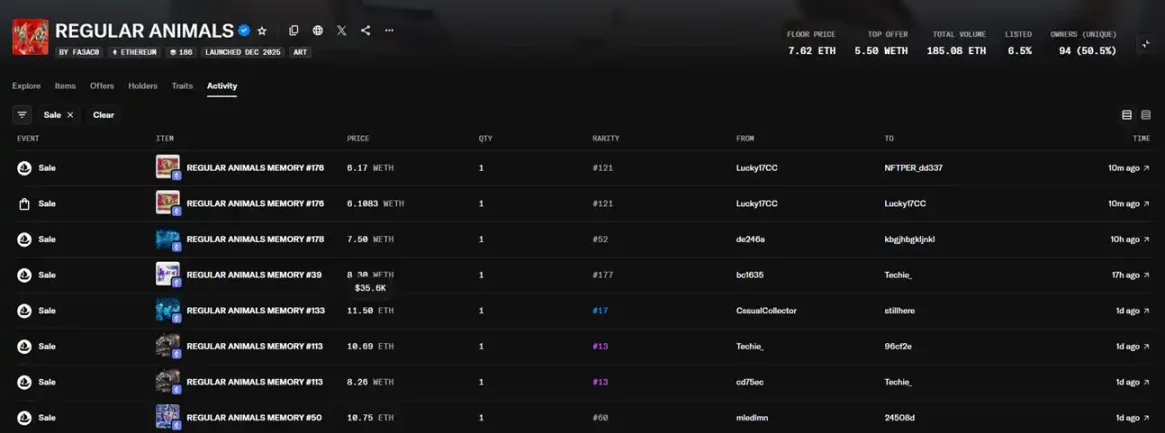
Yesterday, multiple Regular Animals were sold on OpenSea for over 10 ETH (approximately $35,000) each. These artworks were given away for free at Art Basel, with a total of 256 pieces. At this price, beeple essentially gave away nearly ten million dollars worth of NFTs at Art Basel.
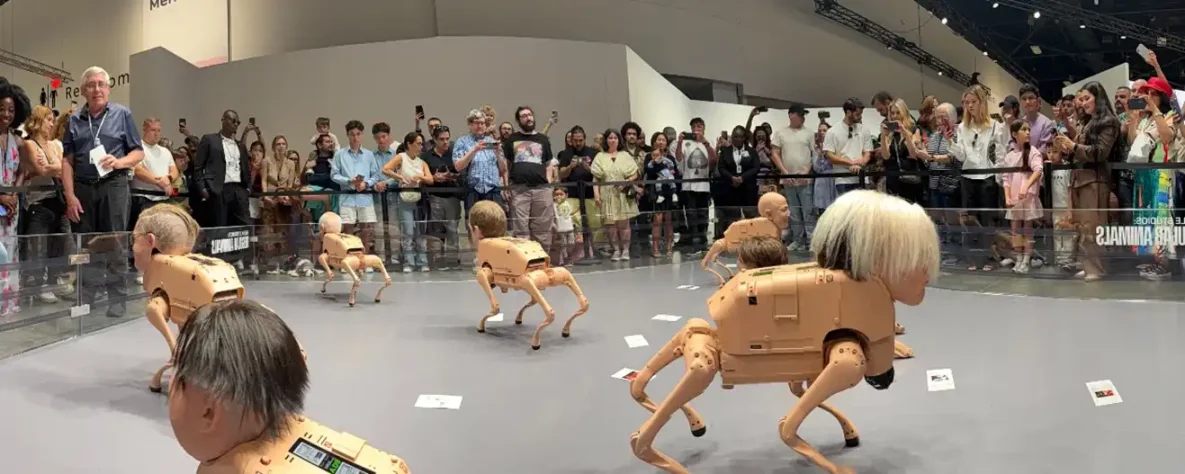
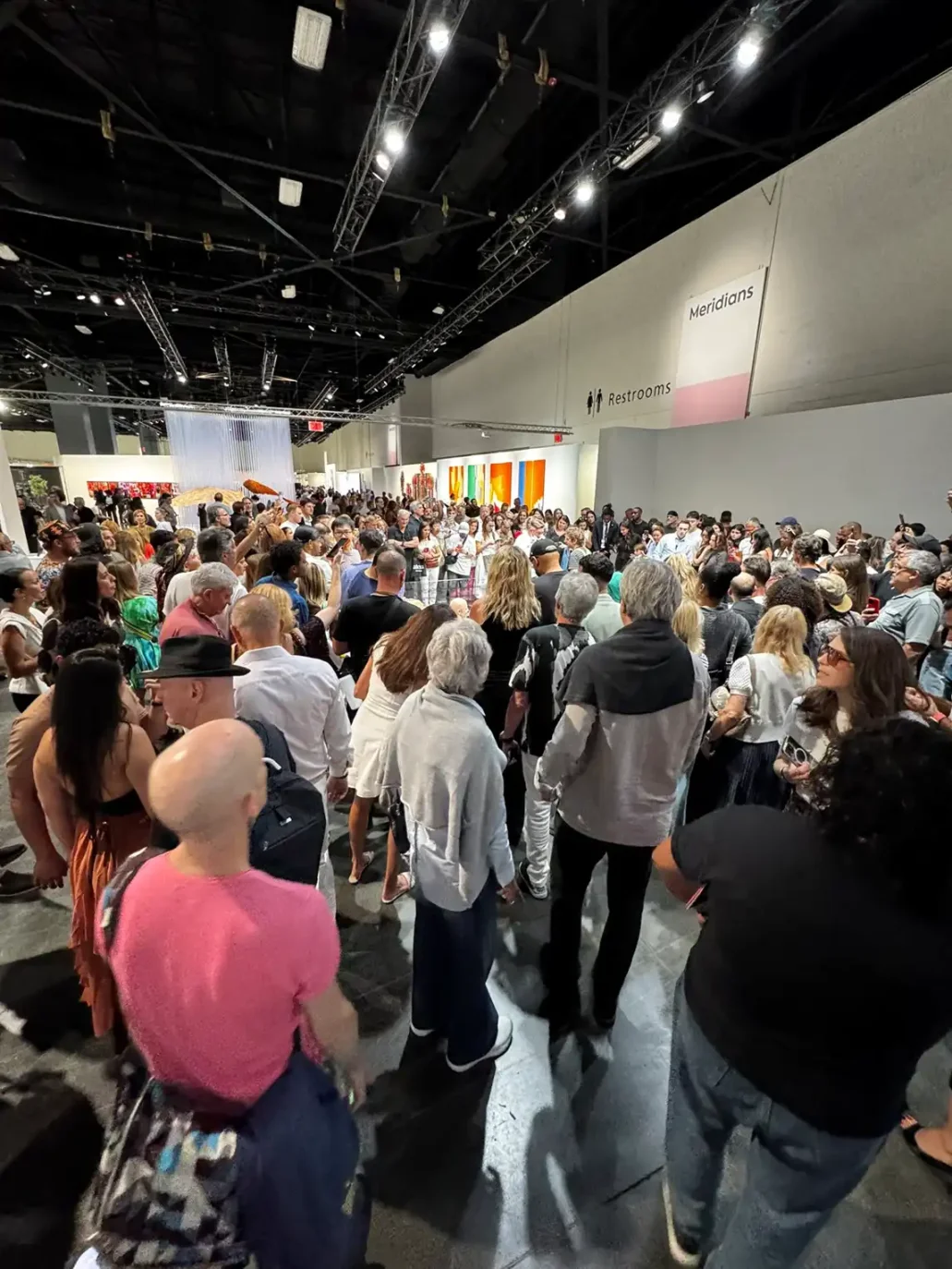
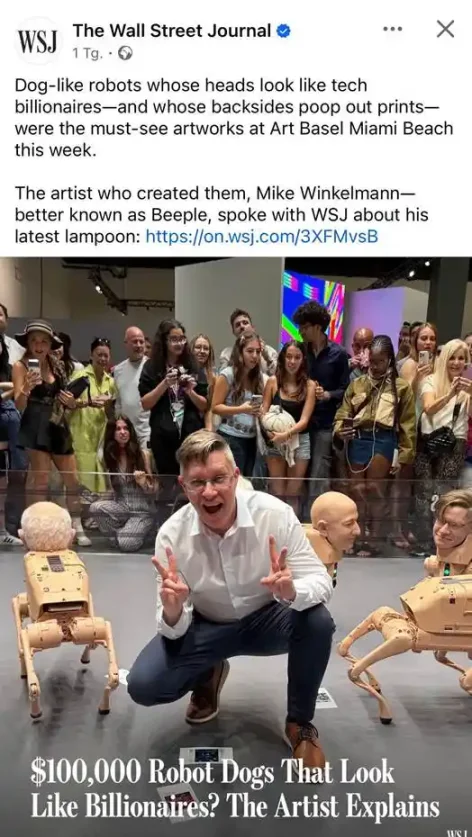
The project that beeple and his team brought to Art Basel is Regular Animals. These are robotic dogs, as shown in the image below. They look somewhat eerie because these robotic dogs have human faces, and they are faces of well-known figures such as Musk, Andy Warhol, Zuckerberg, Picasso, and even beeple himself.
Of course, it's not just about the eerie visual effect. These robotic dogs use the cameras on their heads to observe their surroundings and employ an evolving visual algorithm to create artworks.
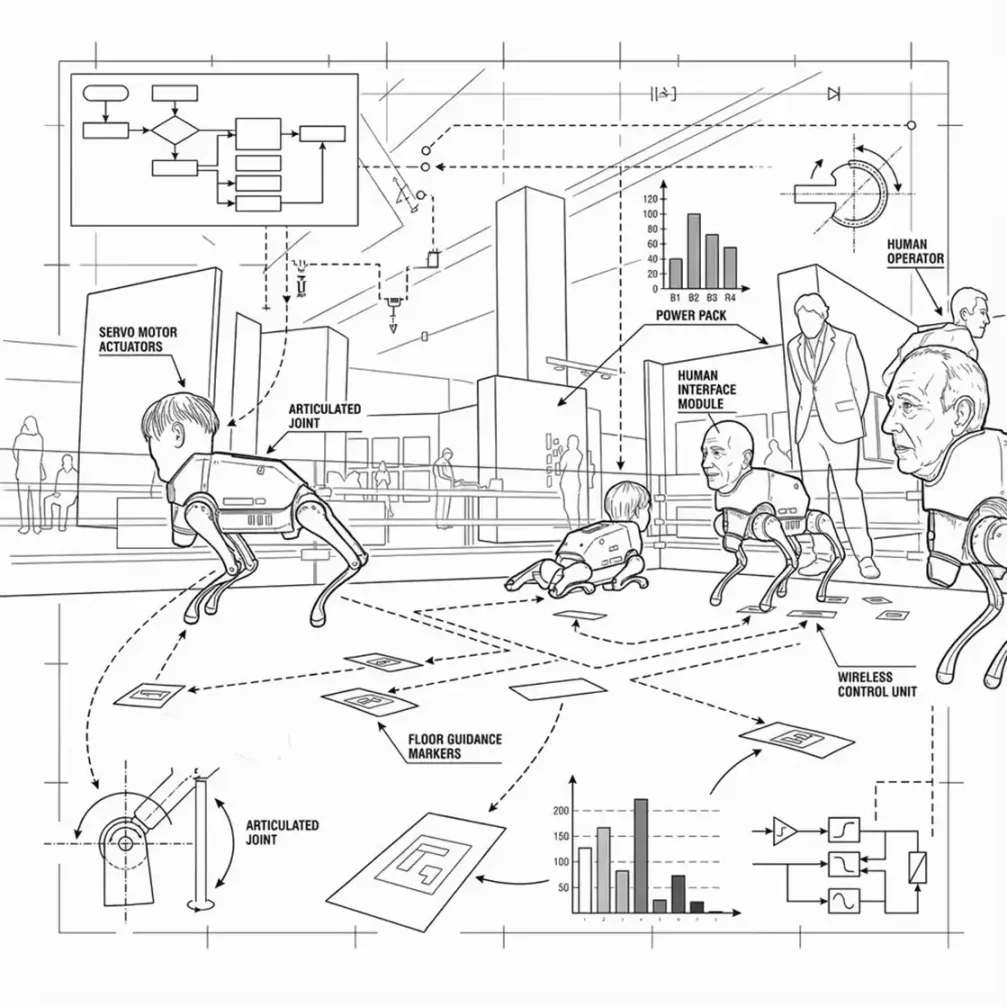
The selection of these famous figures is not arbitrary. The reason for choosing the aforementioned celebrities is that they have influenced how we view the world, whether through algorithms, art, or politics. As humans, we observe the world through these perspectives, and so do these robotic dogs. At Art Basel, these robotic dogs and humans observed each other, and each moment of observation became an artwork created by the robotic dogs. These artworks are also like autobiographies of these robotic dogs.
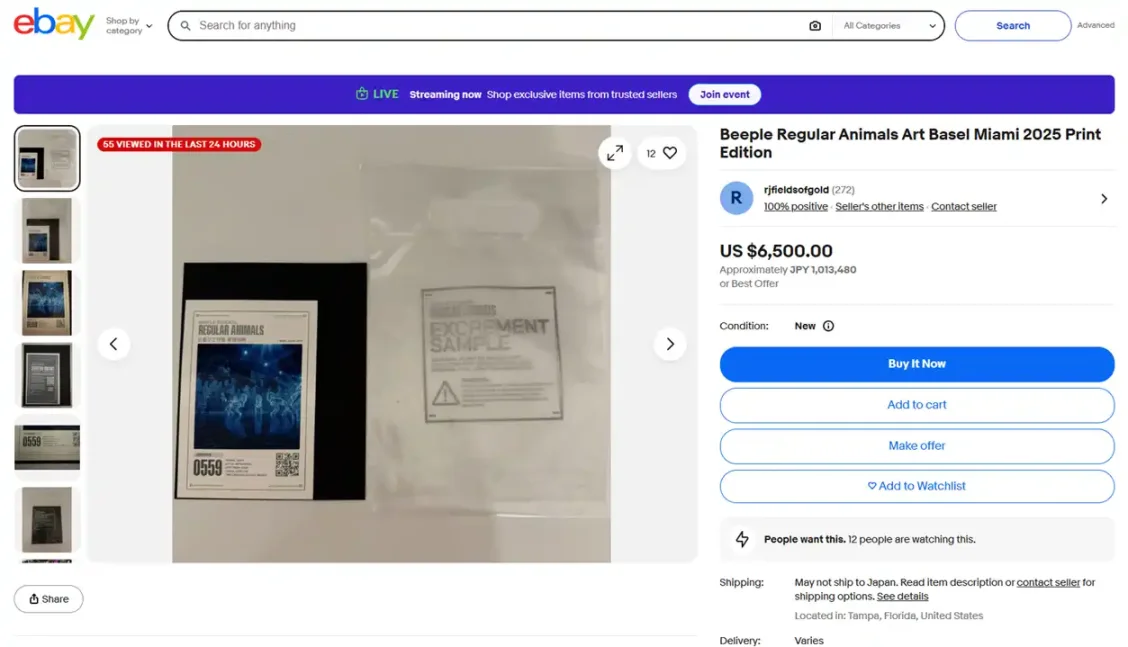
Interestingly, Regular Animals also has a physical series, with a total of 1,024 pieces. On eBay, someone has already listed one for a fixed price of $6,500. The market's valuation is that NFTs are far more valuable than physical paintings, reminiscent of Damien Hirst's "The Currency" series years ago, which forced owners to choose between physical and NFT versions.
Before achieving great success in the NFT field, beeple had been creating art every day since 2007 but had never sold anything for more than $100. After gaining fame and fortune, beeple did not squander it like some artists or crypto project teams. Instead, he acquired a studio/gallery of about 460 square meters, built a team of dozens of 3D artists, engineers, and researchers (even including a former Boeing engineer), invited Carolyn Christov-Bakargiev, the former director of the Castello di Rivoli Museum of Contemporary Art, as an advisor, and continuously exhibited at art shows around the world while creating new artworks.

This exhibition of beeple's robotic dogs has not only gained attention in the crypto circle due to its price but has also been covered by traditional media outlets like WSJ.
Связанные с этим вопросы

QWho is Beeple and what is he known for in the NFT world?

ABeeple is an artist who gained fame for selling an NFT for $69 million, symbolizing the golden era of NFTs.

QWhat is the name of Beeple's latest NFT project featured at the Basel Art Show?

ABeeple's latest project is called 'Regular Animals,' which features robotic dogs with human faces of famous personalities.

QHow many Regular Animals NFTs were distributed for free at the Basel Art Show, and what was their estimated total value?

A256 Regular Animals NFTs were distributed for free at the Basel Art Show, with an estimated total value of nearly $9 million based on secondary market sales.

QWhat unique ability do the Regular Animals robotic dogs have?

AThe Regular Animals robotic dogs use cameras to observe their surroundings and employ an evolving visual algorithm to create artworks, which serve as their autobiographies.

QHow has Beeple's approach to his career evolved since his NFT success?

ABeeple has established a large studio, assembled a team of artists and engineers, and continues to create and exhibit artworks globally, focusing on innovation rather than extravagance.

Похожее

Analyst: Ripple (XRP) Price Could Rise from $2 to $10 in Less Than a Year

Cryptocurrency analyst Chad Steingraber predicts that XRP could surge from $2 to $10 in less than a year, driven by strong institutional demand through recently launched exchange-traded funds (ETFs). Key factors supporting this outlook include the rapid accumulation of XRP by ETFs. Data from SoSoValue shows that XRP-focused ETFs have absorbed over 506 million XRP (worth approximately $506 million) in under a month since their launch in November. This represents about 0.74% of XRP’s circulating supply—a significant level of adoption in a short time. Additionally, the Bitwise Crypto 10 Fund (BITW), which holds XRP as 5% of its portfolio, began trading with over $1.25 billion in assets. Steingraber draws parallels to Bitcoin’s post-ETF performance, suggesting that continued ETF inflows could propel XRP toward a 400% price increase by 2026. Technically, XRP’s chart patterns support a bullish outlook. On weekly charts, the token has broken out of a multi-month symmetrical triangle—a pattern often indicating a strong trend continuation. The measured move from this pattern suggests a potential rise to the $14–$15 range. A second pattern, a bull flag observed on higher timeframes, also points to a target near $14–$15, reinforcing the analyst’s prediction. The article includes standard disclaimers that it is not investment advice and all trading carries risk.

cointelegraph_中文4 мин. назад

Analyst: Ripple (XRP) Price Could Rise from $2 to $10 in Less Than a Year

cointelegraph_中文4 мин. назад

Bitcoin (BTC) Year-End Push to $100,000 Largely Depends on Fed Policy Pivot Outcome

Bitcoin's potential to reach $100,000 by year-end is heavily dependent on the outcome of the U.S. Federal Reserve's policy shift. The recent 4% drop in Bitcoin, bringing it to a low of $88,140, highlights the market's sensitivity to monetary policy and credit risk. A key factor is the Fed's transition away from quantitative tightening, which concluded on December 1. Over the past six months, this policy has removed $1.36 trillion in liquidity from the financial system. The market is now pricing in a high probability of rate cuts, with expectations for three reductions by September 2026. Lower interest rates and increased systemic liquidity reduce the appeal of fixed-income assets, as seen with money market funds hitting a record $8 trillion. Simultaneously, rising credit risk in the tech sector, exemplified by Oracle's soaring debt protection costs, is pushing investors toward scarce assets like Bitcoin. Oracle, with $105 billion in debt, relies heavily on AI-driven revenues, and the market's growing concern over the sustainability of such debt-fueled growth is creating structural unease. This combination of the Fed's policy pivot, diminishing fixed-income appeal, and tech sector credit risk sets the stage for capital rotation into Bitcoin. The path to $100,000 appears clearer as these macroeconomic and credit dynamics converge.

cointelegraph_中文11 мин. назад

Bitcoin (BTC) Year-End Push to $100,000 Largely Depends on Fed Policy Pivot Outcome

cointelegraph_中文11 мин. назад

The New Frontier of Privacy Coins: Technology, Prevention, and Regulatory Game

Privacy coins are at a critical juncture, shaped by technological evolution, regulatory pressure, and judicial decisions. In 2024–2025, court rulings, law enforcement actions, and technical adjustments are redefining the boundaries of this sector. Key developments include debates over whether decentralized mixing tools constitute sanctionable property, cross-border crackdowns on anonymous transaction services in Europe and the U.S., and privacy-focused projects adopting more compliant technical designs. Judicially, U.S. courts have issued influential rulings questioning whether immutable smart contracts fit traditional legal frameworks. Meanwhile, European authorities continue to target mixing services accused of facilitating money laundering. Technologically, some privacy projects are incorporating optional privacy features, flexible fee mechanisms, and improved audit interfaces to enhance usability and reduce regulatory friction. Macro-trends show countries advancing comprehensive crypto regulatory frameworks covering custody, trading, stablecoins, and anti-money laundering (AML) standards. Regulatory bodies increasingly demand that high-privacy tools provide verifiable audit trails or compliance-friendly modes to access legal financial services. Looking ahead, three main trajectories are emerging: continued legal clarification around smart contracts and mixer liabilities, a shift in privacy protocols from absolute anonymity toward optional privacy with auditability, and a market reassessment of the regulatory risk associated with privacy assets. This is causing a strategic split within the industry—some communities insist on strong privacy for niche demands, while others pursue “compliance-friendly privacy” models like enterprise-grade confidential transactions or auditable privacy pools. In essence, privacy coins are transitioning from pursuing maximum anonymity to seeking sustainable existence within regulatory boundaries. Future judicial rulings, policies, and protocol upgrades will determine which projects survive market and legal pressures. Those offering meaningful privacy while maintaining legal compliance are most likely to endure.

cointelegraph_中文17 мин. назад

The New Frontier of Privacy Coins: Technology, Prevention, and Regulatory Game

cointelegraph_中文17 мин. назад

Торговля

Спот
Фьючерсы
活动图片