This article is from:@peruvian_bull
Compiled by | Odaily Planet Daily (@OdailyChina); Translator | Ethan (@ethanzhang_web 3)
Editor's Note: Over the past four months, Bitcoin has almost established a fixed rhythm—a clear wave of selling pressure emerges whenever the U.S. stock market opens. It rises during Asian hours, continues its upward trend in Europe, but quickly falls back as soon as New York opens. Traders have dubbed this the "10 AM Strike." This force acts like an invisible structural headwind, repeatedly liquidating leveraged positions, dampening market sentiment, and gradually wearing down investors' patience.
However, when the lawsuit documents against Jane Street were officially made public, this months-long rhythm was suddenly interrupted. Is this merely a coincidence, or a signal of deeper structural changes? How did the entire process unfold? Odaily Planet Daily provides the full compilation below.
——————Separator——————
The most powerful trading firm you've never heard of has just been caught red-handed. Twice, on two different continents. And Bitcoin, it seems, has finally breathed a sigh of relief.
Jane Street Group is a quantitative trading firm headquartered in New York. They don't have a CEO.

According to their own description, they operate like an "anarchic commune." In the first nine months of 2025, they achieved net trading revenue of $24 billion, already surpassing the $20.5 billion for the entirety of 2024. The second quarter of 2025 alone reached $10.1 billion, marking the highest quarterly trading revenue in Wall Street's history.
By any measure, they are one of the most profitable trading institutions globally.
And just this week, the bankruptcy administrator for Terraform Labs filed a lawsuit in Manhattan federal court, accusing Jane Street of using insider information to front-run the collapse of Terra Luna in May 2022. This collapse wiped out $40 billion in market value and triggered a chain reaction that ultimately brought down Celsius, Three Arrows Capital, and FTX.

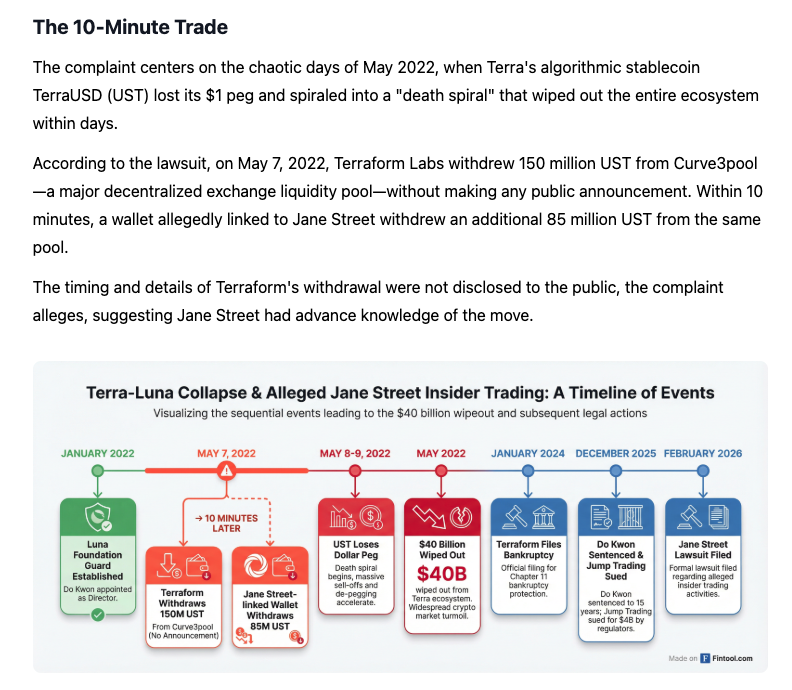
The allegation is stunningly simple. On May 7, 2022, Terraform Labs quietly withdrew $150 million in UST from Curve3pool, a major decentralized liquidity pool. There was no public announcement, just a silent withdrawal of liquidity.
Ten minutes later, a wallet linked to Jane Street withdrew $85 million from the same pool. Just ten minutes later...
The complaint alleges that a former Terraform intern, Bryce Pratt, who became a full-time employee at Jane Street in September 2021, established private communication channels with former colleagues and allegedly passed material non-public information about Terraform's liquidity movements directly to Jane Street's trading team.
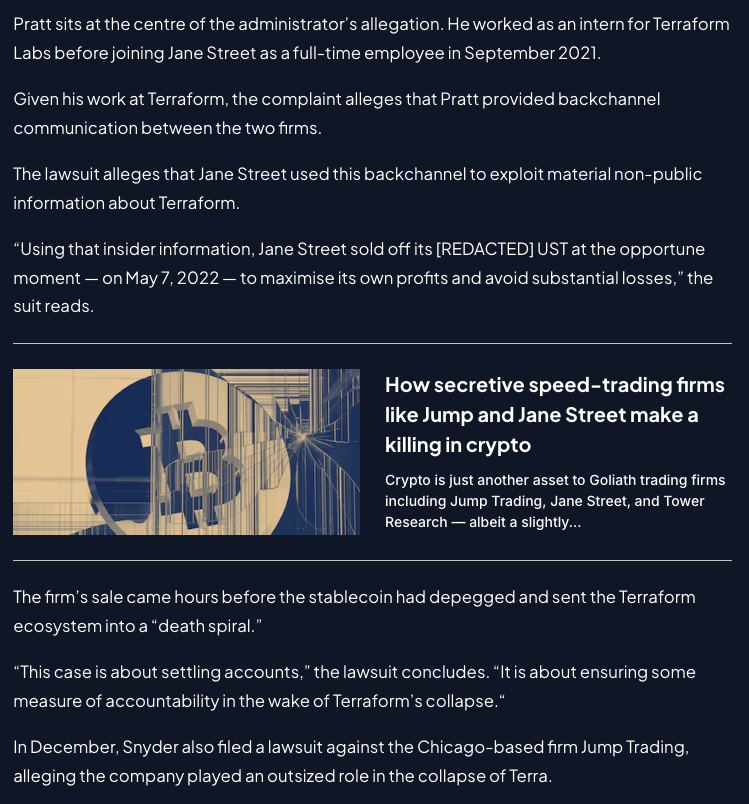
The complaint names four defendants: Jane Street Group LLC, co-founder Robert Granieri, and employees Bryce Pratt and Michael Huang.
The administrator's statement gets straight to the point: the trades Jane Street executed would have been impossible without the exclusive insider information they possessed.
Making matters worse, the complaint alleges that Jane Street's withdrawal helped trigger the de-pegging of UST, plunging the entire Terraform ecosystem into a death spiral. LUNA fell from over $80 to near zero. $40 billion evaporated. Ordinary investors lost everything. Retirement funds, education savings, life savings—wiped out in days.
Jane Street's response? Calling the allegations "desperate and baseless."
But here's the thing: This isn't the first time.
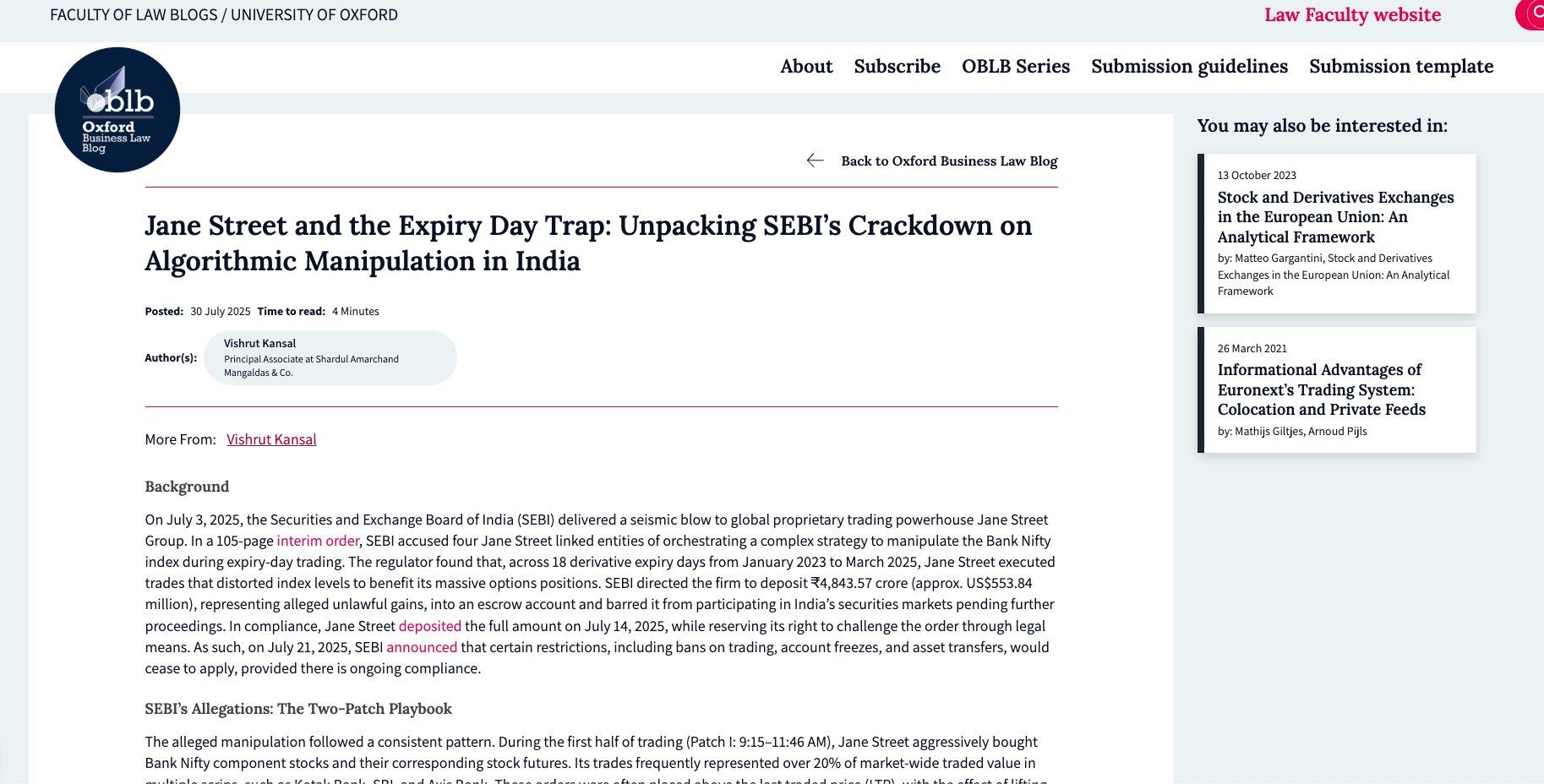
In July 2025, the Securities and Exchange Board of India (SEBI) brought one of the largest market manipulation charges in the country's history against Jane Street. The investigation found that on 18 derivatives expiry days between January 2023 and March 2025, Jane Street executed a textbook pump-and-dump operation on the Bank Nifty index.
The operation was extremely mechanical:
Morning: Jane Street's algorithms aggressively bought component stocks and futures, pushing the index up 1% to 1.3%. On some trading days, SEBI determined that the entire positive move in the index came from Jane Street.
Simultaneously, they built massive short option positions, primarily selling call options and buying put options, at a scale far exceeding their stock holdings. SEBI determined that, on a delta-equivalent basis, the option positions were 7.3 times the size of the spot and futures positions. This wasn't hedging, nor was it arbitrage; it was packaged directional manipulation.
Afternoon: They reversed their operations, selling the stocks bought in the morning. The index fell, and the short options profited. Rinse and repeat every expiry day.
SEBI assessed illegal profits at 484.3 billion rupees, approximately $580 million, and called their actions a "mechanism deliberately designed to manipulate the settlement price." The regulator also noted that Jane Street continued executing this strategy even after the National Stock Exchange issued a clear warning in February 2025.
SEBI's wording was unusually harsh: "Market integrity and the trust of millions of small and medium investors and traders can no longer be held hostage by such non-credible actors."
Jane Street was barred from the Indian securities market, has deposited over $560 million into an escrow account, and has appealed. As of now, the case is still pending before the Securities Appellate Tribunal in India.

Now, back to Bitcoin.
Since November 2025, Bitcoin traders noticed an anomaly. Every day around 10:00 AM Eastern Time, coinciding with the U.S. stock market open, a flood of sell orders hit BTC and related ETF shares. The pattern was unusually consistent: gains during Asian and European hours, selling pressure at the New York open. (Refer to the article: "Is Jane Street Manipulating Bitcoin? Viral Theory Analysis")
The data was hard to ignore. Charts from December 2025 showed that on certain days, BTC would drop from $89,700 to $87,700 in minutes, first liquidating $171 million in leveraged long positions before quickly bouncing back. This pattern occurred on December 1, 5, 8, 10, 12, 15, and repeated throughout January and February 2026.
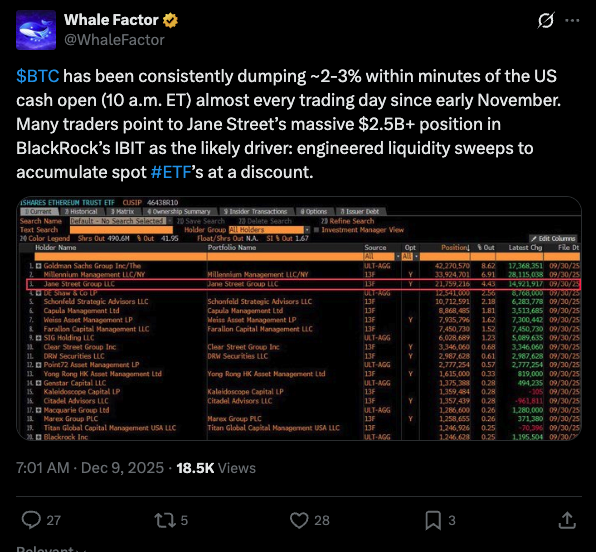
Crypto Twitter gave it a name: the "10 AM Strike."
Fingers were quickly pointed at Jane Street, and not without reason. Jane Street is one of the four Authorized Participants (APs) for BlackRock's IBIT, the world's largest spot Bitcoin ETF. The other three are Virtu Americas, JP Morgan Securities, and Marex. As an AP, Jane Street has special privileges to create and redeem ETF shares, meaning they have direct access to the core pipeline that "puts Bitcoin into an institutional wrapper and takes it out."
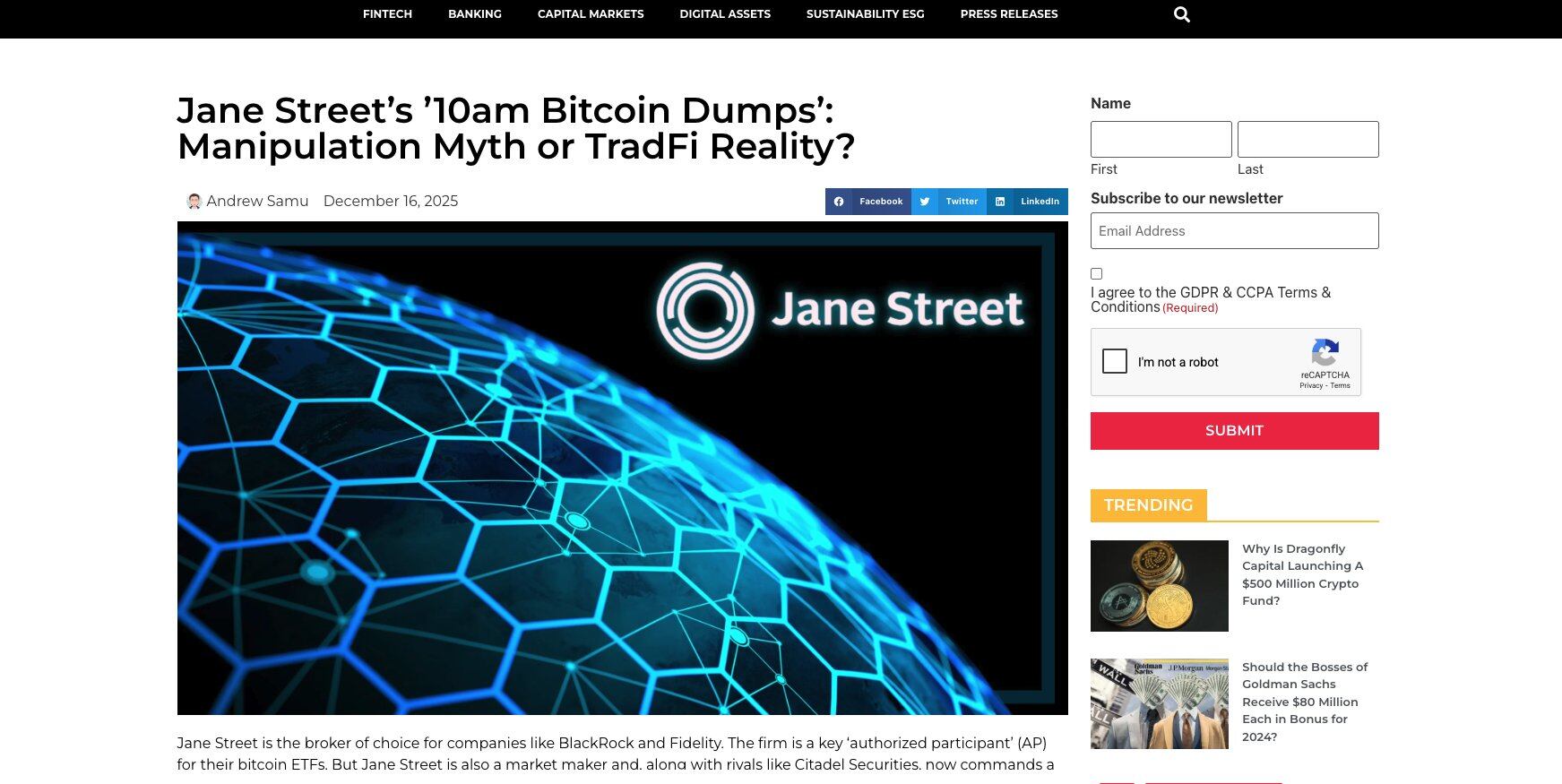
Their 13F disclosures also confirm their massive size. According to Q3 2025 filings, Jane Street held $5.7 billion worth of IBIT shares. They added another $276 million in Q4 2025, bringing their total holdings to over 20 million shares, worth approximately $790 million at year-end prices. Their peak exposure once neared $2.5 billion in IBIT.
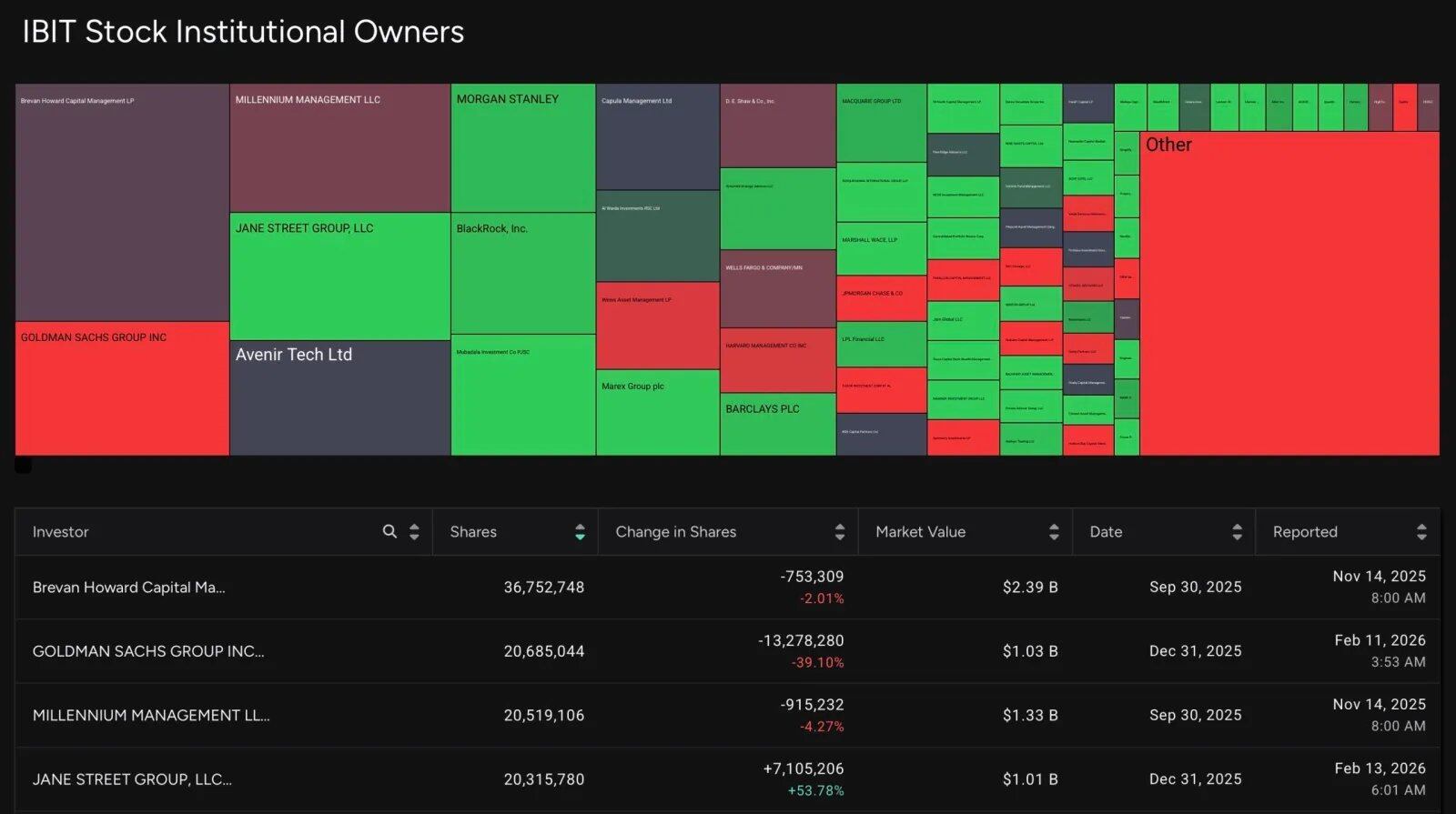
But what really raised eyebrows: Allegedly, while they were dumping BTC on the spot market every morning, they increased their holdings of MSTR (MicroStrategy, now Strategy) by 473% in Q4 2025, accumulating 951,187 shares worth approximately $121 million. During the same period, large institutions like BlackRock and Vanguard were significantly reducing their MSTR holdings by billions of dollars.
You can run through this logic again: Open the market by dumping BTC — drive the price down — liquidate leveraged longs — buy back at lower prices; simultaneously, betting on a rebound by increasing positions in the market's "most leveraged" Bitcoin proxy asset.
Glassnode co-founders Jan Happel and Yann Allemann, through their X account Negentropic, reignited this speculation, linking the algorithmic trading rhythm to the Terraform lawsuit documents. The Milk Road account further amplified the discussion, stating there had been "persistent whispers" in the market pointing to certain institutional desks executing "a very specific, and somewhat shady, playbook."

Then, the lawsuit landed. Something quite extraordinary happened.
After the Terraform lawsuit against Jane Street was filed, the "10 AM Strike"... didn't happen. For the first time in months, Bitcoin didn't sell off at the U.S. market open; instead, it rallied.
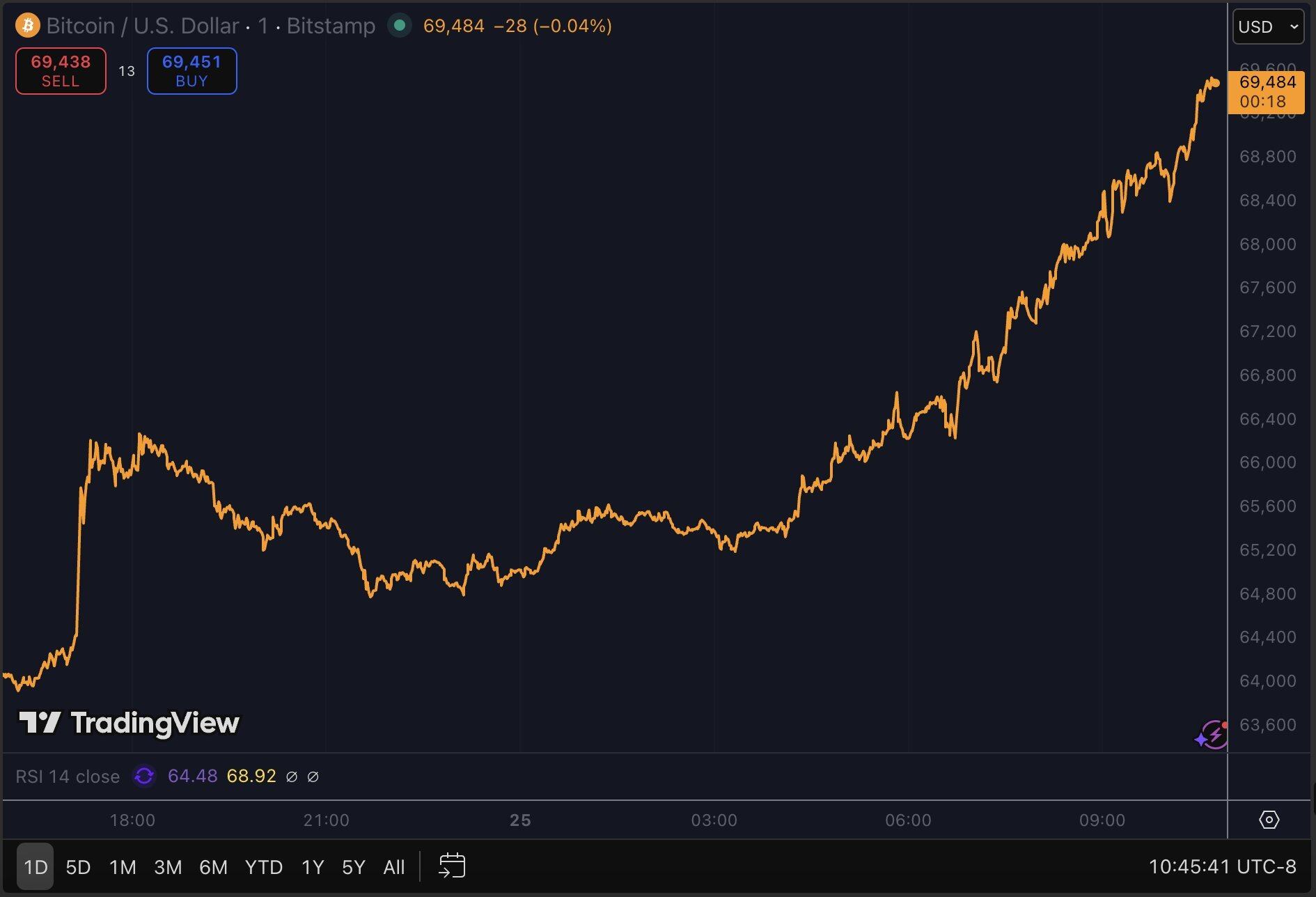
Today, Bitcoin rose over 3%, breaking through multiple resistance levels and returning above $68,000—just days after it nearly fell below $60,000. Over $323 million in short positions were liquidated. The Stochastic RSI hit 100. ETF net inflows for the day reached $257.7 million, the highest since early February.
The pattern was broken.
Of course, I must be cautious. Correlation does not equal causation. There could be many variables: Trump's State of the Union address, oversold technical conditions, short covering. The Fear and Greed Index fell to 11, indicating "Extreme Fear," which is often a contrarian signal. The RSI also fell to 15.80, a reading not seen since the pandemic crash of 2020—which was followed by a 1400% surge. But the timing is still hard to dismiss as mere coincidence.
A theory circulating on X suggests that after the lawsuit, Jane Street was "forced to shut down their trading algorithms." Jane Street told Cointelegraph that these are "baseless, opportunistic claims." Whether they were forced to stop or paused voluntarily due to legal risk, the result is the same: that persistent selling pressure disappeared.
What does this really mean for Bitcoin?
Spot Bitcoin ETFs were originally seen as the "ultimate equalizer": an institutional gateway, a compliant product, backed by BlackRock. And they have been extremely successful—IBIT alone has absorbed over $20 billion since its launch.
But the ETF structure also brought back something Bitcoin was meant to escape: trusted intermediaries with privileged access.
When the SEC approved spot Bitcoin ETFs in January 2024, it required a "cash-only" create and redeem mechanism. Whenever shares needed to be created or redeemed, someone had to buy or sell actual Bitcoin. The institutions with this access—the APs—naturally held a structural advantage over other market participants.
By September 2025, the SEC approved IBIT's use of "in-kind" creation and redemption, meaning APs could directly exchange Bitcoin for ETF shares without going through fiat currency. This gave Jane Street, Virtu, JP Morgan, and Marex more direct control over the flow of Bitcoin in and out of its largest institutional wrapper.

The "10 AM Strike" is essentially a new symptom of an old disease—the same one that has plagued the gold market for decades.
I wrote in "The Gold Endgame Begins": In the paper-for-paper trading game, those closest to the privileged interface can move the price before the rest of the market can react.
JPMorgan traders Gregg Smith and Michael Nowak were convicted of "spoofing" in the precious metals futures market. The scheme lasted 8 years and involved thousands of illegal trades. JPMorgan paid $920 million to settle. Deutsche Bank paid $30 million for similar issues. UBS, HSBC, and six individual traders also faced CFTC anti-spoofing charges.
The same playbook. Just a different asset.
And every time, these institutions package it as "market making," "arbitrage," "hedging"—the euphemisms are endless. The result is always the same: the ordinary get ripped off, the insiders harvest the spread.
So, what's next?
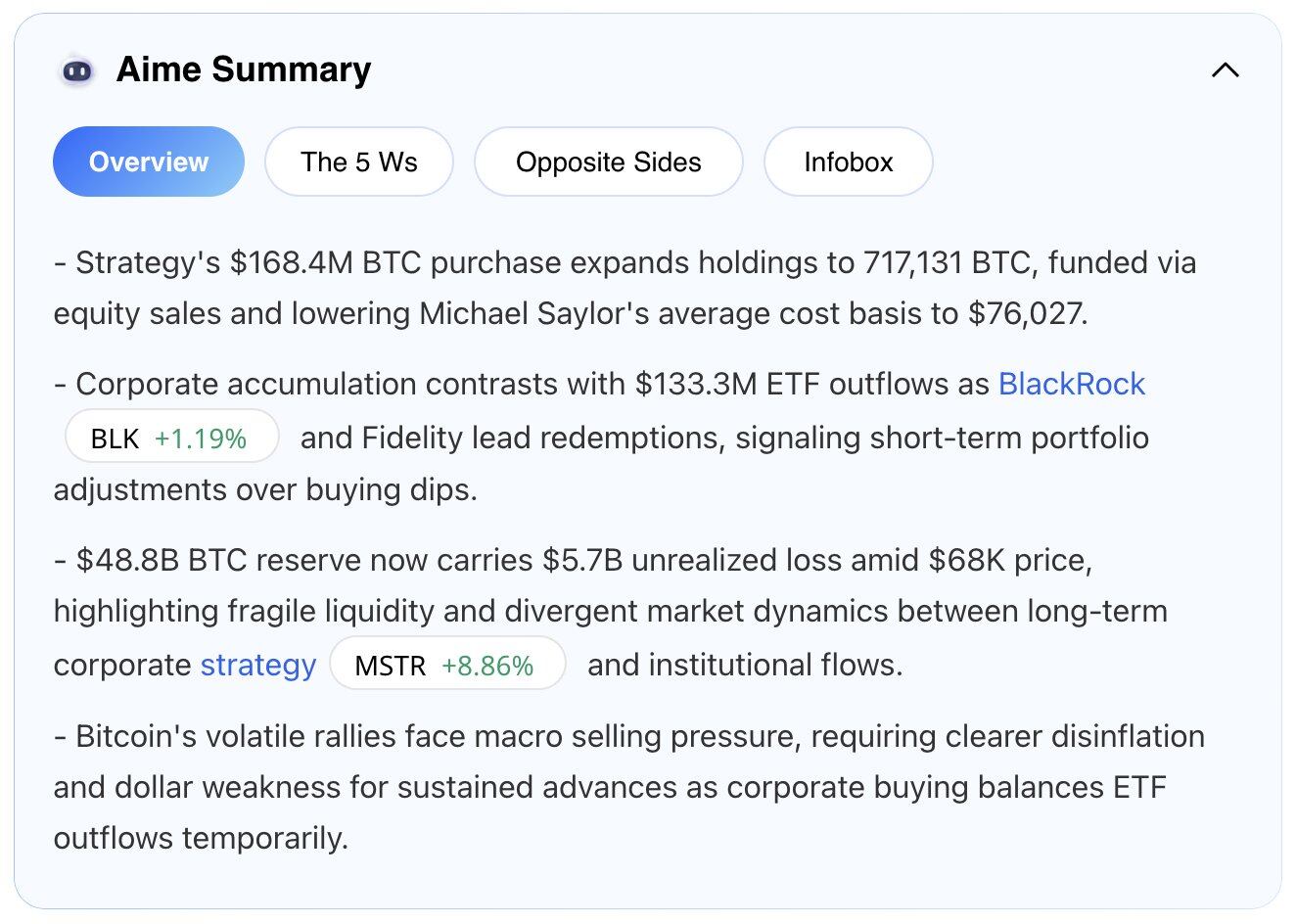
The larger structural picture hasn't changed. $4.5 billion in net ETF outflows in the first 8 weeks of 2026 looks scary. But Strategy (Saylor's company) just bought $39 million worth of BTC, accounting for 99% of all corporate Bitcoin purchases in the same period. The real big players aren't selling; they seem more like they were waiting for the algorithms to finish their work.
Maybe—just maybe—the algorithms have stopped.
If Jane Street, due to legal risks, cross-continental regulatory scrutiny, or self-preservation, is forced to step back from that alleged "daily selling program," then a structural headwind that has been压在 Bitcoin's head for four months has been partially removed.
Bitcoin was born for moments like this: a monetary system that doesn't rely on trusted intermediaries; a system that doesn't need authorized participants; a system that shouldn't be front-run by "private channels of former interns."
But let's not forget how we got here. The very institutions hailed for "market making" and "providing liquidity" are the same ones accused of front-running a collapse, manipulating a national index, and executing daily algorithmic sales of the very asset their ETF tracks.
This is the system Bitcoin was designed to replace.