Litecoin bucks market downtrend, posting 19% gains to pass Shiba Inu

cryptoslateОпубликовано 2022-11-23Обновлено 2022-11-23

Введение

Litecoin bucked the market downtrend, posting 19% gains over the past week to lead the top 100.

Litecoin bucked the market downtrend, posting 19% gains over the past week to lead the top 100.

Price performance over the last 24 hours has seen LTC record 13.7% gains to $70.10 from $61.53 at the time of press. The majority of today’s gains resulted from a 9.6% upside swing on the 13:00 (UTC) candle.
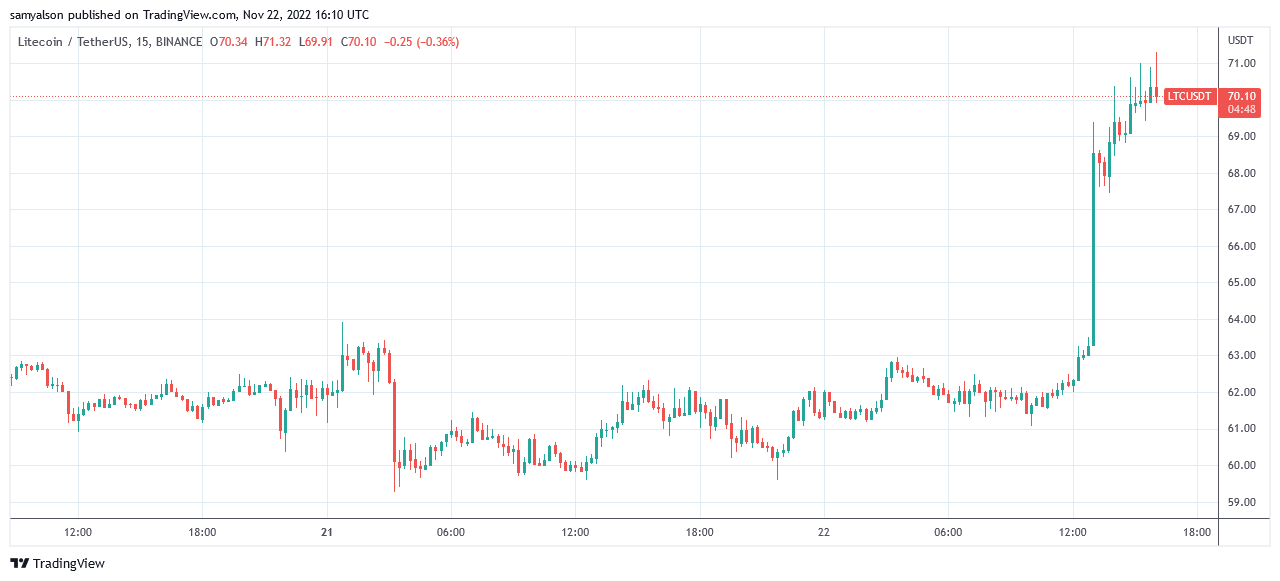
Litecoin 15 minute chart

Source: LTCUSDT on TradingView.com

As a result, Litecoin continues climbing higher on the market cap rankings. Excluding stablecoins, this positions LTC in the top 10 to rank 9th, leapfrogging Shiba Inu in the process.

“Boring” Litecoin offers stability

CryptoSlate reported that Litecoin’s resurgence is likely due to the market seeking stability amid the FTX fallout.

Since FTX began showing signs of insolvency, market cap outflows have totaled $228 billion, leading to tanking token prices. Especially in respect of FTX-affiliated projects, including FTT and SOL, with the former now languishing outside the top 200.

Commenting on the chaotic market conditions of late, the Managing Director of the Litecoin Foundation, Alan Austin, recently asked, “Have you guys had enough excitement yet?”

Austin was referring to Litecoin’s “boring” reputation, which lacks glamor but offers holders a high degree of stability in return.

Barring Bitcoin, Litecoin is perhaps the most solid cryptocurrency in terms of longevity, with 11 years of history in and around the large caps to back this up.

On-chain metrics show users hodling LTC

Analysis of Glassnode data suggests users increasingly view Litecoin as a store of value instead of a payment token – which is its primary use case.

Since Q1 2021, the amount of Litecoin hodled or lost continues to grow steadily over time. The chart below shows approximately 20 million LTC currently falls into this category.
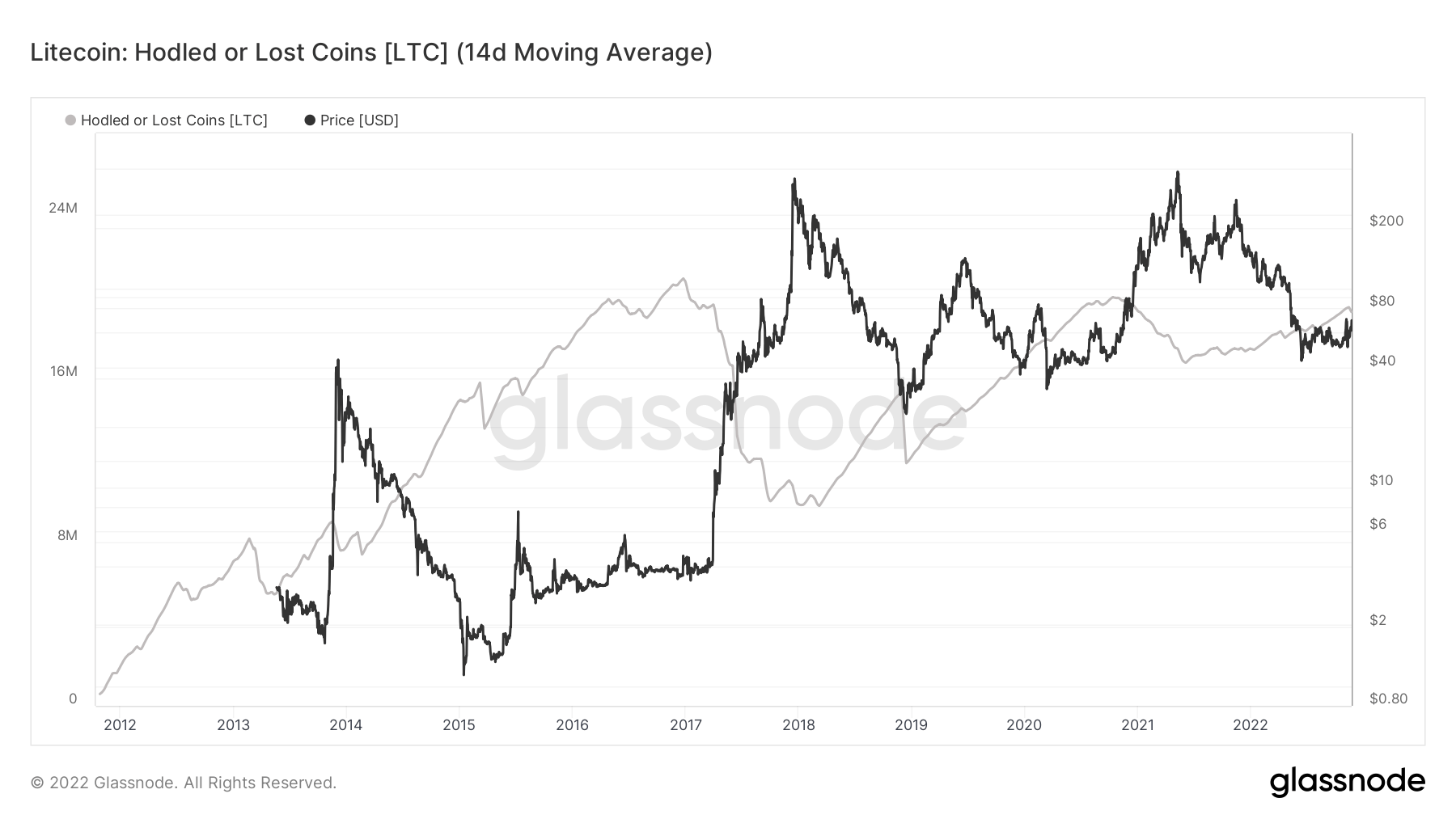
Litecoin: Hodled or Lost Coins

Source: Glassnode.com

Revived Supply Last Active 5+ Years refers to the amount of Litecoin inactive five years prior to the data point. The chart below shows a peak in inactive supply in late 2017 of approximately 150,000 LTC.

Since then, LTC tokens have been much more active. However, the recent trend shows LTC holders are again beginning to horde their tokens, albeit not to the same degree as in late 2017.
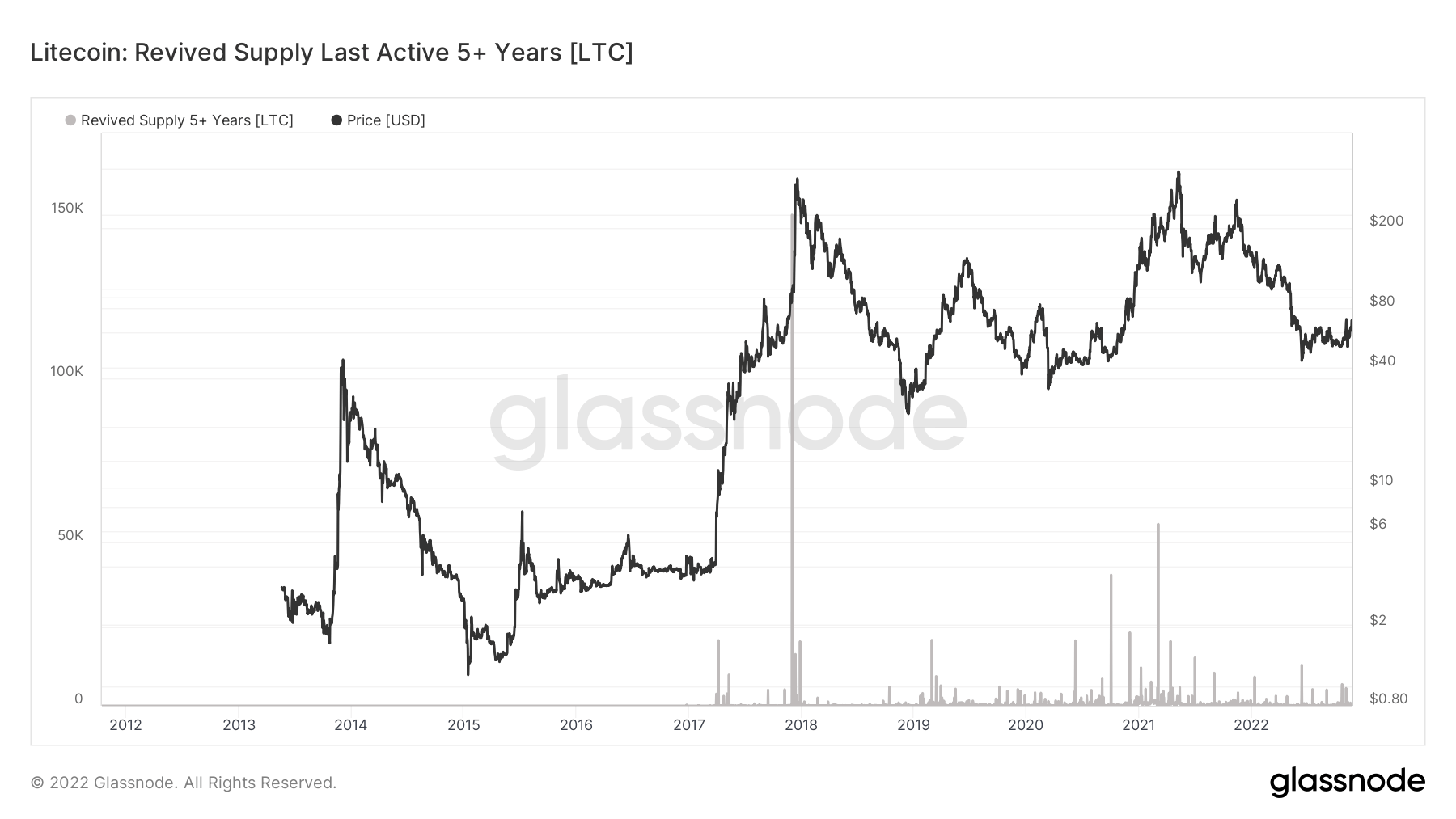
Revived Supply Last Active

Source: Glassnode.com

The above suggests long-term holders are not selling their Litecoin, which may be another factor in Litecoin’s price resurgence besides stability.

Похожее

The Real Battlefield of AI Lies in the 'Dark Forest'

The article "AI's Real Battlefield is in the 'Dark Forest'" discusses the shifting dynamics in the global AI landscape, contrasting the strategic directions of Chinese and U.S. AI developers. Chinese companies like Alibaba (with its "HappyHorse" video model), ByteDance (Seedance 2.0), and Kuaishou (Kling 3.0) have taken the lead in text-to-video generation, surpassing OpenAI’s now-discontinued Sora. These models are deeply integrated into their parent companies’ content ecosystems (e.g., Douyin, Kuaishou), serving to reduce content creation costs and enhance user engagement rather than operating as standalone profit centers. In contrast, U.S. firms are pivoting toward high-stakes enterprise and security applications. Anthropic’s Claude Mythos model demonstrates advanced capabilities in autonomously discovering and exploiting software vulnerabilities, prompting concern at the highest levels of U.S. financial and governmental institutions. OpenAI responded with its own GPT-5.4-Cyber, signaling a strategic shift from consumer-facing products to enterprise-grade tools focused on cybersecurity and programming. The divergence is attributed to fundamental differences in resources and market structures. U.S. companies, backed by vast computational resources (e.g., Amazon and Google supply Anthropic with substantial funding and TPU access), can pursue deep, specialized R&D in high-value B2B sectors. Chinese firms, facing significant compute power constraints and a less mature enterprise SaaS market, have found success by leveraging their massive consumer platforms and optimizing for cost-efficiency. The article warns that the AI race is entering a "dark forest" phase—a reference to competitive dynamics where cybersecurity capabilities could determine digital sovereignty. While Chinese models like Zhipu AI’s GLM-5.1 show promise in narrowing the gap in coding proficiency, the author stresses that achieving parity in security-critical AI will require asymmetric strategies, including greater investment in coding models, adaptation to domestic hardware, and exploring international markets in the Global South.

marsbit51 мин. назад

The Real Battlefield of AI Lies in the 'Dark Forest'

marsbit51 мин. назад

Торговля

Спот
Фьючерсы
活动图片