There’s Yet Another Crypto Unicorn

u.todayОпубликовано 2022-03-15Обновлено 2022-03-15

Введение

Gauntlet Networks, a financial modeling and simulation platform for blockchains, has reached unicorn status after the latest funding round, Bloomberg reports.  

Gauntlet Networks, a financial modeling and simulation platform for blockchains, has reached unicorn status after the latest funding round, Bloomberg reports.  
It raked in $23.8 million during a funding round led by a fintech-focused Silicon Valley-based venture capital firm.    
Tarun Chitra, an ex-programmer at multinational investment management firm D. E. Shaw & Co, launched Gauntlet Networks back in 2018. Chitra dipped his toes into blockchain and Bitcoin mining all the way back in 2011.   
Originally launched as a ratings agency, the New Work-based company then pivoted to decentralized finance, calibrating risk parameters, setting risk parameters and optimizing collateral factors. In such a way, DeFi protocols can substantially improve their capital efficiency.
Paradigm, Polychain Capital, First Round Capital, and Coinbase Ventures are among the company’s top investors.
Its clients include such prominent DeFi projects as Aave, Synthetix and Compound. Some clients are willing to pay Gauntlet Networks millions a year in order to manage their risks. As reported by U.Today, Acala, a parachain on the Polkadot network, announced a partnership with Gauntlet Networks in April. Polychain Capital also plans to expand into the gaming sector.  
Presently, the company has a 32-strong team, and Chitra claims that he plans to expand the team with the help of the freshly injected funding amid mushrooming demand for crypto analytics platforms.   
Chitra claims that it is getting increasingly challenging to process data because of the growth of the sector.  
The total value locked in Ethereum-based DeFi protocols currently stands at $110.8 billion, according to data provided by Defi Llama.

Похожее

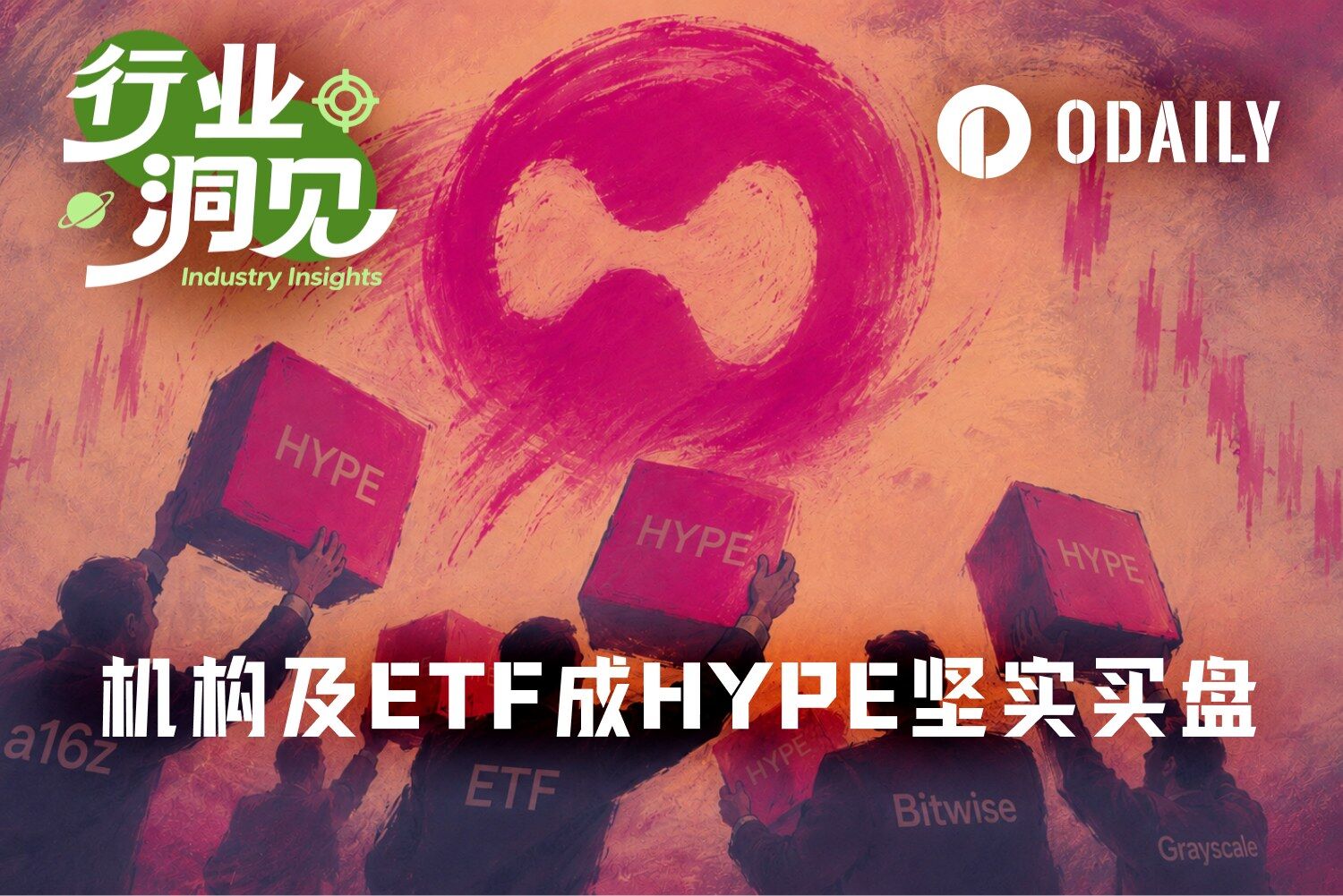
HYPE Spot ETF Continuously Accumulates 1% in 14 Days: Is the $75 New High Just the Starting Point?

Hyperliquid (HYPE) has surged to a new all-time high of $75 amid strong institutional and ETF-driven buying pressure. The article highlights several key bullish factors. First, the HYPE spot ETFs from 21Shares and Bitwise have seen 14 consecutive days of net inflows, totaling over $136 million and absorbing nearly 1% of HYPE's market cap—a faster initial pace than BTC or ETH ETFs. This ETF demand provides a solid price floor. Second, the protocol's own Assistance Fund (AF) mechanism, which uses 99% of fees to buy back and burn HYPE, has already removed over $1.1 billion worth of tokens, creating a dual support system alongside ETF inflows. This combined buying power is expected to counter potential selling pressure from upcoming team token unlocks. Institutionally, venture firm a16z is now considered one of the largest external holders of HYPE, with multiple addresses accumulating millions of tokens. Galaxy Digital is also actively buying. Analysts and firms like Bitwise and Grayscale are framing HYPE not as a mere meme coin but as a "second-generation" crypto with real value capture and infrastructure potential. Furthermore, Hyperliquid Strategies (PURR), a publicly traded company holding a large HYPE treasury, is set to join the Russell 3000 Index, potentially unlocking further passive investment flows. The ongoing feud between prominent backers like Arthur Hayes (pro-HYPE) and Kyle Samani (pro-SOL) underscores the intense market debate, with Hayes famously betting HYPE will outperform all top-ten crypto assets this year.

Odaily星球日报5 мин. назад

HYPE Spot ETF Continuously Accumulates 1% in 14 Days: Is the $75 New High Just the Starting Point?

Odaily星球日报5 мин. назад

ETH Bull and Bear Views Compilation: Can Ethereum's Value Flow Back to ETH?

Titled "ETH Bull and Bear Views: Can Ethereum's Value Flow Back to ETH?", this article synthesizes the current heated debate around Ethereum's native token, ETH, following Bankless co-founder David Hoffman's decision to sell his entire ETH holdings. The **bullish case**, represented by figures like Tom Lee (BitMine CEO) and Raoul Pal, argues that ETH's core thesis remains intact. They contend Ethereum is the essential, secure, and neutral foundational layer for future finance—encompassing stablecoins, RWA, DeFi, L2s, and Agentic AI. Bulls bet on ETH's long-term revaluation as institutional adoption of on-chain finance grows, with significant buying activity from entities like BitMine and Consensys cited as evidence. Conversely, the **bearish perspective**, led by Hoffman and analysts like Markus Thielen, questions ETH's value capture mechanism. They acknowledge Ethereum's network success but argue that the value created by L2s, DeFi, and applications does not sufficiently accrue to the ETH token itself. Bears point to ETH's prolonged underperformance versus the broader crypto market, lack of traditional cash flows, weakening "ultrasound money" narrative, and apparent institutional retreat (e.g., Harvard Management Company exiting its ETH ETF position) as key concerns. The debate highlights a pivotal shift: ETH is no longer just a community belief asset. The central question is whether ETH can transition from being a "**used infrastructure**" to a "**continuously bought and held core asset**" as more value enters the Ethereum ecosystem. The market is now critically examining the direct link between network growth and ETH's value.

marsbit52 мин. назад

ETH Bull and Bear Views Compilation: Can Ethereum's Value Flow Back to ETH?

marsbit52 мин. назад

Crypto is dead, Perps are forever

The crypto industry is shifting from a focus on creating native assets (like altcoins and protocol tokens) to becoming a "global asset pipeline." Native cryptocurrencies, except for Bitcoin, are seen as failing in their value storage and utility promises, with demand driven largely by speculation. Attention and liquidity are now moving toward real-world assets (RWAs) like U.S. stocks, bonds, gold, and oil traded on-chain via perpetual contracts (Perps). Stablecoins like USDT and USDC set the precedent, proving blockchain's core strength is efficient global settlement and transfer, not inventing new monetary systems. Meanwhile, assets like Ethereum and many DeFi tokens struggle as their narratives weaken against tangible traditional assets and the rapid real-world progress of AI. Perpetual contracts have emerged as a pivotal innovation. They simplify trading by offering pure price exposure to any asset, bypassing complexities of ownership, custody, and traditional market hours. Projects like Hyperliquid gained traction by combining CEX-like efficiency with on-chain transparency, capitalizing on post-FTX distrust, macroeconomic volatility, and the surge in demand for 24/7 stock trading. In conclusion, while the era of speculative native "crypto assets" may be over, perpetual contracts persist as the industry's most potent financial instrument—transforming all assets into globally accessible, constantly tradable instruments centered on price speculation.

marsbit58 мин. назад

Crypto is dead, Perps are forever

marsbit58 мин. назад

Tencent, Alibaba, ByteDance in a Battle for the Skill Store

Skill is becoming a key concept in the AI field, essentially serving as a structured "instruction manual" for AI Agents that specifies tool calls, decision logic, and output standards. This allows Agents to execute predefined tasks. As the number of Skills grows, distribution platforms have emerged. Major tech companies are swiftly entering this space. In March, Tencent, Alibaba, and ByteDance launched Skill stores within their respective Agent platforms. Subsequently, players like Zhipu AI, Meituan, and Xiaohongshu joined the fray. This competition for the "Skill store" is fundamentally a battle for the AI-era user entry point; whoever controls distribution controls the users. While ByteDance's Coze has experimented with paid Skills, most platforms offer them for free. The real value lies not in the stores themselves but in using them to attract and retain users within an ecosystem, driving revenue from services like cloud computing, model calls, or advertising. The landscape features three main player types: 1) **Internet giants** (e.g., Alibaba, ByteDance, Tencent, Meituan), leveraging Skills to drive traffic and monetize through their broader ecosystems (cloud services, transactions, ads). 2) **Large model companies** (e.g., Zhipu AI, Moonshot AI), using Skill stores to increase user engagement and monetize model API calls. 3) **Content platforms** (e.g., Xiaohongshu), treating Skills as a new content format to generate traffic and ad revenue. However, transforming Skill stores into a sustainable business faces significant hurdles. Key challenges include: the **difficulty in pricing Skills** due to inconsistent outputs across different models and contexts; **lack of cost transparency** (varying token consumption); **security risks** like Skill poisoning; and the **absence of standardized protocols** for development and evaluation. Unlike standardized mobile apps, Skills are often personalized workflows resistant to uniformity, which hinders the establishment of a reliable review and monetization system akin to the App Store. While there is genuine user demand for paid Skills—particularly in enterprise (e.g., contract review) and certain personal productivity scenarios—current platforms offer developers limited and unpredictable distribution. The future of Skill stores depends on overcoming these standardization, evaluation, and safety challenges to make acquiring a Skill as straightforward as downloading an app. For now, the stores function more as display shelves than robust marketplaces.

marsbit58 мин. назад

Tencent, Alibaba, ByteDance in a Battle for the Skill Store

marsbit58 мин. назад

Торговля

Спот
Фьючерсы

Популярные статьи

Как купить SNT

Добро пожаловать на HTX.com! Мы сделали приобретение Status Network Token (SNT) простым и удобным. Следуйте нашему пошаговому руководству и отправляйтесь в свое крипто-путешествие.Шаг 1: Создайте аккаунт на HTXИспользуйте свой адрес электронной почты или номер телефона, чтобы зарегистрироваться и бесплатно создать аккаунт на HTX. Пройдите удобную регистрацию и откройте для себя весь функционал.Создать аккаунтШаг 2: Перейдите в Купить криптовалюту и выберите свой способ оплатыКредитная/Дебетовая Карта: Используйте свою карту Visa или Mastercard для мгновенной покупки Status Network Token (SNT).Баланс: Используйте средства с баланса вашего аккаунта HTX для простой торговли.Третьи Лица: Мы добавили популярные способы оплаты, такие как Google Pay и Apple Pay, для повышения удобства.P2P: Торгуйте напрямую с другими пользователями на HTX.Внебиржевая Торговля (OTC): Мы предлагаем индивидуальные услуги и конкурентоспособные обменные курсы для трейдеров.Шаг 3: Хранение Status Network Token (SNT)После приобретения вами Status Network Token (SNT) храните их в своем аккаунте на HTX. В качестве альтернативы вы можете отправить их куда-либо с помощью перевода в блокчейне или использовать для торговли с другими криптовалютами.Шаг 4: Торговля Status Network Token (SNT)С легкостью торгуйте Status Network Token (SNT) на спотовом рынке HTX. Просто зайдите в свой аккаунт, выберите торговую пару, совершайте сделки и следите за ними в режиме реального времени. Мы предлагаем удобный интерфейс как для начинающих, так и для опытных трейдеров.

344 просмотров всегоОпубликовано 2024.04.19Обновлено 2026.06.02

Как купить SNT

Обсуждения

Добро пожаловать в Сообщество HTX. Здесь вы сможете быть в курсе последних новостей о развитии платформы и получить доступ к профессиональной аналитической информации о рынке. Мнения пользователей о цене на SNT (SNT) представлены ниже.

活动图片