Securitize Drops 40% in First Week of Trading as Tokenization Industry Enters Patent Wars

Foresight NewsОпубликовано 2026-07-08Обновлено 2026-07-08

Введение

The article discusses the recent stock performance of Securitize (NYSE: SECZ) and a looming patent war in the tokenization industry. Securitize, a leading tokenization platform and transfer agent for BlackRock's BUIDL fund, debuted on the NYSE via a SPAC merger on July 2. After an initial rise, its stock plummeted nearly 40% within a week, closing at $8.06 on July 7. Analysts attribute the sharp decline largely to typical post-SPAC investor turnover and broader pressure on crypto-related stocks, rather than fundamental business deterioration. Concurrently, Securitize faces significant legal challenges. On June 15, infrastructure rival tZERO accused Securitize of patent infringement concerning its core DS Protocol and Vault Registrar products. Securitize preemptively filed a lawsuit on June 22 seeking a declaratory judgment of non-infringement. tZERO, holding 105 patents, has indicated it has identified at least six other market participants for potential infringement actions, signaling a broader industry-wide patent conflict. A separate lawsuit was also filed by Liquid Rarity Exchange. The article concludes that while Securitize's stock drop may be a temporary SPAC-related correction, the patent disputes initiated by tZERO represent a more profound, long-term risk for the entire tokenization sector, potentially shifting competitive dynamics from business execution to intellectual property litigation.


Written by: Sanqing, Foresight News


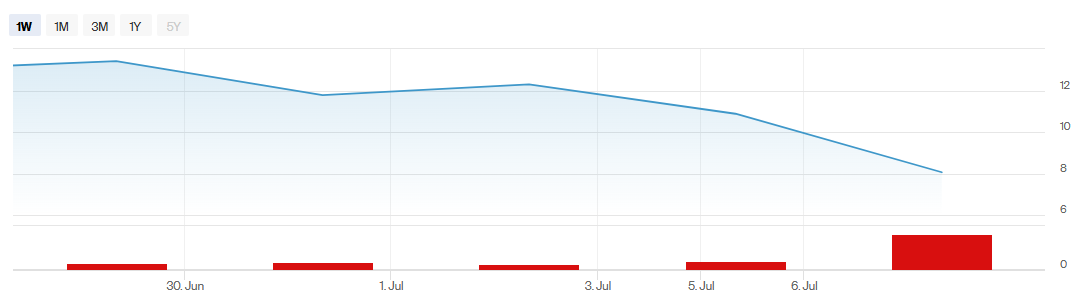
On July 2nd, Securitize (NYSE:SECZ) officially listed on the New York Stock Exchange via a SPAC merger completed with Cantor Equity Partners II. The stock rose on its first trading day, an event initially seen by the market as a landmark signaling the acceptance of the tokenization industry by traditional capital markets. However, the script took a sharp turn just a few trading days later. By the close on July 7th, SECZ was trading at $8.06, plummeting 25.92% for the day, having touched an intraday low of $8.00. This represented a pullback of approximately 40% from its peak during the first week of trading.

Source: NYSE


This is a company selected by BlackRock's tokenized money market fund BUIDL as its transfer agent, widely recognized by the capital markets as a leading platform in the tokenization space, with a pre-merger valuation of $1.25 billion. The stark contrast of its post-listing decline has led many investors to scrutinize the gap between the "tokenization narrative" and the "secondary market reality."


SPAC Mechanism Exposes Issues Before Fundamentals


In recent years, crypto-related companies that have gone public via SPAC have almost universally undergone similar valuation re-pricing during the handover period.


Twenty One Capital (XXI), also orchestrated by an entity affiliated with Cantor Fitzgerald, fell about 25% on its first day of trading on the NYSE via a SPAC merger on December 9th, 2025, closing at $11.42. It continued to decline thereafter, with its share price once falling below $6, a drop of over 80% from its peak of $49. ProCap Financial (BRR), a Bitcoin treasury company that completed its merger around the same time, debuted at $10 and is now trading around $2.4, a decline of roughly 76%.


Several market participants attribute the recent sharp decline to the SPAC structure itself rather than a deterioration in company fundamentals.


According to a CoinDesk report, Jeff Dorman of Arca stated publicly that this volatility is more a result of the SPAC mechanism than a worsening of fundamentals. Post-SPAC listing, the investor base undergoes a complete shift—from the original SPAC subscribers who prefer fixed income to long-term equity holders focused on fundamentals. This handover process inherently creates significant volatility.


Market confidence in the "tokenization" story itself has not collapsed; what has collapsed is confidence in the SPAC pricing mechanism. Despite the falling stock price, Securitize tokenized $295 million worth of its own stock on its first trading day and deployed it on Solana and Avalanche.


Securitize's decline also coincided with broader pressure on U.S.-listed crypto-related stocks. By early July, shares of Coinbase and Circle had fallen approximately 63% and 74%, respectively, from their respective all-time highs set in July 2025. Over the same period, the S&P 500 index retreated only about 2% from its June peak. When the entire sector's stocks are more volatile than their underlying assets, a newly listed tokenization platform can hardly remain unscathed.


Patent Lawsuit Reveals Industry Fissures


On June 15th, tokenization infrastructure company tZERO sent a "cease and desist and reservation of rights" letter to Securitize, alleging that its two core products, DS Protocol and Vault Registrar, infringe patents held by tZERO. The allegations specifically involve U.S. Patents No. 11,216,802 ("Smart Contract Rules for Self-Executing Security Tokens") and No. 11,394,560 ("Cryptographic Integration Platform").


tZERO demanded that Securitize cease commercialization of the relevant products by June 18th or face injunctive relief and claims for monetary damages.


Securitize took the offensive, filing a declaratory judgment action for non-infringement on June 22nd in the U.S. District Court for the District of Delaware (Case No. 1:26-cv-00722, Securitize, Inc. v. tZERO Group, Inc. et al.). It seeks a court declaration that its products do not infringe tZERO's patents, characterizing the allegations as "baseless," "lacking in substance," and "contrary to the spirit of fair competition in the industry."


The case is currently in its early stages, assigned to Judge Gregory B. Williams. There have been no substantive pleadings, counterclaims, motions to dismiss, or settlement announcements. This means the case could still take various paths, including an out-of-court settlement, partial dismissal, or even a withdrawal of the allegations by tZERO.


The weight of this lawsuit far exceeds that of an ordinary commercial dispute.


tZERO's patent assertions were not made on a whim. Founded in 2014 and stemming from the vision of a security token trading platform by Overstock.com (a longstanding U.S. online retailer whose founder, Patrick Byrne, was an early blockchain evangelist), the company initiated a strategic review of its intellectual property portfolio following a management reshuffle at the end of 2025.


According to tZERO's announcement on June 15th regarding the progress of its IP portfolio enforcement, it holds 105 patents across 23 patent families. Its business scope spans core aspects of tokenization infrastructure, including compliant security token systems, crypto asset integration, and KYC verification processes.


More critically, tZERO has explicitly stated that its patent review has identified "at least six" other market participants with potential infringements, covering areas such as compliant RWA platforms, institutional infrastructure, prime brokers, and decentralized exchanges. It plans to issue infringement warning letters to more companies after completing its analysis.


As of July 8th, the case remains in its early stages, with neither party having submitted substantive pleadings, counterclaims, or settlement documents.


However, the patent pressure facing Securitize is not limited to tZERO. Concurrently, Liquid Rarity Exchange has also filed a separate lawsuit against Securitize over two other patents, seeking damages and injunctive relief.


In other words, Securitize might be the first, but not the only one. According to data from rwa.xyz, the RWA market has accelerated its expansion from approximately $22 billion at the beginning of the year to over $33 billion, moving from the "proof-of-concept" stage to "actual deployment."


This is the backdrop against which tZERO has chosen to turn its long-dormant patent portfolio into a commercial bargaining chip. When the patent barriers within the tokenization industry begin to be actively asserted, nearly every platform claiming to "master core technologies" risks being drawn into similar disputes. This warrants more long-term attention than a single stock price pullback.


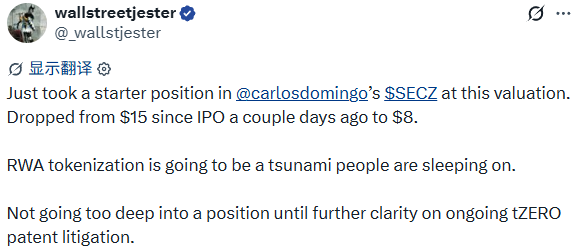
As X user wallstreetjester noted, he "just opened a position" in SECZ but clearly stated he "will not add significantly until the lawsuit has clearer progress." This represents the genuine sentiment of a segment of potential buyers.


Primary Market Believes in Institutions, Secondary Market Believes in Liquidity


Securitize's shareholder roster is impressively distinguished. It was chosen by BlackRock's BUIDL fund as its transfer agent, and during its PIPE financing round, it attracted institutional investors like Borderless Capital and Hanwha Investment. The SPAC transaction itself was initiated by an affiliate of Cantor Fitzgerald.


This narrative of "joint endorsement by traditional financial institutions" is highly persuasive during primary market fundraising and was a key support for Securitize's $1.25 billion pre-merger valuation.


However, the secondary market doesn't care about endorsements; it only cares about liquidity. The market still buys into the "tokenization" story; what has cooled off is merely the short-term pricing of Securitize's specific stock.


BlackRock's name might make primary market investors willing to pay for the valuation story, but it cannot convince the secondary market to continue holding shares when patent disputes are unresolved and SPAC handover pressure persists. Trust is a static brand asset; liquidity is the dynamic outcome of market博弈. This sharp decline precisely proves there is no necessary conversion rate between the two.


Securitize's share price will eventually stabilize or rebound as the investor base transition completes, a near-inevitable phase of growing pains for SPAC-listed companies. However, the patent war ignited by tZERO warrants vigilance from all participants in the tokenization industry.


With tZERO holding 105 patents and targeting at least six potential infringers, the next round of competition in the tokenization industry may no longer be just about compliance licenses, institutional relationships, or trading volume.


For platforms still relying on the valuation story of "we were the first to implement a certain technical solution," a cease-and-desist letter could bring that story to an abrupt halt at any moment.


Securitize's fall has wiped out short-term valuation; but tZERO's lawsuit may have unveiled a patent war that the entire tokenization industry is not yet prepared to face.


Связанные с этим вопросы

QWhat are the main reasons for Securitize's (SECZ) sharp stock price decline shortly after its NYSE listing?

AThe primary reasons for SECZ's decline are attributed to the inherent volatility of the SPAC listing mechanism and sector-wide pressure on crypto-related stocks. The SPAC structure triggered a shift in investor base from SPAC investors to long-term equity holders, causing significant price volatility during the handover. Simultaneously, the entire crypto-stock sector, including companies like Coinbase and Circle, has been underperforming the broader market, creating a negative backdrop for SECZ.

QWhat is the core nature of the legal dispute between tZERO and Securitize mentioned in the article?

AtZERO has accused Securitize of patent infringement, specifically alleging that Securitize's DS Protocol and Vault Registrar products violate two of its U.S. patents related to self-executing smart contract rules for security tokens and crypto integration platforms. Securitize responded by filing a declaratory judgment lawsuit, asking the court to confirm that its products do not infringe and characterizing tZERO's claims as baseless.

QHow does the article contrast the forces driving primary market valuation versus secondary market performance for companies like Securitize?

AThe article contrasts that in the primary market, valuation is driven by institutional trust and prestigious backers (like BlackRock, Cantor Fitzgerald), which supported Securitize's $1.25 billion pre-merger valuation. However, the secondary market prioritizes liquidity and immediate risk factors over brand endorsements. It reacts to concrete issues like pending patent lawsuits and SPAC-related selling pressure, leading to a disconnect between the initial valuation narrative and the stock's trading reality.

QWhat broader implication does the tZERO vs. Securitize patent lawsuit hold for the tokenization industry according to the article?

AThe lawsuit signals the potential start of a widespread patent war within the tokenization industry. tZERO's announcement that it has identified at least six other market participants as potential infringers suggests that patent enforcement could become a new, critical competitive dimension. This shift moves the industry beyond competition based solely on compliance, institutional relationships, and trading volume, introducing legal and intellectual property risks that could disrupt many platforms' business narratives.

QAccording to the article, what is the current status of the patent lawsuits against Securitize as of July 8th?

AAs of July 8th, the legal cases are in their early stages. The primary lawsuit filed by Securitize against tZERO (case 1:26-cv-00722) is before Judge Gregory B. Williams, with no substantive pleadings, counterclaims, motions to dismiss, or settlement news filed yet. Additionally, Securitize faces a separate, independent patent infringement lawsuit from Liquid Rarity Exchange. The outcomes remain uncertain, with possibilities ranging from out-of-court settlement to case dismissal.

Похожее

После трёх кварталов падения: получится ли у крипторынка стабилизироваться в третьем квартале?

Криптовалютный рынок пережил худший квартал с 2022 года, общая капитализация упала на 12,6% до $2,1 трлн, а дневные объемы торгов снизились на 20,9%. Впервые за три года сократилась и капитализация стейблкоинов. Основные факторы спада — отток средств из биткоин-ETF, распродажа биткоинов корпоративным казначейством Strategy и ужесточение монетарной политики ФРС. Второй квартал завершился чистым оттоком $46,7 млрд из ETF, при этом в июне отток достиг рекордных $45 млрд. Ключевым событием третьего квартала станет заседание ФРС 28–29 июля. Мягкий сигнал может поддержать биткоин в диапазоне $68 000–84 000 и вернуть приток в ETF, тогда как жесткая риторика способна сместить торговый диапазон к $50 000–56 000. Законодательная неопределенность также давит на рынок: прогресс по закону CLARITY Act, определяющему регуляторные границы, замедлился, и вероятность его принятия в 2026 году упала до 40–45%. Несмотря на общий спад, два сегмента показали рост: объемы на рынках предсказаний выросли на 48,7%, а торговля токенизированными коллекционными предметами увеличилась на 143%. Сектор RWA продолжает стабильно развиваться, достигнув $28,1 млрд. Рынок, вероятно, миновал фазу острой распродажи, но для устойчивого восстановления необходимы ясность от ФРС и регуляторный прогресс.

marsbitВчера 08:38

После трёх кварталов падения: получится ли у крипторынка стабилизироваться в третьем квартале?

marsbitВчера 08:38

BIT Торговые часы: BTC по-прежнему под давлением 200 EMA на недельном графике, после отскока возможен перезапуск нисходящего движения; секторы хранения данных и полупроводников, выросшие ночью, начали падение в вечерней сессии

**Краткий обзор рынка: BTC под давлением, коррекция на рынке акций, внимание к данным и событиям** Рынок криптовалют демонстрирует осторожное восстановление. Bitcoin торгуется около $66 000, сталкиваясь со значительным сопротивлением в районе $68 000, где сосредоточены объемные "застрявшие" позиции. Ключевые технические уровни — 200-недельная скользящая средняя (~$63 333) и 200-недельная EMA (~$68 328). Аналитики отмечают низкую ликвидность, характерную для летнего периода. На фондовом рынке после сильного роста во вторник наблюдается коррекция. Фьючерсы на основные индексы США снижаются. Акции полупроводниковой и памяти, которые резко выросли накануне, падают в ночных торгах. Исключением стал SMCI, который вырос более чем на 15% после оптимистичного прогноза. На общий настрой негативно влияют рост цен на нефть (более $91 за баррель Brent) и доходности государственных облигаций США (10-летние — около 4,64%), что возрождает инфляционные опасения. Азиатские рынки показали нестабильную динамику. Индекс KOSPI в Корее вырос на 0,74%, а японский Nikkei 225 снизился на 0,18%. Основной риск для региона — ослабление японской иены до минимумов с 1986 года, что повышает вероятность вмешательства властей. **Ключевые события для наблюдения:** * **24 июля:** Финансовые отчеты Alphabet (Google), Tesla, IBM. Событие AMD, посвященное ИИ. * **25 июля:** Решение по процентной ставке ЕЦБ и пресс-конференция Кристин Лагард. Финансовые отчеты Intel, American Airlines, Honeywell и других. Данные по числу первичных заявок на пособие по безработице в США.

marsbitВчера 08:30

BIT Торговые часы: BTC по-прежнему под давлением 200 EMA на недельном графике, после отскока возможен перезапуск нисходящего движения; секторы хранения данных и полупроводников, выросшие ночью, начали падение в вечерней сессии

marsbitВчера 08:30

Бывший глава CFTC и президент Circle Тарберт: призывает к долгосрочной стратегии, но сам выводит $30 млн

Бывший председатель CFTC и президент Circle Хит Тарберт, публично пропагандируя долгосрочное видение компании для инвесторов на фоне падения акций на 70% с пиковых значений, сам активно распродавал свои акции CRCL. С момента IPO Circle он по плану 10b5-1 продал более 360 тысяч акций, выручив около 30 миллионов долларов, и при этом ни разу не докупал акции на открытом рынке. Эта разница между его публичными заявлениями и личными действиями вызвала критику. Карьера Тарберта демонстрирует классическое использование «вращающейся двери» между регулирующими органами и частным сектором. Уйдя с поста председателя CFTC в 2021 году, через 27 дней он занял должность главного юрисконсульта в маркет-мейкере Citadel Securities, который в тот момент находился под пристальным вниманием из-за скандала с акциями GameStop. Позже, уже работая в Citadel, Тарберт выступал за расширение полномочий CFTC на крипторынок, в то время как его работодатель планировал выход на этот рынок. В 2023 году Тарберт присоединился к Circle, где его опыт и связи сыграли ключевую роль в успешном проведении IPO компании в 2025 году. Однако его последующие массовые продажи акций, совпавшие с падением котировок и его же призывами к долгосрочным инвестициям, ставят под сомнение искренность его уверенности в будущем компании. Критики видят в его карьере образец превращения регуляторного опыта и политических связей в личную выгоду, в то время как риски несут обычные инвесторы, верящие его нарративам.

marsbitВчера 08:07

Бывший глава CFTC и президент Circle Тарберт: призывает к долгосрочной стратегии, но сам выводит $30 млн

marsbitВчера 08:07

Gate Research: Взлет «уолл-стритизации» криптофинансовых продуктов — это конкуренция или интеграция?

**Аналитический обзор Gate Research Institute: Волна "уолл-стритизации" криптофинансовых продуктов — конкуренция или интеграция?** Создание биткоина в 2009 году было ответом на финансовый кризис и стремлением построить децентрализованную систему без доверенных посредников. Однако к 2026 году значительная часть биткоинов (около 7,14%) хранится через ETF таких гигантов, как BlackRock. Это символизирует глубокую интеграцию традиционных финансов (TradFi) и крипторынка. С появлением биткоин-ETF, фьючерсов, RWA (токенизированных реальных активов) и государственных облигаций на блокчейне, традиционные институты получают всё больше влияния на выпуск, ценообразование, кастодию и дистрибуцию криптоактивов. Однако это не одностороннее поглощение, а взаимодополняющая конвергенция. Криптосфера приносит TradFi глобальную 24/7 ликвидность и программируемость, а TradFi предоставляет криптосфере регулируемые каналы, институциональное доверие и массовый доступ. Яркий пример — две противоположные, но ведущие к одной цели траектории: * **Путь А:** Криптобиржи, такие как Gate, начинают с токенизированных акций и CFD, а затем напрямую подключаются к инфраструктуре традиционных брокеров, предлагая реальную торговлю акциями США, Гонконга и Кореи за стейблкоины. * **Путь Б:** Традиционные брокеры, такие как Robinhood, интегрируют криптоактивы, а затем создают собственные Layer 2 для токенизации своих акций, стремясь к круглосуточной торговле. Обе стратегии нацелены на создание **универсального финансового аккаунта будущего** — единой точки доступа к акциям, криптовалютам, ETF, токенизированным облигациям и другим активам. Ключевой конкурентной борьбой становится не между CEX и брокерами, а между этими "супераккаунтами". Параллельно, слой RWA и токенизированных гособлигаций растёт даже на медвежьем рынке, становясь "прослойкой" для объединения капиталов. Хотя этот рынок (около $150 млрд токенизированных казначейских облигаций) ещё мал по сравнению с традиционным ($30 трлн), он демонстрирует устойчивый структурный тренд, привлекающий крупнейшие финансовые институты (JPMorgan, DTCC и др.). **Вывод:** "Уолл-стритизация" — это не поражение идеалов децентрализации, а формирование новой гибридной модели. Децентрализованные протоколы продолжают работать на базовом уровне, в то время как на уровне приложений и пользовательского опыта формируется более эффективный, глобальный и свободный объединённый рынок капитала, где активы TradFi и DeFi торгуются бок о бок в одном интерфейсе. Уолл-стрит не завоевала криптосферу, а криптосфера не обошла Уолл-стрит — они совместно строят новые финансовые рельсы.

marsbitВчера 08:04

Gate Research: Взлет «уолл-стритизации» криптофинансовых продуктов — это конкуренция или интеграция?

marsbitВчера 08:04

S&P Dow Jones и Pantera выпускают криптоиндекс, биткоин оставлен за бортом из-за «отсутствия прибыли»

Стандард энд Пурс (S&P Dow Jones Indices) совместно с Pantera Capital запускает индекс S&P Pantera Digital Asset Index. Новый индекс включает 18 токенов, но исключает биткоин, XRP и мем-токены. Критерием отбора послужила «финансовая жизнеспособность», по аналогии с S&P 500: протокол должен демонстрировать положительный доход в течение нескольких кварталов и распределять стоимость среди держателей токенов. Это первое применение фундаментального подхода к оценке криптоактивов со стороны крупнейшего в мире провайдера индексов. В первую пятерку активов вошли Ethereum (ETH), BNB, Solana (SOL), TRON (TRX) и Hyperliquid (HYPE). Pantera отмечает, что совокупный годовой доход всех протоколов индекса превышает $30 млрд. Биткоин был исключен по трем причинам: он рассматривается как монетарный актив, доступный через отдельные ETF; он не генерирует доход протокола; а смешивание его в индексе с доходными активами затрудняет фундаментальный анализ для институциональных инвесторов. Пока индекс является эталонным, но Pantera ведет переговоры о создании на его основе ETF и других инвестиционных продуктов. Компания также отмечает значительный разрыв на рынке: многие институциональные инвесторы готовы к аллокации в криптоактивы, но им не хватает структурированных продуктов, фокусирующихся на активах с реальной экономической деятельностью.

marsbitВчера 08:02

S&P Dow Jones и Pantera выпускают криптоиндекс, биткоин оставлен за бортом из-за «отсутствия прибыли»

marsbitВчера 08:02

Торговля

Спот
活动图片




