43-Year-Old OnlyFans Helmsman Passes Away; He Once Bought ETH into the Company's Balance Sheet

marsbitОпубликовано 2026-03-25Обновлено 2026-03-25

Введение

Leonid Radvinsky, the 43-year-old Ukrainian-American majority owner of OnlyFans, has passed away after a long battle with cancer. Under his leadership since acquiring 75% of the parent company Fenix International in 2018, OnlyFans grew into a subscription-based content platform valued at approximately $18 billion, with over 377 million users and 4.63 million creators. Radvinsky maintained a low public profile but quietly engaged with crypto initiatives. In 2022, OnlyFans introduced NFT profile picture verification via Ethereum, marking its first step into web3. That same year, Fenix International purchased $19.9 million worth of ETH, recording it on its balance sheet, though it later wrote down $8.46 million due to market declines. The company also donated 500 ETH (then around $1 million) to Ukraine DAO in support of war relief efforts. Although OnlyFans never integrated crypto payments, its founder Tim Stokely later launched Zoop, an NFT trading card platform on Polygon, applying the creator-paid subscription model to web3. In 2025, Zoop and HBAR Foundation even submitted a bid to acquire TikTok’s U.S. operations with plans to incorporate token incentives and NFT-based creator monetization—though the deal did not materialize. Radvinsky’s tenure transformed OnlyFans into a financial powerhouse, generating over $6 billion in annual transactions and paying out more than $700 million in dividends in 2024 alone.

Original Author: Ma He, Foresight News

On March 23, Leonid Radvinsky, the actual controller of OnlyFans, passed away after a long battle with cancer at the age of 43. The OnlyFans company spokesperson simply stated "he passed away peacefully" and requested respect for the family's privacy.

OnlyFans is a content subscription platform headquartered in London, UK. Creators upload exclusive content, and fans pay a monthly fee to subscribe. While it is centered around adult content creators, it also covers areas like fitness, music, and cooking. According to the latest data from 2025, OnlyFans has stabilized at approximately 377.5 million user accounts, with the number of creators growing to 4.63 million. Currently, OnlyFans is valued at around $18 billion, making it the highest-valued private company among global subscription-based creator economy platforms.

Radvinsky, a Ukrainian-American, rarely made public appearances. However, in 2018, he acquired a 75% stake in the parent company of OnlyFans, transforming a small UK-based platform into a cash cow with annual transaction volumes exceeding $6 billion. When he took over OnlyFans in 2018, the platform was just a "paid Instagram" started by the Stokely family with a loan of £10,000. After Radvinsky's significant acquisition, he decisively steered the platform towards adult content. During the pandemic, user numbers exploded, and in 2024 alone, he took home over $700 million in dividends.

Little was known publicly about Radvinsky's stance on crypto—he never publicly endorsed any chain but had explored the crypto world.

Bought Millions in ETH, Also Donated to Ukraine DAO

During his control, OnlyFans quietly launched a small feature in February 2022: support for Ethereum-verified NFTs as profile pictures. The platform explicitly stated this was "the first step in exploring the role of NFTs on the platform." Creators' NFT profile pictures would feature a small Ethereum icon, which could be clicked to view details on OpenSea.

This feature, seemingly minor, allowed millions of adult creators to directly engage with crypto assets for the first time.

This move was early. That year, the NFT frenzy was at its peak; Twitter had just introduced NFT profile pictures, and OnlyFans followed suit quickly.

Less known is that OnlyFans' parent company, Fenix International, also purchased tens of millions of dollars worth of ETH.

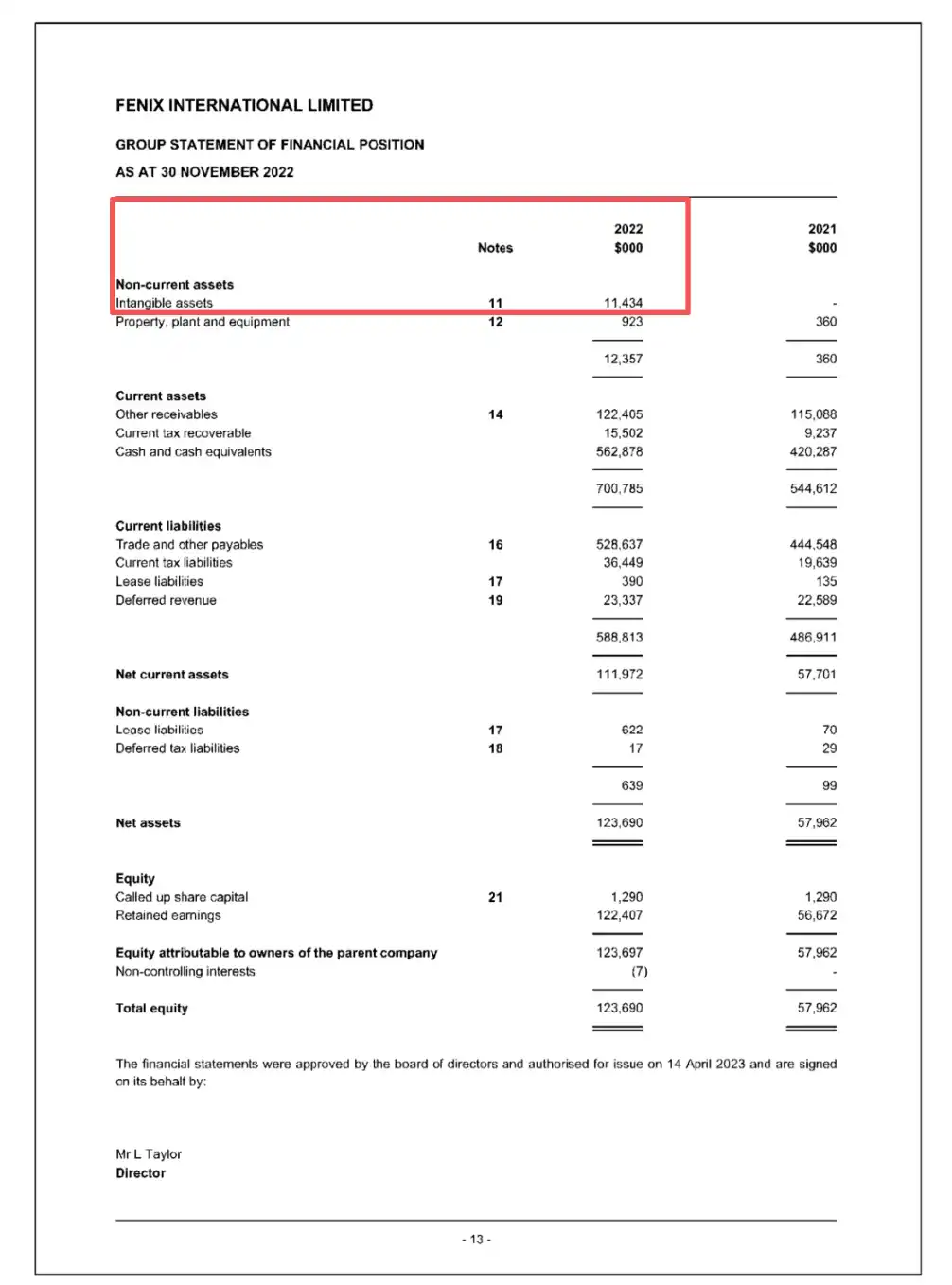
According to the company's financial statements from the end of November 2022, Fenix purchased a total of approximately $19.9 million worth of ETH, listing it as an intangible asset. Due to the cryptocurrency market crash in 2022, Ethereum's price plummeted significantly. The company recorded an impairment loss of approximately $8.46 million that year, adjusting the value of its ETH holdings to about $11.4 million.

The OnlyFans platform has not yet opened up crypto payments; users still rely on credit cards or third-party virtual cards. During Radvinsky's era, OnlyFans resembled more of a hybrid of "traditional finance + adult content," taking a 20% cut, with terrifyingly stable cash flow.

Shifting focus to the Russia-Ukraine war period in 2022, a group of cryptocurrency activists and enthusiasts quickly gathered to support Ukraine.

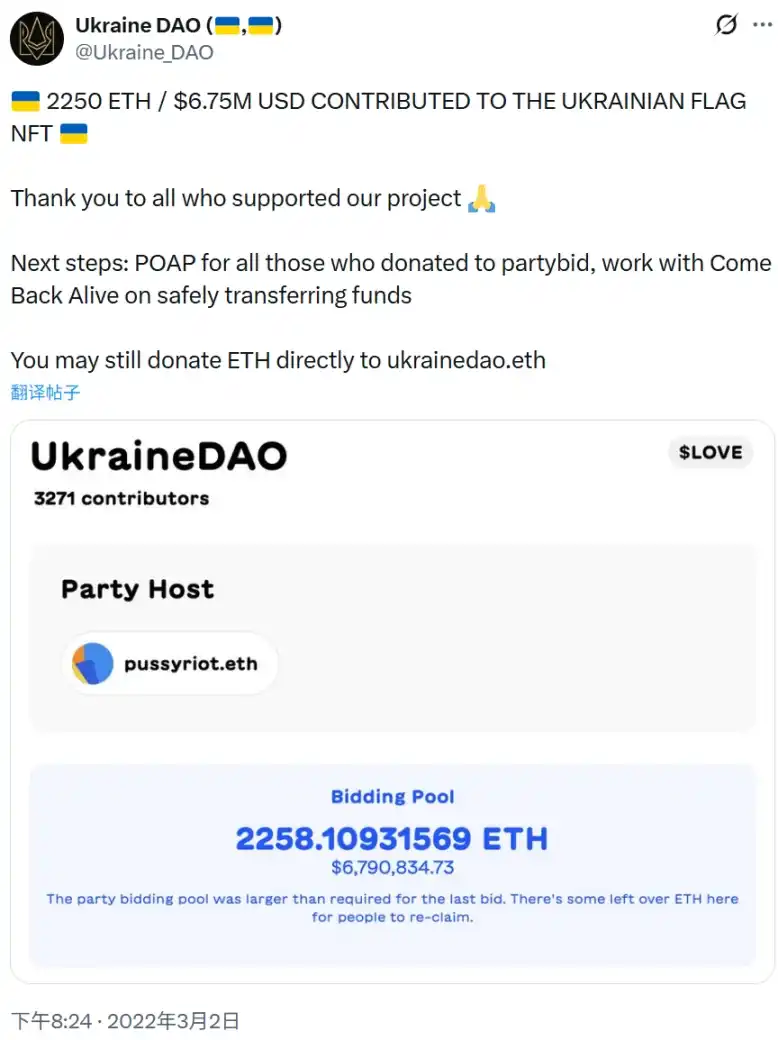
Their method was to auction an NFT artwork depicting the Ukrainian flag. The decentralized autonomous organization "Ukraine DAO" raised 2258 ETH in an auction, worth approximately $6.79 million at the time.

According to a subsequent report by Decrypt, the adult website OnlyFans also participated in this donation.

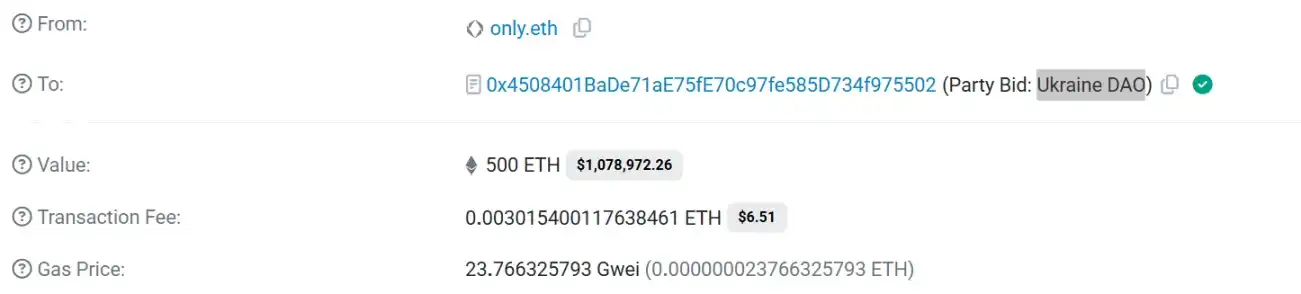
Blockchain tracking platform Etherscan showed that on February 27, an address named only.eth donated 500 ETH to Ukraine DAO, worth $1.079 million today.

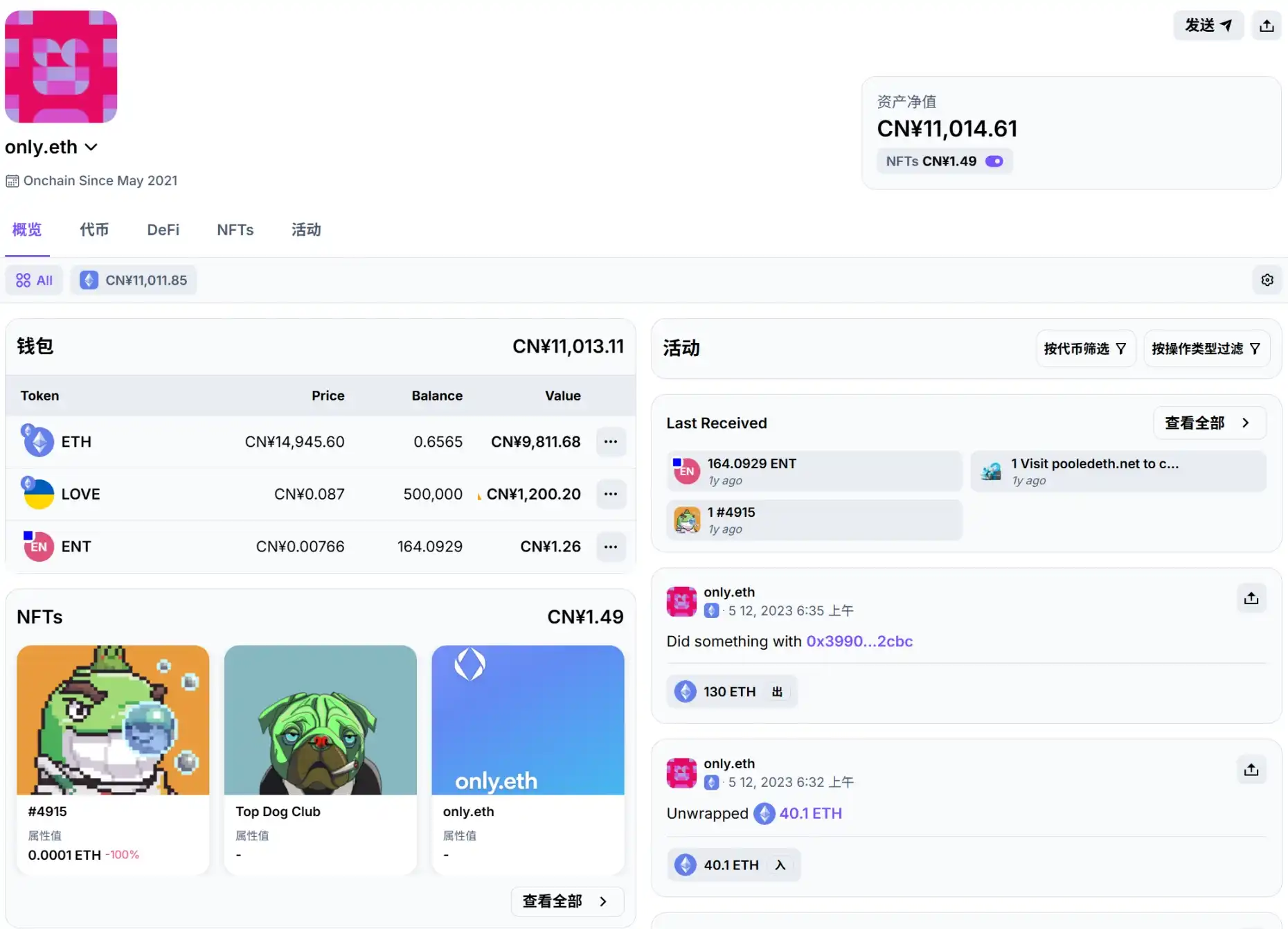
Zapper data shows that the only.eth address was created in May 2021. Currently, its wallet holds a total value of less than $2000, with the last wallet activity being 3 years ago.

However, the person who truly brought the OnlyFans基因 (gene) into crypto was its founder, Tim Stokely.

Stokely founded the OnlyFans platform in 2016, resigned as CEO in December 2021, and made a complete turn. In May 2022, he and former OnlyFans executive RJ Phillips launched Zoop—an NFT trading card platform based on the Polygon chain.

Zoop is positioned as completely "family-friendly": selling 3D digital collectible cards of celebrities and influencers. Users can buy, sell, trade, collect, and also receive airdropped benefits. It features limited editions and emphasizes creator revenue sharing. Essentially, Zoop transplants OnlyFans' "fans pay directly" model into the Web3 collectibles track.

In April 2025, Zoop, in conjunction with the HBAR Foundation (the treasury management entity for the Hedera chain), submitted a bid to acquire TikTok's US operations. The core of the proposal was Web3 integration: Hedera's scalability would be used to support TikTok's NFTs, creator payments, governance structure, and overall token incentive system, aiming to distribute 80% of advertising revenue directly to creators and users.

Ultimately, for various reasons, this intended bid did not finalize. Tim Stokely stepped away from the adult empire but brought its core logic into Zoop and the Hedera-led TikTok bid, effectively upgrading the "fans pay for content" model into a Web3 version.

Связанные с этим вопросы

QWho was the actual controller of OnlyFans and what was the cause of his death?

ALeonid Radvinsky was the actual controller of OnlyFans. He passed away at the age of 43 after a long battle with cancer.

QWhat significant cryptocurrency purchase did OnlyFans' parent company, Fenix International, make under Radvinsky's control?

AFenix International purchased approximately $19.9 million worth of ETH, which it listed as an intangible asset on its balance sheet.

QHow did the OnlyFans platform engage with the crypto space in 2022?

AIn 2022, OnlyFans launched a feature allowing users to set an Ethereum-verified NFT as their profile picture, marking its first step in exploring the role of NFTs on the platform.

QWhat was the name of the core business model of the NFT platform launched by OnlyFans' founder, Tim Stokely, after he resigned?

ATim Stokely co-founded Zoop, an NFT trading card platform on the Polygon blockchain, which uses a 'fans pay creators directly' model similar to OnlyFans but for Web3 collectibles.

QWhat was the purpose of the only.eth address's transaction to Ukraine DAO in February 2022?

AThe only.eth address, associated with OnlyFans, donated 500 ETH (worth about $1.079 million at the time of the article) to Ukraine DAO to support Ukraine during the war.

Похожее

Stuck Polymarket: The Real Test After Riding the Traffic Boom Has Arrived

Polymarket, a leading prediction market platform, is facing significant technical challenges as its growth outpaces its current infrastructure on Polygon. Users are experiencing laggy transactions, unresponsive orders, and delayed confirmations, severely impacting the trading experience. In response, DeFi Engineering VP Josh Stevens outlined a comprehensive engineering overhaul. The plan includes reducing on-chain data delays, fixing order cancellation issues, rebuilding the central limit order book (CLOB), improving website performance, and developing a unified SDK and API. A major revelation was the ongoing "chain migration," indicating a potential move away from Polygon. The core issue is that Polymarket has evolved from a simple prediction market into a high-frequency trading platform, making Polygon's limitations—such as block space, gas fees, and block time—a ceiling for further growth. The migration is not just a simple chain switch but a fundamental rebuild of its trading system to support more complex products like perpetual contracts (Perps). This announcement has sparked competition among chains like Solana, Sui, and Algorand, all vying to host Polymarket. For Polygon, losing this key application, which contributes significantly to its gas fee revenue, would be a major setback. The real test for Polymarket is no longer attracting users but proving it can provide a stable, reliable trading environment that retains them.

Odaily星球日报2 мин. назад

Stuck Polymarket: The Real Test After Riding the Traffic Boom Has Arrived

Odaily星球日报2 мин. назад

Lowering Expectations for BTC's Next Bull Market

The author, Alex Xu, explains his decision to significantly reduce his Bitcoin holdings (from full to ~30% of his portfolio) during the current bull cycle, citing a lowered long-term outlook for BTC's price appreciation in the next cycle. He outlines six key reasons for this reduced expectation: 1. **Diminished Growth Drivers:** The narrative of exponential user adoption has largely played out with institutional ETF adoption. The next major growth phase—adoption by sovereign national reserves or central banks—seems unlikely in the near future. 2. **Personal Opportunity Cost:** More attractive investment opportunities have emerged in other assets, such as undervalued companies. 3. **Industry-Wide Contraction:** The broader crypto industry is struggling, with most Web3 business models (SocialFi, GameFi, DePIN) failing. This overall萧条 (depression) reduces the fundamental demand and consensus for Bitcoin. 4. **Strain on Major Buyer:** MicroStrategy, a major corporate buyer of BTC, faces rising financing expenses for its debt, which could slow its purchasing rate and create significant marginal pressure on the market. 5. **Increased Competition from Gold:** The emergence of "tokenized gold" has closed the functional gap (portability, divisibility) between physical gold and Bitcoin, offering a strong competitor in the non-sovereign store-of-value space. 6. **Security Budget Concerns:** The block reward halving continues to exacerbate the long-standing issue of funding Bitcoin's network security, with new fee source explorations like Ordinals and L2s largely failing. The author's decision to hold a significant (though reduced) position reflects a cautious, not bearish, outlook. He remains open to increasing his exposure if the fundamental reasons for his skepticism change or if new positive catalysts emerge.

marsbit40 мин. назад

Lowering Expectations for BTC's Next Bull Market

marsbit40 мин. назад

Can Iran 'Control' the Strait of Hormuz?

Iran has announced a comprehensive plan to assert control over the strategic Strait of Hormuz, a critical global oil shipping chokepoint. The proposed measures include requiring all vessels to obtain Iranian permission for passage, imposing fees for security, environmental protection, and navigation management—preferably paid in Iranian rials—and absolutely banning Israeli ships. Vessels from countries deemed hostile by Iran’s top security bodies may also be barred. Analysts suggest Iran’s motives are multifaceted: increasing pressure on the U.S. and Israel by leveraging control over oil transit to influence global prices and inflation; creating a new revenue stream, potentially exceeding $7.7 billion annually, to counter Western sanctions and support postwar reconstruction; and using transit permissions as bargaining chips in future negotiations, notably with the U.S. However, the plan faces significant practical and diplomatic challenges. Enforcing comprehensive interception and fee collection in the busy waterway, patrolled by international military forces, would be difficult. The U.S. has already countering with a blockade of Iranian ports and threats to intercept any ship paying fees, potentially strangling Iran’s oil exports and fee revenue. Broad international opposition, led by European and Gulf states, and legal controversies further complicate implementation. The proposal may ultimately serve more as a negotiating tactic than a feasible policy, with its execution remaining highly uncertain.

marsbit1 ч. назад

Can Iran 'Control' the Strait of Hormuz?

marsbit1 ч. назад

Торговля

Спот
Фьючерсы
活动图片