Author: Vivi
When a top AI researcher leaves Google, people might say it's a career choice. But when three high-profile AI talents leave one after another, many start writing Google's 'obituary'.
Noam Shazeer, Google Engineering VP and co-lead of Gemini, announced his departure from Google to join OpenAI. Noam is no ordinary AI researcher. He was one of the authors of the legendary 2017 paper 'Attention Is All You Need'. It was this paper that proposed the Transformer architecture, laying the foundation for today's era of large language models.
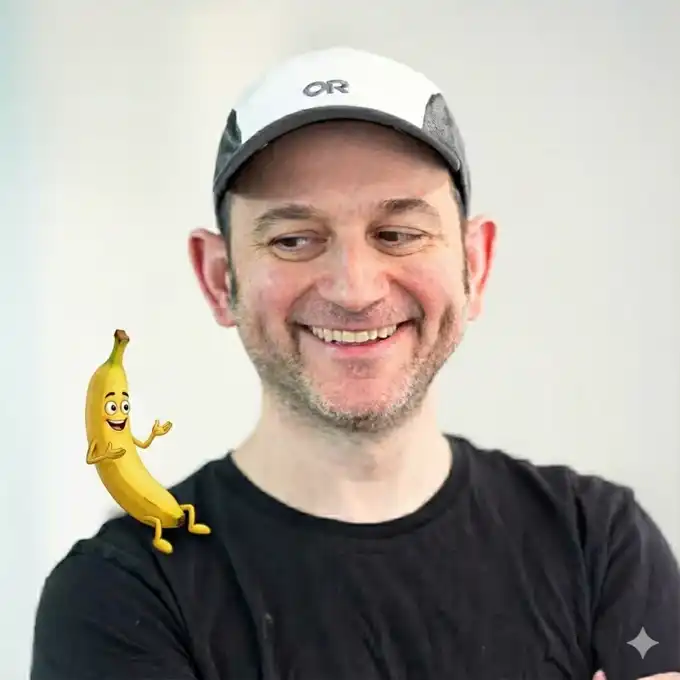
Image source: Noam Shazeer LinkedIn Profile
John Jumper, Google DeepMind VP, is leaving Google DeepMind to join Anthropic. Jumper helped create AlphaFold, the protein structure prediction system that revolutionized biology and drug discovery. In 2024, he and Demis Hassabis, co-founder and CEO of Google DeepMind, shared the Nobel Prize in Chemistry.

Image source: The Gairdner Foundation
Daniel De Freitas, longtime collaborator of Noam Shazeer and co-founder of Character.AI, is also part of this talent exodus story. He is not as widely known as Noam, but is very important in the history of conversational AI. He and Noam both worked on conversational AI at Google early on, later leaving Google in 2021 to found Character.AI, which created one of the earliest wildly popular consumer-grade AI chatbots. In 2024, Google brought them and part of the Character.AI team back to Google through a deal reportedly worth up to $2.7 billion. Now, their names are once again linked to the question: 'Can Google retain the talent that defined the conversational AI era?'
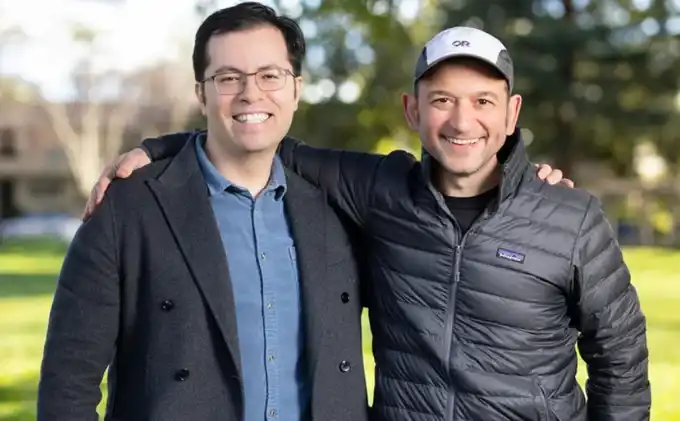
Image source: Business Insider
So, yes, market concern is understandable because this is not just ordinary employee turnover. These three individuals touch upon the three most important threads of modern AI: Transformer, conversational AI, and AlphaFold.
For a Google that is trying hard to prove to the world that Gemini can compete with OpenAI and Anthropic, this is undoubtedly painful.
But an 'obituary' is not the right framework. Talent drain is a warning signal, not a death certificate.
Interpreting from another angle - Google is being poached not because it's already unimportant. On the contrary, precisely because it remains critically important.
OpenAI and Anthropic are both young, hungry, AI giants on the eve of their IPOs. They are competing for talent, credibility, and market momentum. Where do they go when they want the world's top AI talent?
They go to Google.
Looking at it another way, this itself says one thing: Google is still one of the world's deepest pools of AI talent.
These departures are certainly not meaningless. Losing talents like Noam Shazeer, John Jumper, and Daniel De Freitas is certainly painful. They are not names that can be easily replaced.
But the real question should not just be: 'What exactly is wrong with Google?'
It should be: 'Beyond any individual genius, what else does Google have?'
I'd prefer to see it as a stress test, and Google might still be one of the few companies capable of withstanding this pressure test.
Let me elaborate.
1. First Look at the Background: This is a Classic Talent War on the Eve of IPOs
First, we must understand this is not just a Google story. It's also a classic Silicon Valley talent war on the eve of IPOs.
OpenAI and Anthropic are no longer the small research labs of a few years ago; they are now AI giants, entering the period scrutinized by capital markets.

Image source: TechCrunch
They need capital, customers, computing power, enterprise trust, regulatory credibility, and, most importantly, top-tier talent.
At this stage, top AI talent itself becomes part of the valuation narrative.
Noam Shazeer joining OpenAI sends the signal: OpenAI can still attract those who invented the foundational technology of the LLM era.
John Jumper joining Anthropic sends the signal: Anthropic is not just about Claude; it also wants to be seen as a serious frontier AI and AI for Science institution.
These hirings tell investors, employees, clients, and the entire AI community: the best people still believe in our mission.
This is also why this talent war appears so dramatic.
But it's too simplistic to interpret it as: 'Google must have a huge problem, that's why talent is leaving.'
Silicon Valley has never operated that way. Talent flows. Excellent people leaving excellent companies is a normal thing. They might leave for a new mission, bigger equity returns, faster decision-making, more autonomy, or simply entering a different stage in life.
This isn't necessarily a scandal.
In fact, a key reason Silicon Valley became an innovation engine is its extremely high talent mobility. Especially in California, where non-compete clauses are heavily restricted, people can freely move, start companies, compete, and start over.
This freedom is, of course, uncomfortable for many companies. But for the ecosystem, it's crucial.
2. Looking at Google's Real Advantage: It's Not Just a Model Company
Another common misconception is reducing the AI race to model leaderboards.
But Google's advantage is much bigger than benchmarks.
Of course, benchmarks are important.
Power users care about whether Claude writes code better, GPT has stronger reasoning, Gemini has better long-context, multimodal, or tool-calling performance, or if a model has a better personality, usability, or stronger agentic workflows.
Gemini also still needs to prove itself in areas where OpenAI and Anthropic have already established strong mindshare.
But the AI market is far larger than benchmarks.
Most average users don't wake up thinking: 'Which model should I use today?'
They want their email summarized, their schedule organized, their photos searchable, YouTube videos interpreted, and Docs, Gmail, Search, Maps, and Android to become smarter.
This is precisely Google's massive advantage.
OpenAI and Anthropic are excellent model companies. But Google's positioning is completely different: it's a full-stack AI company.
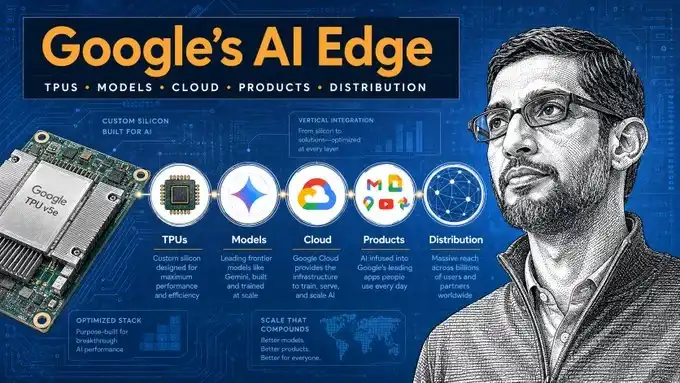
It has infrastructure: TPUs, data centers, Google Cloud, AI Hypercomputer.
It has models: Gemini, Gemma, Veo, Imagen, AlphaFold, and the deep research heritage from Google Brain and DeepMind.
It has products: Search, YouTube, Android, Chrome, Gmail, Workspace, Maps, Photos, Pixel.
It has revenue engines: Search Ads, YouTube Ads, subscriptions, Cloud, enterprise products.
Most importantly, it has distribution: billions of users are already in its ecosystem.
Most AI startups spend heavily to acquire users; Google already has a massive existing user base. Most AI startups need to build user habits from scratch; Google is already part of many people's daily routines.
Similarly, most AI startups need to convince enterprises to trust them; Google is already selling Cloud, Workspace, security, productivity, and infrastructure services to enterprises globally.
This is why the 'Google is doomed' narrative doesn't hold up.
Public opinion easily amplifies panic, but a calm look reveals Google possesses advantages most companies don't: an invisible AI intelligence layer.
The most successful consumer AI might not make users feel they're 'using AI'.
OpenAI and Anthropic need to pull users into their products; Google can push AI into the products users already use every day.
This is a very deep distribution advantage.
Search is also part of this advantage, even though it's often portrayed as Google's biggest weakness.
The bearish logic is clear: if AI changes how people access information, Google's core search business could be disrupted.
This risk is real.
Google's search advertising business is one of the most profitable in tech history. It funds AI research, YouTube infrastructure, Cloud expansion, moonshots, and massive capital expenditures.
So Google's moves here will be extra cautious. But Search isn't just a weakness for Google; it's also a superweapon.
Search gives Google distribution, user intent data, advertiser relationships, billions of daily user interactions, and a direct channel to push AI to mainstream users.
If Google can manage this transition well, Search won't simply be replaced by AI; it will become AI-native.
This process will inevitably create messy scenes - publishers will complain, advertisers will have issues, regulators will watch closely, and users will need time to build trust in AI-generated answers.
But if Google can evolve Search from a list of links into a personalized, multimodal, agentic answer engine, it will still be one of the most important gateways to the internet.
The question now is: Can Google change itself before someone else changes Search?
Google has another severely underestimated advantage: Google can even win when its competitors succeed.
Anthropic isn't just Google's competitor. It's also its strategic partner.
Let's look at the data:
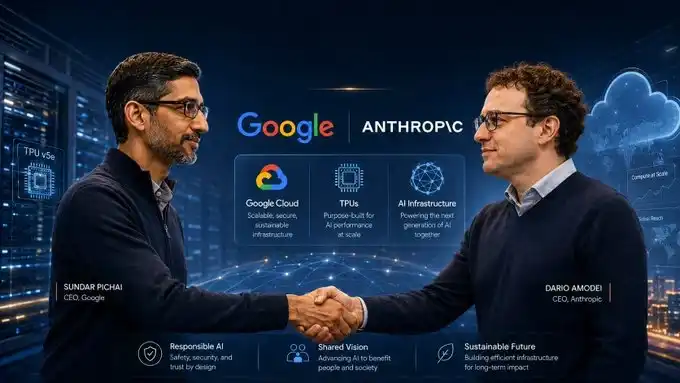
Google's parent company Alphabet has committed to invest up to $400 billion in Anthropic, including a $100 billion cash investment at a reported valuation of $3.5 trillion, with another $300 billion tied to performance goals.
Meanwhile, Anthropic reportedly committed to spending $2 trillion on Google Cloud over five years.
This isn't just a financial investment. Anthropic also announced plans to use up to 1 million Google TPUs, worth hundreds of billions of dollars, and expects to bring over 1GW of computing capacity.
This means one of Google's most important AI rivals could also become one of Google Cloud's most important AI infrastructure customers.
OpenAI has also reportedly turned to Google Cloud for additional computing power.
So Google isn't just participating in the AI model race; it's also becoming part of the underlying infrastructure for other frontier AI companies.
In the AI gold rush, Google isn't just trying to dig for gold itself.
It's also selling shovels, roads, electricity, and cloud infrastructure.
This is a very strong position.
The model race is extremely expensive. Training and serving frontier models requires massive computing power. Even the most successful AI companies need infrastructure partners.
Google has spent many years building its own chips, cloud capacity, and AI infrastructure. Now, even its rivals may need to rely on parts of its tech stack. This is its underlying strength.
Finally, it's worth mentioning that Google's AI ambitions aren't limited to chatbots; they also include AI for Science.
The Nobel Prize-winning AlphaFold is the best example. AlphaFold changed scientists' understanding of protein structure prediction, accelerated biological research, and proved AI isn't just for generating text but can solve truly difficult scientific problems.
This is crucial for the long-term AI race because, ultimately, the biggest AI winners might not just be the companies with the strongest consumer chatbots; they could also be those that can apply AI to science, medicine, climate, education, robotics, and deep technology infrastructure.
Google DeepMind has always had this larger ambition.
Indeed, John Jumper's departure might be Google's 'what could have been', as he represented one of Google's most important victories in AI for Science.
But AlphaFold wasn't the product of any single genius working alone. It came from a team and a research culture: the determination to commit long-term to world-class problems before the market was fully focused.
This culture is rare, and Google still has it.
3. The Real Innovator's Dilemma
So, does Google face the Innovator's Dilemma?
Certainly, no company is immune.
Google's core Search business is both its greatest asset and its biggest constraint.
Startups can charge forward with pure hunger. Google must protect a global business, a brand, regulatory risks, advertisers, publishers, enterprise clients, and billions of users.
This slows decision-making, makes product launches more cautious, and complicates internal coordination - this is the part many criticize.
Google has certainly made mistakes, for instance, Bard's launch was rocky.
Gemini itself has experienced its fair share of public setbacks.
But the important question isn't whether Google has weaknesses; it's: Is Google adapting and adjusting?
I think it is.
The Character.AI story well illustrates this boldness.
Noam Shazeer and Daniel De Freitas left Google to found Character.AI in 2021 and grew quickly. Later, Google decisively brought them and part of the Character.AI team back to Google through a massive deal.
This is the core tension in Google's AI story: Google was too cautious early on, appearing sluggish compared to startups; but later, Google reorganized, refocused, and started pushing Gemini across its entire ecosystem, turning it into an intelligence layer spanning Search, Workspace, Android, Cloud, and consumer products.
This doesn't mean Google can move like a 200-person startup. That's unrealistic.
But when the organization is aligned, it can move like a full-stack AI empire.
This distinction is very important - the Innovator's Dilemma is real, but Google isn't ignoring it.
From revolutionizing Search to integrating Gemini, what we see is the effort of a tech giant in transition.
4. Conclusion: This is a Stress Test, Not an Obituary
The departure of top-tier talent is more like a stress test for Google, not an obituary.
This company is facing one of the most difficult transitions in its history, but it's also one of the few with enough resources, tech stack, and distribution power to navigate this transition.
In the AI era, the shiniest model might win a news cycle; the most aggressive startup might grab headlines in the talent war.
But the best integrated system might win the next decade.
This is why I remain confident in Google - not because Google is perfect, but because Google is one of the few companies that can compete at every layer of the AI future.
The AI race is far from over, and Google is playing a long game.