Two Legends Lost in Three Days: Is Google's AI Talent Dam Cracking?

marsbitОпубликовано 2026-06-20Обновлено 2026-06-20

Введение

In three days, Google lost two AI legends. On June 18, Noam Shazeer, co-author of the seminal "Attention is All You Need" paper and Gemini co-lead, left for OpenAI. Just 48 hours later, John Jumper, 2024 Nobel laureate and AlphaFold lead, departed DeepMind for Anthropic. This follows Andrej Karpathy joining Anthropic in May. These moves highlight a structural trend: top AI talent is concentrating at mission-driven, pre-IPO firms like OpenAI and Anthropic, while Google becomes a primary source. The exodus stems from a core mission mismatch. Google's ad-centric model often subordinates AI research to product and revenue goals, creating friction for pioneers like Shazeer, who returned in 2024 only to leave again. In contrast, OpenAI and Anthropic offer singular focus on pushing AI boundaries, whether towards AGI or safety-aligned models, which deeply appeals to top researchers like Jumper. Financial incentives amplify the pull. With both OpenAI and Anthropic nearing IPO, employees stand to gain immensely from equity, an upside Google's mature stock cannot match. Furthermore, the 2023 merger of Google Brain and DeepMind, intended to consolidate strength, has instead created cultural tension and slowed the path from research to product, as evidenced by Gemini's pace. This talent redistribution is reshaping the AI landscape. While Google retains vast data and compute resources, its true crisis is the quiet, continuous loss of the people who define the field's future. The real mo...

While the company that defined AI's past is losing the people who will define its future.

On June 18th, Noam Shazeer, core author of the Transformer paper and co-lead of Google Gemini, announced on X his departure from Google to join OpenAI, which had confidentially filed for an IPO with the SEC. He is one of the eight equal contributors to the 2017 paper "Attention is All You Need," which laid the technical foundation for modern large language models. Sam Altman immediately reposted and commented, "Noam has been one of the people I've most wanted to work with since day one of OpenAI. Only took a decade."

Forty-eight hours later, on June 19th, John Jumper, 2024 Nobel Laureate in Chemistry and core leader of AlphaFold, announced his departure from Google DeepMind after nearly nine years, joining Anthropic.

Two almost simultaneous departures of top-tier talent are enough to shock the AI community. Extending the timeline reveals an even clearer trend. On May 19th, former OpenAI founding member Andrej Karpathy announced he was joining Anthropic's pre-training team. Although he never worked at Google, his choice similarly illustrates one thing: top talent is concentrating at OpenAI and Anthropic, with Google becoming the primary source in this talent reshuffle.

Three Departures, Not Isolated Cases, But a Trend

Jumper is no ordinary researcher. In 2024, he, along with Demis Hassabis and David Baker, was awarded the Nobel Prize in Chemistry for leading the AlphaFold project, which used AI to predict protein 3D structures in an extremely short time, solving a problem that had perplexed the biology community for fifty years.
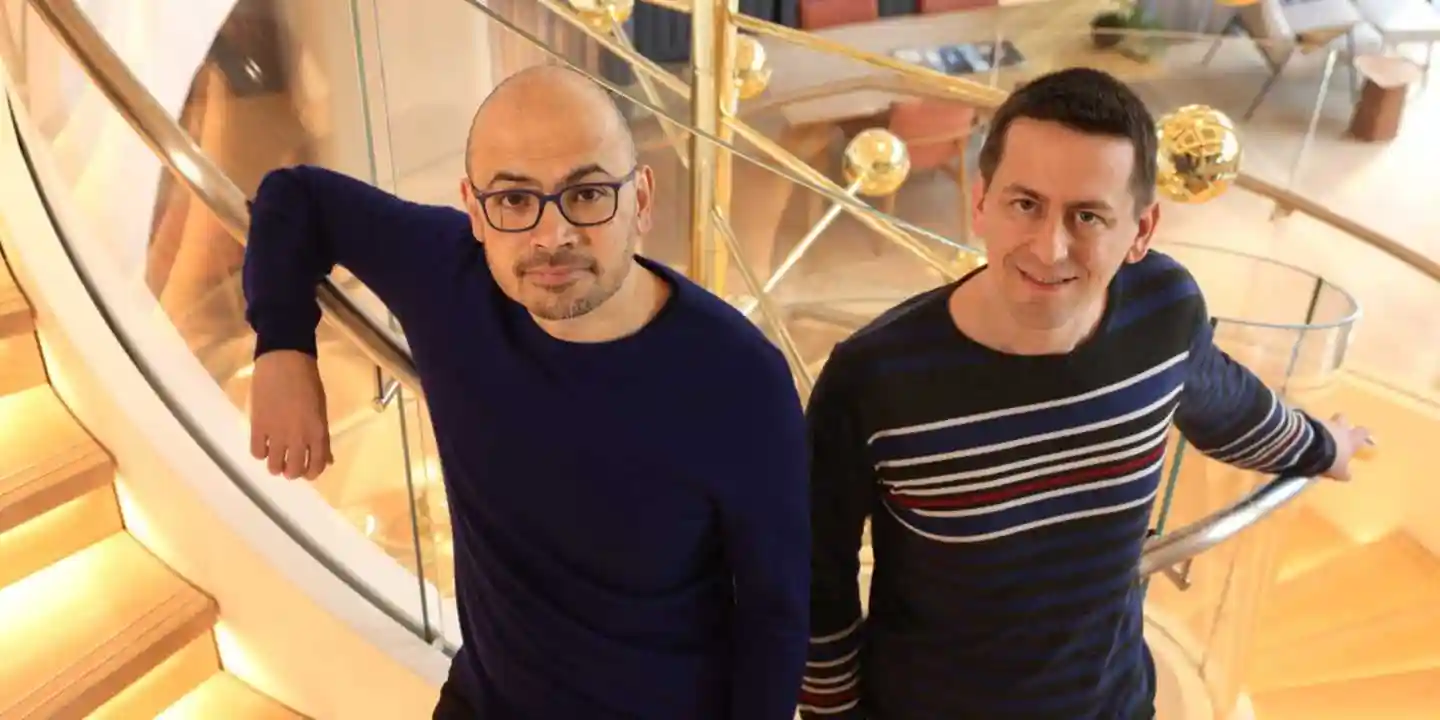
John Jumper (left) pictured with Demis Hassabis, echoing reports of his departure from Google DeepMind for Anthropic. Source: businessinsider.com (copyright review needed)

Shazeer is a key figure in modern AI development. He joined Google in 2000 and co-authored "Attention is All You Need" in 2017. The Transformer architecture proposed in that paper is the technical bedrock of all current large language models. In 2021, after Google refused to launch the AI chatbot product he co-developed with Daniel De Freitas, he left and founded Character.AI in 2022. Three years later, Google brought him back for approximately $2.7 billion, appointing him co-lead of Gemini. However, less than two years after his return, he has chosen to leave again, this time for OpenAI.
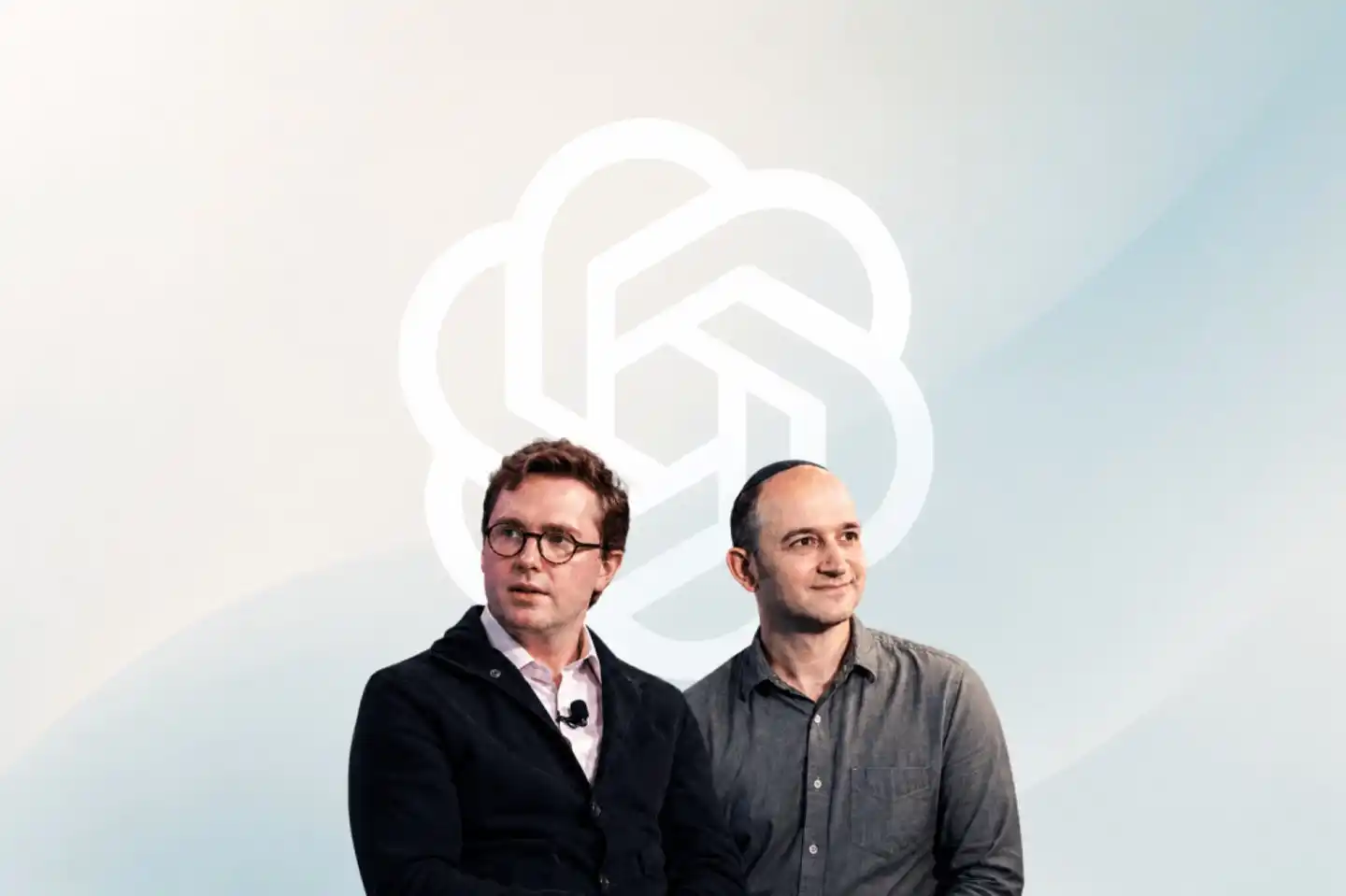
Noam Shazeer pictured with another AI executive, echoing reports of his departure from Google for OpenAI. Source: techcrunch.com (copyright review needed)

Karpathy's choice further confirms the larger trend. In May 2026, this OpenAI founding member, after concluding his educational startup Eureka Labs, announced he was joining Anthropic's pre-training team, responsible for "granting Claude core knowledge and capabilities through large-scale training runs." He never worked at Google, but his destination itself shows where top talent is concentrating.
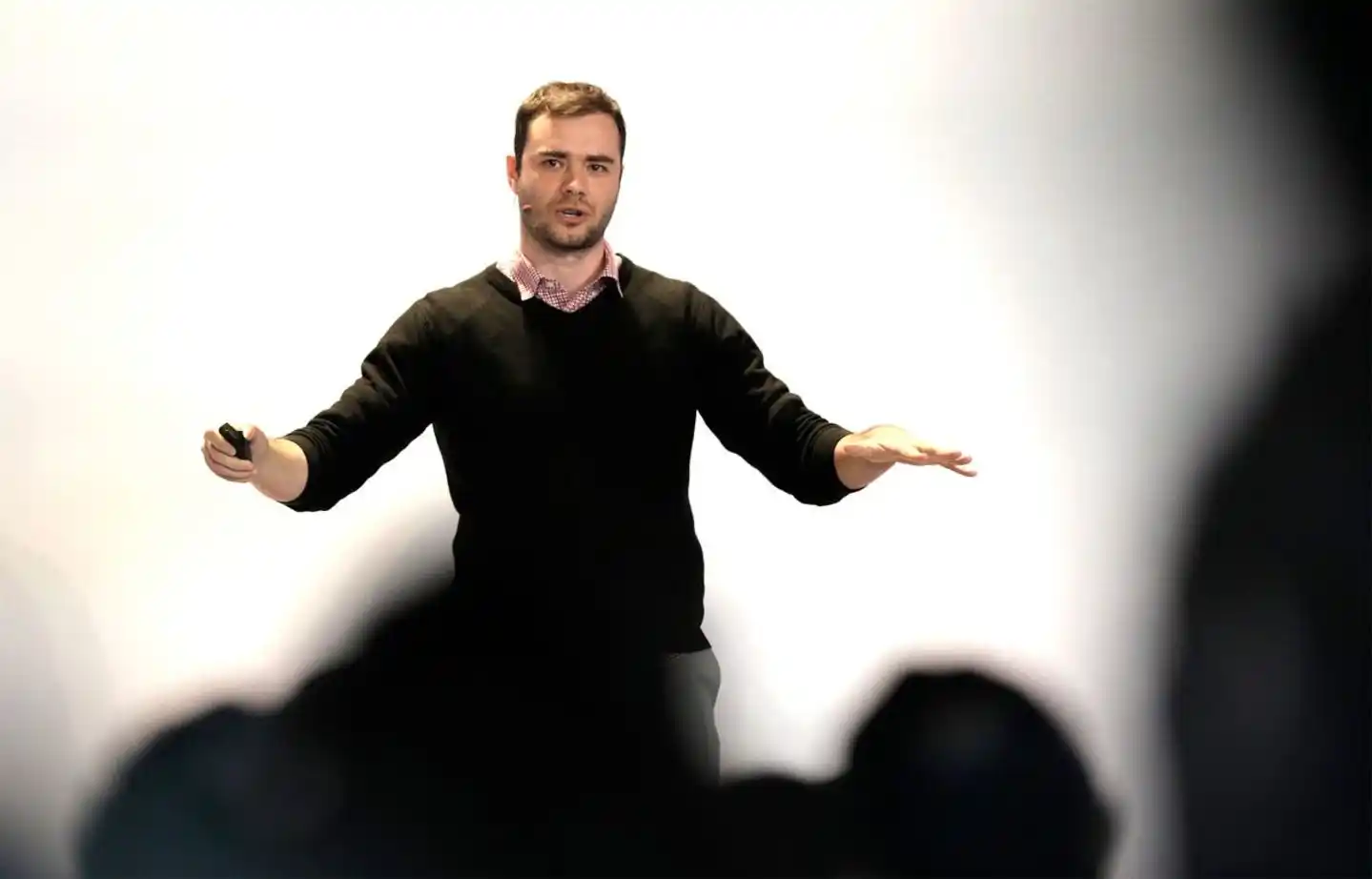
Portrait of Andrej Karpathy, accompanying reports of his joining Anthropic's pre-training team. Source: bloomberg.com (copyright review needed)

Looking back further, this talent flow trend has been evident. Following the merger of Google Brain and DeepMind in April 2023, a significant number of mid-level and senior researchers flowed to OpenAI, Anthropic, and xAI. Tracking the author affiliations on cutting-edge AI papers on arXiv reveals that for more and more top researchers, the institution name on their profile has changed from "Google" to "OpenAI" or "Anthropic."

OpenAI and Anthropic are assembling the most influential talent rosters in the AI field. And Google is becoming the primary exporter in this talent migration.

Mission Misalignment

This is the most fundamental divergence, surpassing salary and compute power in importance.

Nearly 80% of Google parent Alphabet's revenue comes from advertising. This means all investments in the AI field must ultimately answer a product-oriented question: how will this serve the advertising business?

Shazeer quickly discovered after his return in 2024 that Google's core logic hadn't changed. The fundamental constraint he faced at Gemini—catching up to ChatGPT—remained a constrained task within an advertising-first architecture. The goal wasn't to redefine the boundaries of AI capability, but to defend advertising market share.

In contrast, OpenAI's charter clearly states its core mission is AGI (Artificial General Intelligence) for the benefit of all humanity. Anthropic has been built around AI safety since its inception, registered as a Public Benefit Corporation (PBC), legally obligated to balance shareholder interests with social benefits. At these two companies, top researchers don't need to answer questions like "how will this help the ads division increase revenue." They only need to focus on one goal: how to continuously push the boundaries of model capability.

Several researchers who moved from Google to these two organizations have repeatedly mentioned the same word in post-move interviews: "focus." At Google, key performance indicators are search click-through rates, ad conversion rates, and YouTube watch time. At Anthropic, key performance indicators are Claude's performance in pre-training and post-training. For a scientist like Jumper, who dedicated nine academic and professional years to the protein folding problem, this high degree of focus holds an irreplaceable appeal. At Anthropic, AI for Science is not a fringe project but a core research direction.

Mission is the push, while capital is the pull. In terms of compensation incentives, Google is at a structural disadvantage.

OpenAI confidentially filed for an IPO with the SEC in 2026, and Anthropic is also in the IPO preparation queue. Employees at both companies hold significant equity, poised for public market realization. The timing of Jumper's and Shazeer's decisions to join just before this window is no coincidence. In comparison, Google's market capitalization exceeds $2 trillion, with limited room for its stock price to double in the short term, making the explosive potential of its equity incentives at least an order of magnitude lower.

More noteworthy is the capital market's distinctly different pricing logic for these two types of companies. Leaked OpenAI audited financial reports show its 2025 GAAP net loss was approximately $38.5 to $39.0 billion (including about $30 billion in non-cash conversion expenses), with operating losses widening from $8.78 billion in 2024 to about $20.9 billion, yet the capital market reaction remained positive. During the same period, OpenAI's revenue soared from $3.7 billion to $13.07 billion, a 253% increase. In Q1 2026, the company's revenue was $5.7 billion with operating expenses of $3.7 billion. Investors are willing to pay for a "losses for growth" strategy.

At Google, AI investments of similar scale prompt questions from the capital market like, "What impact will this have on margins?" The same large-scale investment in AI is called strategic investment at OpenAI but is viewed as cost-center expansion at Google.

From the perspective of a top researcher, the logic behind this choice isn't complicated. On one side is a company nearing an IPO, where equity could realize nine-figure value within two years, with the entire team focused on optimizing model capability. On the other side is a mature behemoth with a $2 trillion market cap, where a researcher's work must continuously align with the quarterly goals of advertising and search teams.

The DeepMind Merger Creates New Centrifugal Forces

In April 2023, Google Brain and DeepMind merged into Google DeepMind, unified under the leadership of Demis Hassabis. The official narrative at the time was "consolidating strength." But looking back three years later, the merger's actual effects are debatable.

The merger failed to fundamentally resolve the realignment of influence in translating research into products.

DeepMind's foundational research needed to be implemented through product teams, which had their own independent timelines and priorities. Gemini is a典型案例. Shazeer was appointed co-lead, but the product release节奏 and commercialization path remained highly constrained by the search and cloud business units. This contrasts sharply with OpenAI's model where the entire organization revolves around the same core product goal.

The merger also created cultural identity tensions. Google Brain leaned more towards engineering and commercial落地, while DeepMind leaned more towards basic science and long-term exploration. Post-merger, the long-term research-oriented culture is seen as eroded under the pressure to "align with product roadmaps."

A former Google researcher wrote on X, "When we were asked to align our research direction with the product roadmap, I knew it was time to go."

Jumper's departure can be seen as a statement on the post-merger cultural direction. He worked at DeepMind for nearly nine years, experiencing the independent research era, the post-merger integration period, and the current phase of increasing productization pressure. When the research environment increasingly required alignment with search engine KPIs, leaving became a calculated but not difficult decision.

A deeper issue is that less than two years after Shazeer's return, the pace of AI product releases hasn't significantly accelerated. Gemini narrowed the capability gap with ChatGPT but never became the leader in细分领域. He hasn't publicly expressed dissatisfaction—his statement on X was standard professional措辞—but the action itself speaks volumes.

The Talent Map is Undergoing an Irreversible Reshuffle

This talent exodus is no longer just a matter of a few people changing jobs.

Google can bring back top researchers, but it cannot change the most fundamental thing: its core business model is advertising. AI is an enabling tool, not the ultimate mission. Money can bring back a person, but money cannot make Google not be Google. This means the outflow won't stop; it's a structural trend, not a few isolated departures.

On the other side, OpenAI and Anthropic are successfully carving their paths. OpenAI is securing the strongest force in LLM research, while Anthropic is combining AI safety with scientific applications. Both companies have clear boundaries and their own moats. Google is caught in the middle, lacking both OpenAI's product爆发力 and Anthropic's brand differentiation in safety.

What has irreversibly tilted the talent天平 is the IPO window. When top researchers can gain nine-figure or even ten-figure wealth through equity realization within a year or two, no mature giant's compensation system can compete on the same dimension. 2026 may well be remembered not for any particular AI capability breakthrough, but as the year the talent map underwent a structural reshuffle. In this round of competition, talent density determines model capability, model capability determines market share, and market share determines the winner's list.

Google is not without a chance for a comeback. It possesses one of the world's largest computing infrastructures, the most extensive user data reserves, and持续领先 in AI academic paper publications. But all these advantages rest on one premise: you must have足够优秀的人 to use them. And what Google is losing is precisely these people.

This might be the quietest crisis in Google's history—no major product失误, no heavy regulatory fines, no financial爆雷. It's just the smartest people, one after another, choosing to leave. In the AI field, the true moat has never been data, nor compute power, nor even the model architecture itself. It's the people willing to stay and push the technological boundaries day after day. And Google is discovering that retaining these people is far more difficult than training a trillion-parameter model. (This article was first published on Taimei APP, Author | AGI-Signal, Editor | Qin Conghui)

Трендовые криптовалюты

Связанные с этим вопросы

QWhat are the two major AI talent departures from Google mentioned in the article that occurred within three days?

AThe two major departures were: 1) Noam Shazeer, co-author of the 'Attention Is All You Need' paper and co-head of Gemini, who left Google to join OpenAI. 2) John Jumper, 2024 Nobel laureate in Chemistry and core leader of AlphaFold, who left Google DeepMind to join Anthropic.

QAccording to the article, what is identified as the most fundamental reason for the talent exodus from Google?

AThe most fundamental reason is a 'mission misalignment.' Google's core business and revenue are centered on advertising, which imposes product-oriented constraints on AI research and development. In contrast, companies like OpenAI and Anthropic allow researchers to focus singularly on advancing AI capabilities or safety, without the need to justify their work in terms of ad revenue.

QWhat significant event in Google's AI organization in 2023 is cited as a catalyst for increased internal tension and talent outflow?

AThe merger of Google Brain and DeepMind into Google DeepMind in April 2023 is cited. While intended to consolidate strength, it reportedly created centrifugal forces by failing to solve the issue of research-to-product translation and introducing cultural clashes between commercial engineering (Google Brain) and long-term scientific exploration (DeepMind) under increased productization pressure.

QWhat financial factor is mentioned as a powerful 'pull' attracting top AI talent to companies like OpenAI and Anthropic?

AThe impending IPO window for OpenAI and Anthropic is a major financial pull. Employees at these pre-IPO companies hold significant equity that could become extremely valuable upon a public offering, offering potentially nine-figure or higher financial rewards that mature giants like Google, with its massive but slower-growing market cap, cannot easily match.

QWhat does the article conclude is the true 'moat' (defensive advantage) in the AI field, which Google is currently struggling to maintain?

AThe article concludes that the true moat in AI is not data, computing power, or even model architecture, but the people—the top talent who are willing to stay and push the boundaries of the technology day after day. Google's quiet crisis is that it is losing precisely these individuals.

Похожее

Андре Кронье покидает совет директоров Sonic Labs на фоне падения токена

Известный разработчик DeFi Андре Кронье покинул совет директоров Sonic Labs (бывшей Fantom Foundation), вместе с ним ушли ещё два директора. Эти изменения в руководстве произошли на фоне резкого падения курса нативного токена проекта S/FTM, который торгуется примерно на 97% ниже своего исторического максимума. Отставки поднимают вопросы о корпоративном управлении в Sonic Labs, который занимается высокоскоростным масштабированием виртуальной машины Ethereum (EVM). Несмотря на кадровые перестановки, разработчики заявляют, что технические планы и сроки запуска протокола остаются без изменений. Новый генеральный директор сосредоточен на реструктуризации операционной деятельности. Для сообщества DeFi эта ситуация подчёркивает характерную волатильность и проблемы управления в быстроразвивающихся блокчейн-экосистемах. Дальнейшая стабильность и направление развития проекта будут зависеть от прозрачности и чёткой коммуникации со стороны нового руководства.

bitcoinist1 ч. назад

Андре Кронье покидает совет директоров Sonic Labs на фоне падения токена

bitcoinist1 ч. назад

Kraken интегрирует торговлю через солана-децентрализованную биржу прямо в основное приложение

Криптобиржа Kraken интегрировала в своё основное приложение возможность торговли через децентрализованные биржи (DEX) в сети Solana. Это позволяет клиентам в США и более чем 100 странах торговать более чем 2500 токенами на основе Solana, не покидая приложение Kraken. Пользователям больше не нужны отдельные кошельки или мнемонические фразы, что упрощает доступ к ликвидности Solana DEX. Ключевым преимуществом является прямой доступ к ранним активам и токенам новых проектов, которые ещё не представлены на традиционных централизованных биржах. Интеграция объединяет удобство и безопасность централизованной платформы с широким выбором токенов и децентрализованной ликвидностью. Объявление было сделано 20 июня 2026 года.

bitcoinist2 ч. назад

Kraken интегрирует торговлю через солана-децентрализованную биржу прямо в основное приложение

bitcoinist2 ч. назад

Медведи Эфириума сохраняют контроль, так как ETH отскакивает от сопротивления линии тренда

Последний отскок Ethereum не убедил аналитиков в завершении нисходящего тренда. По мнению TheSignalyst, ETH сохраняет медвежий настрой, оставаясь ниже нисходящей красной линии тренда и формируя серию более низких максимумов и минимумов. На графике видно, что цена отклонилась от зоны сопротивления, объединяющей линию тренда и горизонтальный структурный уровень, что усиливает давление продавцов. Ключевая зона поддержки находится между $1 350 и $1 500. Контролируемый откат в этот диапазон может вызвать реакцию, но уверенный прорыв ниже ослабит структуру ETH. В настоящее время ETH находится между значимой поддержкой и линией сопротивления, ограничивающей восстановление, что указывает на техническое сжатие рынка. Борьба Ethereum с сопротивлением также важна для всего альткойн-рынка, поскольку слабость ETH часто снижает аппетит к риску в DeFi и малокапитализированных активах. Для подтверждения разворота быкам необходим четкий прорыв выше сопротивления.

bitcoinist3 ч. назад

Медведи Эфириума сохраняют контроль, так как ETH отскакивает от сопротивления линии тренда

bitcoinist3 ч. назад

TechFlow Разведслужба: Шансы на IPO Anthropic превышают 80%, Иран вновь перекрывает Ормузский пролив, вызывая волатильность цен на нефть

Технологические новости: ожидается IPO Anthropic в 2026 году, рынок обсуждает сосуществование её заявленной ценности в области безопасности ИИ с потенциальной триллионной оценкой. Набирают популярность виртуальные инфлюенсеры, созданные ИИ. Маск заявляет о необходимости астрономических инвестиций в антиматерию для межзвёздных путешествий. Крипто/Web3: Иран объявил о закрытии Ормузского пролива, вызвав волатильность на нефтяном рынке, однако данные о движении судов показывают неоднозначную картину. Одновременно Иран возобновил погрузку нефти на острове Харг, что может увеличить предложение. На рынке чипов: Goldman Sachs предупреждает о возможном приближении к пределу кредитования масштабных расходов на ИИ-инфраструктуру. Корпоративные новости: Cloudflare представил функцию временных аккаунтов для ИИ-агентов. Google сообщает, что более 50% его трафика теперь использует IPv6. Hyundai Motor Group планирует полный выкуп Boston Dynamics. Рынок акций: частные инвесторы активно вкладываются в акции SpaceX. В Европе зафиксирован первый с 2008 года дефолт по акциям CLO. Макроэкономика: Украина атаковала нефтяные объекты в Крыму и Краснодарском крае. Nomura предупреждает о возможном резком ужесточении политики ФРС. Общая тенденция: глобальная ликвидность сокращается на фоне роста предельных издержек в энергетике, кредитовании и технологиях, в то время как капитал продолжает искать новые масштабные возможности для роста.

marsbit4 ч. назад

TechFlow Разведслужба: Шансы на IPO Anthropic превышают 80%, Иран вновь перекрывает Ормузский пролив, вызывая волатильность цен на нефть

marsbit4 ч. назад

Соотношение ETH/BTC упало до уровней начала 2023 года на фоне дебатов о стоимости Ethereum

Курс ETH/BTC упал до уровня начала 2023 года, достигнув отметки 0.027. По сравнению с пиком 2021 года в 0.088 это означает, что Ethereum сейчас выглядит исторически дешевым по отношению к Bitcoin. Аналитик Woetoe задается вопросом, является ли это возможностью для контрарианских инвестиций или признаком структурного снижения. Одновременно с этим график ETH/USDT указывает на риск коррекции. По данным SwallowAcademy, после агрессивного недельного открытия цена может откатиться, при этом была нарушена структура рынка. План предполагает возможную продажу при повторном тестировании зоны $1723 с целью коррекции до $1660. Таким образом, сложилась противоречивая ситуация: Ethereum кажется недооцененным относительно Bitcoin, но при этом испытывает давление на долларовой паре. Для быков ETH первоочередной задачей является не обсуждение оценки, а восстановление технической силы и возобновление роста относительно BTC.

bitcoinist4 ч. назад

Соотношение ETH/BTC упало до уровней начала 2023 года на фоне дебатов о стоимости Ethereum

bitcoinist4 ч. назад

Торговля

Спот
Фьючерсы

Популярные статьи

Как купить S

Добро пожаловать на HTX.com! Мы сделали приобретение Sonic (S) простым и удобным. Следуйте нашему пошаговому руководству и отправляйтесь в свое крипто-путешествие.Шаг 1: Создайте аккаунт на HTXИспользуйте свой адрес электронной почты или номер телефона, чтобы зарегистрироваться и бесплатно создать аккаунт на HTX. Пройдите удобную регистрацию и откройте для себя весь функционал.Создать аккаунтШаг 2: Перейдите в Купить криптовалюту и выберите свой способ оплатыКредитная/Дебетовая Карта: Используйте свою карту Visa или Mastercard для мгновенной покупки Sonic (S).Баланс: Используйте средства с баланса вашего аккаунта HTX для простой торговли.Третьи Лица: Мы добавили популярные способы оплаты, такие как Google Pay и Apple Pay, для повышения удобства.P2P: Торгуйте напрямую с другими пользователями на HTX.Внебиржевая Торговля (OTC): Мы предлагаем индивидуальные услуги и конкурентоспособные обменные курсы для трейдеров.Шаг 3: Хранение Sonic (S)После приобретения вами Sonic (S) храните их в своем аккаунте на HTX. В качестве альтернативы вы можете отправить их куда-либо с помощью перевода в блокчейне или использовать для торговли с другими криптовалютами.Шаг 4: Торговля Sonic (S)С легкостью торгуйте Sonic (S) на спотовом рынке HTX. Просто зайдите в свой аккаунт, выберите торговую пару, совершайте сделки и следите за ними в режиме реального времени. Мы предлагаем удобный интерфейс как для начинающих, так и для опытных трейдеров.

1.5k просмотров всегоОпубликовано 2025.01.15Обновлено 2026.06.02

Как купить S

Sonic: Обновления под руководством Андре Кронье – новая звезда Layer-1 на фоне спада рынка

Он решает проблемы масштабируемости, совместимости между блокчейнами и стимулов для разработчиков с помощью технологических инноваций.

2.3k просмотров всегоОпубликовано 2025.04.09Обновлено 2025.04.09

Sonic: Обновления под руководством Андре Кронье – новая звезда Layer-1 на фоне спада рынка

HTX Learn: Пройдите обучение по "Sonic" и разделите 1000 USDT

HTX Learn — ваш проводник в мир перспективных проектов, и мы запускаем специальное мероприятие "Учитесь и Зарабатывайте", посвящённое этим проектам. Наше новое направление .

1.8k просмотров всегоОпубликовано 2025.04.10Обновлено 2025.04.10

HTX Learn: Пройдите обучение по "Sonic" и разделите 1000 USDT

Обсуждения

Добро пожаловать в Сообщество HTX. Здесь вы сможете быть в курсе последних новостей о развитии платформы и получить доступ к профессиональной аналитической информации о рынке. Мнения пользователей о цене на S (S) представлены ниже.

活动图片