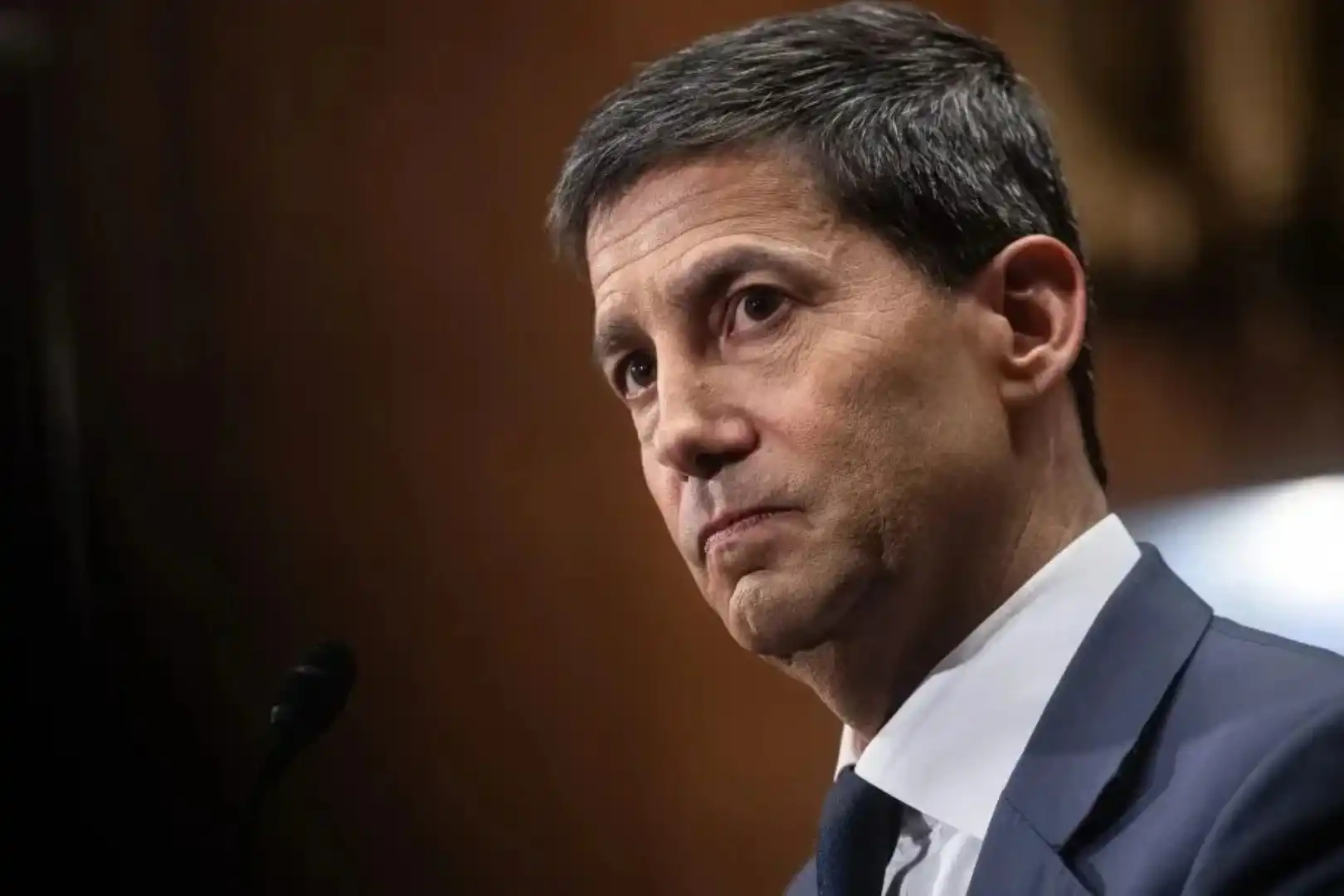
Breaking: Google Gemini Co-Head Poached by OpenAI

marsbitОпубликовано 2026-06-18Обновлено 2026-06-18

Введение

In a significant industry move, Noam Shazeer, a former DeepMind researcher and co-lead of Google's Gemini project, has officially joined OpenAI as the Lead for Architecture Research. Shazeer is a legendary figure in AI, best known as a core author of the seminal 2017 paper "Attention Is All You Need," which introduced the Transformer architecture foundational to modern models like GPT and Gemini. Shazeer announced his move on social media, expressing excitement to join OpenAI's team while also thanking his former colleagues at Google. His career spans over 18 years at Google, where he contributed to key technologies including the Mixture of Experts (MoE) architecture, Mesh TensorFlow, and the LaMDA model. He left Google in 2021 to co-found the conversational AI company Character.AI, which achieved a multi-billion dollar valuation. In 2024, he returned to Google's DeepMind via a major technology licensing deal to help lead the Gemini project. His departure is viewed as a substantial loss for Google and a major talent acquisition for OpenAI, which is intensifying its competition with rivals like Anthropic. At OpenAI, Shazeer will focus on exploring next-generation AI model architectures and the evolution beyond the current Transformer paradigm. The move underscores the fierce competition for top AI research talent as companies race to develop advanced AI systems.

June 19, ZHIDONGSHE News, Today, Google DeepMind researcher and Gemini co-head Noam Shazeer has officially joined OpenAI, where he will serve as the Lead for Architecture Research. He will be responsible for exploring next-generation AI model architectures and driving the further evolution of the Transformer architecture.

Shazeer himself announced his move to OpenAI in a post on the overseas social platform X, stating: "I'm thrilled to join OpenAI and look forward to working with the exceptional team here."

Simultaneously, he expressed gratitude to the Google team: "Leaving was a difficult decision. I'm immensely proud of the Google team and everything we've accomplished together. It has been a privilege to work with you all." A Google spokesperson, in a response to Reuters, stated that the company is grateful for Shazeer's significant contributions over the years and wishes him all the best in his future endeavors.

Noam Shazeer is one of the legendary figures in the AI field. He is one of the core authors of the seminal 2017 paper 'Attention Is All You Need', which first proposed the Transformer architecture, directly establishing the technical foundation for modern large models like the GPT series, Gemini, and Claude.
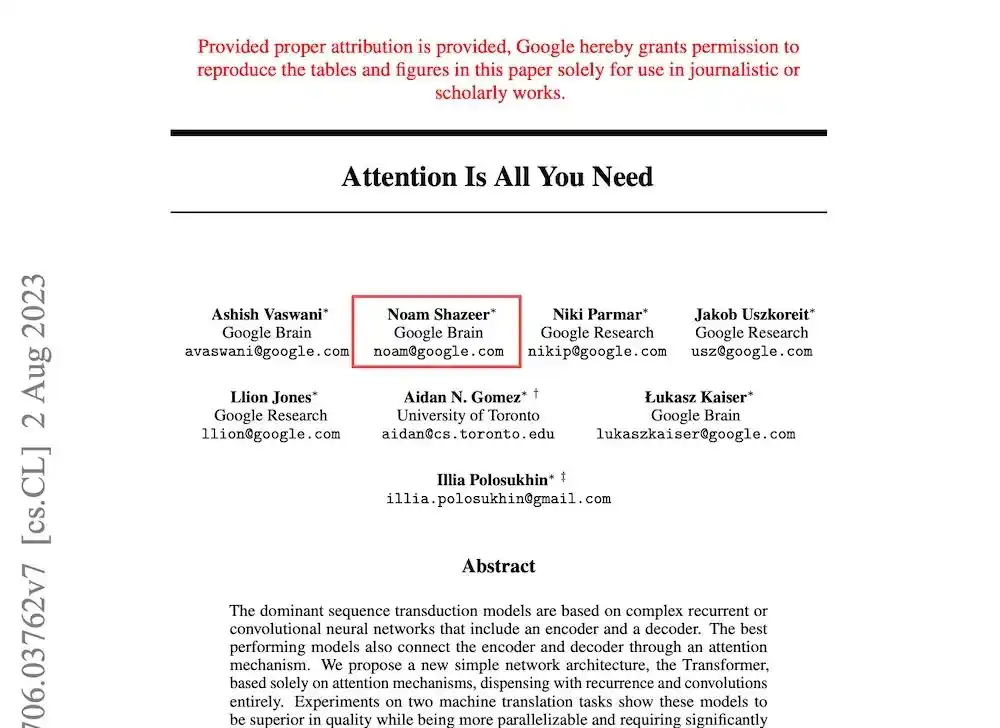
'Attention Is All You Need'

Before joining OpenAI, Shazeer had left Google in 2021 to found Character.AI. In fact, Shazeer is best known as the Co-founder and CEO of Character.AI.

This company bet on the "AI companionship"赛道 even earlier than the ChatGPT explosion, allowing users to engage in long-term conversations with various AI characters. It once became one of the fastest-growing consumer AI applications globally. By 2023, Character.AI's valuation had exceeded $1 billion (approximately RMB 6.765 billion).

In 2024, Google reached a technology licensing agreement with Character.AI valued at approximately $2.7 billion (about RMB 18.266 billion), bringing Noam Shazeer and part of the core team back into DeepMind. Noam Shazeer was appointed as a Gemini co-head, involved in the pre-training R&D of the next-generation Gemini models.

For OpenAI, which is fiercely competing with Anthropic, this is viewed externally as one of the most significant top-tier talent acquisitions in recent years. Following the announcement, OpenAI's senior leadership and several renowned researchers immediately left welcoming messages on X.

OpenAI's Chief Research Officer, Mark Chen, posted: "Very excited to welcome Noam Shazeer to OpenAI as our Lead for Architecture Research. His work on Transformers, MoE, and efficient decoding has shaped modern AI."
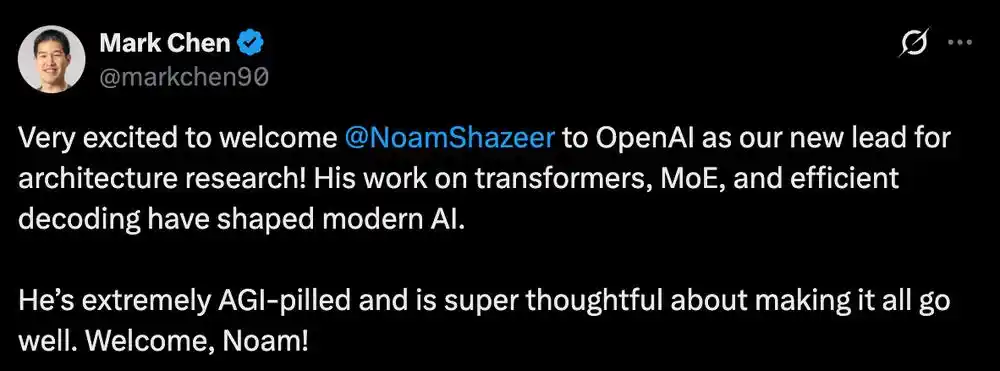
Subsequently, numerous AI researchers also offered congratulations in the comments section, including Google DeepMind researcher and Chinese member of the Gemini Thinking and Coding team, Yuchen Zhuang; OpenAI researcher and core contributor to the o-series reasoning models, Noam Brown; and former Microsoft AI VP, now OpenAI researcher, Sebastien Bubeck, among others.

Google DeepMind Chinese researcher Yuchen Zhuang

OpenAI o-series reasoning model core contributor Noam Brown

OpenAI researcher Sebastien Bubeck

Meanwhile, netizens lamented: "Losing a Transformer author and Gemini co-head is undoubtedly a heavy blow for Google."

01. Renowned Transformer Author, Worked at Google for Nearly 18 Years

From the perspective of the history of generative AI, Noam Shazeer has participated in nearly every key milestone. He joined Google in 2000, serving as a Software Engineer and later Principal Software Engineer, accumulating over 18 years of work experience.
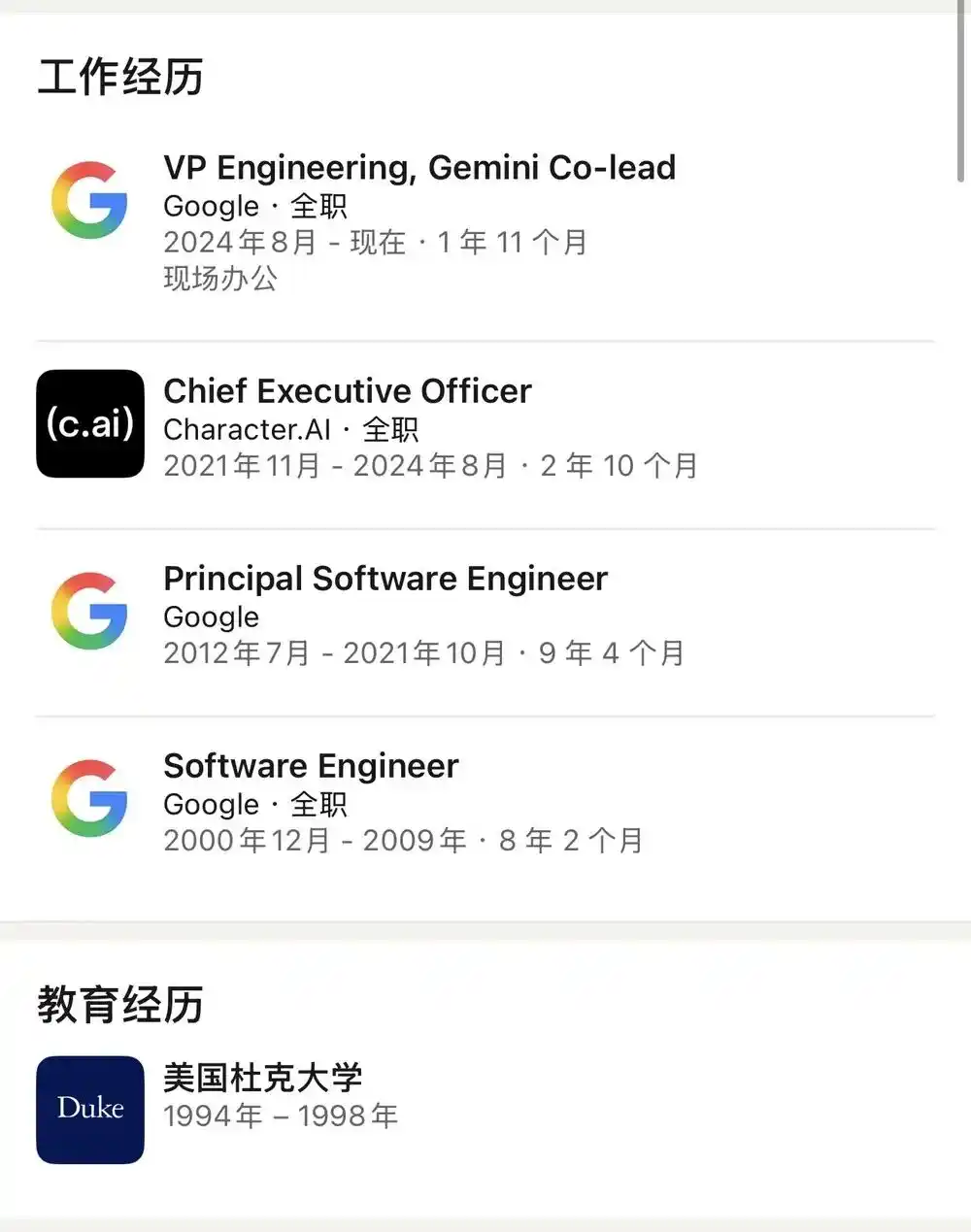
Noam Shazeer's Work Experience and Education Background (Source: LinkedIn)

In 2017, he, along with Ashish Vaswani, Jakob Uszkoreit, and six other Google researchers, co-authored the seminal paper 'Attention Is All You Need', proposing the Transformer architecture. Compared to the then-dominant RNN and LSTM models, the Transformer could process long text more efficiently and possessed greater scalability.

Over the past few years, models such as OpenAI's GPT series, Google's Gemini, Anthropic's Claude, as well as DeepSeek and Llama, are almost all built upon the Transformer architecture at their core. In other words, today's global wave of large models largely rests on the technical foundation laid by this paper.

However, the Transformer is just one of Noam Shazeer's many notable contributions.

During his tenure at Google, he also contributed to the advancement of numerous influential large model technologies. In 2017, as the first author, he proposed the Sparse Gated Mixture of Experts (MoE) architecture, providing crucial technical ideas for later models like GPT-4, Gemini, and DeepSeek-V3; in 2018, he participated in developing Mesh TensorFlow, providing foundational tools for super-large-scale Transformer training; subsequently, he was also involved in key project R&D such as the T5 model and Google's dialogue model LaMDA.

02. Left Google to Start a Company, Then Bought Back for $18.2B

In 2021, Shazeer left Google and co-founded Character.AI with Daniel De Freitas.

At that time, large language models had not yet experienced their "ChatGPT moment," but Character.AI was already pioneering efforts to bring chatbot products to the mass market, rapidly accumulating a large user base.

In 2024, Google reincorporated Shazeer and his core team into the DeepMind ecosystem through a cooperation deal worth approximately $2.7 billion (about RMB 18.266 billion). He subsequently became one of the key leaders of the Gemini project, participating in the pre-training of the next-generation Gemini models.

Shazeer's return coincided with a period of immense pressure on Google's AI business. ChatGPT had exploded in popularity, and Gemini was still in a catch-up phase. After returning to DeepMind, Shazeer participated in model R&D and eventually assumed the role of Gemini co-head, becoming one of the leading figures in Google's AI technology.

Following this, the Gemini 3 series models ranked at the forefront in multiple benchmark tests such as coding and reasoning, becoming a significant asset in Google's competition with OpenAI and Anthropic.

From Google researcher, to entrepreneur, to Gemini co-head, Shazeer has witnessed nearly every major turning point in Google's AI development over the past decade. Therefore, his departure from Google to join OpenAI is regarded by many industry insiders as one of the most significant talent loss events for Google in recent years.

03. OpenAI's Talent Battle Continues to Escalate

Shazeer's joining unfolds against the backdrop of increasingly fierce talent competition in the AI industry.

Over the past year, competition between OpenAI and Anthropic has continued to intensify. The two are not only competing over model capabilities but are also constantly vying for top researchers and core engineers.

The UK's Financial Times reported that OpenAI internally views Shazeer's addition as a major reinforcement. In the future, he will focus on researching new architectural directions beyond the Transformer, and on further enhancing model capabilities.

It's worth noting that the Transformer has dominated the AI field for nearly a decade. With the development of reasoning models, multi-agent systems, and world models, more and more researchers are beginning to ponder: Will the Transformer undergo its next major architectural upgrade?

And Shazeer is precisely one of the most qualified individuals to answer that question.

For Google, this means losing a Transformer author, a Gemini co-head, and one of its most seasoned AI architecture designers. For OpenAI, its laboratory welcomes someone who has personally shaped the modern AI technology stack.

04. Conclusion: A Significant Talent Move in the Transformer Era

As technology gradually approaches the frontier, top researchers themselves have become one of the scarcest resources. The trajectory of Noam Shazeer's career almost connects four key nodes: Transformer, Character.AI, Gemini, and OpenAI.

Now, this Transformer author's departure from Google and joining of OpenAI is not only a talent movement but also reflects the increasingly fierce competitive landscape among current AI giants.

Especially at a time when OpenAI and Anthropic are engaged in a white-hot competition over next-generation models, the enterprise market, and top research talent, and Google is also catching up through Gemini. Losing a Transformer founder and Gemini co-head at this juncture is undoubtedly a significant loss for Google.

For the entire industry, a subsequent question worth following is: When a Transformer author personally researches "architectures beyond the Transformer," where will the next generation of AI models head.

This article is from the WeChat public account "Zhixidongxi" (ID: zhidxcom), author: Jiang Yu, editor: Li Shuiqing

Связанные с этим вопросы

QWho is Noam Shazeer and what is his significance in the AI field?

ANoam Shazeer is a renowned AI researcher, a core author of the seminal 2017 paper 'Attention Is All You Need' which introduced the Transformer architecture, and the former co-lead of Google's Gemini project. His work laid the technical foundation for modern large language models like GPT, Gemini, and Claude.

QWhat new role did Noam Shazeer take at OpenAI and what will he be responsible for?

ANoam Shazeer joined OpenAI as the Lead for Architecture Research. He will be responsible for exploring next-generation AI model architectures and driving the further evolution of the Transformer architecture.

QWhat was the nature of the significant deal between Google and Character.AI involving Shazeer in 2024?

AIn 2024, Google reached a technology licensing deal with Character.AI valued at approximately $2.7 billion (RMB 18.266 billion). This deal brought Noam Shazeer and part of the core team back into Google DeepMind, where he was appointed co-lead of the Gemini project.

QWhy is Shazeer's move to OpenAI considered a significant loss for Google?

AShazeer's departure is considered a significant loss for Google because he is a Transformer author, a former Gemini co-lead, and one of its most senior AI architecture designers. Losing such a key figure in the midst of intense competition with OpenAI and Anthropic is a substantial setback.

QWhat broader industry trend does Shazeer's career move highlight according to the article?

AShazeer's move highlights the increasingly fierce competition for top-tier AI research talent among major tech companies like OpenAI, Google, and Anthropic. As technology pushes the frontier, these researchers themselves become among the most scarce and valuable resources.

Похожее

От Corning до Ciena: 10-кратные возможности на цепочке оптической связи для ИИ

Переход от меди к оптическим технологиям в дата-центрах ИИ создает инвестиционные возможности не только для известных компаний-производителей чипов, но и для ключевых поставщиков по всей цепочке создания стоимости в фотонике. Основной тезис: по мере перехода от 800G к 1.6T и далее к 3.2T, наибольшую выгоду получат компании, поставляющие критически важные компоненты, которые необходимы всем крупным игрокам, а не только самые разрекламированные бренды. **Ключевые компании и их роль:** * **Corning:** Лидер в производстве оптического волокна. Имеет долгосрочные контракты на миллиарды долларов с такими гигантами, как Meta, Amazon, Microsoft и другими. Высокая рентабельность и эффект масштаба. * **Amphenol:** Крупный производитель высокоскоростных соединителей и кабелей (как медных, так и оптических) для стоек ИИ-серверов. Эффективно интегрирует приобретения, демонстрируя высокий рост и прибыльность. * **Credo Technology:** Предоставляет решения для передачи данных (как по меди, так и по оптике), выступая "мостом" между старыми и новыми технологиями. Имеет высокие темпы роста, но также высокие риски из-за концентрации клиентов. * **Ciena:** Лидер в области когерентной оптики, чьи решения позволяют увеличить пропускную способность существующих волокон без их замены. Имеет значительный портфель заказов. * **AXT и VEO Solutions:** Компании "верхнего уровня" цепочки поставок. AXT производит ключевые материалы для оптических лазеров, но сталкивается с рисками экспортного регулирования. VEO Solutions предоставляет тестовое оборудование, необходимое всем участникам рынка ("лопаты для золотой лихорадки"). Также существуют специализированные ETF, такие как FOTO, для диверсифицированного инвестирования в фотонику. **Вывод:** Физические ограничения меди достигнуты. Переход на оптические технологии в дата-центрах ИИ неизбежен, а выгоды будут распределяться среди ключевых игроков по всей цепочке поставок — от материалов и компонентов до систем и тестирования.

marsbit12 мин. назад

От Corning до Ciena: 10-кратные возможности на цепочке оптической связи для ИИ

marsbit12 мин. назад

Collector Crypt с DAU всего 800 человек уже стал одним из самых прибыльных проектов в криптосфере?

**Collector Crypt (CARDS)**: Высокодоходный проект на Solana, оцифровывающий физические коллекционные карточки (в основном Pokémon). Он создает полную финансовую инфраструктуру вокруг этого актива. **Ключевая бизнес-модель**: Основная прибыль генерируется через систему «Гача» (цифровые кейсы). Платформа покупает карты оптом со скидкой 5-15%, пользователи открывают кейсы и могут либо оставить карты, либо немедленно продать их обратно платформе с дисконтом 7-15%. Средний выигрыш пользователя (EV) составляет около +2%, а платформа захватывает около 4.5% прибыли. **Революция рынка**: Проект бросает вызов таким гигантам, как eBay, где комиссии продавца достигают 16-20%. Collector Crypt взимает всего 2% за сделки, предлагая мгновенные расчеты, застрахованное хранение и удобную торговлю, кардинально улучшая пользовательский опыт. **Финансовые показатели**: В мае годовая прибыль оценивалась в ~53 млн долларов, а в июне темпы роста достигли ~109 млн долларов. При текущей полностью разводненной стоимости (FDV) ~550 млн долларов проект демонстрирует исключительную рентабельность. Помимо «Гачи», будущие источники дохода включают комиссии на вторичном рынке, партнерские доли и инструменты для участия в аукционах eBay. **Токеномика**: Общее предложение токенов — 20 млрд, но реальное циркулирующее предложение к 2027 году, вероятно, будет значительно меньше (около 13 млрд в самых агрессивных предположениях), что делает текущую оценку привлекательной. Команда уже начала выкуп токенов на открытом рынке. **Потенциал**: При всего около 800 ежедневных активных пользователей проект генерирует значительную прибыль. Он позиционирует себя не просто как торговая площадка для карточек, а как финансовая инфраструктура для нового класса активов — коллекционных предметов, открывая этот рынок для институциональных инвесторов. Расширение на спортивные карты и другие категории коллекционирования только начинается.

Foresight News25 мин. назад

Collector Crypt с DAU всего 800 человек уже стал одним из самых прибыльных проектов в криптосфере?

Foresight News25 мин. назад

Сенат США нацелен на осень 2026 года для выпуска законопроекта о налогообложении криптовалют на фоне продвижения закона CLARITY Act

Сенат США планирует представить законопроект о налогообложении криптовалют к осени 2026 года, параллельно продвигая закон CLARITY Act. Сенатор Стив Дэйнс сообщил, что республиканцы уже разработали основу законопроекта, схожую с недавними предложениями Палаты представителей. Растущий интерес Конгресса к четким налоговым правилам для цифровых активов стимулировал эту работу, при этом Комитет по финансам Сената ранее уже обсуждал такие вопросы, как стейкинг и майнинг. В то же время законодатели продолжают работу над всеобъемлющим законом CLARITY Act, который определяет правила регулирования криптовалютного рынка и разграничивает полномочия федеральных органов. Этот законопроект был одобрен Комитетом по банковским делам Сената, и его поддержали более 200 компаний отрасли, считающих, что четкое регулирование стимулирует инновации и инвестиции. Оба проекта — налоговый законопроект Сената и CLARITY Act — рассматриваются как взаимодополняющие шаги по созданию комплексной правовой базы для цифровых активов в США. Активность Конгресса указывает на ускорение процесса разработки соответствующего законодательства.

TheNewsCrypto28 мин. назад

Сенат США нацелен на осень 2026 года для выпуска законопроекта о налогообложении криптовалют на фоне продвижения закона CLARITY Act

TheNewsCrypto28 мин. назад

Новый председатель, старый инфляция, сверхожидаемая занятость: как глобальные активы переоцениваются после дебюта Ваша?

Новый председатель ФРС Кевин Уорш представил свой первый монетарный отчёт. Комитет по открытым рынкам оставил целевую ставку без изменений (3.50%—3.75%). Ключевым сигналом стало упрощение заявления ФРС и отказ от «форвардного руководства». Уорш подчеркнул, что Федрезерв должен сосредоточиться на данных, а не на предварительных обещаниях рынку. Хотя Уорш пытался снизить значимость «точечного графика» прогнозов, он показал сдвиг в сторону более жёсткой позиции: медианный прогноз по ставке на конец года вырос, а прогнозы по инфляции PCE на 2026 год были существенно повышены. Это указывает, что вопрос сейчас не о снижении, а о возможном повышении ставок. Уорш сталкивается со сложной дилеммой: инфляция остаётся высокой, а рынок труда неожиданно силён (безработица 4.3%, добавлено 172 тыс. рабочих мест в мае). Сильные экономические данные сейчас воспринимаются рынком негативно, повышая опасения по поводу политики ФРС. Внутри Федрезерва сохраняются разногласия между «голубями» и «ястребами». На рынках активы переоцениваются. Доллар укрепился, доходность гособлигаций остаётся под давлением. Акции технологического и AI-сектора, такие как полупроводники и облачная инфраструктура, столкнулись с давлением на оценку из-за высоких ставок, хотя их фундаментальный спрос остаётся стабильным. Золото и серебро находятся в подвешенном состоянии между высокими ставками и геополитическими рисками. Оборонные акции могут проявлять относительную устойчивость благодаря долгосрочным госзаказам. В будущем внимание рынка будет приковано к ключевым данным: отчёту по занятости за июнь (2 июля) и индексу потребительских цен (середина июля). Следующее заседание FOMC 28-29 июля станет первым по-настоящему значимым решением Уорша и задаст тон. Политическое давление в преддверии промежуточных выборов также будет проверять заявленную независимость ФРС.

marsbit38 мин. назад

Новый председатель, старый инфляция, сверхожидаемая занятость: как глобальные активы переоцениваются после дебюта Ваша?

marsbit38 мин. назад

Стабильные монеты как зарплата: почему они становятся предпочтительным выбором для международных работников?

**Стабильные монеты в зарплатах: почему они становятся предпочтительным выбором для международных работников?** Современная глобальная система оплаты труда скрывает валютные риски. Фрилансеры из Индии, Аргентины, Турции, работающие на компании США, получают доход в долларах, но тратят его в местной валюте. Принудительная конвертация зарплаты при получении ведет к потере покупательной способности, если местная валюта девальвирует. Например, за последний год индийский дизайнер, конвертировавший всю зарплату в рупии, потерял более 10% покупательной способности. В Аргентине потери могли составить 25%. Решение — сохранять часть дохода в долларах или стейблкоинах, привязанных к доллару. Однако обычным людям сложно открыть долларовый счет за рубежом из-за высоких комиссий (в среднем 6,5% за трансфер) и банковских ограничений. Стейблкоины устраняют эти барьеры: переводы почти мгновенны и стоят несколько долларов, а самохранимые кошельки (например, на платформе Altitude) позволяют напрямую владеть долларовыми активами без разрешения банков. Таким образом, работник может хранить сбережения в стейблкоинах, избегая инфляции, конвертируя в местную валюту только для текущих расходов, и даже получать доход через DeFi-протоколы. Хотя риски остаются (потеря приватного ключа, неясное регулирование), тренд набирает силу. Отчеты показывают, что в странах с высокой инфлацией большинство фрилансеров предпочитают зарплату в долларах или стейблкоинах. Это обеспечивает финансовый суверенитет: низкие издержки, контроль над активами и защита от девальвации. Даже МВФ признает потенциал стейблкоинов, предлагая регулировать, а не запрещать их. Стабильные монеты перестраивают зарплатную экосистему, делая деньги более свободными и гибкими.

Foresight News53 мин. назад

Стабильные монеты как зарплата: почему они становятся предпочтительным выбором для международных работников?

Foresight News53 мин. назад

Торговля

Спот
Фьючерсы
活动图片