Earning Bounty with a Forehead Tattoo? pump.fun Keeps Memes Alive Through 'Bounties'

Foresight NewsОпубликовано 2026-06-08Обновлено 2026-06-08

Введение

The article discusses the launch of pump.fun's new bounty platform "Pump.fun GO," which allows meme coin holders to lock funds as rewards for completing specific, often outrageous, marketing tasks to promote their tokens. Examples include a $50,000 bounty to skydive into a World Cup match in a mascot costume and a bounty for getting a forehead tattoo (with a typo) of a token name. The platform has sparked controversy for its perceived copycat nature compared to existing Web3 bounty platforms and its "crazy" tasks, while also granting pump.fun unilateral authority to approve or reject submissions. The move is analyzed as a strategic effort by pump.fun to revive declining platform revenue and meme coin engagement, following a pattern from its earlier, chaotic live-streaming feature. The core logic is that meme coins, lacking fundamentals, rely on manufactured attention and events, with GO formalizing this by outsourcing promotional stunts to bounty hunters, all aimed at boosting token visibility and price.


Written by: angelilu, Foresight News


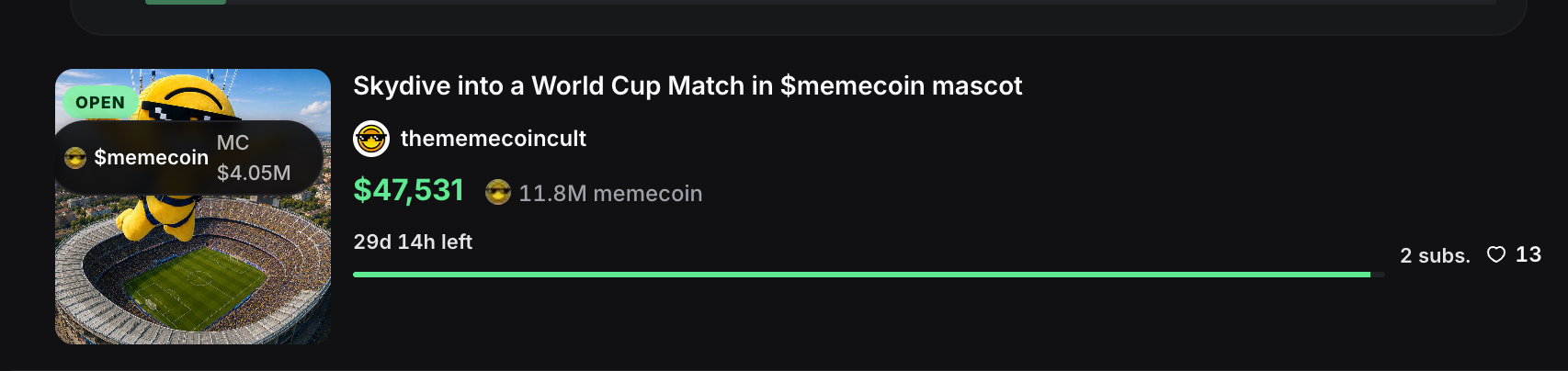
If someone offered you $50,000 to skydive into a World Cup stadium while wearing bizarre costumes to attract the attention of the entire crowd, would you do it?


Most people wouldn't, because in most countries, unauthorized entry into an ongoing sports event constitutes trespassing and can lead to imprisonment. The request is as absurd as a joke, or at least a marketing stunt. But this was precisely the highest-bounty task on the first day of pump.fun's newly launched bounty platform, "Pump.fun GO."


Mechanism of Pump.fun GO


Pump.fun GO attempts to shift the competition for attention around Meme assets from passive dissemination to active output via a task economy. The mechanism of GO isn't complex: an issuer (often a holder of a particular Meme coin) connects a wallet, locks the bounty into an escrow smart contract, and posts a bounty for completing a specific task; a task-taker completes the task, submits proof, and receives the payment after pump.fun's approval. The minimum bounty is $5, with no upper limit. The official launch copy grandly states: "Pay anyone to do anything."


Each task issuer holds a certain Meme coin—the task is a customized marketing campaign for their coin, and the bounty is the promotion fee drawn from their holdings. The coin comes first, the task follows; GO is not a "simple" task platform but an outsourced tool for marketing existing Meme coins.


However, the community's response to this new product is also highly contentious. Firstly, the Web3 bounty platform space already has established professional players like Dework, Gitcoin, and Layer3, leading to accusations that pump.fun is yet another clumsy "copycat." Secondly, the tasks currently listed on the platform often have a "touch of madness," and event adjudication is entirely at the platform's discretion—the terms state: the platform reserves the right to approve, reject, modify, or cancel any task and any submission, with decisions being final and non-appealable.


Why Launch GO Now


But to understand why pump.fun is launching GO now, we must first look at some numbers.


In January 2025, the platform's daily revenue peak exceeded $15 million, with annual cumulative revenue nearing $1 billion. However, by August 2025, daily revenue once fell below $300,000 and has recently hovered around $1 million.


The PUMP token has fallen from its issuance high of $0.006 to today's $0.0016, and SOL has also declined over 55% from its $150 high this year.
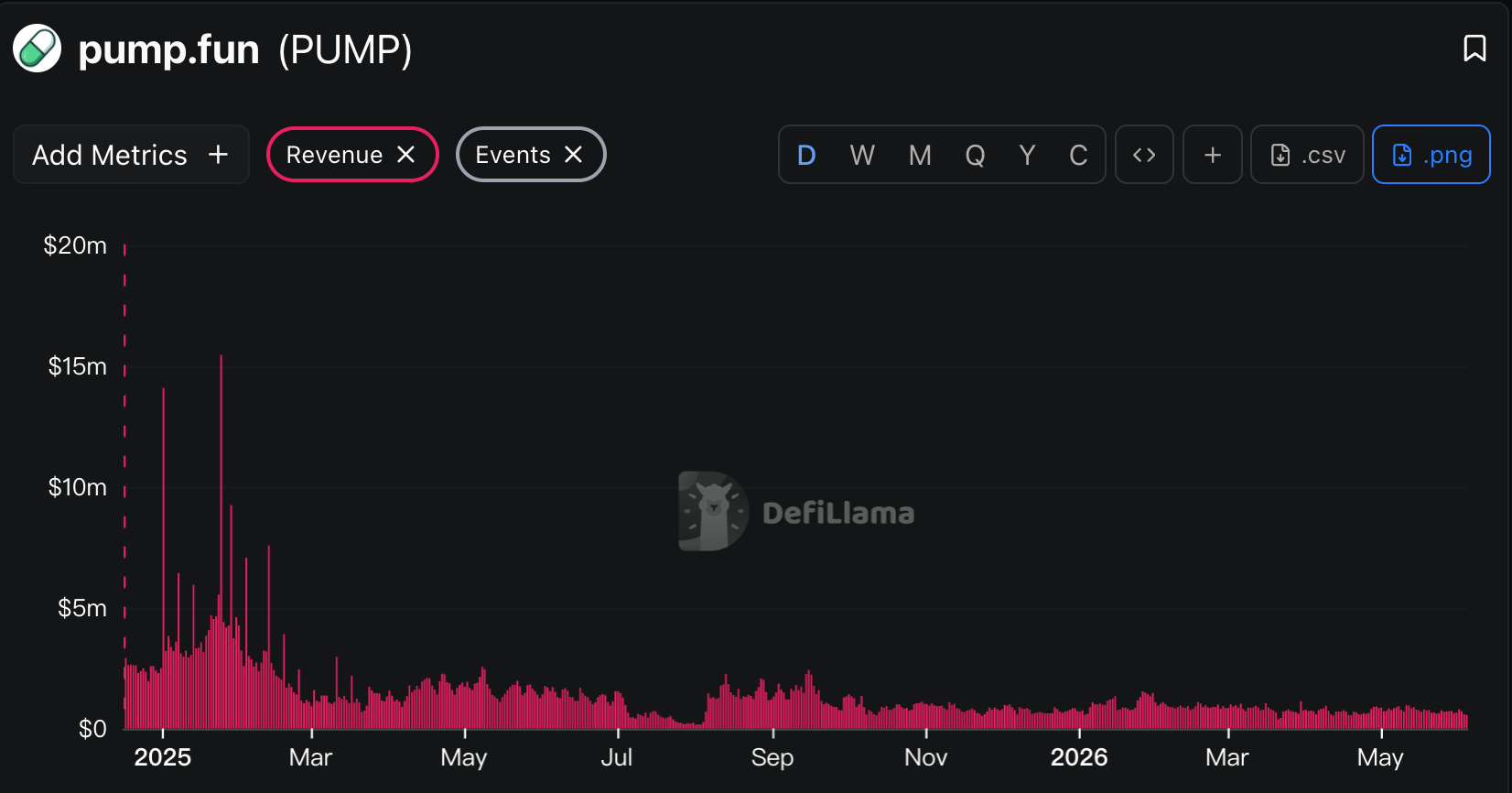


Meanwhile, in April of this year, pump.fun changed its "all revenue used for PUMP buyback and burn" policy to a 50/50 split—half continues for buybacks, and the other half is reserved for product development, hiring, and marketing. GO is the first project funded by this budget allocation.


Hot Content on GO


A closer look at the GO task list reveals that most content is "quite entertaining."


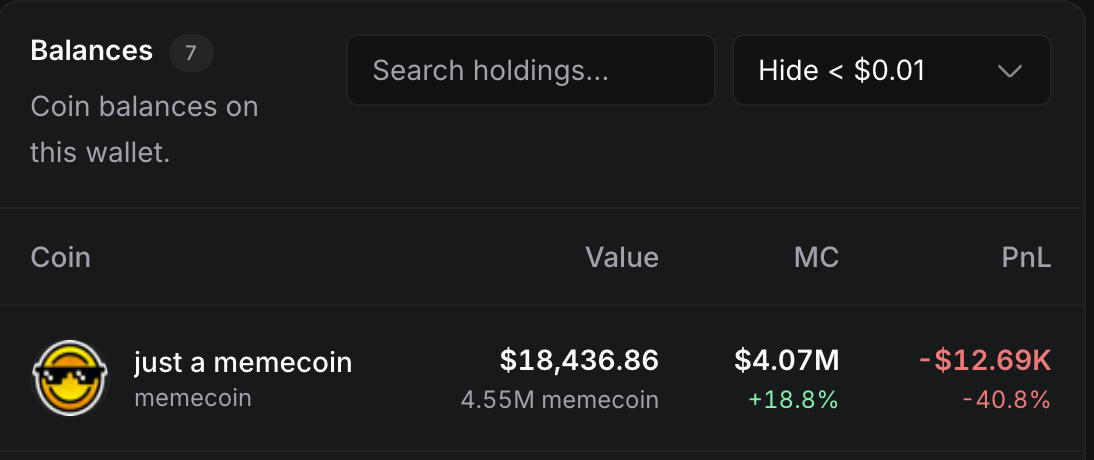
As of writing, the task "requiring the taker to skydive into the World Cup match venue while wearing the memecoin mascot costume throughout" might be "too sensitive" and is no longer displayed on the page. Perhaps related to topping the GO task list that day, the price of the related memecoin rose 18.8% on the day the task was posted, with its market cap exceeding $4 million; its current market cap is $3.73 million.


The bounty issuer "thememecoincult" also posted two other "sensational" tasks: wearing the same mascot costume to break the world record in long-distance running; and spraying the token code and logo on a car while wearing their mascot costume.


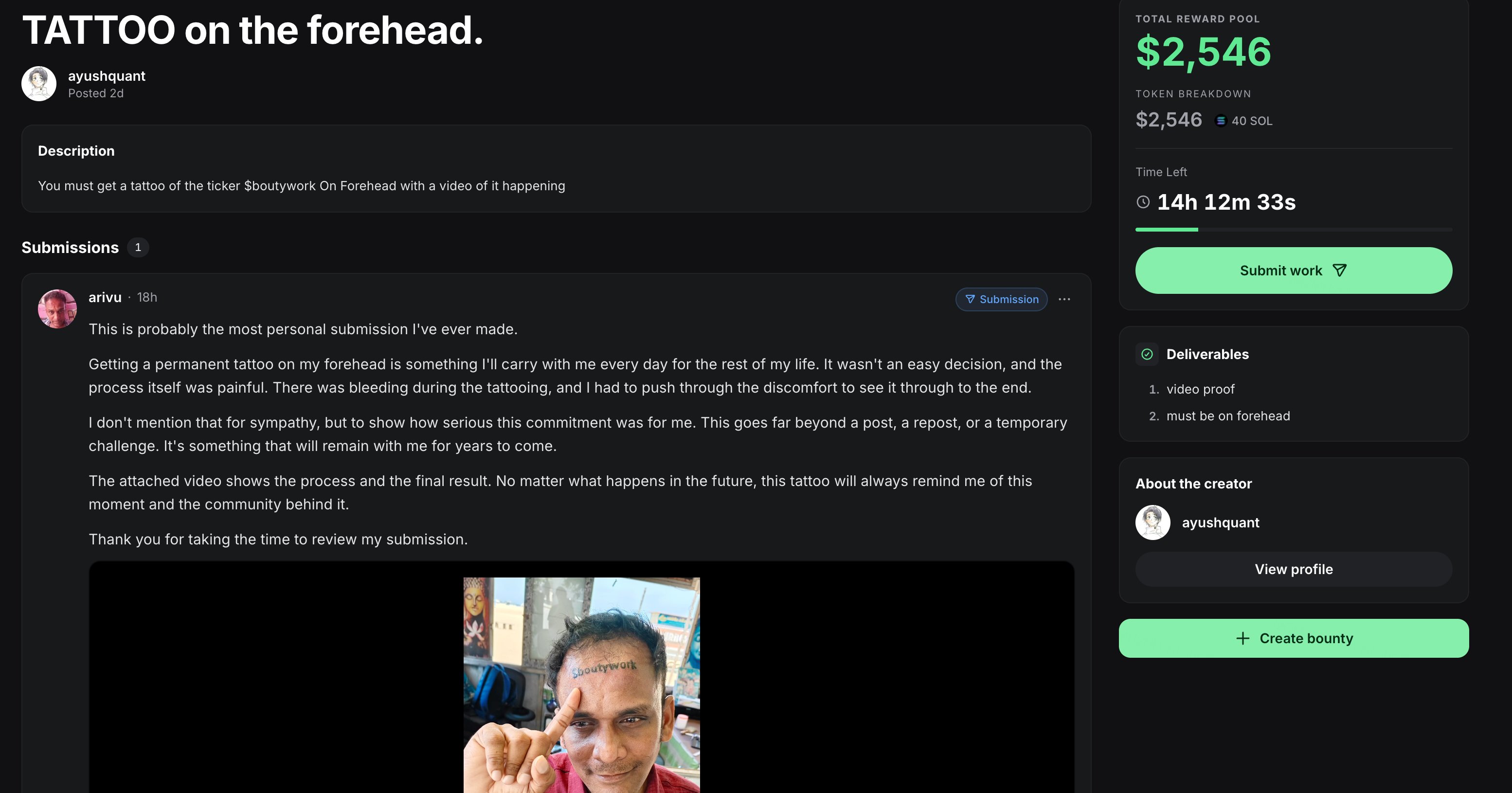
But some are indeed willing to do "crazy" things for the bounty. An Indian man named arivu accepted a bounty task worth 40 SOL (approximately $2,640) to get "$boutywork" tattooed on his forehead as required by the issuer, documenting the entire process in a video. However, there is a missing 'n' compared to the correct spelling "$bountywork." This typo sparked debate over the validity of the reward. Some claimed he wouldn't get a penny, while the issuer side opened a new bounty task for him to correct the tattoo. Ultimately, it's up to the platform to decide whether he receives the bounty after the task concludes.


The story doesn't end there. After the photos and video circulated, the community spontaneously launched a Meme coin featuring the man's photo as its logo. Its current market cap is $220,000, and he reportedly earned $15,000 from transaction fees.


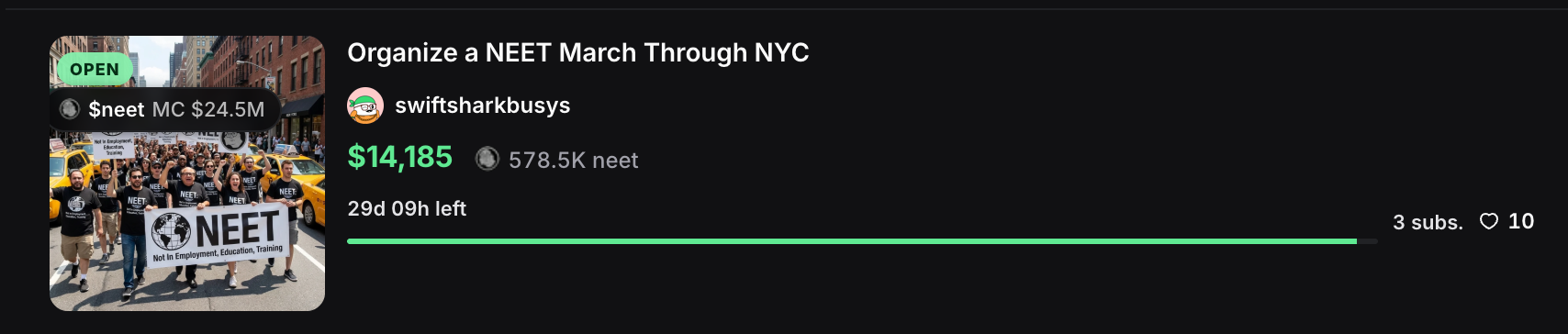
Other popular tasks include: someone offering a $13,728 bounty to "organize a NEET parade through New York City." The logic is to convert on-chain money into offline crowds and signs, film it into a video, bring it back on-chain, and boost the NEET coin price, completing the loop. The related token NEET currently has a market cap of $25.4 million, with 7 submissions.


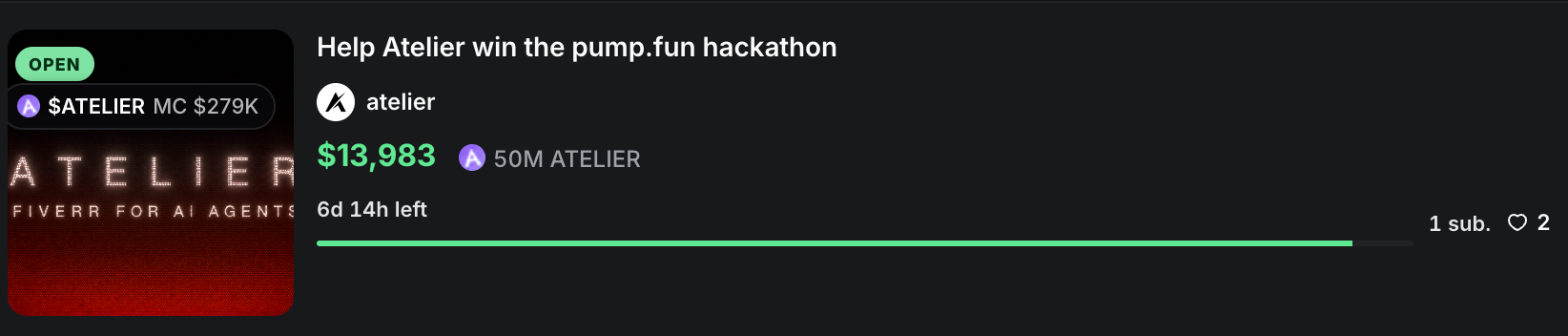
There's also the Atelier project winning pump.fun's hackathon—meaning using pump.fun's own product on its own platform to hire people to win a competition hosted by pump.fun itself.


These tasks lay bare the survival logic of Meme coins. These assets have no fundamentals; their survival depends on sustained attention. Attention comes from events, events need to be created by people, but project teams either can't or dare not do it themselves. GO formalizes this long-implicit chain: lock money into a contract, post a bounty, and wait for someone in the world to claim it.


Here, the employers are a group of token holders, and the takers complete tasks with the goal of making the token more widely known. Ultimately, all proceeds point to the same thing: stop this thing from falling further.


From Livestreams to Bounties


This logic is something pump.fun has already run through once. In 2024, the platform launched a livestreaming feature, which quickly turned into an uncontrolled content experiment: people livestreamed drug use, threatened self-harm, claimed to broadcast from prison, and used Russian roulette to pump prices. The sole purpose was to make the Meme coin rise. In November 2024, livestreaming was urgently taken offline; five months later, it quietly returned with new content moderation policies.


Livestreaming was about getting users to perform voluntarily on stage; GO is about paying people to perform. The underlying logic is exactly the same.


And this time, pump.fun cannot use "too much content to review" as an excuse. Every GO task requires manual platform approval to go live, and every bounty payout requires the platform's nod. What pump.fun learned from "the livestream shutdown" was clearly not "don't do this kind of thing," but rather "continue doing it with a different structure."


Связанные с этим вопросы

QWhat is the core function of the new 'Pump.fun GO' platform, and how is it different from a general task bounty system?

AThe core function of 'Pump.fun GO' is to serve as a marketing outsourcing tool for existing memecoins. It's not a general task platform. Project holders lock a bounty in a smart contract to create tasks that promote their specific memecoin. The goal is to generate attention and events to sustain or increase the coin's value, differing from platforms that fund general projects or development work.

QAccording to the article, what are two main reasons for the community's controversy surrounding 'Pump.fun GO'?

AFirst, it is seen as a copy of established Web3 bounty platforms like Dework, Gitcoin, and Layer3. Second, the tasks often have a 'senseless' or extreme nature (e.g., illegal trespassing), and the platform has unilateral, non-appealable authority to approve, reject, or modify any task and its submissions.

QWhat significant change did pump.fun make to its revenue distribution policy in April, and how is 'GO' related to this change?

AIn April, pump.fun changed its policy from using 100% of revenue to buy back and burn the PUMP token to a 50/50 split. Half continues for buybacks, and the other half is allocated for product development, hiring, and marketing. 'Pump.fun GO' is the first major initiative funded from this new marketing and development budget.

QDescribe the example of the Indian man 'arivu' and the bounty task. What unexpected outcome did his action lead to?

AA man named arivu from India accepted a 40 SOL (~$2,640) bounty to tattoo '$boutywork' (missing an 'n') on his forehead to promote a memecoin. The spelling error sparked debate about the reward's validity. Subsequently, the community autonomously created a new memecoin using his photo as the logo, which reached a $220,000 market cap, earning him $15,000 in fees from that new coin.

QHow does the article connect the logic behind 'Pump.fun GO' to pump.fun's previous 'live streaming' feature, and what key lesson did the platform learn from the streaming experience?

ABoth features share the same underlying logic: generating attention/events to pump memecoin prices. Live streaming relied on users voluntarily performing extreme acts. GO formalizes this by paying people to perform marketing tasks. The lesson learned from the streaming shutdown wasn't to stop such activities, but to 'change the structure and continue.' GO introduces platform pre-approval for tasks and payouts to maintain more control.

Похожее

После трёх кварталов падения: получится ли у крипторынка стабилизироваться в третьем квартале?

Криптовалютный рынок пережил худший квартал с 2022 года, общая капитализация упала на 12,6% до $2,1 трлн, а дневные объемы торгов снизились на 20,9%. Впервые за три года сократилась и капитализация стейблкоинов. Основные факторы спада — отток средств из биткоин-ETF, распродажа биткоинов корпоративным казначейством Strategy и ужесточение монетарной политики ФРС. Второй квартал завершился чистым оттоком $46,7 млрд из ETF, при этом в июне отток достиг рекордных $45 млрд. Ключевым событием третьего квартала станет заседание ФРС 28–29 июля. Мягкий сигнал может поддержать биткоин в диапазоне $68 000–84 000 и вернуть приток в ETF, тогда как жесткая риторика способна сместить торговый диапазон к $50 000–56 000. Законодательная неопределенность также давит на рынок: прогресс по закону CLARITY Act, определяющему регуляторные границы, замедлился, и вероятность его принятия в 2026 году упала до 40–45%. Несмотря на общий спад, два сегмента показали рост: объемы на рынках предсказаний выросли на 48,7%, а торговля токенизированными коллекционными предметами увеличилась на 143%. Сектор RWA продолжает стабильно развиваться, достигнув $28,1 млрд. Рынок, вероятно, миновал фазу острой распродажи, но для устойчивого восстановления необходимы ясность от ФРС и регуляторный прогресс.

marsbitВчера 08:38

После трёх кварталов падения: получится ли у крипторынка стабилизироваться в третьем квартале?

marsbitВчера 08:38

BIT Торговые часы: BTC по-прежнему под давлением 200 EMA на недельном графике, после отскока возможен перезапуск нисходящего движения; секторы хранения данных и полупроводников, выросшие ночью, начали падение в вечерней сессии

**Краткий обзор рынка: BTC под давлением, коррекция на рынке акций, внимание к данным и событиям** Рынок криптовалют демонстрирует осторожное восстановление. Bitcoin торгуется около $66 000, сталкиваясь со значительным сопротивлением в районе $68 000, где сосредоточены объемные "застрявшие" позиции. Ключевые технические уровни — 200-недельная скользящая средняя (~$63 333) и 200-недельная EMA (~$68 328). Аналитики отмечают низкую ликвидность, характерную для летнего периода. На фондовом рынке после сильного роста во вторник наблюдается коррекция. Фьючерсы на основные индексы США снижаются. Акции полупроводниковой и памяти, которые резко выросли накануне, падают в ночных торгах. Исключением стал SMCI, который вырос более чем на 15% после оптимистичного прогноза. На общий настрой негативно влияют рост цен на нефть (более $91 за баррель Brent) и доходности государственных облигаций США (10-летние — около 4,64%), что возрождает инфляционные опасения. Азиатские рынки показали нестабильную динамику. Индекс KOSPI в Корее вырос на 0,74%, а японский Nikkei 225 снизился на 0,18%. Основной риск для региона — ослабление японской иены до минимумов с 1986 года, что повышает вероятность вмешательства властей. **Ключевые события для наблюдения:** * **24 июля:** Финансовые отчеты Alphabet (Google), Tesla, IBM. Событие AMD, посвященное ИИ. * **25 июля:** Решение по процентной ставке ЕЦБ и пресс-конференция Кристин Лагард. Финансовые отчеты Intel, American Airlines, Honeywell и других. Данные по числу первичных заявок на пособие по безработице в США.

marsbitВчера 08:30

BIT Торговые часы: BTC по-прежнему под давлением 200 EMA на недельном графике, после отскока возможен перезапуск нисходящего движения; секторы хранения данных и полупроводников, выросшие ночью, начали падение в вечерней сессии

marsbitВчера 08:30

Бывший глава CFTC и президент Circle Тарберт: призывает к долгосрочной стратегии, но сам выводит $30 млн

Бывший председатель CFTC и президент Circle Хит Тарберт, публично пропагандируя долгосрочное видение компании для инвесторов на фоне падения акций на 70% с пиковых значений, сам активно распродавал свои акции CRCL. С момента IPO Circle он по плану 10b5-1 продал более 360 тысяч акций, выручив около 30 миллионов долларов, и при этом ни разу не докупал акции на открытом рынке. Эта разница между его публичными заявлениями и личными действиями вызвала критику. Карьера Тарберта демонстрирует классическое использование «вращающейся двери» между регулирующими органами и частным сектором. Уйдя с поста председателя CFTC в 2021 году, через 27 дней он занял должность главного юрисконсульта в маркет-мейкере Citadel Securities, который в тот момент находился под пристальным вниманием из-за скандала с акциями GameStop. Позже, уже работая в Citadel, Тарберт выступал за расширение полномочий CFTC на крипторынок, в то время как его работодатель планировал выход на этот рынок. В 2023 году Тарберт присоединился к Circle, где его опыт и связи сыграли ключевую роль в успешном проведении IPO компании в 2025 году. Однако его последующие массовые продажи акций, совпавшие с падением котировок и его же призывами к долгосрочным инвестициям, ставят под сомнение искренность его уверенности в будущем компании. Критики видят в его карьере образец превращения регуляторного опыта и политических связей в личную выгоду, в то время как риски несут обычные инвесторы, верящие его нарративам.

marsbitВчера 08:07

Бывший глава CFTC и президент Circle Тарберт: призывает к долгосрочной стратегии, но сам выводит $30 млн

marsbitВчера 08:07

Gate Research: Взлет «уолл-стритизации» криптофинансовых продуктов — это конкуренция или интеграция?

**Аналитический обзор Gate Research Institute: Волна "уолл-стритизации" криптофинансовых продуктов — конкуренция или интеграция?** Создание биткоина в 2009 году было ответом на финансовый кризис и стремлением построить децентрализованную систему без доверенных посредников. Однако к 2026 году значительная часть биткоинов (около 7,14%) хранится через ETF таких гигантов, как BlackRock. Это символизирует глубокую интеграцию традиционных финансов (TradFi) и крипторынка. С появлением биткоин-ETF, фьючерсов, RWA (токенизированных реальных активов) и государственных облигаций на блокчейне, традиционные институты получают всё больше влияния на выпуск, ценообразование, кастодию и дистрибуцию криптоактивов. Однако это не одностороннее поглощение, а взаимодополняющая конвергенция. Криптосфера приносит TradFi глобальную 24/7 ликвидность и программируемость, а TradFi предоставляет криптосфере регулируемые каналы, институциональное доверие и массовый доступ. Яркий пример — две противоположные, но ведущие к одной цели траектории: * **Путь А:** Криптобиржи, такие как Gate, начинают с токенизированных акций и CFD, а затем напрямую подключаются к инфраструктуре традиционных брокеров, предлагая реальную торговлю акциями США, Гонконга и Кореи за стейблкоины. * **Путь Б:** Традиционные брокеры, такие как Robinhood, интегрируют криптоактивы, а затем создают собственные Layer 2 для токенизации своих акций, стремясь к круглосуточной торговле. Обе стратегии нацелены на создание **универсального финансового аккаунта будущего** — единой точки доступа к акциям, криптовалютам, ETF, токенизированным облигациям и другим активам. Ключевой конкурентной борьбой становится не между CEX и брокерами, а между этими "супераккаунтами". Параллельно, слой RWA и токенизированных гособлигаций растёт даже на медвежьем рынке, становясь "прослойкой" для объединения капиталов. Хотя этот рынок (около $150 млрд токенизированных казначейских облигаций) ещё мал по сравнению с традиционным ($30 трлн), он демонстрирует устойчивый структурный тренд, привлекающий крупнейшие финансовые институты (JPMorgan, DTCC и др.). **Вывод:** "Уолл-стритизация" — это не поражение идеалов децентрализации, а формирование новой гибридной модели. Децентрализованные протоколы продолжают работать на базовом уровне, в то время как на уровне приложений и пользовательского опыта формируется более эффективный, глобальный и свободный объединённый рынок капитала, где активы TradFi и DeFi торгуются бок о бок в одном интерфейсе. Уолл-стрит не завоевала криптосферу, а криптосфера не обошла Уолл-стрит — они совместно строят новые финансовые рельсы.

marsbitВчера 08:04

Gate Research: Взлет «уолл-стритизации» криптофинансовых продуктов — это конкуренция или интеграция?

marsbitВчера 08:04

S&P Dow Jones и Pantera выпускают криптоиндекс, биткоин оставлен за бортом из-за «отсутствия прибыли»

Стандард энд Пурс (S&P Dow Jones Indices) совместно с Pantera Capital запускает индекс S&P Pantera Digital Asset Index. Новый индекс включает 18 токенов, но исключает биткоин, XRP и мем-токены. Критерием отбора послужила «финансовая жизнеспособность», по аналогии с S&P 500: протокол должен демонстрировать положительный доход в течение нескольких кварталов и распределять стоимость среди держателей токенов. Это первое применение фундаментального подхода к оценке криптоактивов со стороны крупнейшего в мире провайдера индексов. В первую пятерку активов вошли Ethereum (ETH), BNB, Solana (SOL), TRON (TRX) и Hyperliquid (HYPE). Pantera отмечает, что совокупный годовой доход всех протоколов индекса превышает $30 млрд. Биткоин был исключен по трем причинам: он рассматривается как монетарный актив, доступный через отдельные ETF; он не генерирует доход протокола; а смешивание его в индексе с доходными активами затрудняет фундаментальный анализ для институциональных инвесторов. Пока индекс является эталонным, но Pantera ведет переговоры о создании на его основе ETF и других инвестиционных продуктов. Компания также отмечает значительный разрыв на рынке: многие институциональные инвесторы готовы к аллокации в криптоактивы, но им не хватает структурированных продуктов, фокусирующихся на активах с реальной экономической деятельностью.

marsbitВчера 08:02

S&P Dow Jones и Pantera выпускают криптоиндекс, биткоин оставлен за бортом из-за «отсутствия прибыли»

marsbitВчера 08:02

Торговля

Спот
活动图片




