Next 1000x Crypto News Live Today: Early Alpha on the Latest Crypto Gems (November 5)

bitcoinistОпубликовано 2025-11-05Обновлено 2025-11-05

Введение

Stay Ahead with the Latest Insights of Today's Next 1000x Crypto Check out our Live Next 1000x Crypto Updates for...

Trusted Editorial content, reviewed by leading industry experts and seasoned editors. Ad Disclosure

Stay Ahead with the Latest Insights of Today’s Next 1000x Crypto

Check out our Live Next 1000x Crypto Updates for November 5, 2025!

Crypto is a multi-trillion-dollar industry, with 10x, 100x, or even 1000x opportunities lying there, just waiting to be found.

Take Dogecoin 36,000% increase in 12 years, or XRPs 42,000% performance in the same period. Closer at hand, we have SPX6900 with a mind-boggling 45,149,000% explosive rally in only two years.

Imagine if you’d bought $SPX when it was $0.004 just 11 months ago. That’s a 27,000%+ ROI that’s unique to the crypto industry.

Top Picks for Next 1000x Crypto Today

If you’re looking for the earliest alpha on the next 1000x crypto and ROI crushers, you’re in the right place.

We update this page regularly throughout the day with the latest insider alpha on cryptos with the most explosive potential. Keep refreshing to stay ahead of the pack!

Disclaimer: No crypto investment comes without risk. Our content is for informational purposes, not financial advice. We may earn affiliate commissions at no extra cost to you.


Bitcoin Slips Below $100K, Driving Traders to Bitcoin Hyper’s $26M Presale

November 5, 2025 • 11:00 UTC

After briefly sliding to $98K on Tuesday, Bitcoin is fighting to hold its ground above $100K.
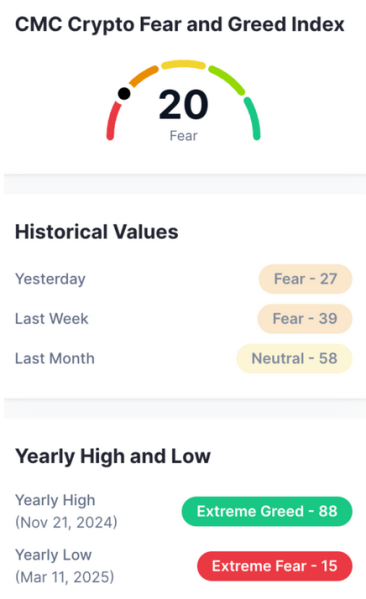
Crypto Fear and Greed Index, source: CoinMarketCap

Macroeconomic headwinds and a stronger US dollar have dampened confidence in Bitcoin’s short-term trajectory, driving investors to US-based bonds and presale tokens like Bitcoin Hyper.

Bitcoin Hyper is building a Layer-2 solution that could potentially step up Bitcoin for the increasingly competitive Web3 market, by bringing more speed and programmability to the network.

As bears dominate the market, investors are seeking a haven in Bitcoin Hyper’s viral token presale that just broke $26M.

Could $HYPER be the next 1000X crypto?

Read our Bitcoin Hyper deep dive to find out.


Lummis Pushes ‘Biggest’ Crypto Law Ever Setting the Stage for the Next 1000x Crypto $PEPENODE

November 5, 2025 • 10:00 UTC

Senator Cynthia Lummis is calling her Clarity Act the biggest crypto law in U.S. history. She’s on a mission to ditch the regulatory chaos and give crypto a clear, official rulebook.

Lummis is in a total sprint, trying to rope in bipartisan support to get this bill through the Banking Committee before the year ends. Why?

The bill essentially tells the SEC and CFTC exactly who regulates what, offering market structure and stability to major firms. It also helps out local community banks by legally allowing them to jump into the digital asset game with custody services, which lets them compete with the big crypto players.

The hope is that the new clarity will open the floodgates for investment. In fact, many in the community are already looking ahead. While Washington focuses on regulation, the market is buzzing about projects like PEPENODE ($PEPENODE). It’s blending meme culture with a cool mine-to-earn gaming ecosystem.

PEPENODE ($PEPENODE) is exactly the early-stage, utility-focused innovation that could thrive if Lummis’s clarity finally arrives, potentially becoming one of the next 1000x crypto success stories.

See why our experts think $PEPENODE could reach $0.0023 by the end of 2025.


$10B Profit in 2025 Pushes Tether to Top, Sets Up $BEST As Next 1000x Crypto

November 5, 2025 • 10:00 UTC

Tether’s Q3 attestation report is some impressive stuff. Among the highlights:

  • $10B net profit in 2025 YTD
  • $17B in new $USDT issued
  • Tether holds $135B in US Treasuries, surpassing South Korea’s $132B to rank 17th among foreign countries.

It’s all part of an increasingly dominant picture for Tether and $USDT, which currently boasts a $183B market cap.

Stablecoins enjoy growing adoption as cross-border remittance systems and tools for banks to settle payments at any time, anywhere. And as stablecoin use grows, expect ordinary investors to follow suit.

But to use stablecoins smoothly, you need a crypto wallet. Best Wallet offers a fully non-custodial crypto wallet with MPC and biometric security. Use up to five individual wallets within the app, and access the best crypto presales before they launch.

The Best Wallet Token ($BEST) powers the Best Wallet ecosystem – and with Tether’s $USDT pushing crypto adoption, $BEST could be the next 1000x crypto.

Learn what $BEST is and how it works with our review.


Authored by Ben Wallis, Bitcoinist — https://bitcoinist.com/next-1000x-crypto-live-news-today-november-5-2025

Editorial Process for bitcoinist is centered on delivering thoroughly researched, accurate, and unbiased content. We uphold strict sourcing standards, and each page undergoes diligent review by our team of top technology experts and seasoned editors. This process ensures the integrity, relevance, and value of our content for our readers.

Ben is a freelance writer specializing in crypto developments (mainly altcoins) and the intricate ways global economics shape the digital asset space. His B.Ed. in Education provides a unique foundation for his writing, enabling him to distill complex crypto concepts and market shifts into clear, digestible insights. This skill is key to helping readers adapt and apply their understanding to the ever-evolving world of crypto investment. Passionate about making crypto accessible, Ben crafts content designed to educate a broad audience, from current market events to the essential foundational knowledge that underpins them. His goal is to empower readers through understanding. When he’s not immersed in crypto analysis and breaking down complex topics, Ben is an avid Pokémon fan and enjoys all things Disney.

Похожее

The Paradox of Automation: The Stronger the AI, the Busier Humans Become

The Paradox of Automation: The more powerful AI becomes, the more work humans have to do. This article, based on observations from AI-heavy company Every, argues that while AI agents automate tasks like coding, writing, and customer service, they don't eliminate human jobs. Instead, they transform work and create *more* demand for human expertise. AI commoditizes "yesterday's human capabilities" by cheaply generating code, text, and images from past data. This leads to an abundance of similar, generic outputs. Consequently, what becomes scarce and valuable is human judgment in the present moment: knowing *what* is worth doing, *why*, and *how* to do it well. The article identifies two collaboration models: "Agent employees" for delegated tasks and "human-AI collaboration" within tools like Claude Code for complex work. In both cases, humans are essential to set direction, judge quality, and maintain systems. As AI makes execution cheap, human roles shift from executors to designers, reviewers, and meaning-makers. The author addresses "benchmark anxiety" by explaining that AI excels within specific, human-defined problem "frames." As AI masters one frame (e.g., code rewriting), new, more complex frames emerge (e.g., deciding *when* to rewrite). This creates an ongoing cycle where AI chases the frames, but humans remain the "framers." Even with advanced AGI, this dynamic may persist as long as AI lacks true human-like agency and self-directed purpose. The core paradox holds: automation amplifies the need for the very human judgment it seems to replace.

marsbit17 мин. назад

The Paradox of Automation: The Stronger the AI, the Busier Humans Become

marsbit17 мин. назад

a16z: 7 Charts to Understand How Tokenization is Changing the Nature of Assets

"a16z: 7 Charts on How Tokenization is Changing the Nature of Assets" Tokenized Assets (or Real-World Assets - RWA) are transforming asset forms, liquidity, and financial system construction. The market recently surpassed $30 billion, stabilizing around $34 billion (excluding stablecoins), representing a tenfold increase in less than two years, driven by clearer regulations, mature institutional infrastructure, and increased financial institution adoption. The primary driver of recent growth is tokenized U.S. Treasury bonds. These offer investors efficient, flexible digital access to yield-bearing assets and improve institutional operations like settlement and collateral management. Other asset classes show varied growth: asset-backed credit leads, followed by niche financial assets (e.g., reinsurance, mining notes), while venture capital took longer to scale. Market segmentation shows high concentration. In commodities, tokenized gold dominates (~$5 billion), as its standardized, storable nature fits tokenization well. Bonds are the largest category ($15.2B), but only ~5% are used in DeFi protocols. Conversely, smaller niches like reinsurance tokens see high (~84%) on-chain utilization, highlighting a core industry divide: most current tokenized assets are merely digitized records for easier holding/transfer, lacking the "composability" (free combination/interaction) that is key to blockchain-native finance. The ecosystem is distributed across multiple blockchains, with Ethereum hosting over half the value ($15.7B), followed by BNB Chain, Solana, and others. Future market size predictions vary widely (e.g., $2-$30 trillion by 2030+), but all indicate massive potential from the current small base. Tokenized assets currently represent minuscule fractions of their global counterparts (e.g., 0.01% of global bonds). The current phase focuses on digitizing straightforward assets. The next challenge is to bring more complex financial components on-chain and deeply integrate tokenized assets into composable, internet-native financial infrastructure.

链捕手58 мин. назад

a16z: 7 Charts to Understand How Tokenization is Changing the Nature of Assets

链捕手58 мин. назад

a16z: How Tokenization is Transforming the Nature of Assets in 7 Charts

"Tokenized Assets: How Tokenization Changes the Nature of Assets" by a16z Crypto The market for tokenized assets, excluding stablecoins, has grown from under $3 billion two years ago to over $340 billion today. US Treasury bonds are the primary growth driver, allowing investors to hold yield-bearing assets digitally and enabling more efficient settlement. Other key sectors include private credit (growing fastest), commodities (dominated by gold), and niche financial assets. However, the market remains concentrated in tokenized US Treasuries and gold. A critical insight is that most tokenized assets currently lack "composability." While the total market is large, only a small fraction is actively used within DeFi protocols. For instance, only about 5% of tokenized bonds and a low percentage of tokenized gold are utilized on-chain. In contrast, assets like reinsurance and private credit tokens show much higher on-chain usage rates (84% and 33%, respectively). This highlights a divide: many tokenized assets are merely digital records on a blockchain without enabling new, programmable financial applications. The Pantera Capital Token Native Index indicates over 70% of tokenized assets have minimal on-chain native functionality. Ethereum remains the dominant blockchain for tokenized assets (over $150B), but the ecosystem is diversifying across chains like BNB Chain, Solana, and Stellar, based on factors like cost and compliance. Major institutions forecast massive future growth, with predictions for the tokenized asset market ranging from $2 trillion to over $30 trillion by the early 2030s. However, compared to the global financial system (e.g., ~$140T bonds, multi-trillion dollar gold market), tokenized assets currently represent a tiny fraction (0.01% or less). The conclusion is that while tokenization has begun by digitizing and streamlining settlement for simpler assets, the next phase involves bringing more complex financial instruments on-chain and deeply integrating them into composable, internet-native financial infrastructure.

Odaily星球日报1 ч. назад

a16z: How Tokenization is Transforming the Nature of Assets in 7 Charts

Odaily星球日报1 ч. назад

The Revived Codex, Carrying OpenAI's Hopes for IPO

This article analyzes the intense recent development of OpenAI's Codex, positioning it as a crucial component for OpenAI's impending IPO. Over the past two months, Codex has seen a rapid series of major updates focused on integrating into real enterprise workflows. Key new features include enhanced context capture (Appshots, file previews, built-in browser), long-running task execution ("Goal Mode"), remote operation (phone control, lock-screen access), and enterprise management tools (plugin sharing, access tokens, automated risk review). These updates aim to make Codex a comprehensive AI workbench that can "see the scene, push tasks, and manage risks." The author argues that while ChatGPT proves OpenAI's massive user base and API provides foundational revenue, Codex represents OpenAI's clearest path to demonstrating tangible, high-value commercial viability. It targets developers and engineering teams—a segment already accustomed to paying for efficiency gains in costly software development cycles. This is critical because, despite higher overall revenue, OpenAI's adjusted operating margins remain deeply negative, highlighting the challenge of outrunning immense compute costs. The pressure is amplified by competitor Anthropic's success with Claude Code, which has shown that a focused approach on high-value enterprise and developer workflows can lead to a path toward profitability. Codex's aggressive evolution is thus seen as OpenAI's strategic move to capture a similar enterprise-ready, revenue-generating narrative essential for its market debut. In essence, "ChatGPT proved OpenAI has users. Codex needs to prove OpenAI is a business that can make money."

marsbit2 ч. назад

The Revived Codex, Carrying OpenAI's Hopes for IPO

marsbit2 ч. назад

a16z: 7 Charts to Understand How Tokenization Is Changing the Nature of Assets

a16z: 7 Charts on How Tokenization is Transforming the Nature of Assets Tokenized Assets, often referred to as "real-world assets" (RWA), are altering the form, flow, and structure of the financial system. The market recently surpassed $30 billion (excluding stablecoins), driven largely by tokenized U.S. Treasuries. These offer investors digital, yield-bearing assets with efficient settlement. Growth varies significantly by asset class. Asset-backed credit leads in speed, followed by niche financial assets, while venture capital and active strategies took longer to scale. U.S. Treasuries and commodities dominate, holding about two-thirds of the current market share. Within commodities, gold tokenization dominates entirely due to its standardization and historical appeal in crypto. The ecosystem is spread across multiple blockchains. Ethereum holds over half the market, with others like BNB Chain, Solana, and Stellar holding significant shares. However, a key insight is that most tokenized assets currently lack "composability." While the total market is large, only a small fraction (e.g., 5% of tokenized bonds) is used within DeFi protocols. Many tokens are simply digital records of off-chain assets, not natively programmable financial building blocks. In contrast, smaller categories like reinsurance tokens see very high on-chain usage. Looking ahead, forecasts for the tokenized asset market by 2030 range from $2 trillion to over $30 trillion, representing immense potential growth from today's ~$340 billion base. Yet, relative to global markets (e.g., $140T+ in bonds), tokenization's penetration remains minuscule (<0.02%). The current phase focuses on digitizing straightforward assets for efficiency. The next major challenge is bringing more complex financial instruments on-chain and integrating tokenized assets into truly composable, internet-native financial infrastructure.

marsbit2 ч. назад

a16z: 7 Charts to Understand How Tokenization Is Changing the Nature of Assets

marsbit2 ч. назад

Торговля

Спот
Фьючерсы
活动图片