Popular Analyst PlanB Expects Bitcoin Price To Double In 2025 As Bear Market Is Not Here

bitcoinistОпубликовано 2025-03-22Обновлено 2025-03-22

Введение

Recent Bitcoin price analyses from analysts have been mostly centred on the notion of whether the leading cryptocurrency has already...

Trusted Editorial content, reviewed by leading industry experts and seasoned editors. Ad Disclosure

Recent Bitcoin price analyses from analysts have been mostly centred on the notion of whether the leading cryptocurrency has already reached its peak this cycle. Bearish sentiment is already creeping in among investors, and the outlook is now whether BTC and the entire crypto industry have transitioned into a bear market.

Interestingly, crypto analyst PlanB, widely followed for his stock-to-flow model and long-standing BTC forecasts, has pushed back against growing speculation that the market is transitioning into a bearish phase. 

PlanB Dismisses Bear Market Calls, Says Bear Market Has Not Arrived

Taking to social media platform X, crypto analyst PlanB laid out a compelling argument for why he believes Bitcoin is still in the middle of a sustainable uptrend, one that could see the price doubling once again by 2025. His interesting argument comes alongside other new outlooks from analysts, who are now noting key bullish signals for Bitcoin.

PlanB’s latest analysis is based on Bitcoin’s 200-week arithmetic and geometric moving averages, which are two long-term trend indicators analysts use to distinguish between bull and bear market phases. According to him, these two averages have been close together for over a year. The close movement of these moving averages goes against a downward trend but rather a steady uptrend with reduced volatility. 

He explained that a real bear market usually comes after a true bull run, which is characterized by a sharp divergence between the two averages. Since that divergence has yet to happen in the current cycle, PlanB argues that the market has not experienced a real bull phase, let alone entered a bear phase.

Looking Ahead: Bitcoin Price To Double In 2025

Expanding on this theme, PlanB pointed to Bitcoin’s performance over the past two years, noting a steady and predictable doubling of the price. Bitcoin rose from around $20,000 in 2022 to approximately $40,000 in 2023 and first moved to the $80,000 range in early 2024. If this pattern holds, the analyst predicted that Bitcoin could reach $160,000 by the end of 2025. 

PlanB acknowledged that this trajectory if it continues, could be the end to the traditional four-year cycle theory that has predicted Bitcoin’s market psychology since its launch. Nonetheless, such a change would be more fitting for a maturing asset class like BTC, which has pierced into the institutional market in the past year.

If PlanB’s projection of a price-doubling trend holds, BTC could be on track for not just $160,000 in 2025. According to the analyst’s prediction, the rate of uptrend means that Bitcoin has the chance to trade at $320,000 in 2026 and $640,000 sometime in 2027. 

These long-term bullish targets are very optimistic, but the current focus is on short-term price movement where there’s so much work for bull traders to do. The first step is to break above the current price range between $80,000 and $90,000. At the time of writing, Bitcoin is trading at $84,000, having rejected again at $86,500.

Bitcoin
BTC trading at $84,230 on the 1D chart | Source: BTCUSDT on Tradingview.com
Featured image from Unsplash, chart from Tradingview.com
Editorial Process for bitcoinist is centered on delivering thoroughly researched, accurate, and unbiased content. We uphold strict sourcing standards, and each page undergoes diligent review by our team of top technology experts and seasoned editors. This process ensures the integrity, relevance, and value of our content for our readers.

Scott Matherson is a leading crypto writer at Bitcoinist, who possesses a sharp analytical mind and a deep understanding of the digital currency landscape. Scott has earned a reputation for delivering thought-provoking and well-researched articles that resonate with both newcomers and seasoned crypto enthusiasts. Outside of his writing, Scott is passionate about promoting crypto literacy and often works to educate the public on the potential of blockchain.

Похожее

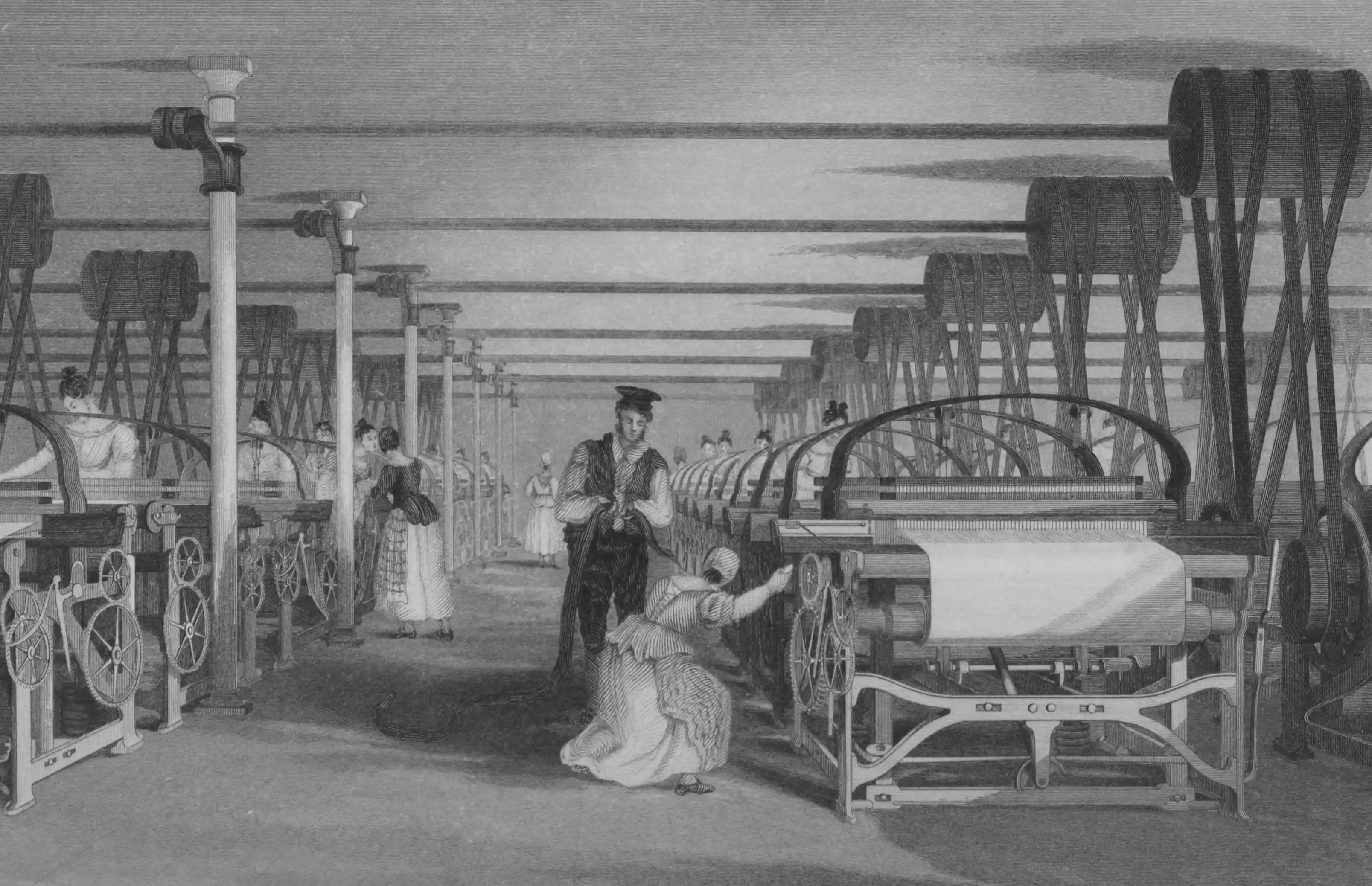
The AI Industrial Revolution: Where Are We Now?

This article explores the current stage of the AI industrial revolution, arguing we are still merely attaching new tools to old workflows rather than fundamentally redesigning production. The author compares this to the early Industrial Revolution, where factories simply replaced waterwheels with steam engines without changing their core structure. Similarly, today we embed AI chat windows into existing software but leave organizational processes unchanged. While massive investment floods into AI infrastructure (data centers, chips), akin to railway manias of the past, the real transformation lies in "dismantling the old workshop"—reorganizing companies around AI. Examples include Notion's use of hundreds of AI Agents and Y Combinator's experiments with self-improving AI systems that operate autonomously. The author notes a critical gap: while China has vast AI user growth, few companies have rebuilt core workflows. AI is beginning to impact entry-level jobs, and early adopters are gaining a compounding advantage. The conclusion is that the pivotal moment will not be the invention of better models, but when organizations decide to tear down old structures and rebuild around AI, shifting the bottleneck from human coordination to computing power. The future workplace and job titles are yet to be defined, but the imperative is to move away from legacy processes and position oneself where the new "railway" is being built.

marsbit18 мин. назад

The AI Industrial Revolution: Where Are We Now?

marsbit18 мин. назад

Morning Post | Hyperliquid Launches Off-chain Event Prediction Market Contract; Strategy Completes $1.5 Billion Debt Buyback; Kelp DAO Announces rsETH Fully Restored

Crypto Market Digest (May 27, 2026) Ondo Finance's founder Nathan Allman has passed away, with President Ian De Bode taking over as CEO. In regulatory news, Hong Kong authorities concluded a consultation on virtual asset service provider licensing, aiming to align rules with traditional finance. Kelp DAO announced its rsETH token has fully recovered five weeks after a $293 million hack by Lazarus Group, though the incident caused significant damage to DeFi lending protocols like Aave. Key industry developments include Hyperliquid launching off-chain event prediction market contracts, and the CME introducing futures for Avalanche and Sui. A report highlights the rise of AI Agent payments, with over $73 million settled on-chain in a year, predominantly using USDC. Meanwhile, blockchain detective ZachXBT exposed market manipulation involving several BSC tokens. In investment news, a firm referred to as "Strategy" completed a $1.5 billion debt buyback. Political contributions from the crypto sector for the 2026 U.S. elections have surpassed $500 million, heavily favoring Republican candidates. BitMEX founder Arthur Hayes revealed Zcash is his second-largest holding, citing the growing necessity for monetary privacy. The digest concludes with trending memecoins on Ethereum, Solana, and Base networks, and highlights in-depth articles covering the impending SpaceX IPO, Polymarket's regulatory challenges, and an analysis of the on-chain treasury landscape.

链捕手18 мин. назад

Morning Post | Hyperliquid Launches Off-chain Event Prediction Market Contract; Strategy Completes $1.5 Billion Debt Buyback; Kelp DAO Announces rsETH Fully Restored

链捕手18 мин. назад

Just Now, Chinese AI Enters Top 2 in Global Programming, Only Claude Remains Ahead

**China's AI Ranks Second Globally in Programming, Trailing Only Claude** Today, Alibaba's Qwen3.7-Max achieved a score of 1541 on the Code Arena benchmark, securing fourth place globally and surpassing top models like GPT-5.5 and Gemini 3.5 Flash. Among the top positions, it is now the only non-Claude model, placing second overall after Anthropic's Opus models. Before this official ranking, Qwen3.7-Max had already gained recognition overseas. In practical tests, it outperformed rivals on tasks like creating a self-training Tetris AI and generating complex 3D models, often at a significantly lower cost. Developers praised its ability, especially when integrated with tools like Hermes Agent and OpenCode, to effectively replace models such as GPT-5.5. In a hands-on challenge to create a 3D racing game from a detailed prompt, Qwen3.7-Max delivered a fully playable HTML file in the first attempt, requiring only minor bug fixes. It uniquely included a start menu and sound effects—details missed by other models. While competitors like Gemini 3.5 Flash and Claude Opus 4.6 produced less polished or functional versions, and GPT-5.5 had its own quirks, Qwen3.7-Max stood out for its initial completeness and playability. This performance stems from its design as an "Agent Base Model," built for long-duration, autonomous task execution. Internal tests show it can run continuously for 35 hours, making over 1158 tool calls without context degradation or instruction drift. Key technical advancements include "environment expansion" training, which improves adaptability across different frameworks, and "long-horizon autonomous execution" training, enabling sustained strategic decision-making. By entering the top tier of the programming arena, Qwen3.7-Max demonstrates that Chinese AI models are not just catching up but are becoming defining competitors, challenging the long-standing dominance of Silicon Valley in this field.

marsbit1 ч. назад

Just Now, Chinese AI Enters Top 2 in Global Programming, Only Claude Remains Ahead

marsbit1 ч. назад

From a Lunch Table to an Infinite Universe: Fei-Fei Li Bets on AI's Next Dimension

From a Lunch Table Conversation to an Infinite Universe: Fei-Fei Li Bets on AI's Next Frontier - Spatial Intelligence In an era dominated by large language models, AI pioneer Fei-Fei Li argues that true understanding requires spatial intelligence — the ability to perceive, reason, and interact within the physical 3D/4D world. She points to evolutionary history: spatial perception drove the Cambrian explosion 540 million years ago, while language is a far more recent, inherently "lossy" way to encode reality. Current models struggle with basic spatial tasks a child can do, like counting chairs in a video. Her company, World Labs, is pioneering this shift with "Marble," a model that generates navigable, consistent 3D worlds from text, images, or simple 3D inputs—distinct from video generators like Sora. Though smaller than models like GPT-5, due to scarce 3D data and early-stage scaling laws, Marble is already used in gaming, robot training (by NVIDIA), architectural design, and personalized therapy for conditions like OCD and acrophobia. Li envisions this technology enabling "infinite universes" for creativity, social interaction, and more. However, she cautions against utopian or dystopian extremes, advocating for a measured vision where AI enhances human dignity and prosperity, akin to how electricity transformed civilization. The journey is long — as evidenced by the 20-year path to viable autonomous vehicles — but the direction is clear: for AI to move from merely talking about the world to truly understanding and acting within it.

marsbit1 ч. назад

From a Lunch Table to an Infinite Universe: Fei-Fei Li Bets on AI's Next Dimension

marsbit1 ч. назад

Торговля

Спот
Фьючерсы
活动图片