
SignalPlus波动率专栏(20240809):两个问题

Odaily星球日报Опубликовано 2024-08-09Обновлено 2024-08-09

Введение

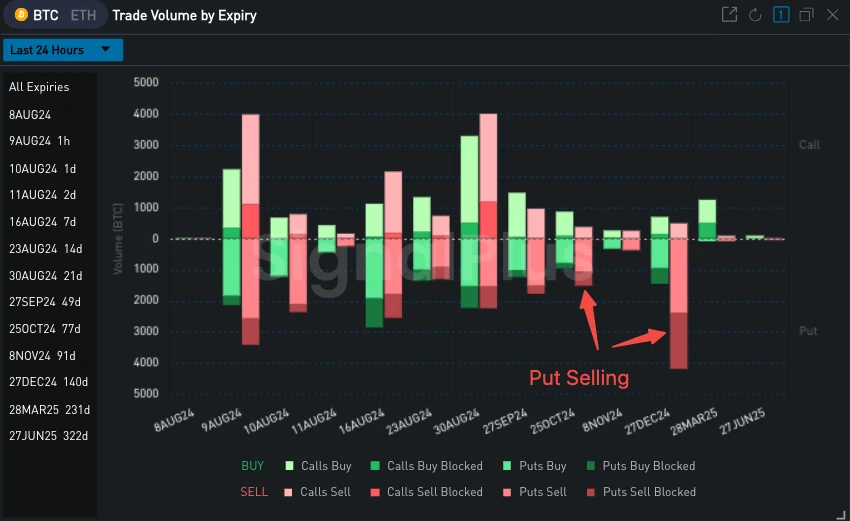
过去24小时,加密货币市场集中关注两个焦点,一是IV为什么垮了,二是为什么涨了?币价的上涨带动Vol Skew回升,自看跌一侧的大量抛售更是显著增加了BTC十月到年底斜率。

SignalPlus波动率专栏(20240809):两个问题

SignalPlus波动率专栏(20240809):两个问题

过去 24 小时,加密货币市场集中关注两个焦点,一是 IV 为什么垮了,二是为什么涨了?我们可以顺着时间线找到一些线索。

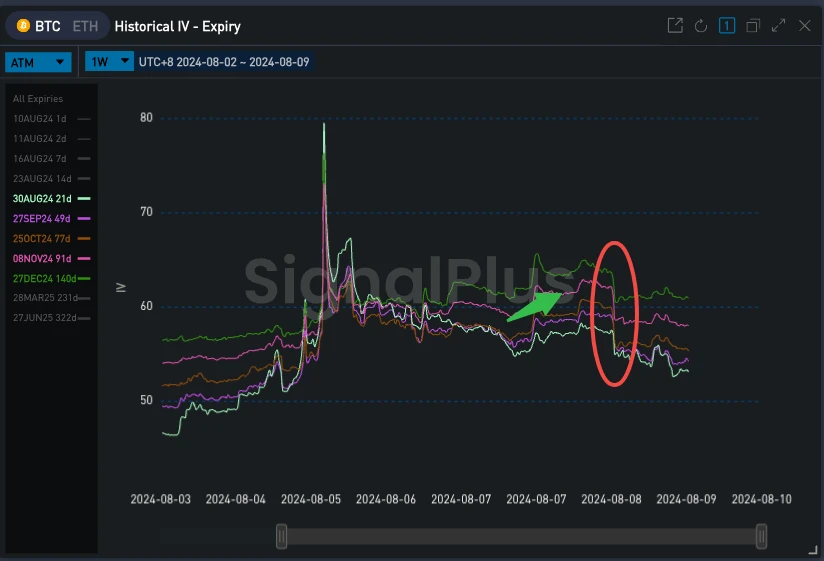
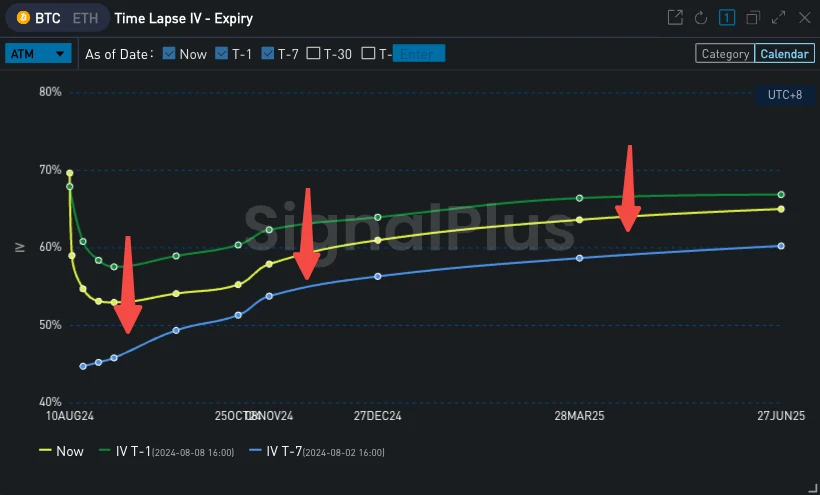
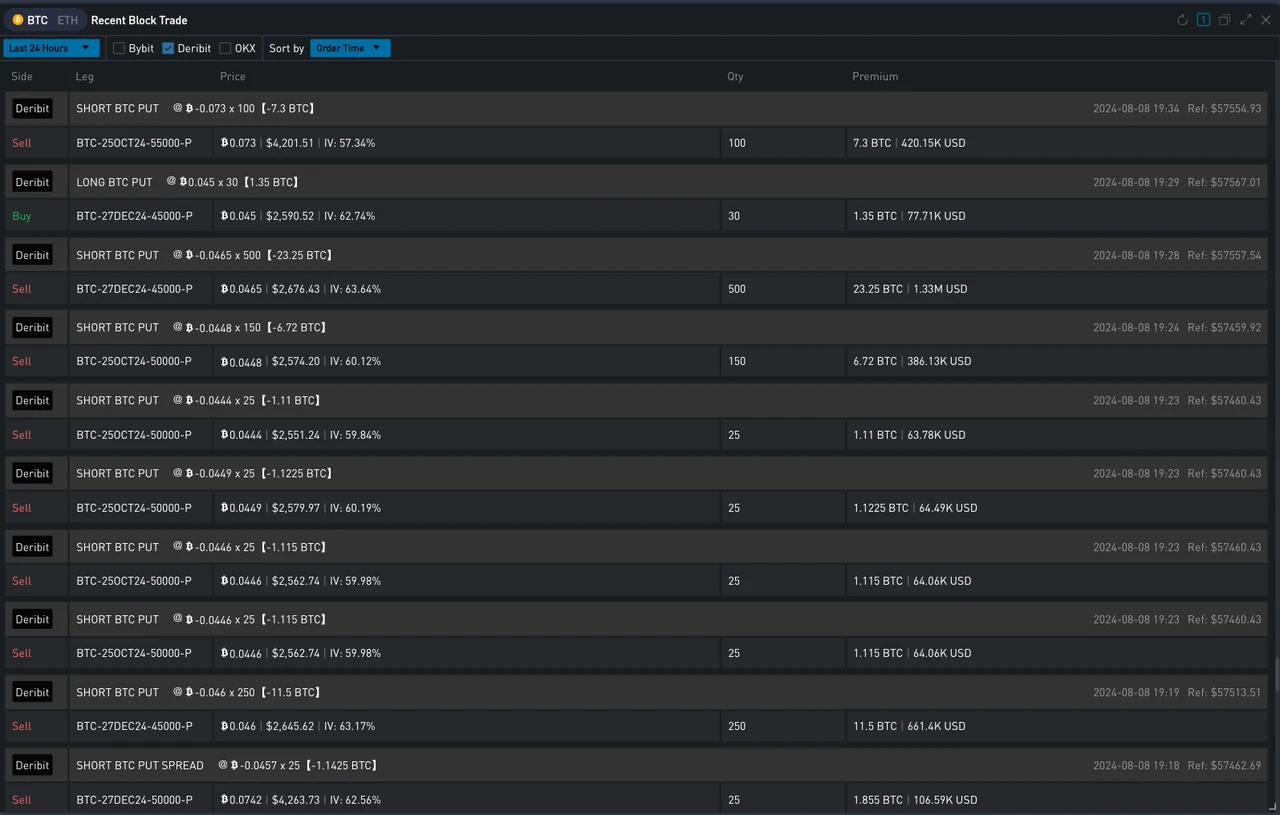
事情开始于 8 月 8 日晚上 7: 30 左右。在此之前,昨日 BTC 的画门行情将市场整体隐含波动率逐步推至高点,而正当价格恢复平静在 57500 附近小幅整盘时,Deribit 市场上突然出现大量 Dec 和 Oct 的卖出看跌期权成交,年底的 IV 短时间内被砸低 3% Vol,带动整条 Vol Curve 大幅向下平移。
SignalPlus波动率专栏(20240809):两个问题

SignalPlus波动率专栏(20240809):两个问题

Source: SignalPlus Time Lapse IV / Historical IV
SignalPlus波动率专栏(20240809):两个问题

SignalPlus波动率专栏(20240809):两个问题

Source: SignalPlus Trade Volume by Expiry; Recent Block Trade
SignalPlus波动率专栏(20240809):两个问题

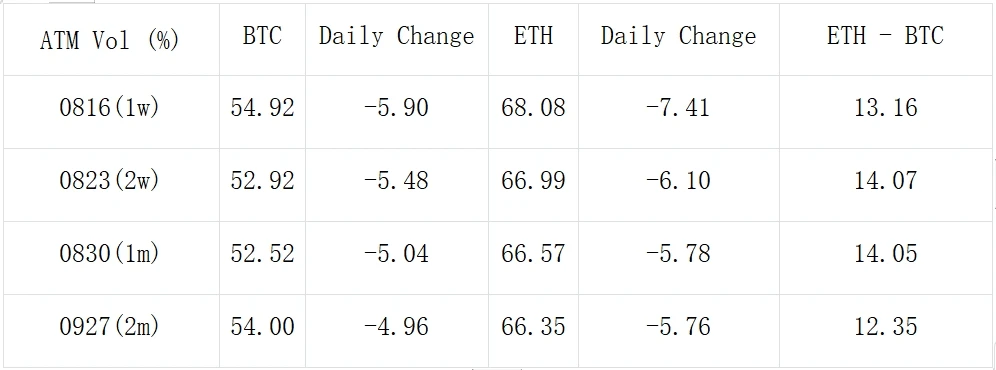
Source: Deribit (截至 9 AUG 16: 00 UTC+ 8)

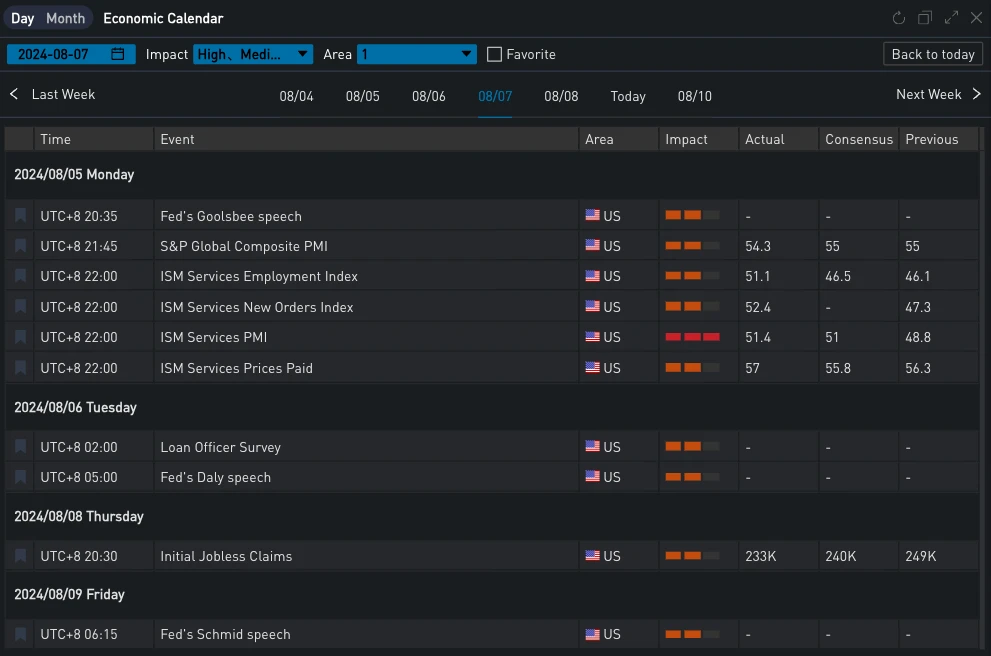
而后来到晚上 08: 30 ,美国公布了新一轮的初请失业金人数,数据下降幅度接近一年来最大,缓解了人们对全球最大经济体经济放缓的担忧,美股强劲反弹(道指/标普/纳指分别收涨 1.76% /2.3% /2.87% ),美债收益率走高。作为与美指高度正相关的风险资产,BTC 价格也受到提振,从 57500 一路上行突破 60000 美元,并一度挑战 62000 这道关键支撑位。

但说回宏观这件事,这周对全球投资者来说都是相当艰难,SoFi 的 Liz Young Thomas 对此评论:“起伏不定,四处皆是。我们了解到市场对美国经济数据的敏感程度,日元套利交易影响的广泛性,以及投资者对降息作为解决一切问题的习惯。”

也正是在如此波动的行情中,市场的焦虑和不安逐渐累积,投资者的情绪一直处于低迷的状态,才让这份通常没被人放在“High-Importance”的数据引如此大的波动。或许本月初开始的恐慌有些夸大,但这份数据并不见得平息了衰退的恐慌。摩根大通的 Lakos-Bujas 向市场发出警告,股市不再是单向上行交易,而是越来越对围绕经济增长下行风险,美联储降息的时机,仓位过多,估值过高,以及总统选举和地缘政治不确定性上升展开的双向辩论。
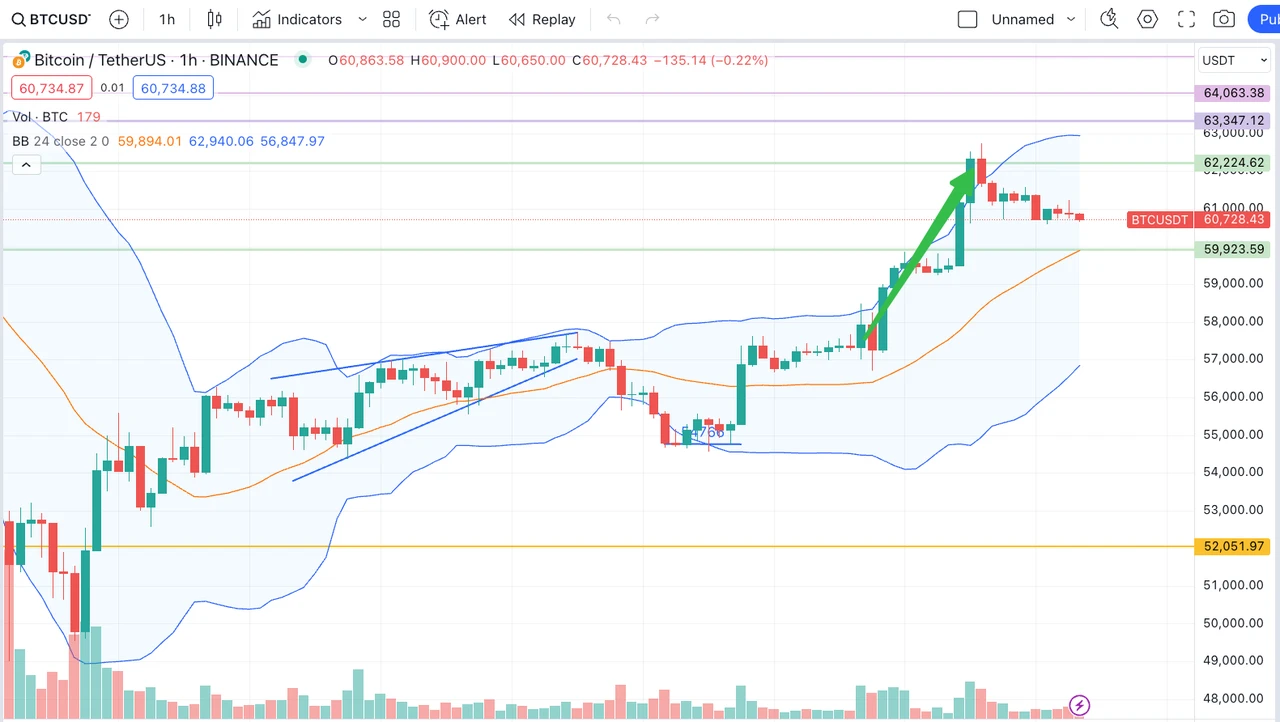
SignalPlus波动率专栏(20240809):两个问题

SignalPlus波动率专栏(20240809):两个问题

Source: TradingView; SignalPlus, Economic Calendar

另外,经过这两轮事件后我们观察到,币价的上涨带动 Vol Skew 回升,自看跌一侧的大量抛售更是显著增加了 BTC 十月到年底斜率,使得 25 dRR 指标在局部范围内大幅上行,波动率曲面在一夜之间发生了明显的转变。
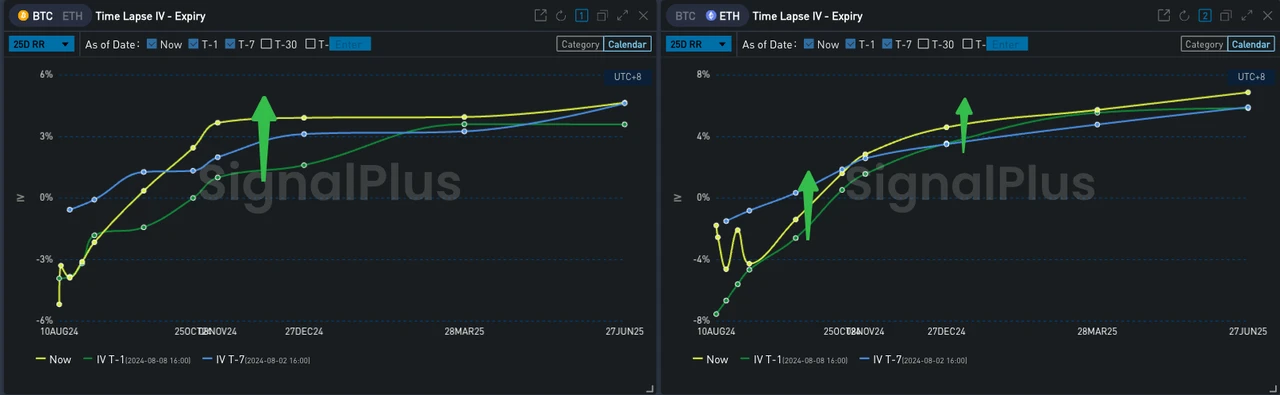
SignalPlus波动率专栏(20240809):两个问题

Source: SignalPlus

SignalPlus波动率专栏(20240809):两个问题

Data Source: SignalPlus, ETH Top Trade
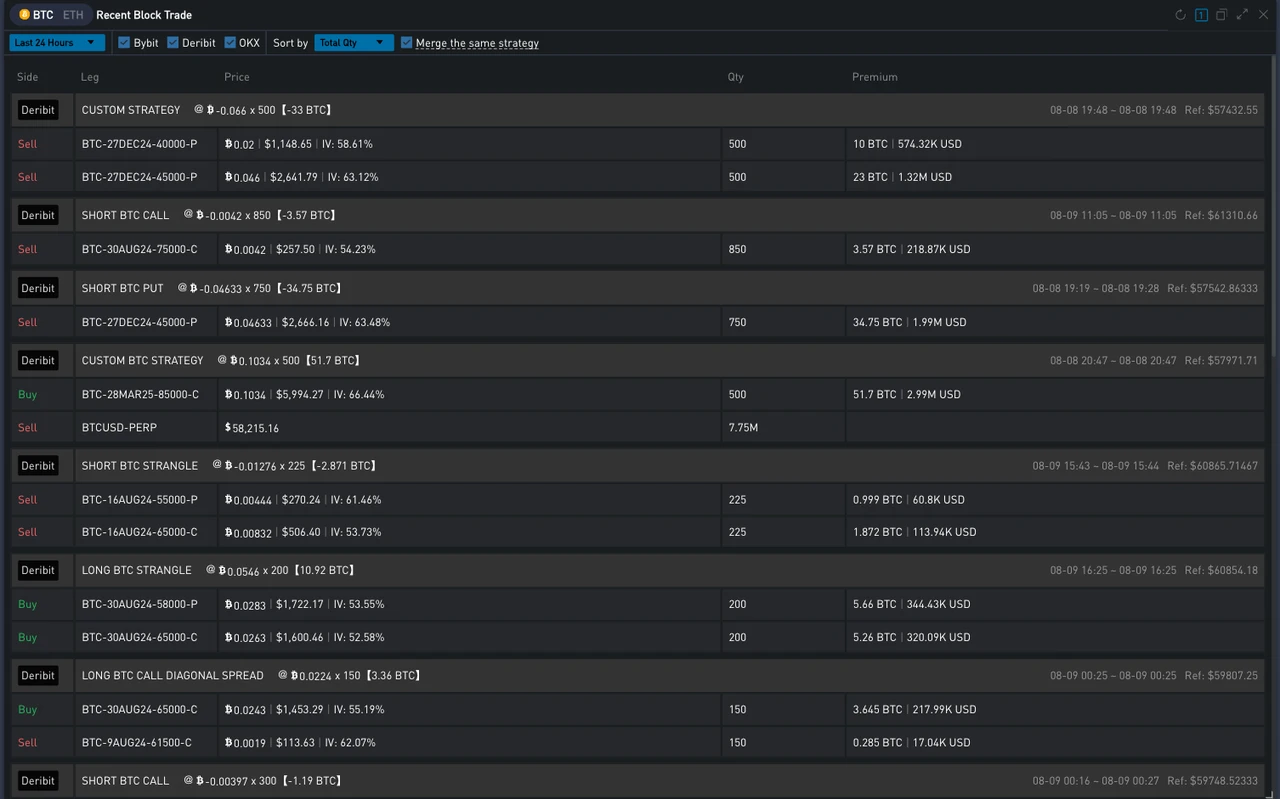
SignalPlus波动率专栏(20240809):两个问题

Data Source: SignalPlus, BTC Top Trade

SignalPlus波动率专栏(20240809):两个问题

您可在 t.signalplus.com 使用 SignalPlus 交易风向标功能,获取更多实时加密资讯。如果想即时收到我们的更新,欢迎关注我们的推特账号@SignalPlusCN,或者加入我们的微信群(添加小助手微信:SignalPlus 123)、Telegram 群以及 Discord 社群,和更多朋友一起交流互动。SignalPlus Official Website:https://www.signalplus.com

Похожее

Podcast Notes: Hyperliquid Has Become the Top Interest Point for Traditional Hedge Funds

Empire Podcast hosts Jason Yanowitz and Santiago Santos discuss the surging institutional interest in Hyperliquid, a decentralized perpetual exchange, marking the highest level of engagement from traditional hedge fund managers since Paul Tudor Jones endorsed Bitcoin in 2020. The primary driver is the demand for weekend trading of commodities like oil, especially during geopolitical tensions such as the Iran conflict, as Hyperliquid provides the only active price discovery venue when traditional markets are closed. Trade XYZ, a front-end on Hyperliquid, has seen significant growth, with weekend oil price predictions having a median error of only 50 basis points. Santos predicts commodity trading volume on Hyperliquid will surpass Bitcoin within the year and that its market cap could rise from $25 billion to $100 billion. Other key points include Kraken raising $200 million at a reduced valuation of $13.3 billion, and the SEC clarifying that self-custodied DeFi frontends like MetaMask are not subject to broker-dealer rules, resolving a major regulatory uncertainty. The hosts also note the strong correlation between crypto and macro markets, with the S&P 500 posting one of its best 10-day rallies since 1950. They highlight MicroStrategy's continued Bitcoin acquisitions and the potential of real-world asset (RWA) tokenization as a key trend. The discussion concludes with skepticism towards many L2 projects, predicting a wave of protocols truly going to zero as capital concentrates in proven assets like Bitcoin and Hyperliquid.

marsbit3 ч. назад

Podcast Notes: Hyperliquid Has Become the Top Interest Point for Traditional Hedge Funds

marsbit3 ч. назад

a16z: The Next Frontier of AI, The Triple Flywheel of Robotics, Autonomous Science, and Brain-Computer Interfaces

a16z presents a comprehensive investment thesis for the next frontier of AI: Physical AI, centered on a synergistic flywheel of robotics, autonomous science, and novel human-computer interfaces (HCIs) like brain-computers. While the current AI paradigm scales on language and code, the most disruptive future capabilities will emerge from three adjacent fields leveraging five core technical primitives: 1) learned representations of physical dynamics (via models like VLA, WAM, and native embodied models), 2) embodied action architectures (e.g., dual-system designs, diffusion-based motion generation, and RL fine-tuning like RECAP), 3) simulation and synthetic data as scaling infrastructure, 4) expanded sensory channels (touch, neural signals, silent speech, olfaction), and 5) closed-loop agent systems for long-horizon tasks. These primitives converge to power three key domains: * **Robotics:** The literal embodiment of AI, requiring all primitives for real-world physical interaction and manipulation. * **Autonomous Science:** Self-driving labs that conduct hypothesis-experiment-analysis loops, generating structured, causally-grounded data to improve physical AI models. * **Novel HCIs:** Devices (AR glasses, EMG wearables, BCIs) that expand human-AI bandwidth and act as massive data-collection networks for real-world human experience. These domains form a mutually reinforcing flywheel: Robotics enable autonomous labs, which in turn generate valuable data for robotics and materials science. New interfaces provide rich human-physical interaction data to train better robots and scientists. Together, they represent a new scaling axis for AI, moving beyond the digital realm to interact with and learn from physical reality, promising significant emergent capabilities and value.

marsbit3 ч. назад

a16z: The Next Frontier of AI, The Triple Flywheel of Robotics, Autonomous Science, and Brain-Computer Interfaces

marsbit3 ч. назад

Conversation with Bitwise Advisor: From K-Shaped Economy to AI Taking Jobs, How Can Bitcoin Save the Younger Generation?

Jeff Park, a macro strategist and advisor at Bitwise, argues that the traditional financial system is broken, particularly for young generations. He describes a "K-shaped economy" where asset inflation enriches the wealthy while leaving others behind, with unaffordable housing as a key symptom. Park explains that real estate is often a depreciating asset due to maintenance costs and taxes, yet it remains unattainable for many young people due to distorted demand from global capital flows. He proposes Bitcoin as a superior store of value—scarce, portable, and free from maintenance costs or excessive taxation. By diverting capital away from real estate, Bitcoin could help lower housing prices and increase accessibility. Park also discusses the decline of traditional "smart investing" (e.g., value stocks) and the rise of "ideological investing" in non-correlated assets like crypto, luxury goods, and collectibles. On AI, Park warns it could trigger extreme social inequality by eliminating jobs while boosting corporate profits. He believes this will push younger generations toward Bitcoin, not only as a hedge but also as a symbol of decentralization and data sovereignty—offering an alternative to centralized AI systems that use personal data without fair compensation. He advises a diversified portfolio with Bitcoin as a core holding to hedge against currency devaluation and systemic risk.

marsbit5 ч. назад

Conversation with Bitwise Advisor: From K-Shaped Economy to AI Taking Jobs, How Can Bitcoin Save the Younger Generation?

marsbit5 ч. назад

Торговля

Спот
Фьючерсы
活动图片