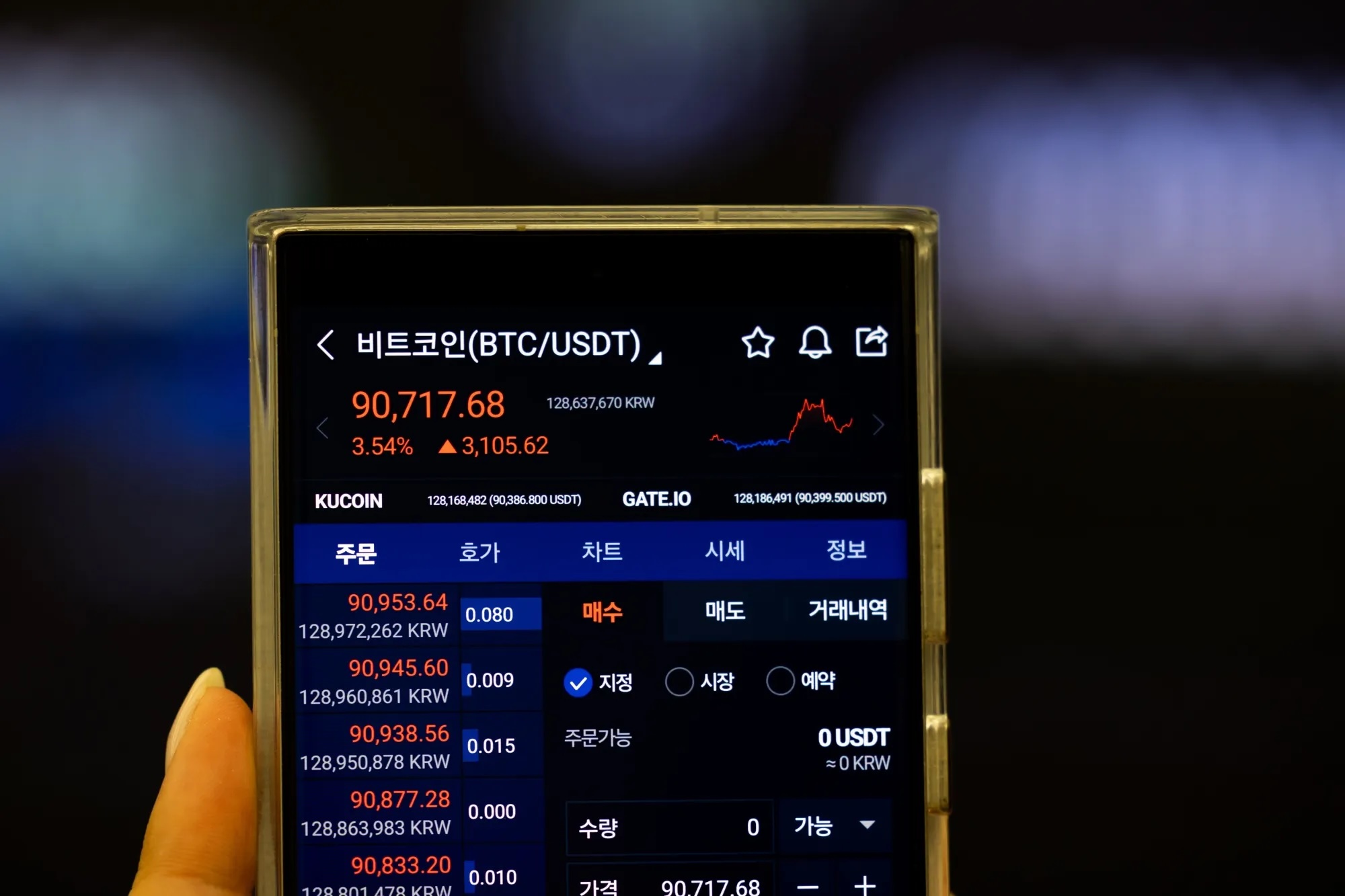
Nigeria’s Central Bank Fleshes Out New Rule Allowing Crypto Firms’ Access to Bank Accounts

CoinDeskPolicyОпубликовано 2024-01-03Обновлено 2024-01-04

Введение

Nigerian banks are still restricted from holding or trading crypto on their own behalf, despite regulators’ softening stance toward digital assets.

The Central Bank of Nigeria (CBN) has released guidelines for banks on digital assets, a sign the country's regulators are softening their stringent stance on crypto.

The guidelines, publicized Tuesday on the bank's website, ​​provide greater details on the regulators’ decision to open accounts for virtual asset service providers last month. The rules are an about-face for Africa's largest economy, where a years-long ban once barred financial institutions from servicing crypto firms.

“Current trends globally have shown that there is a need to regulate the activities of virtual assets service providers which include cryptocurrencies and crypto assets,” the CBN said Tuesday in a statement.

Advertisement
Advertisement

The guidance does not lift restrictions on the holding or trading of cryptocurrencies by Nigerian banks on their own behalf. Also under the rules, cash withdrawals from crypto accounts and clearing third-party checks through virtual asset-holding accounts are forbidden.

Nigeria’s push to increase oversight of digital assets aligns with recent initiatives from neighboring African nations, where cryptocurrencies have become increasingly popular as hedges against inflation. In 2022, Botswana passed a law regulating the digital assets sector despite opposition from some lawmakers in the country. Meanwhile, the Bank of Mauritius has been planning to launch a central bank digital currency, Bloomberg News reported.

Edited by Sheldon Reback.

Похожее

Polymarket's "2028 Presidential Election" Volume King Is... LeBron James???

An article from Odaily Planet Daily, authored by Azuma, discusses a peculiar phenomenon observed on the prediction market platform Polymarket regarding the "2028 US Presidential Election" event. Despite having a real-time probability of less than 1%, unlikely candidates such as NBA star LeBron James (with $48.41 million in trading volume), celebrity Kim Kardashian ($33.84 million), and even ineligible figures like Elon Musk ($23.14 million) and New York City Mayor Zohran Mamdani ($18.39 million) account for approximately 70% of the total trading volume. In contrast, high-probability candidates like Vice President JD Vance ($10.58 million), California Governor Gavin Newsom ($15.71 million), and Secretary of State Marco Rubio ($9.32 million) have significantly lower trading activity. The article explains that this counterintuitive trend is not driven by irrational speculation but by rational strategies. Polymarket offers a 4% annualized holding reward for certain markets, including the 2028 election, to maintain long-term pricing accuracy. This yield exceeds the current 5-year US Treasury rate (3.98%), attracting large investors ("whales") to hold "NO" shares on low-probability candidates for risk-free returns. Additionally, some users utilize a platform feature that allows converting a set of "NO" shares into corresponding "YES" shares for better liquidity or pricing efficiency, rather than directly buying "YES" shares for their preferred candidates. Thus, the seemingly absurd trading activity is strategically motivated.

marsbit57 мин. назад

Polymarket's "2028 Presidential Election" Volume King Is... LeBron James???

marsbit57 мин. назад

Dialogue with ViaBTC CEO Yang Haipo: Is the Essence of Blockchain a Libertarian Experiment?

"ViaBTC CEO Yang Haipo: Blockchain as a Hardcore Libertarian Experiment" In a deep-dive interview, ViaBTC CEO Yang Haipo reframes the essence of blockchain, arguing it is not merely a new technology or infrastructure but a hardcore libertarian experiment. This experiment, born from the 2008 financial crisis and decades of cypherpunk ideology, tests a fundamental question: to what extent can freedom and self-organization exist without centralized trust? The discussion highlights the experiment's verified outcomes. On one hand, it has proven its core value of censorship resistance, providing critical financial lifelines for entities like WikiLeaks and individuals in hyperinflationary or sanctioned countries via tools like stablecoins. However, Yang points out a key paradox: the most successful product, USDT, is itself a centralized compromise, showing users prioritize a less-controlled pipeline over pure decentralization. On the other hand, the experiment has exposed the severe costs of this freedom—a "dark forest" without safeguards. Events like the collapses of LUNA, Celsius, and FTX, resulting in massive wealth destruction and prison sentences for founders, underscore the system's fragility and the inherent risks of an unregulated environment. Yang observes that despite decentralized protocols, human nature inevitably recreates centralized power structures, speculative frenzies, and narrative-driven cycles (from ICOs to Meme coins), where emotion and belonging often trump technological substance. Looking forward, he believes blockchain's future is significant but niche. Its real value lies in serving specific, real-world needs for financial sovereignty and bypassing traditional controls, not as a universal infrastructure replacing all centralized systems. For the average participant, Yang's crucial advice is to cultivate independent judgment. True freedom is not holding a crypto wallet, but possessing a mind resilient to groupthink and narrative hype in a high-risk, often irrational market.

marsbit1 ч. назад

Dialogue with ViaBTC CEO Yang Haipo: Is the Essence of Blockchain a Libertarian Experiment?

marsbit1 ч. назад

Торговля

Спот
Фьючерсы
活动图片