Decisions regarding crypto regulations shall not be rushed, says Nirmala Sitharam, the Finance Minister of India. In an interaction at Stanford University, Sitharam flagged concerns over alleged illegal activities and misuse of the digital asset has stated that India shall be thoughtful regarding imposing crypto regulations.
Nirmala Sitharam conveyed in the interaction, that;
It will have to take its time…all of us to be sure that at least with a given available information, we’re taking the decern decision. It can’t be rushed through
The main concern around cryptocurrency that has been highlighted by the Finance Minister of India several times, has been the chances of money laundering and terror financing. She stated that other countries have the same concerns.
These are some of the concerns, not just India, but many countries of the world have and are also discussed in global, multilateral platforms.
Open To Promoting Innovation Around The Crypto Industry
In the report presented by PTI, the Central Government of India seems to be open to promoting innovation in the crypto industry with no intention of hurting it.
It was also reported that well-grounded progress in the distributed ledger was being introduced into the blockchain space.
Although India continues to maintain a positive stance on crypto, well-defined regulatory guidelines from the government are still missing. Despite this, the Reserve Bank Of India wishes to introduce Central Bank Digital Currency (CBDC).
In the Union Budget Speech which was presented on February 1, Nirmala Sitharam announced that a CBDC or the digital Rupee would be introduced in the upcoming fiscal year.
In the same meeting, the Indian government also levied a 30% tax and a 1% TDS on gains made from any digital asset from April 1.
Reserve Bank Of India’s Deputy Governor stated that there needs to employ a calculated and calibrated approach while launching the digital currency in India. Launching a CBDC could have many effects on the monetary and economical policies of a country.
Crypto Trading Volumes In India Have Plummeted Since The Imposition Of 30% Tax
Crypto trading volume in India had been severely affected ever since the Indian government imposed a rigorous taxation framework on crypto.
Sentiments of traders have been hurt as the 30% tax bracket is the highest tax slab that’s imposed, not to forget the 1% TDS made on the gains.
Data collected from Crebaco, in conjunction with Nomics and CoinMarketCap collated data from four major cryptocurrency exchanges.
The data states a fall of 72% on WazirX, 59% on ZebPay, 52% on CoinDCX, and 41% on BitBns. The trading volumes were measured in U.S. dollars.
Due to unclear communication from the Central Government, the regulatory framework of the crypto industry still remains murky.
Recently, ambiguity from the National Payments Corporation India (NPCI) regarding depositing money through UPI has been blocked by many Indian banks.
Consistent roadblocks faced within the VDA (Virtual Digital Asset) industry have even caused some of the pioneering crypto firms to shift base from the country.
Despite India promising a fair and just stance on regulations, the immediate need of the hour is transparency and clarity about the regulatory framework.
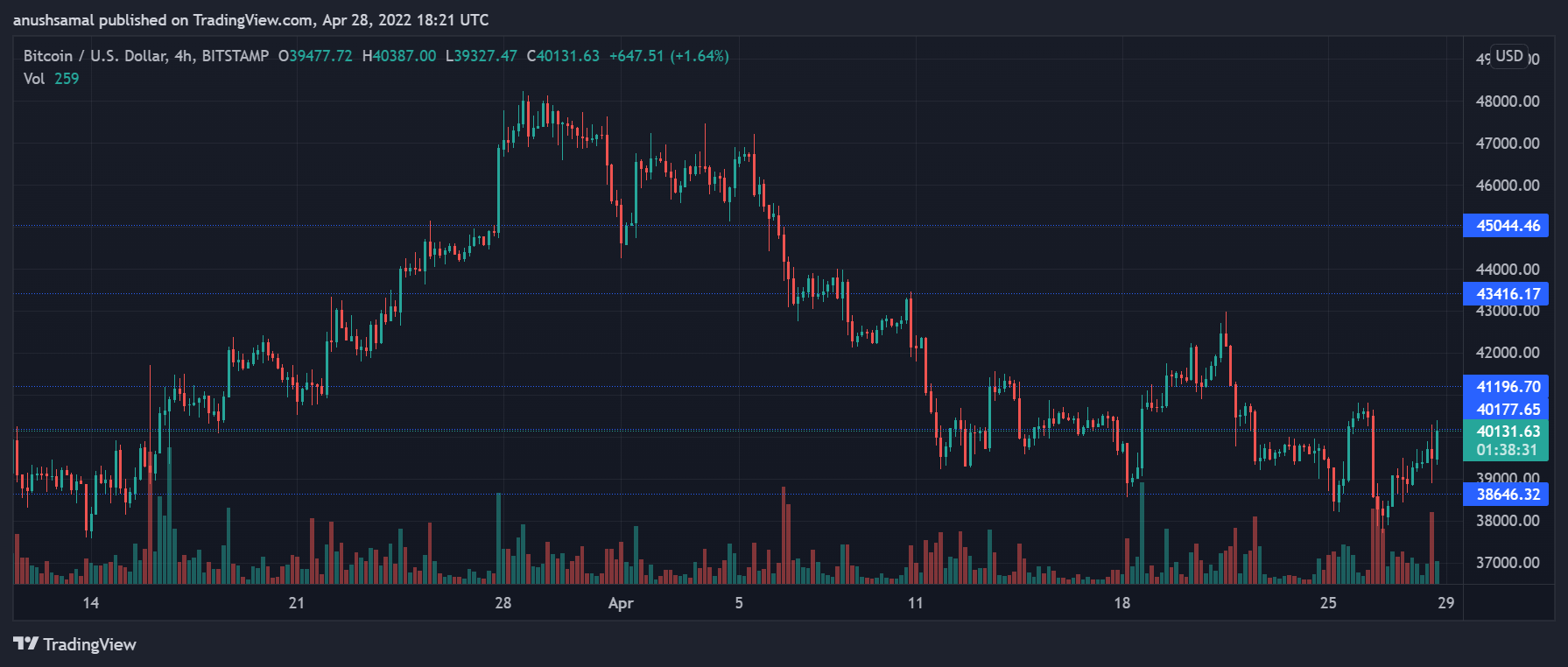
Bitcoin was seen trading above the $40,000 mark on the four-hour chart. Image Source: BTC/USD on TradingView