由于投资者权衡债务上限僵局,最新的 FOMC 会议纪要,比特币的低迷持续低于 26.5K 美元

CoindeskОпубликовано 2023-05-26Обновлено 2023-05-26

Введение

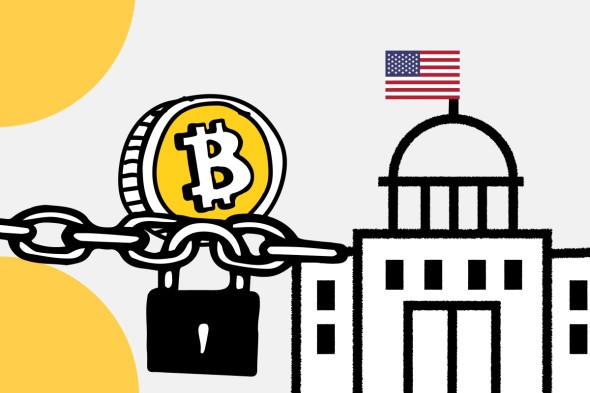
在经历了两周的持平之后,由于投资者对英国通胀和珍妮特耶伦对美国债务上限僵局的最新警告令价格在周三震荡,投资者受到惊吓,加密货币市场终于经历了一些变化。

在经历了两周的持平之后,由于投资者对英国通胀和珍妮特耶伦对美国债务上限僵局的最新警告令价格在周三震荡,投资者受到惊吓,加密货币市场终于经历了一些变化。

当天晚些时候发布的最新联邦公开市场委员会 (FOMC) 会议纪要显示,美国央行官员在继续加息问题上存在分歧,这对提振市场信心毫无帮助。

比特币最近的交易价格约为 26,440 美元,在过去 24 小时内下跌约 3%,接近 5 月 12 日以来的最低水平,当时市值最大的加密货币跌破 26,000 美元。在此期间,随着市场应对美国政府无力偿还债务的前景以及持续的加密货币监管和宏观经济不确定性, BTC一直在低交易量和波动中苦苦挣扎。直到周三,比特币一直保持在 26,500 美元至 27,500 美元的范围内。

金融科技平台 YouHodler 的市场主管 Ruslan Lienkha 在给 CoinDesk 的一封电子邮件中写道,“金融市场紧张局势加剧”对股票和数字资产造成了冲击。

Lienkha 写道:“由于对美国可能违约的担忧加剧,美国股指面临抛售压力:当局距离达成某种协议仅剩大约 10 天,我们尚未看到这些谈判取得任何进展。” “所有这些不确定性迫使金融机构重组资产并为可能的违约做准备,这给金融市场的参与者带来了额外的压力。”

以太币最近以 1,808 美元左右的价格易手,较周二同期下跌约 2.6%。大多数主要加密货币周三都出现亏损, LTC和SOL是 Solana 智能合约平台的代币,分别下跌超过 5.2% 和 3.6%。衡量加密货币市场表现的CoinDesk 市场指数下跌 2.8%。 CoinDesk 比特币趋势指标仍处于下降趋势区域,最近有所下降——这反映了投资者乐观情绪的下降。许多分析师认为,在新的催化剂出现之前,比特币将继续停滞不前。

周三,主要股指也出现了类似的挣扎,至少暂时恢复了股票和加密货币定价之间的相关性,以科技股为主的纳斯达克指数、标准普尔 500 指数和道琼斯工业平均指数 (DJIA) 均下跌了大部分。近几个月来,这两种资产类别的走势越来越不同,但耶伦本月第三次警告美国可能在没有债务限制协议的情况下“耗尽资金”,这似乎席卷了所有资产。

周三早些时候,在英国最新的 4 月份消费者价格指数 (CPI) 升至 6.8%,高于预期的 6.2% 和 1992 年以来的最高点后,加密货币暴跌。令人失望的 CPI 表明英国央行将不得不继续近期的饮食政策。加息,这通常阻碍了加密市场。

在周三接受 CoinDesk TV 采访时,“The Crypto Trader”一书的作者 Glen Goodman 指出,比特币最近与传统避险资产黄金的价格保持着更多联系。但他补充说, BTC仍然缺乏一些一致的动机来解释投资者的买卖决定。

“我们仍然没有找到每个人都需要有一个目标的原因,但我们已经找到了很多原因,”古德曼说。 “唯一的问题是人们还没有在一个主要叙述上达成一致。我们在等待事件发生,等待某种灾难降临世界经济,例如美元崩溃。然后,当然,每个人都会围绕一个故事团结起来。”

Похожее

HYPE Spot ETF Continuously Accumulates 1% in 14 Days: Is the $75 New High Just the Starting Point?

Hyperliquid (HYPE) has surged to a new all-time high of $75 amid strong institutional and ETF-driven buying pressure. The article highlights several key bullish factors. First, the HYPE spot ETFs from 21Shares and Bitwise have seen 14 consecutive days of net inflows, totaling over $136 million and absorbing nearly 1% of HYPE's market cap—a faster initial pace than BTC or ETH ETFs. This ETF demand provides a solid price floor. Second, the protocol's own Assistance Fund (AF) mechanism, which uses 99% of fees to buy back and burn HYPE, has already removed over $1.1 billion worth of tokens, creating a dual support system alongside ETF inflows. This combined buying power is expected to counter potential selling pressure from upcoming team token unlocks. Institutionally, venture firm a16z is now considered one of the largest external holders of HYPE, with multiple addresses accumulating millions of tokens. Galaxy Digital is also actively buying. Analysts and firms like Bitwise and Grayscale are framing HYPE not as a mere meme coin but as a "second-generation" crypto with real value capture and infrastructure potential. Furthermore, Hyperliquid Strategies (PURR), a publicly traded company holding a large HYPE treasury, is set to join the Russell 3000 Index, potentially unlocking further passive investment flows. The ongoing feud between prominent backers like Arthur Hayes (pro-HYPE) and Kyle Samani (pro-SOL) underscores the intense market debate, with Hayes famously betting HYPE will outperform all top-ten crypto assets this year.

Odaily星球日报10 мин. назад

HYPE Spot ETF Continuously Accumulates 1% in 14 Days: Is the $75 New High Just the Starting Point?

Odaily星球日报10 мин. назад

ETH Bull and Bear Views Compilation: Can Ethereum's Value Flow Back to ETH?

Titled "ETH Bull and Bear Views: Can Ethereum's Value Flow Back to ETH?", this article synthesizes the current heated debate around Ethereum's native token, ETH, following Bankless co-founder David Hoffman's decision to sell his entire ETH holdings. The **bullish case**, represented by figures like Tom Lee (BitMine CEO) and Raoul Pal, argues that ETH's core thesis remains intact. They contend Ethereum is the essential, secure, and neutral foundational layer for future finance—encompassing stablecoins, RWA, DeFi, L2s, and Agentic AI. Bulls bet on ETH's long-term revaluation as institutional adoption of on-chain finance grows, with significant buying activity from entities like BitMine and Consensys cited as evidence. Conversely, the **bearish perspective**, led by Hoffman and analysts like Markus Thielen, questions ETH's value capture mechanism. They acknowledge Ethereum's network success but argue that the value created by L2s, DeFi, and applications does not sufficiently accrue to the ETH token itself. Bears point to ETH's prolonged underperformance versus the broader crypto market, lack of traditional cash flows, weakening "ultrasound money" narrative, and apparent institutional retreat (e.g., Harvard Management Company exiting its ETH ETF position) as key concerns. The debate highlights a pivotal shift: ETH is no longer just a community belief asset. The central question is whether ETH can transition from being a "**used infrastructure**" to a "**continuously bought and held core asset**" as more value enters the Ethereum ecosystem. The market is now critically examining the direct link between network growth and ETH's value.

marsbit57 мин. назад

ETH Bull and Bear Views Compilation: Can Ethereum's Value Flow Back to ETH?

marsbit57 мин. назад

Crypto is dead, Perps are forever

The crypto industry is shifting from a focus on creating native assets (like altcoins and protocol tokens) to becoming a "global asset pipeline." Native cryptocurrencies, except for Bitcoin, are seen as failing in their value storage and utility promises, with demand driven largely by speculation. Attention and liquidity are now moving toward real-world assets (RWAs) like U.S. stocks, bonds, gold, and oil traded on-chain via perpetual contracts (Perps). Stablecoins like USDT and USDC set the precedent, proving blockchain's core strength is efficient global settlement and transfer, not inventing new monetary systems. Meanwhile, assets like Ethereum and many DeFi tokens struggle as their narratives weaken against tangible traditional assets and the rapid real-world progress of AI. Perpetual contracts have emerged as a pivotal innovation. They simplify trading by offering pure price exposure to any asset, bypassing complexities of ownership, custody, and traditional market hours. Projects like Hyperliquid gained traction by combining CEX-like efficiency with on-chain transparency, capitalizing on post-FTX distrust, macroeconomic volatility, and the surge in demand for 24/7 stock trading. In conclusion, while the era of speculative native "crypto assets" may be over, perpetual contracts persist as the industry's most potent financial instrument—transforming all assets into globally accessible, constantly tradable instruments centered on price speculation.

marsbit1 ч. назад

Crypto is dead, Perps are forever

marsbit1 ч. назад

Торговля

Спот
Фьючерсы
活动图片