Trump Administration Backs Kalshi and Polymarket as Nevada Moves to Enforce Ban

bitcoinistPublicado em 2026-02-19Última atualização em 2026-02-19

Resumo

A legal battle over prediction markets is intensifying in the U.S. as federal regulators, backed by the Trump administration, support operators Kalshi and Polymarket, while Nevada moves to enforce a ban. The dispute centers on whether prediction markets are financial products under federal oversight or a form of gambling subject to state regulation. Nevada’s Gaming Control Board filed a lawsuit to block Kalshi from offering sports-related event contracts, arguing they constitute unlicensed gambling. Kalshi contends its contracts are financial derivatives regulated by the CFTC, which has filed a brief supporting federal jurisdiction. The outcome could define the regulatory boundary between financial markets and gambling nationwide.

A growing legal clash over prediction markets in the United States is intensifying after federal regulators aligned with the Trump administration stepped in to support industry operators Kalshi and Polymarket, even as Nevada moves forward with enforcement action to shut down parts of their businesses.

The dispute raises a broader question facing courts and regulators: whether prediction markets are financial products governed by federal law or a form of online gambling subject to state control.

The latest developments came after the U.S. Court of Appeals for the Ninth Circuit rejected Kalshi’s request to pause enforcement actions by Nevada regulators. Within hours of the decision, the Nevada Gaming Control Board filed a civil lawsuit seeking to block the platform from offering sports-related event contracts to state residents.
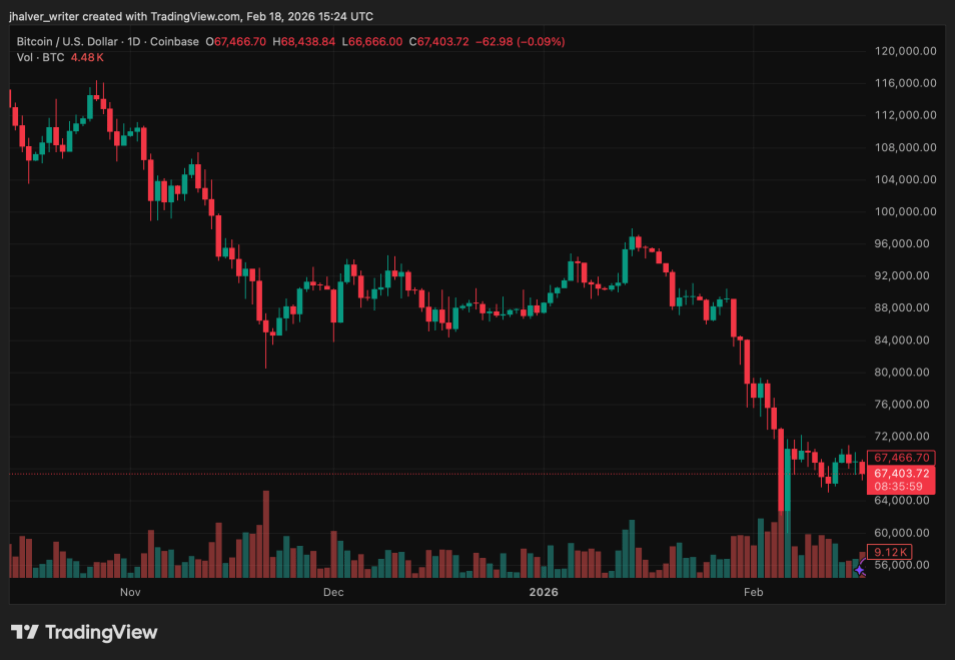
BTC's price trends to the downside on the daily chart. Source: BTCUSD on Tradingview 

Nevada Pushes Gambling Enforcement

Nevada regulators argue that Kalshi’s event contracts, which allow users to trade on outcomes such as sports results, function similarly to traditional sports betting and therefore require a state gaming license.

Officials say the company is offering unlicensed wagering that violates Nevada’s gaming laws and undermines the state’s tightly regulated betting market.

The lawsuit seeks an injunction that could force Kalshi to halt its local operations while litigation continues. The state has taken similar action against other platforms, reflecting a wider effort by multiple jurisdictions to limit prediction markets they view as gambling products.

Kalshi disputes that characterization, maintaining that its contracts are financial derivatives, not bets. The company operates as a federally regulated exchange and has moved to have the case transferred to federal court, arguing that state laws are preempted by federal oversight.

Federal Regulators Enter the Fight

At the center of the dispute is the Commodity Futures Trading Commission (CFTC), which, under Chairman Michael Selig, has taken a more active stance in defending prediction markets. The agency filed an amicus brief supporting federal jurisdiction, arguing that states cannot reclassify federally regulated derivatives trading as illegal gambling.

The Trump administration’s backing of Kalshi and Polymarket shows a broader policy shift toward treating prediction markets as part of the financial system rather than the gambling industry. Federal officials argue that allowing individual states to impose bans could create fragmented regulation and undermine national derivatives markets.

Prediction platforms allow participants to buy contracts priced between one and 99 cents based on the probability of real-world events occurring. While markets cover politics, economics, and weather outcomes, sports-related contracts account for the majority of trading volume.

What Comes Next for Prediction Markets

The legal battle is unfolding across several courts and could ultimately determine who regulates prediction markets nationwide. States, including Massachusetts, Tennessee, and others, have issued lawsuits or cease-and-desist orders, while operators continue to argue for federal protection.

Nevada’s enforcement action increases immediate pressure on Kalshi, though appeals, including a potential emergency request to the U.S. Supreme Court, remain possible.

The outcome could reshape how Americans participate in event-based trading and define the boundary between financial speculation and online gambling for years to come.

Cover image from ChatGPT, BTCUSD chart from Tradingview

Criptomoedas em alta

Perguntas relacionadas

QWhat is the core legal dispute surrounding prediction markets like Kalshi and Polymarket in the United States?

AThe core legal dispute is whether prediction markets are financial products governed by federal law (specifically, as derivatives regulated by the CFTC) or a form of online gambling subject to state control and licensing.

QWhich federal agency has intervened to support Kalshi and Polymarket, and what is its argument?

AThe Commodity Futures Trading Commission (CFTC), under Chairman Michael Selig, has intervened. It filed an amicus brief arguing that states cannot reclassify federally regulated derivatives trading as illegal gambling, as this would undermine national derivatives markets and create fragmented regulation.

QWhat specific action did Nevada regulators take against Kalshi, and what is their justification?

ANevada regulators filed a civil lawsuit seeking an injunction to block Kalshi from offering sports-related event contracts to state residents. They argue these contracts function like traditional sports betting and therefore require a state gaming license, making their current operation unlicensed wagering that violates state law.

QHow does Kalshi define its own event contracts, and what action has it taken in response to Nevada's lawsuit?

AKalshi defines its event contracts as financial derivatives, not bets. In response to Nevada's lawsuit, the company has moved to have the case transferred to federal court, arguing that state laws are preempted by federal oversight.

QWhat broader policy shift does the Trump administration's backing of these prediction markets represent?

AIt represents a policy shift toward treating prediction markets as part of the financial system rather than the gambling industry, aiming to prevent fragmented state-level regulation that could undermine the national derivatives market.

Leituras Relacionadas

Stablecoins Finally Find Real Yield: An In-Depth Look at On-Chain Reinsurance Re | A Conversation with Re Founder Karan Saroya

Stablecoin Real Yield Found: A Deep Dive into On-Chain Reinsurance with Re's Karan Saroya As stablecoin supply exceeds $170 billion, the search for sustainable, non-speculative yield intensifies. Re, an on-chain reinsurance platform, provides an answer: connecting stablecoin capital to the trillion-dollar traditional reinsurance market. Re operates as a regulated reinsurer, accepting stablecoin deposits as collateral to back US insurance companies. These insurers pay premiums, generating yield that flows back to on-chain depositors. Currently supporting 35 insurers and underwriting $500 million, Re projects scaling to over $1 billion soon. Key insights from a Bankless podcast with founder Karan Saroya and investor Avichal of Electric Capital: 1. **Uncorrelated, Real-World Yield:** Re offers stablecoin holders access to reinsurance returns (targeting 12-14%+), an asset class entirely separate from crypto or equity markets. 2. **Operational Efficiency via Smart Contracts:** Re replaces traditional, labor-intensive capital fundraising with smart contracts, allowing a ~12-person team to compete with industry giants. 3. **Regulatory Leverage:** For every $1 of collateral, regulations allow backing $5-7 in written premiums. This leverage amplifies returns from the underlying risk-free rate. 4. **DeFi Integration:** Depositors receive receipt tokens, which can be used in protocols like Morpho for "looping," potentially pushing yields to 18-20%+. 5. **The "DeFi Mullet" Model:** A compliant front-end (regulated reinsurer) paired with a decentralized back-end (smart contracts, DeFi capital markets). 6. **RE Governance Token:** Modeled on Lloyd's of London, the token governs the central capital pool's allocation, counterparty acceptance, and parameters. 7. **Real Economic Impact:** Capital funds real-world productivity (factories, clinics, businesses) via insurance, moving beyond crypto's internal loops. The discussion highlights a pivotal moment: DeFi's supply-side infrastructure is now met by real demand for productive yield, potentially kickstarting a flywheel where vast on-chain stablecoin capital seeks these real-world returns.

链捕手Há 35m

Stablecoins Finally Find Real Yield: An In-Depth Look at On-Chain Reinsurance Re | A Conversation with Re Founder Karan Saroya

链捕手Há 35m

1996 or 1999? Walsh's First Test is 'How to View AI'

"1996 or 1999? Wall's First Big Test Is 'How to View AI'" Federal Reserve Chairman Wall's initial challenge is not whether to raise or cut rates, but a more fundamental judgment: what kind of boom is the current AI boom? This will determine the Fed's policy path and define his legacy. Economics is split between two opposing views, according to reporter Nick Timiraos. One sees imminent productivity gains that will increase supply and cool inflation, allowing the Fed to hold steady. The other argues that while productivity benefits are distant, demand shocks are here now, and waiting for data confirmation risks missing the intervention window, forcing sharper rate hikes later. Wall has signaled a leaning toward the first view, echoing 1996-era Alan Greenspan, who embraced strong, productivity-driven growth without fear of inflation. However, Wall faces a different macro environment than Greenspan did, with tariff pressures, expanding fiscal deficits, and diminishing globalization benefits, which could force more significant inflation pressures even if AI benefits materialize. Wall's logic, expressed before taking office, is that AI-driven productivity gains won't show in official data for years. If the Fed waits for confirmation, it might mistakenly tighten policy and choke off the very growth that could suppress inflation. This argues for using forward-looking narratives over lagging data. Chicago Fed President Austan Goolsbee presents a key counter-argument. He distinguishes between expected and unexpected productivity booms. A widely anticipated boom, like the current AI wave, can cause people to spend future wealth gains in advance, overheating the economy before productivity actually rises, thus requiring preemptive rate hikes. He cites rising costs for AI data centers as evidence of such overheating. Fed Governor Christopher Waller offers a rebuttal to Goolsbee, noting the "expected spending" mechanism only works if people can borrow against future income, which many households cannot do due to borrowing constraints. Wall also faces a paradox related to his desire to reduce the Fed's use of "forward guidance" (pre-announcing policy moves). This practice was established in 1999 when Greenspan began signaling hikes to avoid market shocks. If the economy follows a less optimistic path, Wall may be forced to choose between using the guidance he wants to abolish or risking market volatility by staying silent. The ultimate question defining Wall's first major test remains: Is this 1996 or 1999?

marsbitHá 1h

1996 or 1999? Walsh's First Test is 'How to View AI'

marsbitHá 1h

Ethereum Q1 2026 Report: Fees Decline, Users and Transaction Volume Hit New Highs

Ethereum Q1 2026 Report: Fees Down, Users & Transactions Hit New Highs Token Terminal's Q1 2026 report on Ethereum presents a pivotal development: the network achieved record highs in monthly active users (13.2M, +85.9% YoY), total transactions (200.4M, +81.5% YoY), and throughput (25.78 TPS), while transaction fees on the mainnet plummeted by 47.9% quarter-over-quarter. This shift is attributed to the network's strategic move into a "low fees for scale" phase, exemplified by the Fusaka upgrade which increased data capacity and lowered block space costs, releasing pent-up demand (a manifestation of Jevons's Paradox). The report highlights a core narrative shift for Ethereum: from a DeFi-centric blockchain to a global financial settlement layer. It maintains a dominant position in tokenized assets, holding majority market shares among top chains in stablecoins (61.8%), tokenized funds (73.0%), and tokenized commodities (84.0%). Growth in tokenized funds (+73.1% YoY) and commodities (+325.9% YoY) was particularly strong, driven by institutions like BlackRock and JPMorgan entering the space. Contrasting these usage gains, several USD-denominated value metrics declined in Q1: fully diluted market cap fell 30.3% QoQ, total value locked (TVL) dropped 11.0%, and ecosystem transaction volume decreased 24.0%. The report interprets this as Ethereum prioritizing long-term network expansion and cementing its role as the default settlement layer for finance over short-term fee capture. The commentary from Etherealize argues that, much like the early internet, Ethereum's open, permissionless model is poised to win over closed alternatives as institutional tokenization accelerates.

marsbitHá 3h

Ethereum Q1 2026 Report: Fees Decline, Users and Transaction Volume Hit New Highs

marsbitHá 3h

He Just Raised 2.7 Billion, and Li Fei-Fei Also Invested

Pete Florence, a former senior research scientist at Google DeepMind and a key contributor to the Vision-Language-Action (VLA) model architecture, is deliberately distancing his startup, Generalist AI, from the trendy "world model" label. He argues that the industry should prioritize concrete goals over buzzwords. His goal is to create robots that can perform a vast range of unseen tasks with high speed and success rates, without needing task-specific training data. Recently, his company raised $400 million (¥2.7 billion) at a $2 billion valuation. Notable investors include NVIDIA's NVentures, Bezos Expeditions, NFDG, as well as Xiaomi co-founder Lin Bin, Zoom founder Eric Yuan, and renowned AI scientist Fei-Fei Li. Florence's approach stems from his academic background at MIT under Professor Russ Tedrake, focusing on understanding the physical world. After joining DeepMind, he developed models like Transporter Network and co-created the VLA framework. He left in 2025 to found Generalist AI. The company has launched two models: GEN-0, which demonstrated that scaling laws apply to physical motion, and GEN-1. GEN-1 was trained on over 500,000 hours of physical interaction data collected via a specialized wearable device. It achieves a 99% success rate on precise mechanical tasks like folding boxes and maintains performance three times faster than its predecessor. Florence believes GEN-1 is reaching a commercial utility threshold similar to the GPT-3 inflection point. The substantial funding round, following GEN-1's release, signifies strong investor confidence in Generalist AI's practical, goal-driven path to creating versatile, useful robots, regardless of the "world model" terminology.

marsbitHá 3h

He Just Raised 2.7 Billion, and Li Fei-Fei Also Invested

marsbitHá 3h

Trading

Spot
Futuros

Artigos em Destaque

Como comprar BAN

Bem-vindo à HTX.com!Tornámos a compra de Comedian (BAN) simples e conveniente.Segue o nosso guia passo a passo para iniciar a tua jornada no mundo das criptos.Passo 1: cria a tua conta HTXUtiliza o teu e-mail ou número de telefone para te inscreveres numa conta gratuita na HTX.Desfruta de um processo de inscrição sem complicações e desbloqueia todas as funcionalidades.Obter a minha contaPasso 2: vai para Comprar Cripto e escolhe o teu método de pagamentoCartão de crédito/débito: usa o teu visa ou mastercard para comprar Comedian (BAN) instantaneamente.Saldo: usa os fundos da tua conta HTX para transacionar sem problemas.Terceiros: adicionamos métodos de pagamento populares, como Google Pay e Apple Pay, para aumentar a conveniência.P2P: transaciona diretamente com outros utilizadores na HTX.Mercado de balcão (OTC): oferecemos serviços personalizados e taxas de câmbio competitivas para os traders.Passo 3: armazena teu Comedian (BAN)Depois de comprar o teu Comedian (BAN), armazena-o na tua conta HTX.Alternativamente, podes enviá-lo para outro lugar através de transferência blockchain ou usá-lo para transacionar outras criptomoedas.Passo 4: transaciona Comedian (BAN)Transaciona facilmente Comedian (BAN) no mercado à vista da HTX.Acede simplesmente à tua conta, seleciona o teu par de trading, executa as tuas transações e monitoriza em tempo real.Oferecemos uma experiência de fácil utilização tanto para principiantes como para traders experientes.

580 Visualizações TotaisPublicado em {updateTime}Atualizado em 2026.06.02

Como comprar BAN

Discussões

Bem-vindo à Comunidade HTX. Aqui, pode manter-se informado sobre os mais recentes desenvolvimentos da plataforma e obter acesso a análises profissionais de mercado. As opiniões dos utilizadores sobre o preço de BAN (BAN) são apresentadas abaixo.

活动图片