IP Token Plunges 98%, Is DATA Rebranding the Last-Ditch Effort? Analyzing Story Protocol's Transformation

Foresight NewsPublicado em 2026-07-10Última atualização em 2026-07-10

Resumo

IP Token Plummets 98%, Is DATA Rebranding a Last Gamble? Analyzing Story Protocol's Pivot **Summary** Story Protocol, having seen its IP token fall approximately 98% from its all-time high, announced a major pivot on June 25, rebranding as the DATA Foundation. The project will shift its focus from IP to AI training data infrastructure, with a corresponding token change from IP to DATA. While the announcement triggered a brief price bounce, the token soon fell back near its lows. This analysis argues that such a fundamental rebrand is not typically a bullish signal, but rather an admission that the original strategy failed. Historically, rebrands fail when not backed by genuine improvements in product, user adoption, or liquidity, as seen in cases like MultiversX (Elrond) and Golem. Merely chasing a new narrative without execution is insufficient. Conversely, successful pivots are defined by on-chain evidence of growth. The transformation of ETHLend into Aave is the prime example, where a surge in Total Value Locked (TVL) and users preceded and drove long-term value. Projects like Polygon and Kaia, despite price declines, show underlying operational strength. Story’s pivot, announced just two weeks after its token hit a record low, risks being perceived as a last-ditch marketing effort. Leadership changes—with founder Seung Yoon Lee moving to an advisory role—further close the chapter on the original vision. For the DATA rebrand to succeed, it must demonstrably improve th...


Author: Tiger Research

Compilation: AididiaoJP, Foresight News


Key Takeaways


Rebranding is usually not a signal of recovery, but more like an admission of the failure of the original strategy. Past cases show that if products, users, and liquidity don't truly return after a name change, it often ends in failure.


However, judging success or failure solely by price is prone to error. If on-chain execution evidence persists after the rebrand, one shouldn't jump to conclusions of failure too early.


The true test of success lies in the path of ETHLend's transformation into Aave: first comes growth in users and Total Value Locked, and then price follows.


Whether Story Protocol's shift from IP to DATA is a genuine business restructuring or a final marketing attempt will be answered by its future execution.


Market Reaction to Rebranding: Not Necessarily a Good Omen
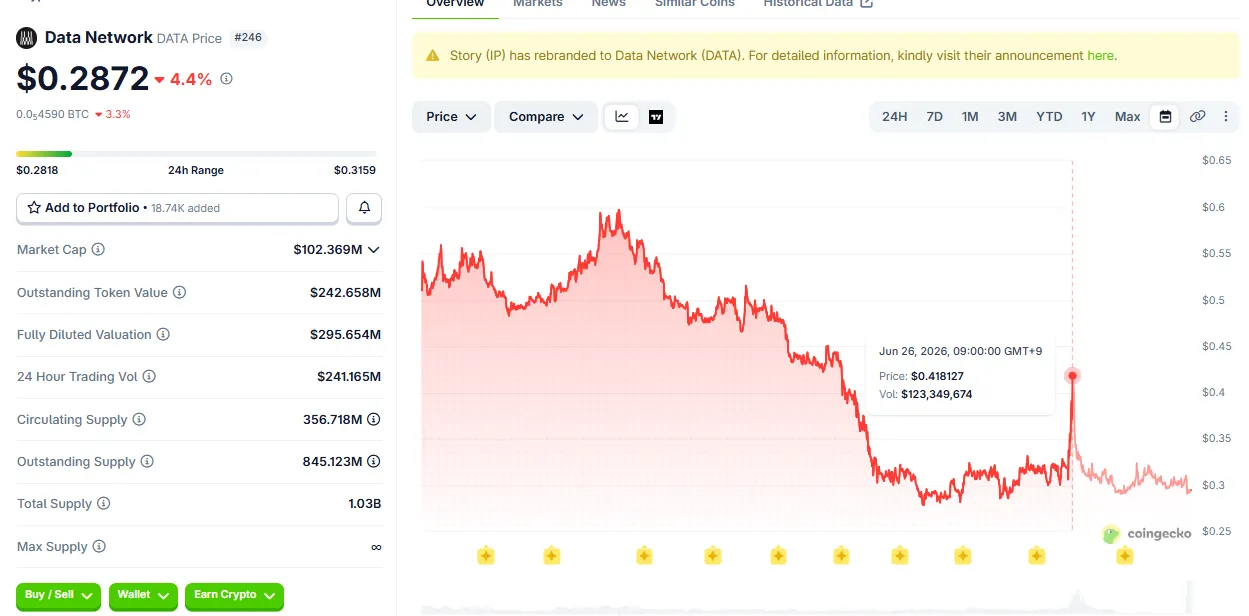


On June 25th, Story Protocol announced its transformation into the DATA Foundation and plans to switch its token from IP to DATA. Although the project had previously secured consecutive funding rounds led by a16z, the IP token struggled to sustain its value during the bear market, falling approximately 98% from its all-time high.


The token subsequently hit new lows. Following the rebranding announcement, the price saw a brief rebound but soon fell back near its lows.


In reality, it's difficult to view this rebranding as a long-term positive for the project. To some extent, it indirectly acknowledges that the project has reached a dead end.


A comprehensive rebrand incurs significant tangible and intangible costs. The time and funds previously invested in brand recognition become sunk costs. Changing the token symbol and project name also carries risks related to internal communication, external coordination, and on-chain asset migration. This means the decision itself carries weight; a rebrand is not superficial but involves a comprehensive adjustment of on-chain and off-chain infrastructure.


Before expecting short-term price rebounds from a token symbol change, a more pertinent question is: what fundamental problem forced the project to abandon the accumulated brand equity and decide to take this path?


Common Traits of Failed Rebranding Cases
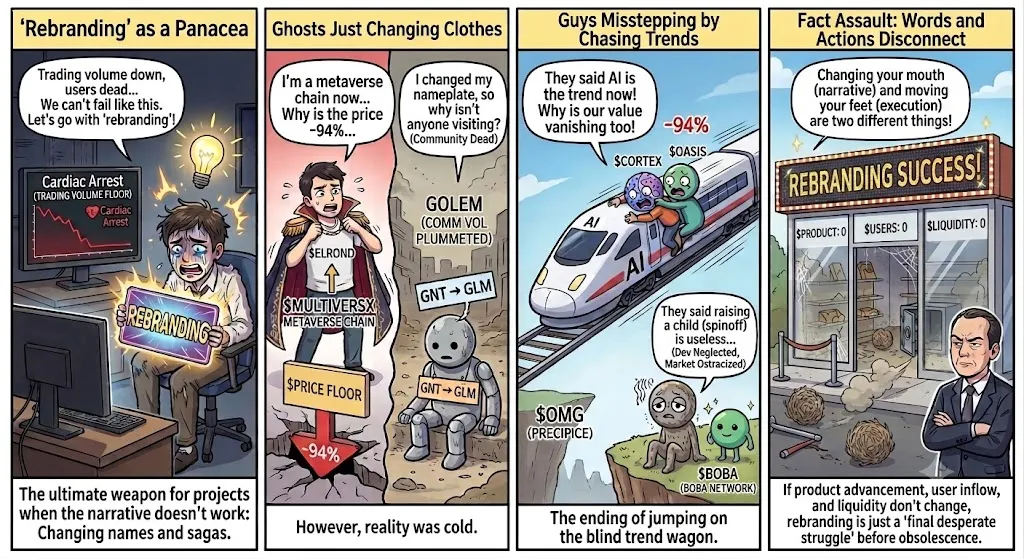


On the surface, rebranding seems like just changing the project name and token symbol, but in essence, it's a shift in product direction and core philosophy. Data from failed rebrands show that most projects that failed to demonstrate genuine improvement in real metrics were eventually eliminated by the market.


  • MultiversX (formerly Elrond): Kept the original EGLD token symbol, pivoted to a metaverse narrative, but the token value has fallen about 94% since the rebrand.
  • Golem (GNT to GLM): Completed token migration, but price is down 92.7% from its peak. Trading volume and development activity have significantly declined, and the project has largely lost relevance.
  • Cortex (CTXC) and Oasis (ROSE): As the AI blockchain narrative faded, Cortex's value nearly zeroed out. Oasis, after pivoting to AI privacy, has also fallen about 94% since its rebrand.
  • OMG Network: After spinning off Boba Network, core network development and ecosystem management were neglected, eventually being left behind by the market.


The common thread among these failed cases is the lack of substantive follow-through in product development, user acquisition, or liquidity provision after the rebrand. Adjusting the narrative and executing the business are two different things.


Judging by Token Price Alone is Far from Enough


Of course, judging a project's success or failure solely by price decline has its limitations, as post-rebrand performance is often intertwined with the overall bear market environment. To avoid mistakenly categorizing projects that still maintain robust on-chain execution data as failures, the following cases are worth referencing.


Ongoing Operational Cases


Kaia (KLAY & FNS merged into KAIA): Post-merger token price fell about 73%, but the project demonstrated strong underlying vitality through initiatives like partnering with South Korea's Kookmin Bank and Busan Bank to issue a Korean won stablecoin, and LINE's mini-program decentralized application. The mini-program attracted 35 million users in its first month, generating 7.3 million new wallets.


Polygon (MATIC to POL): Token fell about 81%, but underlying business continues to advance through the operation of multi-chain settlement infrastructure like AggLayer and the retention of a large ecosystem.


Render (RNDR to RENDER) and ASI: Although market performance has been weak, they possess clear real-world use cases—providing AI computing power and operating core AI products, and their technical execution is validated. Therefore, they are not categorized as failures.


The Benchmark for Successful Rebranding


The case of ETHLend transforming into Aave sets the standard for success.
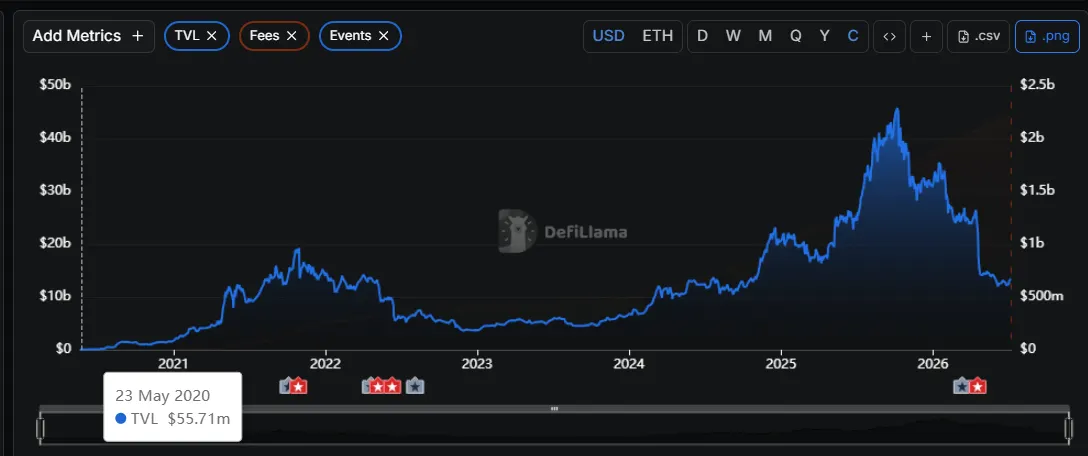


Since its name change in 2020, Aave's Total Value Locked has grown steadily. It has enriched its product line by expanding supported assets, and its user base has significantly expanded. Today, it has become synonymous with the lending protocol sector, a setter of on-chain benchmark interest rates, akin to the "central bank" of decentralized finance. This is a classic example of improving business metrics driving brand value appreciation.


The story of MakerDAO pivoting to Sky is similar: what matters is not the token's roughly 20% decline, but its performance relative to the broader market and its clear execution in running the USDS and sUSDS decentralized stablecoins.


These cases show that the key to judging the success of a rebrand is not short-term price volatility, but whether the project's stated rationale truly materializes and the subsequent tangible results. A rebrand without genuine growth in underlying metrics will eventually be abandoned by the market once the marketing effect wears off.


Story Protocol's Current Rebrand
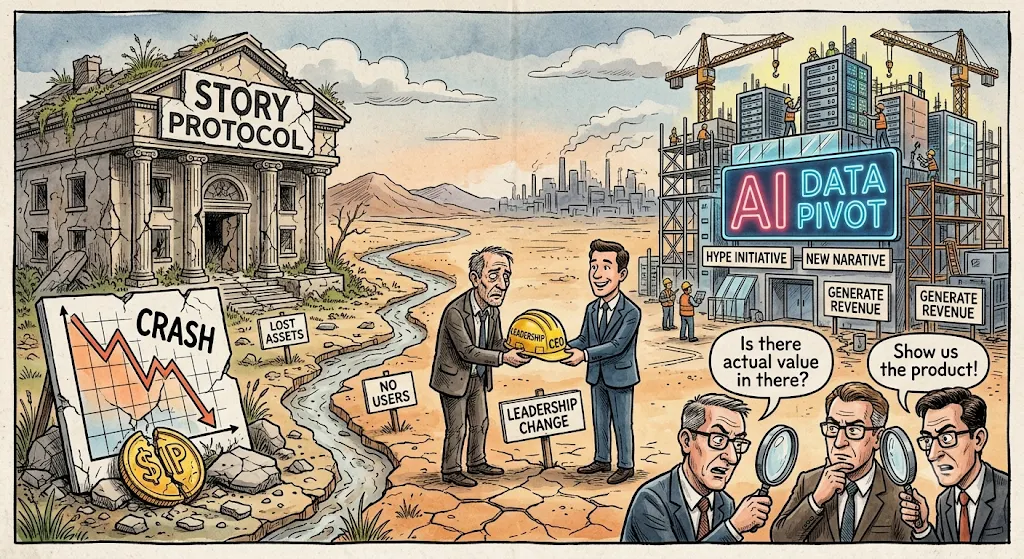


Story's IP token launched in February 2025, reaching its all-time high of around $14.78 in September of the same year, then entering a period of stagnation.


Notably, consider the timing: the token hit its all-time low of $0.275 on June 10, 2026. Just two weeks later, on June 25, the project announced its pivot to AI training data infrastructure.


Because the rebrand occurred near the all-time low, the market questions whether this is merely the final card played to boost the price.


For Story to justify this rebrand, three key metrics need to be tracked in the future:


  • Whether the token's relative strength compared to the broader market recovers;
  • The trend of on-chain liquidity and trading volume after the token switch;
  • Whether the new AI data narrative genuinely brings on-chain user growth and increased settlement revenue.


Changes in core leadership are also noteworthy. The original narrative leader, Seung Yoon Lee, has stepped back from the foundation's daily operations into an advisory role focusing on strategy. Former Chief Product Officer Andrea Muttoni has taken over as the new CEO of the DATA Foundation.


Seung Yoon Lee remains the CEO of the development company PIP Labs, but his reduced role in the foundation marks the end of a chapter for the original Story (IP) narrative centered around this Korean founder and the three consecutive a16z-led funding rounds.


Based on currently available data, this pivot to DATA looks more like a defensive adjustment than a long-term strategic overhaul. To change this perception, tangible results in liquidity, users, and settlement revenue must be delivered after the token switch. Otherwise, Story will become just another failed rebranding case, with its past brief glory fading into memory.

Criptomoedas em alta

Perguntas relacionadas

QWhat is the main concern raised in the article about Story Protocol's rebranding to DATA Foundation?

AThe main concern is that the rebranding might not signal a genuine recovery but rather an admission that the original IP strategy has failed. The timing, occurring after the IP token hit a historical low, leads to skepticism about whether it's a final marketing attempt rather than a substantive business pivot.

QAccording to the article, what is the common factor among failed rebranding cases like MultiversX and Golem?

AThe common factor is that after the rebranding, there was no substantial follow-through in terms of product development, user acquisition, or liquidity provision. The narrative change was not backed by real improvements in fundamental business metrics.

QWhat key example does the article use to illustrate a successful rebranding, and why was it successful?

AThe article uses the example of ETHLend rebranding to Aave. It was successful because the rebranding was followed by significant growth in Total Value Locked (TVL), expansion of supported assets, and a substantial increase in user base, transforming it into a leading lending protocol.

QWhat three key metrics does the article suggest should be tracked to judge the success of Story Protocol's (DATA) rebranding?

AThe three key metrics are: 1) The relative strength of the DATA token compared to the broader market. 2) The trend of on-chain liquidity and trading volume after the token migration. 3) Whether the new AI data narrative actually brings growth in on-chain users and increases settlement revenue.

QWhat leadership change is highlighted in the article regarding Story Protocol's transition to DATA?

AThe article highlights that Seung Yoon Lee, the original narrative driver and founder, has stepped back from the foundation's daily operations to an advisory role focusing on strategy. Andrea Muttoni, the former Chief Product Officer, has taken over as the new CEO of the DATA Foundation.

Leituras Relacionadas

Valuation $1 Billion, Nvidia Doubles Down! Is Prime Intellect Washing Off Its Web3 Label?

Prime Intellect, a decentralized AI infrastructure company founded in 2024, recently announced a $130 million Series A funding round at a $1 billion valuation, with investments from NVIDIA, Intel, and Dell's venture arms. The company claims its annualized recurring revenue (ARR) has exceeded $100 million within a year, serving over 6,000 enterprise clients. Initially rooted in Web3 and decentralized science (DeSci), Prime Intellect has evolved into a full-stack AI training and deployment platform. Its core technology enables distributed training of large language models across globally dispersed, heterogeneous GPU clusters. Key milestones include releasing open-source models like INTELLECT-1 and INTELLECT-3, and launching Prime Intellect Lab, a platform allowing users to train and optimize agentic models without managing their own GPU infrastructure. The company's deep collaboration with hardware giants, particularly NVIDIA, extends beyond investment to joint optimization of software (e.g., integrating NVIDIA Dynamo) and hardware systems. A notable commercial case involves fintech company Ramp using Prime Lab to train a specialized agent, demonstrating the platform's applied value. While achieving rapid commercial growth, Prime Intellect has systematically downplayed its earlier Web3 and token-based incentives from its official documentation, repositioning itself as a mainstream AI infrastructure provider focused on enterprise adoption and potential IPO.

Foresight NewsHá 4m

Valuation $1 Billion, Nvidia Doubles Down! Is Prime Intellect Washing Off Its Web3 Label?

Foresight NewsHá 4m

After 13% Daily Distribution, Why Did SATA Still Fall?

Strive Asset Management's BTC-linked preferred stock SATA transitioned from monthly to daily dividend distributions on June 16, with a current annualized yield of 13%. Despite this change, SATA's price fell approximately 9.9% from June 22 to June 26. The analysis highlights that this decline reflects fundamental credit and structural risks, not simply dividend frequency. SATA represents a perpetual, cumulative preferred equity interest in Strive, not a direct Bitcoin-backed bond. Its dividends depend on Strive's corporate credit and access to capital markets. While Strive's Bitcoin holdings grew from 15,009 to 19,864 BTC between May 12 and June 18, SATA's outstanding shares grew faster (from ~4.96 million to ~7.83 million). Coupled with a drop in BTC price, the pure Bitcoin coverage ratio for SATA's stated amount fell from ~2.44x to ~1.52x. A further ~34.3% decline in BTC to ~$39,416 would bring this coverage to 1.0x. Daily dividends smooth cash flow for investors and reduce dividend-capture trading, but do not eliminate price volatility or credit risk. SATA now trades at a ~12.25% discount to its $100 stated amount, implying a market yield of ~14.81% and a credit spread of ~1,117 bps over SOFR. Key risks include a negative feedback loop if SATA trades below par, making new issuance dilutive; reliance on capital markets for dividend funding despite a ~17-month cash buffer; and the perpetual nature of the security, where dividends can be deferred. In summary, SATA innovates by providing daily income from a Bitcoin-focused corporate balance sheet, but its recent price action underscores its exposure to Bitcoin valuation, company-specific financing risks, and perpetual duration. The market is repricing it from a near-par yield product to a deeply discounted high-risk credit instrument.

marsbitHá 32m

After 13% Daily Distribution, Why Did SATA Still Fall?

marsbitHá 32m

Unlocking 20%, $125 Million in Pressure, Can PUMP Hold Up?

"Pump.fun Faces Crucial Test with $125M Token Unlock Despite a cooldown in the meme coin market, Pump.fun remains one of Web3's top revenue-generating protocols, earning $28.4 million in the past 30 days. The platform has accumulated approximately $1.05 billion in total revenue from over 12 million tokens created. The protocol now faces its biggest challenge: the first unlock of team and investor tokens. A total of 82.5 billion PUMP tokens (8.25% of total supply, 20.23% of previous circulating supply), valued at around $125 million, have been unlocked. This potential selling pressure is significant compared to the token's 24-hour trading volume of only $28 million. While Pump.fun uses a portion of its revenue to buy back and burn PUMP tokens, creating buy-side pressure, this support has weakened. The buyback rate was reduced from 100% to 50% of net fees in April 2024. In June 2024, monthly buybacks totaled just $9.2 million, an over 80% drop from its peak. At this rate, selling just 7% of the newly unlocked tokens would offset a full month of buybacks. Furthermore, this unlock is only the first batch; team and investors still hold another 247.5 billion locked PUMP tokens, with 240 billion community tokens awaiting a release schedule. Despite these headwinds, PUMP is argued to be a relatively scarce asset in the current market. With a $610 million market cap against $28.4 million in monthly revenue, its valuation is lower than competitors like Hyperliquid. The investment thesis for PUMP is not betting on a single meme coin but on the persistent activity of the meme market and Pump.fun's ability to maintain its position as a key platform. The conclusion suggests that while the unlock tests short-term price resilience, the protocol's underlying revenue strength will determine PUMP's long-term trajectory, potentially making the current dip a viable entry point for long-term accumulation."

Odaily星球日报Há 45m

Unlocking 20%, $125 Million in Pressure, Can PUMP Hold Up?

Odaily星球日报Há 45m

Aave Withdrawal, TVL Plunges: Where is MegaETH's Valuation Anchor?

MegaETH, once a highly anticipated new blockchain, has seen a dramatic decline in its Total Value Locked (TVL) and token price. According to DefiLlama data, its TVL plummeted nearly 60% in 24 hours, falling to just over $30 million from a May peak, with the Aave V3 protocol withdrawing 80% of its liquidity. The MEGA token price dropped to around $0.048, with a market cap of ~$54 million and a fully diluted valuation (FDV) of ~$480 million. The analysis identifies three key mismatches between MegaETH's valuation and its fundamentals. First, its high FDV contrasts with minimal real usage: low protocol revenue (~$90k/30 days) and few daily active addresses. Second, its DeFi narrative is contradicted by its revenue structure, where a collectible card game (Monster) generates most income, not major DeFi protocols like Aave. Third, initial hype from VC backing and airdrop farming has faded without sustained user adoption or clear applications. The TVL was heavily concentrated in Aave and largely driven by cyclical arbitrage strategies involving stablecoins like USDm and USDe. As the yield for these strategies diminished, funds rapidly exited. The departure of this speculative capital has exposed a lack of substantial, organic ecosystem activity. While the sharp drop could be seen as a correction from inflated expectations, the article suggests MegaETH's valuation lacks a solid foundation. Future price movements may rely on short-term market sentiment rather than genuine improvement in network fundamentals, such as increased real usage, a diversified application ecosystem, and consistent user growth. The situation reflects a broader market trend of demanding clearer value propositions beyond just high TVL figures.

marsbitHá 1h

Aave Withdrawal, TVL Plunges: Where is MegaETH's Valuation Anchor?

marsbitHá 1h

Trading

Spot

Artigos em Destaque

O que é $S$

Compreender o SPERO: Uma Visão Abrangente Introdução ao SPERO À medida que o panorama da inovação continua a evoluir, o surgimento de tecnologias web3 e projetos de criptomoeda desempenha um papel fundamental na formação do futuro digital. Um projeto que tem atraído atenção neste campo dinâmico é o SPERO, denotado como SPERO,$$s$. Este artigo tem como objetivo reunir e apresentar informações detalhadas sobre o SPERO, para ajudar entusiastas e investidores a compreender as suas bases, objetivos e inovações nos domínios web3 e cripto. O que é o SPERO,$$s$? O SPERO,$$s$ é um projeto único dentro do espaço cripto que procura aproveitar os princípios da descentralização e da tecnologia blockchain para criar um ecossistema que promove o envolvimento, a utilidade e a inclusão financeira. O projeto é concebido para facilitar interações peer-to-peer de novas maneiras, proporcionando aos utilizadores soluções e serviços financeiros inovadores. No seu núcleo, o SPERO,$$s$ visa capacitar indivíduos ao fornecer ferramentas e plataformas que melhoram a experiência do utilizador no espaço das criptomoedas. Isso inclui a possibilidade de métodos de transação mais flexíveis, a promoção de iniciativas impulsionadas pela comunidade e a criação de caminhos para oportunidades financeiras através de aplicações descentralizadas (dApps). A visão subjacente do SPERO,$$s$ gira em torno da inclusão, visando fechar lacunas dentro das finanças tradicionais enquanto aproveita os benefícios da tecnologia blockchain. Quem é o Criador do SPERO,$$s$? A identidade do criador do SPERO,$$s$ permanece algo obscura, uma vez que existem recursos publicamente disponíveis limitados que fornecem informações detalhadas sobre o(s) seu(s) fundador(es). Esta falta de transparência pode resultar do compromisso do projeto com a descentralização—uma ética que muitos projetos web3 partilham, priorizando contribuições coletivas em vez de reconhecimento individual. Ao centrar as discussões em torno da comunidade e dos seus objetivos coletivos, o SPERO,$$s$ incorpora a essência do empoderamento sem destacar indivíduos específicos. Assim, compreender a ética e a missão do SPERO é mais importante do que identificar um criador singular. Quem são os Investidores do SPERO,$$s$? O SPERO,$$s$ é apoiado por uma diversidade de investidores que vão desde capitalistas de risco a investidores-anjo dedicados a promover a inovação no setor cripto. O foco desses investidores geralmente alinha-se com a missão do SPERO—priorizando projetos que prometem avanço tecnológico social, inclusão financeira e governança descentralizada. Essas fundações de investidores estão tipicamente interessadas em projetos que não apenas oferecem produtos inovadores, mas que também contribuem positivamente para a comunidade blockchain e os seus ecossistemas. O apoio desses investidores reforça o SPERO,$$s$ como um concorrente notável no domínio em rápida evolução dos projetos cripto. Como Funciona o SPERO,$$s$? O SPERO,$$s$ emprega uma estrutura multifacetada que o distingue de projetos de criptomoeda convencionais. Aqui estão algumas das características-chave que sublinham a sua singularidade e inovação: Governança Descentralizada: O SPERO,$$s$ integra modelos de governança descentralizada, capacitando os utilizadores a participar ativamente nos processos de tomada de decisão sobre o futuro do projeto. Esta abordagem promove um sentido de propriedade e responsabilidade entre os membros da comunidade. Utilidade do Token: O SPERO,$$s$ utiliza o seu próprio token de criptomoeda, concebido para servir várias funções dentro do ecossistema. Esses tokens permitem transações, recompensas e a facilitação de serviços oferecidos na plataforma, melhorando o envolvimento e a utilidade gerais. Arquitetura em Camadas: A arquitetura técnica do SPERO,$$s$ suporta modularidade e escalabilidade, permitindo a integração contínua de funcionalidades e aplicações adicionais à medida que o projeto evolui. Esta adaptabilidade é fundamental para manter a relevância no panorama cripto em constante mudança. Envolvimento da Comunidade: O projeto enfatiza iniciativas impulsionadas pela comunidade, empregando mecanismos que incentivam a colaboração e o feedback. Ao nutrir uma comunidade forte, o SPERO,$$s$ pode melhor atender às necessidades dos utilizadores e adaptar-se às tendências do mercado. Foco na Inclusão: Ao oferecer taxas de transação baixas e interfaces amigáveis, o SPERO,$$s$ visa atrair uma base de utilizadores diversificada, incluindo indivíduos que anteriormente podem não ter participado no espaço cripto. Este compromisso com a inclusão alinha-se com a sua missão abrangente de empoderamento através da acessibilidade. Cronologia do SPERO,$$s$ Compreender a história de um projeto fornece insights cruciais sobre a sua trajetória de desenvolvimento e marcos. Abaixo está uma cronologia sugerida que mapeia eventos significativos na evolução do SPERO,$$s$: Fase de Conceituação e Ideação: As ideias iniciais que formam a base do SPERO,$$s$ foram concebidas, alinhando-se de perto com os princípios de descentralização e foco na comunidade dentro da indústria blockchain. Lançamento do Whitepaper do Projeto: Após a fase conceitual, um whitepaper abrangente detalhando a visão, os objetivos e a infraestrutura tecnológica do SPERO,$$s$ foi lançado para atrair o interesse e o feedback da comunidade. Construção da Comunidade e Primeiros Envolvimentos: Esforços ativos de divulgação foram feitos para construir uma comunidade de primeiros adotantes e investidores potenciais, facilitando discussões em torno dos objetivos do projeto e angariando apoio. Evento de Geração de Tokens: O SPERO,$$s$ realizou um evento de geração de tokens (TGE) para distribuir os seus tokens nativos a apoiantes iniciais e estabelecer liquidez inicial dentro do ecossistema. Lançamento da dApp Inicial: A primeira aplicação descentralizada (dApp) associada ao SPERO,$$s$ foi lançada, permitindo que os utilizadores interagissem com as funcionalidades principais da plataforma. Desenvolvimento Contínuo e Parcerias: Atualizações e melhorias contínuas nas ofertas do projeto, incluindo parcerias estratégicas com outros players no espaço blockchain, moldaram o SPERO,$$s$ em um jogador competitivo e em evolução no mercado cripto. Conclusão O SPERO,$$s$ é um testemunho do potencial do web3 e das criptomoedas para revolucionar os sistemas financeiros e capacitar indivíduos. Com um compromisso com a governança descentralizada, o envolvimento da comunidade e funcionalidades inovadoras, abre caminho para um panorama financeiro mais inclusivo. Como em qualquer investimento no espaço cripto em rápida evolução, potenciais investidores e utilizadores são incentivados a pesquisar minuciosamente e a envolver-se de forma ponderada com os desenvolvimentos em curso dentro do SPERO,$$s$. O projeto demonstra o espírito inovador da indústria cripto, convidando a uma exploração mais aprofundada das suas inúmeras possibilidades. Embora a jornada do SPERO,$$s$ ainda esteja a desenrolar-se, os seus princípios fundamentais podem, de facto, influenciar o futuro de como interagimos com a tecnologia, as finanças e uns com os outros em ecossistemas digitais interconectados.

91 Visualizações TotaisPublicado em {updateTime}Atualizado em 2024.12.17

O que é $S$

O que é AGENT S

Agent S: O Futuro da Interação Autónoma no Web3 Introdução No panorama em constante evolução do Web3 e das criptomoedas, as inovações estão constantemente a redefinir a forma como os indivíduos interagem com plataformas digitais. Um projeto pioneiro, o Agent S, promete revolucionar a interação humano-computador através do seu framework aberto e agente. Ao abrir caminho para interações autónomas, o Agent S visa simplificar tarefas complexas, oferecendo aplicações transformadoras em inteligência artificial (IA). Esta exploração detalhada irá aprofundar-se nas complexidades do projeto, nas suas características únicas e nas implicações para o domínio das criptomoedas. O que é o Agent S? O Agent S é um framework aberto e agente, especificamente concebido para abordar três desafios fundamentais na automação de tarefas computacionais: Aquisição de Conhecimento Específico de Domínio: O framework aprende inteligentemente a partir de várias fontes de conhecimento externas e experiências internas. Esta abordagem dupla capacita-o a construir um rico repositório de conhecimento específico de domínio, melhorando o seu desempenho na execução de tarefas. Planeamento ao Longo de Longos Horizontes de Tarefas: O Agent S emprega planeamento hierárquico aumentado por experiência, uma abordagem estratégica que facilita a decomposição e execução eficientes de tarefas intrincadas. Esta característica melhora significativamente a sua capacidade de gerir múltiplas subtarefas de forma eficiente e eficaz. Gestão de Interfaces Dinâmicas e Não Uniformes: O projeto introduz a Interface Agente-Computador (ACI), uma solução inovadora que melhora a interação entre agentes e utilizadores. Utilizando Modelos de Linguagem Multimodais de Grande Escala (MLLMs), o Agent S pode navegar e manipular diversas interfaces gráficas de utilizador de forma fluida. Através destas características pioneiras, o Agent S fornece um framework robusto que aborda as complexidades envolvidas na automação da interação humana com máquinas, preparando o terreno para uma infinidade de aplicações em IA e além. Quem é o Criador do Agent S? Embora o conceito de Agent S seja fundamentalmente inovador, informações específicas sobre o seu criador permanecem elusivas. O criador é atualmente desconhecido, o que destaca ou o estágio nascente do projeto ou a escolha estratégica de manter os membros fundadores em anonimato. Independentemente da anonimidade, o foco permanece nas capacidades e no potencial do framework. Quem são os Investidores do Agent S? Como o Agent S é relativamente novo no ecossistema criptográfico, informações detalhadas sobre os seus investidores e financiadores não estão explicitamente documentadas. A falta de informações disponíveis publicamente sobre as fundações de investimento ou organizações que apoiam o projeto levanta questões sobre a sua estrutura de financiamento e roteiro de desenvolvimento. Compreender o apoio é crucial para avaliar a sustentabilidade do projeto e o seu impacto potencial no mercado. Como Funciona o Agent S? No núcleo do Agent S reside uma tecnologia de ponta que lhe permite funcionar eficazmente em diversos ambientes. O seu modelo operacional é construído em torno de várias características-chave: Interação Humano-Computador Semelhante: O framework oferece planeamento avançado em IA, esforçando-se para tornar as interações com computadores mais intuitivas. Ao imitar o comportamento humano na execução de tarefas, promete elevar as experiências dos utilizadores. Memória Narrativa: Utilizada para aproveitar experiências de alto nível, o Agent S utiliza memória narrativa para acompanhar os históricos de tarefas, melhorando assim os seus processos de tomada de decisão. Memória Episódica: Esta característica fornece aos utilizadores orientações passo a passo, permitindo que o framework ofereça suporte contextual à medida que as tarefas se desenrolam. Suporte para OpenACI: Com a capacidade de funcionar localmente, o Agent S permite que os utilizadores mantenham o controlo sobre as suas interações e fluxos de trabalho, alinhando-se com a ética descentralizada do Web3. Fácil Integração com APIs Externas: A sua versatilidade e compatibilidade com várias plataformas de IA garantem que o Agent S possa integrar-se perfeitamente em ecossistemas tecnológicos existentes, tornando-o uma escolha apelativa para desenvolvedores e organizações. Estas funcionalidades contribuem coletivamente para a posição única do Agent S no espaço cripto, à medida que automatiza tarefas complexas e em múltiplos passos com mínima intervenção humana. À medida que o projeto evolui, as suas potenciais aplicações no Web3 podem redefinir a forma como as interações digitais se desenrolam. Cronologia do Agent S O desenvolvimento e os marcos do Agent S podem ser encapsulados numa cronologia que destaca os seus eventos significativos: 27 de Setembro de 2024: O conceito de Agent S foi lançado num artigo de pesquisa abrangente intitulado “Um Framework Agente Aberto que Usa Computadores como um Humano”, mostrando a base para o projeto. 10 de Outubro de 2024: O artigo de pesquisa foi disponibilizado publicamente no arXiv, oferecendo uma exploração aprofundada do framework e da sua avaliação de desempenho com base no benchmark OSWorld. 12 de Outubro de 2024: Uma apresentação em vídeo foi lançada, proporcionando uma visão visual das capacidades e características do Agent S, envolvendo ainda mais potenciais utilizadores e investidores. Estes marcos na cronologia não apenas ilustram o progresso do Agent S, mas também indicam o seu compromisso com a transparência e o envolvimento da comunidade. Pontos-Chave Sobre o Agent S À medida que o framework Agent S continua a evoluir, várias características-chave destacam-se, sublinhando a sua natureza inovadora e potencial: Framework Inovador: Concebido para proporcionar um uso intuitivo de computadores semelhante à interação humana, o Agent S traz uma abordagem nova à automação de tarefas. Interação Autónoma: A capacidade de interagir autonomamente com computadores através de GUI significa um avanço em direção a soluções computacionais mais inteligentes e eficientes. Automação de Tarefas Complexas: Com a sua metodologia robusta, pode automatizar tarefas complexas e em múltiplos passos, tornando os processos mais rápidos e menos propensos a erros. Melhoria Contínua: Os mecanismos de aprendizagem permitem que o Agent S melhore a partir de experiências passadas, aprimorando continuamente o seu desempenho e eficácia. Versatilidade: A sua adaptabilidade em diferentes ambientes operacionais, como OSWorld e WindowsAgentArena, garante que pode servir uma ampla gama de aplicações. À medida que o Agent S se posiciona no panorama do Web3 e das criptomoedas, o seu potencial para melhorar as capacidades de interação e automatizar processos significa um avanço significativo nas tecnologias de IA. Através do seu framework inovador, o Agent S exemplifica o futuro das interações digitais, prometendo uma experiência mais fluida e eficiente para os utilizadores em diversas indústrias. Conclusão O Agent S representa um ousado avanço na união da IA e do Web3, com a capacidade de redefinir a forma como interagimos com a tecnologia. Embora ainda esteja nas suas fases iniciais, as possibilidades para a sua aplicação são vastas e cativantes. Através do seu framework abrangente que aborda desafios críticos, o Agent S visa trazer interações autónomas para o primeiro plano da experiência digital. À medida que avançamos mais profundamente nos domínios das criptomoedas e da descentralização, projetos como o Agent S desempenharão, sem dúvida, um papel crucial na formação do futuro da tecnologia e da colaboração humano-computador.

706 Visualizações TotaisPublicado em {updateTime}Atualizado em 2025.01.14

O que é AGENT S

Como comprar S

Bem-vindo à HTX.com!Tornámos a compra de Sonic (S) simples e conveniente.Segue o nosso guia passo a passo para iniciar a tua jornada no mundo das criptos.Passo 1: cria a tua conta HTXUtiliza o teu e-mail ou número de telefone para te inscreveres numa conta gratuita na HTX.Desfruta de um processo de inscrição sem complicações e desbloqueia todas as funcionalidades.Obter a minha contaPasso 2: vai para Comprar Cripto e escolhe o teu método de pagamentoCartão de crédito/débito: usa o teu visa ou mastercard para comprar Sonic (S) instantaneamente.Saldo: usa os fundos da tua conta HTX para transacionar sem problemas.Terceiros: adicionamos métodos de pagamento populares, como Google Pay e Apple Pay, para aumentar a conveniência.P2P: transaciona diretamente com outros utilizadores na HTX.Mercado de balcão (OTC): oferecemos serviços personalizados e taxas de câmbio competitivas para os traders.Passo 3: armazena teu Sonic (S)Depois de comprar o teu Sonic (S), armazena-o na tua conta HTX.Alternativamente, podes enviá-lo para outro lugar através de transferência blockchain ou usá-lo para transacionar outras criptomoedas.Passo 4: transaciona Sonic (S)Transaciona facilmente Sonic (S) no mercado à vista da HTX.Acede simplesmente à tua conta, seleciona o teu par de trading, executa as tuas transações e monitoriza em tempo real.Oferecemos uma experiência de fácil utilização tanto para principiantes como para traders experientes.

1.3k Visualizações TotaisPublicado em {updateTime}Atualizado em 2026.06.02

Como comprar S

Discussões

Bem-vindo à Comunidade HTX. Aqui, pode manter-se informado sobre os mais recentes desenvolvimentos da plataforma e obter acesso a análises profissionais de mercado. As opiniões dos utilizadores sobre o preço de S (S) são apresentadas abaixo.

活动图片