Original Author: Ma He, Foresight News
On May 14th, MetaMask wallet developer Consensys temporarily postponed its IPO until at least this autumn. Meanwhile, crypto hardware wallet giant Ledger also suspended its U.S. IPO plans on May 13th. Previously, exchange Kraken had repeatedly delayed its listing plans. This series of IPO delays and suspensions indicates a clear narrowing of the IPO window in 2026, following the surge in crypto company listings in 2025.
2025 was seen as a "bumper year for IPOs" in the industry: stablecoin issuer Circle successfully listed on the NYSE, and companies like Bullish and Gemini completed their IPOs, initially opening exit channels for crypto VCs. Crypto-related IPOs in 2025 raised approximately $14.6 billion, and total VC deal volume soared to $19.7 billion. The price of BTC once surged to a historic high of $126,000. Inflows of institutional capital and a relatively friendly regulatory environment propelled strong first-day performances for several crypto stocks.
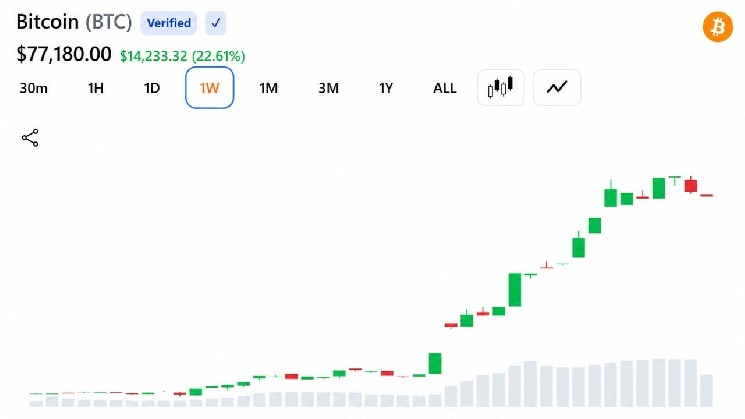
Entering 2026, Bitcoin's price saw a significant correction, trading volume declined, and investor risk appetite for crypto stocks rapidly cooled. BitGo, as the first crypto IPO of 2026, listed in January at a price of $18. Despite a brief rise on the first day, its price subsequently fell, at one point dropping to $7, and has now recovered to $11.9.
Specifically, the listing pace of several leading companies has noticeably slowed. Kraken's parent company, Payward, confidentially filed an S-1 form in November 2025, originally planning to proceed in Q1 2026, with a valuation once targeting $20 billion. On March 18th this year, the company paused its plans citing "difficult market conditions." Co-CEO Arjun Sethi stated that despite a recent funding round lowering the valuation to $13.3 billion, the IPO filing remains active, awaiting the optimal window.

Arjun Sethi
Ledger's pause was more abrupt. Known for its hardware wallets and enterprise-grade infrastructure, reports in January 2026 indicated it had hired investment banks to prepare for a U.S. listing with a target valuation of $4 billion. According to sources familiar with the matter, Ledger decided to hold off due to unfavorable market conditions and did not initiate the formal filing process. A company spokesperson declined to comment but indicated a possible turn towards private financing to sustain growth.
Notably, just in March, Ledger appointed former Circle executive John Andrews as CFO and opened a New York office to strengthen its U.S. business presence. This expansion shows its business strategy remains unchanged, and the listing suspension is more a result of external pressures.
Meanwhile, MetaMask parent company Consensys has also joined the wait-and-see ranks. The company had hired JPMorgan and Goldman Sachs as underwriters, originally planning to submit its S-1 form around the end of February, targeting a 2026 listing. However, due to weak market conditions, Consensys has postponed its IPO to at least this autumn.
The suspension of these crypto company IPOs is, of course, the result of multiple overlapping factors.
The stock performance of the first wave of crypto IPOs in 2025 has heightened market caution towards the 2026 listing window.
This year, Circle's stock price has fallen from a high of $300 to below $50 at one point, and Bullish's dropped from $118 to below $25. Even BitGo, the first crypto IPO of 2026, was not spared—after listing at $18 in January, it briefly rebounded but then fell all the way to around $7 at its lowest.
This year's performance collectively confirms that crypto-related stocks can easily attract capital during the tail end of a bull market but struggle to resist valuation resets during cyclical downturns. Traditional institutional investors are significantly increasing their risk premium requirements for "cycle-bound" assets.
In stark contrast to the "cooling-off period" for crypto IPOs, the AI sector is experiencing a dual climax of IPOs and financing in 2026.
SpaceX has initiated IPO preparations with a target valuation as high as $1.75 trillion to $2 trillion, making it one of the most anticipated tech listings globally.

OpenAI's valuation is approaching $1 trillion and is in close communication with multiple investment banks regarding its listing path; Anthropic's valuation is nearing $900 billion and is also actively preparing IPO materials. The AI narrative, backed by the certainty of a "productivity revolution," is attracting a massive influx of long-term capital. Even in an environment of macroeconomic uncertainty, AI-related IPOs still garner far higher risk appetite than crypto assets.
In contrast, crypto companies are highly dependent on Bitcoin prices and trading volume, with more volatile revenue, making it difficult to provide the certainty of "exponential growth" promised by AI companies. This cross-sector disparity in cold and hot sentiment further amplifies investors' wait-and-see attitude towards crypto IPOs and also forces crypto enterprises to accelerate their transition from "storytelling" to "focusing on cash flow and compliance."
Furthermore, crypto companies are adopting a more pragmatic strategic shift: while private financing scales have shrunk, it can still provide a buffer; some companies choose to first optimize product lines, expand into stablecoins or institutional services, and wait to list after Bitcoin stabilizes at higher levels and market conditions improve.
The implications of this phenomenon for the industry warrant deep thought.
On one hand, it accelerates the survival of the fittest. Weaker projects face increased difficulty in financing, and resources concentrate towards companies with strong compliance and solid infrastructure, such as Ledger's institutional-grade platform and Kraken's custody business. On the other hand, it highlights the crypto industry's transition from story-driven to performance-driven. Companies that truly survive across cycles are winning long-term trust by building resilient cash flows and enhancing transparency. However, in the short term, the narrowing IPO window may lead to valuation resets and affect confidence and liquidity across the entire ecosystem.
Looking ahead, if Bitcoin returns to $90,000 or even higher, and regulatory legislation further materializes, a second wave of IPOs may emerge in the second half of 2026.