Google's AI Talent Loss: A Stress Test or a Prelude to an 'Obituary'?

marsbitPublicado em 2026-06-21Última atualização em 2026-06-21

Resumo

The departure of high-profile AI talent from Google, including transformer pioneer Noam Shazeer and AlphaFold's John Jumper, has sparked debate about the company's competitive position. However, this is less a sign of decline than a pressure test typical of the pre-IPO talent wars among AI giants like OpenAI and Anthropic. Google's true strength lies not just in models but in its unparalleled full-stack position: extensive AI research, proprietary infrastructure (TPU, Google Cloud), a massive user base across products (Search, YouTube, Android), and established enterprise relationships. It is simultaneously a competitor and a key infrastructure provider for rivals. While facing the innovator's dilemma inherent to protecting its core search business, Google is aggressively integrating AI across its ecosystem. The narrative shouldn't focus on individual departures but on Google's systemic advantages—its deep talent pool, integrated product strategy, and capacity to compete across every layer of the AI stack for the long term.

Author: Vivi

When a top AI researcher leaves Google, people might say it's a career choice. But when three high-profile AI talents leave one after another, many start writing Google's 'obituary'.

Noam Shazeer, Google Engineering VP and co-lead of Gemini, announced his departure from Google to join OpenAI. Noam is no ordinary AI researcher. He was one of the authors of the legendary 2017 paper 'Attention Is All You Need'. It was this paper that proposed the Transformer architecture, laying the foundation for today's era of large language models.

Image source: Noam Shazeer LinkedIn Profile

John Jumper, Google DeepMind VP, is leaving Google DeepMind to join Anthropic. Jumper helped create AlphaFold, the protein structure prediction system that revolutionized biology and drug discovery. In 2024, he and Demis Hassabis, co-founder and CEO of Google DeepMind, shared the Nobel Prize in Chemistry.

Image source: The Gairdner Foundation

Daniel De Freitas, longtime collaborator of Noam Shazeer and co-founder of Character.AI, is also part of this talent exodus story. He is not as widely known as Noam, but is very important in the history of conversational AI. He and Noam both worked on conversational AI at Google early on, later leaving Google in 2021 to found Character.AI, which created one of the earliest wildly popular consumer-grade AI chatbots. In 2024, Google brought them and part of the Character.AI team back to Google through a deal reportedly worth up to $2.7 billion. Now, their names are once again linked to the question: 'Can Google retain the talent that defined the conversational AI era?'

Image source: Business Insider

So, yes, market concern is understandable because this is not just ordinary employee turnover. These three individuals touch upon the three most important threads of modern AI: Transformer, conversational AI, and AlphaFold.

For a Google that is trying hard to prove to the world that Gemini can compete with OpenAI and Anthropic, this is undoubtedly painful.

But an 'obituary' is not the right framework. Talent drain is a warning signal, not a death certificate.

Interpreting from another angle - Google is being poached not because it's already unimportant. On the contrary, precisely because it remains critically important.

OpenAI and Anthropic are both young, hungry, AI giants on the eve of their IPOs. They are competing for talent, credibility, and market momentum. Where do they go when they want the world's top AI talent?

They go to Google.

Looking at it another way, this itself says one thing: Google is still one of the world's deepest pools of AI talent.

These departures are certainly not meaningless. Losing talents like Noam Shazeer, John Jumper, and Daniel De Freitas is certainly painful. They are not names that can be easily replaced.

But the real question should not just be: 'What exactly is wrong with Google?'

It should be: 'Beyond any individual genius, what else does Google have?'

I'd prefer to see it as a stress test, and Google might still be one of the few companies capable of withstanding this pressure test.

Let me elaborate.

1. First Look at the Background: This is a Classic Talent War on the Eve of IPOs

First, we must understand this is not just a Google story. It's also a classic Silicon Valley talent war on the eve of IPOs.

OpenAI and Anthropic are no longer the small research labs of a few years ago; they are now AI giants, entering the period scrutinized by capital markets.

Image source: TechCrunch

They need capital, customers, computing power, enterprise trust, regulatory credibility, and, most importantly, top-tier talent.

At this stage, top AI talent itself becomes part of the valuation narrative.

Noam Shazeer joining OpenAI sends the signal: OpenAI can still attract those who invented the foundational technology of the LLM era.

John Jumper joining Anthropic sends the signal: Anthropic is not just about Claude; it also wants to be seen as a serious frontier AI and AI for Science institution.

These hirings tell investors, employees, clients, and the entire AI community: the best people still believe in our mission.

This is also why this talent war appears so dramatic.

But it's too simplistic to interpret it as: 'Google must have a huge problem, that's why talent is leaving.'

Silicon Valley has never operated that way. Talent flows. Excellent people leaving excellent companies is a normal thing. They might leave for a new mission, bigger equity returns, faster decision-making, more autonomy, or simply entering a different stage in life.

This isn't necessarily a scandal.

In fact, a key reason Silicon Valley became an innovation engine is its extremely high talent mobility. Especially in California, where non-compete clauses are heavily restricted, people can freely move, start companies, compete, and start over.

This freedom is, of course, uncomfortable for many companies. But for the ecosystem, it's crucial.

2. Looking at Google's Real Advantage: It's Not Just a Model Company

Another common misconception is reducing the AI race to model leaderboards.

But Google's advantage is much bigger than benchmarks.

Of course, benchmarks are important.

Power users care about whether Claude writes code better, GPT has stronger reasoning, Gemini has better long-context, multimodal, or tool-calling performance, or if a model has a better personality, usability, or stronger agentic workflows.

Gemini also still needs to prove itself in areas where OpenAI and Anthropic have already established strong mindshare.

But the AI market is far larger than benchmarks.

Most average users don't wake up thinking: 'Which model should I use today?'

They want their email summarized, their schedule organized, their photos searchable, YouTube videos interpreted, and Docs, Gmail, Search, Maps, and Android to become smarter.

This is precisely Google's massive advantage.

OpenAI and Anthropic are excellent model companies. But Google's positioning is completely different: it's a full-stack AI company.
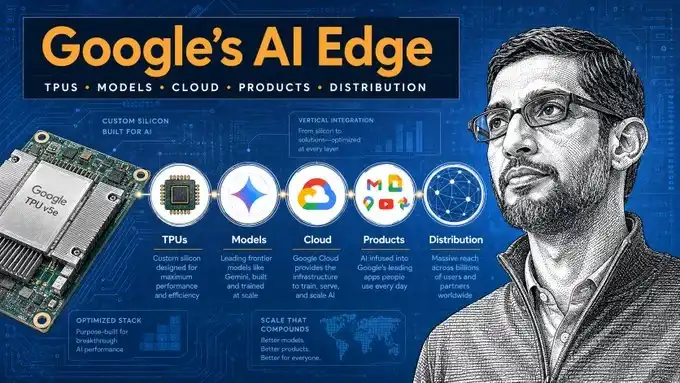
It has infrastructure: TPUs, data centers, Google Cloud, AI Hypercomputer.

It has models: Gemini, Gemma, Veo, Imagen, AlphaFold, and the deep research heritage from Google Brain and DeepMind.

It has products: Search, YouTube, Android, Chrome, Gmail, Workspace, Maps, Photos, Pixel.

It has revenue engines: Search Ads, YouTube Ads, subscriptions, Cloud, enterprise products.

Most importantly, it has distribution: billions of users are already in its ecosystem.

Most AI startups spend heavily to acquire users; Google already has a massive existing user base. Most AI startups need to build user habits from scratch; Google is already part of many people's daily routines.

Similarly, most AI startups need to convince enterprises to trust them; Google is already selling Cloud, Workspace, security, productivity, and infrastructure services to enterprises globally.

This is why the 'Google is doomed' narrative doesn't hold up.

Public opinion easily amplifies panic, but a calm look reveals Google possesses advantages most companies don't: an invisible AI intelligence layer.

The most successful consumer AI might not make users feel they're 'using AI'.

OpenAI and Anthropic need to pull users into their products; Google can push AI into the products users already use every day.

This is a very deep distribution advantage.

Search is also part of this advantage, even though it's often portrayed as Google's biggest weakness.

The bearish logic is clear: if AI changes how people access information, Google's core search business could be disrupted.

This risk is real.

Google's search advertising business is one of the most profitable in tech history. It funds AI research, YouTube infrastructure, Cloud expansion, moonshots, and massive capital expenditures.

So Google's moves here will be extra cautious. But Search isn't just a weakness for Google; it's also a superweapon.

Search gives Google distribution, user intent data, advertiser relationships, billions of daily user interactions, and a direct channel to push AI to mainstream users.

If Google can manage this transition well, Search won't simply be replaced by AI; it will become AI-native.

This process will inevitably create messy scenes - publishers will complain, advertisers will have issues, regulators will watch closely, and users will need time to build trust in AI-generated answers.

But if Google can evolve Search from a list of links into a personalized, multimodal, agentic answer engine, it will still be one of the most important gateways to the internet.

The question now is: Can Google change itself before someone else changes Search?

Google has another severely underestimated advantage: Google can even win when its competitors succeed.

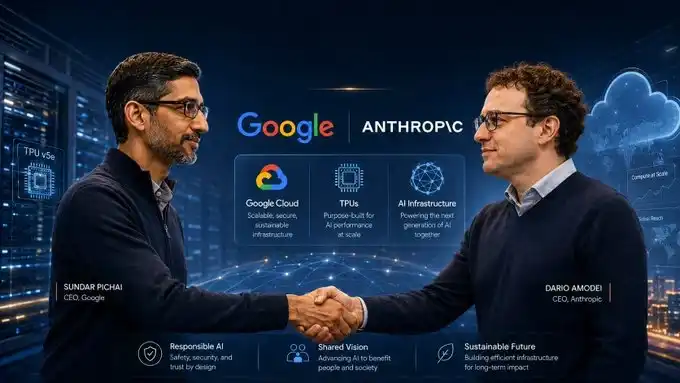
Anthropic isn't just Google's competitor. It's also its strategic partner.

Let's look at the data:

Google's parent company Alphabet has committed to invest up to $400 billion in Anthropic, including a $100 billion cash investment at a reported valuation of $3.5 trillion, with another $300 billion tied to performance goals.

Meanwhile, Anthropic reportedly committed to spending $2 trillion on Google Cloud over five years.

This isn't just a financial investment. Anthropic also announced plans to use up to 1 million Google TPUs, worth hundreds of billions of dollars, and expects to bring over 1GW of computing capacity.

This means one of Google's most important AI rivals could also become one of Google Cloud's most important AI infrastructure customers.
OpenAI has also reportedly turned to Google Cloud for additional computing power.

So Google isn't just participating in the AI model race; it's also becoming part of the underlying infrastructure for other frontier AI companies.

In the AI gold rush, Google isn't just trying to dig for gold itself.

It's also selling shovels, roads, electricity, and cloud infrastructure.

This is a very strong position.

The model race is extremely expensive. Training and serving frontier models requires massive computing power. Even the most successful AI companies need infrastructure partners.

Google has spent many years building its own chips, cloud capacity, and AI infrastructure. Now, even its rivals may need to rely on parts of its tech stack. This is its underlying strength.

Finally, it's worth mentioning that Google's AI ambitions aren't limited to chatbots; they also include AI for Science.

The Nobel Prize-winning AlphaFold is the best example. AlphaFold changed scientists' understanding of protein structure prediction, accelerated biological research, and proved AI isn't just for generating text but can solve truly difficult scientific problems.

This is crucial for the long-term AI race because, ultimately, the biggest AI winners might not just be the companies with the strongest consumer chatbots; they could also be those that can apply AI to science, medicine, climate, education, robotics, and deep technology infrastructure.

Google DeepMind has always had this larger ambition.

Indeed, John Jumper's departure might be Google's 'what could have been', as he represented one of Google's most important victories in AI for Science.

But AlphaFold wasn't the product of any single genius working alone. It came from a team and a research culture: the determination to commit long-term to world-class problems before the market was fully focused.

This culture is rare, and Google still has it.

3. The Real Innovator's Dilemma

So, does Google face the Innovator's Dilemma?

Certainly, no company is immune.

Google's core Search business is both its greatest asset and its biggest constraint.

Startups can charge forward with pure hunger. Google must protect a global business, a brand, regulatory risks, advertisers, publishers, enterprise clients, and billions of users.

This slows decision-making, makes product launches more cautious, and complicates internal coordination - this is the part many criticize.

Google has certainly made mistakes, for instance, Bard's launch was rocky.

Gemini itself has experienced its fair share of public setbacks.

But the important question isn't whether Google has weaknesses; it's: Is Google adapting and adjusting?

I think it is.

The Character.AI story well illustrates this boldness.

Noam Shazeer and Daniel De Freitas left Google to found Character.AI in 2021 and grew quickly. Later, Google decisively brought them and part of the Character.AI team back to Google through a massive deal.

This is the core tension in Google's AI story: Google was too cautious early on, appearing sluggish compared to startups; but later, Google reorganized, refocused, and started pushing Gemini across its entire ecosystem, turning it into an intelligence layer spanning Search, Workspace, Android, Cloud, and consumer products.

This doesn't mean Google can move like a 200-person startup. That's unrealistic.

But when the organization is aligned, it can move like a full-stack AI empire.

This distinction is very important - the Innovator's Dilemma is real, but Google isn't ignoring it.

From revolutionizing Search to integrating Gemini, what we see is the effort of a tech giant in transition.

4. Conclusion: This is a Stress Test, Not an Obituary

The departure of top-tier talent is more like a stress test for Google, not an obituary.

This company is facing one of the most difficult transitions in its history, but it's also one of the few with enough resources, tech stack, and distribution power to navigate this transition.

In the AI era, the shiniest model might win a news cycle; the most aggressive startup might grab headlines in the talent war.

But the best integrated system might win the next decade.

This is why I remain confident in Google - not because Google is perfect, but because Google is one of the few companies that can compete at every layer of the AI future.

The AI race is far from over, and Google is playing a long game.

Criptomoedas em alta

Perguntas relacionadas

QWhat is the main reason the article suggests for the recent high-profile AI talent departures from Google?

AThe article frames the departures primarily as part of a typical 'IPO eve talent war,' where companies like OpenAI and Anthropic are seeking top talent to bolster their credibility and market narrative before going public, rather than solely as a sign of Google's internal decline.

QAccording to the article, what is Google's key strategic advantage over pure model companies like OpenAI and Anthropic?

AGoogle's key advantage is its position as a 'full-stack AI company.' It has a massive ecosystem of widely-used products (Search, YouTube, Android, Workspace, etc.), vast infrastructure (TPUs, data centers, Google Cloud), and billions of existing users, allowing it to integrate AI directly into daily user habits rather than having to pull users into a new product.

QHow does the article reframe Google's role in the AI competition beyond just being a model competitor?

AThe article reframes Google as also being a crucial infrastructure provider in the AI 'gold rush.' It notes that even competitors like Anthropic and OpenAI are becoming significant customers of Google Cloud and its TPU chips, meaning Google profits from and underpins the infrastructure needs of the broader AI ecosystem.

QWhat example does the article give to show that Google is willing to be aggressive and adapt, despite its size?

AThe article cites the Character.AI story. After Noam Shazeer and Daniel De Freitas left Google to found Character.AI, Google later orchestrated a massive deal (reportedly around $27 billion) to bring them and part of their team back into the company, demonstrating a willingness to make bold moves to secure strategic talent and assets.

QWhat is the article's final conclusion about the significance of the AI talent leaving Google?

AThe article concludes that the talent departures are more accurately seen as a 'stress test' for Google, not an 'obituary.' It argues that while painful, Google possesses the unique resources, technology stack, and distribution scale to navigate this transition and compete in the long-term, multi-layered AI landscape.

Leituras Relacionadas

The Hunter Becomes the Hunted: The Most Profitable MEV Bot Gets Hacked

A well-known and highly profitable Ethereum MEV Bot, Jaredfromsubway.eth, suffered a sophisticated on-chain attack this Saturday, losing over $7.5 million. Analysis by Blockaid and others reveals this was not a conventional phishing or smart contract exploit, but a targeted "counter-MEV honeypot attack." The attacker meticulously laid a trap over several weeks, deploying 66 fake token contracts and liquidity pools disguised as major assets like WETH and USDC. These pools created the illusion of arbitrage opportunities. The MEV Bot's automated system detected these signals, executed trades, and in the process, granted approval permissions to attacker-controlled contracts. These approvals were not revoked, creating a persistent vulnerability. The attacker then exploited this in a single transaction, draining the bot's ETH, USDC, and USDT holdings. Jaredfromsubway.eth is notorious as one of Ethereum's most active and profitable MEV Bots, primarily known for executing "sandwich attacks" to profit from transaction slippage. Estimates suggest it has earned tens of millions in MEV revenue. The incident highlights escalating crypto security threats, demonstrating that even top-tier automated "predators" are vulnerable to novel, logic-based attacks designed to exploit their own operational rules. Following the hack, an unverified X account impersonating Jaredfromsubway.eth emerged, falsely offering a bounty for the return of funds, prompting developer warnings for users to stay vigilant.

marsbitHá 1h

The Hunter Becomes the Hunted: The Most Profitable MEV Bot Gets Hacked

marsbitHá 1h

The Reality of Payments in Latin America Is Not What You Think

The payment landscape in Latin America is undergoing a fundamental shift, driven by on-the-ground realities that challenge common perceptions. Based on over 500 hours of field research across the region, key insights emerge. Firstly, QR code payments, like Brazil's Pix, are becoming the dominant payment method in most emerging markets, overtaking cards. However, these domestic instant payment systems lack international interoperability, creating a significant gap for cross-border users. Secondly, the narrative around crypto cards is often misunderstood; their primary volume comes from high-net-worth professionals using them for salary conversions (e.g., USDT to local currency via Pix), not retail micro-payments. Competition in payments is shifting from customer acquisition to controlling the settlement layer, leading fintechs to acquire banking licenses for efficiency. Thirdly, treating "Latin America" as a single market is a mistake. Countries like Argentina, Brazil, and Mexico have distinct economic realities, user segments, and regulatory approaches. Brazil alone has at least five distinct user segments with different financial flows. Overlooked markets like Guatemala, Honduras, and El Salvador (the "forgotten five") offer high remittance volumes with lower competitive density. Finally, regulation in Latin America is often ahead of the US, with clearer frameworks for digital assets and a pragmatic approach from regulators focused on safety rather than obstruction. The margin on stablecoin forex is rapidly compressing toward zero, meaning future winners will be those building value-added services on top of the infrastructure, not just the cheapest exchange.

marsbitHá 1h

The Reality of Payments in Latin America Is Not What You Think

marsbitHá 1h

Making Music in a Bear Market: The Survival Experiment of a Bitcoin Band

"Orange Pill Jam: A Bitcoin Band's Survival in the Bear Market" Orange Pill Jam is a musical group exploring themes of financial sovereignty and privacy, born from the Bitcoin community. Formed after singer Mermaid performed her song "Dollar Apocalypse" at a 2022 conference, the band creates music intended for both Bitcoin enthusiasts and general audiences. Their creative process involves Mermaid writing lyrics and melodies, which producer/multi-instrumentalist Michi then shapes with a precise, rhythm-focused approach, often demanding numerous retakes to achieve his unique standard of timing. Their songs, like "Cypherpunks' Manifesto" and "Fire of Freedom," tackle concepts of digital privacy, the pitfalls of "free" services, and personal sovereignty, influenced by experiences in places like El Salvador. Despite operating in a crypto bear market with a Copyleft model (offering music for free sharing/remixing and accepting optional Bitcoin donations), they face practical challenges. Their growth is slow on platforms like YouTube and Spotify, which aren't optimized for their niche content. The band also navigates the rise of AI-generated music. While acknowledging AI's efficiency for certain tasks, they believe human creativity occupies a unique space that algorithms cannot replicate—the ability to create new genres and capture intangible rhythmic feeling. For Orange Pill Jam, the core argument for both Bitcoin in a downturn and human artistry in the AI age lies in this irreplaceable, intentional, and imperfectly human creative process. Their project persists as an anti-algorithm experiment, valuing the unquantifiable impact of music over scalable metrics.

marsbitHá 1h

Making Music in a Bear Market: The Survival Experiment of a Bitcoin Band

marsbitHá 1h

Trading

Spot
Futuros

Artigos em Destaque

O que é $S$

Compreender o SPERO: Uma Visão Abrangente Introdução ao SPERO À medida que o panorama da inovação continua a evoluir, o surgimento de tecnologias web3 e projetos de criptomoeda desempenha um papel fundamental na formação do futuro digital. Um projeto que tem atraído atenção neste campo dinâmico é o SPERO, denotado como SPERO,$$s$. Este artigo tem como objetivo reunir e apresentar informações detalhadas sobre o SPERO, para ajudar entusiastas e investidores a compreender as suas bases, objetivos e inovações nos domínios web3 e cripto. O que é o SPERO,$$s$? O SPERO,$$s$ é um projeto único dentro do espaço cripto que procura aproveitar os princípios da descentralização e da tecnologia blockchain para criar um ecossistema que promove o envolvimento, a utilidade e a inclusão financeira. O projeto é concebido para facilitar interações peer-to-peer de novas maneiras, proporcionando aos utilizadores soluções e serviços financeiros inovadores. No seu núcleo, o SPERO,$$s$ visa capacitar indivíduos ao fornecer ferramentas e plataformas que melhoram a experiência do utilizador no espaço das criptomoedas. Isso inclui a possibilidade de métodos de transação mais flexíveis, a promoção de iniciativas impulsionadas pela comunidade e a criação de caminhos para oportunidades financeiras através de aplicações descentralizadas (dApps). A visão subjacente do SPERO,$$s$ gira em torno da inclusão, visando fechar lacunas dentro das finanças tradicionais enquanto aproveita os benefícios da tecnologia blockchain. Quem é o Criador do SPERO,$$s$? A identidade do criador do SPERO,$$s$ permanece algo obscura, uma vez que existem recursos publicamente disponíveis limitados que fornecem informações detalhadas sobre o(s) seu(s) fundador(es). Esta falta de transparência pode resultar do compromisso do projeto com a descentralização—uma ética que muitos projetos web3 partilham, priorizando contribuições coletivas em vez de reconhecimento individual. Ao centrar as discussões em torno da comunidade e dos seus objetivos coletivos, o SPERO,$$s$ incorpora a essência do empoderamento sem destacar indivíduos específicos. Assim, compreender a ética e a missão do SPERO é mais importante do que identificar um criador singular. Quem são os Investidores do SPERO,$$s$? O SPERO,$$s$ é apoiado por uma diversidade de investidores que vão desde capitalistas de risco a investidores-anjo dedicados a promover a inovação no setor cripto. O foco desses investidores geralmente alinha-se com a missão do SPERO—priorizando projetos que prometem avanço tecnológico social, inclusão financeira e governança descentralizada. Essas fundações de investidores estão tipicamente interessadas em projetos que não apenas oferecem produtos inovadores, mas que também contribuem positivamente para a comunidade blockchain e os seus ecossistemas. O apoio desses investidores reforça o SPERO,$$s$ como um concorrente notável no domínio em rápida evolução dos projetos cripto. Como Funciona o SPERO,$$s$? O SPERO,$$s$ emprega uma estrutura multifacetada que o distingue de projetos de criptomoeda convencionais. Aqui estão algumas das características-chave que sublinham a sua singularidade e inovação: Governança Descentralizada: O SPERO,$$s$ integra modelos de governança descentralizada, capacitando os utilizadores a participar ativamente nos processos de tomada de decisão sobre o futuro do projeto. Esta abordagem promove um sentido de propriedade e responsabilidade entre os membros da comunidade. Utilidade do Token: O SPERO,$$s$ utiliza o seu próprio token de criptomoeda, concebido para servir várias funções dentro do ecossistema. Esses tokens permitem transações, recompensas e a facilitação de serviços oferecidos na plataforma, melhorando o envolvimento e a utilidade gerais. Arquitetura em Camadas: A arquitetura técnica do SPERO,$$s$ suporta modularidade e escalabilidade, permitindo a integração contínua de funcionalidades e aplicações adicionais à medida que o projeto evolui. Esta adaptabilidade é fundamental para manter a relevância no panorama cripto em constante mudança. Envolvimento da Comunidade: O projeto enfatiza iniciativas impulsionadas pela comunidade, empregando mecanismos que incentivam a colaboração e o feedback. Ao nutrir uma comunidade forte, o SPERO,$$s$ pode melhor atender às necessidades dos utilizadores e adaptar-se às tendências do mercado. Foco na Inclusão: Ao oferecer taxas de transação baixas e interfaces amigáveis, o SPERO,$$s$ visa atrair uma base de utilizadores diversificada, incluindo indivíduos que anteriormente podem não ter participado no espaço cripto. Este compromisso com a inclusão alinha-se com a sua missão abrangente de empoderamento através da acessibilidade. Cronologia do SPERO,$$s$ Compreender a história de um projeto fornece insights cruciais sobre a sua trajetória de desenvolvimento e marcos. Abaixo está uma cronologia sugerida que mapeia eventos significativos na evolução do SPERO,$$s$: Fase de Conceituação e Ideação: As ideias iniciais que formam a base do SPERO,$$s$ foram concebidas, alinhando-se de perto com os princípios de descentralização e foco na comunidade dentro da indústria blockchain. Lançamento do Whitepaper do Projeto: Após a fase conceitual, um whitepaper abrangente detalhando a visão, os objetivos e a infraestrutura tecnológica do SPERO,$$s$ foi lançado para atrair o interesse e o feedback da comunidade. Construção da Comunidade e Primeiros Envolvimentos: Esforços ativos de divulgação foram feitos para construir uma comunidade de primeiros adotantes e investidores potenciais, facilitando discussões em torno dos objetivos do projeto e angariando apoio. Evento de Geração de Tokens: O SPERO,$$s$ realizou um evento de geração de tokens (TGE) para distribuir os seus tokens nativos a apoiantes iniciais e estabelecer liquidez inicial dentro do ecossistema. Lançamento da dApp Inicial: A primeira aplicação descentralizada (dApp) associada ao SPERO,$$s$ foi lançada, permitindo que os utilizadores interagissem com as funcionalidades principais da plataforma. Desenvolvimento Contínuo e Parcerias: Atualizações e melhorias contínuas nas ofertas do projeto, incluindo parcerias estratégicas com outros players no espaço blockchain, moldaram o SPERO,$$s$ em um jogador competitivo e em evolução no mercado cripto. Conclusão O SPERO,$$s$ é um testemunho do potencial do web3 e das criptomoedas para revolucionar os sistemas financeiros e capacitar indivíduos. Com um compromisso com a governança descentralizada, o envolvimento da comunidade e funcionalidades inovadoras, abre caminho para um panorama financeiro mais inclusivo. Como em qualquer investimento no espaço cripto em rápida evolução, potenciais investidores e utilizadores são incentivados a pesquisar minuciosamente e a envolver-se de forma ponderada com os desenvolvimentos em curso dentro do SPERO,$$s$. O projeto demonstra o espírito inovador da indústria cripto, convidando a uma exploração mais aprofundada das suas inúmeras possibilidades. Embora a jornada do SPERO,$$s$ ainda esteja a desenrolar-se, os seus princípios fundamentais podem, de facto, influenciar o futuro de como interagimos com a tecnologia, as finanças e uns com os outros em ecossistemas digitais interconectados.

72 Visualizações TotaisPublicado em {updateTime}Atualizado em 2024.12.17

O que é $S$

O que é AGENT S

Agent S: O Futuro da Interação Autónoma no Web3 Introdução No panorama em constante evolução do Web3 e das criptomoedas, as inovações estão constantemente a redefinir a forma como os indivíduos interagem com plataformas digitais. Um projeto pioneiro, o Agent S, promete revolucionar a interação humano-computador através do seu framework aberto e agente. Ao abrir caminho para interações autónomas, o Agent S visa simplificar tarefas complexas, oferecendo aplicações transformadoras em inteligência artificial (IA). Esta exploração detalhada irá aprofundar-se nas complexidades do projeto, nas suas características únicas e nas implicações para o domínio das criptomoedas. O que é o Agent S? O Agent S é um framework aberto e agente, especificamente concebido para abordar três desafios fundamentais na automação de tarefas computacionais: Aquisição de Conhecimento Específico de Domínio: O framework aprende inteligentemente a partir de várias fontes de conhecimento externas e experiências internas. Esta abordagem dupla capacita-o a construir um rico repositório de conhecimento específico de domínio, melhorando o seu desempenho na execução de tarefas. Planeamento ao Longo de Longos Horizontes de Tarefas: O Agent S emprega planeamento hierárquico aumentado por experiência, uma abordagem estratégica que facilita a decomposição e execução eficientes de tarefas intrincadas. Esta característica melhora significativamente a sua capacidade de gerir múltiplas subtarefas de forma eficiente e eficaz. Gestão de Interfaces Dinâmicas e Não Uniformes: O projeto introduz a Interface Agente-Computador (ACI), uma solução inovadora que melhora a interação entre agentes e utilizadores. Utilizando Modelos de Linguagem Multimodais de Grande Escala (MLLMs), o Agent S pode navegar e manipular diversas interfaces gráficas de utilizador de forma fluida. Através destas características pioneiras, o Agent S fornece um framework robusto que aborda as complexidades envolvidas na automação da interação humana com máquinas, preparando o terreno para uma infinidade de aplicações em IA e além. Quem é o Criador do Agent S? Embora o conceito de Agent S seja fundamentalmente inovador, informações específicas sobre o seu criador permanecem elusivas. O criador é atualmente desconhecido, o que destaca ou o estágio nascente do projeto ou a escolha estratégica de manter os membros fundadores em anonimato. Independentemente da anonimidade, o foco permanece nas capacidades e no potencial do framework. Quem são os Investidores do Agent S? Como o Agent S é relativamente novo no ecossistema criptográfico, informações detalhadas sobre os seus investidores e financiadores não estão explicitamente documentadas. A falta de informações disponíveis publicamente sobre as fundações de investimento ou organizações que apoiam o projeto levanta questões sobre a sua estrutura de financiamento e roteiro de desenvolvimento. Compreender o apoio é crucial para avaliar a sustentabilidade do projeto e o seu impacto potencial no mercado. Como Funciona o Agent S? No núcleo do Agent S reside uma tecnologia de ponta que lhe permite funcionar eficazmente em diversos ambientes. O seu modelo operacional é construído em torno de várias características-chave: Interação Humano-Computador Semelhante: O framework oferece planeamento avançado em IA, esforçando-se para tornar as interações com computadores mais intuitivas. Ao imitar o comportamento humano na execução de tarefas, promete elevar as experiências dos utilizadores. Memória Narrativa: Utilizada para aproveitar experiências de alto nível, o Agent S utiliza memória narrativa para acompanhar os históricos de tarefas, melhorando assim os seus processos de tomada de decisão. Memória Episódica: Esta característica fornece aos utilizadores orientações passo a passo, permitindo que o framework ofereça suporte contextual à medida que as tarefas se desenrolam. Suporte para OpenACI: Com a capacidade de funcionar localmente, o Agent S permite que os utilizadores mantenham o controlo sobre as suas interações e fluxos de trabalho, alinhando-se com a ética descentralizada do Web3. Fácil Integração com APIs Externas: A sua versatilidade e compatibilidade com várias plataformas de IA garantem que o Agent S possa integrar-se perfeitamente em ecossistemas tecnológicos existentes, tornando-o uma escolha apelativa para desenvolvedores e organizações. Estas funcionalidades contribuem coletivamente para a posição única do Agent S no espaço cripto, à medida que automatiza tarefas complexas e em múltiplos passos com mínima intervenção humana. À medida que o projeto evolui, as suas potenciais aplicações no Web3 podem redefinir a forma como as interações digitais se desenrolam. Cronologia do Agent S O desenvolvimento e os marcos do Agent S podem ser encapsulados numa cronologia que destaca os seus eventos significativos: 27 de Setembro de 2024: O conceito de Agent S foi lançado num artigo de pesquisa abrangente intitulado “Um Framework Agente Aberto que Usa Computadores como um Humano”, mostrando a base para o projeto. 10 de Outubro de 2024: O artigo de pesquisa foi disponibilizado publicamente no arXiv, oferecendo uma exploração aprofundada do framework e da sua avaliação de desempenho com base no benchmark OSWorld. 12 de Outubro de 2024: Uma apresentação em vídeo foi lançada, proporcionando uma visão visual das capacidades e características do Agent S, envolvendo ainda mais potenciais utilizadores e investidores. Estes marcos na cronologia não apenas ilustram o progresso do Agent S, mas também indicam o seu compromisso com a transparência e o envolvimento da comunidade. Pontos-Chave Sobre o Agent S À medida que o framework Agent S continua a evoluir, várias características-chave destacam-se, sublinhando a sua natureza inovadora e potencial: Framework Inovador: Concebido para proporcionar um uso intuitivo de computadores semelhante à interação humana, o Agent S traz uma abordagem nova à automação de tarefas. Interação Autónoma: A capacidade de interagir autonomamente com computadores através de GUI significa um avanço em direção a soluções computacionais mais inteligentes e eficientes. Automação de Tarefas Complexas: Com a sua metodologia robusta, pode automatizar tarefas complexas e em múltiplos passos, tornando os processos mais rápidos e menos propensos a erros. Melhoria Contínua: Os mecanismos de aprendizagem permitem que o Agent S melhore a partir de experiências passadas, aprimorando continuamente o seu desempenho e eficácia. Versatilidade: A sua adaptabilidade em diferentes ambientes operacionais, como OSWorld e WindowsAgentArena, garante que pode servir uma ampla gama de aplicações. À medida que o Agent S se posiciona no panorama do Web3 e das criptomoedas, o seu potencial para melhorar as capacidades de interação e automatizar processos significa um avanço significativo nas tecnologias de IA. Através do seu framework inovador, o Agent S exemplifica o futuro das interações digitais, prometendo uma experiência mais fluida e eficiente para os utilizadores em diversas indústrias. Conclusão O Agent S representa um ousado avanço na união da IA e do Web3, com a capacidade de redefinir a forma como interagimos com a tecnologia. Embora ainda esteja nas suas fases iniciais, as possibilidades para a sua aplicação são vastas e cativantes. Através do seu framework abrangente que aborda desafios críticos, o Agent S visa trazer interações autónomas para o primeiro plano da experiência digital. À medida que avançamos mais profundamente nos domínios das criptomoedas e da descentralização, projetos como o Agent S desempenharão, sem dúvida, um papel crucial na formação do futuro da tecnologia e da colaboração humano-computador.

686 Visualizações TotaisPublicado em {updateTime}Atualizado em 2025.01.14

O que é AGENT S

Como comprar S

Bem-vindo à HTX.com!Tornámos a compra de Sonic (S) simples e conveniente.Segue o nosso guia passo a passo para iniciar a tua jornada no mundo das criptos.Passo 1: cria a tua conta HTXUtiliza o teu e-mail ou número de telefone para te inscreveres numa conta gratuita na HTX.Desfruta de um processo de inscrição sem complicações e desbloqueia todas as funcionalidades.Obter a minha contaPasso 2: vai para Comprar Cripto e escolhe o teu método de pagamentoCartão de crédito/débito: usa o teu visa ou mastercard para comprar Sonic (S) instantaneamente.Saldo: usa os fundos da tua conta HTX para transacionar sem problemas.Terceiros: adicionamos métodos de pagamento populares, como Google Pay e Apple Pay, para aumentar a conveniência.P2P: transaciona diretamente com outros utilizadores na HTX.Mercado de balcão (OTC): oferecemos serviços personalizados e taxas de câmbio competitivas para os traders.Passo 3: armazena teu Sonic (S)Depois de comprar o teu Sonic (S), armazena-o na tua conta HTX.Alternativamente, podes enviá-lo para outro lugar através de transferência blockchain ou usá-lo para transacionar outras criptomoedas.Passo 4: transaciona Sonic (S)Transaciona facilmente Sonic (S) no mercado à vista da HTX.Acede simplesmente à tua conta, seleciona o teu par de trading, executa as tuas transações e monitoriza em tempo real.Oferecemos uma experiência de fácil utilização tanto para principiantes como para traders experientes.

1.3k Visualizações TotaisPublicado em {updateTime}Atualizado em 2026.06.02

Como comprar S

Discussões

Bem-vindo à Comunidade HTX. Aqui, pode manter-se informado sobre os mais recentes desenvolvimentos da plataforma e obter acesso a análises profissionais de mercado. As opiniões dos utilizadores sobre o preço de S (S) são apresentadas abaixo.

活动图片