From Shouting 150 Dollars to Liquidating HYPE in Just Three Days, How Much Credibility Does Arthur Hayes Have Left?

marsbitPublicado em 2026-06-09Última atualização em 2026-06-09

Resumo

How much of Arthur Hayes's market credibility remains? Recently, the "godfather of crypto perpetual swaps" and BitMEX co-founder has faced public criticism, including accusations from on-chain investigator ZachXBT about creating exit liquidity for his followers. Starting last week, Hayes executed multiple sudden sell-offs. He had repeatedly publicly predicted the HYPE token would reach $150. After a $100,000 bet defending Hyperliquid on June 1st, he announced just three days later that he had completely sold his HYPE and NEAR holdings, successfully exiting near the peak. He also sold ZEC and WLD. His sale of WLD appeared to be a classic "pump and dump" maneuver. On June 3rd, he publicly set a $10 target for WLD, causing its price to surge over 35%. By June 6th, he announced he had sold his WLD, citing "anomalous" SpaceX pre-IPO price action, which triggered a sharp price drop. On June 9th, Hayes published a lengthy article explaining his actions, citing factors like rising energy costs and a potential AI bubble burst. Consequently, his family office, Maelstrom, now holds positions in US energy producers and only core crypto assets BTC and ETH, having sold AI-related stocks and non-core cryptocurrencies. This pattern is not new. In 2025, he similarly touted HYPE before selling it at what turned out to be a cycle peak, only to repurchase it at the next cycle's low. Similar scenarios played out with tokens like ETHFI and ENA. Long-term observers have developed a strategy: i...

Original |Odaily Planet Daily(@OdailyChina)

Author |Golem(@web3_golem)
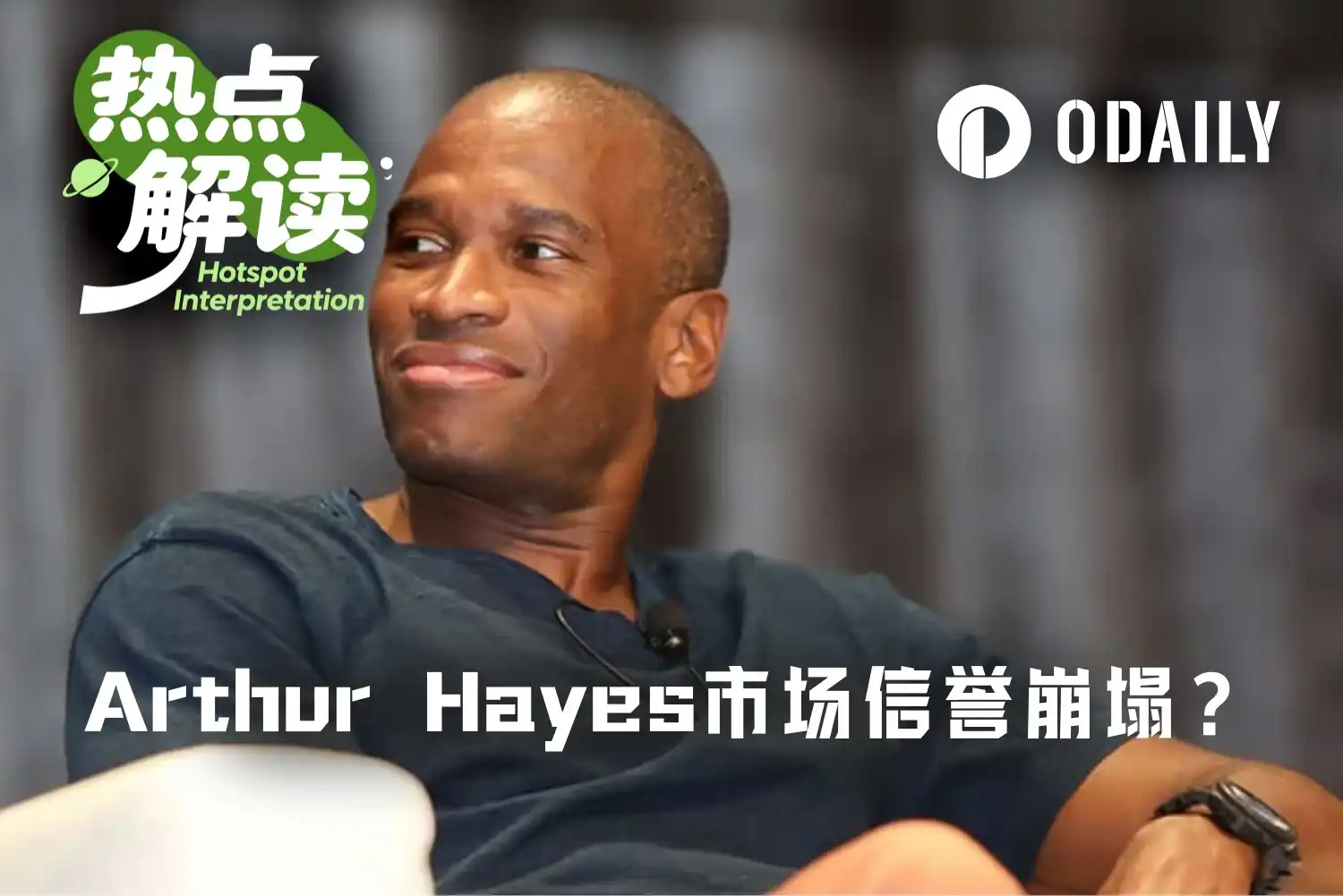
How much market credibility does Arthur Hayes have left? Recently, Arthur Hayes, the "Father of Crypto Perpetual Contracts" and co-founder of BitMEX, has faced public criticism, with on-chain detective ZachXBT also publicly questioning how much exit liquidity he has created using his followers.

Liquidated HYPE, NEAR, WLD

Starting last week, Arthur Hayes performed several unannounced selling operations to exit the top.

Arthur Hayes had repeatedly publicly stated that HYPE would rise to 150 dollars in this cycle. On June 1, Arthur Hayes was passionately criticizing and making a 100, 000 dollars bet with Kyle Samani, former co-founder of Multicoin Capital, for disparaging Hyperliquid. However, just 3 days later, Arthur Hayes announced he had completely liquidated his HYPE and NEAR holdings, with HYPE falling over 13.6% that day. His sell-off successfully exited at the top; HYPE hit a new high of 75.5 dollars on June 4 before falling continuously, currently trading around 62-64 dollars.

In addition to selling HYPE and NEAR, Arthur Hayes also liquidated ZEC and WLD. His liquidation of ZEC might be somewhat justified due to the Orchard Pool attack, but his selling of WLD resembled a classic "KOL cutting retail" operation: secretly accumulating, publicly shilling, and finally selling at a pumped price.

Because from publicly shilling WLD to liquidating WLD, Arthur Hayes only "acted" for 3 days. On June 3, the day before selling HYPE, Arthur Hayes publicly called for WLD to reach 10 dollars, suggesting WLD would become an alternative for investors who find it difficult to directly participate in SpaceX equity trading. After the news spread, WLD rose over 35% that day. But by June 6, Arthur Hayes changed his tune, stating he had sold all his WLD because SpaceX's pre-market price movement was "anomalous." This single, light explanation caused WLD to drop over 20% that day.

The difference between Arthur Hayes and "third-rate KOLs" is that he writes essays, often justifying his actions from the perspectives of macroeconomics and top-level design.

On June 9, Arthur Hayes published a lengthy essay, Reality Test (taking about 20 minutes to read fully), explaining his recent moves. He argued that three factors—rising energy costs due to restricted traffic in the Strait of Hormuz, the IPOs of the three major AI stocks (SpaceX, Anthropic, and OpenAI), and Trump turning against AI for mid-term elections—would burst the AI bubble.

Based on this, his family office Maelstrom holds significant positions in US-listed energy producers and has sold AI-related stocks and non-core crypto assets, holding only BTC and ETH.

Arthur Hayes' Words Shouldn't Be Heeded, But His Actions Must Be Watched

Arthur Hayes' articles are not only adept at using a large amount of economic data and charts to argue points but sometimes also overlay political and historical perspectives, leaving people dazzled. But when you take his words seriously and invest real money following his moves, he might announce the next day that he has liquidated and started talking down, seemingly forgetting what he said the day before, and your portfolio takes a simultaneous hit.

Such operations are common. As early as 2025, Arthur Hayes repeatedly played the "bullish one moment, liquidating the next" script. The most classic example remains HYPE. In August 2025, during a speech at WebX Japan, Arthur Hayes touted HYPE, claiming the token still had up to 126x upside potential (Odaily Note: price was 45.9 dollars that day), but just one month later, he announced he had sold all HYPE for millions in profit, citing the need to avoid token unlock risks.

This sale by Arthur Hayes was precisely at the peak of HYPE's last bull run, after which HYPE fell continuously. It wasn't until mid-January 2026 that Arthur Hayes started buying HYPE again on a large scale. Judging from the price action, his entry point was again the low point of this cycle's rally.

Similar examples include ETHFI and ENA, all involving public bullish statements, followed by unannounced sales, achieving precise exits at the top.(Related reading:You Ran Again First! A Review of Arthur Hayes' Exit Records)

Long-term followers of Arthur Hayes have summarized a methodology: Arthur Hayes' words shouldn't be listened to, but his actions must be closely watched. Follow his accumulation cautiously, but sell decisively when he does.

However, if Arthur Hayes continues such performances, especially cases like this WLD price manipulation, no matter how reasonable the excuses are disguised, his market credibility will be threatened. It's like a crypto version of "The Boy Who Cried Wolf." In the end, Arthur Hayes will inevitably face backlash.

One sentence in his latest published article is correct—"I am still an unabashed gambler," and gamblers generally don't end well.


Perguntas relacionadas

QWhat recent actions have led to Arthur Hayes' market credibility being questioned?

AArthur Hayes has faced criticism for abruptly selling off assets like HYPE, NEAR, and WLD after publicly endorsing them. For example, he sold HYPE days after predicting it would reach $150 and dumped WLD just three days after recommending it, actions that have drawn accusations of creating exit liquidity for his followers.

QHow did Arthur Hayes explain his sudden sale of AI-related crypto assets like WLD?

AIn his article 'Reality Test,' Hayes cited three main reasons: rising energy costs due to restricted traffic in the Strait of Hormuz, the potential IPO of major AI companies (SpaceX, Anthropic, OpenAI), and the possibility of Trump turning against AI for midterm elections. He claimed these factors could burst the AI bubble, prompting his family office to sell non-core crypto assets and hold only BTC and ETH.

QWhat is the 'methodology' some investors have developed regarding Arthur Hayes' market behavior?

ASome investors have concluded that 'Arthur Hayes' words cannot be trusted, but his actions must be closely watched.' They advise being cautious about following his buying moves but promptly selling when he does, as he has a history of publicly advocating for assets and then selling them at what often turns out to be a peak.

QWhat was a previous instance where Arthur Hayes exhibited similar 'pump and dump' behavior?

AA classic example is with HYPE in August 2025. Hayes publicly promoted HYPE at the Japan WebX conference, claiming it had 126x upside potential. Just one month later, he announced he had sold all his HYPE holdings, profiting millions, citing token unlock risks. This sale occurred near the peak of HYPE's price at that time.

QAccording to the article, what does Arthur Hayes call himself, and what warning is implied about such a label?

AIn his latest article, Arthur Hayes states, 'I am still an unapologetic gambler.' The article implies that such behavior is risky and warns that consistently acting like a gambler manipulating the market could lead to a loss of credibility and eventual backlash, similar to the 'boy who cried wolf' fable.

Leituras Relacionadas

La Liga Team Bets $1 Million Against Themselves Before Match: Does Using Prediction Markets for Insurance Comply with Sports Regulations?

A Spanish La Liga club, reportedly Osasuna, purchased insurance against relegation and was linked to a transaction of over $1 million on the prediction market platform Kalshi, betting against its own victory in a crucial season-ending match. While Osasuna confirmed buying €1.2 million insurance for a potential €6 million payout in case of relegation through broker Howden, it did not confirm involvement with Kalshi. The reported trade involved intermediaries like Game Point Capital and Greenlight Commodities, with quant firm Susquehanna as the counterparty. This incident highlights the blurring line between financial hedging and gambling in prediction markets. Such markets allow trading on future event outcomes, like sports results. In the US, Kalshi operates as a regulated event contract market under the CFTC. However, Spanish authorities recently initiated penalties against Kalshi and Polymarket, considering their activities unlicensed gambling. The case raises core questions about prediction markets: who can trade, how insider information is handled, and whether participants can influence outcomes, especially in sports where results are human-driven. While leagues like La Liga and Serie A have partnered with Polymarket in North America, the regulatory clash and potential for conflicts of interest, as seen in this club's alleged transaction, present significant challenges as prediction markets evolve toward institutional risk management.

Foresight NewsHá 41m

La Liga Team Bets $1 Million Against Themselves Before Match: Does Using Prediction Markets for Insurance Comply with Sports Regulations?

Foresight NewsHá 41m

Fundraising is Like a Strange Dance: The 'Absurd Drama' of Silicon Valley Founders' Capital Raises

The article details a series of absurd and revealing anecdotes shared by Silicon Valley founders about their venture capital fundraising experiences, sparked by Greg Isenberg's story of pitching to a sleeping a16z partner. Founders describe surreal pitch meetings: one faced a barefoot, peanut-eating investor who offered triple the requested amount after 30 seconds; another performed a pitch in a VC's parked car; a founder discovered his audience understood no English beyond "yes." These stories highlight the often irrational and performative nature of fundraising. Beyond the absurdity, darker power imbalances are exposed. Stories include investors suggesting founders fire co-founders for their equity, blatant market misjudgments, disrespectful behavior from LPs, and discriminatory remarks. A debate also emerges around "Sequoia's" practice of splitting a round into two valuations. However, the thread isn't solely critical. Positive counter-narratives celebrate supportive VCs who offered crucial advice during crises, respected founders' timelines, and showed simple gestures of respect—like a partner personally fetching coffee before a major pitch. Ultimately, the collective sharing acts as a pressure release, illustrating that fundraising is a complex dance of power, trust, and sometimes sheer theater. It underscores that beyond capital, mutual respect and integrity remain the most enduring foundations of the founder-investor relationship.

marsbitHá 1h

Fundraising is Like a Strange Dance: The 'Absurd Drama' of Silicon Valley Founders' Capital Raises

marsbitHá 1h

Trading

Spot
Futuros

Artigos em Destaque

Como comprar HYPE

Bem-vindo à HTX.com!Tornámos a compra de Hyperliquid (HYPE) simples e conveniente.Segue o nosso guia passo a passo para iniciar a tua jornada no mundo das criptos.Passo 1: cria a tua conta HTXUtiliza o teu e-mail ou número de telefone para te inscreveres numa conta gratuita na HTX.Desfruta de um processo de inscrição sem complicações e desbloqueia todas as funcionalidades.Obter a minha contaPasso 2: vai para Comprar Cripto e escolhe o teu método de pagamentoCartão de crédito/débito: usa o teu visa ou mastercard para comprar Hyperliquid (HYPE) instantaneamente.Saldo: usa os fundos da tua conta HTX para transacionar sem problemas.Terceiros: adicionamos métodos de pagamento populares, como Google Pay e Apple Pay, para aumentar a conveniência.P2P: transaciona diretamente com outros utilizadores na HTX.Mercado de balcão (OTC): oferecemos serviços personalizados e taxas de câmbio competitivas para os traders.Passo 3: armazena teu Hyperliquid (HYPE)Depois de comprar o teu Hyperliquid (HYPE), armazena-o na tua conta HTX.Alternativamente, podes enviá-lo para outro lugar através de transferência blockchain ou usá-lo para transacionar outras criptomoedas.Passo 4: transaciona Hyperliquid (HYPE)Transaciona facilmente Hyperliquid (HYPE) no mercado à vista da HTX.Acede simplesmente à tua conta, seleciona o teu par de trading, executa as tuas transações e monitoriza em tempo real.Oferecemos uma experiência de fácil utilização tanto para principiantes como para traders experientes.

296 Visualizações TotaisPublicado em {updateTime}Atualizado em 2026.06.02

Como comprar HYPE

Discussões

Bem-vindo à Comunidade HTX. Aqui, pode manter-se informado sobre os mais recentes desenvolvimentos da plataforma e obter acesso a análises profissionais de mercado. As opiniões dos utilizadores sobre o preço de HYPE (HYPE) são apresentadas abaixo.

活动图片