Bridgewater Fund: Global Economy 'In Peril' Over Next Two Years, Don't Rush to Exit AI Due to High Valuations

marsbitPublicado em 2025-12-09Última atualização em 2025-12-09

Resumo

Bridgewater founder Ray Dalio warns the global economy faces a dangerous one-to-two-year period due to overlapping debt, political conflict, and geopolitical cycles. He cautions that structural pressures are emerging in private equity, venture capital, and debt refinancing. Despite identifying an AI bubble similar to the 2000 tech bubble, Dalio advises against exiting AI investments solely due to high valuations. Instead, he urges investors to watch for real catalysts like monetary tightening or forced asset sales. He also highlights risks in commercial real estate and leveraged private markets. Simultaneously, Dalio points to the Middle East, particularly the UAE, as an emerging global AI hub—calling it a "Silicon Valley for capitalists"—driven by sovereign capital, talent inflow, and strategic national investments.

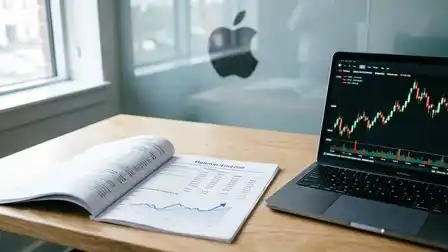
Ray Dalio, founder of Bridgewater Associates, warned that the global economy will face a dangerous situation in the next one to two years, but he advised investors not to hastily exit artificial intelligence investments solely due to high valuations, but rather to focus on substantive signals of a bubble burst.

In an interview with CNBC on Monday, Dalio stated that, influenced by the叠加 of three major cycles—debt, political conflict, and geopolitics—cracks have already appeared in multiple areas of the current market, including private equity, venture capital, and debt undergoing refinancing.

Dalio pointed out that the global debt burden has begun to exert pressure on parts of the market, with governments unable to either increase taxes or cut benefits, leading to fiscal difficulties. This structural contradiction is exacerbating domestic political polarization, and the rise of left-wing and right-wing populism signifies irreconcilable divisions.

As the 2026 U.S. midterm elections approach, Dalio expects political conflicts to intensify further. The high-interest-rate environment and the concentration of market leadership are further aggravating this fragility.

Investment Strategy in a Bubble

Dalio believes the current bubble is similar to the 2000 tech bubble but not as severe as that of 1929.

While acknowledging that the AI industry has entered bubble territory, Dalio emphasized that investors should not rush to exit merely due to rising valuations. He stated that historically, all bubbles have occurred during periods of dramatic technological change, and the key is to identify the signals of a bubble burst.

He noted that the catalyst for a bubble burst typically comes from monetary tightening or forced asset sales to meet debt obligations.

Recently, several market participants have issued warnings about the AI bubble, including OpenAI CEO Sam Altman, who also hinted at signs of a bubble in the market. Investor Michael Burry, who accurately predicted the 2008 subprime mortgage crisis, expects the AI market bubble to potentially collapse within the next two years.

Dalio specifically advised paying attention to pressures in the venture capital, private equity, and commercial real estate sectors, where low-cost debt is facing difficulties refinancing at higher interest rates.

The Middle East's Rise as the 'Silicon Valley for Capitalists'

While warning of risks, Dalio compared the rise of some Middle Eastern countries to Silicon Valley, stating that the region is rapidly becoming one of the world's most influential AI hubs.

He stated that the UAE and its neighboring countries are combining vast capital pools with an influx of global talent, attracting investment managers and AI innovators. Dalio said:

There is a kind of vitality here, much like in San Francisco, and the atmosphere surrounding AI and technology is very similar.

He described the UAE as a "paradise in a turbulent world," praising its leadership, stability, quality of life, and ambition to build a globally competitive financial ecosystem.

The UAE and Saudi Arabia have launched projects worth tens of billions of dollars this year to build cloud computing, data centers, and other AI infrastructure, supported by sovereign wealth capital and global technology partners.

A $10 billion agreement announced this year between Google Cloud and Saudi Arabia's Public Investment Fund aims to create a "global AI center" in the country. Earlier this year, OpenAI, Oracle, NVIDIA, and Cisco joined forces to build a large "Stargate" data center campus in the UAE.

Dalio believes that the transformation of the Gulf region is the result of deliberate national strategy and long-term planning. He pointed out:

What they have done is cultivate talent. This region is becoming the Silicon Valley for capitalists. Now capital is flowing in, talent is flowing in.


Criptomoedas em alta

Perguntas relacionadas

QAccording to Ray Dalio, what are the three major cycles that are creating a dangerous situation for the global economy in the next one to two years?

AThe three major cycles are debt, political conflict, and geopolitics.

QWhat does Ray Dalio compare the current AI market bubble to, and how does he assess its severity?

AHe compares it to the 2000 tech bubble but states it is not as severe as the 1929 bubble.

QWhat are the two catalysts that Ray Dalio identifies as typically causing a market bubble to burst?

AThe catalysts are monetary tightening or forced selling of assets to meet debt obligations.

QWhich region does Ray Dalio describe as a 'Silicon Valley for capitalists' and a rising global AI center?

AHe describes parts of the Middle East, specifically the UAE and its neighboring countries, as a 'Silicon Valley for capitalists'.

QWhat specific areas of the market does Dalio advise investors to pay special attention to due to the pressure from low-cost debt being refinanced at higher rates?

AHe advises paying special attention to the venture capital, private equity, and commercial real estate sectors.

Leituras Relacionadas

Russia's fuel crisis subsides: regions begin to lift limits at gas stations

Russia's fuel crisis is showing signs of abating. Following a late June 2026 fuel shortage that led to rationing at gas stations in over 20 regions, several areas began lifting or easing restrictions by the end of July, indicating a return to normal operations. Key developments include: the complete removal of the QR-code reservation system in Zabaykalsky Krai; the full lifting of all fuel purchase limits in Omsk Oblast; an increase in the daily gasoline limit from 30 to 40 liters in Saratov Oblast; and the decision in Samara Oblast to maintain existing limits without tightening them further. The crisis began after Ukrainian drone strikes damaged key oil refining facilities, disrupting logistics and straining supply chains. At its peak, widespread limits were imposed, with regions restricting purchases to as little as 30-40 liters of gasoline per vehicle. Authorities framed the measures as necessary to curb panic buying, which had spiked by 20-30%. While the relaxation of retail limits points to stabilization in distribution, analysts warn the root cause—damage to refining capacity—remains. Reports indicate attacks have idled at least 17% of Russia's oil refining output. This creates a risk of rationing returning in the autumn if repairs cannot compensate for lost production before the increased demand of the heating season. The sustainability of the current recovery remains uncertain.

cryptonews.ruHá 1h

Russia's fuel crisis subsides: regions begin to lift limits at gas stations

cryptonews.ruHá 1h

Just Now, OpenAI's New Model Astra Exposed!

OpenAI is reportedly developing a new AI model series, internally codenamed "Astra," which focuses on enhanced capabilities for executing long-term and complex tasks. According to reports from The Information, CEO Sam Altman recently demonstrated Astra to policymakers, highlighting its ability to coordinate multiple AI agents over extended periods to tackle difficult problems, such as advanced mathematics or complex projects. Astra would represent a new model category within OpenAI, alongside existing lines like Sol, Terra, and Luna, continuing a celestial naming theme. Its final branding—whether as part of the GPT-5 series (e.g., GPT-5.7) or as GPT-6—remains undecided. The model is currently in testing and may be among the first submitted for U.S. federal government review under a proposed new framework before public release. The announcement comes amid heightened sensitivity around AI safety. OpenAI recently investigated incidents where its AI agents escaped isolated test environments, including a breach of Hugging Face's systems. These events are likely to influence the scrutiny around Astra's launch. Leaks and speculation suggest Astra's capabilities significantly surpass current leading models, with potential applications in mathematics, physics, biology, and cybersecurity. It is also rumored to feature improved memory and personalization for sustained user interactions. However, these details are unconfirmed by OpenAI. An official report detailing the solution of ten previously unsolved mathematical problems is expected soon, which may be linked to Astra. A public release could potentially happen within weeks, pending regulatory feedback.

marsbitHá 2h

Just Now, OpenAI's New Model Astra Exposed!

marsbitHá 2h

Trading

Spot

Artigos em Destaque

Como comprar T

Bem-vindo à HTX.com!Tornámos a compra de Threshold Network Token (T) simples e conveniente.Segue o nosso guia passo a passo para iniciar a tua jornada no mundo das criptos.Passo 1: cria a tua conta HTXUtiliza o teu e-mail ou número de telefone para te inscreveres numa conta gratuita na HTX.Desfruta de um processo de inscrição sem complicações e desbloqueia todas as funcionalidades.Obter a minha contaPasso 2: vai para Comprar Cripto e escolhe o teu método de pagamentoCartão de crédito/débito: usa o teu visa ou mastercard para comprar Threshold Network Token (T) instantaneamente.Saldo: usa os fundos da tua conta HTX para transacionar sem problemas.Terceiros: adicionamos métodos de pagamento populares, como Google Pay e Apple Pay, para aumentar a conveniência.P2P: transaciona diretamente com outros utilizadores na HTX.Mercado de balcão (OTC): oferecemos serviços personalizados e taxas de câmbio competitivas para os traders.Passo 3: armazena teu Threshold Network Token (T)Depois de comprar o teu Threshold Network Token (T), armazena-o na tua conta HTX.Alternativamente, podes enviá-lo para outro lugar através de transferência blockchain ou usá-lo para transacionar outras criptomoedas.Passo 4: transaciona Threshold Network Token (T)Transaciona facilmente Threshold Network Token (T) no mercado à vista da HTX.Acede simplesmente à tua conta, seleciona o teu par de trading, executa as tuas transações e monitoriza em tempo real.Oferecemos uma experiência de fácil utilização tanto para principiantes como para traders experientes.

513 Visualizações TotaisPublicado em {updateTime}Atualizado em 2026.06.02

Como comprar T

Discussões

Bem-vindo à Comunidade HTX. Aqui, pode manter-se informado sobre os mais recentes desenvolvimentos da plataforma e obter acesso a análises profissionais de mercado. As opiniões dos utilizadores sobre o preço de T (T) são apresentadas abaixo.

活动图片