A taxa de câmbio de referência serve apenas para consulta e não está bloqueada. A taxa final será determinada pelo preço de execução real.
Estatísticas em Tempo Real de T
O preço ao vivo de Threshold Network Token (T) é $0.0034 USD e a sua capitalização de mercado atual é de $-- USD.
Receba atualizações em tempo real de T/USD na HTX. Mantenha-se informado com os dados mais recentes e as tendências do mercado para tomar decisões de trading inteligentes. HTX, a sua fonte confiável de informações precisas sobre preços de criptomoedas.
Estatísticas Principais de Threshold Network Token
Volume de 24h (USD)
$--
Variação de Preço Hoje
--
Oferta em Circulação (T)
--
Registe-se e negoceie para ganhar recompensas no valor de até 1,500 USDT.Participe Agora
Desempenho do Preço de T
Acompanhe as variações de preço de Threshold Network Token com visualizações de gráfico abrangendo 1 dia, 30 dias, 60 dias, 90 dias, 1 ano e o período desde que foi listado na HTX.Ver mais dados sobre os preços de Threshold Network Token
Horário
Alterar
Variação (%)
Preço mais alto
Preço mais baixo
No data
Informações de Mercado de T
Obtenha os detalhes mais recentes do preço de Threshold Network Token na HTX: alta e baixa em 24 horas, máxima histórica (ATH) e variação percentual diária do preço.
24h Baixo
$0
24h Alto
$0
Máximo histórico
$0
Capitalização de Mercado
$0.00
Volume de 24h (USD)
$--
Oferta Circulante
--
O que é T?
O ecossistema Threshold foi criado a partir da fusão da NuCypher e da Keep Networks numa única rede descentralizada. O Threshold oferece um conjunto de serviços de criptografia de limiar para aplicações web3 através de uma rede descentralizada de nós. Os serviços na Rede Threshold incluem um serviço de re-encriptação proxy para gestão de segredos controlados pelo utilizador e controlo de acesso dinâmico, e tBTC v2, uma ponte de ativos descentralizada e sem permissões entre Bitcoin e Ethereum.
É super fácil comprar T na HTX. Basta clicar aqui para ver um guia completo sobre como comprar Threshold Network Token com facilidade.
Mercados em Tempo Real de T
Veja os preços em tempo real de Threshold Network Token nos mercados à vista da HTX. Alterne entre os mercados à vista e de futuros para comparar instantaneamente os preços ao vivo e as variações de preço em 24 horas.
Com base no desempenho histórico de Threshold Network Token, a nossa ferramenta de previsão estima que o preço de Threshold Network Token (T) poderá atingir -- até --.
Preço Previsto de T em --
A nossa previsão mais recente indica que o preço de Threshold Network Token (T) aumentará para -- até --, com uma variação de preço de --% e um ROI acumulado de aproximadamente --%.
Compre o seu primeiro T na HTXRegiste-se Agora
Perguntas Frequentes sobre T
Qual é o preço de Threshold Network Token (T) hoje?
O preço atual de Threshold Network Token (T) é $0.0034 USD.
Qual é a capitalização de mercado de Threshold Network Token (T)?
A capitalização de mercado atual de Threshold Network Token (T) é de $0.00 USD, calculada multiplicando a sua oferta em circulação pelo seu preço atual.
Qual é a oferta em circulação de Threshold Network Token (T)?
A oferta em circulação atual de Threshold Network Token (T) é de -- T.
Qual é a máxima histórica de Threshold Network Token (T)?
Em 2026-08-20, a máxima histórica de Threshold Network Token (T) é de $0 USD.
Qual é o volume de negociação em 24h de Threshold Network Token (T)?
O volume de negociação em 24 horas de Threshold Network Token (T) é de -- USD na HTX.
Posso comprar Threshold Network Token (T) na HTX?
Sim, a HTX oferece taxas de trading líderes do setor e alta liquidez, garantindo uma experiência de compra de Threshold Network Token (T) suave e segura.
Seven months after taking over, Farcaster's current operator, Neynar, has announced it is seeking a new team to take over operations of the decentralized social protocol and its associated products, including the flagship Farcaster client and the Clanker platform. Neynar co-founder Rishav Mukherji acknowledged the company failed to meet its goals since acquiring Farcaster from its original creators in January, citing a combination of a tight-knit community, high operating costs for the main app, and slow market growth as reasons requiring a different organizational and funding structure.
Farcaster is a decentralized social protocol allowing users to maintain identity, content, and social graphs across different client applications. Despite Neynar reducing infrastructure costs by 80% and decentralizing protocol operations further, the challenge of scaling consumer adoption and sustaining the flagship app remains unresolved. The original founding team at Merkle Manufactory had previously struggled to grow the user base beyond 200,000-300,000 monthly active users.
This marks the second major operational handoff for Farcaster in less than a year, following a similar transition by competitor Lens Protocol. The search for a new operator highlights a recurring difficulty in Web3 social: maintaining and growing consumer-facing applications while the underlying decentralized protocols continue to function. The structure of the potential handoff—whether products will be transferred together or separately—and details regarding the return of Neynar's remaining capital are still pending. Services continue to operate normally for users in the interim.
Zhang Lei's company Pinzhun Laser (频准激光) became the biggest "meat sign" (highly profitable new share) of the year on its A-share market debut. Its stock price skyrocketed nearly 600% from its IPO price, generating potential single-lot profits of over 550,000 RMB for lucky subscribers.
Founded by Zhang Lei, a 2014 Ph.D. graduate from the Shanghai Institute of Optics and Fine Mechanics, Pinzhun Laser specializes in ultra-stable, narrow-linewidth lasers critical for quantum computing. Its lasers are used by leading global research teams at Harvard, Caltech, and France's PASQAL. The company later successfully applied its core frequency conversion technology to the semiconductor sector, developing deep-ultraviolet lasers for advanced chip manufacturing and inspection. This move diversified its revenue, with semiconductor sales growing rapidly to account for over 25% of its business by 2025. The company boasts gross margins consistently above 69%.
Remarkably, Pinzhun Laser required only two major external funding rounds before its IPO, a testament to its early profitability. Key strategic investors in its IPO included major downstream players like BOE,佰维存储 (BIWIN), and中微半导体 (AMEC), signaling strong industry validation.
The article highlights the crucial early-stage support from Hangzhou-based capital, particularly funds associated with the Hangzhou Institute of Optics and Fine Mechanics. This "patient capital" model, part of Hangzhou's broader 300-billion-yuan industrial fund strategy, focuses on partnering with scientist-entrepreneurs through the risky valley of death from lab to market. The success of Pinzhun Laser and another Hangzhou-backed firm,宇树科技 (Unitree Robotics), showcases how this supportive ecosystem helps build leading hard-tech companies.
A tech company called Apate is using 200,000 AI personas to pose as scam victims, wasting millions of hours of fraudsters' time each month and saving the public an estimated $13 million in a six-week period. Founded by Dali Kaafar, the idea came from his own experience of wasting a scammer's time. Apate's bots, trained on real scam-baiting conversations, engage fraudsters via phone and chat platforms like WhatsApp, extracting valuable intelligence such as new crypto wallet addresses and scam tactics. This data helps banks and telcos combat criminal rings globally. While scammers are also starting to use AI, Apate believes defensive AI bots have a strategic advantage in gathering intelligence and disrupting these operations.
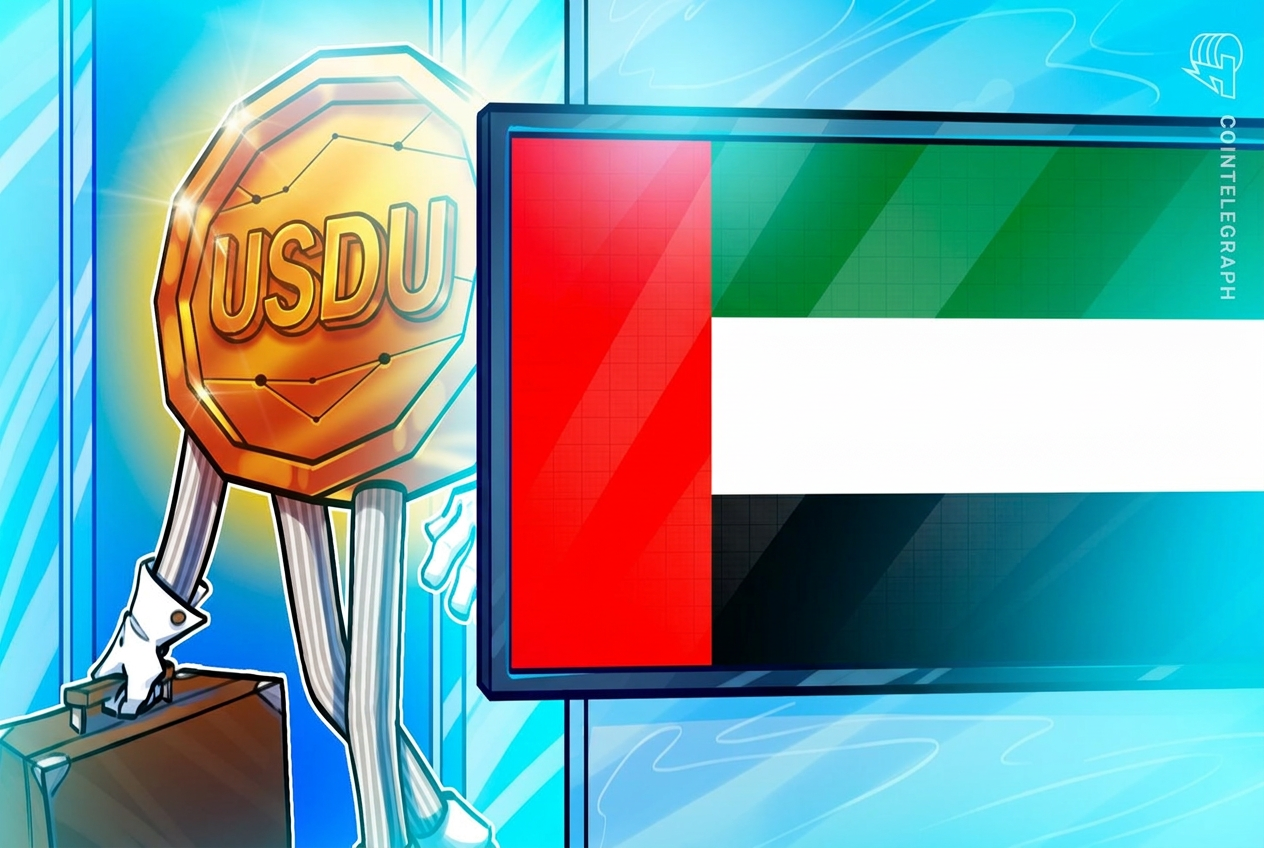
Bitcoin.com is integrating USDU, a U.S. dollar-backed stablecoin registered with the Central Bank of the UAE, into its self-custodial wallet. Issued by Abu Dhabi's Universal Digital, USDU is the first and only Foreign Payment Token registered under the UAE's Payment Token Services Regulation. The Ethereum-based stablecoin will be available for holding, sending, and receiving in the wallet, with swap and trading features planned via third parties. Bitcoin.com also aims to accept USDU for services and enable merchant payments. The integration is part of USDU's broader push, following recent support from Zodia Custody and a liquidity pool on Uniswap.
Russian authorities are investigating a suspect accused of stealing nearly 10 million rubles worth of cryptocurrency from a cold wallet. According to investigators, the wallet belonged to an unnamed commercial company executive's assistant. In March, the suspect allegedly gained access to the victim's wallet by "an unidentified method" and transferred the digital assets to another address.
During a search of the suspect's home, police seized three computers and three mobile phones for forensic examination, as they may contain important digital evidence. The case is being investigated as grand larceny under the Russian Criminal Code, carrying a potential sentence of up to ten years in prison. Police are also checking the suspect's possible involvement in other cryptocurrency thefts and identifying potential accomplices.
The article notes that while cold wallets (hardware wallets storing private keys offline) are considered more secure against remote hacking, they remain vulnerable if a perpetrator gains physical or direct access to the keys.
In a related case earlier in June, a court in Tomsk sentenced two men to 8 and 9.5 years in a strict-regime colony for a robbery and cryptocurrency theft. They forced an acquaintance at knifepoint to log into a crypto exchange account and transfer over 85 bitcoins, valued at approximately $5.1 million at the time.
cryptonews.ru6小时前
Threads
Bem-vindo à Comunidade HTX. Aqui, você pode se manter informado sobre os desenvolvimentos mais recentes da plataforma e ter acesso a insights profissionais do mercado. As opiniões dos utilizadores sobre o preço de Threshold Network Token (T) são apresentadas abaixo.
Perguntas Relacionadas
Bem-vindo à FAQ de Cripto. As perguntas e respostas dos utilizadores sobre Threshold Network Token (T) são apresentadas abaixo.