U.S. Stocks Trend (June 24): Korean Stock Plunge Ripples Global Chip Sector, Micron Tumbles Over 10%, Long-Term Supply Certainty Faces a 'Hard Test'

marsbitPublicado em 2026-06-24Última atualização em 2026-06-24

Resumo

US Stock Market Trend (June 24): South Korean Market Plunge Disrupts Global Chips, Micron Drops Over 10%, Long-Term Supply Certainty Faces Hard Test On Monday, the South Korean KOSPI index plunged 10%, with SK Hynix and Samsung dropping over 12%, triggered by rumors that SK Hynix might slow its HBM4 production expansion. This shock quickly spread to the U.S. semiconductor sector. Micron plummeted 13.18% to $1,051.77, SanDisk fell 13.64%, and Marvell declined 8%. The Philadelphia Semiconductor Index closed down 7.87%, while the Nasdaq fell 2.21% to 25,587.04 points. The sell-off particularly hit memory chip stocks. Defensive sectors showed relative resilience, with gains in stocks like IBM and Johnson & Johnson. Market volatility spiked, with the VIX index jumping 12.79%. Commodities weakened, with WTI crude oil hitting a near three-month low and gold falling below $4,100. The core issue is not a challenge to AI demand itself, but a market reassessment of overly optimistic capacity expectations for memory chips, especially HBM. The rumor about SK Hynix undermined perceived certainty in the AI infrastructure cycle. Key upcoming events include Thursday's PCE inflation data, which will influence Fed rate expectations, and Micron's earnings report. The market will focus on Micron's HBM gross margins and its long-term capacity guidance. The shift indicates the AI investment cycle is moving from euphoria to rational pricing. Large institutions are questioning the sustainability ...

Author: Tide Research

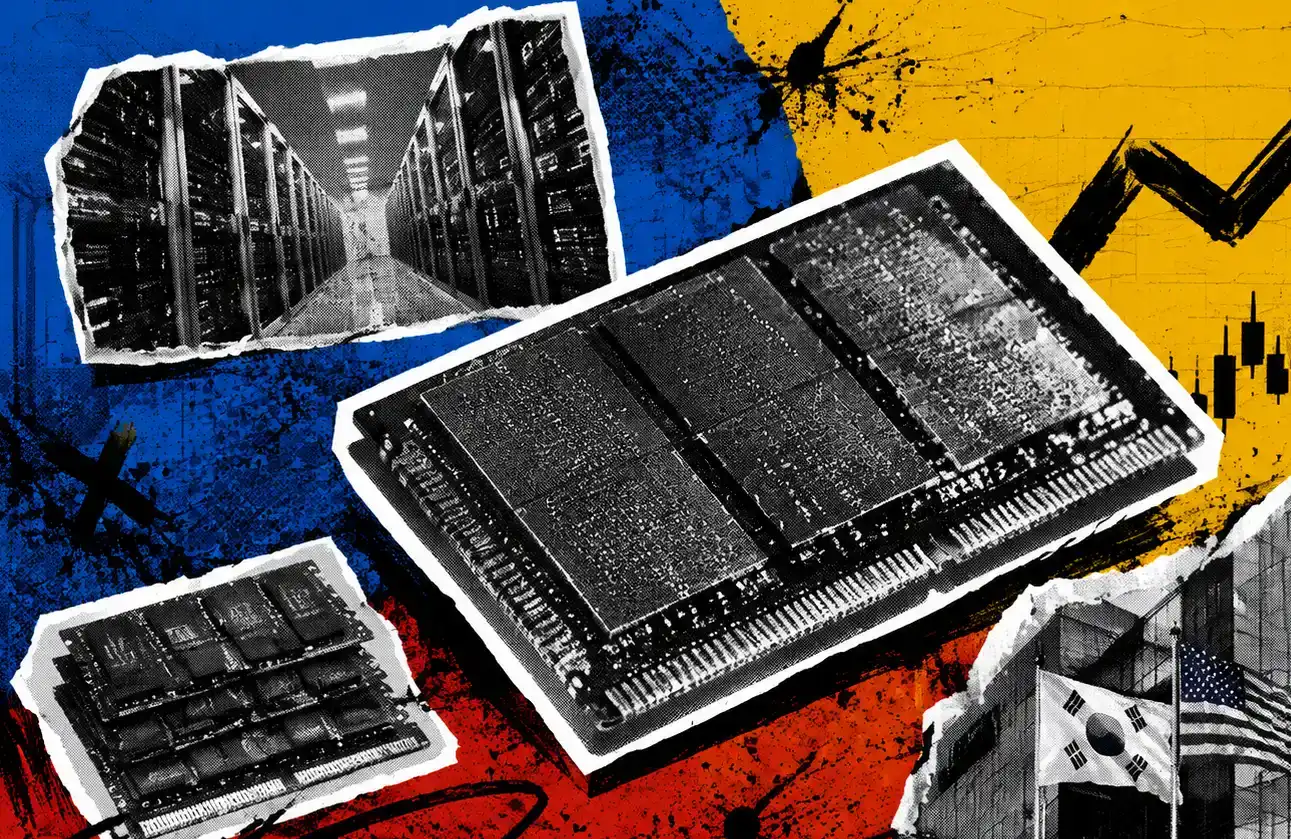
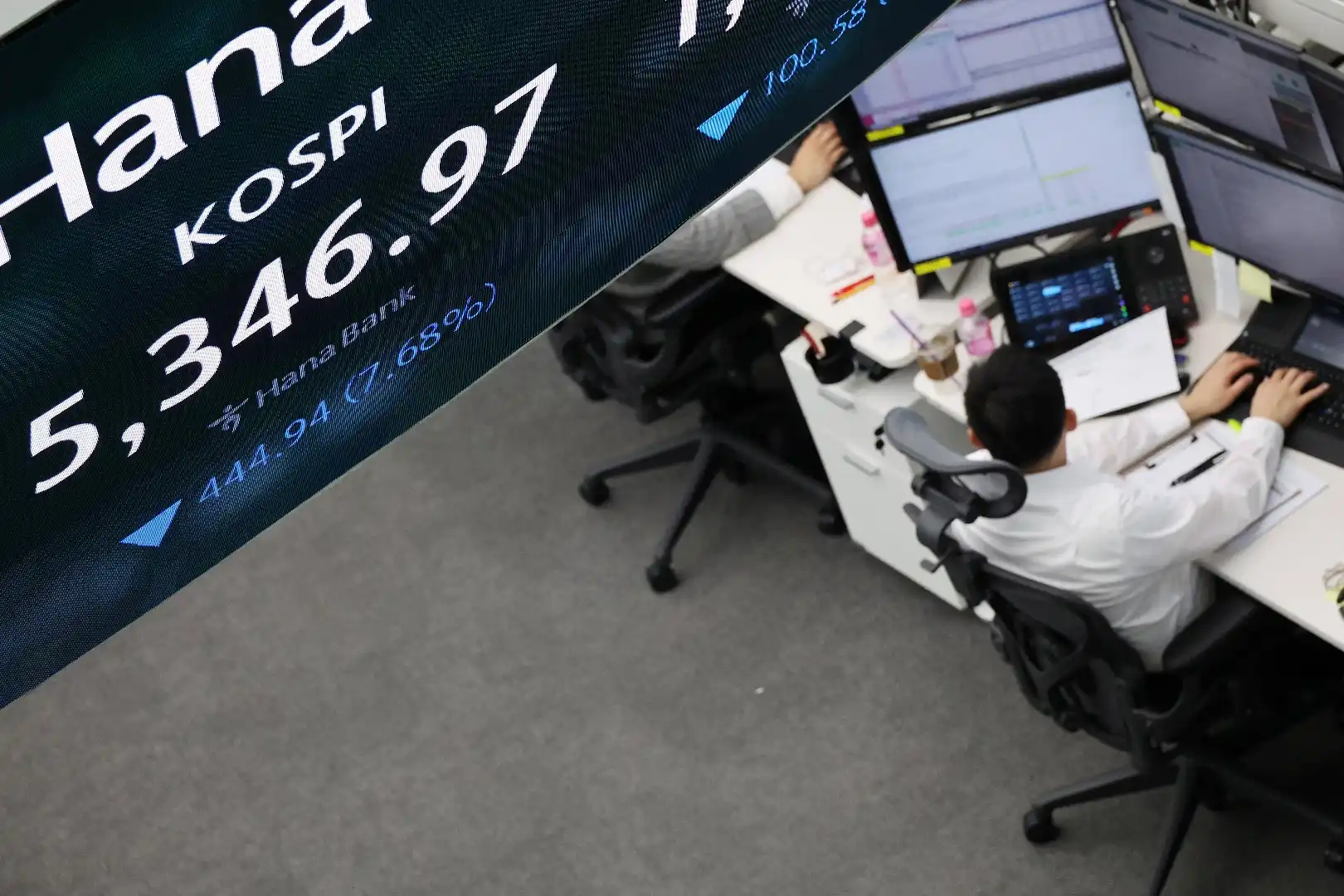
On Monday, South Korea's KOSPI index plunged 10%, with SK Hynix and Samsung dropping more than 12%, triggered by rumors that SK Hynix might slow down HBM4 capacity expansion. This shock from the Korean stock market instantly spread to the U.S. chip supply chain, with Micron tumbling 13.18% to $1,051.77, SanDisk down 13.64%, Marvell falling 8%. The Philadelphia Semiconductor Index closed down 7.87%, and the Nasdaq ended with a 2.21% decline at 25,587.04 points.

Market Performance

The Nasdaq fell 2.21% to 25,587.04 points, the S&P 500 declined 1.44% to 7,365.46 points, and the Dow Jones Industrial Average edged down 0.09% to 51,666.84 points. Chip stocks were the biggest drag on the day, with memory chips particularly hard-hit. Micron, SanDisk, and Western Digital fell 13.18%, 13.64%, and 8.5% respectively, leading to a repricing of the entire memory chip ecosystem. Nvidia dropped over 4%, AMD fell more than 5%, Intel slid over 6%, and the Philadelphia Semiconductor Index closed down 7.87%.

Defensive sectors showed relative resilience. IBM rose 5.04% to $264.94, Accenture gained 1.75% to $127.01, Walmart advanced 1.91% to $119.42, and Johnson & Johnson increased 3.37% to $239.075.

SpaceX closed up 0.98% at $156.11, ending its three-day losing streak. The VIX index jumped to 19.49, up 12.79% from the previous day. In commodities, WTI crude oil fell to $73.1, hitting a nearly three-month low; Brent crude dropped to $77.2; gold fell below $4,100. Bitcoin declined 4.23% to $62,266, and Ethereum fell about 5.7%. The U.S. dollar index hit a new high in over a year, while offshore Chinese yuan fell nearly 200 pips intraday, approaching 6.80.

Macro & Outlook

The key point is that this selling pressure is not directed at AI demand itself, but rather a reassessment of over-optimism regarding memory chip capacity. Rumors of SK Hynix slowing HBM4 expansion triggered a simple yet deadly logic chain: if signs of weaker-than-expected HBM supply emerge, the certainty of the entire AI infrastructure cycle diminishes.

Thursday's PCE inflation data will determine the market's repricing of federal funds futures. CME data shows traders are pricing in a rate hike for September, whereas just two weeks ago, only one rate hike was expected within the year. If the PCE data comes in hot, the probability of a hike could jump directly above 50%. On the same day, Micron will report earnings. Wall Street expects Q3 revenue around $34.5 billion, with the key focus being whether HBM gross margins can hold at 81% and management's guidance for 2027 HBM capacity. Any conservative commentary could trigger a second wave of declines.

The U.S.-Iran oil sanction waiver policy takes effect, with the U.S. approving Iran to sell oil within 60 days, continuing to pressure oil prices with inventory and supply expectations. Geopolitical premiums have largely faded.

Tide Research Perspective

The most direct target of this hit is: the AI arbitrage cycle is moving from frenzy to rational pricing. The 10% drop in Korean stocks is not a technical correction, but large institutions beginning to question the sustainability of AI capital expenditure (capex) growth. Memory chip prices have already tripled, and whether demand can match this supply expectation has now become a hard question.

Micron was previously priced as the ironclad guarantee for AI infrastructure, but now it's being priced as a cyclical commodity. This shift only takes one piece of bad news to ignite. The Dow's slight decline versus the Nasdaq's more than 2% plunge indicates a divergence, meaning the AI sector is losing its dominance. Thursday's Micron earnings and PCE data are a watershed. The market is not focused on current quarter data, but on long-term supply certainty. From yesterday onward, this certainty has significantly diminished.


Criptomoedas em alta

Perguntas relacionadas

QWhat was the main trigger for the sharp decline in the U.S. chip stock sector on June 24th?

AThe main trigger was a sell-off in Korean stocks, particularly a plunge of over 10% in the KOSPI index. This was driven by rumors that SK Hynix, a major memory chip manufacturer, might slow down its expansion of HBM4 production. This raised concerns about potential oversupply in the AI infrastructure cycle, which rippled into the U.S. market and severely impacted chip stocks like Micron.

QHow did key U.S. indices perform on that day, and what does the performance gap indicate?

AThe Nasdaq Composite fell 2.21%, the S&P 500 dropped 1.44%, while the Dow Jones Industrial Average was largely flat, declining only 0.09%. This significant performance gap indicates that the AI-heavy and tech-focused stocks, which dominate the Nasdaq, were the primary source of market weakness. It suggests a potential shift in market leadership away from the AI sector.

QAccording to the article, what is the core issue the market is now questioning about the AI sector?

AThe core issue is the long-term supply-demand balance and the sustainability of the AI capital expenditure (capex) boom. The market is moving from 'irrational exuberance' to rational pricing, questioning whether future demand can match the aggressive supply expectations, especially for critical components like High Bandwidth Memory (HBM). The recent sell-off represents a 'hard test' for the long-term supply certainty previously priced into these stocks.

QWhat two major events are highlighted as potential market turning points for the coming week?

ATwo major events are highlighted: the release of the U.S. PCE (Personal Consumption Expenditures) inflation data on Thursday and Micron Technology's quarterly earnings report on the same day. The PCE data will influence Federal Reserve interest rate expectations, while Micron's report, particularly its guidance on HBM margins and future capacity, will be critical for the semiconductor and AI investment narrative.

QWhy is Micron Technology specifically mentioned as facing a significant re-evaluation by the market?

AMicron is facing a significant re-evaluation because its stock was previously priced as a guaranteed beneficiary and enabler of the AI infrastructure build-out. The news from SK Hynix has led the market to reprice Micron more like a traditional cyclical commodity stock rather than a secular growth story. Its valuation is now more sensitive to supply-side risks and doubts about the durability of the AI-driven demand cycle.

Leituras Relacionadas

Semiconductor Stock Rebound: Is the Technical Correction Over or a Trend Reversal?

The core of recent semiconductor stock volatility is not about daily price swings, but rather the market questioning whether AI-driven semiconductor pricing has entered a new phase. Following a sharp sell-off in Korean stocks on June 23rd, led by Samsung and SK Hynix, a subsequent rebound is seen more as a technical positioning adjustment rather than a confirmed trend reversal. The key variable is HBM (High Bandwidth Memory), essential for AI chips. Its supply-demand imbalance granted memory makers significant pricing power. The current market focus is on whether this dynamic remains strong enough to justify elevated valuations. All eyes are on Micron's upcoming earnings report. The critical factor is not whether results meet already high expectations, but whether the company's guidance confirms that AI memory pricing power, order visibility, and future margins are still expanding. Micron's outlook will serve as a crucial test for the broader AI semiconductor chain, including Samsung, SK Hynix, and other infrastructure players. The recent bounce appears to be a pre-earnings positioning repair. For it to evolve into a sustained uptrend, concrete evidence is needed that the AI infrastructure expansion cycle's fundamentals—particularly for high-end memory—remain robust and can continue to surpass elevated market expectations. The risk is that strong demand alone may not be sufficient if future guidance hints at peaking momentum or increasing supply-side pressures.

marsbitHá 34m

Semiconductor Stock Rebound: Is the Technical Correction Over or a Trend Reversal?

marsbitHá 34m

Global Tech Stocks Plunge: Another Stress Test for the AI Bull Market

Global tech stocks plummeted in a sharp selloff on June 23, with South Korea's KOSPI index crashing nearly 10%, triggering a trading halt. The plunge was led by semiconductor giants Samsung and SK Hynix, dragging down major Asian and US tech indexes and levered ETFs. The immediate trigger was a confluence of three signals within 24 hours: 1) reports that SK Hynix was slowing HBM4 expansion, raising doubts about a key AI chip bottleneck; 2) profit-taking ahead of Micron's earnings report after its massive year-to-date rally; and 3) a warning from Korean regulators about the risks of single-stock leveraged ETFs. The selloff's severity was amplified by Korea's uniquely leveraged market structure: record-high retail margin debt, over $30 billion in volatile single-stock leveraged ETFs requiring daily rebalancing (which creates selling pressure during declines), and the surprising shift of the National Pension Service from a net buyer to a net seller. The event reignited debates about an AI bubble. Analysts differed on timing—some warned of imminent rupture, others saw a temporary liquidity-driven correction—but agreed that sky-high valuations, a shift to retail/leveraged buying, and rising rates created a fragile setup. The parallel steep drop in SpaceX's stock, alongside its massive debt raise for AI infrastructure, underscored a broader market shift from narrative-driven "infinite imagination" to a "return on investment" calculation phase. All eyes are now on Micron's upcoming earnings report, seen as a key test for the AI hardware trade's fundamental logic. A strong report could stabilize markets, while a miss could validate deeper fears. The episode serves as a stark warning: when a bull run becomes dependent on leveraged bets on a single narrative, a violent and rapid correction should not be a surprise. The core question for investors is how much drawdown they are willing to tolerate to stay invested.

marsbitHá 35m

Global Tech Stocks Plunge: Another Stress Test for the AI Bull Market

marsbitHá 35m

Ethereum Foundation Cuts 20% of Staff, 54 Depart: The Survival Logic Behind the Restructuring

The Ethereum Foundation (EF) has announced a major restructuring, resulting in the departure of 54 staff members, representing approximately 20% of its workforce. This reorganization is not merely a cost-cutting measure but a strategic refocusing. The EF will now concentrate its resources on what it deems critical and unique tasks, structured around five new operational clusters. The new structure comprises clusters dedicated to: the Protocol Layer (ensuring Ethereum's core properties like censorship resistance and security); the Access Layer (enabling trusted, non-intermediated user interactions); the User Layer (grounding decisions in real user needs and constraints); the Community Layer (representing EF's stance and building alliances); and the Institutional Layer (engaging with enterprises, governments, and academia to promote principled adoption). The foundation stated that the layoffs were a difficult but necessary step to align its organization and spending with its long-term mandate, insulating its core work from short-term market fluctuations. Affected employees were offered a severance package and transition support. The restructured EF emerges as a leaner and more focused organization, poised to prioritize the development and preservation of Ethereum's foundational promise of self-sovereignty. Further details on the new operational model are expected in the coming weeks.

marsbitHá 38m

Ethereum Foundation Cuts 20% of Staff, 54 Depart: The Survival Logic Behind the Restructuring

marsbitHá 38m

Trading

Spot
Futuros

Artigos em Destaque

Como comprar CHIP

Bem-vindo à HTX.com!Tornámos a compra de USD.AI (CHIP) simples e conveniente.Segue o nosso guia passo a passo para iniciar a tua jornada no mundo das criptos.Passo 1: cria a tua conta HTXUtiliza o teu e-mail ou número de telefone para te inscreveres numa conta gratuita na HTX.Desfruta de um processo de inscrição sem complicações e desbloqueia todas as funcionalidades.Obter a minha contaPasso 2: vai para Comprar Cripto e escolhe o teu método de pagamentoCartão de crédito/débito: usa o teu visa ou mastercard para comprar USD.AI (CHIP) instantaneamente.Saldo: usa os fundos da tua conta HTX para transacionar sem problemas.Terceiros: adicionamos métodos de pagamento populares, como Google Pay e Apple Pay, para aumentar a conveniência.P2P: transaciona diretamente com outros utilizadores na HTX.Mercado de balcão (OTC): oferecemos serviços personalizados e taxas de câmbio competitivas para os traders.Passo 3: armazena teu USD.AI (CHIP)Depois de comprar o teu USD.AI (CHIP), armazena-o na tua conta HTX.Alternativamente, podes enviá-lo para outro lugar através de transferência blockchain ou usá-lo para transacionar outras criptomoedas.Passo 4: transaciona USD.AI (CHIP)Transaciona facilmente USD.AI (CHIP) no mercado à vista da HTX.Acede simplesmente à tua conta, seleciona o teu par de trading, executa as tuas transações e monitoriza em tempo real.Oferecemos uma experiência de fácil utilização tanto para principiantes como para traders experientes.

356 Visualizações TotaisPublicado em {updateTime}Atualizado em 2026.06.02

Como comprar CHIP

Discussões

Bem-vindo à Comunidade HTX. Aqui, pode manter-se informado sobre os mais recentes desenvolvimentos da plataforma e obter acesso a análises profissionais de mercado. As opiniões dos utilizadores sobre o preço de CHIP (CHIP) são apresentadas abaixo.

活动图片