Two Legends Lost in Three Days: Is Google's AI Talent Dam Cracking?

marsbitPublicado em 2026-06-20Última atualização em 2026-06-20

Resumo

In three days, Google lost two AI legends. On June 18, Noam Shazeer, co-author of the seminal "Attention is All You Need" paper and Gemini co-lead, left for OpenAI. Just 48 hours later, John Jumper, 2024 Nobel laureate and AlphaFold lead, departed DeepMind for Anthropic. This follows Andrej Karpathy joining Anthropic in May. These moves highlight a structural trend: top AI talent is concentrating at mission-driven, pre-IPO firms like OpenAI and Anthropic, while Google becomes a primary source. The exodus stems from a core mission mismatch. Google's ad-centric model often subordinates AI research to product and revenue goals, creating friction for pioneers like Shazeer, who returned in 2024 only to leave again. In contrast, OpenAI and Anthropic offer singular focus on pushing AI boundaries, whether towards AGI or safety-aligned models, which deeply appeals to top researchers like Jumper. Financial incentives amplify the pull. With both OpenAI and Anthropic nearing IPO, employees stand to gain immensely from equity, an upside Google's mature stock cannot match. Furthermore, the 2023 merger of Google Brain and DeepMind, intended to consolidate strength, has instead created cultural tension and slowed the path from research to product, as evidenced by Gemini's pace. This talent redistribution is reshaping the AI landscape. While Google retains vast data and compute resources, its true crisis is the quiet, continuous loss of the people who define the field's future. The real mo...

While the company that defined AI's past is losing the people who will define its future.

On June 18th, Noam Shazeer, core author of the Transformer paper and co-lead of Google Gemini, announced on X his departure from Google to join OpenAI, which had confidentially filed for an IPO with the SEC. He is one of the eight equal contributors to the 2017 paper "Attention is All You Need," which laid the technical foundation for modern large language models. Sam Altman immediately reposted and commented, "Noam has been one of the people I've most wanted to work with since day one of OpenAI. Only took a decade."

Forty-eight hours later, on June 19th, John Jumper, 2024 Nobel Laureate in Chemistry and core leader of AlphaFold, announced his departure from Google DeepMind after nearly nine years, joining Anthropic.

Two almost simultaneous departures of top-tier talent are enough to shock the AI community. Extending the timeline reveals an even clearer trend. On May 19th, former OpenAI founding member Andrej Karpathy announced he was joining Anthropic's pre-training team. Although he never worked at Google, his choice similarly illustrates one thing: top talent is concentrating at OpenAI and Anthropic, with Google becoming the primary source in this talent reshuffle.

Three Departures, Not Isolated Cases, But a Trend

Jumper is no ordinary researcher. In 2024, he, along with Demis Hassabis and David Baker, was awarded the Nobel Prize in Chemistry for leading the AlphaFold project, which used AI to predict protein 3D structures in an extremely short time, solving a problem that had perplexed the biology community for fifty years.

John Jumper (left) pictured with Demis Hassabis, echoing reports of his departure from Google DeepMind for Anthropic. Source: businessinsider.com (copyright review needed)

Shazeer is a key figure in modern AI development. He joined Google in 2000 and co-authored "Attention is All You Need" in 2017. The Transformer architecture proposed in that paper is the technical bedrock of all current large language models. In 2021, after Google refused to launch the AI chatbot product he co-developed with Daniel De Freitas, he left and founded Character.AI in 2022. Three years later, Google brought him back for approximately $2.7 billion, appointing him co-lead of Gemini. However, less than two years after his return, he has chosen to leave again, this time for OpenAI.
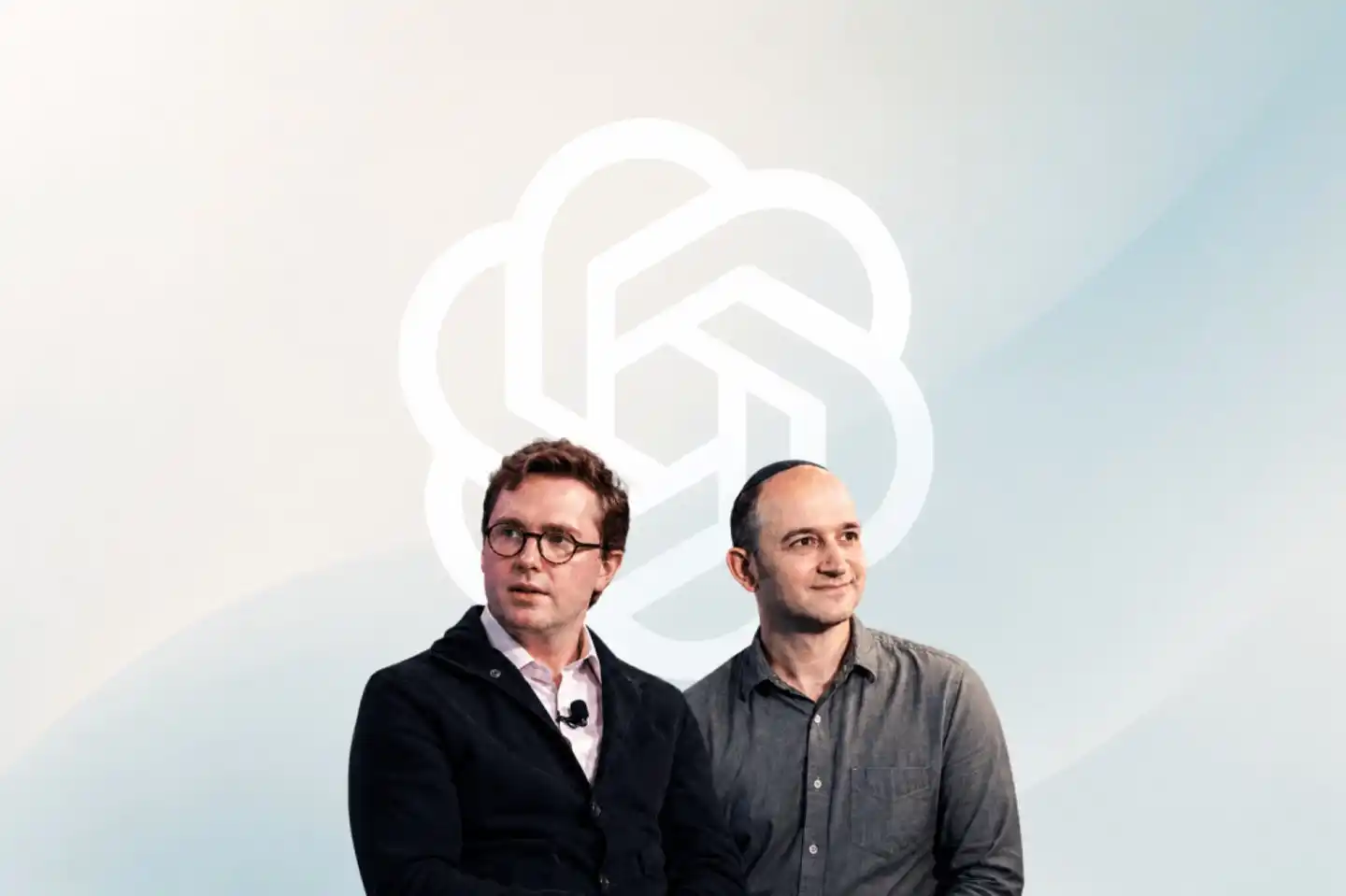
Noam Shazeer pictured with another AI executive, echoing reports of his departure from Google for OpenAI. Source: techcrunch.com (copyright review needed)

Karpathy's choice further confirms the larger trend. In May 2026, this OpenAI founding member, after concluding his educational startup Eureka Labs, announced he was joining Anthropic's pre-training team, responsible for "granting Claude core knowledge and capabilities through large-scale training runs." He never worked at Google, but his destination itself shows where top talent is concentrating.

Portrait of Andrej Karpathy, accompanying reports of his joining Anthropic's pre-training team. Source: bloomberg.com (copyright review needed)

Looking back further, this talent flow trend has been evident. Following the merger of Google Brain and DeepMind in April 2023, a significant number of mid-level and senior researchers flowed to OpenAI, Anthropic, and xAI. Tracking the author affiliations on cutting-edge AI papers on arXiv reveals that for more and more top researchers, the institution name on their profile has changed from "Google" to "OpenAI" or "Anthropic."

OpenAI and Anthropic are assembling the most influential talent rosters in the AI field. And Google is becoming the primary exporter in this talent migration.

Mission Misalignment

This is the most fundamental divergence, surpassing salary and compute power in importance.

Nearly 80% of Google parent Alphabet's revenue comes from advertising. This means all investments in the AI field must ultimately answer a product-oriented question: how will this serve the advertising business?

Shazeer quickly discovered after his return in 2024 that Google's core logic hadn't changed. The fundamental constraint he faced at Gemini—catching up to ChatGPT—remained a constrained task within an advertising-first architecture. The goal wasn't to redefine the boundaries of AI capability, but to defend advertising market share.

In contrast, OpenAI's charter clearly states its core mission is AGI (Artificial General Intelligence) for the benefit of all humanity. Anthropic has been built around AI safety since its inception, registered as a Public Benefit Corporation (PBC), legally obligated to balance shareholder interests with social benefits. At these two companies, top researchers don't need to answer questions like "how will this help the ads division increase revenue." They only need to focus on one goal: how to continuously push the boundaries of model capability.

Several researchers who moved from Google to these two organizations have repeatedly mentioned the same word in post-move interviews: "focus." At Google, key performance indicators are search click-through rates, ad conversion rates, and YouTube watch time. At Anthropic, key performance indicators are Claude's performance in pre-training and post-training. For a scientist like Jumper, who dedicated nine academic and professional years to the protein folding problem, this high degree of focus holds an irreplaceable appeal. At Anthropic, AI for Science is not a fringe project but a core research direction.

Mission is the push, while capital is the pull. In terms of compensation incentives, Google is at a structural disadvantage.

OpenAI confidentially filed for an IPO with the SEC in 2026, and Anthropic is also in the IPO preparation queue. Employees at both companies hold significant equity, poised for public market realization. The timing of Jumper's and Shazeer's decisions to join just before this window is no coincidence. In comparison, Google's market capitalization exceeds $2 trillion, with limited room for its stock price to double in the short term, making the explosive potential of its equity incentives at least an order of magnitude lower.

More noteworthy is the capital market's distinctly different pricing logic for these two types of companies. Leaked OpenAI audited financial reports show its 2025 GAAP net loss was approximately $38.5 to $39.0 billion (including about $30 billion in non-cash conversion expenses), with operating losses widening from $8.78 billion in 2024 to about $20.9 billion, yet the capital market reaction remained positive. During the same period, OpenAI's revenue soared from $3.7 billion to $13.07 billion, a 253% increase. In Q1 2026, the company's revenue was $5.7 billion with operating expenses of $3.7 billion. Investors are willing to pay for a "losses for growth" strategy.

At Google, AI investments of similar scale prompt questions from the capital market like, "What impact will this have on margins?" The same large-scale investment in AI is called strategic investment at OpenAI but is viewed as cost-center expansion at Google.

From the perspective of a top researcher, the logic behind this choice isn't complicated. On one side is a company nearing an IPO, where equity could realize nine-figure value within two years, with the entire team focused on optimizing model capability. On the other side is a mature behemoth with a $2 trillion market cap, where a researcher's work must continuously align with the quarterly goals of advertising and search teams.

The DeepMind Merger Creates New Centrifugal Forces

In April 2023, Google Brain and DeepMind merged into Google DeepMind, unified under the leadership of Demis Hassabis. The official narrative at the time was "consolidating strength." But looking back three years later, the merger's actual effects are debatable.

The merger failed to fundamentally resolve the realignment of influence in translating research into products.

DeepMind's foundational research needed to be implemented through product teams, which had their own independent timelines and priorities. Gemini is a典型案例. Shazeer was appointed co-lead, but the product release节奏 and commercialization path remained highly constrained by the search and cloud business units. This contrasts sharply with OpenAI's model where the entire organization revolves around the same core product goal.

The merger also created cultural identity tensions. Google Brain leaned more towards engineering and commercial落地, while DeepMind leaned more towards basic science and long-term exploration. Post-merger, the long-term research-oriented culture is seen as eroded under the pressure to "align with product roadmaps."

A former Google researcher wrote on X, "When we were asked to align our research direction with the product roadmap, I knew it was time to go."

Jumper's departure can be seen as a statement on the post-merger cultural direction. He worked at DeepMind for nearly nine years, experiencing the independent research era, the post-merger integration period, and the current phase of increasing productization pressure. When the research environment increasingly required alignment with search engine KPIs, leaving became a calculated but not difficult decision.

A deeper issue is that less than two years after Shazeer's return, the pace of AI product releases hasn't significantly accelerated. Gemini narrowed the capability gap with ChatGPT but never became the leader in细分领域. He hasn't publicly expressed dissatisfaction—his statement on X was standard professional措辞—but the action itself speaks volumes.

The Talent Map is Undergoing an Irreversible Reshuffle

This talent exodus is no longer just a matter of a few people changing jobs.

Google can bring back top researchers, but it cannot change the most fundamental thing: its core business model is advertising. AI is an enabling tool, not the ultimate mission. Money can bring back a person, but money cannot make Google not be Google. This means the outflow won't stop; it's a structural trend, not a few isolated departures.

On the other side, OpenAI and Anthropic are successfully carving their paths. OpenAI is securing the strongest force in LLM research, while Anthropic is combining AI safety with scientific applications. Both companies have clear boundaries and their own moats. Google is caught in the middle, lacking both OpenAI's product爆发力 and Anthropic's brand differentiation in safety.

What has irreversibly tilted the talent天平 is the IPO window. When top researchers can gain nine-figure or even ten-figure wealth through equity realization within a year or two, no mature giant's compensation system can compete on the same dimension. 2026 may well be remembered not for any particular AI capability breakthrough, but as the year the talent map underwent a structural reshuffle. In this round of competition, talent density determines model capability, model capability determines market share, and market share determines the winner's list.

Google is not without a chance for a comeback. It possesses one of the world's largest computing infrastructures, the most extensive user data reserves, and持续领先 in AI academic paper publications. But all these advantages rest on one premise: you must have足够优秀的人 to use them. And what Google is losing is precisely these people.

This might be the quietest crisis in Google's history—no major product失误, no heavy regulatory fines, no financial爆雷. It's just the smartest people, one after another, choosing to leave. In the AI field, the true moat has never been data, nor compute power, nor even the model architecture itself. It's the people willing to stay and push the technological boundaries day after day. And Google is discovering that retaining these people is far more difficult than training a trillion-parameter model. (This article was first published on Taimei APP, Author | AGI-Signal, Editor | Qin Conghui)

Criptomoedas em alta

Perguntas relacionadas

QWhat are the two major AI talent departures from Google mentioned in the article that occurred within three days?

AThe two major departures were: 1) Noam Shazeer, co-author of the 'Attention Is All You Need' paper and co-head of Gemini, who left Google to join OpenAI. 2) John Jumper, 2024 Nobel laureate in Chemistry and core leader of AlphaFold, who left Google DeepMind to join Anthropic.

QAccording to the article, what is identified as the most fundamental reason for the talent exodus from Google?

AThe most fundamental reason is a 'mission misalignment.' Google's core business and revenue are centered on advertising, which imposes product-oriented constraints on AI research and development. In contrast, companies like OpenAI and Anthropic allow researchers to focus singularly on advancing AI capabilities or safety, without the need to justify their work in terms of ad revenue.

QWhat significant event in Google's AI organization in 2023 is cited as a catalyst for increased internal tension and talent outflow?

AThe merger of Google Brain and DeepMind into Google DeepMind in April 2023 is cited. While intended to consolidate strength, it reportedly created centrifugal forces by failing to solve the issue of research-to-product translation and introducing cultural clashes between commercial engineering (Google Brain) and long-term scientific exploration (DeepMind) under increased productization pressure.

QWhat financial factor is mentioned as a powerful 'pull' attracting top AI talent to companies like OpenAI and Anthropic?

AThe impending IPO window for OpenAI and Anthropic is a major financial pull. Employees at these pre-IPO companies hold significant equity that could become extremely valuable upon a public offering, offering potentially nine-figure or higher financial rewards that mature giants like Google, with its massive but slower-growing market cap, cannot easily match.

QWhat does the article conclude is the true 'moat' (defensive advantage) in the AI field, which Google is currently struggling to maintain?

AThe article concludes that the true moat in AI is not data, computing power, or even model architecture, but the people—the top talent who are willing to stay and push the boundaries of the technology day after day. Google's quiet crisis is that it is losing precisely these individuals.

Leituras Relacionadas

Optical Chips: Collective Capacity Expansion

The global optical chip industry is experiencing a massive wave of expansion driven by surging AI data center demand. Major players across the US, Japan, Europe, and China are aggressively investing to ramp up production capacity. In the US, Coherent is expanding its 6-inch Indium Phosphide (InP) semiconductor fab in Texas, supported by CHIPS Act funding and a $2 billion strategic investment from NVIDIA. Lumentum is building a new factory for InP optical devices, and Nokia is scaling its advanced photonic chip packaging and testing capabilities. NVIDIA's investments aim to secure future supply of critical lasers and optical interconnect products for AI infrastructure. Japan's JX Advanced Metals, a leading InP substrate supplier, plans a multi-billion yen investment to increase its capacity 7-10 times, strengthening its grip on the crucial upstream materials market. In Europe, IQE and Tower Semiconductor settled a patent dispute and signed a multi-year InP epitaxial wafer supply agreement, highlighting that next-generation silicon photonics platforms will integrate high-performance InP components. STMicroelectronics and Sivers Semiconductors are also expanding silicon photonics production and partnerships. China is rapidly building out its domestic supply chain. Dongshan Precision's subsidiary, Source Photonics, announced a $12 billion project to expand optical chip and module production. Companies like Sanan Optoelectronics and Yunnan Germanium are scaling up InP chip manufacturing and substrate production, moving towards vertical integration from materials to modules. While debate continues around the exact future architecture—whether CPO (Co-Packaged Optics), NPO, or pluggables will dominate—analysts like Morgan Stanley argue the underlying driver is unchangeable: the explosive growth in bandwidth demand. This will inevitably increase the volume of optical engines, lasers, and related content per GPU, regardless of the final technical path. The competition for "more light" in the AI era has intensified into a global, full-chain capacity race.

marsbitHá 53m

Optical Chips: Collective Capacity Expansion

marsbitHá 53m

Stablecoins Finally Find Real Yield: An In-Depth Look at On-Chain Reinsurance Re | A Conversation with Re Founder Karan Saroya

Stablecoin Real Yield Found: A Deep Dive into On-Chain Reinsurance with Re's Karan Saroya As stablecoin supply exceeds $170 billion, the search for sustainable, non-speculative yield intensifies. Re, an on-chain reinsurance platform, provides an answer: connecting stablecoin capital to the trillion-dollar traditional reinsurance market. Re operates as a regulated reinsurer, accepting stablecoin deposits as collateral to back US insurance companies. These insurers pay premiums, generating yield that flows back to on-chain depositors. Currently supporting 35 insurers and underwriting $500 million, Re projects scaling to over $1 billion soon. Key insights from a Bankless podcast with founder Karan Saroya and investor Avichal of Electric Capital: 1. **Uncorrelated, Real-World Yield:** Re offers stablecoin holders access to reinsurance returns (targeting 12-14%+), an asset class entirely separate from crypto or equity markets. 2. **Operational Efficiency via Smart Contracts:** Re replaces traditional, labor-intensive capital fundraising with smart contracts, allowing a ~12-person team to compete with industry giants. 3. **Regulatory Leverage:** For every $1 of collateral, regulations allow backing $5-7 in written premiums. This leverage amplifies returns from the underlying risk-free rate. 4. **DeFi Integration:** Depositors receive receipt tokens, which can be used in protocols like Morpho for "looping," potentially pushing yields to 18-20%+. 5. **The "DeFi Mullet" Model:** A compliant front-end (regulated reinsurer) paired with a decentralized back-end (smart contracts, DeFi capital markets). 6. **RE Governance Token:** Modeled on Lloyd's of London, the token governs the central capital pool's allocation, counterparty acceptance, and parameters. 7. **Real Economic Impact:** Capital funds real-world productivity (factories, clinics, businesses) via insurance, moving beyond crypto's internal loops. The discussion highlights a pivotal moment: DeFi's supply-side infrastructure is now met by real demand for productive yield, potentially kickstarting a flywheel where vast on-chain stablecoin capital seeks these real-world returns.

链捕手Há 2h

Stablecoins Finally Find Real Yield: An In-Depth Look at On-Chain Reinsurance Re | A Conversation with Re Founder Karan Saroya

链捕手Há 2h

1996 or 1999? Walsh's First Test is 'How to View AI'

"1996 or 1999? Wall's First Big Test Is 'How to View AI'" Federal Reserve Chairman Wall's initial challenge is not whether to raise or cut rates, but a more fundamental judgment: what kind of boom is the current AI boom? This will determine the Fed's policy path and define his legacy. Economics is split between two opposing views, according to reporter Nick Timiraos. One sees imminent productivity gains that will increase supply and cool inflation, allowing the Fed to hold steady. The other argues that while productivity benefits are distant, demand shocks are here now, and waiting for data confirmation risks missing the intervention window, forcing sharper rate hikes later. Wall has signaled a leaning toward the first view, echoing 1996-era Alan Greenspan, who embraced strong, productivity-driven growth without fear of inflation. However, Wall faces a different macro environment than Greenspan did, with tariff pressures, expanding fiscal deficits, and diminishing globalization benefits, which could force more significant inflation pressures even if AI benefits materialize. Wall's logic, expressed before taking office, is that AI-driven productivity gains won't show in official data for years. If the Fed waits for confirmation, it might mistakenly tighten policy and choke off the very growth that could suppress inflation. This argues for using forward-looking narratives over lagging data. Chicago Fed President Austan Goolsbee presents a key counter-argument. He distinguishes between expected and unexpected productivity booms. A widely anticipated boom, like the current AI wave, can cause people to spend future wealth gains in advance, overheating the economy before productivity actually rises, thus requiring preemptive rate hikes. He cites rising costs for AI data centers as evidence of such overheating. Fed Governor Christopher Waller offers a rebuttal to Goolsbee, noting the "expected spending" mechanism only works if people can borrow against future income, which many households cannot do due to borrowing constraints. Wall also faces a paradox related to his desire to reduce the Fed's use of "forward guidance" (pre-announcing policy moves). This practice was established in 1999 when Greenspan began signaling hikes to avoid market shocks. If the economy follows a less optimistic path, Wall may be forced to choose between using the guidance he wants to abolish or risking market volatility by staying silent. The ultimate question defining Wall's first major test remains: Is this 1996 or 1999?

marsbitHá 3h

1996 or 1999? Walsh's First Test is 'How to View AI'

marsbitHá 3h

Ethereum Q1 2026 Report: Fees Decline, Users and Transaction Volume Hit New Highs

Ethereum Q1 2026 Report: Fees Down, Users & Transactions Hit New Highs Token Terminal's Q1 2026 report on Ethereum presents a pivotal development: the network achieved record highs in monthly active users (13.2M, +85.9% YoY), total transactions (200.4M, +81.5% YoY), and throughput (25.78 TPS), while transaction fees on the mainnet plummeted by 47.9% quarter-over-quarter. This shift is attributed to the network's strategic move into a "low fees for scale" phase, exemplified by the Fusaka upgrade which increased data capacity and lowered block space costs, releasing pent-up demand (a manifestation of Jevons's Paradox). The report highlights a core narrative shift for Ethereum: from a DeFi-centric blockchain to a global financial settlement layer. It maintains a dominant position in tokenized assets, holding majority market shares among top chains in stablecoins (61.8%), tokenized funds (73.0%), and tokenized commodities (84.0%). Growth in tokenized funds (+73.1% YoY) and commodities (+325.9% YoY) was particularly strong, driven by institutions like BlackRock and JPMorgan entering the space. Contrasting these usage gains, several USD-denominated value metrics declined in Q1: fully diluted market cap fell 30.3% QoQ, total value locked (TVL) dropped 11.0%, and ecosystem transaction volume decreased 24.0%. The report interprets this as Ethereum prioritizing long-term network expansion and cementing its role as the default settlement layer for finance over short-term fee capture. The commentary from Etherealize argues that, much like the early internet, Ethereum's open, permissionless model is poised to win over closed alternatives as institutional tokenization accelerates.

marsbitHá 4h

Ethereum Q1 2026 Report: Fees Decline, Users and Transaction Volume Hit New Highs

marsbitHá 4h

Trading

Spot
Futuros

Artigos em Destaque

O que é $S$

Compreender o SPERO: Uma Visão Abrangente Introdução ao SPERO À medida que o panorama da inovação continua a evoluir, o surgimento de tecnologias web3 e projetos de criptomoeda desempenha um papel fundamental na formação do futuro digital. Um projeto que tem atraído atenção neste campo dinâmico é o SPERO, denotado como SPERO,$$s$. Este artigo tem como objetivo reunir e apresentar informações detalhadas sobre o SPERO, para ajudar entusiastas e investidores a compreender as suas bases, objetivos e inovações nos domínios web3 e cripto. O que é o SPERO,$$s$? O SPERO,$$s$ é um projeto único dentro do espaço cripto que procura aproveitar os princípios da descentralização e da tecnologia blockchain para criar um ecossistema que promove o envolvimento, a utilidade e a inclusão financeira. O projeto é concebido para facilitar interações peer-to-peer de novas maneiras, proporcionando aos utilizadores soluções e serviços financeiros inovadores. No seu núcleo, o SPERO,$$s$ visa capacitar indivíduos ao fornecer ferramentas e plataformas que melhoram a experiência do utilizador no espaço das criptomoedas. Isso inclui a possibilidade de métodos de transação mais flexíveis, a promoção de iniciativas impulsionadas pela comunidade e a criação de caminhos para oportunidades financeiras através de aplicações descentralizadas (dApps). A visão subjacente do SPERO,$$s$ gira em torno da inclusão, visando fechar lacunas dentro das finanças tradicionais enquanto aproveita os benefícios da tecnologia blockchain. Quem é o Criador do SPERO,$$s$? A identidade do criador do SPERO,$$s$ permanece algo obscura, uma vez que existem recursos publicamente disponíveis limitados que fornecem informações detalhadas sobre o(s) seu(s) fundador(es). Esta falta de transparência pode resultar do compromisso do projeto com a descentralização—uma ética que muitos projetos web3 partilham, priorizando contribuições coletivas em vez de reconhecimento individual. Ao centrar as discussões em torno da comunidade e dos seus objetivos coletivos, o SPERO,$$s$ incorpora a essência do empoderamento sem destacar indivíduos específicos. Assim, compreender a ética e a missão do SPERO é mais importante do que identificar um criador singular. Quem são os Investidores do SPERO,$$s$? O SPERO,$$s$ é apoiado por uma diversidade de investidores que vão desde capitalistas de risco a investidores-anjo dedicados a promover a inovação no setor cripto. O foco desses investidores geralmente alinha-se com a missão do SPERO—priorizando projetos que prometem avanço tecnológico social, inclusão financeira e governança descentralizada. Essas fundações de investidores estão tipicamente interessadas em projetos que não apenas oferecem produtos inovadores, mas que também contribuem positivamente para a comunidade blockchain e os seus ecossistemas. O apoio desses investidores reforça o SPERO,$$s$ como um concorrente notável no domínio em rápida evolução dos projetos cripto. Como Funciona o SPERO,$$s$? O SPERO,$$s$ emprega uma estrutura multifacetada que o distingue de projetos de criptomoeda convencionais. Aqui estão algumas das características-chave que sublinham a sua singularidade e inovação: Governança Descentralizada: O SPERO,$$s$ integra modelos de governança descentralizada, capacitando os utilizadores a participar ativamente nos processos de tomada de decisão sobre o futuro do projeto. Esta abordagem promove um sentido de propriedade e responsabilidade entre os membros da comunidade. Utilidade do Token: O SPERO,$$s$ utiliza o seu próprio token de criptomoeda, concebido para servir várias funções dentro do ecossistema. Esses tokens permitem transações, recompensas e a facilitação de serviços oferecidos na plataforma, melhorando o envolvimento e a utilidade gerais. Arquitetura em Camadas: A arquitetura técnica do SPERO,$$s$ suporta modularidade e escalabilidade, permitindo a integração contínua de funcionalidades e aplicações adicionais à medida que o projeto evolui. Esta adaptabilidade é fundamental para manter a relevância no panorama cripto em constante mudança. Envolvimento da Comunidade: O projeto enfatiza iniciativas impulsionadas pela comunidade, empregando mecanismos que incentivam a colaboração e o feedback. Ao nutrir uma comunidade forte, o SPERO,$$s$ pode melhor atender às necessidades dos utilizadores e adaptar-se às tendências do mercado. Foco na Inclusão: Ao oferecer taxas de transação baixas e interfaces amigáveis, o SPERO,$$s$ visa atrair uma base de utilizadores diversificada, incluindo indivíduos que anteriormente podem não ter participado no espaço cripto. Este compromisso com a inclusão alinha-se com a sua missão abrangente de empoderamento através da acessibilidade. Cronologia do SPERO,$$s$ Compreender a história de um projeto fornece insights cruciais sobre a sua trajetória de desenvolvimento e marcos. Abaixo está uma cronologia sugerida que mapeia eventos significativos na evolução do SPERO,$$s$: Fase de Conceituação e Ideação: As ideias iniciais que formam a base do SPERO,$$s$ foram concebidas, alinhando-se de perto com os princípios de descentralização e foco na comunidade dentro da indústria blockchain. Lançamento do Whitepaper do Projeto: Após a fase conceitual, um whitepaper abrangente detalhando a visão, os objetivos e a infraestrutura tecnológica do SPERO,$$s$ foi lançado para atrair o interesse e o feedback da comunidade. Construção da Comunidade e Primeiros Envolvimentos: Esforços ativos de divulgação foram feitos para construir uma comunidade de primeiros adotantes e investidores potenciais, facilitando discussões em torno dos objetivos do projeto e angariando apoio. Evento de Geração de Tokens: O SPERO,$$s$ realizou um evento de geração de tokens (TGE) para distribuir os seus tokens nativos a apoiantes iniciais e estabelecer liquidez inicial dentro do ecossistema. Lançamento da dApp Inicial: A primeira aplicação descentralizada (dApp) associada ao SPERO,$$s$ foi lançada, permitindo que os utilizadores interagissem com as funcionalidades principais da plataforma. Desenvolvimento Contínuo e Parcerias: Atualizações e melhorias contínuas nas ofertas do projeto, incluindo parcerias estratégicas com outros players no espaço blockchain, moldaram o SPERO,$$s$ em um jogador competitivo e em evolução no mercado cripto. Conclusão O SPERO,$$s$ é um testemunho do potencial do web3 e das criptomoedas para revolucionar os sistemas financeiros e capacitar indivíduos. Com um compromisso com a governança descentralizada, o envolvimento da comunidade e funcionalidades inovadoras, abre caminho para um panorama financeiro mais inclusivo. Como em qualquer investimento no espaço cripto em rápida evolução, potenciais investidores e utilizadores são incentivados a pesquisar minuciosamente e a envolver-se de forma ponderada com os desenvolvimentos em curso dentro do SPERO,$$s$. O projeto demonstra o espírito inovador da indústria cripto, convidando a uma exploração mais aprofundada das suas inúmeras possibilidades. Embora a jornada do SPERO,$$s$ ainda esteja a desenrolar-se, os seus princípios fundamentais podem, de facto, influenciar o futuro de como interagimos com a tecnologia, as finanças e uns com os outros em ecossistemas digitais interconectados.

71 Visualizações TotaisPublicado em {updateTime}Atualizado em 2024.12.17

O que é $S$

O que é AGENT S

Agent S: O Futuro da Interação Autónoma no Web3 Introdução No panorama em constante evolução do Web3 e das criptomoedas, as inovações estão constantemente a redefinir a forma como os indivíduos interagem com plataformas digitais. Um projeto pioneiro, o Agent S, promete revolucionar a interação humano-computador através do seu framework aberto e agente. Ao abrir caminho para interações autónomas, o Agent S visa simplificar tarefas complexas, oferecendo aplicações transformadoras em inteligência artificial (IA). Esta exploração detalhada irá aprofundar-se nas complexidades do projeto, nas suas características únicas e nas implicações para o domínio das criptomoedas. O que é o Agent S? O Agent S é um framework aberto e agente, especificamente concebido para abordar três desafios fundamentais na automação de tarefas computacionais: Aquisição de Conhecimento Específico de Domínio: O framework aprende inteligentemente a partir de várias fontes de conhecimento externas e experiências internas. Esta abordagem dupla capacita-o a construir um rico repositório de conhecimento específico de domínio, melhorando o seu desempenho na execução de tarefas. Planeamento ao Longo de Longos Horizontes de Tarefas: O Agent S emprega planeamento hierárquico aumentado por experiência, uma abordagem estratégica que facilita a decomposição e execução eficientes de tarefas intrincadas. Esta característica melhora significativamente a sua capacidade de gerir múltiplas subtarefas de forma eficiente e eficaz. Gestão de Interfaces Dinâmicas e Não Uniformes: O projeto introduz a Interface Agente-Computador (ACI), uma solução inovadora que melhora a interação entre agentes e utilizadores. Utilizando Modelos de Linguagem Multimodais de Grande Escala (MLLMs), o Agent S pode navegar e manipular diversas interfaces gráficas de utilizador de forma fluida. Através destas características pioneiras, o Agent S fornece um framework robusto que aborda as complexidades envolvidas na automação da interação humana com máquinas, preparando o terreno para uma infinidade de aplicações em IA e além. Quem é o Criador do Agent S? Embora o conceito de Agent S seja fundamentalmente inovador, informações específicas sobre o seu criador permanecem elusivas. O criador é atualmente desconhecido, o que destaca ou o estágio nascente do projeto ou a escolha estratégica de manter os membros fundadores em anonimato. Independentemente da anonimidade, o foco permanece nas capacidades e no potencial do framework. Quem são os Investidores do Agent S? Como o Agent S é relativamente novo no ecossistema criptográfico, informações detalhadas sobre os seus investidores e financiadores não estão explicitamente documentadas. A falta de informações disponíveis publicamente sobre as fundações de investimento ou organizações que apoiam o projeto levanta questões sobre a sua estrutura de financiamento e roteiro de desenvolvimento. Compreender o apoio é crucial para avaliar a sustentabilidade do projeto e o seu impacto potencial no mercado. Como Funciona o Agent S? No núcleo do Agent S reside uma tecnologia de ponta que lhe permite funcionar eficazmente em diversos ambientes. O seu modelo operacional é construído em torno de várias características-chave: Interação Humano-Computador Semelhante: O framework oferece planeamento avançado em IA, esforçando-se para tornar as interações com computadores mais intuitivas. Ao imitar o comportamento humano na execução de tarefas, promete elevar as experiências dos utilizadores. Memória Narrativa: Utilizada para aproveitar experiências de alto nível, o Agent S utiliza memória narrativa para acompanhar os históricos de tarefas, melhorando assim os seus processos de tomada de decisão. Memória Episódica: Esta característica fornece aos utilizadores orientações passo a passo, permitindo que o framework ofereça suporte contextual à medida que as tarefas se desenrolam. Suporte para OpenACI: Com a capacidade de funcionar localmente, o Agent S permite que os utilizadores mantenham o controlo sobre as suas interações e fluxos de trabalho, alinhando-se com a ética descentralizada do Web3. Fácil Integração com APIs Externas: A sua versatilidade e compatibilidade com várias plataformas de IA garantem que o Agent S possa integrar-se perfeitamente em ecossistemas tecnológicos existentes, tornando-o uma escolha apelativa para desenvolvedores e organizações. Estas funcionalidades contribuem coletivamente para a posição única do Agent S no espaço cripto, à medida que automatiza tarefas complexas e em múltiplos passos com mínima intervenção humana. À medida que o projeto evolui, as suas potenciais aplicações no Web3 podem redefinir a forma como as interações digitais se desenrolam. Cronologia do Agent S O desenvolvimento e os marcos do Agent S podem ser encapsulados numa cronologia que destaca os seus eventos significativos: 27 de Setembro de 2024: O conceito de Agent S foi lançado num artigo de pesquisa abrangente intitulado “Um Framework Agente Aberto que Usa Computadores como um Humano”, mostrando a base para o projeto. 10 de Outubro de 2024: O artigo de pesquisa foi disponibilizado publicamente no arXiv, oferecendo uma exploração aprofundada do framework e da sua avaliação de desempenho com base no benchmark OSWorld. 12 de Outubro de 2024: Uma apresentação em vídeo foi lançada, proporcionando uma visão visual das capacidades e características do Agent S, envolvendo ainda mais potenciais utilizadores e investidores. Estes marcos na cronologia não apenas ilustram o progresso do Agent S, mas também indicam o seu compromisso com a transparência e o envolvimento da comunidade. Pontos-Chave Sobre o Agent S À medida que o framework Agent S continua a evoluir, várias características-chave destacam-se, sublinhando a sua natureza inovadora e potencial: Framework Inovador: Concebido para proporcionar um uso intuitivo de computadores semelhante à interação humana, o Agent S traz uma abordagem nova à automação de tarefas. Interação Autónoma: A capacidade de interagir autonomamente com computadores através de GUI significa um avanço em direção a soluções computacionais mais inteligentes e eficientes. Automação de Tarefas Complexas: Com a sua metodologia robusta, pode automatizar tarefas complexas e em múltiplos passos, tornando os processos mais rápidos e menos propensos a erros. Melhoria Contínua: Os mecanismos de aprendizagem permitem que o Agent S melhore a partir de experiências passadas, aprimorando continuamente o seu desempenho e eficácia. Versatilidade: A sua adaptabilidade em diferentes ambientes operacionais, como OSWorld e WindowsAgentArena, garante que pode servir uma ampla gama de aplicações. À medida que o Agent S se posiciona no panorama do Web3 e das criptomoedas, o seu potencial para melhorar as capacidades de interação e automatizar processos significa um avanço significativo nas tecnologias de IA. Através do seu framework inovador, o Agent S exemplifica o futuro das interações digitais, prometendo uma experiência mais fluida e eficiente para os utilizadores em diversas indústrias. Conclusão O Agent S representa um ousado avanço na união da IA e do Web3, com a capacidade de redefinir a forma como interagimos com a tecnologia. Embora ainda esteja nas suas fases iniciais, as possibilidades para a sua aplicação são vastas e cativantes. Através do seu framework abrangente que aborda desafios críticos, o Agent S visa trazer interações autónomas para o primeiro plano da experiência digital. À medida que avançamos mais profundamente nos domínios das criptomoedas e da descentralização, projetos como o Agent S desempenharão, sem dúvida, um papel crucial na formação do futuro da tecnologia e da colaboração humano-computador.

682 Visualizações TotaisPublicado em {updateTime}Atualizado em 2025.01.14

O que é AGENT S

Como comprar S

Bem-vindo à HTX.com!Tornámos a compra de Sonic (S) simples e conveniente.Segue o nosso guia passo a passo para iniciar a tua jornada no mundo das criptos.Passo 1: cria a tua conta HTXUtiliza o teu e-mail ou número de telefone para te inscreveres numa conta gratuita na HTX.Desfruta de um processo de inscrição sem complicações e desbloqueia todas as funcionalidades.Obter a minha contaPasso 2: vai para Comprar Cripto e escolhe o teu método de pagamentoCartão de crédito/débito: usa o teu visa ou mastercard para comprar Sonic (S) instantaneamente.Saldo: usa os fundos da tua conta HTX para transacionar sem problemas.Terceiros: adicionamos métodos de pagamento populares, como Google Pay e Apple Pay, para aumentar a conveniência.P2P: transaciona diretamente com outros utilizadores na HTX.Mercado de balcão (OTC): oferecemos serviços personalizados e taxas de câmbio competitivas para os traders.Passo 3: armazena teu Sonic (S)Depois de comprar o teu Sonic (S), armazena-o na tua conta HTX.Alternativamente, podes enviá-lo para outro lugar através de transferência blockchain ou usá-lo para transacionar outras criptomoedas.Passo 4: transaciona Sonic (S)Transaciona facilmente Sonic (S) no mercado à vista da HTX.Acede simplesmente à tua conta, seleciona o teu par de trading, executa as tuas transações e monitoriza em tempo real.Oferecemos uma experiência de fácil utilização tanto para principiantes como para traders experientes.

1.3k Visualizações TotaisPublicado em {updateTime}Atualizado em 2026.06.02

Como comprar S

Discussões

Bem-vindo à Comunidade HTX. Aqui, pode manter-se informado sobre os mais recentes desenvolvimentos da plataforma e obter acesso a análises profissionais de mercado. As opiniões dos utilizadores sobre o preço de S (S) são apresentadas abaixo.

活动图片