2026-08-13 Quinta

Notícias de cripto - Página 553

Mantenha-se a par do mercado de cripto. Notícias em tempo real, análises, preços, histórias em alta e análise de especialistas — tudo num só lugar.

Agents Capital Markets: How Will Autonomous Agents Get Funded?

"Agents Capital Markets: How Autonomous Agents Will Raise Capital" Within a decade, specialized capital markets will emerge for AI Agents—software entities with legal personhood that perform work, earn revenue, and need capital. Unlike today's AI companies (like Sierra or Harvey) backed by traditional VC, these future *Agent companies* will be autonomous, legally-recognized entities (e.g., Wyoming memberless LLCs) that directly own assets, sign contracts, and incur liabilities. The driving forces are fourfold: 1) **Overwhelming economics** (Agent companies can deliver services at 85-90% lower cost than human firms); 2) **Proven demand** (current Agent operators already generate billions in revenue); 3) **Existing legal frameworks** enabling algorithmically-managed companies; and 4) **Massive, yield-seeking capital pools** (e.g., private credit) looking for new, uncorrelated assets. Agent capital markets won't rely on one model but a multi-layered "stack" matching different growth stages: 1) VC equity for early human-led builders; 2) Programmatic working capital advances (like Stripe Capital); 3) Revenue-based financing (RBF); 4) Slate financing (pooled funds for many Agents, similar to Hollywood); and 5) Tokenization as a secondary settlement layer, not a primary funding source. The ultimate shift is from funding constrained by human decision-makers to capital flowing algorithmically based on an Agent's auditable performance, contract book, and cash flows. This transition will be enabled by standardized infrastructure—rating methodologies, contracts, indices—turning Agents from software experiments into a foundational, financeable sector of the economy. The constraints are loosening; the opportunity is here.

链捕手05/19 05:15

Agents Capital Markets: How Will Autonomous Agents Get Funded?

链捕手05/19 05:15

The Warsh Storm Approaches

The article "The Warsh Storm Approaches" analyzes the potential market impact of Kevin Warsh becoming the new Federal Reserve Chairman, succeeding Jerome Powell. It argues that the current AI-driven stock market rally, concentrated in high-valuation tech giants, relies on a crucial premise: that long-term interest rates will eventually fall. This premise is now under threat as the 30-year Treasury yield remains persistently high, exceeding 5%, due to sticky inflation, worsening U.S. fiscal deficits, and deteriorating Treasury supply-demand dynamics. The core vulnerability is that high long-term rates pressure valuations by increasing the discount rate for future earnings. The article warns that Warsh's policy stance could intensify this pressure. Unlike Powell, Warsh is seen as more tolerant of market stress, more committed to quantitative tightening (QT/shrinking the Fed's balance sheet), and less inclined to provide implicit market support. His tenure at the Fed during the 2008 crisis shaped his skepticism about prolonged quantitative easing, believing it fuels asset bubbles without sufficiently boosting the real economy. While strong AI-driven earnings growth could theoretically offset higher rates, the narrative is currently concentrated in a few firms and hasn't yet translated into broad-based productivity gains for the wider economy. Therefore, the AI boom may not be enough to counter the valuation pressures from sustained high yields. Warsh's leadership could force the market to confront a new reality where the old supports—low long-term rates and a reliably supportive Fed—are no longer guaranteed, potentially triggering a reassessment of sky-high stock valuations.

marsbit05/19 04:58

The Warsh Storm Approaches

marsbit05/19 04:58

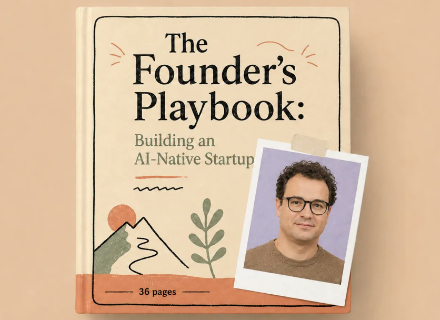
Anthropic Founder's Handbook: How to Build an AI-Native Company!

Anthropic has released "The Founder's Playbook: How to Build an AI Native Company," a guide that reimagines the startup lifecycle (Ideation, MVP, Launch, Scale) for 2026-era AI capabilities. The core thesis is that AI is fundamentally changing how ideas become reality, shifting the founder's role from an individual contributor to an orchestrator of AI agents. This lowers execution barriers, allowing domain experts (e.g., in medicine, law, education) to build products without deep technical skills, as AI can handle prototyping, coding, research, and operations. However, the playbook warns that easier prototyping increases the risk of building products no one needs, emphasizing that validation, not just building, is critical. It highlights that AI enables small teams to possess capabilities once reserved for large organizations, compressing functions like development, marketing, and support. This challenges traditional competitive advantages based on organizational size. For AI-native companies, sustainable moats will not come from the AI model alone but from deep domain knowledge, user data flywheels (behavioral fingerprints from real usage), and workflow lock-in that makes switching costly. Ultimately, the guide signals a shift in focus from raw model capability to how AI fundamentally reshapes company structure, processes, and competitive strategy. An AI-native company is defined not by using AI tools but by embedding AI into its core operational DNA from inception.

marsbit05/19 03:54

Anthropic Founder's Handbook: How to Build an AI-Native Company!

marsbit05/19 03:54

Bernstein's 97-Page Report Decoded: The Battle for AI Data Center Connectivity, Who Will Be the True Winner by 2026?

Bernstein's 97-page report analyzes the AI data center connectivity landscape. It argues that the bottleneck is shifting from raw compute (GPU) to the systems connecting GPUs, crucial for cluster efficiency. Copper and optical interconnects are not in a simple replacement cycle but will coexist long-term, with copper dominating short-distance "scale-up" connections and optics favored for longer "scale-out" scenarios. While Co-Packaged Optics (CPO) is the long-term direction for power and cost savings, its widespread adoption faces manufacturing and reliability hurdles, with mass deployment unlikely before 2028. Transitional technologies like Linear Pluggable Optics (LPO) and Near-Packaged Optics (NPO) are seen as near-term leaders. A key insight is that CPO will fundamentally reshape the value chain, shifting profits from traditional optical module suppliers towards chip designers (e.g., NVIDIA, Broadcom), advanced packaging (e.g., TSMC), and system integrators. For 2026, the report highlights more immediate and certain investment opportunities in the essential "infrastructure" enabling this connectivity shift. This includes upgrades for PCBs, ABF substrates, and CCLa driven by new AI server/switch platforms, alongside demand for 1.6T optical modules, LPO/NPO, and the testing/validation equipment required for future CPO scale-up.

marsbit05/19 03:16

Bernstein's 97-Page Report Decoded: The Battle for AI Data Center Connectivity, Who Will Be the True Winner by 2026?

marsbit05/19 03:16

活动图片