2026-08-12 Quarta

Notícias de cripto - Página 497

Mantenha-se a par do mercado de cripto. Notícias em tempo real, análises, preços, histórias em alta e análise de especialistas — tudo num só lugar.

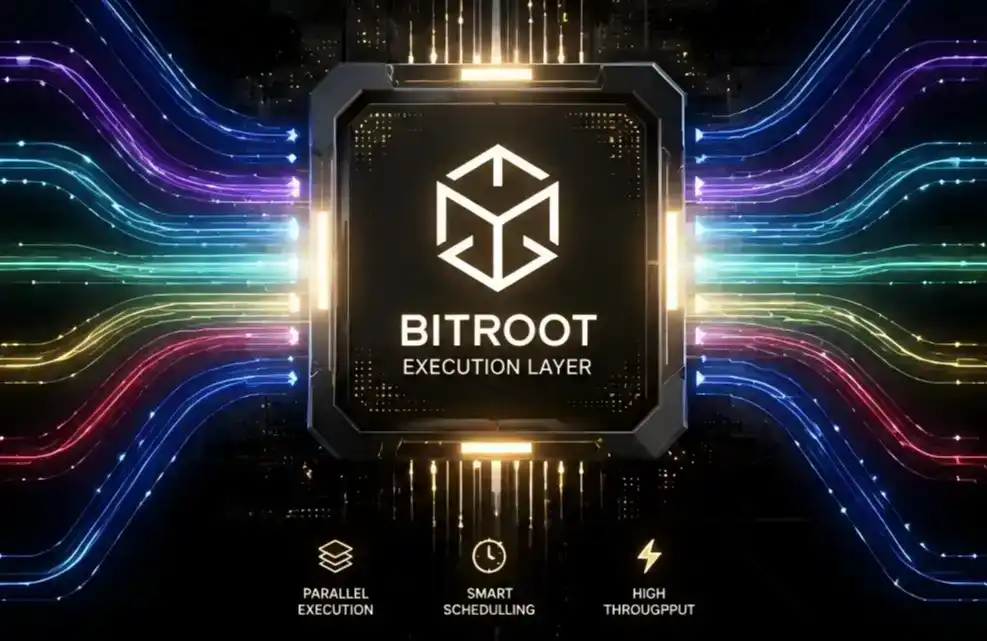
Bitroot Public Chain Invited to Attend Tencent Cloud Singapore AI Conference, Discussing the Future Alongside Solana

On May 19, Bitroot, an emerging Layer 1 blockchain, participated in the Tencent Cloud AI Summit in Singapore alongside key industry players like Solana Foundation. The event explored the intersection of AI infrastructure, enterprise applications, AI Agents, and Web3. Bitroot's invitation, despite being pre-mainnet, highlights industry interest in its focus on high-performance, AI-native architecture tailored for future AI Agent execution and verifiable on-chain automation. Bitroot CEO Juan Jose emphasized that AI competition is shifting from model performance to data, real-world application scenarios, and trust infrastructure. He argued that for AI Agents to evolve from assistants to autonomous executors managing transactions and assets, they require low-latency, low-cost, and high-throughput blockchain environments. Bitroot aims to address this through its EVM-compatible design, optimistic parallel execution, and a consensus mechanism targeting high scalability. Currently in its Testnet 5.0 phase, Bitroot reports metrics like over 50,000 peak TPS and sub-0.3 second average block time. Its narrative positions it within a growing landscape where next-generation Layer 1s like Monad and Aptos also compete on performance, while Bitroot differentiates by integrating AI computational capabilities natively across its stack. The summit underscored that the fusion of AI and Web3 is moving from concept to infrastructure competition, where networks balancing performance, security, and verifiability will be crucial for enabling scalable AI-driven applications.

marsbit05/27 08:13

Bitroot Public Chain Invited to Attend Tencent Cloud Singapore AI Conference, Discussing the Future Alongside Solana

marsbit05/27 08:13

Hedge Fund Q1 Interpretation: Everyone Is Selling Software, Buying Chips

Hedge Funds and Mutual Funds Aligned in Q1: Dumping Software, Buying Chips A clear consensus emerged among major U.S. hedge funds and mutual funds in Q1: they were simultaneously selling software stocks and pouring capital into the semiconductor sector. This aggressive rotation pushed semiconductor exposure in hedge fund long portfolios to a record high. Hedge funds delivered a 7% return year-to-date, while only 30% of large-cap active mutual funds outperformed their benchmarks. The average short interest for S&P 500 constituents rose to 3% of market cap, the highest since 2011. Within technology, the structural shift was stark. Hedge funds' semiconductor weighting hit an all-time high, while software fell to its lowest since 2019. Excluding Microsoft, mutual funds' relative overexposure to semis vs. software was the largest since 2012. Microsoft was among the most net-sold stocks by both groups. Hedge funds net purchased semiconductor names like LRCX and AMAT. Strategies diverged on leverage and cash. Hedge funds increased their net exposure to near a one-year high after an initial cut. Mutual funds raised their cash allocation, though it remains historically low at 1.4%. Sector alignment was high in Industrials (both overweight) but divergent in Tech: hedge funds increased their Tech net tilt by a record 853 basis points, while mutual funds reduced theirs. Clear splits also appeared in Financials and Consumer Discretionary. Four stocks appeared on both Goldman's hedge fund VIP and mutual fund overweight lists: BA, MA, MRVL, and V. This "shared favorites" basket has returned 10% YTD, outperforming the equal-weight S&P 500. Notably, all "Magnificent Seven" stocks are on the hedge fund VIP list but are uniformly underweighted by mutual funds.

marsbit05/27 08:04

Hedge Fund Q1 Interpretation: Everyone Is Selling Software, Buying Chips

marsbit05/27 08:04

The Evolution Path of Physical Bitcoin

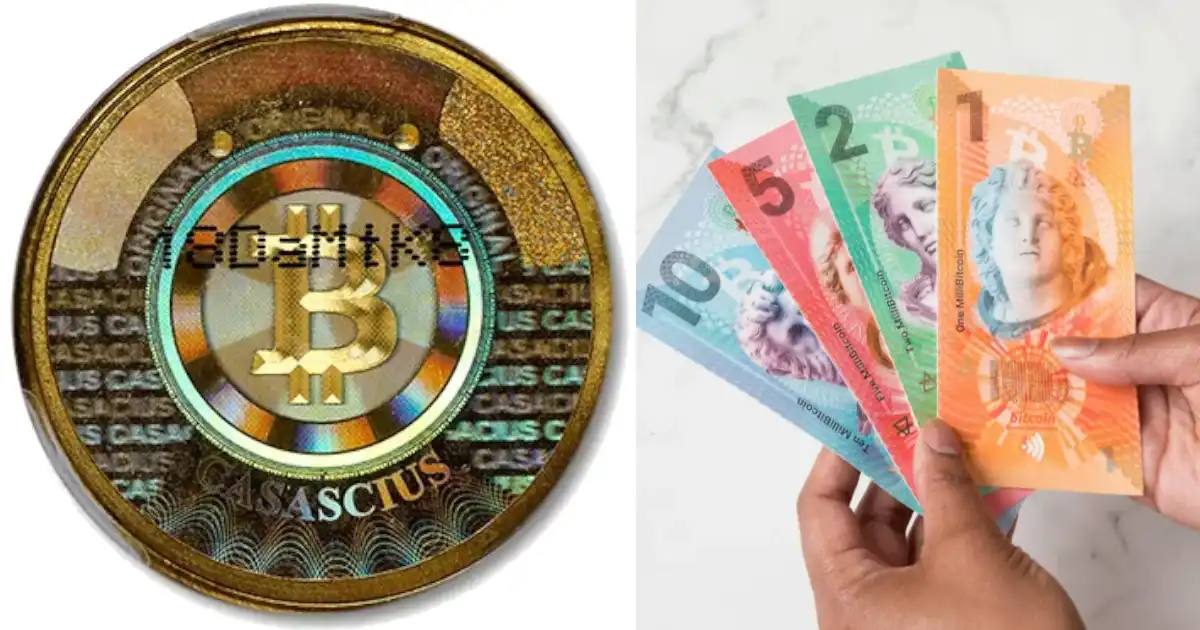
The Evolution of Physical Bitcoin Bitcoin's digital nature is its core strength, enabling self-custody and rapid global transfers. However, its intangibility also hinders mainstream adoption. For over a decade, creators have attempted to materialize Bitcoin while preserving its cash-like properties, yielding notable results. Casascius Coins, launched in 2011, were the first and most iconic physical Bitcoin. Creator Mike Caldwell generated private keys offline, printed them on coins, and sealed them with tamper-evident holograms. This model relied on user trust in the centralized issuer. Production ceased in 2013 due to regulatory pressure from FinCEN. RavenBit Coins emerged in 2014 aiming to decentralize minting by letting users generate and apply their own keys. However, this led to trust issues with numerous untrusted minters and insecure key generation methods. In 2016, Coinkite introduced Opendimes—a breakthrough in bearer asset technology. These USB-shaped devices generate and store keys internally. Funds can be received by checking the public key, but spending requires physically breaking the device to extract the private key. While innovative and open-source, its cost (~$20) and form factor limit its use for small, everyday transactions. Satochip's Satodime, a card-shaped device using similar secure chip technology, followed. It supports NFC interaction and comes in various forms. While potentially cheaper in bulk (~13€), it remains a high-security hardware wallet, not a low-cost cash substitute. A fundamental cost barrier exists. For physical Bitcoin to achieve widespread commercial use, hardware costs must drop below $1 to match the production cost of fiat banknotes. Current secure chips capable of running Bitcoin's cryptographic algorithms (like secp256k1) are too expensive. Chips like NXP's NTAG X DNA (~$3) show cost-reduction potential but lack native Bitcoin curve support. Projects like OfflineCash embed chips in banknote-like paper, but face challenges with durability, the need for custom Bitcoin-enabled chips, and the inherent requirement for users to verify balances online—which conflicts with Bitcoin's trustless ideal. Coinkite's Tapsigner, a ~$20 card with a proprietary Bitcoin NFC chip, is seen as a more practical step forward. It functions as a reloadable hardware wallet for contactless payments, solving the "change" problem and focusing on real-world retail integration, a direction also pursued by companies like Cash App and Square. In summary, the journey to physical Bitcoin has progressed from trusted centralized mints (Casascius) to user-generated keys (RavenBit) and finally to self-contained secure hardware (Opendimes, Satodime, Tapsigner). The core challenge remains developing a sufficiently low-cost, durable, and truly trustless physical bearer asset that can function like cash in daily transactions. Current solutions are either too expensive or introduce new trust assumptions, keeping the ideal of ubiquitous physical Bitcoin just out of reach for now.

marsbit05/27 07:12

The Evolution Path of Physical Bitcoin

marsbit05/27 07:12

Samsung Relies on Technology Cycles, SK Hynix on HBM, How Did Micron Win a Trillion-Dollar Market Cap?

Micron Technology, the third-largest memory chip maker alongside Samsung and SK Hynix, recently saw its market cap surpass $1 trillion. Founded in 1978 in Boise, Idaho, Micron survived brutal industry cycles while American peers and Japan's memory sector faltered. Its survival is attributed to a dual strategy: leveraging political and legal avenues for critical breathing room, coupled with relentless manufacturing cost control. Historically, Micron sought U.S. government intervention three times. In 1985, it filed an anti-dumping complaint against Japanese firms, leading to the U.S.-Japan Semiconductor Agreement. Ironically, this created an opening for Samsung, which later became its toughest competitor. In 2002, Micron turned "whistleblower" in a DRAM price-fixing investigation, escaping penalties while rivals were fined. In 2017, it sued China's Fujian Jinhua, contributing to its placement on a U.S. entity list, stifling a nascent competitor. However, a major strategic misstep occurred in 2013 with the acquisition of bankrupt Japanese firm Elpida. Integrating Elpida's mobile-DRAM-focused technology diverted resources, causing Micron to miss the critical early decade of development for High Bandwidth Memory (HBM)—the high-performance memory essential for AI chips like NVIDIA GPUs. By the time AI demand exploded in 2022, SK Hynix, which launched the first HBM in 2013, held about 85% of the HBM3 market, leaving Micron with roughly 3%. Micron now faces a triple squeeze. In the high-end HBM market, it lags significantly behind SK Hynix and Samsung. In the mid-to-low end DRAM market, it faces aggressive price competition from China's CXMT. Furthermore, a 2023 Chinese cybersecurity ban on its products slashed its revenue from China, a once-core market, from over 10% to just 7.1% by FY2025, causing it to exit China's data center server business. Beneath its political maneuvering lies Micron's core strength: exceptional manufacturing efficiency and cost control. Decades of engineering have yielded DRAM chips with a smaller cell area than rivals, meaning more chips per wafer and lower unit costs. This efficiency, not subsidies, has allowed it to withstand price wars. While political leverage bought time, Micron is now paying a "time debt" in the HBM race. It is racing to ramp up HBM3E production and develop HBM4, but catching up to competitors who started a decade earlier is a monumental challenge. Its future hinges on whether its expertise in cost control and political strategy can compensate for the lost time in a technology race where early-mover advantage is decisive.

链捕手05/27 06:39
Samsung Relies on Technology Cycles, SK Hynix on HBM, How Did Micron Win a Trillion-Dollar Market Cap?

链捕手05/27 06:39

New AMD Paper Overturns Conventional Wisdom: FP4 Training Instability's Cause Is Not Insufficient Randomness

AMD's new research challenges the conventional understanding of FP4 training instability. While reducing precision from FP8 to FP4 promises doubled computational throughput and is supported by new hardware like NVIDIA Blackwell and AMD MI350 series, training large language models natively with FP4 has been notoriously unstable, often attributed to insufficient stochasticity. The paper "Pretraining large language models with MXFP4 on Native FP4 Hardware" demonstrates successful end-to-end FP4 pre-training of Llama 3.1-8B on AMD MI355X GPUs using the MXFP4 format, achieving a 9-10% overall speedup over FP8. Crucially, it identifies the root cause of instability: not randomness, but the accumulation of *structural micro-scaling errors* along the sensitive weight gradient (Wgrad) path. Through controlled experiments, researchers found that quantizing the Wgrad operation to FP4 caused significant convergence degradation. Counterintuitively, common stochasticity-based mitigation techniques like stochastic rounding and randomized Hadamard transforms worsened performance. In contrast, applying a *deterministic* Hadamard transform successfully stabilized training by ensuring consistent error patterns, reducing the extra token cost from 26-27% to just 8-9%. This work has significant implications: 1) It provides a clear diagnostic for low-precision training instability, steering focus towards structural errors. 2) It pushes FP4 from a primarily inference-focused format into the realm of viable training. 3) It leverages the open OCP Microscaling (MX) standard, promoting cross-vendor compatibility. The research marks a critical step towards more economical large model training by further pushing the boundaries of low-precision computation.

marsbit05/27 06:19

New AMD Paper Overturns Conventional Wisdom: FP4 Training Instability's Cause Is Not Insufficient Randomness

marsbit05/27 06:19

Will ONDO's 'Tokenization Narrative' Change After Its CEO's Unexpected Passing?

Ondo Finance founder and CEO Nathan Allman has passed away unexpectedly. Allman, a Brown University graduate with a background in private credit and Goldman Sachs' digital asset team, was a key architect of Ondo's pivot from DeFi structured yield products to becoming a leading Real-World Asset (RWA) protocol. He drove the strategy to tokenize traditional financial assets like US Treasuries (OUSG), yield-generating dollar assets (USDY), and US stocks/ETFs (Ondo Global Markets) for on-chain accessibility. The company announced that President Ian De Bode, a former McKinsey partner with a strong institutional strategy and operations background, will succeed Allman as CEO. While Allman's sudden departure presents a near-term challenge, testing market confidence and Ondo's continuity, the project is seen as more than a founder-driven narrative. It has an established product suite and a management team with deep traditional finance experience. The long-term impact hinges on the new leadership's ability to execute. De Bode's expertise in compliance, distribution, and institutional partnerships aligns with RWA's next phase of scaling infrastructure. The core question is whether Ondo can maintain its product momentum and institutional relationships. Ondo's native ONDO token represents governance and RWA narrative value, not direct revenue from the underlying assets. Its future as a "top tokenization play" will depend on the team's continued delivery of product growth, asset scale, and real-world demand, moving beyond the initial emotional shock.

marsbit05/27 05:33

Will ONDO's 'Tokenization Narrative' Change After Its CEO's Unexpected Passing?

marsbit05/27 05:33

Bankless Co-founder's Confession on Selling Off ETH: Ethereum Did the Right Thing, but 'ETH as Money' Has No Future

Bankless co-founder David Hoffman recently sold his remaining ETH holdings, sparking debate within the Ethereum community. In a detailed explanation, Hoffman clarifies that his decision was not based on bearish sentiment towards Ethereum itself, which he remains highly optimistic about, but rather on the conclusion that the "ETH is Money" narrative has largely run its course. Hoffman argues that for ETH to achieve its envisioned status as global money, Ethereum needed to execute flawlessly across multiple layers—governance, technology, and market dominance—in a highly coordinated manner. He acknowledges Ethereum's significant successes and current justified valuation but suggests the window for a major revaluation based on this monetary narrative is closing. The post examines several challenges: the strong correlation between L1 chain activity/fees and native token value; the perceived failure of the "strong version" of crypto (user-owned, egalitarian systems) versus the rise of a "weak version" (efficient ledger technology for traditional finance); and the possibility that ETH's momentum as money was uniquely tied to the distorted conditions of the 2020-2021 period. Crucially, Hoffman highlights a structural tension: Ethereum is architected as a "giver, not a taker," providing critical infrastructure like secure block space and tokenization at cost. This ethos benefits the broader ecosystem (applications, L2s) but doesn't prioritize extracting maximum value for ETH itself. The "ETH is Money" thesis required Ethereum to win a war of overwhelming market dominance—a war its design philosophy refuses to explicitly fight. Therefore, while he sees continued immense success for the Ethereum network and its ecosystem (following a "fat application" theory where value accrues to apps and L2s), Hoffman finds it increasingly difficult to foresee a structural upward revaluation for the ETH asset based on the monetary narrative. His capital reallocation reflects a belief that this particular investment thesis has played out.

Odaily星球日报05/27 05:26

Bankless Co-founder's Confession on Selling Off ETH: Ethereum Did the Right Thing, but 'ETH as Money' Has No Future

Odaily星球日报05/27 05:26

活动图片