2026-08-07 Sexta

Notícias de cripto - Página 338

Mantenha-se a par do mercado de cripto. Notícias em tempo real, análises, preços, histórias em alta e análise de especialistas — tudo num só lugar.

qinbaFrank: Review and Outlook of the AI Computing Power Wave — From the Three Debates on NVIDIA to Optical Interconnect and SpaceX IPO, How is Capital Rotating?

**Summary: Retrospective and Outlook on the AI Computing Wave - A Framework for Capital Rotation** Based on a presentation by investor qinbaFrank, this analysis reviews the AI computing market trajectory since 2023 and outlines a forward-looking framework. **Key Phases and Market Debates:** The AI bull market progressed through three major debates: 1) The necessity of massive capital expenditure (late 2023). 2) The sustainability of tech giants' spending (early 2024-early 2025). 3) Potential overestimation of compute needs (early 2025). Consensus solidified in late 2025 as model capabilities and utility demonstrably improved. **Core Thesis: Penetration Rate Drives Commercialization.** Unlike the 2000 dot-com bubble, the current AI wave benefits from mature digital infrastructure, enabling faster adoption. The critical threshold is 10% penetration; surpassing it (with recent enterprise intent surveys showing ~18%) indicates entry into a rapid growth "golden period" where user scale and willingness to pay increase simultaneously. **AI vs. Internet: A Fundamental Difference.** While the internet enhanced connection efficiency, AI directly substitutes human cognition and labor. Once AI performance exceeds the "societal average" human level, its commercial value scales exponentially as payment shifts from human labor costs to AI service fees. **Investment Logic Evolution in the Compute Chain.** The focus has expanded from GPUs to a systemic re-rating of the entire hardware stack: storage/HBM, CPUs, interconnects, power, and advanced packaging. The framework is: **short-term "scarcity pricing," mid-term "upgrade pricing" (e.g., optical interconnects, power networks), and long-term "Physical AI" pricing** (edge computing, robotics). **Market Focus Shift and Adjustment Framework.** The market is transitioning from "hardware scarcity" to "commercialization validation." The ultimate anchor for the narrative is sustained high growth in model providers' Annual Recurring Revenue (ARR) and cloud business revenue, which justifies continued capital expenditure. Adjustments are categorized into three levels: * **L1 (Minor):** Driven by valuation compression or macro noise (e.g., single CPI print). Fundamentals intact. * **L2 (Moderate):** Triggered by significant macro events requiring risk repricing. Requires new data for confidence restoration. * **L3 (Major):** Involves a reset of the core industrial narrative or macro regime (e.g., AI commercialization growth stalling). The **crucial dividing line** is whether AI commercialization growth slows. Without a slowdown, pullbacks are likely L1/L2 "repricing" events. A genuine growth deceleration would signal an L2/L3 narrative reset. **Conclusion: A Foundational Civilizational Leap.** AI represents a foundational upgrade to "intelligence" itself—akin to humanity mastering fire—rather than a single-point industrial revolution. This底层能力跃迁 (underlying capability leap) will spawn successive waves of innovation (Agent, robotics, industry workflow重构). The journey will be波浪式的 (wavelike), driven by cycles of scarcity, technological upgrades, and远期兑现 (long-term realization).

marsbit06/17 11:28

qinbaFrank: Review and Outlook of the AI Computing Power Wave — From the Three Debates on NVIDIA to Optical Interconnect and SpaceX IPO, How is Capital Rotating?

marsbit06/17 11:28

A Country That Mined Bitcoin for 8 Years Has Built Its Own Dedicated Crypto Bank

A country that has been mining Bitcoin for eight years has established its own dedicated crypto bank. DK Bank, located in Bhutan's newly developed GMC special administrative zone, aims to fill the significant banking service gap for the cryptocurrency industry. Its CEO, Zheng YD, explained that most banks avoid crypto businesses due to a lack of risk management frameworks for decentralized and anonymous protocols. Operating under a unique "one country, two systems" governance model separate from mainland Bhutan, GMC aspires to become a financial hub for South Asia. DK Bank differentiates itself by offering integrated multi-currency accounts where users can manage both fiat currencies and stablecoins like USDT and USDC in one place, alongside services like Bitcoin-backed loans. The bank faces technical challenges in merging traditional banking systems with 24/7 crypto markets and implements rigorous on-chain and off-chain transaction monitoring for risk control. GMC's regulatory framework draws from Singaporean common law and Abu Dhabi's ADGM rules, offering a fast-track licensing process for already licensed firms while maintaining high standards. The initiative is part of Bhutan's longer-term crypto strategy, which includes Bitcoin mining since 2018. The focus, however, is on building a diversified institutional-grade crypto ecosystem—including custody and asset management—rather than retail speculative tokens. Proponents argue such sovereign crypto infrastructure is necessary, and Bhutan's early, measured approach exemplifies the thoughtful integration needed in global finance.

Foresight News06/17 10:58

A Country That Mined Bitcoin for 8 Years Has Built Its Own Dedicated Crypto Bank

Foresight News06/17 10:58

Unveiling the Whales of the World Cup Prediction Market: Smart Money Stumbles on the Pitch, 'Buy No' Outperforms 'Buy Yes'

**Title: Unveiling the Whales of the World Cup Prediction Market: "Smart Money" Stumbles on the Pitch as "Buying No" Outperforms "Buying Yes"** An analysis of pre-match trades over $5,000 on Polymarket for 20 completed group stage matches reveals a counterintuitive finding: large "smart money" bets were not consistently accurate. Aggregated pre-match buying volume was $89.55 million, with a weighted hit rate of only 48.5%. Holding these positions would have resulted in an estimated net loss of about $1.76 million (ROI -2.0%), challenging the notion that big money reliably predicts outcomes. The data highlights several key dynamics. Draws proved to be a major risk, significantly impacting bets on favored teams, as seen in Belgium-Egypt and Spain-Cape Verde. Markets were more efficient for clear mismatches (e.g., Germany's big win) but became prone to bias when favorites were overvalued. Notably, buying "No" shares (betting against a specific outcome) significantly outperformed buying "Yes," with hit rates of 62.4% vs. 37.5%. This suggests the market often overprices popular narratives, creating value in contrarian positions. Individual trades showed extreme volatility. One wallet (mintblade) earned an estimated $6.77 million by betting against Iran, while another (LEEEROYJENKINS) lost roughly $8.39 million on a Belgium win. The market favors high-risk, high-reward information trading rather than steady arbitrage. For sustained insight, wallets with consistent performance across multiple matches (e.g., swisstony) are more telling than one-off big bets. Ultimately, the Polymarket acts less as a crystal ball and more as a mirror, reflecting crowd bias and the inherent unpredictability of football. True "smart money" may lie not in predicting the future, but in identifying and exploiting market mispricings while respecting risk.

marsbit06/17 10:34

Unveiling the Whales of the World Cup Prediction Market: Smart Money Stumbles on the Pitch, 'Buy No' Outperforms 'Buy Yes'

marsbit06/17 10:34

Bezos' Third Startup Still Can't Avoid Musk

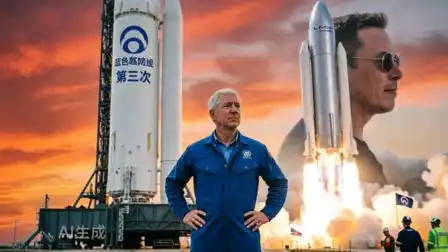
Jeff Bezos Returns as CEO for Third Venture, Still Can't Avoid Musk After stepping down as Amazon CEO in 2021, Jeff Bezos has returned to the front lines as co-CEO of Prometheus, an AI startup he founded. In a recent CNBC interview, Bezos described the experience as "Type 2 fun"—exhausting but ultimately rewarding. Founded less than a year ago, Prometheus has already raised over $18 billion in two funding rounds, achieving a staggering $41 billion valuation. Prometheus aims to develop a "General Engineer AI" to accelerate the entire "invention loop"—design, simulation, testing, and manufacturing—for complex physical products like jet engines, spacecraft, and medical devices. This positions the company at the intersection of Bezos's past experiences: Amazon's platform-building scale and Blue Origin's rigorous physical engineering. This marks Bezos's third major venture, following Amazon and Blue Origin. His co-CEO is Vik Bajaj, bringing expertise from life sciences and hard tech. Bezos now dedicates most of his time to Prometheus, signaling his belief in its transformative potential. The move also comes as Bezos's space company, Blue Origin, faces challenges, including a recent test explosion delaying its New Glenn rocket. Meanwhile, Elon Musk's SpaceX achieved a record-breaking IPO, surpassing Amazon's market cap. While Musk focuses on AI for executing physical tasks (like Tesla's robots and SpaceX's engineering), Bezos is betting on AI to *invent* in the physical world. Prometheus enters a crowded industrial AI field with players like OpenAI, NVIDIA, and Tesla's Optimus. Its lofty valuation bets on the unproven but massive opportunity to become the foundational platform for engineering in the AI era—a "blue ocean" Bezos hopes to define before Musk does.

marsbit06/17 10:32

Bezos' Third Startup Still Can't Avoid Musk

marsbit06/17 10:32

Won't US Stocks Ever Fall Again? The 'Great Melt-up' Trap in the Era of High Debt

The article analyzes a popular theory circulating online that the U.S. stock market may be mathematically incapable of a true, sustained decline due to the country's massive and growing national debt. The argument suggests that the government's only path to managing this debt is through inflation and money printing, which would nominally lift asset prices like stocks, creating a perpetual "melt-up." The author places this idea within the historical context of market melt-ups, such as the dot-com bubble and Japan's asset bubble, where prices detach from fundamentals driven by momentum and FOMO. While acknowledging that a high-debt environment creates incentives for inflation, which is generally favorable for assets over cash, the article refutes key claims of the online theory. It clarifies that interest payments are not about to exceed GDP, that printing money is not the only option for the government, and that stocks do not reliably rise in lockstep with hyperinflation, citing historical examples from Germany, Zimbabwe, and Venezuela. The more probable outcome, according to the author, is a prolonged period of financial repression—moderate inflation above interest rates that slowly erodes debt and cash purchasing power, leading to nominally higher asset prices but potentially lower real returns. The core warning is that while long-term market trends may be upward, this does not eliminate the risk of significant interim crashes (30%, 40%, or more) or guarantee real wealth creation during inflationary times. The conclusion advises against betting one's entire financial future on a smooth, perpetually rising market narrative. Instead, it recommends a disciplined, diversified strategy involving productive assets (stocks, real estate, some gold, short-term bonds) and an adequate cash buffer to avoid forced selling during downturns. The key takeaway is to avoid extreme concentration in expensive assets and leverage, and not to base investment decisions on the hope that every market dip will inevitably be rescued.

marsbit06/17 10:11

Won't US Stocks Ever Fall Again? The 'Great Melt-up' Trap in the Era of High Debt

marsbit06/17 10:11

The Fate of Digital Banks: No Fancy App Can Outshine a Banking License

The Fate of Digital Banks: A Flashy App is No Match for a Banking License The article argues that despite attracting billions of users with fee-free checking accounts and sleek apps, most "neobanks" struggle to be profitable because their core business—transaction fees—is inherently low-margin. The real profit engine of banking is lending (credit), which generates interest income. However, many early neobanks operated without their own banking licenses, which restricted their ability to lend at scale. Examples like Nubank, Revolut, and Chime illustrate the point. While they gained users with free accounts, their eventual profitability came from rolling out credit products. The piece highlights systemic risks for neobanks that rely on third-party infrastructure, citing the Synapse bankruptcy, which froze user funds and revealed the fragility of such models. The solution, according to the author, is obtaining a formal banking license, like the U.S. OCC's national trust charter. This provides regulatory backing, allows direct custody of funds, and eliminates dependency on intermediary partners. The trend is now evident in the crypto sector, where companies like Kraken, SoFi, and others are actively pursuing such licenses. The article concludes that while technology changes, the fundamental business logic of banking—profiting from lending—remains constant. Successful digital banks ultimately conform to this old model, just with better interfaces and fairer terms.

Foresight News06/17 10:03

The Fate of Digital Banks: No Fancy App Can Outshine a Banking License

Foresight News06/17 10:03

In the Name of Charity, For the Benefit of the Family: How the Trump Family Turns Philanthropy into Profit?

Charity for Profit: How the Trump Family Turned Philanthropy into Personal Gain Amid a recent controversy over misleading claims about his cryptocurrency company American Bitcoin, Eric Trump invoked his children's cancer charity as evidence of his good intentions. While his Curetivity foundation (formerly the Eric Trump Foundation) has donated over $25 million to St. Jude Children's Research Hospital, an investigation reveals a pattern of self-dealing and opaque practices that benefited the Trump family business. Internal documents show that from 2011 to 2016, over $500,000 from the charity was funneled back to Trump-owned properties for event costs, transactions often omitted from tax filings. This created clear conflicts of interest, with figures like former club manager and current White House aide Dan Scavino involved on both sides. Public claims of "one of the lowest expense ratios" were contradicted by records showing significant spending on entertainment, auctions, and transportation. Facing scrutiny in 2017, Eric Trump distanced himself from the board and rebranded the foundation. After a state investigation shifted focus to compliance rather than enforcement, he returned as the public face. Fundraising events, now less transparent, continue at Trump venues. Estimates suggest these events have directed over $1 million to the Trump Organization over two decades. The same playbook of optimistic claims and obscured financial realities is now evident in Eric Trump's role at American Bitcoin. He promoted it as a highly profitable venture with low mining costs, but reports indicate most Bitcoin was purchased with funds from constant stock issuance, not mined, with actual costs far higher than claimed. While the company's stock has crashed nearly 90% from its peak, Eric Trump's personal stake remains valuable. The recurring pattern involves aggressive public defense, legal maneuvering to bury records, making minimal changes to satisfy regulators, and eventually repackaging the venture to regain trust, often successfully.

marsbit06/17 09:54

In the Name of Charity, For the Benefit of the Family: How the Trump Family Turns Philanthropy into Profit?

marsbit06/17 09:54

活动图片