2026-08-07 Sexta

Notícias de cripto - Página 336

Mantenha-se a par do mercado de cripto. Notícias em tempo real, análises, preços, histórias em alta e análise de especialistas — tudo num só lugar.

Oil Prices Fall Below $80, Bitcoin Yet to Rise: Liquidity Becomes Key Market Driver

Oil prices fell below $80 as a US-Iran peace framework eased tensions, but Bitcoin failed to rally, remaining around $64,900. The article argues that while lower oil removes a key bearish factor for BTC, the primary market drivers have shifted to liquidity conditions, Federal Reserve policy, ETF fund flows, and overall risk appetite. Historically, high oil prices threatened inflation, delaying Fed rate cuts and hurting risk assets like Bitcoin. Now, with oil prices down, Bitcoin's path hinges on whether this translates into lower inflation expectations, softer Treasury yields, and a more dovish Fed stance. Recent FOMC minutes still show concern over energy-driven inflation, keeping financial conditions restrictive. Bitcoin ETF flows showed a slight positive inflow recently, but sustained demand is needed for a meaningful shift. The market requires consistent signals: stable ETF inflows, declining yields, and improving risk sentiment alongside lower oil prices. Without this combination, lower oil alone may not boost BTC. The outlook presents two paths: a recovery if lower oil eases inflation, the Fed turns less hawkish, and ETF demand stabilizes, allowing BTC to reclaim the $66,900-$70,000 range. Conversely, Bitcoin could remain pressured if the peace deal stalls, the Fed remains restrictive, yields stay high, or ETF flows reverse. In summary, for the remainder of 2026, liquidity factors—Fed policy, ETF activity, and investor risk appetite—have surpassed oil prices as the critical determinants of Bitcoin's price trajectory.

marsbit06/18 02:49

Oil Prices Fall Below $80, Bitcoin Yet to Rise: Liquidity Becomes Key Market Driver

marsbit06/18 02:49

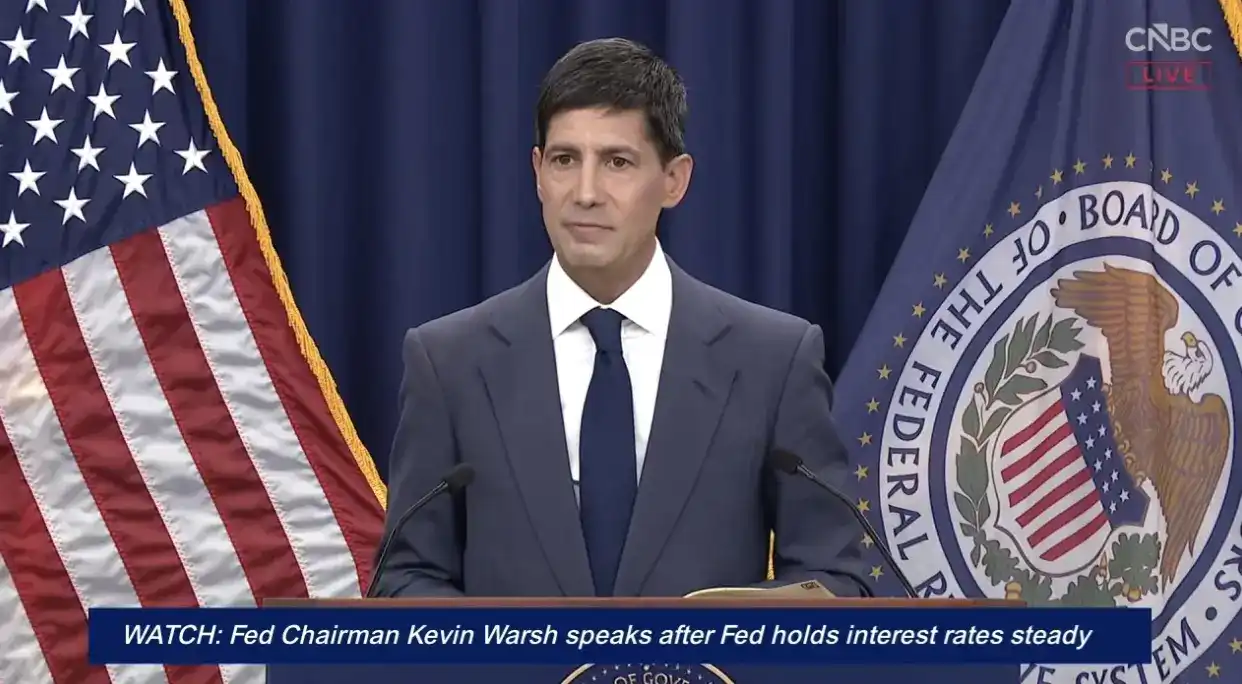
Full Debut Q&A! Fed Chair Wash: Firmly Adhering to 2% Inflation Target, Establishing Five Special Task Forces, Personally Did Not Submit Dot Plot

Federal Reserve Chair Kevin Warsh delivered his first FOMC press conference, maintaining the federal funds rate at 3.5%-3.75% and emphasizing the Committee's unanimous and explicit commitment to achieving its 2% inflation target. Key announcements included significant changes to Fed communication and operations. The policy statement was significantly shortened and, notably, forward guidance was removed. Chair Warsh broke from precedent by declining to submit his own economic forecasts and "dot plot." He announced the immediate formation of five special working groups focusing on: Fed communication, the balance sheet, data sources, productivity and employment (including AI's impact), and the inflation framework. These groups, which will include external experts, are tasked with recommending improvements by year-end. One key group will review the Fed's $6.7 trillion balance sheet to assess the roles of interest rates versus balance sheet tools in monetary policy. Warsh characterized the current restrictive stance of policy as "uneven," noting its effect on housing but questioning its impact on financial markets where conditions appear less restrictive. He expressed a desire to move away from a "Fed-speak" driven market, arguing that markets should react to economic data rather than Fed commentary to provide better informational signals. On inflation, he stated there is no need to reconsider the 2% target until the Fed re-establishes its commitment and capability to achieve it. Economic projections (SEP) from other officials showed a split on the rate outlook for 2024, with half expecting at least one hike and half forecasting unchanged or lower rates. The median projection saw the federal funds rate at 3.8% by year-end 2024. Following the announcements, risk assets sold off sharply, Treasury yields rose, and the dollar strengthened.

marsbit06/18 02:18

Full Debut Q&A! Fed Chair Wash: Firmly Adhering to 2% Inflation Target, Establishing Five Special Task Forces, Personally Did Not Submit Dot Plot

marsbit06/18 02:18

Full First Q&A! Fed Chair Warsh: Sticks to 2% Inflation Target, Establishes Five Special Working Groups, Personally Did Not Submit Dot Plot

The Federal Reserve, under new Chair Kevin Warsh, held its first FOMC meeting, maintaining the federal funds rate target range at 3.5% to 3.75%. The central bank issued a significantly shortened policy statement, explicitly removing forward guidance. Chair Warsh delivered a strong, unified commitment to achieving the 2% inflation target, stating the FOMC has the "capability and the commitment" to restore price stability and sees no need to review the target itself at this time. Warsh announced the immediate formation of five special working groups to examine and propose improvements in key areas by year-end: Fed communication, the balance sheet (including a review of the $6.7 trillion portfolio and its role in policy), data sources and methodology, productivity and employment (including AI's impact), and the inflation framework. In a break from tradition, Chair Warsh did not submit his own economic projections or "dot plot." The submitted Summary of Economic Projections (SEP) showed a split among other officials: half anticipate at least one rate hike this year, while half expect rates to remain steady or fall. The median projection sees the federal funds rate at 3.8% by year-end 2026. Warsh characterized the current policy stance as "uneven," noting restrictive effects in sectors like housing but less so in financial markets. He emphasized a desire to move away from a market dynamic overly focused on Fed signaling, advocating for markets to react more to economic data. On AI, he called it potentially the most significant economic change in his adult life, driving clear demand but with uncertain timing and scale on the supply side, creating a "race" between the two.

链捕手06/18 02:16

Full First Q&A! Fed Chair Warsh: Sticks to 2% Inflation Target, Establishes Five Special Working Groups, Personally Did Not Submit Dot Plot

链捕手06/18 02:16

The DeepSeek Financing Story

DeepSeek's financing round, totaling approximately 3 billion USD, concluded recently, revealing details about the process and key investors. The round was initiated around April with strict initial terms: a minimum commitment of 5 billion RMB, no syndication, and a pure RMB structure. These were later relaxed, with the minimum ticket size reduced to 1.5 billion RMB. A pivotal four-hour online investor meeting in mid-May served as the primary interaction for many backers with DeepSeek's founder, Liang Wenfeng. Despite not being a naturally eloquent speaker, Liang's philosophy deeply resonated. He consistently emphasized the company's singular focus on AGI (Artificial General Intelligence), the principle of "less is more," extreme caution in spending, and the paramount importance of team stability. His notable quotes included describing the team as "ordinary people doing extraordinary things" and stating that "AGI is a big enough thing; everything else is just process." The final investor list featured 10 entities, but underlying fund structures indicate participation from nearly 100 institutions and individuals. Notable lead investors include Monolith Capital (increasing its commitment from 1.5 to 3 billion RMB), Zhenxingu Capital, IDG Capital, and state-affiliated investors like Guozhitou. Conspicuously absent were major firms like Sequoia China and Hillhouse Capital, despite earlier speculation about their involvement. A core condition set by Liang Wenfeng for all investors, whether corporate or venture capital, was a strict prohibition against poaching DeepSeek employees or encouraging them to leave to start ventures. The financing process highlighted DeepSeek's unexpected openness to external capital, surprising many in the investment community. The company's low-profile nature, combined with its ambitious AGI vision and principled approach, fostered a sense of reverence among participating investors, many of whom were reluctant to discuss the deal publicly, preferring to maintain its discreet and purposeful ethos.

链捕手06/18 02:08

The DeepSeek Financing Story

链捕手06/18 02:08

The DeepSeek Fundraising Story

"The DeepSeek Funding Story: Insights from the $2.15 Billion Round" This article details behind-the-scenes narratives from DeepSeek's recent massive funding round. Key highlights include the legendary four-hour online investor meeting where CEO Liang Wenfeng, despite not being a charismatic speaker, impressed attendees with his focus on AGI and team stability. He emphasized the philosophy of "ordinary people doing extraordinary things" and a steadfast commitment to solely advancing intelligence. The fundraising process, initiated in April, saw initial demands for a minimum investment of 5 billion RMB, no syndication, and a pure RMB structure. These terms were later adjusted to a 1.5 billion RMB minimum to accommodate more investors. A notable absence was the lack of participation from major VC firms Sequoia China and Hillhouse Capital, despite early rumors, making IDG the only established VC in the final lineup. The investor list, while showing 10 entities, actually involved nearly 100 underlying institutions and individuals upon closer examination. Significant participants included Monolith Capital, which doubled its commitment to 3 billion RMB, and Zhenxingu Capital, an unexpected entrant. Liang Wenfeng's paramount condition for all investors was a strict agreement not to poach DeepSeek employees. The article reflects on DeepSeek's unexpected openness to funding and the mix of strategies—synergy, insight, brand alignment, and persistence—that secured investors a stake. The overarching sentiment among participants is one of pride and a shared belief in DeepSeek's potential to become a landmark Chinese company, driven by a profound sense of purpose in the AGI race.

marsbit06/18 02:06

The DeepSeek Fundraising Story

marsbit06/18 02:06

DAT Companies Take on Side Businesses

The article details the strategic shifts of Digital Asset Treasury (DAT) companies amid a prolonged market downturn. Initially popularized by firms like MicroStrategy, the DAT model—where companies hold cryptocurrencies on their balance sheets—has faced significant pressure as crypto ETFs eroded their investment thesis and bear markets strained finances. Key players are adapting in several ways. Some, like ETHzilla, have abandoned the model entirely. Others are pivoting towards becoming active, revenue-generating participants in the crypto ecosystem rather than passive holders. This evolution is taking two main paths: 1. **Transformation into Institutional Crypto Asset Managers:** Companies like SharpLink Gaming and GameSquare are leveraging their holdings to generate yield, moving beyond simple storage. They employ strategies like 100% ETH staking or using machine learning to optimize DeFi yields, positioning themselves as platforms offering institutional-grade crypto yield products. 2. **Becoming Blockchain Infrastructure Operators:** This is prominent in the Solana ecosystem. Firms like DeFi Development and SOL Strategies are acquiring validator businesses, issuing liquid staking tokens (e.g., dfdvSOL, fwdSOL), and integrating them into DeFi protocols. They generate fee-based revenue from these operations, building network effects. The article notes that successful转型 hinges on building operational expertise and defensible business models around crypto assets, such as technical advantages or deep ecosystem integration. However, these new paths carry risks like smart contract vulnerabilities or ecosystem dependence. Ultimately, this collective shift signals a maturation phase for the DAT movement. It highlights that in crypto, sustainable value is increasingly tied to active participation, cash flow generation, and providing real utility, rather than speculative capital allocation alone.

Foresight News06/18 02:03

DAT Companies Take on Side Businesses

Foresight News06/18 02:03

The Fate of Digital Banks: A Fancy App Can't Match a Banking License

**Title:** The Fate of Digital Banks: A Fancy App is No Match for a Banking License **Summary:** The article argues that digital-only "neobanks" have struggled to achieve profitability, with 76% still operating at a loss. Their core mistake was focusing on offering low-fee checking accounts, which generate minimal revenue from interchange fees. The fundamental profit engine of banking is **credit**—lending money and earning interest—a business largely restricted to licensed entities. Successful neobanks like **Nubank** and **Revolut** only became profitable by pivoting to become full-scale lenders, using their sleek apps as mere customer acquisition tools. Others, like **Chime**, suffered for years relying solely on transaction fees before embracing lending. The piece highlights the systemic risks of depending on third-party infrastructure, exemplified by the **Synapse** bankruptcy which froze millions in user funds. The only reliable safeguard is a **banking license**, which provides direct regulatory oversight and control over assets. This realization is now dawning in the cryptocurrency sector. Major firms like Paxos, Circle, and Crypto.com are actively seeking **national trust charters** from the OCC to legitimize their operations and escape dependency on traditional banking partners. Companies like **SoFi** have completed the evolution from fintech to licensed bank to stablecoin issuer. While DeFi has grown in secured lending, **unsecured lending** remains minuscule due to the lack of real-world identity and legal recourse for defaults on blockchain. Truly scaling credit likely requires a banking license. The conclusion is stark: despite promises of disruption, surviving digital banks have simply replicated the age-old banking model—profiting from interest on loans. A user-friendly interface changes the experience, but not the essential economics. In the end, a banking license is not an option but a necessity for sustainable operation.

marsbit06/18 01:53

The Fate of Digital Banks: A Fancy App Can't Match a Banking License

marsbit06/18 01:53

A Country That Has Been Mining Bitcoin for 8 Years Establishes Its Own Dedicated Crypto Bank

Bhutan, a small Himalayan nation known for prioritizing Gross National Happiness over GDP, has established a dedicated crypto bank after eight years of Bitcoin mining. The DK Bank, located in the Gelephu Mindfulness City (GMC) Special Administrative Region, aims to fill the persistent banking gap for the crypto industry. Unlike traditional banks that often reject crypto firms or only handle their fiat transactions, DK Bank offers integrated multi-currency accounts where users can manage both fiat currencies and stablecoins like USDT and USDC, alongside services such as Bitcoin-backed loans. The bank operates under a unique "one country, two systems" governance model in GMC, which is designed to become a financial hub for South Asia. Its regulatory framework is modeled on Singapore's common law and Abu Dhabi Global Market's (ADGM) rules, offering a fast-track licensing process for firms already licensed in those jurisdictions. DK Bank and GMC authorities emphasize stringent, real-time on-chain and off-chain transaction monitoring to mitigate risks associated with anonymity in crypto. This move is part of Bhutan's longer-term strategic pivot toward institutional crypto services—including mining, custody, and asset management—rather than retail-focused speculative tokens. Officials stress diversification within the blockchain ecosystem to hedge against volatility in assets like Bitcoin. The development of supporting infrastructure, including an international airport managed by Singapore's Changi operator, is ongoing, with completion targeted for 2029. The initiative represents Bhutan's attempt to position itself at the forefront of the shift of global financial services on-chain, leveraging its early experience and a stated ethos of orderly and mindful progress.

marsbit06/18 01:32

A Country That Has Been Mining Bitcoin for 8 Years Establishes Its Own Dedicated Crypto Bank

marsbit06/18 01:32

活动图片